
Bring your enthusiasm, optimism, and great ideas, because the 2018 Partners in Progress Conference is an opportunity you don’t want to miss.
Featuring an outstanding educational program, fresh ideas, and constructive conversation, the 2018 conference will take place Feb. 13-14, 2018, in Orlando, Fla. The event will set the stage for the exchange of thoughts and establish a dialogue between labor and management to better understand the market and our competitive strengths.
The 2018 conference’s theme is “Communicate, Commit, Deliver,” because we know together we are stronger when these values happen. Those who have attended previous conferences know how beneficial this program can be. This year will be no different. Mark your calendar now and plan to attend.
Strengthen relationships, explore new markets
The 2018 conference also offers you the unique opportunity to exchange ideas with other chapters and locals across the country. You will gain the tools to strengthen or establish your local labor/management relationship, improve communication with workers, labor, and management, and explore ways to sustain and expand markets.
Together we will address complex industry problems and examine solutions. The exceptional educational program will foster a spirit of cooperation between labor and management. Enthusiasm, optimism, and great ideas will be the by-products of these efforts.
The 2018 conference will be held Feb. 13-14, 2018 at the recently renovated Hilton Buena Vista Resort in Orlando, Fla. The program has been completely restructured to maximize your learning opportunities.
Watch the Partners in Progress (link to: http://www.pinp.org/) and SMACNA (https://www.smacna.org) websites for more details on the program.
Author: paul
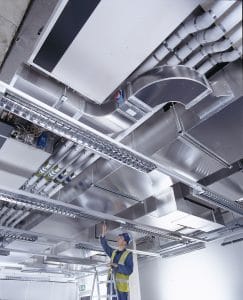 The Hippocratic Oath is an oath historically taken by physicians. In its original form, it requires a new physician to swear to uphold specific ethical standards. The oath is considered a rite of passage for medical practitioners and, although various modernized versions are often used these days, the message delivered is still the same: “Do no harm.”
Workers performing construction, renovation or maintenance activities in a health care environment may not take the Hippocratic Oath, but undoubtedly they do not want to harm anyone either. And, as we see construction projects in the health care industry continue to outpace construction in other sectors, the oath must extend beyond the traditional medical community.
Understanding the need for construction workers in the health care industry to be properly trained and certified, NEMIC will introduce six new certifications over the next two years that cover the broad range of tasks, techniques and skills needed for work that meets the industry’s Infection Control Risk Assessment (ICRA) protocols.
Safe work near active areas
With so many facilities expanding and/or renovating, ICRA aims for patient safety when work is being done near or even directly adjacent to active treatment areas.
The first certification, ICRA/Certified Healthcare Environment Worker, introduced in late 2016, is the basis upon which the subsequent certifications will build. The healthcare environment worker will understand the basics of infection control and the role of the construction worker in preventing the spread of infection. The certified healthcare environment worker is trained and certified in ICRA policy and protocol.
NEMIC is expected to institute two additional certifications in 2017, with the final three certifications to be implemented in 2018.
The risks to patient health—and to facilities’ insurance costs—make ICRA capability a fast-growing requirement for contractors and workers alike.
Each of the certifications requires members to attend courses developed and taught by the ITI and pass a test to receive their certification. Those who become certified will receive a photo ID card that shows his or her certification type, certification number and the date the current certification expires. All certifications must be renewed every two years.
“These certifications open up a new market share for our SMART signatory contractors and members working in health care facilities,” said Dave Bernett, NEMIC’s Administrator. “With an aging population, the nation’s hospitals, nursing homes, acute care facilities, general medical facilities and even local drug store pharmacies that administer flu shots all are going to be expanding and modernizing.
“Because these facilities have mandates in place from the Centers for Medicare and Medicaid that affect their budgets, having a certified workforce protects the facilities’ bottom line and the patients they care for.”
[text subhead]
ICRA certs give contractors, members edge to win work
NEMIC Director of Certification Gary Andis explained that the new certifications go far beyond what any other group offers workers in the health care construction industry.
“We are currently the only group that requires our members take—and pass—a test to assess knowledge at the end of the training program,” Andis said. “The test isn’t easy—only about 62 percent of participants in the pilot program passed—but the rigor of the program will ensure that we are producing highly qualified technicians and supervisors with the right skills for our market.”
Health care facilities are unique in that many operate 24 hours a day, 365 days a year. Performing maintenance, construction and renovation projects in that environment poses concerns beyond your traditional facility. Health care-associated infections (HAIs) are especially concerning.
The Centers for Disease Control and Prevention (CDC) estimates that every year some 648,000 patients in the United States develop infections during a hospital stay, and about 75,000 of those patients die. Due to the vast number of HAIs recorded, the Centers for Medicare and Medicaid have implemented a strategy of withholding reimbursement to health care facilities for failure to properly institute infection-control measures—and each year, the percentage withheld increases.
While it is impossible to measure the exact number of patients that developed HAIs from facility-related construction or maintenance activities, a 2011 survey analysis by the Centers for Medicare and Medicaid concluded that each year an estimated 5,000 patients develop an HAI that ultimately leads to death as the result of ongoing construction.
Sector grows by the billions
In the first half of 2016, construction in the health care industry rose by 2.2 percent, or $19.6 billion, from the same period the previous year. Economists from the American Institute of Architects predict that 2017 will see that number double.
“The work is emerging and the need will continue to grow as baby boomers age and their health care needs expand,” Andis said. “NEMIC and the ITI are creating new opportunities to put members to work, and this certification and the subsequent certifications we are working on will ensure that our contractors working in the health care market have access to employees that have proven they understand the intricacies of ICRA.
“Receiving a certificate for sitting through an eight-hour class doesn’t prove you absorbed the information. But, passing a rigorous test shows you understand and grasp the subject matter.”
The Fourth Annual National Safety Stand-Down to Prevent Construction Falls is happening now. Across the country, companies are pausing work for toolbox talks, equipment audits, and educational activities addressing this hazard. CLICK HERE for a video introduction. You can join the Center to Protect Worker Rights (CPWR) at 2 pm EST for their webinar on the latest research on fall fatalities and fall prevention from their CPWR Quarterly Data Report. This 30 minute webinar will review the main findings of the report, and highlight the need to reduce fall injuries and fatalities in construction and the importance of the Stand-Down and the overall CPWR-NIOSH-OSHA National Fall Prevention Campaign.
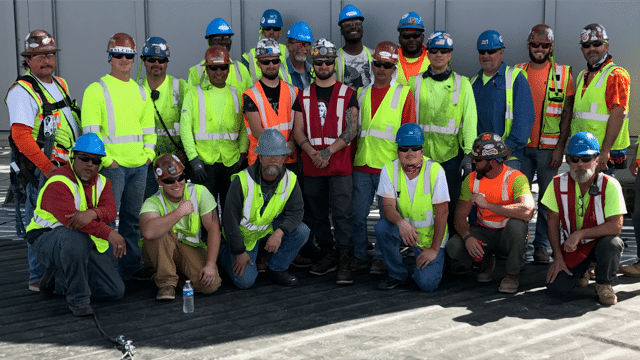
A Union president’s job always involves a lot of travel, to meet with contractors, industry leaders, elected officials, and with Union officers, funds staff, and many others across the U.S. and Canada.
But just after t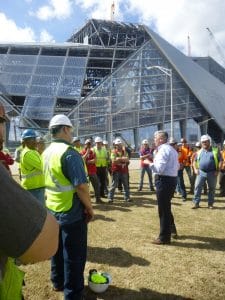 he 2016 election, General President Joseph Sellers., Jr., decided that whenever possible, he would add a valuable element to those trips: talking with members to get their input.
These pages cover just a few of these early sessions, in Mississippi, Florida, and Georgia. There have been others, like at Cove Point in Maryland where a number of SM Local 100 members were praised by management at API for their valuable work at the facility. There will be many more.
The reception from members he has spoken with and the input he has brought back from those visits have made Sellers more committed than ever to continue the ongoing gatherings.
His busy travel schedule takes time—but also takes him to place
s where he can connect with members: construction sites, rail yards, fabrication shops, production plants, transit depots, and others.
Sellers, a second-generation sheet metal worker, has felt increasing pride as he speaks with members.
“I am always energized by our members,” Sellers noted. “They show me their professionalism, their union spirit and—what I’m really after—their ideas for making things better on the job, in our Union and in their own communities.
“I look forward to the opportunities I’ll have all year to take a minute with our membership and listen to your thoughts and views. That kind of informed input is what I value most to make our Union work for all of us.”
Through the work and dedication of SM Local 103 (Helena, MT) Business Rep. Brandon Leatham, SM Local 103 has secured work on the new Black Canyon High school in Idaho Falls, Idaho.
“By strategically using the Idaho Market Recovery Fund over the last couple of years we were able to be in a position to target this project for our S.E. Idaho members,” said John L. Carter, Local 103 Business Manager.
YMC Inc., a mechanical contractor from Meridian, Idaho, was the successful bidder–over two large non-union shops—for the 23,000 man-hour, $5.2 million HVAC job.
The school will serve about 1,500 students at first and will be constructed with the infrastructure to add more classrooms and 300 additional students. The school will cover just over 250,000 square feet.
Unity raises market share
“With a completion date of August 2018, this project is a great opportunity for our members to work in their home area and showcase their skills for this contractor.
“Local 103 has been working to increase our market share in southeastern Idaho, and with this project the members are able to see what can be done when we all work together,” Carter said.
For the second year in a row, Superior Air Handling was one of several winners of the SMOHIT Safety Champion award for its record of safety at the Mixed Oxide Facility, known as The Mox Project, at the Savannah River Site.
The company reached a milestone of more than 1.75 million safety man hours, which amounts to seven years without a lost-time injury, to earn the award. Superior Air Handling expects to hit 2 million safety man hours by this spring.
James Walton and Robert Dickamore from Superior were on hand at SMOHIT’s second annual Safety Champions Conference in October 2016 to accept the award.
When accepting the award, Walton, a certified safety and health technician and safety manager for Superior said, “These awards are for the guys. Without them, I don’t have a job. They’re the reason I get up and go to work every day.”
The Mixed Oxide Fuel Fabrication Facility (MFFF) in Aiken, South Carolina will be a major component in the United States’ program to dispose of surplus weapons-grade plutonium.
The Mox project is one of Superior Air Handling’s largest ongoing projects. Superior is installing the HVAC and industrial ventilation systems for the facility, which is designed to take surplus weapons-grade plutonium, remove impurities and mix it with uranium oxide to form MOX fuel pellets for reactor fuel assemblies. These assemblies will be irradiated in commercial nuclear power reactors.
Superior Air Handling began work on the project site in 2009, and the company characterizes the project as one of the “most significant, complex, challenging and rewarding projects due to the unique design of the nuclear processing systems and the strict compliance to NQA-1 quality requirements.”
Superior’s team of more than 150 employees at Mox has installed much of the NQA-1 ductwork and equipment.
Superior Air Handling is one of the country’s leading HVAC sheet metal contractors with an extensive background in a variety of project venues, including laboratory and health care facilities, high rise commercial buildings, and nuclear plants.
The sheet metal trade may be one of the oldest inthe country, but modern technology propels it forward—and SMART’s affiliated funds are helping members keep pace.
AutoCAD, Navisworks, Robotic Total Station and other tools make it easier to design HVAC systems, communicate with the job site, collaborate with other trades and allow changes to happen that once would have been impossible.
Greg Greene, a detailer/designer for Metropolitan Mechanical Contractors in Minnesota, marvels every day at the changes since he turned out in 1980. In 1999, slowed by degenerative arthritis, he traded his tools and embraced for the then-new technology.
Greene’s 37 years of craft and digital experience went into designing HVAC at the Minnesota Vikings’ U.S. Bank Stadium and his current project, the BMO Harris Bradley Center, home of the NBA Milwaukee Bucks.
Virtual feet on the ground
Working on a Milwaukee project from his Minnesota office—400 miles away–would not have been possible even five years ago. Today, Navisworks lets anyone associated with the project virtually walk around the building like a first-person player in a video game.
“It allows you to tour the facility and make changes in the 3D virtual world instead of waiting until the building is finished and you wish you could have done something different,” Greene said. That brings everyone into the loop clarifying every detail.
“I’m updating the model four to five times an hour, so they’re constantly getting those updates,” Greene added. “We constantly work with the other trades. There is a lot of back and forth, especially on remote projects. Before, everyone would need to work on the same model at the same time. It would’ve been a lot harder.”
Similarly, Robotic Total Station allows workers to precisely place duct and pipe hangers and floor openings using land-based positioning devices fed by software. Once again, it means fewer mistakes.
“On a lot of drawings, we aren’t dimensioning anymore, because we know the hangers are done before the deck floors,” Greene said. “Most trades are getting on board with coordinating the hangers. If you do it from the get-go, you really save time.”
Experience required
While this undoubtedly sound cool to younger members, including upcoming and current apprentices, the work still requires skills that only experience can provide, said Ron McGuire, Building Information Modeling (BIM) specialist for the ITI.
“The gaming age has influence on a generation,” McGuire said. “But you can’t teach experience. Someone with ten years in the field knows how a job runs. It’s hard to reenact that in a classroom.”
By embracing the opportunity to transition his expertise from the job site to the BIM world, Greene reinvigorated his passion for his career—and saved it.
“I saw it as a way to be able to work until I’m 62,” Greene said. “I could see field work wasn’t going to be long term. A lot of sheet metal workers don’t want to sit at a desk all day, but for me, it saved my career.”
ITI builds the leading edge
Industry demands these technologies, and the ITI develops the instructors who train members at their home locals. Sessions and courses are already broad and always expanding, to keep members not just current, but on the leading edge.
For information on ITI instructor classes, visit www.sheetmetal-iti.org/catalog.
Inventing the wheel isn’t always necessary when it comes to curriculum and training. For SMART Sheet Metal Local 22 in Crawford, New Jersey, finding something new was more about bringing back something that worked years ago, dusting it off and adding to it.
Local 22 hosted its last Building Inspectors Program in 2007. It was brought back when Dave Castner, organizer, marketing director and instructor, inspected at a school improperly installed fire dampers that both the building department and fire inspector had approved. After the New Jersey Department of Community Affairs got involved, the repair was awarded to a union contractor.
Recently, leadership at the local — including Tom Fischbach, president and business manager; Castner; and Charlie Beelitz, training coordinator — saw a niche in the community the program could fill and resurrected it. The first class was held in April 2016 with 50 building inspectors in attendance.
The program uses the curricula of the ITI and hosts local building inspectors to educate them on the correct installation, operation and inspection of fire and smoke dampers.
Through a partnership with Rutgers University and the Department of Community Affairs, Local No. 22 was able to offer the course as a continuing education sponsor, which allowed them to provide continuing education units (CEUs), which every inspector needs to maintain his or her license. Local No. 22 also made the class mobile, filling a 7-foot-by-12-foot trailer with equipment and holding the class on campus.
In five classes in 2016, approximately 200 building inspectors, out of 900 to 1,000 in New Jersey, will complete the program. Fire marshals, engineers and construction managers have also attended the class. Local No. 22 offers this service free of charge, although its investment has weight.
“I’m hoping the program will do a couple things,” Fischbach said. “I hope it will educate the people we are trying to touch — be it the building inspectors or fire inspectors — on what we do and how we do it. In turn, hopefully, it will level the playing field and gain some contractor base in the smaller markets we’re not involved in and protect the larger contractor markets we are in.”
In July 2017, due to New Jersey HVACR Licensing, building inspectors will begin inspecting duct work as well as fire dampers. This class teaches them what they’re seeing, how to detect problems and when to contact experts to provide maintenance. Dampers prevent smoke and fire from traveling through the ventilation system, keeping it contained to the ignition point and away from occupants of the building. Properly working dampers save lives and allow for first responders to enter a building and extinguish a fire safely.
Dampers that were bolted shut during the MGM Fire in 1980 contributed to smoke inhalation cases, which was the leading cause of death during that incident. Dampers take a skilled eye and hand to inspect, and many building inspectors were never taught how to spot a faulty damper.
“Through this program, we’re finding out now the building inspectors aren’t looking at the fire dampers,” said Castner, who instructs the program. “We’re trying to raise awareness; you have to look at the fire dampers. They don’t have the knowledge of the functioning of the whole system. They look at it as cool air and heat, and that’s it.”
Fire damper inspection is only one part of the larger goal Local No. 22 is trying to accomplish with the program.
“We want to bring awareness to what the systems do,” Castner said. “We’re starting with the building inspectors, but we’re trying to get deeper into it. If these people — building inspectors, fire inspectors, fire officials — understand what they’re looking at and how to tell if they’re installed correctly, they will see what effect it has on the efficiency of the system.”
“The program is designed to make them look at all contractors a little bit closer, making them provide an efficient, functioning system where we’re more competitive,” Fischbach added. “It levels the playing field a little bit more.”
This is only the first step in a master plan of education and networking for Local No. 22.
“They’re surprised to see how little changes in design or fittings can really affect the system, and they are really interested in the fire damper inspections,” Castner said. “They come to us, and they know they’ll get the right answers. I think this is the first time in a long time we’re at the front of something, and we’re not trying to chase it.”
Lindsay Lanning of Glendale, Arizona, was selected as the grand prize winner of the Union Sportsmen’s Alliance (USA) and Carhartt Ultimate Elk Hunt Sweepstakes, winning a guided five-day elk hunt in the Gila National Forest in New Mexico, valued at approximately $22,000.
Lanning is a member of SMART TD Local 1629 and was selected from nearly 5,000 entrants. She is also a member of the USA, which partnered with Carhartt to honor the American worker by awarding a hunt of a lifetime to one union member and a guest.
Lanning chose to bring along her father Dana Lanning, of Phoenix, who has worked as a union crane operator for more than 30 years. Dana was a member of the International Union of Operating Engineers Local 428 and is currently a member of the International Brotherhood of Electrical Workers Local 769. He introduced Lindsay to hunting, taking her on dove and quail hunts when she was a kid and guiding her on her first elk hunt when she was 15. The two remain close hunting partners to this day.
“This is an amazing opportunity,” said Lindsay, “It’s something that my father and I would never treat ourselves to, but it’s absolutely an experience that we’ve dreamed about.”
Big Chino Guide Services, one of the Southwest’s premier hunting outfitters, will guide Lindsay and Dana this fall, with the hope of getting them within range of some of New Mexico’s biggest bull elk.
“We couldn’t be more excited for Lindsay and her father,” said Mike d’Oliveira, USA’s deputy director. “Their story resonates with so many other families who have forged generational bonds through their union membership and also their time enjoying the great outdoors.”
The USA is a nonprofit conservation organization created by and for union members and their families. It harnesses the power of expertly-trained union volunteers to create and improve public access to the outdoors, improve wildlife habitats, mentor youth in the outdoors and restore America’s parks.
Since 2012, Carhartt has collaborated with the USA, helping it to raise funds for conservation projects and unite the community around a shared passion for the outdoors. Each year, the USA and Carhartt produce a national sweepstakes. This year, the promotion centered around the theme of “Hunt Your Legacy” to align with the introduction of Carhartt’s all-new Rugged Outdoors line of high-performance hunting gear.
“As a family-owned company tracing our roots back to 1889, we have a deep appreciation for the traditions and heritage of our customers,” said Brian Spiro, Carhartt’s strategic partnerships manager. “Our partnership with the Union Sportsmen’s Alliance provides us with the opportunity to reach a vast number of dedicated union members who share a rich outdoor legacy.”
The sweepstakes ran from October through December of 2016 and drew the support of several international unions who collectively delivered the promotional ad to more than 2.5 million homes. All active and retired AFL-CIO union members were eligible to enter.
“This contest garnered attention from union members all over the nation,” said d’Oliveira. “It proved the strength of the bonds of so many working men and women to the outdoors and to Carhartt, a brand that shares their rich history, acknowledges the value of a hard earned dollar and encourages their rugged pursuits.”