
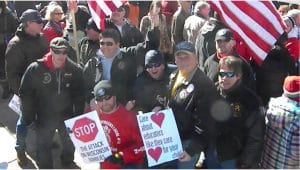
In his February 2017 message, General President Sellers discusses his recent meeting with President Trump and White House officials along with the battle being waged in the states and on the national level over a new round of right to work laws and attacks on Davis Bacon.
Video
Author: paul
Following a vote of the employees at its Lancaster, California factory, Build Your Dreams (BYD) recognized SMART Sheet Metal Local 105 (LA-area) as the exclusive collective bargaining representative for its employees in negotiations. This vote, often called a “card-check,” is an important step towards unionization.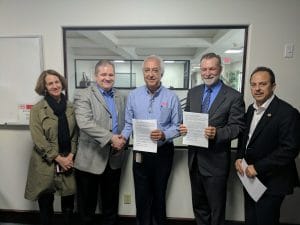
“BYD is one of the few companies today creating manufacturing jobs in the U.S. We have tripled in size in the last 18 months, with orders for our advanced technology zero-emission coaches, buses, and trucks coming in from across the country. As a result, we will continue to grow and expand our facility in Lancaster and look to add more manufacturing jobs in the near future,” said Stella Li, President of BYD America.
James White, SMART’s Director of Organizing, agreed, saying “It’s clear that BYD is here for the long haul, and we’re glad to see them stand with us in support of their workers. BYD has demonstrated a strong desire from the beginning to always provide the best environment for its workers, and we are pleased to have them as a willing and engaging partner.”
The unionization process began last summer when SMART Local 105 and BYD signed a neutrality agreement giving the union the right to begin speaking with employees. Following the card-check, SMART and a group of elected representatives from BYD factory staff will survey employee goals and begin contract negotiations with BYD management.
“Too many manufacturing employers fight unionization efforts, but a strong relationship between management and labor means more growth, good jobs, and, ultimately, a better product,” said Madeline Janis, Executive Director of the transit workers advocacy group Jobs to Move America. “I want to thank BYD for engaging in this process in good faith, and look forward to seeing a strong contract take effect.”
SMART Local 105 Business Manager Luther Medina welcomed BYD workers to SMART noting that “this is a great day for the southern California transportation production industry. Local 105 has always been on the cusp of new technology and practices and look forward to pushing forward again as we lead our industry into the 21st century.”
The BYD factory in Lancaster, California currently employs more than 400 local people, and with a planned expansion nearly complete, that number is expected to triple over the next three years.
Who’s behind right-to-work?
Ignoring the facts about “right-to-work,” far-right politicians across the country are promoting these deceptive policies as payback to their Big Business donors. By weakening workers’ ability to have a say about their job, right to work weakens unions’ ability to serve as an advocate for all workers and a check against corporate greed.
Without solid evidence to back their claims, the politicians advancing right-to-work legislation depend on a coordinated network of extremist right-wing groups to provide resources, research, and an echo chamber that pave the way for right to work.
The most well-known of these cash-flush special interest groups include the American Legislative Exchange Council (ALEC), the U.S. Chamber of Commerce, and the National Right to Work Committee. Read on to learn more about the groups working overtime to make every state a right-to-work state.
ALEC
Right to work has gained some momentum as result of the collusion between Big Business and allied lawmakers involved in ALEC, an established conservative group backed by corporate special interests that peddles influence with state legislators. While much of its work has gone on behind closed doors, several media outlets and the Center for Media and Democracy have recently exposed how ALEC operates, peeling back the curtain on the significant political influence it wields at the state level. ALEC gives companies and politicians a shared role in developing its legislative prototypes, which are then introduced in copycat fashion by its members in legislatures nationwide. As part of its extremist agenda, ALEC and its members aim to limit the rights of workers and their unions through initiatives such as right to work. Check out Progress Missouri’s ALEC exposé, which reveals just how similar Missouri’s proposed right-to-work bill is to ALEC’s draft legislation.
In the ultimate irony, ALEC gives corporations a voice and a vote in order to rob workers of theirs. ALEC’s leadership and membership include executives from corporations like Comcast and Walmart that are notorious for their low-wage, anti-worker business practices. ALEC is also tied to heavy hitters in the Tea Party movement, like the billionaire Koch brothers, who channel their vast wealth to far-right groups and politicians and helped orchestrate Wisconsin Gov. Scott Walker’s repeal of public employees’ collective bargaining rights.
U.S. Chamber of Commerce
As the nation’s most powerful lobbying group, the U.S. Chamber of Commerce has made right to work one of its top priorities. The U.S. Chamber and its state affiliates have issued misleading reports, launched PR blitzes, and used their lobbying muscle to advance right-to-work legislation across the country. Like ALEC, corporations funnel money to the prominent lobbying force to promote their agenda in Congress and in the states. The U.S. Chamber has been campaigning against unions, fair labor practices, increases in the minimum wage, and legal protections for America’s workers for nearly a century.
While the Chamber advocates that workers benefiting from a union contract should not have to pay the union any fees, the Chamber does not appear to hold itself to the same standards. Click here to view a local Chamber’s double standard on right to work, which surfaced when the area’s union Building Trades Council inquired whether it would be possible to be a member of the Chamber but not pay dues. The Chamber responded that “It would be against Chamber by-laws and policy to consider any organization or business a member without dues being paid. The vast majority of the Chamber’s annual revenues come from member dues, and it would be unfair to the other members to allow an organization not paying dues to be included in member benefits.”
For more about the U.S. Chamber, click here.
National Right to Work
The National Right to Work Committee and its legal arm, the National Right to Work Legal Defense Foundation, are longtime proponents of right to work. The group claims to be a “worker advocate,” but an examination of its press releases issued between 2003 and 2005 showed no reference to any attempt to improve benefits or working conditions for workers; and only one mention of increasing wages. Meanwhile, the organization continuously pushes reports with outdated and flawed information to advance right to work. National Right to Work refuses to disclose its donors. However, like ALEC, the group has connections to the ultra-conservative Koch brothers.
For more about National Right to Work, click here.
What About Corporations?
In addition to hiding behind these special-interest groups, thanks to Supreme Court’s decision in Citizens United, corporations have significant leeway to funnel hundreds of millions of dollars to influence elections and policy—without having to disclose their role. Since that landmark decision, record sums of money have been spent by outside groups to scale back protections for workers, and it is no coincidence that right to work has recently gained momentum.
Despite the challenges of tracking specific businesses and donors that are involved in promoting right to work, it’s clear that those behind these efforts have deep pockets. In 2012, Indiana’s airwaves were flooded with ads for right to work featuring top Republican lawmakers, who refused to share how the ads were funded. Public records reveal that the Indiana Opportunity Fund, a group founded by Republican activist Jim Bopp, spent $600,000 on ad buys. With laws granting anonymity to his donors, Bopp wouldn’t disclose where the money came from.
VOLUNTEERS CLEAN VIETNAM VETERANS MEMORIAL WALL
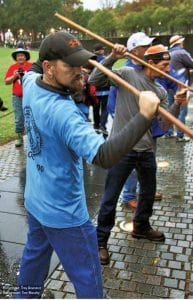 Volunteering is an important form of member action—giving back to our communities and building a positive image. Even the simplest tasks, however, can be deeply significant.
Such was the case a few months ago when a group of members—retirees, veterans and staff from SM Local 100 (Washington, D.C.) and International officials—came out in force to wash the historic Vietnam Veterans Memorial Wall.
The cleaning is done year-round by groups who join a long waiting list for a chance to do this solemn work. This SMART crew joined other volunteers well before the sun came up before tourists began arriving for the day.
The Vietnam Veterans Memorial, often called “The Wall that Heals,” displays the names of the more than 58,000 service members who gave their lives in service during the Vietnam Conflict. The gradually heightening east and west walls form a wide, 125-degree angle ‘V’ in a total span of nearly 500 feet. The memorial also includes “The Three Servicemen” statue and the Vietnam Women’s Memorial.
With more than 3 million visitors each year paying their respects at the wall, this volunteer maintenance is a small but vital way for SMART to give thanks to the very special group whose names are inscribed.
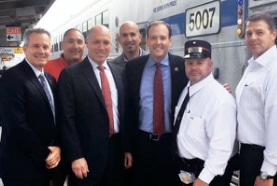 With roughly 340,000 passengers every weekday, the Long Island Rail Road (LIRR) is the busiest commuter rail system in North America—one of only a few systems in the world that run 24 hours a day, seven days a week, year-round.
In 2015, its fourth straight year with increased ridership, the LIRR carried 87.65 million passengers into, out from, and around New York City and its vast eastern boroughs and suburbs. Little wonder, then, that adding LIRR capacity is a top priority effort for the LIRR’s operating agency, the Metropolitan Transportation Authority (MTA).
SMART is working with New York Governor Andrew Cuomo on rebuilding and expanding the complex web of transportation infrastructure that feeds New York City. SMART TD GCA 505 General Chairman Anthony Simon has been working with both sides of the aisle to implement the LIRR improvements and other projects within the Governor’s broad initiative.
Second- and third-track expansion in the works
With the city’s role as economic engine for the state and entire region, most Democratic and Republican political officials are on board with the aggressive LIRR plan.
A current $387 million project will add a second track to expand service on 18 miles of the LIRR main line’s east end. After that job is completed, the railroad will add 9.8 miles of third track on that same main line to further improve service between the suburbs of Long Island, Queens and Manhattan.
The increased capacity will provide drastic improvements in key areas: serving reverse commuters; relieving congestion; and feeding the ongoing East Side Access project to bring more service into Grand Central Station.
“This bold and aggressive plan is not only making the largest commuter railroad in the country better and more efficient, it is creating jobs and more work for our members and the members of other trade unions,” says Simon.
Political action builds strong relationships—and jobs
Simon has worked closely with the Governor’s office, MTA Chairman Tom Prendergast, local politicians and other labor leaders to ensure everybody benefits from this unprecedented capital plan at the MTA.
Working under project labor agreements (PLAs) with ambitious goals, union workers on Long Island will be busy thanks to the relationships SMART has built with leaders in the U.S. Congress and the powerful New York State Senate.
Intensive work with local politicians has generated strong support within communities of all sizes, who see the economic value of new jobs and the safer and more efficient railroad the projects will create.
SMART’s political action is well known to—and well respected by—key government officials, including U.S. Representative Peter King (R) and New York Governor Andrew Cuomo.
“Anthony Simon is direct and honest and as honorable as any one I have ever dealt with. He is always a man of his word and a true leader,” Congressman King said.
Governor Cuomo said, “New York is undertaking the nation’s most ambitious infrastructure plan to ensure that we have a transportation system that is built to meet the commuter demands of the 21st century and provide an enhanced travel experience for all.
“The men and women of the SMART Transportation Division on the LIRR, led by Anthony Simon, are invaluable assets as we work together toward a safer, more efficient transit system for all New Yorkers,” Cuomo added.
Unified SMART flexes muscle
Another positive aspect of the LIRR work is to be able to see how our united Union is working—members and officials, side by side and regardless of craft or work—to generate progress and increase work for SMART members and Union labor overall.
SMART SM Local 137 President and Business Manager Dante Dano and TD GCA 505’s General Chairman Simon have combined resources and formed a bond that is clearly benefitting members in the New York area compared with what might have been achieved operating separately. The LIRR projects are just the latest example of this increased strength in action.
Dano reflected on this joint effort by remarking that, “maintaining an open dialogue with political leaders and communicating the needs of working families, while working with other labor leaders toward a common goal, is the key to being effective. The relationships you build are vital, regardless of party or any of the positions you have taken.”

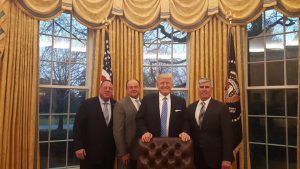 Earlier this week, I was joined by SMART Government Affairs Director Steve Dodd and General Vice President Gary Masino in a meeting with President Trump and Building Trades leaders at his first work day in the Oval Office. Throughout, we were regarded with respect and courtesy.
We met with the President to hold a frank and honest discussion about the issues that lie at the heart of what our members and working families have on their minds. Jobs, income security and the ability to get ahead in today’s economy. We commend the President for moving ahead on the issue of foreign trade deals as he promised during his campaign.
Our members know that we must get to work on rebuilding our American infrastructure. We look forward to working with the new administration as he turns his campaign promises into new jobs in order to do just that.
An investment in our infrastructure wouldn’t just benefit SMART members, it’s an investment in the middle class. It’s not solely roads and bridges—it includes our rail and transit networks, and upgrading schools, hospitals, universities, and energy assets, too.
While we have not always agreed with the President or the Republican Party, our union will support what’s best for our members and America’s working families. We’re ready to roll up our sleeves for our Union, the middle class, and the entire nation.
General President Sellers led a group of SMART leaders joining Sean McGarvey, president of the North America’s Building Trades Unions, Terry O’Sullivan, president of the Laborers’ International Union of North America (LIUNA) and others in a day one meeting with President Donald Trump at the White House. The meeting was held to discuss revitalizing American jobs and giving American workers a fair playing field, as described by White House Press Secretary Sean Spicer.
Earlier in the day, the President signed an Executive Order withdrawing the United States from the Trans-Pacific Partnership (TPP), a deal staunchly opposed by American working families across the country and throughout the labor movement.
On the first day of the state’s new legislative session, Republican members of Kentucky’s House Economic Development and Workforce Investment Committee approved House Bill 1, a law requiring unions to negotiate for and represent people even when they refuse to pay dues.
The committee – called the Labor and Industry Committee until it was renamed by the new Republican majority– also approved a bill repealing the state prevailing wage law and preventing cities and counties from having their own prevailing wage standards for projects not involving state money.
Finally, the committee approved legislation that would require unions to collect annual authorization cards to deduct union dues directly from paychecks.
All three bills won along straight party lines with no Democrats in support.
Each bill contains an “emergency” clause, meaning they go into effect the moment they are signed by the governor.
This past Saturday was the 25th Wreaths across America day, where 44,000 volunteers placed 245,000 wreaths at gravesites and memorials in Arlington Cemetery. This is also coordinated and carried out with wreath-laying ceremonies at 1,100 additional locations in all 50 states.
Thank you to our families that joined us by making donations and those who volunteered to honor our country’s heroes.
It was truly a day full of remembrance and emotion. No matter where the fallen may be buried, we will always #say their name. The mission, to:
Remember our fallen U.S. veterans
Honor those who serve
Teach your children the value of freedom.
Joe and Beth Sellers Rich and Marilyn McClees
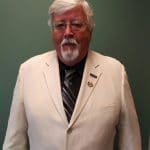 As a second generation Sheet Metal Worker, Jim Paquette started in the trade working as an Apprentice shortly after his high school graduation in 1978. Completing a four year apprenticeship in 1982, he over the years has had the opportunity to work in most trade areas from shop fabrication to the installation of all types HVAC products as well siding and roof decking and served as a job site steward for several large industrial projects sites including job site foreman.
An avid motorcycle enthusiast he purchased his first Harley Davidson motorcycle just out of high school before entering work in the trade. He has ridden all along the west coast stretching from the Alaska border as far south as Cabo San Lucas Mexico attending the Sturgis Rally three times over the years after making four attempts. He continues to enjoy riding motorcycles whenever he has the opportunity.
Following successful completion of Labour Management Studies program at British Columbia Institute of Technologies, he was first elected to hold Local Union Office as a Business Representative in 1997 and attended the New Business Agents Class held that year at the National Labor College. He was re-elected as a Business Representative and in 2003 was nominated and elected to serve his local union membership as the Business Manager / Financial Secretary Treasurer and has been consistently re-elected afterwards.
In addition to his duties as Business Manager / Financial Secretary Treasurer for his home local union he also currently holds the position of President for both the Canadian Council of Sheet Metal Workers & Roofers and the Western Canadian Conference of Sheet Metal Workers & Roofers and also serves the British Columbia & Yukon Territory Building Construction Trades Council elected to the position of Financial Secretary Treasurer and is co-chair of the British Columbia Jurisdictional Assignment Plan of the Construction Industry.
He has served SMART whenever he has been asked to do so including being appointed Chairman for an International Trial Committee, and also continues to serves both the US and Canada as a Trustee of the SMART Local Union & Councils Pension Plan, and is also a member of the SMACNA / SMART Best Practices Task Force which seeks to improve labour relations between management and labour as well as improving work opportunities on both sides of the border.