
BILOXI, Miss. – An eastbound CSX train hit a packed charter bus that was stuck on the tracks at approx. 2 p.m., Tuesday, March 7. Four fatalities have been reported and several people were airlifted from the scene. Nearly all of the 50 people aboard the bus were injured, several critically.
Click here to see video and read more from CNN.com.
Tag: CSX

Richard P. “DG” De Genova, 67, died Tuesday, February 14 surrounded by his family.
De Genova hired out with the Youngstown and Southern (Y&S) Railway while attending Youngstown State University (YSU). After receiving his BA in History/Secondary Education in 1972, he was a substitute teacher for the Struthers, Lowellville and Campbell, Ohio, high schools.
De Genova realized that his true passion was the railroad and hired out as a brakeman with the then B&O Railroad (now CSX) in August of 1973. Throughout his career, he held the positions of brakeman, road conductor and yardmaster. A member of Local 1948 in Youngstown, Ohio, De Genova served the union as general chairperson for CSX B&O Yardmasters (GCA 247) for 24 years. He settled countless claims for the membership and worked tirelessly to defend the rights of the membership.
In his free time, De Genova was a history buff who enjoyed reading historical books and watching documentaries. He was also a fan of the Cleveland Indians and other local baseball teams.
De Genova is survived by his wife of 38 years, Phyllis (Gallas); two daughters, Angela (Jonathan) Bellack and Natalie De Genova; parents, Mary K. and Joseph De Genova; and sister, Barb (Gary) Roberts. He was preceded in death by an infant son, Patrick.
Visiting hours are Friday, Feb. 17 from 5-8 p.m. at the Higgins-Reardon Funeral Home, 2726 Center Rd., Poland, OH 44514. A prayer service will be held Saturday, Feb. 18 at 9:30 a.m. at the funeral home. A mass of Christian burial will follow at 10 a.m. at the Holy Family Parish, 2729 Center Rd., Youngstown, OH 44514.
Memorial contributions may be made to the Beatitude House, 238 Tod Lane, Youngstown, OH 44504-1714, or online at www.beatitudehouse.com.
Click here to read De Genova’s official obituary and to leave condolences.
SMART TD extends their condolences to the De Genova family, friends and all who knew De Genova.
4th Quarter 2016
Net Earnings: $458 million or $0.49 per share, up from $466 million or $0.48 per share in 2015’s 4th quarter
Revenue: Increased by 9 percent to $3,037 billion
Operating Income: Increased to $1 billion over last year’s $791 million
Operating Ratio: 67 percent, an improvement over last year’s 71.6 percent
2016 Annual Earnings
Net Earnings: Decreased to $1.7 billion or $1.81 earnings per share, down from $1.96 billion or $2.00 per share in 2015
Revenue: Decreased to $11.1 billion from $11.8 billion in 2015
Operating Income: Decreased $3.4 billion from $3.6 billion in 2015
Operating Ratio: 69.4 percent
Click here to read CSX’s full earnings report

4th Quarter 2016
Net Earnings: Net income increased by 20 percent to C$3.84 million; diluted earnings per share increased 25 percent to C$2.61 from fourth quarter 2015’s reported C$2.08
Revenue: Decreased 3 percent to C$1.64 billion from C$1.69 billion
Operating Income: Increased 6 percent to C$717 million over fourth quarter 2015’s C$677 million
Operating Ratio: 56.2 percent, a record low
2016 Annual Earnings
Net Earnings: Net income increased by 18 percent to C$1.6 billion from C$1.4 billion; diluted earnings per share increased 27 percent to C$10.63 from C$8.40
Revenue: Decreased 7 percent to C$6.23 billion from 2015’s reported C$6.71 billion
Operating Income: Decreased 4 percent from 2015’s C$2.7 billion to C$2.6 billion
Operating Ratio: 58.6 percent, a record low
Click here to read CP’s full earnings report

4th Quarter 2016
Net Earnings: $1.1 billion or $1.39 per diluted share, an increase of 6 percent
Revenue: Down 1 percent to $5.2 billion
Operating Income: Up 2 percent to $2.0 billion
Operating Ratio: Improved by 1.2 points to 62.0 percent
2016 Annual Earnings
Net Earnings: Decreased by 11 percent to $4.2 billion or 8 percent to $5.07 per diluted share, down from 2015’s reported $4.8 billion or $5.49 per diluted share
Revenue: Decreased to $19.9 billion from $21.8 billion
Operating Income: Decreased by 10 percent to $7.3 billion
Operating Ratio: Increased 0.4 points to 63.5 percent
Click here to read UP’s full earnings report

4th Quarter 2016
Net Earnings: Decreased by 5 percent to $130 million or $1.21 earnings per share
Revenue: Static at $599 million
Operating Income: Decreased by 4 percent to $211 million
Operating Ratio: 64.8 percent, a 1.4 point increase from 2015’s 4th quarter report of 63.4 percent
2016 Annual Earnings
Net Earnings: $480 million or $4.43 per share, down from 2015’s reported $485 million or $4.40 per share
Revenue: Down 3 percent to $2.3 billion
Operating Income: Increased by 2 percent to $819 million
Operating Ratio: 64.9 percent, a 1.9 point improvement over 2015
Click here to read KCS’s full earnings report

4th Quarter 2016
Net Earnings: Increased 8 percent to C$1,018 million; diluted earnings per share increased 12 percent to C$1.32
Revenue: Increased by 2 percent to C$3,217 million
Operating Income: Increased by 3 percent to C$1,395 million
Operating Ratio: 56.6 percent, an improvement of 0.6 points
2016 Annual Earnings
Net Earnings: Increased 3 percent to C$3,640 million; diluted earnings per share rose 6 percent to C$4.67
Revenue: Decreased by 5 percent to C$12,037 million
Operating Income: Increased 1 percent to C$5,312 million
Operating Ratio: Improved 2.3 points to 55.9 percent
Click here to read CN’s full earnings report

4th Quarter 2016
Net Earnings: Increased 15 percent to $416 million; diluted earnings per share increased 18 percent to $1.42
Revenue: Decreased 1 percent to $2.5 billion
Operating Income: Increased 19 percent to $761 million
Operating Ratio: 69.4 percent, a 510 point improvement over 74.5 percent reported for the fourth quarter of 2015
2016 Annual Earnings
Net Earnings: Increased 7 percent to $1.7 billion; diluted earnings per share increased 10 percent to $5.62
Revenue: Decreased by 6 percent to $9.9 billion
Operating Income: Increased 7 percent to $3.1 billion
Operating Ratio: Improved 370 points to 68.9 percent as compared to 2015’s reported 72.6 percent
Click here to read NS’s full earnings report
Note: Operating ratio is a railroad’s operating expenses expressed as a percentage of operating revenue, and is considered by economists to be the basic measure of carrier profitability. The lower the operating ratio, the more efficient the railroad.
Two CSX trains collided in Marion County, Fla. in the early hours of Wednesday, Nov. 16, causing approximately 20 train cars to derail. Two members of the train crews were treated for injuries and released without hospitalization. An estimated 15,000 gallons of fuel was spilled.
Click here to read more from Florida Today.
Net Earnings: $455 million or $0.48 per share; down from $507 million or $0.52 per share
Revenue: Declined 8 percent
Operating Income: Declined 10 percent to $841 million
Operating Ratio: Increased 70 basis points to 69.0 percent
Click here to read CSX’s full earnings report
Net Earnings: $121 million or $1.12 per diluted share; down from $132 million or $1.20 per diluted share
Revenue: Decreased 4 percent to $605 million
Operating Income: Decreased 9 percent to $200 million
Operating Ratio: Increased to 66.9 percent
Click here to read Kansas City Southern’s full earnings report
Net Earnings: C$347 million (7 percent increase) or C$2.34 diluted earnings per share (a 15 percent increase); up from C$323 million or C$2.04 diluted earnings per share
Revenue: Decrease of 9 percent to C$1.55 billion
Operating Income: C$657 million, a decrease of 13 percent
Operating Ratio: 57.7 percent, lowest ever reported
Click here to read Canadian Pacific’s full earnings report
Net Earnings: $1.1 billion or $1.36 per diluted share (9 percent decline); down from $1.3 billion or $1.50 per diluted share
Revenue: $5.2 billion, down 7 percent
Operating Income: Declined 11 percent to $2.0 billion
Operating Ratio: 62.1 percent, up 1.8 points
Click here to read Union Pacific’s full earnings report
Net Earnings: C$972 million or C$1.25 per diluted share, as compared to 2015 3rd quarter of C$1,007 million or C$1.26 per diluted share
Revenue: Decreased 6 percent to C$3,014 million
Operating Income: Declined 5 percent to C$1,407 million
Operating Ratio: A record 53.3 percent, a 0.5-point improvement
Click here to read Canadian National’s full earnings report
Net Earnings: $460 million (2 percent increase) or $1.55 diluted earnings per share (4 percent increase); up from $452 million or $1.49 diluted earnings per share
Revenue: Declined 7 percent to $2.5 billion
Operating Income: Stayed at a steady $820 million
Operating Ratio: 67.5 percent, a 220 basis point improvement over 2015’s reported 69.7 percent in the third quarter
Click here to read Norfolk Southern’s full earnings report
Note: Operating ratio is a railroad’s operating expenses expressed as a percentage of operating revenue, and is considered by economists to be the basic measure of carrier profitability. The lower the operating ratio, the more efficient the railroad.
On Friday, October 14, 2016, SMART Union united with the Brotherhood of Locomotive Engineers and Trainmen (BLET), Brotherhood of Maintenance of Way Employees Division (BMWED) and the Brotherhood of Railroad Signalmen (BRS), in a joint statement to the Federal Railroad Administration (FRA) that voiced their collective opposition to a recent CSX petition requesting permission from the FRA to remove approximately 125 signals from a stretch of track in Michigan.
Citing reasons of crew safety and public safety, SMART Transportation Division (SMART TD) President, John Previsich and SMART TD Michigan State Legislative Director, Jerry Gibson, worked with SMART and SMART TD’s legislative offices and and leaders from the BLET, BWED and BRS in requesting that the FRA deny CSX’s request.
“Considering the number of residents, homes, schools and churches along this line, and the safety risk involved if these signals are removed, we oppose this request and ask the FRA to deny this wavier,” stated SMART Transportation Division President, John Previsich.
Gibson emphasized safety concerns and also connected the dots between the outcome of the presidential election and future decisions made by the FRA and other president-appointed federal industry boards.
“The SMART TD Michigan State Legislative Board opposition is based on the reason signal systems are put into place: Employee and public safety. As a former qualified engineer and conductor on this line, the territory has a winding path with poor long distance sightlines, making the operable signal system that is currently in place critical to crew and public safety.
“While many may not see the direct correlation between this issue and voting for those candidates endorsed by the SMART TD National Legislative office and State boards, it is a great example. The President of the United States appoints the Director of the Federal Railroad Administration, Surface Transportation Board, Railroad Retirement Board, Department of Labor, and Department of Transportation, to name a few – all of which have the power to determine if these requests are approved or denied,” he stated.
Gibson also added: “If we cast our vote in the wrong direction, the outcome of many issues that directly affect rail labor and their families with be compromised,”
To read the joint labor statement to the FRA, please click here.
Net Earnings: $445 million or $0.47 per share; down from $533 million or $0.56 per share
Revenue: Down 12 percent
Operating Income: Down 17 percent to $840 million
Operating Ratio: Increased 210 basis points to 68.9 percent
Click here to read CSX’s full earnings report.
Net earnings: $120 million or $1.11 diluted earnings per share, a 10 percent increase
Revenue: $569 million, a decrease of 3 percent
Operating Income: $220 million, an 18 percent increase
Operating Ratio: 61.3 percent, improvement of 6.8 points
Click here to read Kansas City Southern’s full earnings report.
Net Earnings: C$328 million or C$2.15 per share, a decline of 16 percent
Revenue: C$1.45 billion, a decrease of 12 percent
Operating Income: C$551 million, a decrease of C$95 million
Operating Ratio: 62 percent, an increase of 110 basis points
Click here to read Canadian Pacific’s full earnings report.
Net Earnings: $1.0 billion or $1.17 per diluted share, a decline of 15 percent
Revenue: $4.8 billion, down 12 percent
Operating Income: $1.7 billion, down 15 percent
Operating Ratio: 65.2 percent, an increase of 1.1 points
Click here to read Union Pacific’s full earnings report.
Net Earnings: Decreased to C$858 million or C$1.10 per diluted share
Revenue: Decreased to C$2,842 million, a 9 percent decrease
Operating Income: C$1,549 million, a 12 percent decline
Operating Ratio: Second quarter record of 54.5 percent, an improvement of 1.9 points
Click here to read Canadian National’s full second quarter earnings report.
Net Earnings: $405 million or $1.36 diluted earnings per share, a decline in net earnings and a 4 percent decline in earnings per share.
Revenue: $2.5 billion, down 10 percent
Operating Income: $770 million, a 5 percent decrease
Operating Ratio: Improved to 68.6 percent, a 140 basis point improvement or 11 percent reduction
Click here to read Norfolk Southern’s full second quarter earnings report.
Note: Operating ratio is a railroad’s operating expenses expressed as a percentage of operating revenue, and is considered by economists to be the basic measure of carrier profitability. The lower the operating ratio, the more efficient the railroad.

The CSX train yard located in New Castle, Pa., (aka Mahoningtown yard) has a long history with the railroad. The train yard was first used for the Pennsylvania Railroad, and then later the Baltimore & Ohio (B&O) Railroad and finally CSX. The Buffalo & Pittsburgh short line railroad also currently uses the yard.
The yard is a hub used by members of SMART TD Locals 1374 (New Castle), 1379 (Pittsburgh), 340 (Connellsville, Pa.), 377 (Salamanca, N.Y.) and 1948 (Youngstown, Ohio).
Click here to read a nostalgic piece about this rail yard and the history of railroading in Pennsylvania from The New Castle News.
Check out this related story about the history of Pennsylvania railroads entitled, “The lure of railroad Memories of days gone by” by the same author at The New Castle News.
CSX Corporation announced declining financial results for the first quarter 2016. Net earnings for the railroad decreased to $356 million or $0.37 per share, down from first quarter 2015 reported net earnings of $442 million or $0.45 per share.
“As we managed through the impact of the continued coal decline and other market forces during the first quarter, CSX took aggressive actions to improve efficiency, reduce costs and streamline resources across the network to further reshape the company,” CEO Michael J. Ward said.
Revenue for the quarter declined 14 percent, reflecting a lower fuel recovery, a 5 percent volume decline and a $95 million year-over-year decline in other revenue. Expenses also decreased by 12 percent, driven by efficiency gains of $133 million and lower volume-related costs of $64 million. CSX reported a decrease to operating income of $139 million to $704 million. At the same time, the operating ratio increased 90 basis points year-over-year to 73.1 percent.
“While CSX delivered strong efficiency gains in the first quarter, we continue to expect full-year earnings per share to decline in 2016 as a result of ongoing coal headwinds combined with other market fundamentals. At the same time, CSX remains focused on meeting and exceeding customer expectations while driving further efficiency savings to maximize shareholder value and achieve a mid-60s operating ratio longer term.”
Operating ratio is a railroad’s operating expenses expressed as a percentage of operating revenue, and is considered by economists to be the basic measure of carrier profitability. The lower the operating ratio, the more efficient the railroad.
In a press release April 19, Kansas City Southern (KCS) released their first quarter 2016 financial results.
Revenue decreased by 7 percent to $563 million. Operating income increased 5 percent to $188 million. Carload volumes for the quarter were 5 percent lower than in the first quarter 2015. Revenue declined 1 percent.
Operating expenses decreased by 12 percent to $375 million. Operating ratio came in at 66.6 percent, a 2.3 point improvement as compared with the reported 70.5 percent of the first quarter 2015. Diluted earnings per share were $0.99. Adjusted diluted earnings per share were $1.03.
“Despite flooding that shut down key portions of our U.S. rail network for over three weeks, KCS delivered solid earnings and operating results,” said CEO David L. Starling. “That we overcame this very significant challenge while simultaneously scaling costs across the network clearly demonstrates KCS’ ability to react quickly to rapid and unexpected changes to its operating environment.”
Canadian Pacific Railway (CP) announced its lowest-ever first quarter operating ratio of 58.9 percent and diluted earnings per share of C$3.51 (an 83 percent increase from C$1.92) or adjusted diluted earnings per share of C$2.50 (an 11 percent increase from C$2.26) for the first quarter 2016. CP reports that their operating ratio improved 430 basis points year-over-year and for a third straight quarter was below 60 percent. At 58.9 percent, operating ratio is the lowest-ever when compared to adjusted operating ratios in previous quarters, CP said.
“The precision railroading model works in all economic environments,” said CP CEO E. Hunter Harrison. “Despite weakness in the economy and volume headwinds, we focused on what we can control – our costs and our commitment to providing reliable service – and delivered a record performance.”
Revenues for the railroad were down 4 percent to C$1.59 billion from 2015’s first quarter revenues of C$1.67 billion. Operating income increased 7 percent to C$653 million from C$612 million. Net income rose 69 percent to C$540 million from C$320 million. Adjusted income was up 2 percent to C$384 million from the reported C$375 million of the first quarter last year.
“I am proud of what the team continues to produce quarter after quarter in these difficult times and we remain optimistic in our outlook given signs of stabilization within the Canadian economy and in key global markets,” Harrison said. “As market conditions improve and volumes increase, our team of professional railroaders will be ready. Furthermore, we are confident in our plan to deliver shareholder value, which includes the announcement of a new share repurchase program that demonstrates our continued confidence over the long-term.”
 Union Pacific Corporation (UP) reported declines in first quarter 2016 revenues.
Operating revenue was down 14 percent to $4.8 billion. The railroad reported a first quarter net income of nearly $1.0 billion or $1.16 per diluted share, down 11 percent as compared to last year’s first quarter of $1.2 billion or $1.30 per diluted share. Operating income was down 15 percent to $1.7 billion and operating ratio went up 0.3 points to 65.1 percent.
“In this challenging environment, we have continued our intense focus on operating safely and efficiently, managing our resources, and improving our customer experience,” said CEO Lance Fritz. “As a result, the quarterly operating ratio came in at 65.1 percent, up only 0.3 points from last year, as solid core pricing and productivity improvements helped to offset an 8 percent decline in total volumes.”
Norfolk Southern Corporation (NS) announced strong financial results for the first quarter 2016.
Income from railway operations was up 19 percent to $723 million; while net income also saw a 25 percent increase to $387 million as compared to last year’s first quarter reported $310 million. NS reported that a first quarter record was set for operating ratio, which came in at 70.1 percent. Diluted earnings per share were $1.29, up 29 percent as compared with the reported diluted earnings per share of $1.00 for the first quarter 2015.
Railway operating revenues fell 6 percent to $2.4 billion, while operating expenses also decreased 13 percent to $1.7 billion.
“Our strong first-quarter results demonstrate the significant progress we are making in line with our strategic plan,” said CEO James A. Squires. “Since I became CEO in June, our team has been committed to streamlining operations, reducing expenses and maintaining superior customer service levels. Our focus on strengthening Norfolk Southern is yielding results, and the company is now on track to achieve productivity savings of about $200 million and an operating ratio below 70 in 2016.”
NS is implementing a strategic plan to reduce costs, drive profitability and enhance value for all NS shareholders. Through this plan, NS expects to achieve annual productivity savings of more than $650 million by 2020 and an operating ratio below 65 percent by 2020.
Canadian National Railway (CN) announced mostly positive financial results for the first quarter 2016.
The railway reported a 13 percent increase in net income to C$792 million, while diluted earnings per share increased 16 percent to C$1.00. Operating income also increased 14 percent to C$1,217 million. CN reported a decrease in revenues by 4 percent to C$2,964 million. Carloadings declined 7 percent and revenue ton-miles also declined 9 percent. Operating expenses saw a decline of 14 percent to C$1,747 million. Operating ratio improved 6.8 points to 58.9 percent.
CEO Claude Mongeau said, “CN delivered a very solid quarterly performance in a challenging economic environment. We successfully aligned our resources with the reduced volume level to achieve strong efficiency gains, while continuing to offer superior customer service and significantly improving our safety performance. These achievements allowed the CN team to deliver record first-quarter financial results.”
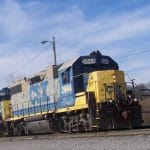 The Columbus Dispatch reported that yesterday, February 9, two CSX employees were injured when their train, bound for the Honda plant, collided with a stationary car. CSX has not yet issued a statement.
Read the complete story here.