

Tag: FRA
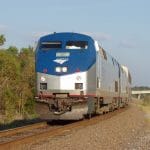 The Associated Press reports that the Federal Railroad Administration (FRA) has ordered Amtrak to retrain employees on basic safety rules after an Amtrak train slammed into a backhoe last week, killing two maintenance-of-way (MOW) employees and injuring dozens of passengers.
Loram Maintenance of Way spokesman Tom DeJoseph told reporters that the MOW workers on the tracks were unaware that one of the tracks was active and in service at the time of the accident.
Amtrak’s CEO Joe Boardman has stated that he will immediately comply with FRA’s directive.
Click here to read more from the Associated Press.
 The Federal Railroad Administration (FRA) recently unveiled their website redesign. The site highlights numerous aspects of rail safety focused on the public, first responders and law enforcement. Click here to view the FRA’s upgraded site.
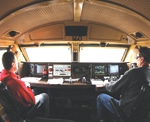 Support among railroaders, unions, states and others has come in the wake of last week’s Federal Railroad Administration’s (FRA) proposed two-person crew rule.
The proposed rule comes after a completed study by the FRA comparing two accidents: the Lac-Megantic, Quebec, derailment (operated by a one crewmember) and the Casselton, N.D. derailment (operated by three persons). After studying the two accidents, FRA determined that two-person crews are safer for all involved and published a proposed rule in the Federal Register.
Read more from People’s World.
 Progressive Railroading reported that the Federal Railroad Administration is seeking public input as to whether federal regulations concerning the use of locomotive horns at public grade crossings should be changed. Read the entire story here.
CantonRep.com reported that Federal Railroad Administration (FRA) inspectors are now analyzing evidence to determine what led to the derailment of eight rail cars in the Wheeling & Lake Erie Railway yard in Brewster, Ohio, on Monday, Feb. 1, 2016.
Cargo included flammable liquid that ignited upon impact, forcing the evacuation of hundreds of nearby residents. Investigators noted that the fire could have been much worse.
Read the complete story here.

Enforcement push is part of broader effort to increase overall rail safety
WASHINGTON – The Federal Railroad Administration (FRA) today announced that its stepped-up enforcement of railroad safety regulations led to the highest-ever civil penalty collection rate in the agency’s 50-year history.
For Fiscal Year (FY) 2015, the agency will collect 75 percent of all civil penalties it issued to railroads for violating federal safety regulations – a six percent increase over FY2014, and the largest percentage rate ever collected by the agency. The total amount of civil penalties in FY2015, $15 million, increased by 12 percent compared to the previous year.
“Safety must be the number one priority for every railroad, and the Department of Transportation will continue to take aggressive action against railroads who fail to follow safety rules,” said U.S Transportation Secretary Anthony Foxx. “A strong safety enforcement program is critical to prevent accidents, save lives and move our country forward.”
FRA’s collection rate is the highest in the agency’s history and significantly higher than previous years.
| Year | Collection Rate |
| FY 2015 | 75% |
| FY 2014 | 69% |
| FY 2013 | 68% |
| FY 2012 | 69% |
| FY 2011 | 68% |
| FY 2010 | 68% |
| FY 2009 | 67% |
Last year, more than 6,485 railroad company violations resulted in civil penalties. The largest portion of those violations, 29 percent, was for motive power and equipment violations, followed by 26 percent for track violations.
| FRA Safety Discipline | Violations Resulting in a Civil Penalty | Percentage |
| Hazmat | 1,327 | 20% |
| MP&E | 1,869 | 29% |
| OP | 1,184 | 18% |
| Signal & Train Control | 416 | 7% |
| Track | 1,689 | 26% |
| TOTAL | 6,485 |
“Setting a record for collections is an important milestone, but it is just one element of FRA’s broader effort to achieve a safer rail system,” said FRA Administrator Sarah E. Feinberg. “As we continue to aggressively enforce safety regulations, FRA will also continue to implement new, innovative solutions to increase safety.”
The stepped-up enforcement of safety regulations is part of the Federal Railroad Administration’s larger, comprehensive effort to increase safety of the nation’s rail system. Administrator Feinberg has also prioritized railroad crossing safety, improving the safety of hazmat and crude transport, increasing transparency and working more closely with the National Transportation Safety Board (NTSB).
To read the full report, visit: https://www.fra.dot.gov/eLib/details/L17311#p1_z5_gD
Both inspectors for a state rail safety program — aimed to prevent such fiery derailments involving crude oil as happened this year near Weimdal, N.D. — have been hired and are training with federal inspectors.
In July, an agreement was approved by the Public Service Commission with the Federal Railroad Administration to begin a pilot rail safety program in the state. The program is to supplement the work of the several FRA inspectors assigned to North Dakota and several other states in the region.
Read more from The Bismarck Tribune.
CHICAGO — The Federal Railroad Administration told SMART Transportation Division it has filed a violation against the Union Pacific Railroad in response to a union complaint that the railroad ordered a train crew to work outside its assigned territory while being piloted by a manager who was not qualified on the physical characteristics of the territory.
FRA Region IV Administrator Steve Illich informed SMART TD Illinois Legislative Director Robert W. Guy of the agency’s action in a letter dated October 27.
The incident under investigation by the FRA was reported to the Illinois Legislative Board by a member of the crew of a Bloomington-based local assigned to UP’s Springfield Subdivision.
Although the southern boundary of the territory for which the crew was qualified ends at Milepost 222, Carlinville, Ill., the May 28 job was ordered to retrieve some maintenance-of-way equipment spotted at milepost 234 near Shipman, Ill., 12 miles further south in territory over which none of the crew members were qualified.
“The standard procedure in such cases is to supply the crew with a pilot, normally a fellow transportation employee, who is qualified over the territory,” Guy said.
“But it turned out the UP manager assigned as pilot wasn’t qualified on that territory either,” Guy said. “In fact, he had never been over that track on a moving train, and he not only admitted his lack of qualification but claimed it wasn’t important.”
In his report to the SMART TD Illinois State Legislative Board, the conductor said that he and the engineer, “made it very clear that we were not comfortable having a pilot that he himself [admitted] was not qualified on the territory. His reply was that it was CTC, how hard could it be?”
The conductor asked the manager whether he had a copy of the work orders for the assignment. The manager allegedly replied that all he needed to know was that the ballast undercutter, two flat cars and two hopper cars of ballast were restricted to 25 miles-per-hour.
“The only paperwork I saw was that he had a timetable,” the conductor told the legislative board.
Guy said the crew handled the incident in exactly the right way.
“They notified the manager pilot that they weren’t comfortable,” Guy said. “Then once their tour was over they documented the incident and forwarded the details to local SMART TD officers for handling.”
“The FRA investigator in charge even noted the accuracy of the crew members’ statements regarding the manager pilot,” Guy said. “Once confronted, another UP manager stated that the pilot was not qualified on that segment of track.”
Guy also said he was “appalled” by the cavalier attitude of the manager pilot as witnessed by the crew involved in the May 28 incident.
“It’s not just that this official violated Part 240.231 of Section 49 of the Code of Federal Regulations,” Guy said. “It’s that he did it in such a flagrant and dismissive manner.”
Guy said the manager’s attitude is even more inappropriate in view of the territory where his violation occurred.
“The UP main line between Joliet and Alton has been one continual construction zone so it can be upgraded for 110-mph Amtrak service,” Guy said.
“This territory is full of equipment and manpower, and the track and bridge work migrates to different locations every day,” Guy said.
“Slow orders, Form Bs and other notices related to train movements can be issued and abolished quickly, which is why a crew unfamiliar with the track needs a pilot who knows not only the geography of the alignment but the way the railroad is using it from moment to moment.
“If a train crew is not familiar with the pilot assigned to their job, they should always question the qualifications of that pilot to determine if in fact the person is suitable to serve in that capacity.”