The Federal Railroad Administration (FRA) awarded a research grant for the city of Brunswick, Maine, the Northern New England Passenger Authority (NNEPRA) and the Maine Department of Transportation, among other partners, to participate in a field research program to develop and test new trespass detection and deterrent technologies.

The research will consist of designing, operating and evaluating a large-scale trespass detection and deterrent system to mitigate trespassing along several high-risk areas along the Pan Am Railway and Amtrak’s Downeaster rail line in the Brunswick area.

Read the complete story at Railway Track and Structures.

willie_bates
Bates

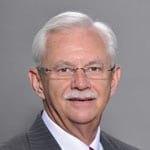
District of Columbia State Legislative Director and SMART Transportation Safety Team member Willie Bates has been invited by Federal Railroad Administrator Joseph Szabo to serve on the Stakeholder Review Panel for the agency’s new Clear Signal for Action safety program.

The CSA safety pilot program, funded by the FRA’s Office of Research and Development, seeks to improve railroad safety and railroad safety culture through the use of peer-to-peer coaching and feedback and safety leadership training.

In a letter to Bates, Szabo said “Risk reduction approaches like CSA allow the industry, through collaborative labor and management efforts, to take proactive measures to prevent accidents.”

Responding to Szabo’s letter, Bates said, “I accept the challenge.”

SRP meetings will be managed by the Volpe National Transportation Systems Center, whose mission is to improve the nation’s transportation system by anticipating emerging transportation issues and serving as a center of excellence for informed decision-making.

Besides his new challenge, Bates serves as a member of the Obama administration’s 20-person Transit Rail Advisory Committee for Safety, which drafts federal regulations for 47 separate transit systems that previously set their own safety rules and procedures. Former Transportation Secretary Ray LaHood named him to the committee.

In 2011, the governor of Virginia awarded Bates the Governor’s Transportation Safety Award for rail transportation. In 2009, Amtrak’s highest safety honor — the Charles Luna Memorial Safety Award — was bestowed upon Bates, who has worked injury-free for 25 years as an Amtrak conductor, and never had a safety-rules violation. The award is named for the UTU’s first International president, who later was an Amtrak board member.

A member of the SMART Transportation Division Local 1933 at Washington, D.C., Bates serves as the local’s chairperson, vice president, legislative representative and delegate.

FRA_logo_wordsWASHINGTON – The Federal Railroad Administration’s (FRA) Railroad Safety Advisory Committee (RSAC) met today in an emergency session to begin consideration of additional regulatory or other safety measures following the derailment in Lac-Megantic, Quebec, Canada earlier this summer.

“Safety is our top priority,” said U.S. Transportation Secretary Anthony Foxx. “While 2012 was the safest year in rail history, we are constantly reviewing our work to ensure the public’s safety on our nation’s rails and value the important input we are receiving from industry stakeholders.”

The RSAC is a technical and policy stakeholder advisory group that makes recommendations to the FRA on rail safety issues, and includes representatives from every facet of the rail industry. The issues discussed at the meeting included the safety requirements contained in FRA Emergency Order No. 28 (EO 28) and the recommendations made in Safety Advisory 2013–06, both issued on Aug. 2.

EO 28 is a mandatory directive to railroads requiring them to undertake a number of immediate actions to ensure that trains transporting hazardous materials (hazmat) are secured and not left unattended. The directive also includes communication requirements. Failure to comply with the emergency order requirements will result in enforcement action.

The safety advisory contains recommendations issued jointly by FRA and the Pipeline and Hazardous Materials Safety Administration (PHMSA) to railroads and hazmat shippers, including requiring railroads to review their crew staffing requirements for transporting hazardous material, conduct system-wide evaluations to identify hazards that may make it more difficult to secure a train or pose other safety risks, and develop procedures to reduce those risks. The advisory served as the agenda for today’s meeting. The implications as well as potential costs and benefits of new or expanded safety requirements and initiatives, including possible new RSAC tasks to implement them, were also discussed.

“Today’s meeting brings together some of the best and brightest minds our industry has to offer in order to tackle issues of paramount importance,” said FRA Administrator Joseph C. Szabo. “The dialogue will serve to build upon the comprehensive regulatory framework we already have in place, and allow us to further enhance safety by eliminating additional risk from the railroad system.”

During the meeting, RSAC members voted to accept four task statements on: appropriate train crew size; requirements for the securement of trains; operational testing for employees to ensure appropriate processes and procedures for securing trains are followed; and hazardous materials issues relating to the identification, classification, operational control and handling of such shipments in transportation. The RSAC will now establish working groups with the necessary expertise to examine each task, gather relevant facts, and develop a range of options. The recommendations of those working groups will be presented to the RSAC by April 2014.

“As greater quantities of hazmat are transported by rail and other modes, the risks increase and we have to make sure our regulations are keeping pace with market and technology forces,” said PHMSA Administrator Cynthia Quarterman. “We have to work together to identify gaps, be willing to acknowledge them and close them.”

Under current U.S. Department of Transportation regulations, freight railroads are required to undertake safety and security risk assessments and implement procedures in order to transport certain hazardous materials, including creating a plan to prevent unauthorized access to rail yards, facilities, and trains carrying hazardous materials. Railroads that carry hazardous materials are required to follow established protocols while en route, and railroad employees are subject to background checks and must complete training. Railroad training programs and operating practices are reviewed and audited by the FRA routinely and are generally designed to be progressive so that as the level of risk increases, so does the level of safety and security required.

WASHINGTON – A federal panel heard comments Wednesday on the adequacy of safety regulations for railroads, during the first of two meetings that will focus on last month’s deadly train derailment in Lac-Megantic, Quebec.

Fatigue is the top safety concern among train crew members, said a representative of one of the major unions for railroad workers.

Read the complete story at The Kennebec Journal.


FRA_logo_wordsThe Federal Railroad Administration has issued a guidance memorandum for Emergency Order 28, which seeks to prevent trains operating on mainline tracks or sidings from moving unintentionally.

The memorandum has been sent to all Railroad Safety Advisory Committee (RSAC) members and alternates.

Hardcopies will be provided at the emergency RSAC meeting scheduled for Aug. 29 and a detailed presentation on the safety advisory, Emergency Order 28 and this guidance document are on the agenda.

To view the guidance memorandum, click here.

FRA_logo_wordsThe Federal Railroad Administration and the Pipeline and Hazardous Materials Safety Administration (PHMSA) will host a public meeting Aug. 27-28 in Washington, D.C., about the transportation of hazardous materials by rail. The two DOT agencies want to hear from stakeholders because they have begun a review of operational factors that affect the safe transportation of hazmats by rail, no doubt spurred by the recent Canadian disaster involving a derailed train carrying crude oil to a refinery.

The meeting is scheduled to last from 8:30 a.m. until 4:30 p.m. both days in the Oklahoma Room in the DOT Conference Center, 1200 New Jersey Ave. S.E., Washington, DC 20590.

Anyone who wants to present an oral statement should notify Kurt Eichenlaub, Railroad Safety specialist in the Hazardous Materials Division’s Office of Safety Assurance and Compliance at FRA, at least four business days prior to the meeting at (20) 493-6050 or Kurt.Eichenlaub@dot.gov.

Comments also may be submitted electronically at www.regulations.gov (Docket No. FRA-2013-0067).

This article originally appeared at www.ohsonline.com.

Crude oil shipped by railroad from North Dakota is drawing fresh scrutiny from regulators concerned that the cargo is adding environmental and safety hazards, something that analysts say could raise costs.

The U.S. Federal Railroad Administration is investigating whether chemicals used in hydraulic fracturing are corroding rail tank cars and increasing risks. Separately, three pipeline companies including Enbridge Inc. warned regulators that North Dakota oil with too much hydrogen sulfide, which is toxic and flammable, was reaching terminals and putting workers at risk.

Read the complete story at Bloomberg Businessweek.

FRA_logo_wordsThe Federal Railroad Administration announced Aug. 8 that it would hold an emergency meeting of the Railroad Safety Advisory Committee (RSAC) Aug. 29. The meeting will focus on the July 6 train derailment in Lac-Mégantic, Quebec.

Preliminary findings from the derailment and safety procedures that may not have been followed will be discussed.

RSAC was established in 1996 to provide advice and recommendations to the FRA on railroad safety matters and is composed of 54 voting representatives from 32 member organizations, representing various rail industry perspectives. There are also non-voting advisory representatives from the NTSB and Federal Transit Administration.

SMART Transportation Division has three members on the committee: Transportation Division President Mike Futhey, Transportation Division Assistant President and General Secretary & Treasurer John Previsich and National Legislative Director James Stem. Charles Fraley from SMART (Sheet Metal Workers) is also a member.

The 9 a.m. meeting is open to the public at the National Housing Center, 1201 15th St. N.W., Washington, DC 20005.

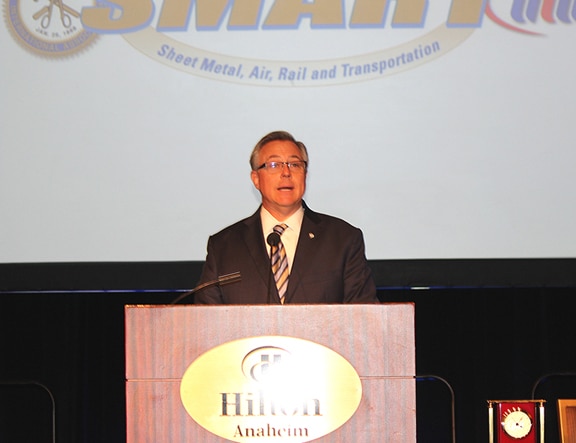
On July 30, Federal Railroad Administrator Joe Szabo addressed attendees of the SMART Transportation Division’s regional meeting in Anaheim, Calif., speaking about future endeavors the FRA has for the rail industry and about safety enhancements moving forward.

“Rail is the transportation mode of opportunity, and we have to ensure continuous safety improvements, building upon the safest year in railroading history, and ensuring that every railroader goes home safely each day, and that communities are kept safe,” Szabo said.

Click here to listen to Szabo’s address.

Szabo was a member of UTU Local 1290 at Chicago, Ill., and served as the UTU’s Illinois State Legislative Director.

szabo_anaheim

Federal Railroad Administrator Joe Szabo addresses attendees of the
SMART Transportation Division’s Anaheim regional meeting.

Mike Futhey
Mike Futhey

By Mike Futhey, 
SMART Transportation Division President – 

The events that unfolded July 6 in the Canadian province of Quebec, where a runaway train exploded and killed 47 people in the city of Lac-Megantic, weigh on the minds of an assortment of people whose lives were touched, directly or indirectly.

On that grizzly evening, a dark stretch of tankers jettisoned through the center of that small community, exploding in the night and leaving an indelible mark for decades to come.

I am not writing this to lay the blame at anyone’s feet; not at the feet of the management of the Montreal, Maine & Atlantic Railway, nor at those of the single operating crew member. However, I would be remiss if I did not raise, again, the dangers inherent in a single-person train operation.

We have been diligent in our endeavors to stop this untenable act by submitting petitions to governmental agencies and by talking directly to the carriers that exercise the “right” to single-person operations.

Unfortunately, our demands for safety regulations, either arbitrarily or voluntarily, have fallen on deaf ears.

This event is not one of first impression. In 1997, in the state of Wisconsin, then Gov. Tommy Thompson petitioned for and signed a bill that requires a two-person train crew operation in that state. It came about after a runaway train and subsequent explosion that did not reach the level of the Lac-Megantic wreck, but that was significant enough to warrant a legislative solution.

Obviously, we find ourselves in another inexcusable scenario, wherein inactivity is an unacceptable alternative. This issue will not go silently into the night.

As such, we will reach out to likeminded leaders in the transportation industry and to legislative bodies that regulate train operations to correct this situation. In doing so, we will expose those that ignore public safety by droning on in semantic, self-justifying plausible deniability.

The new apocalyptic Lac-Megantic will not allow us to merely register a historical footnote. We will now deal with the inextricable knowledge that a single-person train operation contributed to the destruction of life.

Pray for the families of the victims. We will honor them by fighting for change.

Since the time this column was written, the SMART Transportation Division and the Brotherhood of Locomotive Engineers and Trainmen jointly announced that legislation requiring at least two crew members on all freight trains in the U.S. has been filed in Congress. Also, the Federal Railroad Administration issued an emergency order and safety advisory to help prevent trains operating on mainline tracks or sidings from moving unintentionally.