
 The U.S. Department of Transportation’s Federal Railroad Administration (FRA) today issued a final rule, extending the amount of time freight rail equipment can be left off-air (meaning parked with its air brake system depressurized) before requiring a new brake inspection, which is expected to reduce the number of idling locomotives. The final rule incorporates longstanding waivers for brake inspections, tests and equipment, while clarifying existing regulations and removing outdated provisions.
These revisions contemporize Brake System Safety requirements by incorporating safer, newer technologies, reduce unnecessary costs and increase consistency between U.S. and Canadian regulations.
“Incorporating technologies and safety practices, this final rule improves freight rail efficiency and will make our freight rail system competitive for the future,” said FRA Administrator Ronald L. Batory. “Issuing waivers permitting railroads to test these practices gave us an opportunity to verify the safety benefits. Modernization no longer has to happen by waiver; it’s permanent, and the economic impact to freight rail couldn’t come at a more pressing time.”
Canada has allowed trains to be off air for 24 hours since 2008, and Canada’s operational safety data supports FRA’s action. FRA’s final rule permits trains to be off air for as long as 24 hours, bringing the U.S. in line with our neighbors to the north.
The regulatory cost savings is estimated to be over $500 million over the next decade, adding to the over $93 billion in regulatory savings accomplished under the leadership of Secretary Elaine L. Chao and the current administration at the U.S. Department of Transportation.
With this change, FRA estimates the industry will perform 110,000 fewer Class I brake inspections annually. The change reduces the cost and time needed for inspections while permitting more flexibility to turn off locomotives, which is expected to result in fewer locomotives idling in rail yards. FRA will continue to require a Class III brake inspection when adding freight cars to trains.
The final rule incorporates new technology to test brakes on each freight car, permitting two types of automated tests for individual freight cars. “In the more than four years since FRA began issuing waivers for this procedure, we’ve seen it used on more than 800,000 rail cars and have observed remarkable safety improvements,” Batory added.
Cars tested with an automated single car test device showed an 18% reduction in repeat freight car brake failures. Cars tested with the four pressure method showed a 58% reduction in repeat freight car brake failures. These demonstrated improvements permit FRA to increase the testing intervals for freight cars from one year to 24- or 48-month intervals, depending on the automated test method a railroad uses.
FRA is also changing the required height for end-of-train (EOT) marking device displays, reducing it from 48 inches to 40 inches above the top of the rail. This change will permit the manufacture and use of smaller and lighter EOT devices, making them easier and safer for rail workers to carry.
“Issuing test waivers allows our teams to set conditions for railroads to try new technologies,” Batory said. “We only approve waiver requests when we’re certain the changes maintain or improve safety. We’re confident that the changes outlined in this final rule will meet or exceed current safety standards while saving the industry money.”
This final rule addresses several technical issues. To learn more, click here to read the final rule on FRA’s website.
Tag: FRA
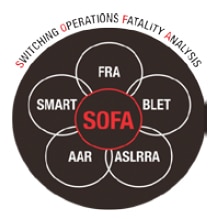 The FRA’s Switching Operations Fatality Analysis (SOFA) working group recently released two new documents — one on the importance of job briefings and the other a safety alert following three switching accidents that have occurred since August.
In the safety alert, SOFA warned, “the SOFA Working Group is concerned by the 159 injuries that occurred this year through August 31, 2020, and reminds all employees to remain vigilant during switching operations by not only protecting the shove movement, but also protecting themselves by avoiding close or no clearance hazards. Last, but not least, remember to always hold a job briefing whenever the job or situation changes.”
Click here to read the full safety alert.
In their “SOFA Lifesavers – Why Job Brief?” notice, SOFA details the importance to perform job briefings and points out that one in five switching operations fatalities lacked an adequate job briefing.
Click here to read SOFA Lifesavers – Why Job Brief?
The Switching Operations Fatality Analysis working group was formed by the Federal Railroad Administration in the early 1990s in an effort to analyze switching accidents and prevent future accidents and fatalities. The group consists of representatives from the FRA, labor and management.
Click here to visit SMART-TD’s SOFA page where these and other SOFA documents are available.
Federal agencies have announced their random drug testing rates for the new calendar year.
In December, the Federal Motor Carrier Safety Administration (FMCSA) announced a test rate increase from 25 percent to 50 percent of the average number of driver positions because of an increased number of positive test results in 2018.
In January, the Federal Transit Administration (FTA) announced that the minimum random drug testing rate will remain unchanged at 50 percent.
The Federal Railroad Administration’s minimum drug test rate remains at 25 percent for workers, excluding maintenance-of-way employees.
The random alcohol testing rate has been set for all three agencies at 10 percent.
Railroad maintenance-of-way employees are tested at a higher rate: 50 percent for drugs and 25 percent for alcohol.
Click here for a chart from DOT detailing the 2020 random testing rates.
Indiana Rail Road, with the backing of the major rail carrier organizations, has filed suit challenging a law requiring two people on freight crews in Illinois, the Courthouse News Service reported.
“The recent history of railroads confirms the wisdom of FRA’s expert determination that minimum-crew-size laws are neither necessary nor appropriate,” the carriers said in their filing. “In recent decades, technological breakthroughs have allowed railroads to gradually decrease average crew sizes—from about five in the 1960s to just two today—while compiling an ever-improving record of safety. Now, the nation’s railroads are poised to deliver even safer and more efficient service.”
The filing repeatedly referenced the Federal Railroad Administration’s withdrawal of its Notice of Proposed Rulemaking (NPRM) that occurred in late May. In the NPRM, FRA Administrator Ron Batory announced that his agency was acting with the intention to pre-empt any state laws regarding rail crew size. Indiana Rail Road, a regional railroad that operates over 250 miles of track in Illinois and Indiana, began using one-person crews in 1997.
The FRA’s NPRM withdrawal is being challenged in the Ninth Circuit Court of Appeals in Nevada by SMART TD, Illinois and a number of other states. Illinois on Aug. 9 became the seventh state overall and third this year to enact two-person crew legislation. The Illinois law is scheduled to take effect on Jan. 1, 2020.
The lawsuit, which also lists the Association of American Railroads and American Short Line and Regional Railroad Association as plaintiffs, was filed Sept. 30 in the U.S. District Court for the Northern District of Illinois Eastern Division.
 The North County Transit District (NCTD) has teamed up with the National Aeronautics and Space Administration (NASA) and the Federal Railroad Administration (FRA) to add an extra level of safety for its staff, contractors and the public. On August 1, 2019, NCTD entered into a partnership with NASA, the FRA, Bombardier Transportation USA, Inc., and the International Association of Sheet Metal, Air, Rail and Transportation Workers (SMART) to participate in the Confidential Close Call Reporting System (C3RS) program.
C3RS is designed to improve railroad safety by collecting and analyzing reports that describe unsafe conditions or events in the railroad industry. Staff and contractors can report safety issues or “close calls” voluntarily and confidentially. A close call is any condition or event that may have the potential for more serious safety consequences such as a blue flag not removed after releasing railway construction equipment or failing to provide proper track protection during track maintenance. By analyzing these events, potential life-saving information can be obtained to help prevent more serious incidents in the future.
NASA took the lead on this program after developing and managing the highly successful Aviation Safety Reporting System (ASRS) which began in 1976. ASRS has received over 1.2 million confidential reports from the aviation community resulting in numerous contributions to aviation safety. As an independent and respected research organization that does not have regulatory or enforcement interests, NASA serves as an objective and trustworthy recipient of reports submitted by railroad professionals.
By identifying close calls on or around the railroad tracks, participating agencies can identify why close calls may occur, recommend and implement corrective actions, and evaluate the effectiveness of any such action that was implemented.
C3RS is in addition and complementary to the many existing safety programs that NCTD currently has in place such as Positive Train Control, which is designed to prevent train-to-train collisions, derailments caused by excessive train speed, train movements through misaligned track switches and unauthorized train entry into work zones.
“Safety at NCTD is our top priority,” explains Matthew Tucker, NCTD Executive Director. “Having the opportunity to partner with a highly successful organization such as NASA to enhance our safety protocols was an easy decision for NCTD.”
Confidentiality is a key element of the C3RS program. Railroad personnel can submit reports when they are involved in or observe an incident or situation in which railroad safety might be compromised. All report submissions are voluntary. Reports sent to C3RS are held in strict confidence, and individuals who report are provided waivers from carrier discipline and FRA enforcement of qualifying events.
“Because of NASA’s strict confidentiality policy for these reports, it’s more likely that we’ll get accurate details about the incident,” says NCTD’s Chief Operations Officer-Rail Eric Roe. “Those details can lead to new safety measures that make the tracks safer for everyone on and around the rails.”
C3RS includes partners Bombardier Transportation and SMART. Bombardier Transportation is NCTD’s rail operations and maintenance contractor. SMART is the union that represents the conductors and engineers on NCTD’s San Diego Subdivision.
NCTD has become the ninth railroad carrier to participate in the C3RS program since its 2007 inception. Other participants include Amtrak, Long Island Rail Road, MBTA/Keolis, Metra, Metro-North, New Jersey Transit, SEPTA, Strasburg Rail Road, Denton County Transportation Authority, North Shore Railroad Group, Belt Railway of Chicago – Operations and Belt Railway of Chicago Non-Ops. FRA is currently accepting new carriers into the program.
Click here for more information about the C3RS program.
In May, the Federal Railroad Administration (FRA) withdrew its proposed rulemaking to require two-person crews on freight trains. The agency then went further and stated that all state laws concerning the subject were preempted by the ruling.
In response, SMART TD President John Previsich testified before the U.S. House Subcommittee on Railroads, Pipelines, and Hazardous Materials in June at a hearing to address the FRA’s decision. In his statement, Previsich described the decision by the FRA as an abdication of its safety oversight duties.
In July, SMART Transportation Division further responded to the FRA by filing a lawsuit with the U.S. Court of Appeals Ninth Circuit Court, asking the court to overturn FRA’s ruling. According to Freightwaves.com, the states of Nevada, Illinois, Washington and California have joined in the fight for two-person crews as well. Nevada, Washington and the California Public Utilities Commission filed petitions with the Ninth Circuit court asking them to review FRA’s decision. Illinois joined the fight for two-person crews August 9, when the state’s governor signed a two-person crew bill into law.
At the SMART TD Regional Meeting in July in San Diego, President Previsich reiterated to members that the union would not take this decision lying down.
“There is going to be a big push coming. We are going to reach out to you when the proper time comes and ask for your assistance,” Previsich told attendees.
Click here to read more from FreightWaves.com.

Since Robert “Bob” Lauby retired from the Federal Railroad Administration (FRA) in April, Karl Alexy has been acting associate administrator for the FRA’s Office of Railroad Safety (RRS). Recently, Alexy has been named as the full-time associate administrator for railroad safety and the chief safety officer within the RRS.
Prior to his recent appointment, Alexy was the deputy associate administrator (DAA) of the RRS and provided leadership to RRS’s three major sections: the Office of Safety Analysis, the Office of Technical Oversight and the Office of Regional Operations.
Alexy came on board the FRA in 2009 as a general engineer in the FRA’s Hazardous Materials Division, collaborating with other DOT agencies and all segments of the rail industry in enforcement and outreach activity in his role. He also developed and executed research programs and rulemakings. In 2012, he was appointed to the position of staff director of the Hazardous Materials Division and led the FRA’s efforts, in coordination with the Pipeline and Hazardous Materials Administration, in developing the Enhanced Tank Car Standards and Operational Controls for High-Hazard Flammable Trains rule. Alexy has also attended many SMART TD regional meetings where he has presented in the FRA Hours of Service workshops.
Click here to read more about Mr. Alexy.
FRA vacancies
FRA also has announced that there are two high-level positions open: Director, Office of Safety Analysis and Deputy Associate Administrator for Railroad Safety.
The director, Office of Safety Analysis serves as primary adviser for the FRA safety regulatory program and assists the Associate Administrator and the Deputy Associate Administrator within the Office of Railroad Safety in formulating program and technical policies, monitoring integrated programs, establishing goals for organizational components and tracking the progress of projects and programs. The incumbent serves as the primary adviser for the FRA safety regulatory program and works closely with executives in the FRA, the U.S. Department of Transportation, the Office of Management and Budget, and the Government Accountability Office and in various other executive agencies to ensure effective and consistent coordination on rail-safety regulatory development and evaluation efforts.
This position is located in Washington, D.C. The vacancy announcement details and instructions on how to apply can be found at the following USAJOBS link: https://www.usajobs.gov/GetJob/ViewDetails/538902000.
The deputy associate administrator for railroad safety supports the Associate Administrator for Railroad Safety and Chief Safety Officer in advancing the mission of FRA with regard to railroad safety. As a senior member of the FRA leadership team, the Deputy Associate Administrator is a primary source of executive advice and leadership for Office of Railroad Safety operations and safety standards as well as policy development. The Deputy Associate Administrator is responsible for planning and ensuring the execution of FRA safety policies, programs and activities and advancing overall organizational excellence within the Office of Railroad Safety.
This position is located in Washington, D.C. The vacancy announcement details and instructions on how to apply to this position can be found at the following USAJOBS link: https://www.usajobs.gov/GetJob/ViewDetails/538901700.
To be considered for either position, interested parties must apply by no later than August 12.
WASHINGTON – The U.S. Department of Transportation’s (DOT) Federal Railroad Administration (FRA) May 8 announced a Notice of Proposed Rulemaking (NPRM) to update the regulation that governs locomotive engineer qualification and certification to make it consistent with the corresponding regulation for conductors.
“The proposed revisions would modernize locomotive engineer certification regulations to match those for train conductors, and provide regulatory efficiencies and cost savings without compromising safety,” FRA Administrator Ronald L. Batory said. “The proposal would streamline the engineer certification process, and reduce paperwork burdens for the responsible parties.”
The proposed rule would adopt the conductor certification regulation process established in 2012 by making conforming amendments to the engineer certification regulation, which was first issued in 1991 and last amended in 2000. Consistent with Executive Order 13771, the proposed rule would reduce overall regulatory reporting and cost burdens for railroads and locomotive engineers. Harmonization of the conductor and engineer regulations would also provide greater clarity to locomotive engineers.
The NPRM includes the following five proposed changes to Title 49 of the Code of Federal Regulations, Part 240:
- Clarifies locomotive engineer certification requirements (Part 240) and aligns them with conductor certification requirements (Part 242) to make it easier for railroad certification managers to become familiar with and administer both regulations.
- Reduces the reporting burden of a person’s former employer to clarify that only certain listed information in the individual’s railroad service record that directly relates to FRA’s requirements in the certification regulation needs to be shared.
- Defers the requirement for railroads to seek a waiver from annual testing of certified locomotive engineers when individuals take an extended absence from performing service requiring certification.
- Modernizes the dispute resolution process by reducing the paperwork burdens for both employees and railroads and allowing for web-based dockets.
- Simplifies the submission process by which qualification and certification programs are modified by allowing electronic submissions.
The proposed revisions for locomotive engineer qualification and certification ensure that certain provisions are consistent, to the extent possible, with those for conductors. FRA is seeking comments on the proposed rule, and will address comments received when preparing a final rule. Comments may be submitted to the docket for the proceeding FRA-2018-0053, and are due by July 8, 2019. Read the full proposed rule here.