
Senator Heidi Heitkamp (D-ND) testified in today in hearings before the FRA, in support of a two-person crew rule for all freight trains. Seated directly behind the Senator is John Risch, SMART TD Legislative Director. Risch, SMART TD Member Mike Rankin, and TTD President Ed Wytkind also provided testimony in favor of the rule.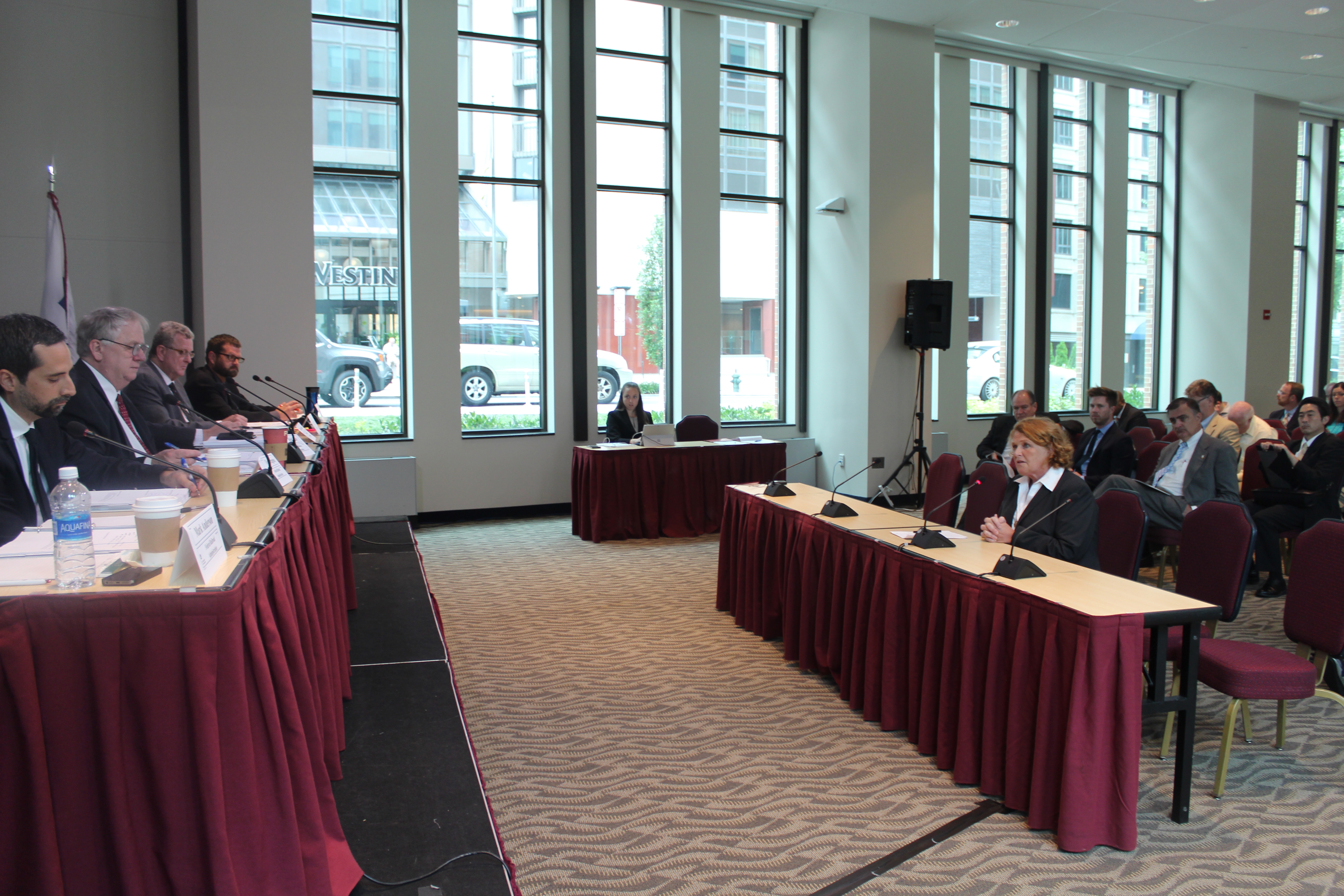
Tag: rail safety
Amarillo.com reported that BNSF freight trains collided head-on this morning in the town of Panhandle, Texas, near Amarillo, creating a massive fireball and explosion that prompted a swift evacuation of Panhandle residents. Injuries and missing persons have been reported; at this time, no details have surfaced regarding those missing, or the number or severity of injuries. Read the complete story here.
Photo courtesy of Kayla Burks for Amarillo.com.
Amarillo.com reported that BNSF freight trains collided head-on this morning in the town of Panhandle, Texas, near Amarillo, creating a massive fireball and explosion that prompted a swift evacuation of Panhandle residents. Injuries and missing persons have been reported; at this time, no details have surfaced regarding those missing, or the number or severity of injuries. Read the complete story here.  Photo courtesy of ABC News.
Enforcement push is part of broader effort to increase overall rail safety
 WASHINGTON – The Federal Railroad Administration (FRA) today announced that its stepped-up enforcement of railroad safety regulations led to the highest-ever civil penalty collection rate in the agency’s 50-year history.
For Fiscal Year (FY) 2015, the agency will collect 75 percent of all civil penalties it issued to railroads for violating federal safety regulations – a six percent increase over FY2014, and the largest percentage rate ever collected by the agency. The total amount of civil penalties in FY2015, $15 million, increased by 12 percent compared to the previous year.
“Safety must be the number one priority for every railroad, and the Department of Transportation will continue to take aggressive action against railroads who fail to follow safety rules,” said U.S Transportation Secretary Anthony Foxx. “A strong safety enforcement program is critical to prevent accidents, save lives and move our country forward.”
FRA’s collection rate is the highest in the agency’s history and significantly higher than previous years.
| Year | Collection Rate |
| FY 2015 | 75% |
| FY 2014 | 69% |
| FY 2013 | 68% |
| FY 2012 | 69% |
| FY 2011 | 68% |
| FY 2010 | 68% |
| FY 2009 | 67% |
Last year, more than 6,485 railroad company violations resulted in civil penalties. The largest portion of those violations, 29 percent, was for motive power and equipment violations, followed by 26 percent for track violations.
| FRA Safety Discipline | Violations Resulting in a Civil Penalty | Percentage |
| Hazmat | 1,327 | 20% |
| MP&E | 1,869 | 29% |
| OP | 1,184 | 18% |
| Signal & Train Control | 416 | 7% |
| Track | 1,689 | 26% |
| TOTAL | 6,485 |
“Setting a record for collections is an important milestone, but it is just one element of FRA’s broader effort to achieve a safer rail system,” said FRA Administrator Sarah E. Feinberg. “As we continue to aggressively enforce safety regulations, FRA will also continue to implement new, innovative solutions to increase safety.”
The stepped-up enforcement of safety regulations is part of the Federal Railroad Administration’s larger, comprehensive effort to increase safety of the nation’s rail system. Administrator Feinberg has also prioritized railroad crossing safety, improving the safety of hazmat and crude transport, increasing transparency and working more closely with the National Transportation Safety Board (NTSB).
To read the full report, visit: https://www.fra.dot.gov/eLib/details/L17311#p1_z5_gD
Both inspectors for a state rail safety program — aimed to prevent such fiery derailments involving crude oil as happened this year near Weimdal, N.D. — have been hired and are training with federal inspectors.
In July, an agreement was approved by the Public Service Commission with the Federal Railroad Administration to begin a pilot rail safety program in the state. The program is to supplement the work of the several FRA inspectors assigned to North Dakota and several other states in the region.
Read more from The Bismarck Tribune.
 A pair of House committees is planning to hold a hearing on U.S. rail security after a thwarted attack by a heavily armed gunman on a high-speed train in Europe.
The House Homeland Security Committee’s subcommittees on intelligence and on transportation security and counterterrorism will meet Thursday, September 17, 2015, to discuss protections for U.S. train passengers after three Americans stopped a gunman and saved hundreds of passengers on a train from Amsterdam to Paris.
Read more from The Hill.
Senators urge TSA to immediately complete measures required in 2007 legislation.
“Tens of millions of riders use our country’s public transportation and passenger rail systems every day, and these networks serve as the backbone of economic activity throughout the country…While aviation security is a vital focus of the TSA, your agency also has a critical role to play in protecting rail and transit passengers.”
 WASHINGTON – U.S. Senators Richard Blumenthal (D-Conn.) and Cory A. Booker (D-N.J.), members of the Senate Committee on Commerce, Science, and Transportation, called on the Transportation Security Administration (TSA) to immediately implement outstanding security and safety improvements to the nation’s passenger rail systems that were mandated in legislation passed by Congress in 2007. In a letter to TSA Administrator Peter Neffenger, Blumenthal and Booker noted the attempted terrorist attack on a Paris-bound train last week in which three Americans successfully subdued the attacker and the need to ensure basic protections for the tens of millions of people who every day rely on America’s public transportation systems.
In 2007, Congress passed the Implementing Recommendations of the 9/11 Commission, measures the 9/11 Commission urged Congress to adopt to ensure greater security on all of America’s transit systems. The legislation required TSA to create a regulatory framework that addresses the threats facing our passenger rail and transit agencies by having security plans in place, ensuring proper security training for employees, and requiring thorough vetting for those working on the systems.
“Tens of millions of riders use our country’s public transportation and passenger rail systems every day, and these networks serve as the backbone of economic activity throughout the country,” the senators wrote. “Our rail and transit networks carry significantly more people per day than our airlines do. Penn Station in New York City, for example, handles half a million passengers each day – making it busier than all three New York City regional airports combined, and the busiest transportation hub in our country. While aviation security is a vital focus of the TSA, your agency also has a critical role to play in protecting rail and transit passengers.”
“Action on many Congressional mandates has languished for far too long…The legislation was enacted in August 2007 and these items were all due within one year of that date. As of August 2015 – over seven years since the last deadline – we still do not have final action on these requirements. These are urgent priorities and completion of these mandates will further prepare us for emerging threats on the horizon.”
“Last week, three Americans traveling in Europe heroically subdued an armed terrorist attempting to attack and kill passengers on a Paris-bound train. The swift action of these men averted a catastrophe that could have claimed many lives. This close call requires that we consider the vulnerabilities this incident – and several other high-profile attacks on rail and transit elsewhere globally – expose for our rail and transit passengers. This is why we ask for action on long overdue requirements placed on the Transportation Security Administration (TSA) by Congress.”
Railroads and other industry stakeholders must deploy new technology to combat rail safety accidents, according to a report released today by the Alliance for Innovation and Infrastructure.
Titled “Back on Track: Bringing Rail Safety into the 21st Century,” the report examines the nation’s aging rail infrastructure and highlights current deficiencies in the rail system.
Using government data, the report’s authors found that about 73 percent of all derailments between 2011 and 2014 were the result of faulty track integrity and human error. Such incidents are likely to continue to occur unless those issues are addressed, according to the report.
Read more from Progressive Railroading.
MPR news interviewed Vice General Chairperson of Union Pacific GO 225 Randy Raskin and Minnesota State Legislative Director Phil Qualy, both of Local 650 (Minneapolis), during an ongoing series of conversations about rail safety in Minnesota.
MPR News’ Tom Weber interviewed Raskin and Qualy for their expertise on trains from the inside out.
They talked about the jobs of conductors and engineers and what role they play in ensuring the safety of our railways.
Listen to the interview from MPR News.
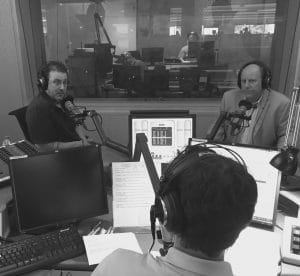
Raskin and Qualy