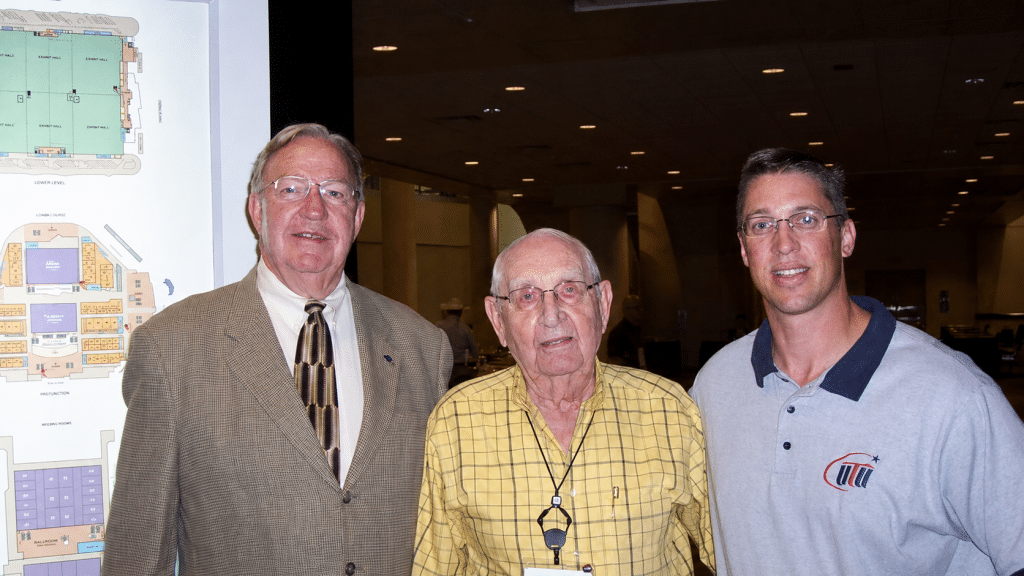
St. Paul, Minn. — June 2026

Another Regional Training Seminar (RTS) is in the books and once again, SMART-TD members proved that education is the greatest investment we can make in our union.

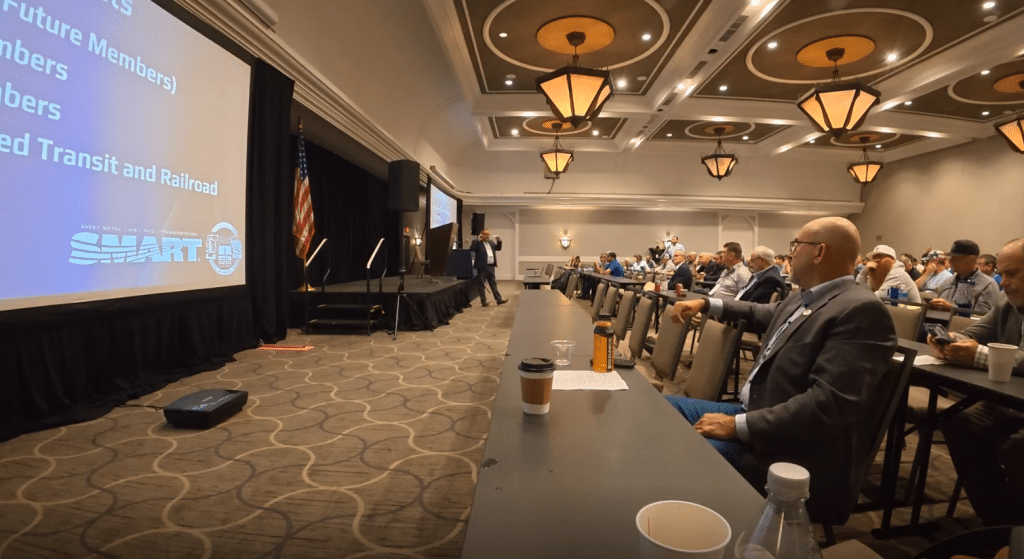
After gathering in St. Paul, Minn. last week, more than 330 local officers returned home with new skills, new ideas, and a renewed commitment to serving the members who elected them. In doing so, they broke the attendance record set just last year in Denver, Colo. The growth of our RTS program continues to show that SMART-TD officers understand that the stronger our leaders become, the stronger our union becomes.
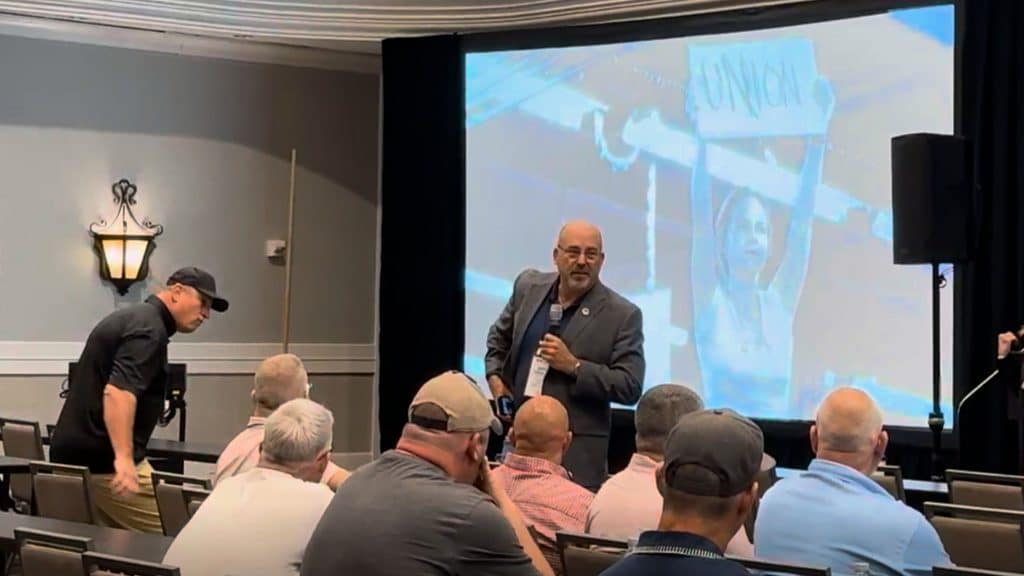
President Ferguson introducing our Designated Legal Council

A Challenge to Grow

SMART-TD President Jeremy Ferguson opened the seminar with a challenge.

He made it clear that the next few days would not be easy. He reminded attendees that they were not in the Twin Cities for a member-funded vacation away from the railroad or bus property. They were there to work.

President Ferguson encouraged every officer in the room to make the most of the opportunity before them. While rail carriers and transit agencies are constantly looking for new ways to challenge our members, our union must work just as hard to stay ahead. Every officer was challenged to expand their toolbox, sharpen their leadership skills, and become an even stronger advocate for the quality of life and fair treatment of our brothers and sisters.

Judging by the energy in every classroom throughout the week, our officers accepted that challenge.
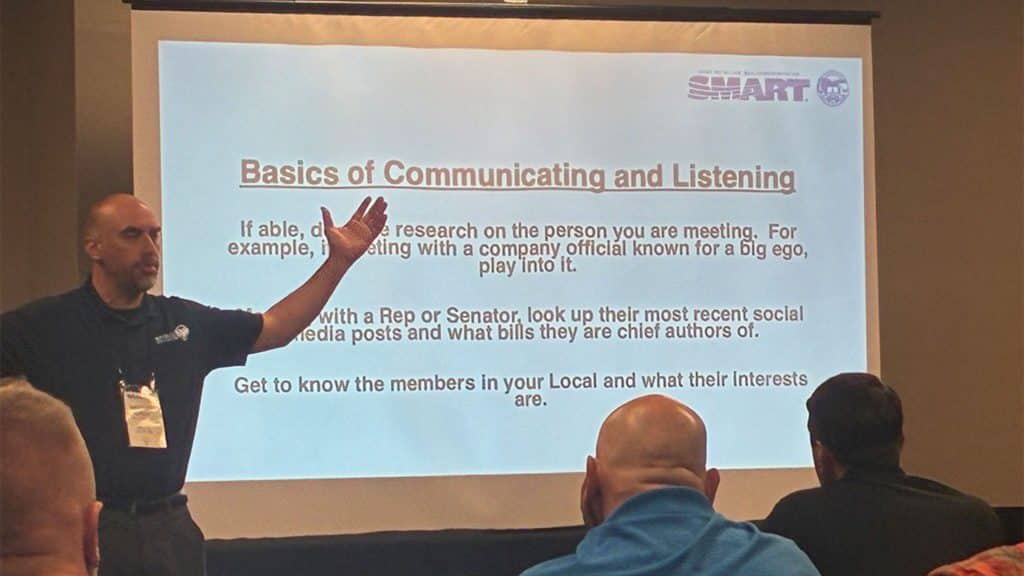
Minnesota Safety and Legislative Director, Nick Katich teaching our LR’s training track

Member Feedback Fuels the Fire

Members traveled from across the region and as far away as Oregon to take part in this learning opportunity. The old saying tells us that iron sharpens iron, and nowhere was that more evident than in St. Paul.

Our local officers continue to impress us with their creativity, determination, and relentless commitment to defending our membership. Every RTS reminds us that some of the best ideas in our organization come directly from the local officers who face challenges on the property every day.

The feedback our leadership team received throughout the week was invaluable and will help shape future training as we continue improving the program.
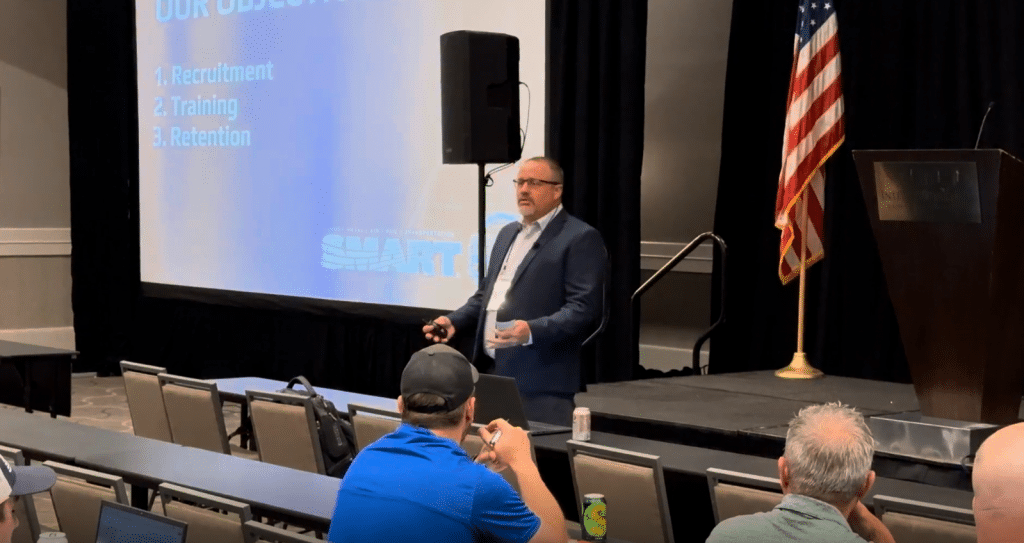
Andy Goeckner, Assistant Director of our Organizing Department, breaks down the role every member plays in recruitment and retention.

Education That Produces Results

Many of the attendees in St. Paul were participating in an RTS for the very first time. For some, the amount of information presented over three days was overwhelming. But every new officer also discovered something important. They were surrounded by experienced union leaders who were eager to share what works.

That exchange of ideas is one of the greatest strengths of the RTS program.

Throughout the week, officers learned how to build stronger discipline cases, improve appeal success, pass state and local safety legislation, properly manage local finances, and use SMART-TD’s new accounting software to ensure their locals remain in compliance with state, federal, and Department of Labor requirements.

Special attention was also given to strengthening the daily operations of our local unions, so they remain transparent, accountable, and beyond reproach.
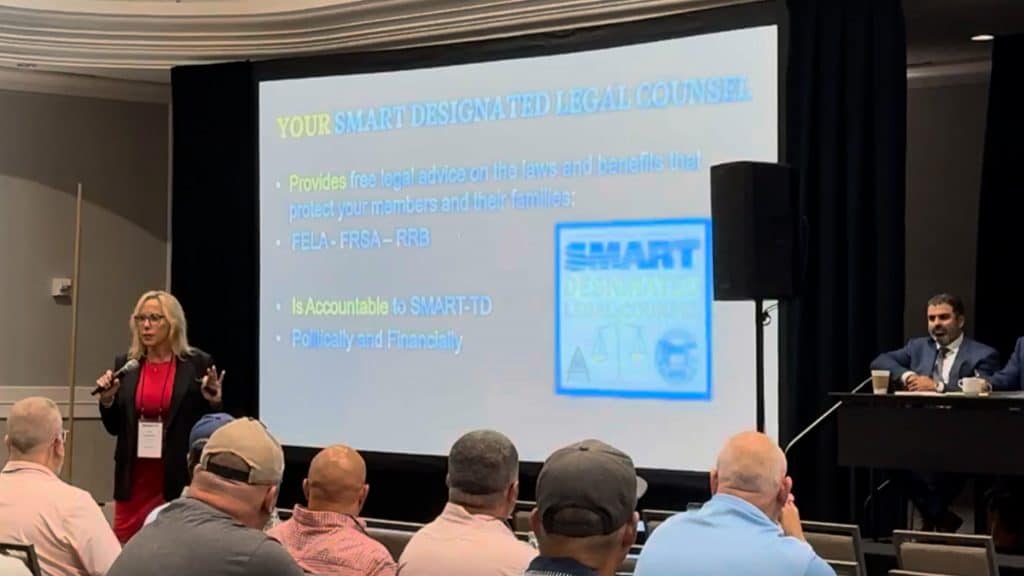
Sara Youngdahl, SMART-TD Designated Legal Counsel Coordinator, gets our officers up to speed on Whistleblower protections.

Learning From the Best

Wednesday morning began with one of the week’s most valuable sessions as members of SMART-TD’s Designated Legal Counsel (DLC) delivered an extensive presentation on whistleblower protections.

Nearly a dozen experienced attorneys walked local officers through the process of filing whistleblower claims, common mistakes to avoid, and the best practices for protecting members who stand up for safety and the law.

Their presentation was followed by a Q&A session where the local officers were able to give specific examples of what had happened to their members and received real-time feedback on how to handle those situations.

It was another reminder that successful representation requires preparation, knowledge, and a willingness to keep learning.
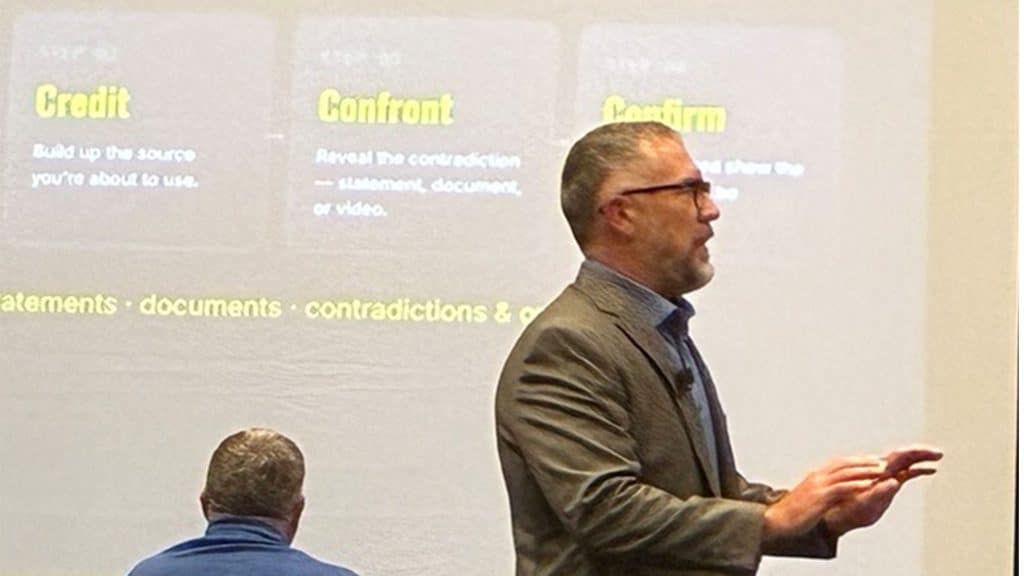
Vice President, Jamie Modesitt teaching the Advanced Local Chairperson class.

Relevant Training for Today’s Challenges

One reason the RTS program continues to grow is that the curriculum never stands still. As the challenges facing our members evolve, so does our training.

This year’s Local President’s course focused heavily on conducting fair and proper local union elections. While election procedures are always important, the subject is especially timely because local unions across SMART-TD will hold elections in 2026 for Local Presidents, Local Vice Presidents, Secretaries, Treasurers, Trustees, Local Chairpersons, Vice Local Chairpersons, and LCA Secretary.

Making sure every election is conducted fairly, transparently, and according to our union’s constitution protects both our members and SMART-TD. Every member deserves to know their voice is heard and given equal weight. SMART News will provide more information about upcoming local union elections in the next few weeks and months.

The response from participants was overwhelmingly positive, and this course will continue to be a major focus at the upcoming Baltimore Regional Training Seminar.
Looking Ahead to Baltimore

The momentum behind the Regional Training Seminar program has never been stronger.

The knowledge gained in St. Paul will strengthen representation in discipline hearings, improve legislative advocacy, help locals remain financially compliant and ultimately deliver better service to every SMART-TD member.

If you were unable to attend the St. Paul RTS, please make every effort to join us later this summer in Baltimore, Md.

Even if you have attended an RTS before, we encourage you to come back.

The curriculum continues to evolve every year to address today’s challenges, incorporate member feedback, and provide information that is immediately useful to local officers. No two seminars are exactly alike, and every RTS offers new tools that can make you a more effective union leader.

Our union has built an outstanding record of success before the National Mediation Board, in arbitration, in state legislatures, and at the bargaining table. That success is not an accident. It is the direct result of local officers who refuse to stop learning and refuse to settle for “good enough.”

Education strengthens representation. Representation protects our members. And together, we are building a stronger SMART-TD one local officer at a time.

We’ll see you in Baltimore!
When SMART-TD first asked railroaders to speak up about the dangers of drones operating around active rail yards and critical railroad infrastructure, the Federal Aviation Administration’s (FAA) public comment docket contained just 202 submissions.

Today, that number has climbed to 334 comments — an increase of 132 additional voices weighing in on this important safety issue.

While we cannot say with certainty that every new comment came from a SMART-TD member, a family member, or a supporter of our position, one thing is undeniable: since our membership was activated, public participation on this issue has surged.

That is exactly how grassroots advocacy is supposed to work.

Thank You to All Who Have Helped

SMART-TD’s National Safety and Legislative Department would like to extend its sincere appreciation to the 15 State Safety and Legislative Boards that have already stepped up and launched e-mail and peer-to-peer text message campaigns encouraging members to participate in this effort. We also want to recognize the State Directors and Local Legislative Representatives, and the leadership of the SMART-TD Auxiliary, who have helped spread the word and engage members across the country.

Most importantly, we want to thank every SMART-TD member who took a few minutes out of their day to submit a comment to the FAA.

You are making a difference.

Why Stopping Drones in OUR Workplace Matters

For years, railroaders have warned about the growing use of drones inside active rail yards and around moving trains. SMART-TD members understand better than anyone that rail operations already demand constant awareness, concentration, and communication. Introducing drones into these environments creates distractions, raises security concerns, and introduces unnecessary risks into workplaces that already contain moving equipment, hazardous materials, and critical infrastructure.

The federal government is now considering restrictions on drone operations around transportation facilities because these concerns are real. The fact that regulators are examining this issue at all is proof that railroad workers’ voices matter.

But the comment period is still open, and our work is not finished.

Submit Your Comments by July 6

The quality of our argument is not in question. Railroad workers know what happens in rail yards every day. We know the hazards. We know the risks. We know the difference between safe operations and unnecessary distractions.

The question now is simple:

How much volume will our voice bring to this conversation?

Every additional comment helps demonstrate that these concerns are not isolated complaints or whining. They are shared by railroad workers across the country who understand what is at stake when drones become normalized around active railroad operations.

If you have been thinking about submitting a comment, now is the time.

This Only Takes a Few Minutes

As we explained in our original article, your comment does not need to be long, complicated, or written like a legal brief.

Simply tell the FAA:

  • Your craft and years of experience on the rail.
  • Why active rail yards are dangerous enough without drones operating overhead.
  • Why drone surveillance for operational testing creates unnecessary distractions and hazards.
  • Why critical infrastructure deserves stronger protections.
  • Why railroad workers shouldn’t have to guess whether the drone above their chlorine cars is a terrorism threat or a standard O-Test.

Tell them your truth.

The most powerful comments are often the simplest ones.

If you have witnessed unsafe drone operations, explain what you saw. If you have concerns about security, distractions, hazardous materials, or worker safety, share them. The FAA needs to hear directly from the people who work these yards every day.

Join the Campaign

If your State Safety and Legislative Board, Local Representative, Legislative Representative, or local organization would like to join this nationwide effort, please contact the SMART-TD National Safety and Legislative Department at dbanks@smart-union.org, and we will help put out a call to action in your local, state, or region.

There is still time to make your voice heard.

Together, we opened the door. Together, we can make sure the FAA hears from the people who know rail safety best.

Submit Your Comment to the FAA

Federal Register : Designation-Restrict the Operation of Unmanned Aircraft in Close Proximity to a Fixed Site Facility

Thank you again to every State Safety and Legislative Board, every Director, every Local Legislative Representative, and every member who has already taken action.

Let’s keep the momentum going and finish the job.

A serious injury involving a SMART-TD member at CSX’s Selkirk Yard has once again exposed what our union has been warning about for years: rushing employees into unfamiliar territory without proper training is a recipe for disaster. The conductor involved in the incident had recently transferred from Collinwood Yard in Cleveland, Ohio, raising serious questions about whether 10 days is enough time to qualify on a facility reportedly covering 1,250 acres.

Our union repeatedly warned CSX that cutting corners on qualification and training would eventually get someone hurt. Following the incident that left our brother severely injured, New York State Safety and Legislative Director Luke Deleskiewicz delivered a pointed message to CSX leadership: this outcome was foreseeable, the warnings were given, and management chose to ignore them.

We strongly encourage every member of the SMART-TD union to read Brother Deleskiewicz’s letter to Doug Ryhorchuck, the Senior VP of Operations at CSX, below.  

Momentum Builds for Railroad Labor Priorities

In Washington, victories for railroad workers never happen overnight. They are built through years of advocacy, countless conversations, and strong relationships with elected officials who are willing to listen, learn, and lead. That’s not an easy lift.

Over the past several weeks, SMART-TD members have seen meaningful progress on multiple legislative fronts, and one name has consistently appeared throughout those efforts: Congressman Jeff Van Drew of New Jersey.

SMART-TD has always been clear about one thing: our issues are not partisan. Railroad safety, quality of life, and protecting good-paying transportation jobs are not Republican issues or Democratic issues. They are worker issues. Our union has always judged elected officials by a simple standard: Are they with us, or are they against us?

That is why it is worth recognizing the role Congressman Van Drew has played in several recent legislative victories.

Drawing the Line on Automated Track Inspections

As a member of the House Transportation and Infrastructure Committee, Van Drew has become an increasingly important voice on rail labor issues. Most recently, he co-led Amendment 294 to the BUILD America 250 Act alongside Congresswoman Dina Titus (D-NV). That amendment protects the long-standing requirement for regular human visual track inspections and makes clear that Automated Track Inspection technology should supplement (not replace) the trained railroad professionals who keep our nation’s rail network safe. The measure advanced through committee with bipartisan support and represented a significant victory for railroad workers and public safety.

2-PC, Long Trains, Inspection Times, and More

Van Drew also helped lead efforts to include the Railway Safety Act in the BUILD America 250 Act. Working alongside Representatives Troy Nehls, Chris Deluzio, Emilia Sykes, Dina Titus, Rob Bresnahan, and others, the amendment advanced critical rail safety reforms that labor organizations have fought for since the East Palestine disaster. These reforms include stronger inspection standards, enhanced safety requirements, protections that help ensure safety is never sacrificed for corporate efficiency, and as 2-Person Freight Train Crews as the law of the land.

Passenger Rail Crew Safety and Respect

On Thursday, June 11, Van Drew, along with Representative Laura Gillen (D-NY), introduced a bill in the House to strengthen protections for passenger rail crews, further demonstrating a willingness to engage on issues that directly affect the men and women who operate America’s transportation network. In this bill. Van Drew and Gillen demand that our passenger rail members have the same federal protections against assault as flight crews enjoy. This is something our Safety and Legislative Department and Bus & Transit Assault Prevention & Safety (BTAPS) committee have been working on for a considerable amount of time in SMART-TD’s efforts to curb the transit assault epidemic in America.

 That is quite a bit of positive change for SMART-TD railroaders to cram into a short period of time, and Rep. Van Drew, along with his staff, has been a common thread through all of these victories.

It Takes a Village

To be clear, these accomplishments belong to a broad coalition. SMART-TD is grateful for the leadership and support of Representatives Titus, Gillen, Nehls, Deluzio, Sykes, Rulli, Bresnahan, and many others who have stood with transportation workers. Progress only happens when lawmakers from both parties work together and when labor speaks with a united voice.

What makes Van Drew’s recent involvement particularly noteworthy is not simply the votes he has cast. It is the effort he has made to understand our industry. He has reached out to SMART-TD’s Safety and Legislative Departments, asked questions, sought information, and taken the time to learn about the realities facing railroad workers. Those conversations have helped turn awareness into action. And that action has taken the shape of his sponsorship and co-sponsorship of historic legislation in our industry.

His work on the Transportation and Infrastructure Committee has given him a close view of the challenges facing America’s rail network, and he has shown a willingness to use that position to advocate for practical solutions that protect workers, strengthen safety, and serve the public interest.

From Maverick to Farquaad

If the title of Tuesday morning’s Senate Commerce, Science, & Transportation Subcommittee  hearing sounded familiar, that’s because it was pulled straight from the movie “Top Gun.”

The Need for Speed.

It’s the kind of phrase meant to evoke boldness, confidence, and daring leadership. The image is clear: Maverick pushing the throttle forward, embracing innovation, and leading America into the future.

That was exactly the tone Subcommittee Chairman Todd Young (R-Indiana) was trying to set as senators and industry executives discussed autonomous vehicles, artificial intelligence, and a technology-driven transportation system.

But for railroad workers watching the hearing, a different movie came to mind.

Instead of Maverick and Goose, the message sounded more like Lord Farquaad from “Shrek.”

If you have any kids or grandkids in your life, you remember the scene. Farquaad sends a group of loyal soldiers into mortal danger for his personal benefit and to benefit the rich and connected and declares, “Some of you may die, but it’s a sacrifice I am willing to make.”

The crowd cheers. The joke, of course, is that Farquaad isn’t the one taking the risk. With all due respect to Senator Young, the AAR, and all of the other cheerleaders at this hearing, we aren’t looking to die for your profit margin or your re-election chances.

“With All Due Respect, Mr. Dennit”

That is what made one exchange during the hearing so troubling.

While discussing the transition toward increasingly autonomous transportation systems, Sen. Young acknowledged there could be “high-profile” and “politically resonant” examples of “suboptimal outcomes” along the way, including incidents involving safety.

To a senator discussing technology policy, that may sound like a reasonable observation.

But to a railroader, the phrase “suboptimal outcomes” sounds like something else entirely: a derailment, a hazmat release, a serious injury.

Worst case scenario, it sounds like fatalities. And that gets to the heart of the divide exposed during the hearing.

Too Fast. Too Furious.

For the technology advocates, the conversation centered on the destination. The future. The promise of automation. The efficiencies that could be gained (AKA Operating Ratio).

For us, the railroad workers, the question is very simple.

Who pays the price during the journey?

Throughout the hearing, witness after witness spoke enthusiastically about accelerating technological deployment. The title itself, “The Need for Speed,” revealed the mindset. Move faster. Deploy faster. Adopt faster.

That may work in Silicon Valley’s “move fast and break things” culture, but it does not work in railroading.

The Baby Ruth in the Swimming Pool

When things break in our industry, people die. Every rule in the railroad rulebook exists because someone learned a lesson the hard way. Every safety regulation has a story behind it, usually a tragic one.

That is why the testimony from the only member of the labor community stood out. While industry leaders and some senators were cheering and celebrating technological progress and claiming railroads are operating in the safest era in history, Teamsters representative Cole Scandaglia stood out as the guy in the room who wasn’t on board with the pep rally.

He had already shocked those in attendance after saying that employees have reasons not to believe everything the company puts out about its safety culture. When he was pushed for an example of something the companies or “the regulated” have said that wasn’t true, Scandaglia challenged the senators on the committee. He told them to find a railroader in their district and ask them whether they feel they are working in the safest era of American railroading, like the AAR just testified.

Most railroaders already know the answer. Innovation is not the problem. Technology is not the problem.

The problem is an industry mindset that treats our safety as an obstacle to overcome rather than a responsibility to uphold.

And when the people pushing the future aren’t the same people bearing the risk, railroaders have every right to ask whether the destination is worth the cost of the journey.

SMART-TD isn’t looking to ruin the Hollywood images Chairman Young had going on today, but maybe he should remember that we’d rather the rail industry focus on troubleshooting Goose’s ejector seat before they worry about pushing the plane to hit Mach 10.

We’re tired of throwing our brothers and sisters’ dog tags into the ocean.

For railroaders who have spent years watching carriers put profits ahead of safety, SMART-TD’s National Safety and Legislative Director Jared Cassity delivers a message of cautious optimism in a recent appearance on America’s Work Force Union Podcast. In a wide-ranging interview released on June 9, 2026, with veteran labor broadcaster Ed “Flash” Ferencz, Cassity explains why the Railroad Safety Act represents one of the most significant opportunities in decades to restore common-sense safety standards to the rail industry and why the fight to get it across the finish line is far from over.

What Is the Railroad Safety Act and Why Does It Matter?

Drawing on lessons learned from his railroad career, the East Palestine derailment, and years of frontline experience representing rail labor, Cassity details how the legislation would address long-standing safety concerns that railroad workers have been raising for years. Among the issues discussed are stronger safety requirements, better use of defect detection technology, improved carmen inspection protocols, corporate accountability, and protections designed to ensure critical safety information reaches train crews when it matters most. He also highlights how the recent two-person crew (2-PC) rule is an important step forward, but only one piece of the broader reforms needed to make railroading safer for workers and the communities we serve.

Rail Labor vs. Railroad Lobbyists: The Fight Behind the Bill

Perhaps most importantly, Cassity pulls back the curtain on the ongoing struggle between rail labor and the powerful railroad lobby. As he explains, rail carriers continue to resist safety investments despite posting enormous profits, often viewing safety improvements as costs rather than necessities. The Railroad Safety Act seeks to change that equation by putting people ahead of quarterly earnings and preventing future disasters before they occur.

Brother Cassity also takes aim at one of the railroad industry’s most misleading and blatantly false arguments against the Railroad Safety Act: the claim that requiring two-person crews will increase shipping costs and drive up the price of goods on store shelves.

Will the Railroad Safety Act REALLY Increase Prices for Consumers?

As Cassity explains, that argument is a manufactured sound bite designed to scare the American public and members of Congress. We know freight trains are already operating with two-person crews today. The Railroad Safety Act does not require railroads to add a third crewmember to trains; it just protects the staffing levels that have long been recognized as necessary for the safe operation of freight trains.

The railroad industry’s argument depends on the public not understanding that reality. It is a calculated effort to convince consumers that a common-sense safety provision will somehow create new operating costs when the truth is that two-person crew language adds absolutely nothing to the railroads’ current labor expenses. NOTHING!

What does cost money? Derailments. Hazardous materials releases. Service disruptions. Infrastructure damage. Litigation. Environmental cleanup. Communities that are devastated by preventable accidents. Those are real costs facing the industry, and they are often the result of the same cost-cutting philosophy that SMART-TD and rail labor have been warning about for years.

Helpful Tip for Saving the Railroads Some Money

The carriers have spent an enormous amount of money fighting the Railroad Safety Act itself. They have financed advertising campaigns attacking the legislation, SMART-TD, and some of the other unions supporting it. They employ teams of lawyers, lobbyists, and consultants whose sole purpose is to block safety reforms and preserve policies that place profits ahead of workers and the public. The money spent opposing the Railroad Safety Act is absolutely real, unlike the mythical cost of complying with many of its commonsense provisions.

Cassity’s message is straightforward: if Americans see higher prices after the Railroad Safety Act becomes law, it will not be because Congress required railroads to maintain the crew sizes they already use today. Any such increase would be a choice made in corporate boardrooms by executives and hedge-fund-driven investors seeking to take advantage of Americans’ lack of understanding on the legislation and 2-PC.

Rail labor is not asking for special treatment. We are asking for common-sense safety standards that protect workers, communities, and the nation’s supply chain. The Railroad Safety Act is about putting facts ahead of fear, safety ahead of corporate talking points, and people ahead of stock prices. As railroaders, we know the industry’s track record shows they are more than happy to sacrifice the quality of life of their workforce and, in some cases, public safety itself in pursuit of ever-higher returns. Now, with these public scare tactics of literally blaming us, the railroad workers, for any future market inflation, they are obviously adding “the truth” to the list of things they are willing to sacrifice for that next quarterly earnings statement. The Railroad Safety Act represents an opportunity to begin correcting that course, and it can’t get signed into law soon enough!

Cassity’s message in this podcast is clear. The debate over the Railroad Safety Act is not really about cost. It is about priorities, and this union prioritizes safety. Unfortunately, the railroads prioritize safety only on their websites and in their propaganda campaigns. But for them, that is where safety stops being useful and becomes a burden.

SMART-TD Appreciates America’s Workforce Radio

In our fight to get the RSA across the finish line, we have been looking to bring our issues to the attention of everyone in the country willing to listen to reason. It’s especially critical in a world where the AAR and the Railroads are out there in the media, misleading the public about the affordability crisis nationwide.

That is why it is so valuable to have outlets like this podcast to get the real word out straight from workers who know what they are talking about and who have actual skin in the game We encourage our members to subscribe and follow America’s Work Force Union Podcast, and we hope to see SMART-TD voices featured on the program again soon.

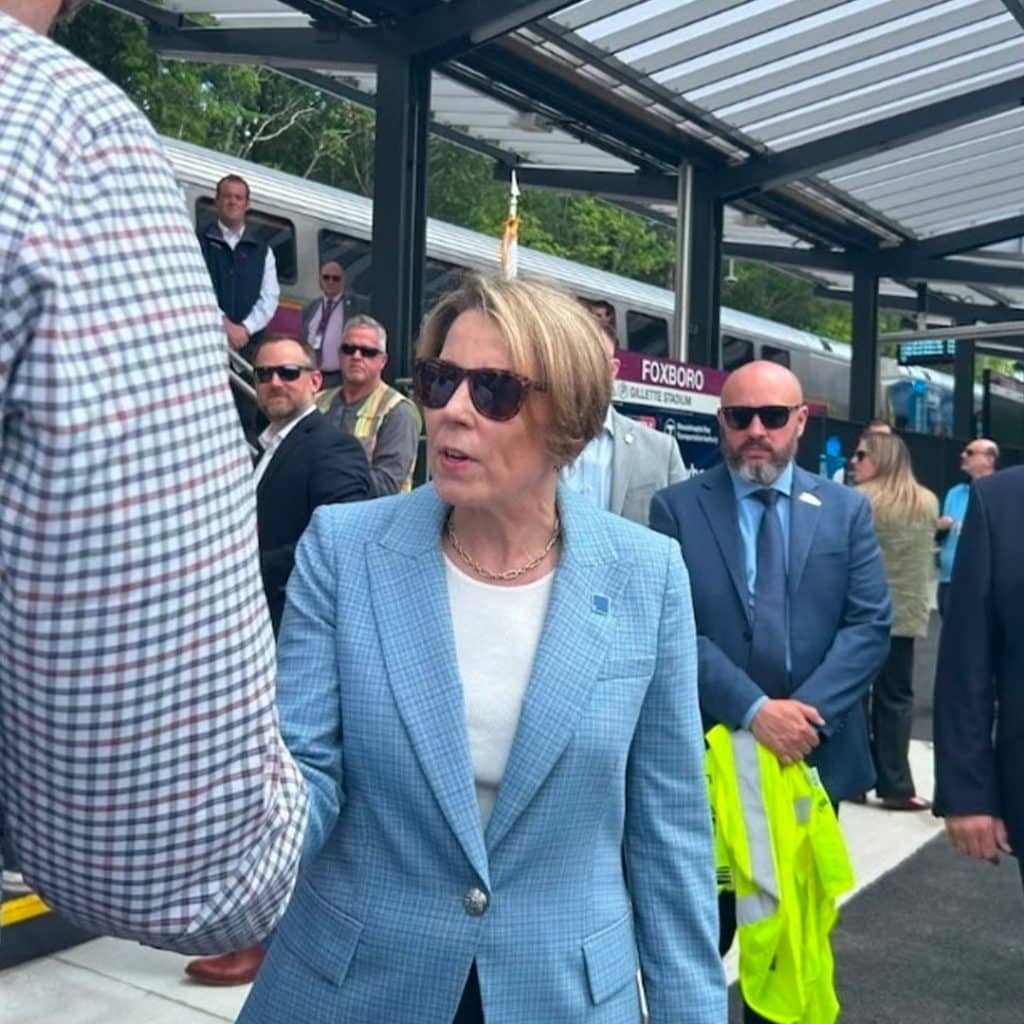
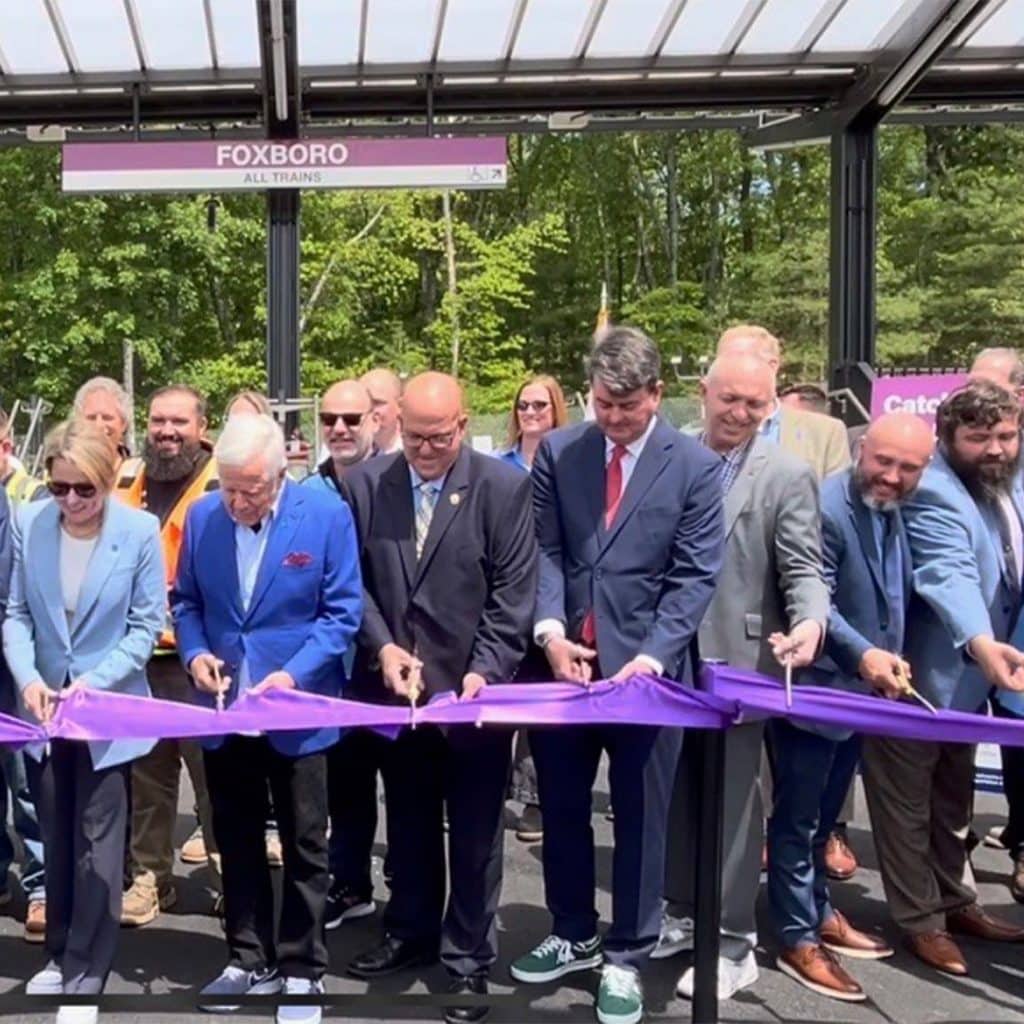
FOXBORO, Mass. — As Massachusetts leaders, transportation officials, and New England Patriots owner Robert Kraft gathered to cut the ribbon celebrating the opening of Foxboro’s new train station, two SMART-TD members stood among the distinguished guests with commemorative scissors in hand.

New England Safety and Legislative Director Dave Stevenson and Bus Transit Assault Prevention and Safety (BTAPS) Committee Chairperson Cole Czub joined Massachusetts Gov. Maura Healey, Kraft, and local officials for the ribbon-cutting ceremony marking the completion of the station, which was built in anticipation of increased ridership associated with FIFA World Cup matches scheduled to be played this summer at the Patriots’ Gillette Stadium.

Left: Mass Governor Maura Healey, Patriots Owner Robert Kraft, On the Right: New England Safety and Legislative Dir. Dave Stevenson, and BTAPS Chair, Cole Czub

A Seat at the Table

Their invitation to participate in the ceremony was more than symbolic. It was recognition of the critical role both our brothers played in ensuring the safety of SMART-TD members who will be responsible for moving thousands of soccer fans to and from one of the largest sporting events in the world.

The preparations are already having a direct impact on railroad employment. This week, a new class of 37 assistant conductors entered service as transit agencies prepare for an anticipated surge in ridership associated with the World Cup. Officials estimate that as many as 20,000 additional riders could travel by rail for each match played at Gillette Stadium, underscoring the importance of both adequate staffing and the safety measures secured through labor’s advocacy.

Making Labor’s Voice Heard

Long before the first train arrives carrying soccer fans from every corner of the world, Stevenson and Czub made sure labor’s voice was heard during the planning process. Working with officials from the Town of Foxboro, state leaders, transit agencies, and the governor’s office, they consistently advocated for protections for the conductors, engineers, and passenger rail employees who will be on the front lines of the event.

With the excitement (and often the alcohol-fueled enthusiasm) that accompanies this level of international sporting events, Stevenson, Czub, and BTAPS refused to allow SMART-TD members to be treated as expendable. Instead, they pushed for meaningful safety measures designed to protect railroad workers and the traveling public alike.

Their efforts paid off.

Gov. Maura Healey with SLD Dave Stevenson

A Major Victory for Frontline Workers

Through their advocacy, agreements were secured with the city, state, and transit agency guaranteeing that every train operating to and from Gillette Stadium during the World Cup will carry a minimum of two transit police officers. For matches expected to draw particularly large crowds or heightened emotions, staffing levels can increase to as many as eight officers per train.

Those protections will help ensure a safer environment for our Keolis members, passengers, and visitors traveling from around the globe to experience the tournament.

The ribbon-cutting ceremony highlighted the importance of the new station and the partnerships that made it possible. But for SMART-TD, the day also served as a reminder of what can be accomplished when members step forward and engage in their communities.

World Champs for SMART-TD Members

We are grateful for the work that went into creating this important transportation asset and for the relationships Stevenson and Czub have built throughout New England. More importantly, however, we are proud of these two brothers for recognizing an opportunity to stand up for the safety and well-being of our members and doing everything in their power to deliver results.

Stevenson, along with New England’s Assistant Safety and Legislative Director Chris Tyrrell, continue to score safety victories throughout New England, while BTAPS and Czub’s advocacy is making an impact in statehouses and transportation discussions across the country. When you consider the wins they are racking up protecting our transportation workers, maybe it is only fitting to see them sharing the spotlight in the shadow of Gillette Stadium with a six-time Super Bowl champion owner and the governor of Massachusetts.

At SMART-TD, those are exactly the kinds of champions we are proud to call our own.

The labor movement lost one of its steadfast champions with the passing of Jackie “Jack” Verlyn Shaver. For decades, Jack dedicated himself to the service of railroad workers, their families, and the principles of unionism that have guided generations of transportation employees.

Jack’s career of service stretched so far back that it predates not just SMART-TD but the United Transportation Union itself. He hired out on the railroad in the fall of 1960 as a member of the Brotherhood of Railroad Trainmen Lodge 30. Since then, Jack has been known for carrying forward the values of solidarity, dignity, and brotherhood through every chapter of our union’s history. Through organizational changes, political battles, legislative fights, and countless challenges facing railroad workers, Jack remained committed to the same cause: protecting working people and strengthening the union that represented them.

For many in SMART-TD and its predecessor organizations, Jack was far more than a leader. He was a mentor. He understood that unions are not built by titles or offices, but by people willing to invest in the next generation. Whether it was a newly hired railroader learning the ropes or one of the labor movement’s most senior elected leaders, Jack always made time to share his knowledge, offer guidance, and encourage others to grow. His reputation as a trusted counselor extended throughout the union, including to former UTU President Al Chesser, who often relied on Jack’s judgment and experience.

As SMART-TD First Vice President Brent Leonard recalled, when he was a young railroader with strong opinions and sharp criticisms, Jack did not dismiss him. Instead, he challenged him to transform that energy into constructive leadership. That approach defined Jack’s character. He saw potential in others and believed it was his responsibility to help them develop it.

Former SMART-TD Illinois State Legislative Director and Federal Railroad Administration Administrator Joe Szabo remembered Jack as both a mentor and a father figure. When Szabo was a young State Director, Jack shared not only his knowledge of railroading, politics, and the legislative process, but also his wisdom about leadership itself. He encouraged others to grow, to serve, and to carry forward the mission of the union. His influence can be seen in the careers and accomplishments of countless leaders who followed in his footsteps.

Former Colorado State Director Rick Johnson described Jack as someone who changed the trajectory of lives. As a union brother and mentor, Jack was unapologetically committed to the workers he represented. His guiding principles were simple but unwavering: family, union, and safety. He understood that every legislative battle, every safety initiative, and every contract fight ultimately came down to protecting the livelihoods and well-being of working railroaders.

Current Colorado State Safety and Legislative Director Carl Smith echoed those sentiments, saying that Colorado, SMART-TD, and the entire rail labor movement lost a great leader in Jack Shaver. Smith noted that Jack demonstrated the right way to lead for decades, maintaining an unwavering focus on the safety and quality of life of his brothers and sisters above all else. That commitment was reflected in everything he accomplished throughout a long and distinguished career and remains an example for future generations of union leaders to follow.

Those who knew Jack consistently speak of his humility. Despite his accomplishments and decades of service as both the Colorado State Director and as the President of the National Association of State Directors, he never forgot where he came from. He expected leaders to carry themselves with dignity, to respect the members they served, and to remember that leadership is a responsibility, not a privilege. He believed in doing things the right way, even when it was not the easy way.

Jack Shaver leaves behind a legacy that cannot be measured solely by positions held, years served, or legislative accomplishments. His true legacy lives on in the people he mentored, the workers he protected, and the principles he embodied. From the newest members entering the industry to the leaders entrusted with guiding our organization, generations of railroaders benefited from his counsel and example. The causes he fought for remain the causes we champion today. As we continue that work, we honor his memory by following the example he set: leading with humility, serving with integrity, and never forgetting where we came from.

Family, friends, and union brothers and sisters will have an opportunity to honor Jack’s life and legacy at a graveside service on Tuesday, June 9, 2026, at 10:00 a.m. at Fort Logan National Cemetery, located at 4400 W. Kenyon Avenue, Denver, Colorado 80236. In recognition of Jack’s decades of service to railroad workers, SMART-TD, and the broader labor movement, all SMART-TD members who wish to attend are welcome to join in paying their respects and celebrating the life of a man whose leadership, mentorship, and commitment to working people left a lasting mark on our organization.

Rest in peace, Brother Shaver. Your life’s work helped move the line forward, and your legacy will continue to guide those who follow.

After 32 years of railroad service and 20 years of dedicated service to this Organization as an officer, Local Chairman John Lynch has announced his retirement effective May 28, 2026.

Brother Lynch’s career has been defined by steadfast leadership, unwavering commitment to the membership, and a deep sense of brotherhood that has strengthened both Local 1494 and General Committee 009 for decades.

Throughout his years of service, John served 20 years as a Local Chairman in Local 1494 and 10 years as the Secretary/Treasurer of Local 1494. He also proudly represented his Local as a delegate to three SMART Conventions and most recently served the past three years as 2nd Vice Chairman of General Committee 009.

While his list of titles and accomplishments is impressive, John’s greatest contribution to this Organization has been the countless members he mentored, supported, and inspired throughout his career.

Whether advocating for members, offering guidance to younger railroaders, or standing firm in defense of our agreements and principles, John earned the respect and admiration of all who had the privilege to work alongside him.

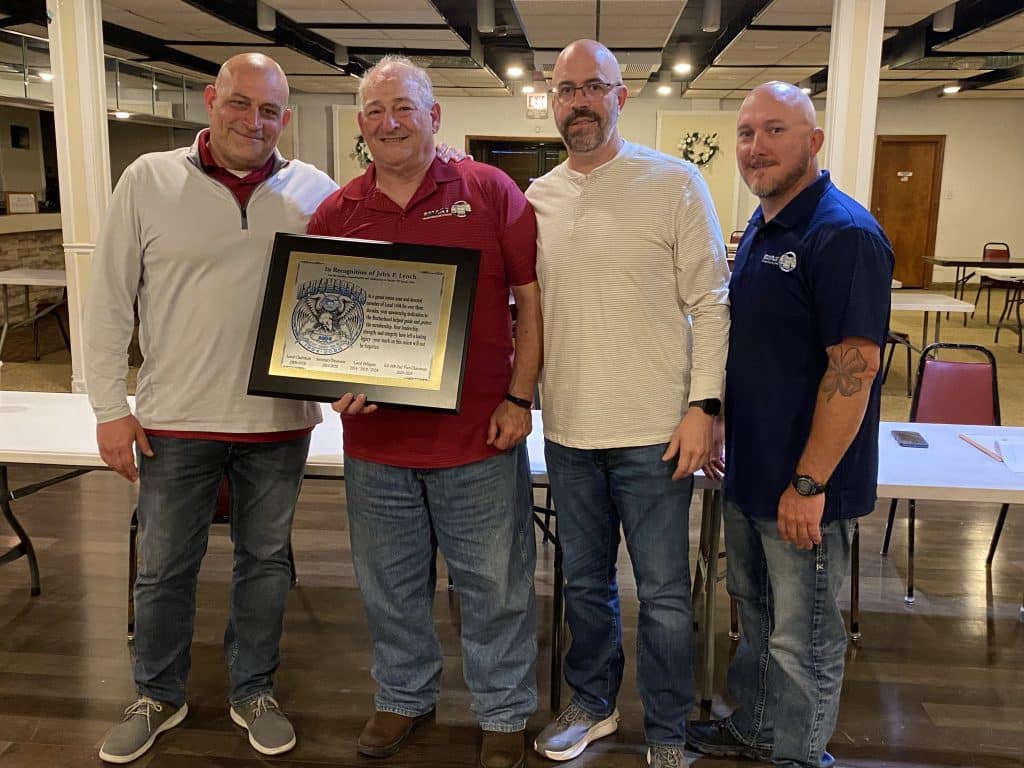
In recognition of his decades of leadership and service, John was recently presented with a commemorative plaque honoring his commitment to the membership and the labor movement.

The plaque reads:

“As a proud union man and devoted member of Local 1494 for over three decades, your unwavering dedication to the brotherhood helped guide and protect the membership. Your leadership, strength, and integrity have left a lasting legacy. Your mark on this union will not be forgotten.”

Left to right, GCA 009 General Chairperson Scott Swiatek, 2nd GCA Vice Chair John Lynch, GCA Secretary Chad Fluke, 1st GCA Vice Chair Chad Davis,

Those words reflect not only John’s service record, but the respect and appreciation felt by the countless brothers and sisters whose lives and careers he impacted throughout the years.

General Chairman Scott Swiatek spoke on behalf of General Committee 009. “We congratulate Brother Lynch on his retirement and sincerely thank him for his many years of commitment, leadership, and service to this Organization. SMART Transportation Division is stronger because of his dedication and tireless representation of the membership. John leaves behind a lasting legacy of integrity, hard work, and brotherhood that will not be forgotten.

I am proud to call John my friend and wish both John and Alice nothing but happiness, health, and well-deserved relaxation in retirement.”

Congratulations, Brother Lynch, and thank you for your service.

Hate to say we told you so

For years, SMART-TD members have warned federal regulators, transit agencies, and railroad executives about the dangers of turning America’s transportation systems over to automation. We were told we were overreacting. We were told computers would make railroads safer and more efficient. We were told to calm down because there were no monsters in the closet.

This week proved why our concerns are justified.

Critical Infrastructure is being tested and targeted

Reports now link the recent cyberattack against the Los Angeles County Metropolitan Transportation Authority (LACMTA) to Iranian-backed hackers. Investigators say the attackers gained access to internal systems tied to one of the nation’s largest transit agencies, disrupting services and exposing sensitive operational data.

The question is, will regulators listen now, or does there have to be a mass casualty event before our obvious concerns are taken seriously?

This is exactly what SMART-TD warned about when the FRA continued approving dangerous automation policies while ignoring the concerns of frontline railroaders. The threat is no longer theoretical. It is happening now.

Hostile foreign actors have already proven they possess both the intent and the capability to target critical American infrastructure, including transportation systems.

And yet, federal regulators continue to allow carriers to expand automation deeper into rail operations.

Automation Creates New Vulnerabilities

Systems like CSX’s “Zero-to-Zero” Trip Optimizer increasingly place train handling, throttle control, and even the air brake functions into the hands of computers instead of trained railroaders. Every time regulators approve another layer of automation, they create another point of vulnerability for cyber criminals and hostile foreign governments to exploit.

This is not Hollywood fiction anymore.

Every rail line in America is critical infrastructure. Freight railroads move chemicals, fuel, military equipment, food, and the supplies that keep our economy alive. Passenger and commuter systems move millions of Americans every day. All of this occurs in the middle of dense populations and within feet of major water supplies and dangerous industrial environments.

When the transportation systems become more dependent on interconnected automation than trained and certified American workers, they become more vulnerable to cyberattacks. It is a very simple concept.

And when those systems fail, it is not corporate executives or software engineers standing on the front lines protecting the public.

It is transportation workers like every one of us at SMART-TD.

Transportation workers are the answer

A trained and certified railroader or bus operator can recognize danger, adapt to changing conditions, and respond when systems malfunction or communications fail. A computer cannot replace human judgment, experience, and situational awareness in a crisis.

That is why SMART-TD has consistently fought against reckless automation policies that prioritize profits over safety and national security. When we see those who are government officials publicly calling for tax dollar investment in things like Parallel Systems, fully automated rail cars, or driverless taxi technology to be used in mass transit, we can’t help but ask what part of this situation they aren’t able to understand.

The attack on LACMTA should be a wake-up call for the FRA, FTA, and DOT. America is moving toward a future where foreign cyber terrorists could potentially disrupt, manipulate, or disable transportation systems that millions of Americans depend on daily.

That is not paranoia. It is common sense.

Federal Regulators Must Change Course

SMART-TD members are not anti-technology. We believe technology should support transportation workers instead of replacing them. The safest railroad and transit systems are the ones that keep trained, certified American workers in control of critical operations and all safety features.

Federal regulators now face a choice: continue down the dangerous path toward unchecked automation or recognize that skilled transportation workers remain the strongest defense against both accidents and cyber threats.

The warning signs are here.

The attacks have already started.

And America still has time to change course before we hand over our transportation networks and supply chain to systems vulnerable to sophisticated cyber terrorists. DOT Regulators and Congress cannot allow this country to sleepwalk into a nationwide catastrophe.