SMART-TD’s Utah SLD, Danny Brewer Responds

Railroaders across the country work under constant pressure. It’s all about getting us to move trains faster, clear yards quicker, and keep operations flowing. But no amount of pressure can change a fundamental truth: the rules governing railroad safety exist because someone was injured, killed, or a disaster occurred when those rules were ignored.

SMART-TD has recently received concerning reports from Utah involving management interference when railroad workers properly report (bad order) unsafe equipment. While these reports involve one location and one railroad carrier, the underlying issue is not unique to any single state or railroad. If a conductor or an engineer has made a professional judgment to tag a car or engine for repair, then that is what needs to happen to ensure the safety of all. Anytime a railroader is pressured to ignore a safety defect or bend a rule, it is a serious problem for our entire industry and the general public.

Management has no business overruling us and deciding to “un-tag” a bad order. If we let them get away with this, they are putting us, our crew, and every crew that touches this equipment in danger. In addition to the safety concerns this raises, it is a blatant example of crossing crafts and disrespect for the railroader who bad ordered the car to begin with. This is not efficiency. It’s just unsafe and out of line.

As Utah State Safety and Legislative Director Brother Danny Brewer reminds us, we must remain accountable to one another and keep railroad managers honest when it comes to safety compliance. From veteran members who are ready to pull the pin all the way to new hire trainees, NOBODY should allow managers to be pulling the red tags off of these cars.

No matter the railroad, the state, or the yard, safety must remain our true north.

Safety Notice from Utah State Safety & Legislative Director, Brother Danny Brewer

Dear fellow SMART-TD members,

The Utah SMART-TD Safety/Legislative Board has recently received several anonymous reports concerning employees that have bad ordered equipment, only to have that designation overruled by a local manager. This is not just unacceptable, it is unethical and potentially unlawful. It is imperative that all of us do everything within our power to ensure our workplace environment is safe and that the equipment we inspect is compliant with FRA Safety standards.

Under 49 U.S.C. § 20109, you have a legal right to report safety defects without facing threats or intimidation. A manager threatening an employee to ignore “bad order” cars is a potential violation of the Federal Railroad Safety Act (FRSA).

If you have a manager telling you not to bad order cars you sincerely believe contain defects that create an unsafe condition,, you can protect yourself from retaliation while standing up for the safety of every other railroader and the general public.

Federal Railroad Safety Act (FRSA) | Whistleblower Protection Program

Our union fought to make whistleblower protection apply to railroaders. It’s here for a reason, and it works.

Recommended Immediate Steps

  • Document Everything: Write down exactly what the manager said, the date, the time, and any witnesses. Save any text messages or emails.
  • Identify the Cars: Keep a record of the specific car numbers (initials and numbers) that you were told to ignore.
  • Report the Threat: Immediately inform your union safety representative (LR). They can help you file a complaint with OSHA (which handles FRSA whistleblower claims).

Remember: You have 180 days from the date of the threat to file.

The “Tag” Rule

If you are performing a Class I or Class IA brake test and you believe a car is defective, the law protects your right to refuse to authorize its use until it is repaired.

This applies to all the equipment you handle or utilize in any way throughout your tour of duty, including:

  • Switches
  • Derails
  • Walking conditions
  • Engines
  • Rail cars

These protections apply to any defects discovered that pertain to unsafe work-related conditions.

If it smells like a Bad Order, it probably is Bad Order. Tag it, ensure it is properly identified (via your Zebra (company-provided tablet) or the/mi function in the MyUP portal), and set it out.

As professional certified rail employees, we owe it to ourselves, our fellow employees, and to the communities that we work in and travel through to ensure our trains are defect-free and yards are safe to work in.

Don’t let ANYONE stop you from doing that.

In Solidarity and Fraternity,Danny Brewer
Utah State Safety/Legislative Director
SMART-TRANSPORTATION UNION
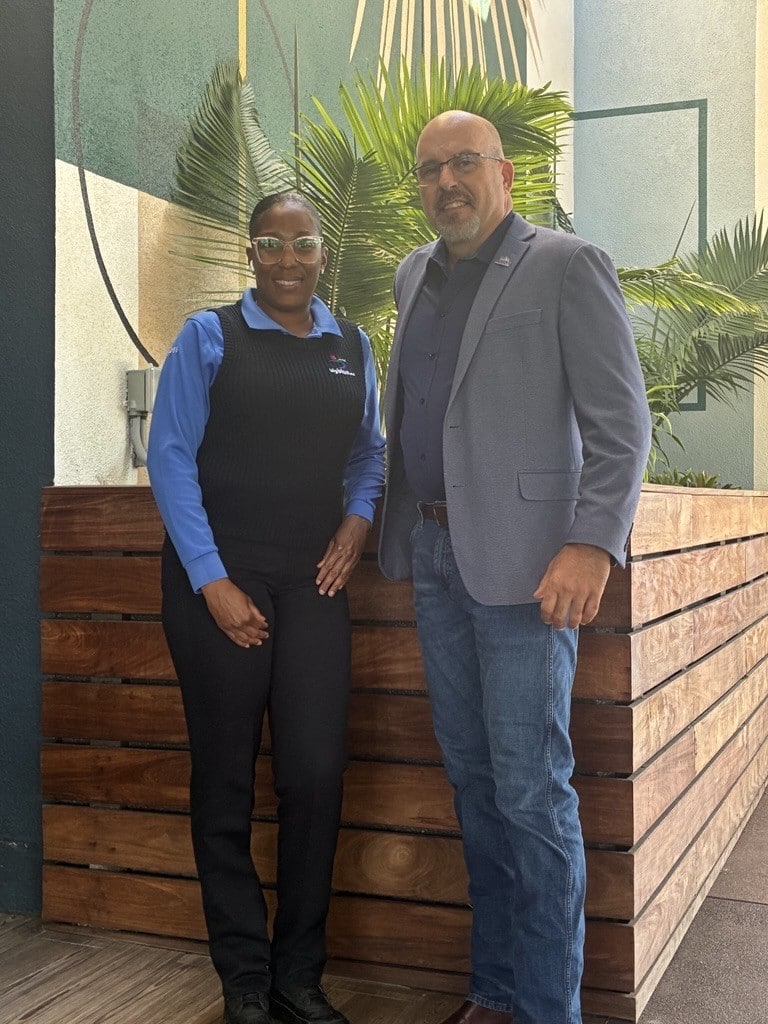
SMART-TD mourns the loss of Brother Neal Malcolm Galloway, a member of Local 662 (Richmond, Va.), CSX conductor, and a railroader whose reputation stretched across the Commonwealth of Virginia.

On the night of his passing, Brother Galloway was doing exactly what he had always done. He was showing up for work, taking the third-trick shift because he could hold, and providing for his family. Tragically, just feet from the on-duty point, he was struck by a car estimated to be going over 100mph. 

Brother Galloway hired out with CSX in the spring of 2012. Like so many in the industry, his seniority never quite allowed him the stability of holding his home terminal in Newport News with any consistency. Instead, Neal lived the life countless railroaders know all too well. He was working wherever he could hold a job within a two-hour call window of his Virginia Beach home. From Richmond, Fulton, Acca, Gladstone, and Lynchburg yards, he worked nearly every board available, earning the respect of crews in every yard he set foot in.

It was not an easy way to make a living. Long hours, long drives, and time away from home are part of that reality. By all accounts, Neal never let that hardship change who he was. Whether coming off a 12-hour shift or heading into one, he was known for his steady demeanor, quick smile, and a joke in the crew room. Across every terminal he worked out of, there was not a person who had a bad word to say about Brother Galloway.

His fellow CSX conductor, SMART-TD Brother, and brother-in-law Gary Catchot recalled, “When Neal and I didn’t have the seniority to hold our home terminal of Newport News, Virginia, we were both working out of any yard we could hold. There were those nights when I needed to talk to somebody on my drive home to stay awake and get there safely. Neal was the kind of guy who got it. You could call him at any hour of the day or night to be that guy who guided you home when you needed him… At the end of the day, he is a man I am proud to call my brother.”

If you would like to help, a GoFundMe has been established to assist his wife, Corrine, and their daughter, Lana, with the unexpected final expenses. As Brother Catchot shared, “I appreciate everything our fellow railroaders are doing to support Corinne and my niece.”

Family and friends are invited to join in a celebration of Neal’s life on Sunday, March 22 @ 1 pm. Hollomon-Brown Funeral Home & Crematory- 3445 Princess Anne Road, Virginia Beach, VA 23456. The family will receive friends at the funeral home one hour prior to the services. Gathering to follow at the Goley residence.

Brother Galloway spent his career taking care of his family, no matter what it took. Now, we ask our SMART-TD family to come together in his memory, to help him do that one more time.

You’d be hard pressed to find someone who can say that being stuck in traffic 20 years ago set them on the path to where they are today.

Markeisha Haynes (Local 1785, Santa Monica, Calif.) is one of those people.

It was the mid-2000s, and she was tired of working dead-end jobs that didn’t provide a decent income to support herself and her two kids.

One day, she happened to pass a Santa Monica Big Blue Bus in traffic and wondered if that could provide the stability she wasn’t getting in other jobs.

“It was on a whim,” Haynes remembers when describing her decision to apply to become a Bus Operator. “I was initially nervous…because when you see the buses, it’s a little intimidating, right? So going into it was definitely a little challenging in the beginning.”

That was 20 years ago. She’s still a full-time Bus Operator but has gained some new titles, including Alternate Vice President (AVP) Bus-West, and is currently the only female vice president at the international level within SMART-TD.

Climbing the Ranks While Staying True to Her Beginnings

After getting hired, it didn’t take long for AVP Haynes to know that she wanted to do more.

Initially, she was a line instructor who helped new hires learn how to operate a motor coach, a role that she credits as a start to venturing out into other positions.

When she wanted to have more input in the direction of Local 1785, she decided to reach out to the Vice General Chairperson to learn how to get more involved.

His response: What took you so long?

“He had mentioned that he saw something in me…he saw this fire in me, this drive in me, and…he was getting ready to retire,” she explained.

He allowed her to shadow him before he retired, and she ultimately ran for the position.

“I was nervous at the time, because I didn’t have any experience in any of the positions,” said AVP Haynes. “It was really scary to take on the position, but there was just something in me that I knew I could do it. I campaigned, I won, and it was amazing. It’s just been up from there.” 

Today, in addition to being an Alternate Vice President, she’s also…

  • General Chairperson for the General Committee of Adjustment for Santa Monica Municipal Bus Lines (GCA SMB)
  • Local Chairperson for the Local Committee of Adjustment for Santa Monica Municipal Bus Lines (LCA SMB)
  • Secretary for the Association of General Chairpersons (District 3)
  • Member of the Field Service Committee
  • Member of the Organizing Committee

The fact that AVP Haynes is still a full-time Bus Operator has allowed her to truly make an impact in each of these roles. She doesn’t just guess what the membership wants: she experiences it firsthand.

“I stay connected to what’s still happening here, whether it’s out on the road, being in the seat, driving and operating my vehicle,” she said. “I tell a lot of the Operators, ‘I understand. I’ve been there. I know what it’s like to feel overworked. I know what it feels like when you’re underpaid.’”

AVP Bus-West Markeisha Haynes made it to the Anaheim Regional Training Seminar in September of 2025 after finishing her workday. Pictured here with SMART-TD President Jeremy Ferguson

Trusting Her Gut to Deliver Strong Results for the Membership

Something that stands out the most to AVP Haynes is what she’s been able to win for her members when it’s time to negotiate a new contract.

The first contract that she negotiated not long after becoming a General Chairperson resulted in an 18% wage increase over three years. The second contract resulted in a 19% wage increase, both of which were unprecedented.

She kept one question front and center in her mind during negotiations, especially since she hadn’t been a general chairperson for very long: is this good for my membership?

“It has to start with us (General Chairpersons and leadership roles), because the members are looking to us,” she explained. “So if we don’t put ourselves in the position where we ask ourselves ‘Is this good for me? Am I okay with this?’ and if we have to question it, then it’s not good, and then your members are not going to be okay with it. It starts and ends with us.”

“We Can Only Attract What We See”

As the only female in a leadership role at the international level, AVP Haynes admits it took her a minute to get used to often being the only woman at the table.

“Initially, I was like ‘Oh my gosh, I’m the only woman. Wait, hold on…maybe I shouldn’t say this or maybe I shouldn’t say that,’” she remembered. “But you know, it’s one of those things…I’m just going to be me. I’m just going to be who I am and who I am to the core. I can do it, too.”

She’s hopeful that mantra will lead to more union sisters holding similar leadership positions.

“All we see is the male-dominated industry…we have to step outside of that and be willing to change,” she explained. “That’s stepping outside of being comfortable. That’s putting your voice out there. That’s not being afraid to speak up. I just believe that the more that we showcase that women are in these positions, I think that will get more excited about holding a leadership role, because we only attract what we can see.”

She believes that one of the ways to help do that is to showcase women in various leadership roles throughout our union so that more of them will consider stepping forward.

“I would love to see more women involved in different officer positions in the union. I would love to support that,” she said. “Whether it’s mentor, give guidance, or whatever I can do to help the next person move up, I’m all for it: making sure that women are seen and heard in these positions as well.”

That instinct to mentor and help others is ultimately what’s propelled VP Haynes to where she is today. 

“I believe there’s no stopping me. There’s no limit to how far I can go because of the drive that I have to help people.”


For the second year in a row, SMART-TD General Committee of Adjustment (GCA) 875 (Los Angeles, Calif.) leads the way in transit safety improvements for our brothers and sisters who work for Los Angeles County Metro Transportation Authority (LACMTA). This comes at a time when attacks on Operators show no signs of slowing down on both a local and national level.

Building off its 2024 successes, GCA-875 notched several major achievements in 2025. In particular, the successful installation of Operator barriers across the entire Metro bus fleet has demonstrated a significant improvement in the safety of our members. By continuing to advance safety, technology, and workforce excellence, GCA-875 is ensuring that its members remain protected, supported, and prepared for the future of public transportation.

GCA-875 Sets the Standard for Operator Safety Industry-Wide

One of GCA-875’s biggest accomplishments in 2024 was the creation of the Los Angeles Transit Police Department, which focuses on safeguarding both passengers and Operators.

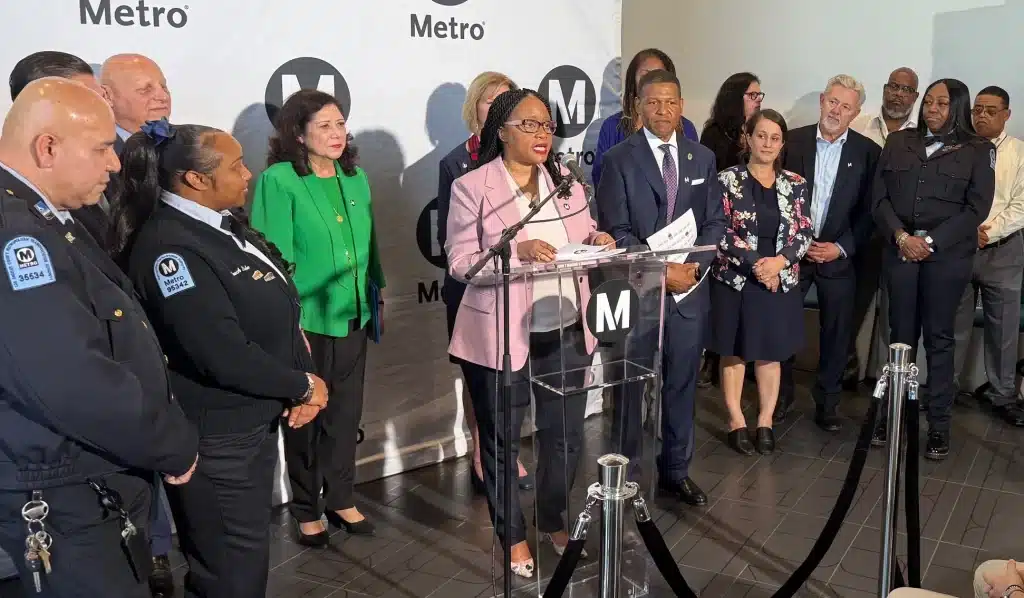
In July of 2025, GCA leadership met with Metro’s new Chief of Police William Scott and its in-house police department to discuss its future collaborative efforts. Chief Scott plans to hire approximately 700 officers to strengthen safety across the transit system and provide even more protection for SMART-TD Operators.

An incident in October of 2025 underscores why the need for improved safety across the transit agency is critical.

Metro Chief of Police William Scott is announced at a press conference with L.A. City officials and SMART-TD brothers and sisters from Metro.

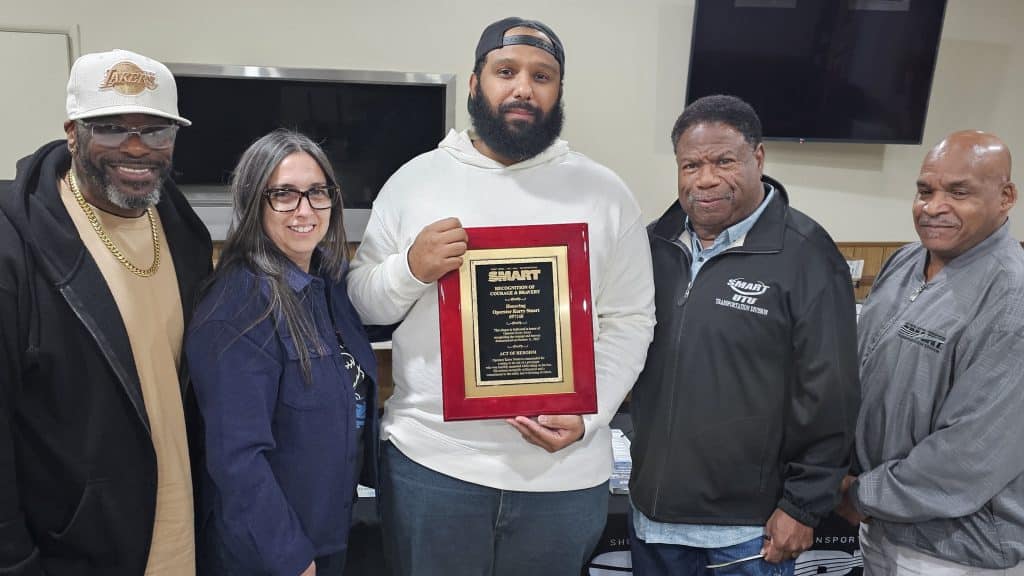
While Brother Kerry Stuart (Local 1564, Los Angeles, Calif.) was on duty, one of his passengers was violently assaulted by another rider and sustained a serious neck injury.

Borther Stuart didn’t hesitate and took decisive action. He removed his shirt, applied pressure to the wound and remained with the injured passenger until medical help arrived. His quick thinking and bravery were instrumental in saving the passenger’s life, and he was honored for his heroic actions.

SMART Local 1564 formally honored Operator Stuart for his heroic actions. Left to
Right: Nathan Henderson – Vice President; Wanda Muñoz – President; Kerry Stuart –
Honoree Member Division 18; Andy Carter – Local Chairperson and Gregory Smith –
Vice Chairperson.

New Pilot Program Enhances Operator Awareness

With input from SMART-TD, Metro continues to advance safety innovation with pilot programs for the Mobileye Shield+ Collision Avoidance System and the Luminator Video Mirror System, new technologies designed to enhance Operator awareness and reduce roadway risks.

The Luminator Video Mirror provides some of the following benefits to Operators…

  • Increased safety: The system alerts the driver of a potential danger in the blind spot area by switching on a light. This allows the driver to have an optimized view of their environment.
  • Reduced driver fatigue, including less strain on the eyes
  • Integrated systems to ensure that cameras can always take critical images
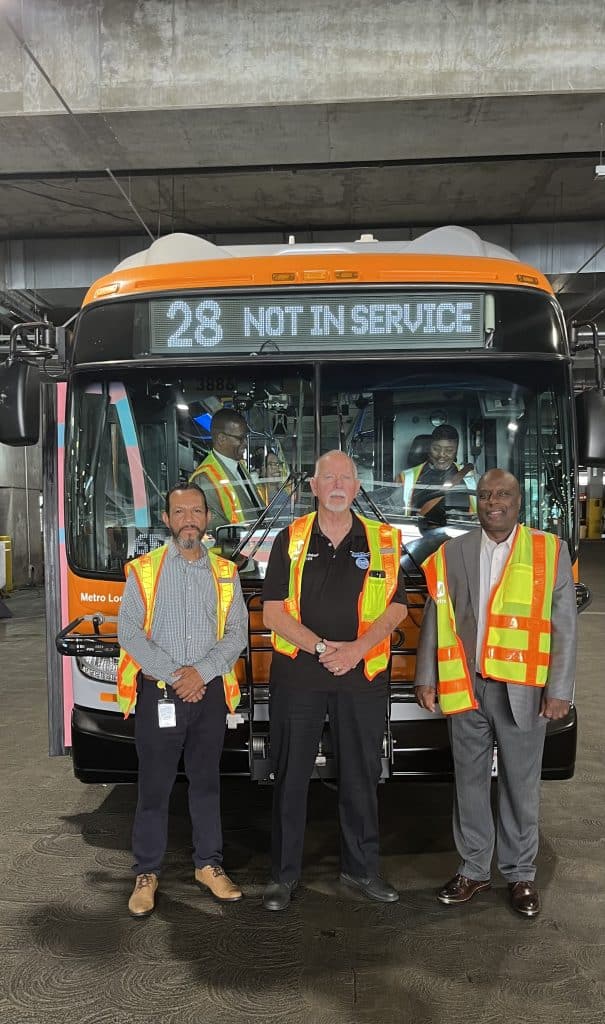
SMART team ,(left to right) Local Chairperson 1607/Secretary of the GCA 875 –
Julio Mejia, General Chairperson – John M. Ellis and Local Chairperson 1565/Vice
General Chairperson – Quintin Wormley

Projects Honored with Multiple Prestigious Awards

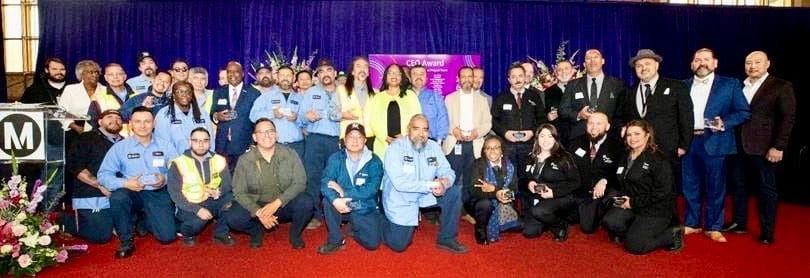
Held in March of 2025, Metro’s annual Moscars Awards celebrate excellence throughout the agency, and GCA-875 and its officers received special recognition for both their leadership and dedication in successfully completing the Operator Barrier Project across the entire Metro bus fleet.

The completion of the barrier installations marks a major milestone in enhancing Operator safety system-wide. The commitment, persistence, and collaboration demonstrated by SMART leadership and Metro partners were instrumental in bringing this project to full completion.

Just three months later, GCA-875 General Chairperson John M. Ellis and LACMTA CEO Stephanie Wiggins accepted an award for “Project of the Year” for the same initiative at the annual California Transportation Foundation Awards, highlighting the project’s impact on safety, innovation, and labor-management collaboration.

GCA-875 Team accepting Moscars Award for their work on Operator Barrier Project

Effort to Protect Operators is Rooted in Teamwork

As General Chairman Ellis explains, the strong partnership between Metro and SMART-TD underscores what’s possible when labor and management work constructively to improve the safety of Operators system-wide. “Through a joint collaborative effort with Metro, we will continue to protect our Operators with the latest technology available,” he said.

This week, the Washington Post Editorial Board posted a column tearing down the Railway Safety Act of 2026. As a union, we would have hoped that a respected national newspaper like The Post would have done its research on an important topic like our members’ ability to make it home after every shift in one piece. Unfortunately, they decided to use their national platform to amplify the views of the railroads and their lobbying arm, the Association of American Railroads (AAR).

Just like in a disciplinary hearing on the railroad, a statement that goes unchallenged has a tendency to become a fact.

With that in mind, SMART-TD President Jeremy Ferguson submitted an op-ed to the Washington Post editorial board today. He let them know the truth from actual railroaders.  After reading what the post passed off to the country as facts on your safety, Brother Ferguson wasn’t about to let it be the last word.

Please take a moment to read the view from the railroad corporations that the Washington Post put out there, as well as the response your union sent back at them.

After reading these two opposite points of view, SMART-TD would like to encourage all our members to drop the Washington Post Editorial Board a line at oped@washpost.com. Please let them know your perspective and personal experience with railroads being trusted to regulate and now legislate themselves.


Recent incidents involving autonomous vehicles have raised new questions about how driverless technology interacts with the transportation systems our members operate every day.

In a widely circulated video from Austin, Texas, a Waymo driverless taxi stopped dangerously close to an active railroad crossing as a train passed within inches of the vehicle. Fortunately, the car had no passengers and no collision occurred. But the situation highlights how even advanced autonomous systems can misinterpret complex transportation environments.

This isn’t an isolated concern. Investigations and driver reports have also raised alarms about Tesla’s “Full Self-Driving” software struggling at railroad crossings. In one viral incident, a Tesla operating with the system drove directly through lowered crossing gates, and multiple drivers have reported their vehicles failing to recognize flashing lights, barriers, or approaching trains.

For the members of the SMART Transportation Division, these incidents are not just tech glitches. They are real-world safety risks.

Impact on Bus Members

In cities where robotaxis are being deployed, bus operators are already dealing with new challenges. Driverless vehicles operating in dense urban traffic can behave unpredictably, creating additional hazards for professional drivers responsible for moving dozens of passengers safely through crowded streets.

At the same time, these same autonomous services are being positioned as competitors in the public transportation space, potentially replacing union jobs that have long provided safe, reliable mobility for communities.

A New Concern for Rail Members

Rail members face a new and different problem. What happens when these vehicles encounter railroad crossings?

Professional train crews know that when something goes wrong at a crossing, the consequences can be life changing. Engineers and conductors cannot stop a train quickly and when a vehicle enters a crossing improperly, the crew may be forced to witness a catastrophic event they have little ability to prevent.

Reports of autonomous vehicles stopping on tracks, ignoring crossing arms, or misinterpreting rail infrastructure raise serious questions about whether this technology is ready to share the roadway with trains. We already know the answer to how they are adding a dangerous layer to the jobs of our bus operators. 

For rail workers, a collision involving a driverless car is not just a headline. It’s a critical incident that affects their safety, their careers, and their mental health for years to come.

Technology Must Work for Safety and Workers

SMART-TD is not opposed to technology or innovation. Our industry has always evolved with new tools and systems that improve efficiency and safety.

But technology must make transportation safer, not introduce new and unpredictable hazards for workers and the public.

Autonomous vehicles are being deployed rapidly on public roads and near critical infrastructure like rail crossings. Before that expansion continues, regulators and technology companies must ensure these systems can reliably understand and safely interact with the complex transportation environments that union bus operators and rail crews navigate every day.

Our members already carry enormous responsibility for public safety. The last thing they should have to worry about is whether we’ll carry the trauma of hurting or killing people so that Waymo and Tesla executives can continue their race to see who can deploy their unsafe products on the road the fastest.

Automation and the Threat to Union Jobs

Beyond the immediate safety concerns, driverless technology also raises a larger question for the future of transportation work. If companies can normalize the idea that taxis and personal vehicles no longer need drivers, how long will it be before they argue that buses no longer need operators either?

Public transit systems depend on highly trained professional operators who do far more than steer a vehicle. They manage passenger safety, respond to emergencies, assist riders with disabilities, and navigate constantly changing traffic conditions. Replacing that human expertise with automation would not only put good union jobs at risk; it would also put passengers and the public in serious danger.

Rail members are not immune from these pressures either. In Georgia, Genesee & Wyoming Railroad has been working with a company (Parallel Systems) founded by former SpaceX engineers to test autonomous railcar technology. They recently announced they are jumping from phase 2 of the testing process the FRA agreed to, all the way to Phase 5. This problem is not science fiction anymore. It is all too real.

While these projects are often promoted as cutting-edge innovation, they raise serious questions about whether the true goal is improving safety or simply removing skilled workers from the equation.

Operating trains and buses safely requires judgment, experience, and accountability that no algorithm can replicate. Our members understand the real-world complexities of transportation in a way that technology companies and the venture capital backing them overlooks.

SMART-TD will continue to stand up for the workers who keep our transportation systems running safely and reliably every day. Innovation should strengthen safety and support the workforce, not eliminate the professionals who make the system work and keep our communities safe.

SMART-TD members across the country have been closely following developments surrounding the proposed merger between Union Pacific (UP) and Norfolk Southern (NS). In January, the Surface Transportation Board (STB) rejected the railroads’ initial merger filing, which understandably created confusion and concern.

We want to be clear about what actually happened: the merger itself was not rejected.

STB Decision Was a Delay, not a Rejection

The STB determined that the initial application submitted by the railroads was administratively incomplete, meaning certain technical requirements in the filing needed to be addressed before the agency could begin its full review. The Board provided guidance on how to correct those issues, and the railroads are expected to refile their application next month, which will restart the formal regulatory review process.

While this development has delayed the timeline, it does not change the underlying agreement SMART-TD negotiated to protect your jobs.

Historic “Jobs for Life” Protections for Railroaders

Following extensive negotiations with both UP and NS, SMART-TD secured a historic agreement guaranteeing that employees in train and yard service on both Union Pacific and Norfolk Southern will not face involuntary furloughs for the duration of their railroad careers if the merger is approved.

That level of protection is unprecedented in modern rail mergers and represents a major shift from the uncertainty that has too often followed consolidations in the past.

Taking the Fight for Railroad Jobs to Congress

As part of our advocacy surrounding this merger, SMART-TD President Jeremy Ferguson sent a letter to every member of Congress outlining why our union supports the transaction and the unprecedented job protections secured for you, our members and their constituents. In that letter, President Ferguson emphasized that SMART-TD evaluates every rail merger through one central question, “How will it affect the jobs, livelihoods, and long-term stability of railroad workers?”

Read President Ferguson’s letter to Congress

Job Security Unites Us

We understand that not every railroader is excited about this merger, and that’s okay. There are very few issues in this industry that every railroader agrees on. Healthy debate is part of our culture, and our members hold a wide range of views about consolidation in the rail industry.

However, there is one thing that nearly every railroader can agree on: the sacrifices that come with a career on the railroad deserve real job security in return.

Railroaders work nights, weekends, holidays, and long hours away from their families to keep this country moving. For generations, workers have accepted those sacrifices while living with the constant uncertainty that their job could disappear during the next downturn or change in CEOs.

That is exactly what SMART-TD set out to change.

We also recognize that some other rail labor unions have chosen not to support this merger, and we respect their right to take that position. In many cases, those organizations have expressed concerns because they were not able to secure the same type of ironclad job protections for their members that SMART-TD negotiated for you.

Our responsibility is to the members we represent. That means pursuing opportunities that provide long-term stability and security for the railroaders who depend on these jobs to support their families.

Ending the Cycle of Railroad Furloughs

Another concern we have heard from members involves the reality that some railroaders are currently furloughed today on both Union Pacific and Norfolk Southern. We know that for those members, reading about “Jobs for Life” protections can feel frustrating.

Many SMART-TD officers and leaders have experienced furloughs themselves during their careers. We understand the uncertainty, the financial strain, and the emotional toll it places on railroad families.

We are not saying that furloughs don’t exist today. Unfortunately, they do. But if this merger is approved and implemented, the workers on the rosters of both railroads will never again have to face that gut-wrenching uncertainty.

No more wondering if the next downturn will put you out of work.
No more waiting by the phone to find out if your career is being phased out.
No more living with the constant threat that your livelihood, benefits, and retirement could disappear overnight.

That kind of stability has rarely existed in the railroad industry, and SMART-TD believes railroaders deserve it.

Beyond workforce protections, the proposed merger would create the nation’s first true coast-to-coast freight railroad, improve network efficiency, expand service options for shippers, and strengthen the role rail plays in the national supply chain. But for SMART-TD, the most important part of this agreement will always be the people who keep the trains moving.

Our members.

What Happens Next in the Merger Process


The STB will now wait for the railroads to resubmit their application before beginning a detailed review process. That review will take time, and SMART-TD will remain actively engaged throughout every stage.

We will continue advocating on Capitol Hill and before federal regulators to ensure that the voices of railroad workers are heard.

At the end of the day, this effort is about more than a merger.

It is about making sure that the men and women who dedicate their lives to this industry can count on stable jobs, strong benefits, and secure pensions for life.

Our goal is simple. When a SMART-TD member leaves the railroad, it should be on their terms. Not because of corporate restructuring.

That is the promise behind the “Jobs for Life” agreement, and SMART-TD will continue fighting to make sure it becomes a reality.

Rail safety momentum is building in Washington, D.C., and SMART-TD members are seeing the results.

This week, Sen. Josh Hawley (R-MO) and Sen. Tammy Baldwin (D-WI) introduced the bipartisan Secure Tracks Act, legislation designed to protect one of the most important safeguards on the railroad: the integrity of the rails beneath us.

SMART-TD is proud to endorse this bill and stands with Senators Hawley and Baldwin as they lead the push for safer railroads.

The bill reinforces a simple principle. Technology can HELP railroad workers do their jobs, but it sure as hell cannot replace us.

Why The Bill Matters for SMART-TD Members

Under the Secure Tracks Act, railroads would be required to continue conducting regularly scheduled visual inspections performed by trained human inspectors, while allowing Automated Track Inspection (ATI) technology to serve as a supplemental tool. The legislation would also prevent federal regulators from granting waivers that allow rail carriers to run around the law. It essentially blocks the railroads’ effort to replace human inspections with automated systems that cannot detect the full range of track defects.

For SMART-TD members, that protection matters.

Engineers and conductors operate thousands of trains every day across a rail network that moves heavy freight, hazardous materials, and passengers through communities across the country. The safety of those operations begins with the integrity of the rail beneath our train.

SMART-TD has consistently warned that rail carriers are attempting to use automation not as a safety enhancement, but to reduce manpower. Automated inspection systems can identify only a fraction of the defect types that trained human inspectors routinely detect in the field.

That is why SMART-TD has been clear from the beginning: technology should support railroad workers, not replace them.

The Secure Tracks Act reflects our lived reality.

Putting Rail Safety Over Politics

Just as important as the bill itself is the bipartisan leadership behind it. SMART-TD is proud to point out that both Senator Baldwin and Hawley earned our union’s endorsement in the 2024 election cycle, a decision that was notably met with pushback.

When two of our allies cross the aisle to move the safety of our brothers and sisters forward, it is a proud moment for SMART-TD. Your union does not choose allies based on the letter that’s next to a name. We will work with anyone who is willing to stand up for the safety of the men and women who move America’s freight.

Both Senator Baldwin and Senator Hawley have demonstrated that commitment.

Senator Baldwin has been a consistent partner with rail labor, supporting and authoring legislation aimed at improving rail safety and holding carriers accountable. Senator Hawley also consistently supports railroad workers on major safety issues affecting the industry. He notably stands with us on paid sick time and was an ally in passing the Railroad Employee Equity and Fairness (REEF) Act in 2025.

Their partnership on the Secure Tracks Act sends a clear message that SMART-TD has been advocating for years: rail safety is NOT a partisan issue.

Our members helped build the momentum behind efforts like this by speaking up, educating their lawmakers, and making clear that weakening inspection standards puts railroad workers and communities at risk.

The Secure Tracks Act moves the industry in the right direction by reaffirming that trained railroad professionals must remain at the center of track inspections. That standard protects railroad workers, the communities we serve, and the integrity of the national rail network.

Whether on the rails or in the halls of the Indiana General Assembly, having a two-person crew assigned to the job is invaluable!

Led by the combined efforts of Indiana State Safety & Legislative Director Kenny (KO) Edwards and Assistant Safety & Legislative Director Andy McKeeman, railroad workers who are involved in a fatal grade crossing accident will now have their names and private information redacted from public view, including personal insurance companies. This is a major win for our SMART-TD brothers and sisters in Indiana and all of rail labor throughout the Hoosier State!

Why It Matters

For railroaders, this new protection is about safety, privacy, and fairness.

In the past, when a critical incident occurred, the names of train crew members often appeared in public records and media coverage, even when they had done nothing wrong. That exposure has led to railroaders being contacted or harassed by the families of those involved in the incident and in some cases, even having their personal insurance companies raise rates simply because their names were connected to the event.

By ensuring that crew members’ names and private information are redacted from official reports, this legislation protects railroaders and their families from unnecessary personal and financial consequences. SMART-TD’s Indiana Safety and Legislative Board fought hard for this protection, because they understand that our members deserve to do their jobs without fearing that a tragic incident will follow them home.

Amendment Included in a Legislative Version of Frankenstein’s Monster

Modeled after a similar piece of legislation that passed in Illinois, the amendment securing train crew privacy protections was part of what’s known as a “vehicle bill,” which ultimately resulted in a combination of 11 different pieces of legislation that accomplished multiple goals.  

Described by KO as a “Frankenstein Bill,” it took some careful and strategic maneuvering to ensure that the amendment was included in the final version, which will go into effect on July 1, 2026, once it’s signed into law.

“This was the most nuanced piece of legislation that I’ve ever gotten passed,” he said. “There were several points where it looked like this wouldn’t get over the finish line. But like typical resilient railroaders, we persevered and found other avenues.”

KO points out the fact that the amendment would not have passed without bipartisan support, including the tireless work of Representative Chris Campbell (House District 26) and Representative Mitch Gore (House District 89)

“[Rep. Gore] was [dedicated] in his support of us and did not let up until the amendment had a home where it could pass,” KO explained. “He is a true friend of ours and will continue to be going forward. We were lucky to have a great champion.”

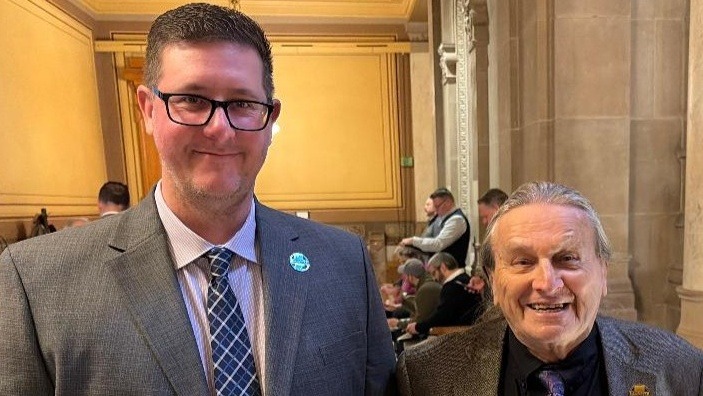
Indiana Assistant State Safety and Legislative Director, Andy McKeeman-Local 1202, and Kenneth (KR) Edwards, Local 206 Retiree and Father of Indiana State SLD Kenny (KO) Edwards

Over a Century of Combined Railroading Experience Gets the Job Done

Joining KO and Assistant SLD McKeeman at the Capitol ahead of the amendment’s final moments before passage was KR Edwards, KO’s father. With 103 years of railroading experience between the three of them, KO credits that knowledge and expertise for making a difference.

“We took over a century of experience to battle!” he said.

As Assistant SLD McKeeman prepares to take the reins after KO’s upcoming retirement, he says that this session was the perfect time for his successor to undergo his legislative training.

“Lobbying is a lot like railroading,” KO explained. “We had a two-person crew, and we hung in there.”

When negotiations opened at the Colorado Pacific Rio Grande Railroad, management came to the table seeking a series of concessions from SMART-TD Local 204 (Pueblo, Colo.). While early conversations included proposals that would have negatively impacted our members’ compensation structure, what the carrier ultimately pursued were cost-saving adjustments.

They believed they had the upper hand, but they ultimately underestimated who they were dealing with.

SMART-TD Local 204 members stood united. General Committee GO-020 General Chairperson Justin Schrock and Vice President Gary Crest made it clear from the outset: whatever discussions took place, our members would not move backward.

What followed was not a long, drawn-out fight. But it was an unusual and highly technical negotiation that required creativity, clarity, and solidarity.

When the dust settled, Local 204 ratified an agreement unanimously that delivers a 25% hourly wage increase over three years, along with meaningful quality-of-life improvements.

But this wasn’t a traditional wage increase story.

It took more outside-the-box thinking than that.

Understanding the Wage Structure

Prior to this agreement, members were compensated based on a 50-hour weekly guarantee. Unless they worked more than 50 hours a week, they received the same weekly pay. Overtime only began after surpassing that 50-hour threshold.

When the railroad sought concessions, your negotiating team developed an outside-the-box solution.

Rather than reducing the weekly compensation paid to our members, the agreement reduces the number of hours tied to that weekly guarantee.

Here’s what that means:

• Members continue to receive the same base weekly pay.
• The number of hours covered under that guarantee is lower.
• Overtime now begins sooner.
• The effective hourly rate increases because the same weekly pay is tied to fewer guaranteed hours.
• When additional hours are worked, they are paid at a higher overtime rate sooner than before.

In other words, the carrier came looking for givebacks.

Our members ratified an agreement that keeps their weekly earnings whole, reduces the number of hours they are on the hook for, improves quality of life, and increases the rate of pay when additional work is required.

That’s not putting the train in reverse. That’s changing notches while keeping it moving forward.

The Gains

Wages

Conductors, Engineers, and Designated Supervisors of Locomotive Engineers (DSLE) will realize a 25% wage increase over the life of the agreement. While the mechanics of that increase involve adjustments to the guaranteed hours structure, the result is higher effective hourly earnings and improved overtime opportunities.

Holiday Improvement

For years, Local 204 members had Easter Sunday listed as one of their contractual holidays even though this shortline railroad does not operate on Sundays, meaning that one of our members’ negotiated holidays was effectively wasted every single year.

This agreement fixes that.

Easter Sunday has been swapped for Christmas Eve, a day that doesn’t play favorites based on the calendar. December 24th falls on a scheduled workday at CXRG six out of every seven years.

In practical terms, this change is like adding a real holiday for Local 204 without giving anything up except the frustration of watching one of their contractual holidays consistently land on a day the railroad wasn’t operating in the first place.

That’s a quality-of-life win that members will actually feel.

PTO Cash-Out

Members can now cash out up to 10 hours of PTO each quarter, for a total of up to 40 hours annually.

Boot Allowance

A $150 annual boot reimbursement was secured.

Borrow-Out Protection

The ownership group behind Colorado Pacific Rio Grande operates three railroads under its umbrella. CXRG is the only one of the three that is organized and protected by a union agreement.

Prior to this agreement, when CXRG employees borrowed out to protect work on one of the other two sister railroads, they were not guaranteed the wages or rule protections they had secured on their home road. Those non-union properties operate with significantly lower wage scales and far fewer work-rule protections surrounding discipline and rule compliance.

That changes now.

Under this newly ratified agreement, Local 204 members are guaranteed the pay rates, rules, interpretations, and protections of their union agreement no matter which of the three railroads they answer the call to work on.

Our brothers and sisters will no longer leave their contractual protections behind when they cross property lines.

Union wages.
Union protections.

Every time.

Strategy, Solidarity, and Creative Leadership

This negotiation required a different kind of approach. It wasn’t about digging in for a prolonged standoff. It was about recognizing the carrier’s objectives and finding a solution that protected our members while improving their overall position.

“This carrier came to the table looking for concessions,” said General Chairperson Justin Schrock. “We were clear from the beginning that our members would not be moving backward. By thinking creatively and staying unified, we were able to restructure the guarantee in a way that protects pay, improves quality of life, and increases earning potential.”

Vice President Gary Crest emphasized the importance of solidarity in achieving that outcome.

“Our job was to keep the train moving forward,” Crest said. “In negotiations like this, you don’t always run it wide open in the 8th notch. Sometimes strategy requires adjusting the throttle. But the reverser? That never moves. Our members stayed together, trusted the process, and the result speaks for itself. Always forward.”