On April 13, 2026, SMART-TD’s General Committee of Adjustment (GCA) 457 reached a Tentative Agreement (TA) with the CPKC Railway covering members in the Central and Southern Regions. This agreement represents years of work to secure strong wages, protect benefits, and improve quality of life for our members.

Ballots will be mailed to all eligible SMART-TD members of GCA 457 beginning April 29, 2026. Voting will remain open through May 21, 2026, and will be conducted by BallotPoint. This is the same secure and trusted election service used in previous national and carrier-specific agreement votes.

An 8-Year Agreement with Industry-Leading Gains

This Tentative Agreement spans eight years, making it three years longer than the standard “pattern” agreements reached at other carriers across other crafts in the rail industry. This extended term provides long-term stability, predictability, and sustained wage growth for our membership.

One of the most significant highlights is a 32.5% General Wage Increase (GWI) over the life of the agreement. The first increase is effective July 1, 2025, with continued increases each year through 2033, steadily raising pay rates across all classifications.

If ratified by GCA 457 membership, the general wage increase will be retroactive to July 1, 2025.

Protection of Benefits and Core Agreements

The TA protects the National Health and Welfare plan for both current and future members. GCA 457 General Chairperson, Sam Habjan, pointed out just how critical priority is in today’s bargaining environment. It also reaffirms crew consist protections, maintaining the integrity of our agreements and preserving jobs.

Quality of Life Improvements

In addition to a 32.5% wage gain, this agreement includes meaningful improvements to members’ quality of life:

  • Scheduled Rest: All employees, including extra boards and pool service, will receive at least two consecutive rest days each workweek.
  • Held Away Pay: Members held away from their home terminal will receive continuous pay after 16 hours, improving compensation during extended delays.
  • Meal Allowances: Additional meal payments are provided when tied up away from home.
  • Personal Leave Improvements: Enhanced personal leave structure, with up to 12 days based on years of service, while protecting all existing entitlements.

Earnings and Work Opportunities

The agreement establishes clear pay structures and predictable earnings potential across multiple work schedules, including 5×2, 6×2, and 4×3 assignments. These structures provide members with the ability to plan their work-life balance while benefiting from increased compensation over time.

Guaranteed Extra Board provisions and alternative work opportunities, such as Alternate Training Status (ATS), also provide income stability during periods of reduced service.

Work Rule and Contract Improvements

Additional provisions in the TA include:

  • Defined basic day and overtime rules, ensuring overtime compensation after 10 hours of service
  • Improved claim handling and discipline timelines, reducing delays in resolving issues
  • Clear rules governing job assignments, bidding, and scheduling under a 7-day mark system

Vacation qualifications and usage have also been clarified, allowing members greater flexibility, including the ability to take vacation in single-day increments.

What methods will be used for voting

Packets mailed on April 29th will include personalized 12-digit access codes and instructions for dial-in telephonic voting. In the following week, text message and email reminders will be sent out to all eligible members who have not yet voted. Those electronic messages will include links to vote using a secure web-based portal.

When will voting end? How soon will we see the results?

Our 21-day ratification will close on Thursday, May 21, at 5:00 p.m. (ET). Results will be announced the following morning.

Is it true that if I abstain from voting, my vote is automatically counted as a vote to “ACCEPT”?

Despite this being completely false, the rumor circulates every time we have a tentative agreement. Every vote is important, and only the votes cast will get counted, so don’t miss your opportunity!

What should I do if I don’t receive a ballot in the mail?

In most cases, this happens when members fail to update SMART-TD with their current home address. Occasionally, there are delays with USPS. If you still haven’t received your ballot by the second week of May, please contact us by calling (620) 704-5384, or by sending an email to: smarttdgca457@gmail.com

A Step Forward and a Voice for Every Member 

We sincerely hope that our members recognize the value and importance of this TA and the hard work that went into arriving at this point. In any case, we encourage all members to vote and make your voice heard.

We also encourage all members to review the full TA, which can be found here and forward any questions they have to their Local Chairperson and/or General Chairperson. It is important to cast an informed and educated vote!
South Portland, Maine — For many railroaders, the instinct is simple. We handle problems in-house, look out for one another, and keep the operation moving as safely as possible with the equipment and conditions we’re given. It’s part of the culture. But when systemic safety failures go unaddressed, they stop being just workplace issues. They become public safety risks.

You don’t have to take the union’s word for it. You can always ask the people of East Palestine, Ohio.

SMART-TD’s Local 1400 out of Rigby Yard in South Portland, Maine, is at the point where they can’t bite their tongues about the safety conditions they and the people of South Portland are facing.

Critical Safety Gaps Put Workers in Danger

A major freight hub now operated by CSX, Rigby Yard has long been the subject of serious safety concerns dating back to its days under Pan Am. All these years have gone by with Pan Am and CSX being aware of these problems, but somehow our brothers and sisters are still dealing with them. Most of their safety reports have not brought about improvements and conditions have gotten even more urgent.

Among the most troubling issues reported by union members:

  • The absence of dedicated yardmasters, despite the size and complexity of the yard
  • The critical “man down” safety system for remote control locomotive (RCO) operations that isn’t assigned to be monitored by anyone
  • Employees working under conflicting rule systems (GCOR and NORAC), with some being disciplined under rules they are not even qualified in
  • Terminal managers lacking proper rule qualifications while simultaneously performing multiple safety-critical roles
  • Failures to communicate hot box detector alerts to incoming crews
  • A serious incident involving a pedestrian strike where CSX never actually responded and the crew was not provided Critical Incident protocol.

Individually, each of these issues raises serious red flags. All put together, they paint a picture of a terminal operating without the safety redundancies that railroaders (and the public) depend on.

Running Plays Without a Quarterback

The lack of yardmasters stands out as a glaring example of the problems at Rigby. Yardmasters are not just coordinators of efficiency; they are central to safe operations, ensuring trains are properly routed, movements don’t conflict, and hazards are addressed in real time. In a yard like Rigby, where freight traffic intersects with busy main lines, involving freight and passenger trains, the absence of that oversight is a hell of a lot more risky than the average “corporate staffing decision.”

The failure to monitor the RCO “man down” feature is another unacceptable and unexplainable gap. This system exists for one reason: if a railroader goes down and cannot respond, help must be dispatched immediately. In an environment where being on the ground normally means something has gone terribly wrong, ignoring those alerts is not an option.

And our risks don’t stay inside the yard.

Railroad safety failures have consequences that reach far beyond the right-of-way. Communities, families, and entire regions can be affected when warning signs are ignored. That’s why the concerns at Rigby Yard have drawn attention not only from our members, but from local residents in South Portland who have organized around the issue. They see what’s happening. And they understand the stakes.

Speaking Out Is Key to Preventing the Next Tragedy

SMART-TD members in Local 1400, along with Chris Lawrence the Chair of their General Committee and Dave Stevenson, our New England Safety and Legislative Director, have taken those concerns beyond the yard limits. They are taking them directly to policymakers. That effort recently led to a significant development.

The former Senate President for the State of Maine and current gubernatorial candidate, Troy Jackson attended a Local 1400 meeting to hear firsthand from the men and women working in these conditions every day.

It matters because when decision-makers take the time to listen directly to railroaders. The conversation changes. The reality of the job, the risks, the responsibilities, and the consequences become clear in a way they just don’t from a report or a briefing alone.

Jackson’s background advocating for working people in another dangerous industry of logging, shaped his response. He didn’t just hear our concerns. He engaged with them. And because SMART-TD members and leaders made the effort to bring him into that room, the situation at Rigby Yard will now factor into his decisions in ways it otherwise wouldn’t have.

That’s the lesson here.

Railroaders pride ourselves on handling our own problems. But when those problems rise to the level of public safety, we have a responsibility to go further. To speak up. To involve our communities. To bring in local, state, and federal leaders who have the power to demand change.

It doesn’t matter who holds office. What matters is that they understand what’s at stake.

And that only happens when we make our voices heard.

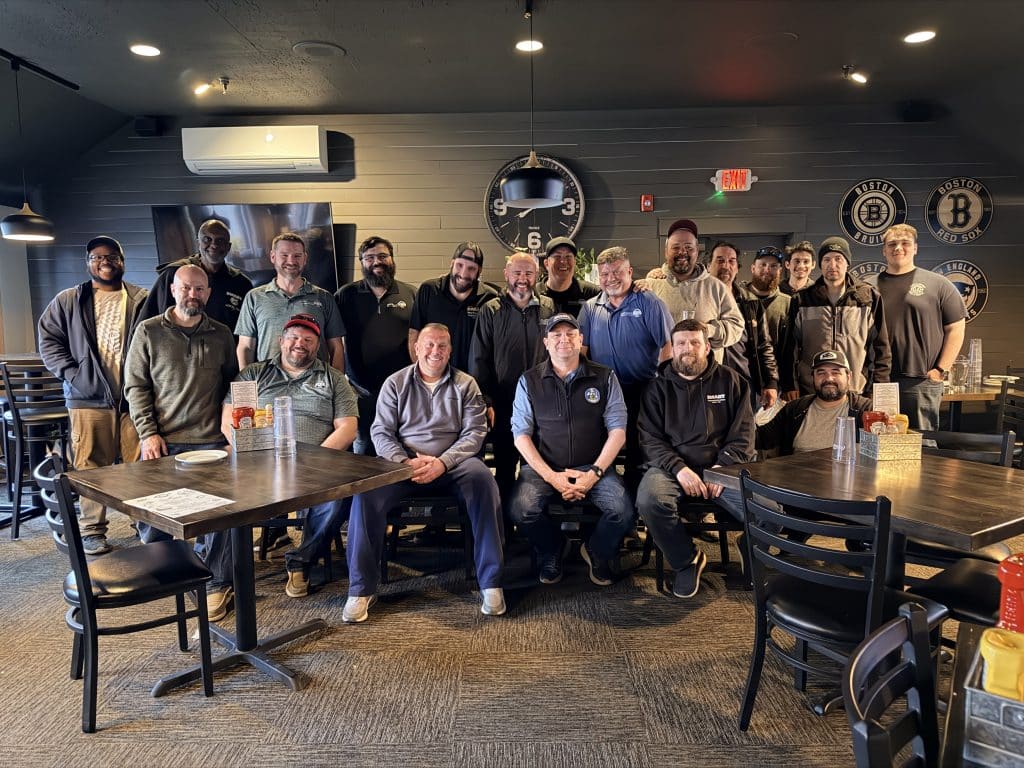
Senate President/Maine Gubernatorial Candidate Troy Jackson, seated front and center (in a baseball hat and vest) with SMART-TD Local 1400 at their April local meeting,

Local 1400 Leading From the Front

Our brothers and sisters of Local 1400, along with their legislative representatives, have set the example. They’ve taken some serious and long-standing safety issues and put them where they belong. That’s in the public eye, and on the desks of people who can no longer ignore them.

At the end of the day, this isn’t just about one rail yard in Maine.

It’s about every railroader who deserves to go home safe.
It’s about every community that trusts us to operate responsibly.
And it’s about making sure the next preventable tragedy never happens.

On April 20, 2026, a bipartisan group of United States Senators sent a letter to Congress supporting increased funding for the Railroad Retirement Board (RRB). At first glance, that may sound like another routine action in Washington, but it’s something that all railroaders should pay attention to.

This letter is about something that is very direct: making sure railroaders can actually access the benefits we have already paid for.

In the letter, the senators ask for the RRB to receive $185 million in administrative funding for Fiscal Year 2027. This is a big increase from their 2026 budget, but this is not a request for new benefits or new programs. It is about allowing the system to work for US.

The Railroad Retirement Board is different from most other systems. Railroaders do not rely on Social Security or standard state unemployment programs. Instead, we pay into our own system, which provides retirement, disability, unemployment, and sickness benefits. We take care of ourselves and each other in-house without taxpayer dollars. Our forefathers in rail labor set it up this way so we can control our own destiny.  

That means the 2027 funding request is not about asking the government for more money in the usual sense. It is about allowing the RRB to use the money that railroaders have already contributed.

The Truth: RRB is Under Strain

The Senators laid out the real problems facing the RRB. Disability claims are taking an average of 14 months to process. Outdated technology is slowing everything down. Staffing shortages are making it harder for the agency to keep up. A large portion of the workforce is nearing retirement, which could make things significantly worse.

For railroaders and their families, this isn’t just a policy issue. It means long waits during some of the most difficult times in our lives. After an injury, during an illness, or when work is unavailable, is not when we should get let down by a system that we pay a significant amount of money every month.

The fact that these U.S. Senators see us and get why we’re angry is why this letter matters.

It also matters because of who stood behind it.

Votes Not Quotes

SMART-TD wants to thank this bipartisan group of United States Senators who came together, not as Republicans or Democrats, but as leaders who are standing With Us in support of railroaders and our families. Those Senators are:

  • Amy Klobuchar (W-MN)
  • Josh Hawley (W-MO)
  • Roger Marshall (W-KS)
  • Bernie Sanders (W-VT)
  • Chris Van Hollen (W-MD)
  • Edward Markey (W-MA)
  • Tammy Duckworth (W-IL)
  • Andy Kim (W-NJ)
  • Ruben Gallego (W-AZ)
  • Tina Smith (W-MN)
  • Cory Booker (W-NJ)
  • Richard Durbin (W-IL)
  • Richard Blumenthal (W-CT)
  • Tim Kaine (W-VA)
  • Angela Alsobrooks (W-MD)

In this moment, each of them is standing up for railroaders. They are standing up for the retirees who more than earned their pensions, the injured worker navigating disability, and the furloughed conductor waiting on unemployment benefits. They are standing up for the principle that railroaders should not have to fight to access our own money.

This Support Is Not A Coincidence

It comes from years of work by SMART-TD members, State Safety and Legislative Boards, and our Local Legislative Representatives who have taken the time to educate lawmakers and share real experiences from the field.

It also reflects a deliberate approach.

As an organization, SMART-TD has focused on building relationships based on issues instead of  politics. That means sitting down with anyone willing to listen and focusing on what matters most, the needs of our members.

This bipartisan letter is a direct result of that approach.

It is a reminder that when we stay focused and engaged, we can build support in places where it might not have existed before. And more importantly, we can help ensure that the system railroaders depend on continues to serve us the way it should.

This should not be complicated.

Railroaders paid into this system.
We earned these benefits.

It’s our money!
We deserve to access it without delay, and without having to ask Congress permission to take care of our own.

SMART General President Michael Coleman brought the voice of every member of our union directly into a high-level conversation on Capitol Hill last week. On Wednesday, April 15, General President Coleman got the opportunity to address the Congressional Labor Caucus on the real issues facing working people in our industries.

The Congressional Labor Caucus, formed in 2020, has quickly become one of the most effective groups in the U.S. House focused on workers’ rights. This group of lawmakers from all over the country is united by a simple goal: finding practical solutions for American workers. Their growing influence and their willingness and ability to work across party lines made this a powerful opportunity for SMART to be heard.

GP Coleman Highlights the Role SMART Members Play Across the US

Coleman began his remarks by making it clear who we are as a union. Whether through sheet metal work that ensures safe buildings and clean air or through Transportation Division members operating freight trains, Amtrak, transit systems, and buses from coast to coast, SMART members build and maintain critical infrastructure and keep the country moving.

From there, he got straight to the issues affecting more than 230,000 workers across the United States and Canada.

Rail Safety Concerns Front and Center

Coleman didn’t hold back on the issue of rail safety. Three years after the East Palestine derailment, he told lawmakers that serious risks remain unaddressed and that his members are still facing unnecessary dangers day in and day out. Longer trains, reduced inspections, disabled wayside defect detectors, and pressure to cut crew sizes are all contributing to a system where more than 1,000 derailments still occur each year.

“This is unacceptable by any transportation standard,” was the clear message.

But Coleman didn’t just identify the problem. He laid out exactly what Congress can do to fix it for us. Coleman asked them to pass comprehensive rail safety legislation, maintain minimum crew sizes, and strengthen federal oversight and enforcement, closing loopholes and shedding light on the blind spots Railroad Corporations use to skirt federal regulations. It was a direct, solutions-focused approach that didn’t leave any guesswork about the path forward.

Transit Safety NOW, Not Later

Coleman also highlighted the growing crisis facing transit workers across the country. Violence on buses and transit systems is rising, and too many workers are left without the protections they need. He called on Congress to establish national safety standards, invest in protective infrastructure, and enforce stronger penalties for assaults on transit workers. He pointed out that multiple pieces of legislation are in front of Congress right now that will move the needle in this direction and noted that if lawmakers are serious about their support for the safety of American workers, these bills TD has gotten to the Hill are how they can act on it.

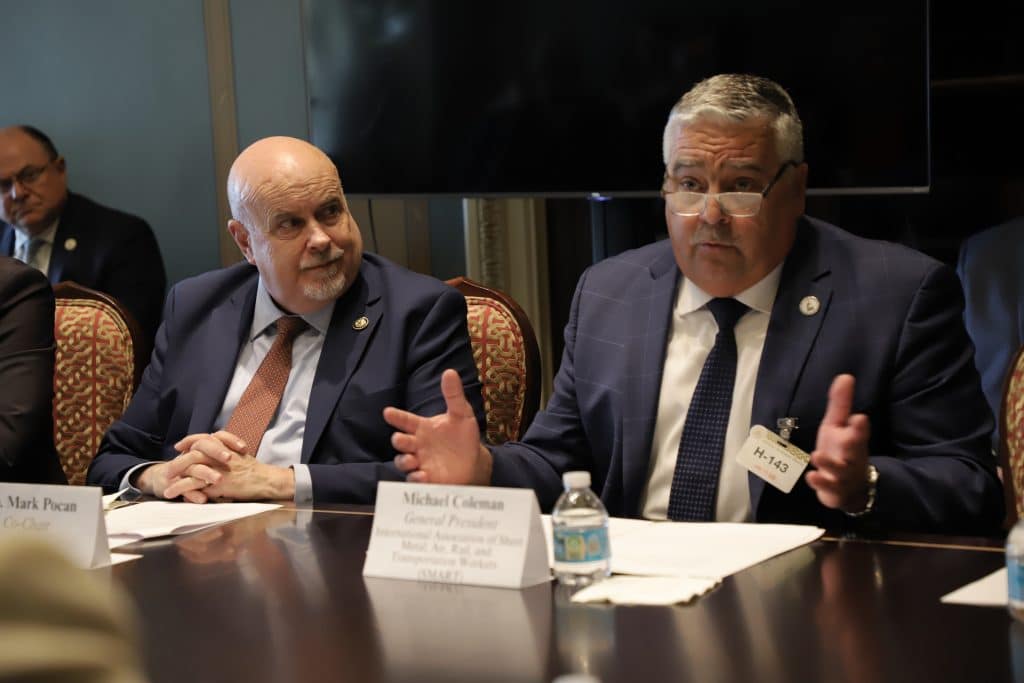
Congressman Mark Pocan (Wisconsin 2nd District) and Co-Chairperson of the Congressional Labor Caucus, SMART Union General President, Michael Coleman

Everyone Has Problems. Few Have Solutions.

Both SMART-TD’S National Safety & Legislative Director and Deputy Director, Jared Cassity and Don Roach, were in the room with the GP for these important conversations.

“I was proud of the representation GP Coleman gave our Transportation Division members,” Cassity said. “It was clear to everyone there that he understands the safety challenges our rail and bus members face every day. He spoke with authority, and he made sure our issues were heard.”

Roach described the moment as something unique.

“To have a group of lawmakers who are committed to labor all in one room, and then to walk them through exactly how they can help our members today, and why it matters to the country, was something to see,” Roach said. “He gave them not just the problems, but a clear plan to act on.”

While the discussion included key Transportation Division priorities, Coleman also strongly advocated for SMART’s sheet metal members, reinforcing the need for policies that support good-paying union jobs, strong apprenticeship programs, training standards, and safe, high-quality, union-built infrastructure in communities across the country.

Significance that Cannot be Overstated

The Congressional Labor Caucus has built a reputation for producing results. Its members are engaged, coordinated, and focused on advancing pro-worker policies. For SMART to be invited to speak to this group is a clear sign that our union is viewed as a leader in today’s labor movement.

That distinction belongs to every member.

From the General President’s office to the newest hires in rail yards and bus garages across the country, SMART’s strength comes from our people. The work done every day by our members is what has built the credibility that opens doors like this for our organization.

Your reputation and professionalism created this moment where our union’s voice carried weight in a room full of decision-makers. A moment where real solutions were put on the table and a moment that showed, once again, that when SMART speaks, Washington listens.

ALERT: Possible Barr Yard Closure Threatens Jobs and National Supply Chain

I’m reaching out with a story developing on Chicago’s South Side that threatens a critical freight rail hub in Chicago, which would lead to job loss, weakened supply chain efficiency, and create a negative economic ripple effect, both in Chicago and nationwide.

At the center is Barr Yard in Riverdale, IL. Recent actions by CSX Transportation signal a possible shutdown as early as June, and the company has already begun rerouting significant freight traffic away from the yard, resulting in a drastic reduction in available work and job loss at Barr Yard.

SMART-Transportation Division, the union representing workers at the yard, warns that this situation mirrors a previous CSX traffic shift that caused major rail bottlenecks nationwide. Concerns are mounting that the carrier is repeating a strategy that previously failed while attempting to avoid accountability by stonewalling transparency to the workers who provide this critical infrastructure service in the freight rail industry.

The closure of Barr Yard would have serious implications in the area and beyond, including:

Immediate job loss: Family-wage union positions are being eliminated, and workers are unable to follow their jobs due to different union agreements at other rail yards.

National supply chain speed reduction: Prior attempts to reroute this volume of freight have led to congestion stretching across the national rail network.

Public safety concerns: Increased train congestion and blocked crossings could delay emergency response times across the region.

If you’re interested, I can connect you with the union representatives monitoring this issue as it is developing, and provide additional context on the Collective Bargaining obligations CSX may not be meeting, as well as the impact this closure would have in Chicago’s South Side neighborhoods.

Thank you for your consideration.

Best regards,

SMART-TD Union

news_TD@smart-union.org

(216) 277-5283 (Office)

Following a newly issued cybersecurity warning from the Federal Railroad Administration (FRA), SMART-TD is alerting all members across both freight and passenger rail operations of what they need to know.  

The alert highlights a credible threat from Iranian state-affiliated cyber actors targeting railroad systems by attempting to access internet-connected industrial control devices used throughout rail operations.

What Risk Does Iran Pose to the U.S. Rail System?

According to the FRA, these foreign actors are specifically targeting programmable logic controllers (PLCs). These are the behind-the-scenes computer systems that help control critical railroad infrastructure.

If compromised, these systems could be manipulated or disabled, potentially causing service disruptions, or in the worst case, interfering with the safe movement of our trains.

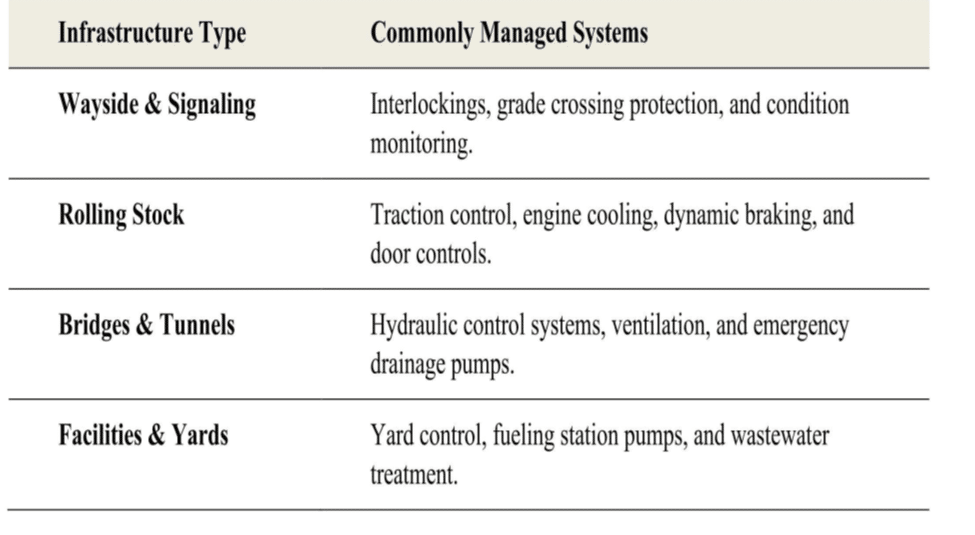
Federal officials also warn that attackers are scanning for exposed systems across the internet, looking for any vulnerabilities they can exploit. This means they are not just targeting one railroad or one type of equipment. This table, provided by the FRA, lays out some of their largest concerns.

Why This Matters to Railroaders

While much of this technology operates in the background, the impact of a cyber incident would be felt directly by the operating crews.

Railroaders are the last line of defense when something doesn’t look, feel, or operate the way it should out there. Keeping that in mind, we encourage you to read over the table of potential issues the FRA released today. Please include discussions of what this warning means on your territory as part of your crew’s job briefings.

The idea that our signals, crossing gates, drawbridges, ventilation in tunnels, and even our braking systems have been flagged as targets of cybercriminals is not something any of us can afford to blow off.

History has taught us that critical infrastructure like railroads often becomes a high-priority target during times of global unrest. With technology becoming more integrated into daily operations, the importance of our situational awareness only increases.

Stay Alert

This is not about creating alarm or inciting panic.  As a union, we want to reach out and reinforce the habits that already make railroaders the safest professionals in the industry.

SMART-TD encourages members to:

  • Pay attention to your train and onboard systems
    If something PTC/Trip Optimizer/Leader is telling you doesn’t match up with what you’re seeing out the windshield, take the time to verify and ensure safe operation.
  • Stay aware of your surroundings
    Pay attention to anything unusual in yards, crew rooms, or along the right-of-way.
  • Watch for unfamiliar individuals or activity
    Especially anyone attempting to access restricted areas, equipment, or railroad-issued devices.
  • Protect your equipment
    Keep tablets, radios, and other devices secure and within your control.
  • Report anything suspicious
    Whether it’s unusual behavior, unfamiliar devices, or system irregularities, we need to report it through the proper channels.
  • TRUST YOUR INSTINCTS
    Railroaders are trained to recognize when something isn’t right. That judgment matters. Please don’t ignore or second-guess yourself out there.

The Crew Is Still in Charge

Automation and digital systems play a major role in modern railroading, but they do not replace the judgment and responsibility of the crew.

If systems were to fail or behave erratically, it is the professionalism, training, and awareness of railroaders that keep trains moving safely.

Now is a good time to think through the basics that have always kept us safe.

  • What would you need if onboard systems became unavailable?
  • Do you have access to critical paperwork, including hazmat information?
  • Are you prepared to operate safely using your training and experience alone?

Railroaders have always adapted and overcome challenges. This moment is no different.

Looking Out for Each Other

Railroading has always been about teamwork and accountability.

This alert is a reminder that real safety doesn’t come from technology, no matter what the corporate guys say. As it turns out, Labor contributes to both Rail Safety and Profits. When you boil it down, safety has and will always come from the people who operate and protect this industry every day.

Stay alert. Stay professional. And continue doing what railroaders have always done best.

Looking out for each other and keeping America moving safely.

For years, our members working the Norfolk Southern main lines between Dalton and Lindale, Ga. (mileposts 32 through 84) have been dealing with something no railroader should ever have to tolerate: repeated, targeted, racially motivated harassment over company radio channels.

This isn’t a one-time incident. This has been happening for three years, and Norfolk Southern has known about it for just as long.

An unknown individual with access to NS narrowband radio frequencies has been singling out African American crew members and broadcasting racist, hateful garbage over the air. When crews try to escape it by switching to Channel Two, the designated emergency backup, the individual follows them over.

That tells us one thing loud and clear:
This person knows the system.

We Deal With Enough Already

Railroaders already have enough people on our backs.

We answer to…

  • Managers
  • Dispatchers
  • Crew Callers
  • A system that controls our time, our rest, and too often, our lives at home

We deal with enough pressure, enough stress, and enough uncertainty.

We don’t need this.

This added layer of harassment, this targeted, racist abuse, is not acceptable by SMART-TD standards.

Is “Safety First” Just a Phrase?

To their credit, Norfolk Southern did make one attempt to block the radio transmissions from the mysterious radio. At least that is what we were told, but they failed.

We were also told there is a reliable system that would stop this individual from continuing his harassment, but it’s “too expensive.”

That tells SMART-TD everything we need to know.

Because in this industry, we are constantly told one thing: Distractions are the enemy of safety.

Yet for three years, this company has allowed crews to endure harassment in the most disgusting, degrading ways imaginable, while operating trains carrying thousands of tons of hazardous materials through communities across Georgia.

Crews are angry.
Crews are distracted.
Crews are human.

And Norfolk Southern has allowed it to continue.

Georgia North Subdivision: Ignored, Dismissed, Endangered

On April 12 at Milepost 84 in Lindale Ga., a SMART-TD crew experienced the same kind of racist tirade, this time with a Norfolk Southern Trainmaster listening in real time. You might think this is where the company would step in and put an end to this, but you would be dead wrong.

The manager’s response wasn’t to find out who it was, issue an order to clear the channel, or even to tell him that he was committing a crime prosecutable by the FCC. Instead, he decided to go with a joke about how “They must have let that guy out of jail,” and move on with his day.

The crew was obviously shaken and distracted, but they did the professional thing and it was decided that they were not in the right mental state to safely operate and decided to stop and request a recrew. This was the safest course of action, as decided by the only two people whose opinion mattered in that moment.

They started to slow down the train, preparing to stop at a convenient crossing for a crew swap, and toned up the dispatcher. Before they could talk to her, the TM had jumped over to the dispatch channel and wanted to know what was going on.

The crew explained that they were mentally shaken by what they had just gone through and that they felt it was not safe for them to continue on their run. Their manger’s response was the added insult to injury for our guys.

“Do you have a signal on your PTC?”

When he was told they did, he ordered:

“Keep that train going!”

Once the dispatcher answered, our engineer explained the situation to her and expressed that it was his professional opinion that the safest course was to recrew the train. While they were explaining their situation to the dispatcher, the trainmaster, who was still on the dispatch channel, asked for a side conversation with the dispatcher on the phone. After the dispatcher had her talk with him, the crew got to speak with her again. All she could say to our guys was, “I’m sorry for what you went through, but do not stop that train.”

Let that sink in.

A crew clearly states they are not safe to operate, and they are told to move anyway.

SMART-TD’s Response: We Are Done Waiting

SMART-TD President Jeremy Ferguson has had enough.

“For three years, our members have been subjected to racist abuse over company channels while Norfolk Southern drags its feet and counts the cost. Let me be clear. If the company doesn’t have the guts to stop this, then by God, SMART-TD will. We are done waiting.”

As of this morning, President Ferguson announced a $10,000 reward for information leading to the identification of the individual responsible.

Ferguson went on to say, “The goal is simple: Find them. Charge them. Hold them accountable, including FCC violations for interference with interstate commerce.”

Leadership Speaks Out

Gregory J. Glenn, Local Chairperson and 2nd GCA Vice Chairperson, made it clear:

“No employee should be subjected to racism in the workplace, and no crew should be forced to operate a train when they have said it is unsafe. These are not gray areas. Norfolk Southern has failed on both counts, and that failure ends now.”

Kelvin Hill, Safety and Legislative Director for Local  1245, spoke directly for the crews:

“Our members have been reporting this for years. Some stopped reporting because nothing was done. That’s what happens when a company shows you it won’t stand up for you. But SMART-TD will. We’re standing up now, and we’re not backing down.”

President Ferguson also had strong words regarding the handling of the Lindale incident:

“Telling a crew to ‘keep it moving’ after they’ve been hit with racist abuse and say they’re not safe is beyond unacceptable. That lack of leadership puts our lives at risk, and those of every man, woman, and child who live and work in the towns we roll through. It’s plain and simple.”

A Pattern of Neglect

As Brother Hill pointed out, over the past three years, these incidents have become so common that some crews stopped reporting them altogether.

Why?

Because they knew the answer they’d get:
“Take it on the chin. Move your train. Get over it.”

That is not acceptable.
Not now. Not ever.

This Ends Now

SMART-TD is putting its money where its mouth is.

A $10,000 reward stands for information leading to charges against the individual responsible.

We will find them.
We will hold them accountable.
And we will make an example out of them.

Because this isn’t just about words, it’s about safety and whether we are the brotherhood we claim to be.

A distracted crew can miss a crossing. A distracted crew can take a turnout too fast. A distracted crew can run a work zone.

People get hurt. People get fired. People die.

Railroading is not a game.

We Stand Together

Railroaders are a family.

We live a life that most people will never understand.
We depend on each other.
We look out for each other.

We do not tolerate hate. And we sure as hell don’t ignore it when one of our own is under attack.

The railroad does enough damage to our mental well-being as it is.

We will not allow that damage to come from within our own ranks, or from someone abusing the system meant to keep us safe.

This is about human decency.
This is about professionalism.
And above all this is about safety.

If Norfolk Southern won’t fix it, SMART-TD will.

Contact: Local Chair, Greg Glenn: gglennsmart1245@gmail.com, or Leg. Rep. Kelvin Hill: kelvin0738@yahoo.com with any information you have that will help in this cause, and for details on how to collect the reward money President Ferguson is putting up.

Ask Chat GPT how long trains are, and you’ll probably get an answer that’s nearly identical this:

“For U.S. Class I railroads, average freight train length isn’t a single fixed number, but industry data and railroad reports generally put it in this range:

  • Typical average: about 5,000 to 7,500 feet (roughly 0.95 to 1.4 miles)
  • Trend in recent years: increasing toward 7,000–8,500 feet as railroads run longer trains for efficiency
  • Some railroads (like BNSF and Union Pacific) often report averages on the higher end of that range
    It varies by commodity and territory:
  • Intermodal trains: often shorter, faster
  • Bulk (coal, grain, ore): longer, sometimes exceeding 10,000 feet
    So if you had to summarize it cleanly:
    👉 Most Class I freight trains today average around 1 to 1.5 miles long, with a clear trend toward longer consists.”

That’s what shows up in Google and AI. That’s what lawmakers see. That’s what regulators see and what reporters see when they are looking for stats to include in their articles.

Even if those averages were “true,” that doesn’t help the crew on the 16,000-footer.

You’re the ones out there running these trains. You know what they really look like. You know how long and heavy they are. And you know that what the average is doesn’t tell the real story of what is going on with train length.

Because the problem isn’t whether the “average” train is 6,000 feet or 7,500 feet.

The problem is that trains are being run far beyond 15,000 feet, and longer, every day.

Maybe the best part of this quote is the “insight” provided about the long coal and grain trains versus the tiny stack or intermodal versions.
That one claim tells you everything you need to know about how misleading the public information can be.

And that’s not an accident.

How Railroads Shape Train Length Statistics Online

Chat GPT, Google Gemini, and whatever other AI bots are out there informing the world about our realities don’t make this stuff up on their own. They reflect what information is available in public records, public statements, and press clippings.

The railroads control the numbers. They control what gets reported. They control what shows up in studies, in news stories, and now in search engines and AI answers. These bots don’t create a warped perception; they just reflect how twisted the public’s perception really is. It’s like the back of a Highlights Magazine that the railroads are selling as a legitimate picture.

And one of the easiest ways to shape the narrative is by focusing on “averages.”

Because averages smooth everything out. They hide the extremes. They make the situation sound normal, manageable, and safe. But the reality you’re dealing with isn’t an average; it’s the upper end.

It’s the trains that keep getting longer, heavier, and harder to handle.

It’s the ones that push the limits of infrastructure, braking systems, and crew safety.

Then, when SMART-TD pushes for regulations saying the railroads need to give the FRA and Congress real data on actual train lengths (not just averages) they turn around and say:

“We don’t track that.”
“It’s too hard.”
“We don’t have the resources.”

But somehow, when it’s time to fight us in Congress or in the statehouses, they suddenly have these manufactured numbers and “averages” ready to pull out.

And those numbers get repeated so often that they start to be used to fact-check each other.

Meanwhile, you’re out there running 15,000-foot trains, which are the biggest safety concerns. And those are the ones that get left out of the conversation.

History We DON’T Want to Repeat

The Guinness World Record for the longest freight train is about 4.6 miles.

Think about that.

That used to be a one-time, headline-making event done as a spectacle or publicity stunt.

Now ask yourself how far off is that from what you’re seeing every day?

These railroads are asking us to push the laws of physics to the breaking point every day. This is why we need your help.

SMART-TD’s Safety and Legislative Department are fighting for laws right now to limit train lengths. We’re taking this fight to Congress, to state houses, and to the media. And we are up against a wall of bad information.

We need the truth from the people who actually do the job.

 What are the real lengths you’re running?
 What are the real weights?
 What are the real car counts?

Send us proof:

  • Pictures of your timebooks (with train info)
  • Redacted work orders showing cars, length, and tonnage
  • Screenshots from your tablet (if allowed)

We don’t need guesses or what you remember. We need real numbers we can point to in committee hearings.

This is how we push back. This is how we show lawmakers what’s actually happening. This is how we break through the noise the railroads are putting out there.

They’ve got their version of the story.

Now it’s time to let the facts speak for themselves.

The railroads have always been good at spitting on us and telling us it’s raining. We can’t let their fake news dictate our reality on this one.

People making decisions about this industry need to see exactly what you’re dealing with, straight from you. Please give us the ammo needed to win this fight.

You can help by sending the requested information to dbanks@smart-union.org. As always, we will go out of our way to make sure nothing will get put out in public that is traceable to any railroader.

FOR IMMEDIATE RELEASE:

Maryland Senate Advances Two-Person Crew Bill, Putting Rail Safety First

ANNAPOLIS, MD (April 4, 2026) — Maryland Senate leadership announced its intent to advance Two-Person Crew (2-PC) rail safety legislation to Governor Wes Moore’s desk, marking a major victory for the safety of workers and communities across the state.

The bill is expected to move out of the Senate Finance Committee and pass the full chamber ahead of the legislative session’s close.

Driven by months of grassroots advocacy, the effort was led by SMART Transportation Division (SMART-TD) members who testified, met with lawmakers, and pushed for action in Annapolis.

This legislation is rooted in a simple principle: protecting lives.

With rail lines crossing nearly every corner of Maryland, requiring a minimum of two qualified crew members on freight trains is a common-sense safety measure designed to prevent disasters and protect both rail workers and the public.

This is not about any one union. It is about the safety and well-being of every Marylander.

Member-Led Effort Delivers Results

Following the model of previous legislative victories in the state, including Maryland’s landmark 2025 transit worker assault law, SMART-TD members played the decisive role in moving this bill forward.

Maryland State Safety and Legislative Director David Pendleton, in his second year in the role, credited the union’s membership and local leadership. “This was a total team effort,” Pendleton said. “Our members showed up. They made the calls, they gave testimony, and they carried the message. I witnessed top to bottom incredible leadership from our local officers across Maryland. In our office, Tom Cahill and Brittany Garris were sensational and Nationally, Brother Directors Cassity and Roach went above and beyond to make sure we had all of the support we needed to deliver this to our members! I could not be more proud of what everyone accomplished together.”

National Leadership and Support

SMART-TD National Safety and Legislative Director Jared Cassity emphasized the importance of unity across the organization. “What happened in Maryland is exactly what this union is built to do,” Cassity said. “When our members organize, when local leadership steps up, and when we work together across every level of this union, we can move mountains. This legislation will save lives, plain and simple.”

Deputy National Safety and Legislative Director Don Roach, who until recently served as Michigan State Safety and Legislative Director, highlighted both the challenge and significance of Pendleton’s leadership. “I know firsthand the pressure that comes with this job,” Roach said. “You’re responsible for your members, your state, and the safety of the public, and you’re often stepping into big shoes.”

Roach noted that Pendleton took over the role following longtime Maryland SLD Larry Kasecamp. “David came into this position with a lot on his shoulders, tremendous pressure to build upon the foundation that Larry laid, ” Roach continued. “In a very short time, he has made a real, measurable impact on the safety, job security, and quality of life for our Maryland members. That should not be lost on anyone.”

Safety Over Profits

As trains grow longer and carry more hazardous materials, maintaining adequate crew size has become a critical safety issue. SMART-TD members and Maryland lawmakers worked together to ensure communities are not treated as collateral damage or reduced to a line item on a corporate balance sheet.

The union also recognized the leadership of Governor Wes Moore, House Speaker Joseline Pena-Melnyk, Senate President Bill Ferguson, and legislators in both chambers who stood up to corporate pressure to prioritize public safety.

A Clear Message

This victory underscores what can be achieved when working people organize and engage in the legislative process. The Maryland Safety and Legislative Board would like to give a special thanks to coalition partners the MD-DC State Federation AFL-CIO, Metropolitan Washington AFL-CIO, MD Legislation Coalition, Unitarian Universalist Environmental  Justice Ministry, MD Pipe Trades Association, IAFF, IBEW Local 26, Metropolitan Baltimore AFL-CIO, and ATU Local 1300.

With final passage expected soon, Maryland is poised to take a major step forward in protecting rail workers and the communities they serve. As Maryland SLD, David Pendleton pointed out, “A lot of us in 2026 are living our lives discouraged, but today, what SMART-TD and the great state of Maryland have proved is that the system still works as long as ‘We, The People’ are willing to stand up, participate in it, and show the willingness to make it true.”

###

For more information or to connect with SMART-TD’s Maryland State Safety and Legislative Director, David Pendleton, or a member of his leadership team, please contact:

Dan Banks

dbanks@smart-union.org

(216) 227-5283

Alyssa Hansen

alyssa.hansen@smart-union.org

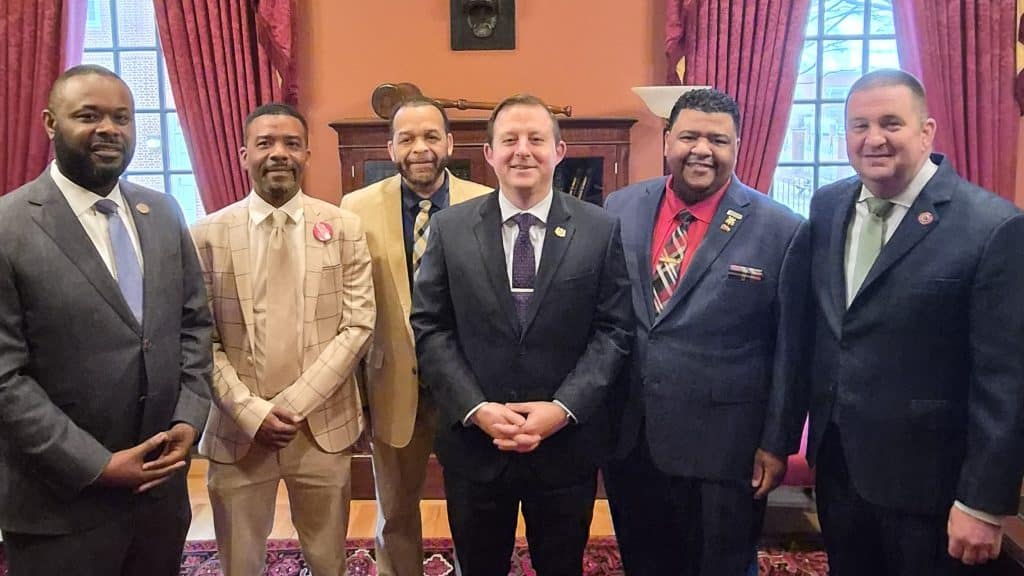
Senator Cory McCray, Metro Baltimore AFL-CIO President Courtney Jenkins, President of ATU 1300 Mike McMillan, Senate President Bill Ferguson, SMART-TD Maryland Director David Pendleton, President Local 1664 of International Association of Fire Fighters Jeff Buddle,

We all learn something early in this industry: the railroad will not accept responsibility for your safety. For railroaders, this truth is most dangerous not on an ordinary workday, but on the worst day of their life.

When a serious injury or fatality occurs, the situation becomes life-altering for the worker and their family. For company officials and local managers, it becomes something else entirely. It’s a career-defining event. Management’s attention immediately turns to numbers like lost-time, reportable injuries, liability exposure, and how the event will affect their performance record and bonuses. In those moments, our well-being often takes a back seat to management’s self-preservation.

Across the industry, management’s performance is evaluated on minimizing injuries, reducing costs, and controlling outcomes. That pressure does not disappear when someone is hurt; it intensifies. When careers, reputations, and bonuses are on the line, the railroads’ focus shifts rapidly toward damage control. In those moments, injured workers are not viewed as equals. They are viewed as a risk. And risk must be managed.

When You’re Injured, the Clock Starts Ticking

After a serious injury or fatality, time becomes the enemy. What follows is a high-stakes race between the railroad and the union.

A race to the hospital.
A race to the family.
A race to the accident scene.

The railroad industry’s documented pattern following an injury is for company representatives to arrive quickly while a member is injured, exhausted, frightened, and heavily medicated. In those moments, workers and families are vulnerable. Conversations are framed as “routine,” “just part of the process,” or even “helpful.” Paperwork appears. Statements are requested. Medical record releases are signed. Access is assumed.

Once a document is signed, a statement is given, and access is granted, the damage is too often done. That is why this moment is where SMART-TD matters most.

One Local Chair, Three Critical Battles

When tragedy strikes, local officers are immediately fighting on three fronts at once:

  • At the hospital: ensuring injured or medicated members are not pressured into giving statements or signing documents, and that medical records are not being released to the railroad
  • With the next of kin: making sure families understand they are not required to speak with company representatives and should not sign anything. Sometimes, the local chairman is even required to physically place themselves between families and railroad management
  • At the scene: ensuring evidence is preserved, and facts are not altered, omitted, or selectively framed

No Local Chair can be in three places at the same time. And too often, members assume, “The union has it covered.”

Here is the truth. The union is not a building or an office. The union is its members.

When something goes wrong, the railroad has a plan, a protocol, and is prepared for these moments. We must be just as prepared. Preparation requires participation, not just being a side line spectator.

Texting, gossiping, and posting divisive, negative comments on social media are not helpful ways to help our members. Showing up, is.

What Every Member Must Do

If you want the union to be there when your family needs it most, these steps are not optional.

1. Download the SMART app: Every member and officer should have the SMART app downloaded onto your phone and other devices. Stay up to date on breaking information about your union and local officers. Find contact information for your SMART-TD Designated Legal Counsel (DLC) on the app before an emergency strikes.

2. Get Help From Your Designated Legal Counsel (DLC): Should you or one of your members suffer injury on the property, contact your local DLC. Your union provides legal counsel who are experienced in representing you and your members when an on the job injury occurs. Your DLC are SMART approved and know what to do when your members need help the most. DLC specialize in enforcing the laws protecting you, your members, and your families.

3. Keep Your Contact Information Updated: When time matters, local officers should not have to search through outdated phone numbers, addresses, or emergency contacts. Too often, the railroad knows how to reach a family before SMART-TD does. Update your contact and emergency contact information with SMART-TD every time it changes. No exceptions.

4. Fill Local Officer Positions: Vacant officer positions weaken our response instantly. When only a few positions are filled, and those members are working or in the away-from-home terminal, coverage collapses. When one person is forced to choose which battle to fight, the others are lost automatically. If your local has vacancies, please step up. Protect your coworkers and their kids when it counts.

5.  Educate Your Family: Your family must know what to expect. They need to understand they are not required to speak to company representatives, that all communication should go through the union and Designated Legal Counsel, and that medical records do not belong to the railroad. Railroad workers are not subject to workers’ compensation systems, so the railroad has no rights to your medical records. Medical information is private, period.

Our families must be prepared to say, “We will not speak with you. Contact the union and my DLC.”

When It Happens to One of Us, We All Must Act

If a brother or sister is hurt, we need to go to the hospital. We need to go to their family’s home. We need to go to the scene. You don’t have to be an officer to help. Post up, hold the line, and keep the railroad from controlling the situation.

This is not extreme. It is necessary.

The railroad has never hidden what it is. What matters now is how we respond.

When something goes wrong, be the union you would want standing between your family and the railroad.