As we settle into the fall, I’d like to take a moment to look back on what was an incredibly busy and productive summer for our Canadian locals. From participation in cross-border conferences and key gatherings here in Canada to important preparations for upcoming project implementations, this summer showcased the development and strength of our union.
We kicked off the summer with a strong presence at the Canadian Convention in Toronto and the SMART Leadership Conference in New York. In New York, we delivered Canadian-specific breakout sessions, which gave our members a platform to explore new resources, discuss innovative recruitment strategies and address unique challenges and opportunities facing our locals from coast to coast.
The momentum continued in Chicago, where over 300 Canadian Building Trades delegates participated in the Tradeswomen Build Nations Conference. The energy and solidarity were truly inspiring, and a testament to the growing strength of tradeswomen across Canada. Events like this not only celebrate how far we’ve come, but also empower SMART members to expand their involvement, grow their networks, step into leadership roles and establish women’s committees within their locals.
Back at home, the Ontario Conference met in Windsor to celebrate recent victories in organizing efforts and to prepare for the next wave of megaprojects set to shape the province’s future. It was a powerful reminder of what we can accomplish through unity and the value of strong partnerships with federal and provincial governments to advance key projects and worker priorities. As part of the conference, a SMART Army event brought members out for a local community clean-up. This was another meaningful opportunity for our members to give back to our communities.
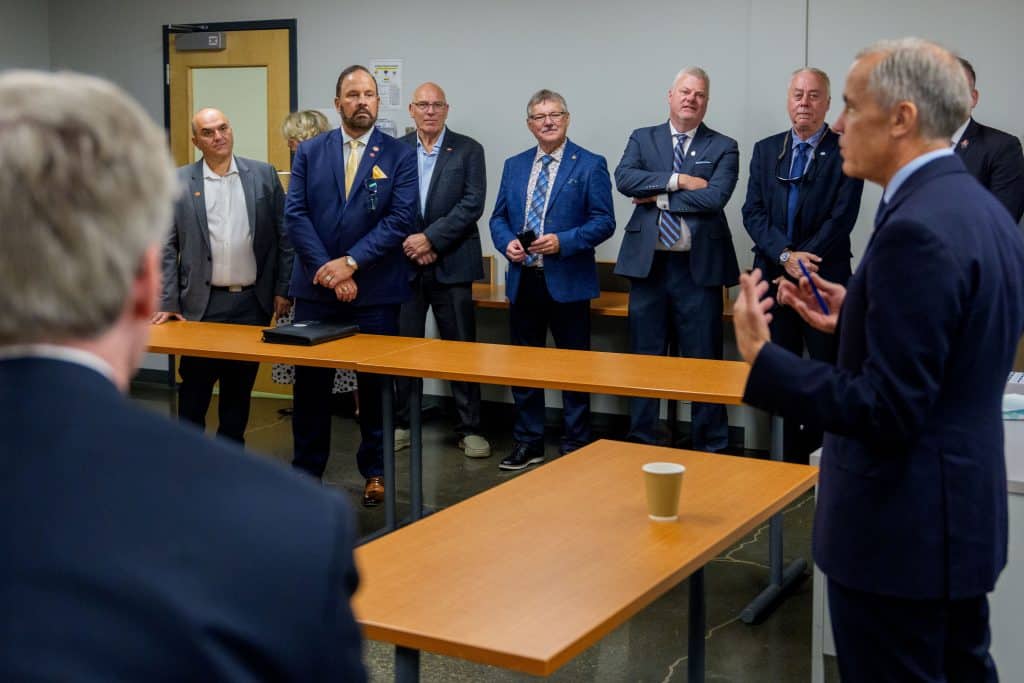
Most recently, I had the privilege of joining the Canadian Building Trades Executive Board for a significant announcement with Prime Minister Mark Carney.
Wall, third from right, and the CBTU Executive Board with Prime Minister Carney
The prime minister officially launched the Major Projects Office, a new initiative designed to fast-track critical infrastructure and energy projects across the country. This office aims to cut approval timelines to under two years, an important step in supporting a growing and evolving Canada.
Five transformative projects have already been greenlit, representing more than $60 billion in investment and creating thousands of jobs, including opportunities for SMART members across Canada.
We are also excited to celebrate a major milestone on the East Coast — Local 409 in Halifax will mark its 80th anniversary since being chartered. We are incredibly proud of Local 409 for its accomplishments, including growing and diversifying the local’s workforce. Congratulations to all current and past members on this incredible achievement.
Moving forward, there are many promising initiatives underway, and we will continue to work closely with the federal government, provincial governments and our locals as they complete and prepare for more green infrastructure and other nation-building projects that will be vital to Canada’s future.
Thank you to everyone who made this summer such a success. As always, we remain committed to building a stronger, more inclusive and forward-thinking union across Canada.
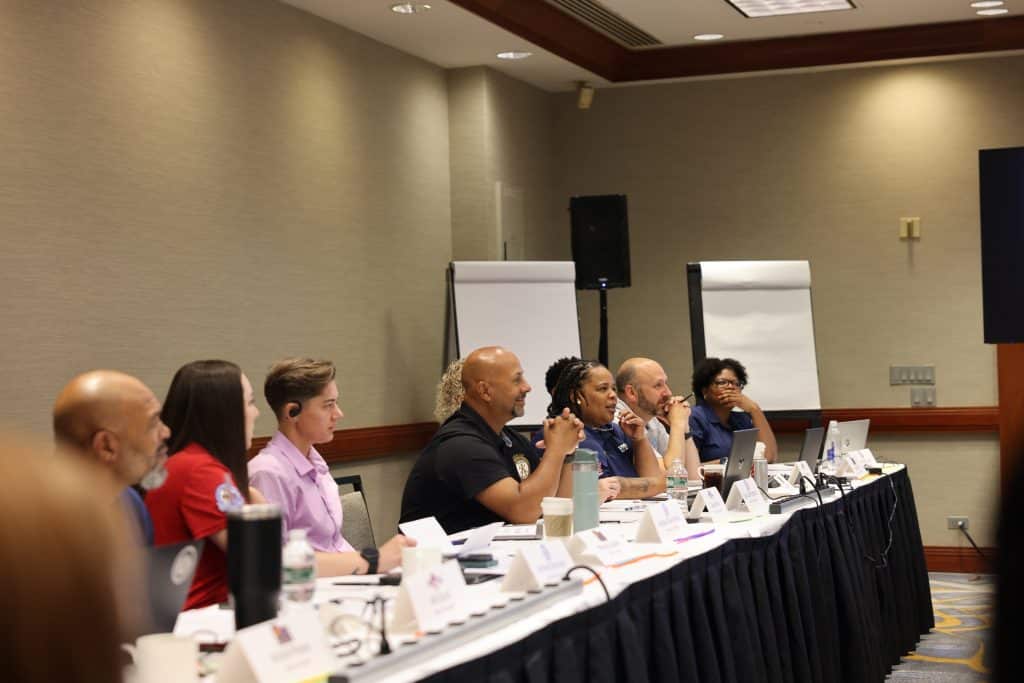
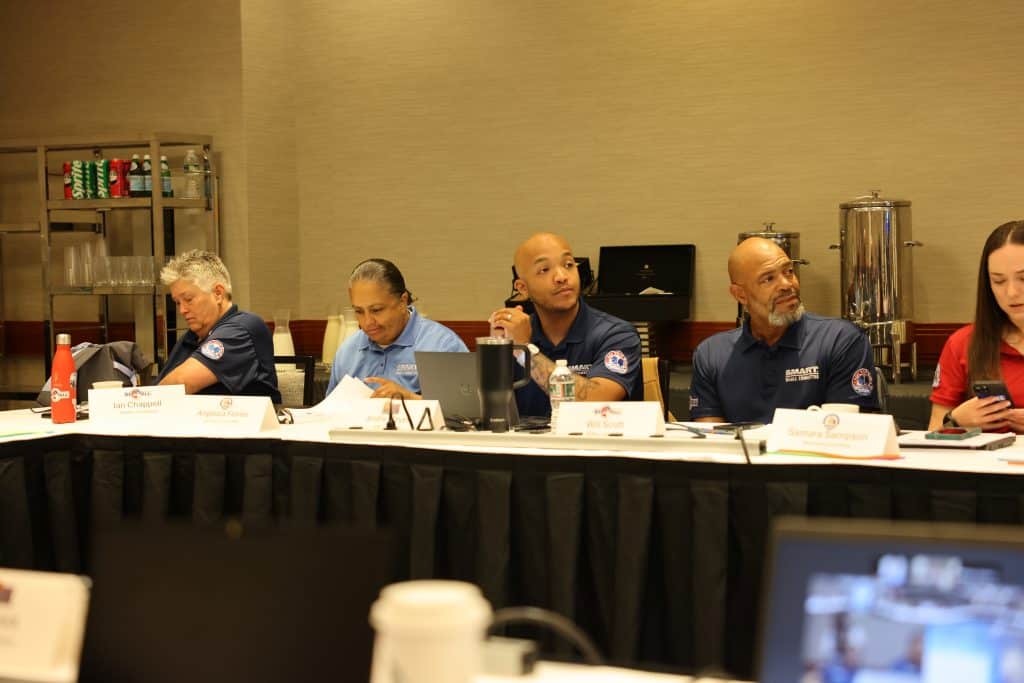
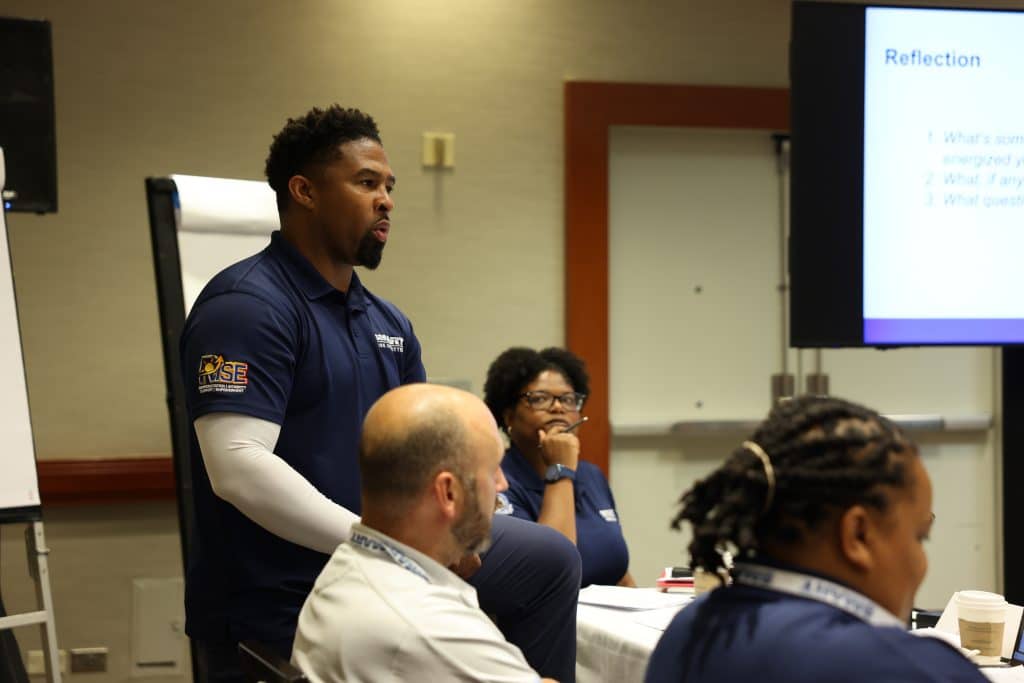
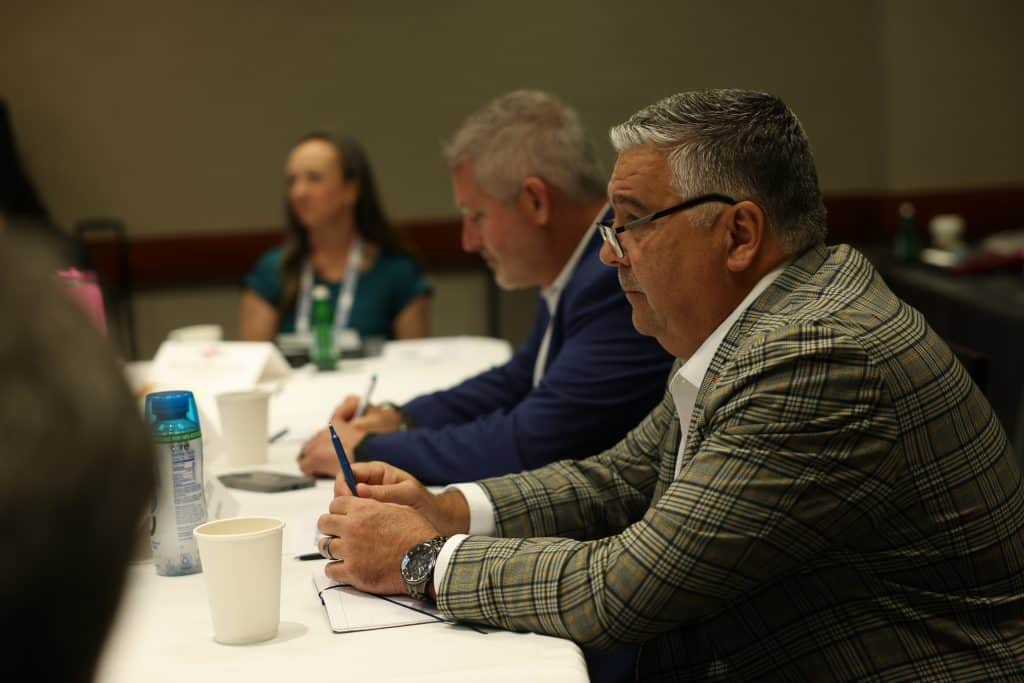
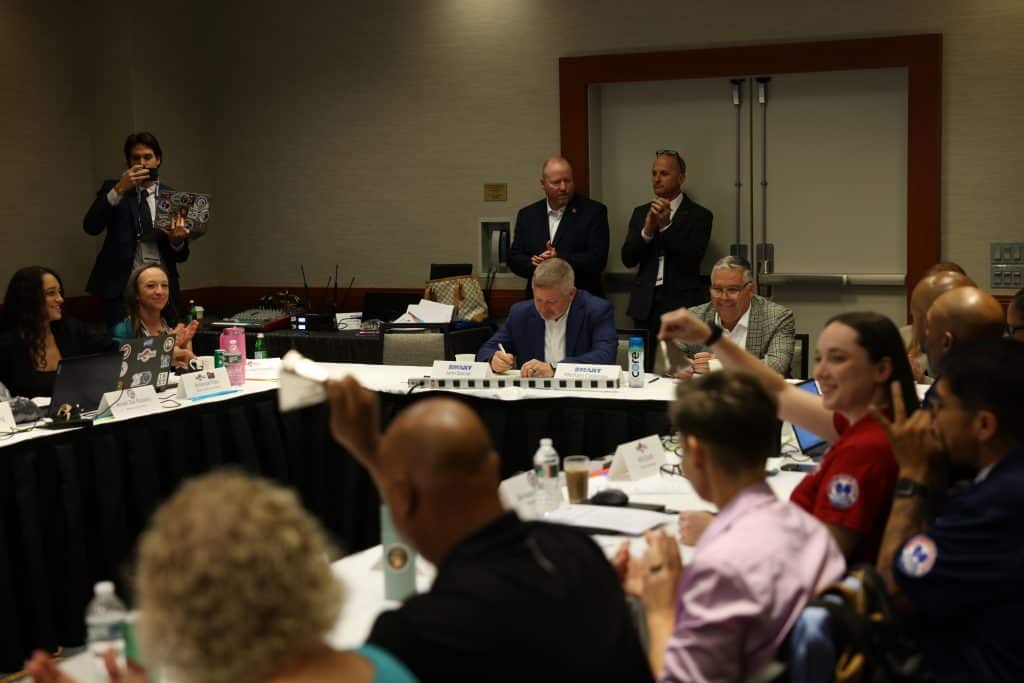
Members of the SMART Women’s, BE4ALL and RISE Committees met on Sunday, August 3, ahead of the 2025 SMART Leadership Conference — bringing members together from across North America to discuss the committees’ individual and collective efforts to strengthen our union.
Spanning a variety of goals and focus areas, from recruitment and retention to internal organizing, members of the three committees spent the day building solidarity, networking, reviewing the activities of each individual committee and offering feedback to ensure each committee’s work is as effective as possible.
“We’re not scared,” said Local 85 (Atlanta) President and BE4ALL Committee member Jan Chappell. “We want everybody to be in the trade.”
The Women’s Committee and BE4ALL (Belonging and Excellence for All) Committee reported on their internal subcommittees’ work. Women’s Committee subcommittees included those focused on parental support and helping local union women’s committees, while BE4ALL members presented on the committee’s culture change work, partnerships with local nonprofit and community groups to help recruit and retain members, the Rapid Response Protocol and beyond.
The RISE (Representation, Integrity, Support, Empowerment) Committee, meanwhile, reported on its nascent RISE Spaces program, a resume-development webinar and an ongoing RISE cookbook effort.
General President Michael Coleman and General Secretary-Treasurer John Daniel also stopped by the meeting, speaking to members about the International’s commitment to strengthening our union through the three committees’ work.
“I want to thank all of you for all the work that you’re doing, and I know it’s not easy,” said General President Coleman. “I can’t say how much I appreciate what you’ve done for your groups, and for our organization.”
He continued: “I’m committed, John’s committed and this organization is committed to doing better. … I’m proud of you, and I just want you to know that you have 110% of our support in what you do.”
General Secretary-Treasurer Daniel added: “Everything General President Coleman said, he’s not just saying that because we’re in this room. My role is to implement General President Coleman’s strategies and his clear-eyed vision: North is North. Make sure we support ALL members.”
General President Coleman and General Secretary- Treasurer Daniel also fielded questions from attendees about topics including the July BE4ALL Town Hall in Cleveland, how SMART can support locals with recruitment, retention and data, dealing with political developments that negatively impact members, and beyond.
June 27 is an important day for Brother Bill Link.
In 1972, it was the day that he began his railroad career. In 2025, it was the day that he officially retired after 53 years of service, the highest Amtrak seniority in the country.
“I loved it. It’s like riding on a rolling treasurer chest, if you’re conscious,” reflected Brother Link two weeks into his retirement. “I found out it was the perfect job for me.”
An Abrupt End to Post-Graduation Limbo
After graduating from Lincoln University in the early 1970s, Brother Link wasn’t in a hurry to find a job.
Instead, he was hanging out at the bar with his friends before heading home between three and four o’clock in the morning, just “living life after college.”
Then one morning he woke up to his 6’3”, 300-pound truck-driver father standing over him. He told him “Boy, if you think you’re gonna be sleeping in my house when I’m going to work after I put you through college, you got another thing coming.”
The next thing Brother Link knew, he was at a job fair in New York City.
“I said ‘Hell no, I don’t want to county money in a room all my life’ so I went up to Central Park and hung out for an hour or two.”
While he was there, he thought about a suggestion from a neighbor back home about the railroad looking for new hires.
Too Tall to be an Engineer
He vividly remembers taking a test with about 11 other men before being told that he was picked for the premier engineer job but was too tall.
As an African American during the height of the Black Power Movement, Brother Link figured that “reasoning” had something to do with his skin color. But it wasn’t that or physical stature that made him too tall. It was his hair.
He waited in a room for about 20 minutes before someone came in and told him “Mr. Link, if you want a job, come back in one hour without that” and pointed to his afro.
“That was the day the revolution died,” said Brother Link, laughing.
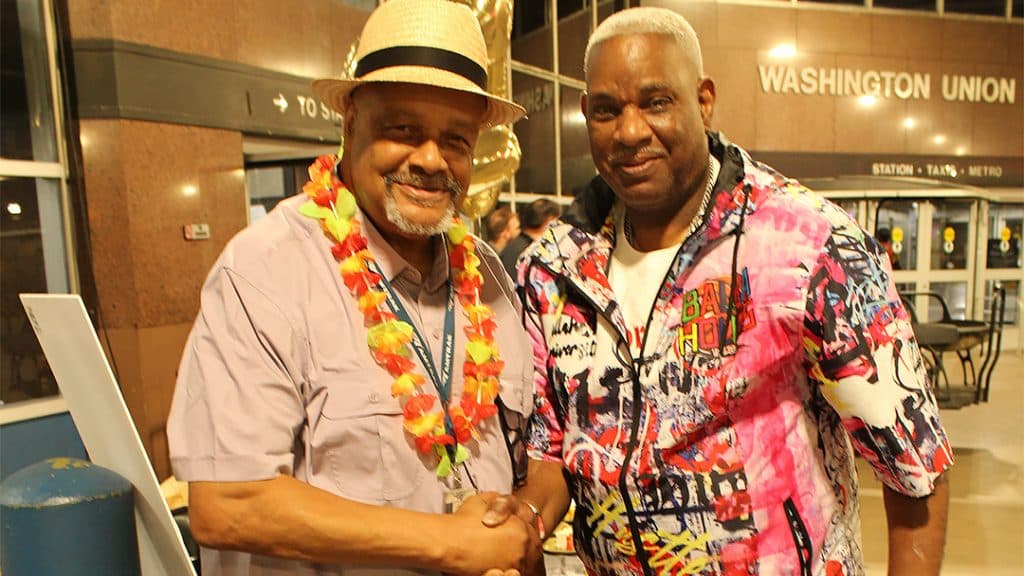
Brother Bill Link (left) at his retirement celebration (Photo courtesy of David Pendleton)
Starting a New Chapter
The day the revolution died was also the birth of Brother Link’s more than five-decades on the rails.
“I was working on freight trains, coal trains, whatever. So I had a mixed career,” he explained. “It wasn’t always on the passenger train, but by the time I got older I got on the passenger train.”
That’s where Brother Link had some of his most impactful experiences.
“The conductor had a lot of roles to play,” he said. “He’s a priest, he’s a policeman, he’s an entertainer. When the train is late, he’s got to keep the people informed and occupied, things like that.”
His last passenger that he talked to before retirement was especially memorable.
“[It] was [singer] Dionne Warwick. She rode the first-class car, and I told her my story about how I’m getting ready to retire.”
The connection that she shares with the railroad is even more memorable: her father was a Pullman Car Porter.
“Can you imagine that?” asked Brother Link. “She was telling me she could always remember two trips that she took. One was to Florida with her father on the train and one to California. She’s the nicest lady.”
Breaking Barriers
Even though he met his fair share of superstars and “shakers and bakers,” Brother Link is most proud of the path that he forged for other African Americans.
“For all we hear in the media and all we hear everywhere, the railroad was very accommodating to race at the time I got hired. There were individuals that were ridiculous, but the railroad as a whole was acceptable.”
Back in the 1970s, his role caught some riders by surprise.
“In my early years on the railroad, African Americans who were 90 years old would come up to me and say ‘Son, we thought we’d never see this day’ when they saw me as a conductor. So I always viewed myself as an ambassador for our race.”
Brother Link was also the first African American to serve as the president of Local 1470.
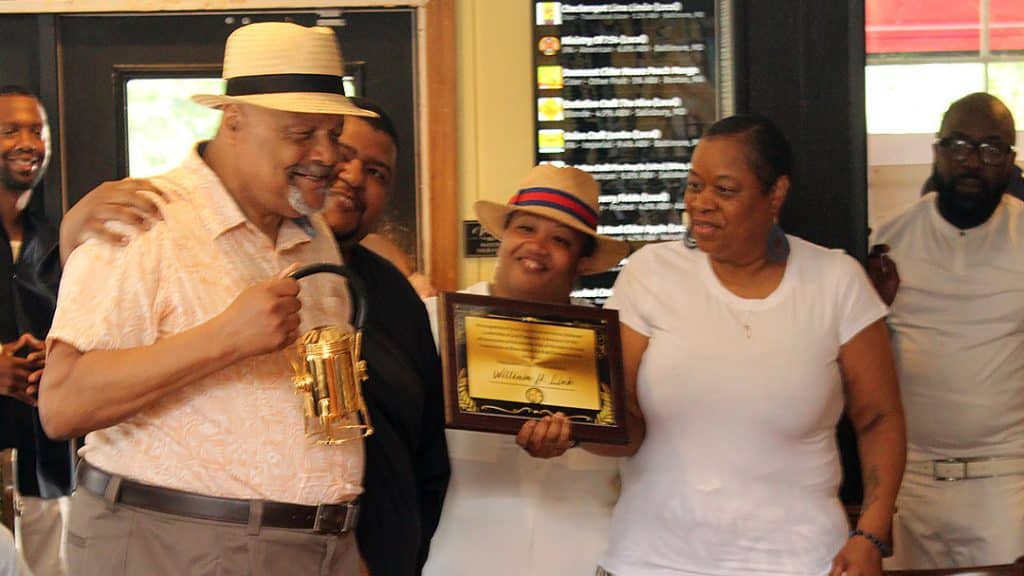
He received the A. Philip Randolph Lifetime Achievement Award and was presented with the Golden Lantern from SMART-TD upon his retirement.
Brother Bill Link receives the Golden Lantern at his retirement celebration (Photo courtesy of David Pendleton)
At the end of the day, he attributes his accomplishments to the foundation that his mother laid for him.
“[She was from] the Jim Crow South so she didn’t want to see us boys getting hurt or anything,” explained Brother Link. “She always told us to be humble, caring, kind and courteous. That was the major ingredient for me making it 50 years.”
Honoring a Mentor and Friend
One of the SMART-TD members who already misses Brother Link is Maryland Safety and Legislative Director David Pendleton, who cites him as his first railroad mentor.
“If you looked up the word ‘trailblazer,’ there will probably be a picture of him somewhere in there,” said SLD Pendleton. “When you think of Local 1470, you think of Bill Link. He’s been a mentor to so many of the members, including myself. I became a union officer at his urging.”
His absence from the train for the past couple of weeks has been an adjustment, but SLD Pendleton is excited for his union brother’s next chapter.
“I’m very happy that my friend is finally retiring and enjoying the years of work that he’s done,” he said. “I’ve been on the railroad over 20 years, and these are the first weeks that I’ve ever been there and he’s not there. So it’s just bittersweet for me. But I miss my buddy, no doubt about it.”
Photo courtesy of David Pendleton
At 75 years old, Brother Link is ready for whatever lies ahead, especially after his retirement celebration.
“The Bible says it best. To all things, there’s a season. A time to be born, time to work, time to live, time to retire, time to die. I had my run with the railroad, and the party they gave me is fulfilling for a lifetime.”
SMART General President Michael Coleman has published a number of videos in recent months — aiming to cut through the noise of corporate media and partisan influencers, and to make sure SMART members are informed about the issues affecting their jobs, their futures and their families.
In an August video, General President Coleman briefly discussed the California high-speed rail project. The Department of Transportation pulled $4 billion from the project — funds that were already committed.
“I believe they’re playing politics with our members’ jobs,” Coleman said.
“This project is covered by a project labor agreement and has already created over 15,000 jobs, many of which are building trades jobs, and it’s going to create even more jobs in the future, and these are jobs for SMART members,” he added. “The California High-Speed Rail Authority also has an agreement with SMART to cover SMART railroaders. And these jobs are covered by the Railway Labor Act, the Railroad Retirement Act and the Railroad Unemployment Insurance Act.”
“This project is not only an investment for our members now, but for our members in the future,” Coleman concluded. “This administration should stand with our members and recommit to this project.”
The Sheet Metal Occupational Health Institute Trust (SMOHIT) provides resources to protect union sheet metal workers on the job, at union halls and at training centers across the United States and Canada. SMOHIT provided automatic external defibrillators (AED) and bleed kits to all locations five years ago, and continues to help members become certified in CPR.
Providing naloxone is no different.
Every SMART union hall and training center is eligible to receive one cabinet with four boxes, or eight doses, of naloxone, a synthetic, potent antagonist for opioid drugs, including morphine and fentanyl. Boxes contain detailed, illustrated instructions on how to administer the drug in case of suspected overdose, which is as easy as spraying the dose inside the patient’s nose. The metal cabinets, offered to sheet metal union halls and training facilities as a member benefit, are not alarmed and are meant to be hung in highly visible areas, said Jeff Bradley, SMOHIT program administrator.
“We wanted to make it accessible to as many people as possible,” he said. “If they run out, they can always order more from us at no direct cost.”
Once hung on the wall at a training center or union hall, the cabinet’s doses are available for whoever needs them, whether the suspected overdose occurs inside a union building or elsewhere. Members can take a box if they’re concerned about a family member or take one to keep at the jobsite. If an opioid drug is in the medicine cabinet at their house, they should have naloxone on hand. Senior citizens are often prescribed naloxone in addition to any opioid medication in case of accidental overdose. With children, even teens, in the home, naloxone is a good thing to have on hand in case the unthinkable happens.
Opioid overdose can happen to anyone who is taking the medication or who purchases any kind of medication from anywhere other than a licensed pharmacy, including social media and the internet. Workers who share medications or teenagers who buy anxiety medications from social media ads are all at risk — because counterfeit opioids look just like the real thing, said Chris Carlough, SMART director of wellness and mental health support.
“The cabinets and doses were purchased to help members save lives, inside and outside of union buildings,” Bradley added. “An overdose can happen to anyone, anywhere, and it’s good to be prepared no matter the circumstances.”
Construction workers build their careers in dangerous situations. Even with every safety measure in place, injuries happen, and when they do, 55% of injured construction workers receive a prescription opioid to manage the pain. Of those injured workers, 29% received two or more opioid prescriptions, according to a study from the Workers Compensation Research Institute.
The risk of overdose is a present danger, and that danger differs across populations and industries. Although the rate of overdose deaths in the United States decreased almost 27% from 2023 to 2024, union construction workers are 10 times more likely to develop an opioid use disorder if given a long-term prescription, according to the Centers for Disease Control and Prevention (CDC).
“The primary reason we’ve experienced a significant drop in opioid overdoses has been the presence of naloxone, so it’s vital we make sure it is visible and available throughout our industry,” Carlough said.
The Belonging and Excellence for All initiative, or BE4ALL, is a joint effort by SMART, SMACNA and the International Training Institute (ITI) designed with one goal in mind: strengthening the unionized sheet metal industry. By boosting recruitment and retention, among other things, BE4ALL aims to bring in and keep the best of the best in the industry, benefiting both local unions and signatory contractors.
Even with that goal, though, members have expressed confusion about BE4ALL. Some think of it as a diversity, equity and inclusion (DEI) initiative. Some think it’s a program put on by just SMART, or just SMACNA. Others don’t know about BE4ALL whatsoever.
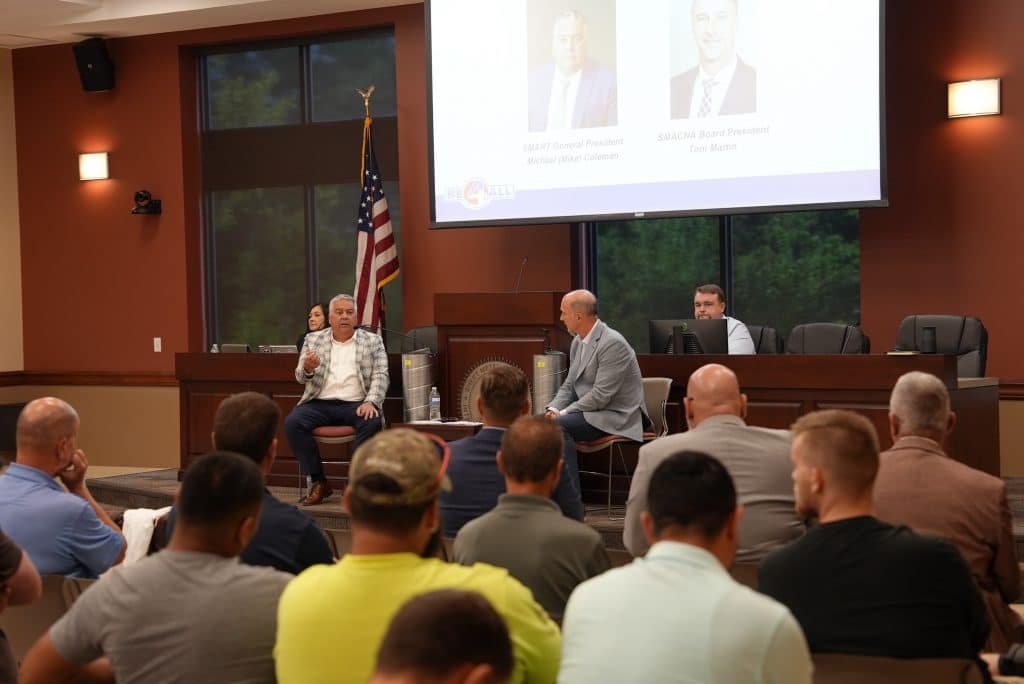
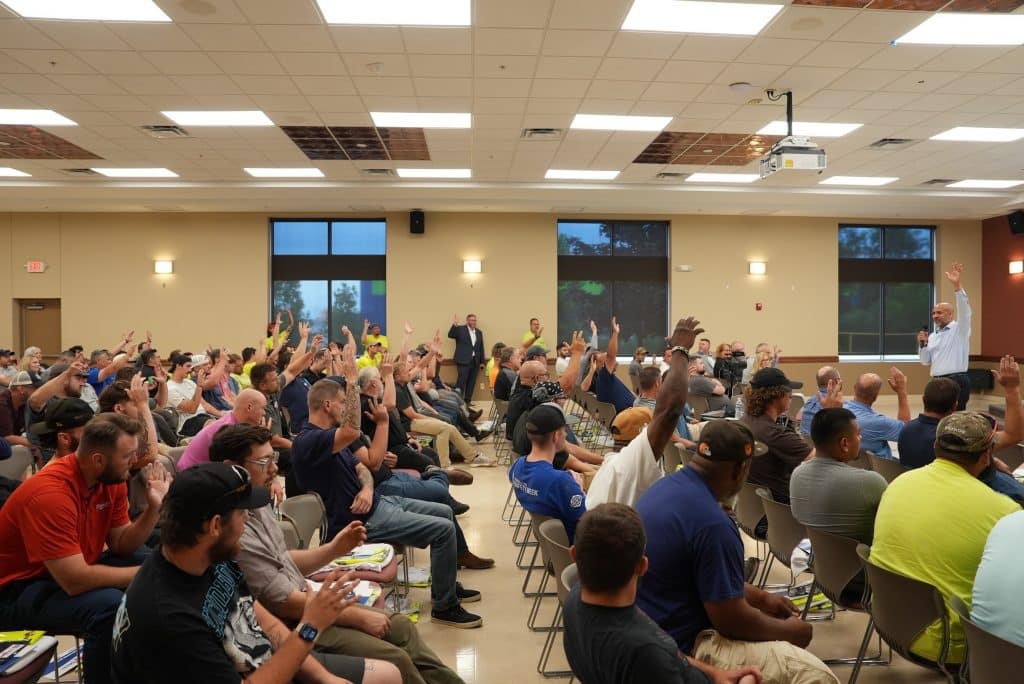
That’s why, on July 17, 2025, SMART General President Michael Coleman and SMACNA President Tom Martin hosted the first-ever BE4ALL Town Hall at the Local 33 union hall in Cleveland, Ohio, discussing the initiative and taking questions from the more than 160 in-person attendees and viewers across North America watching via livestream.
In a powerful conversation moderated by Dushaw Hockett, General President Coleman and President Martin discussed actionable strategies for recruiting and supporting the next generation of sheet metal workers. From communication and mentorship to foreperson training and open-door leadership, they highlighted how BE4ALL is raising the standard for both workers and workplaces — benefiting every single member in the process.
“I spoke before about making our industry more competitive and more attractive to end users. We’re able to bring in more members and train more members, and we’re able to retain those members, if we’re out there supporting [each other],” Coleman said. “We all know the more members we bring in and the more that we retain, [that] builds our pensions, helps with our health insurance cost.”
“If you build confidence, you have respect, you have good culture within your organization, your association or your individual contractor, it helps the bottom line,” added Martin.
Both leaders talked about specific accomplishments achieved by BE4ALL so far. Coleman highlighted the Rapid Response Protocol, a guide to preventing and responding to incidents of bias, harassment or harm, calling it “one of the best documents I have ever read in this industry.” Martin, meanwhile, touched on the BE4ALL website, beforall.org, which has best practices, Toolbox Talks and other resources readily available.
In addition to their moderated discussion, Coleman and Martin took questions from viewers and in-person attendees. Questions spanned a range of topics, including how SMART and SMACNA are working to recruit high school students; how we can better retain the members we recruit, particularly when we know that one bad experience is enough to deter many other potential members in a given community; how we can continue to prioritize mentorship in our industry; and how rank-and-file members can get involved with BE4ALL.
In a defining moment, one virtual attendee asked if BE4ALL was lowering the standards of quality and craftsmanship in the industry.
“Absolutely not,” General President Coleman responded. “In fact, it’s the opposite. It’s about raising the standards for everybody. Along with the support comes the expectation that you’re going to be the best you can be in this industry. That’s what this is about … it makes us all better, it gives us that competitive edge.”
Information in this article is current as of September 18, 2025.
Temperatures were rising and spring was in the Maryland air on March 12, 2025. SMART Local 100 apprentice Kilmar Abrego Garcia had just finished a shift for a signatory contractor and picked up his five-year old son from school. He was headed home with his son strapped into a car seat designed for children with disabilities.
As he drove on Baltimore Avenue in College Park, Md., a law enforcement officer pulled him over.
Abrego Garcia thought it was just a routine traffic stop. It was anything but.
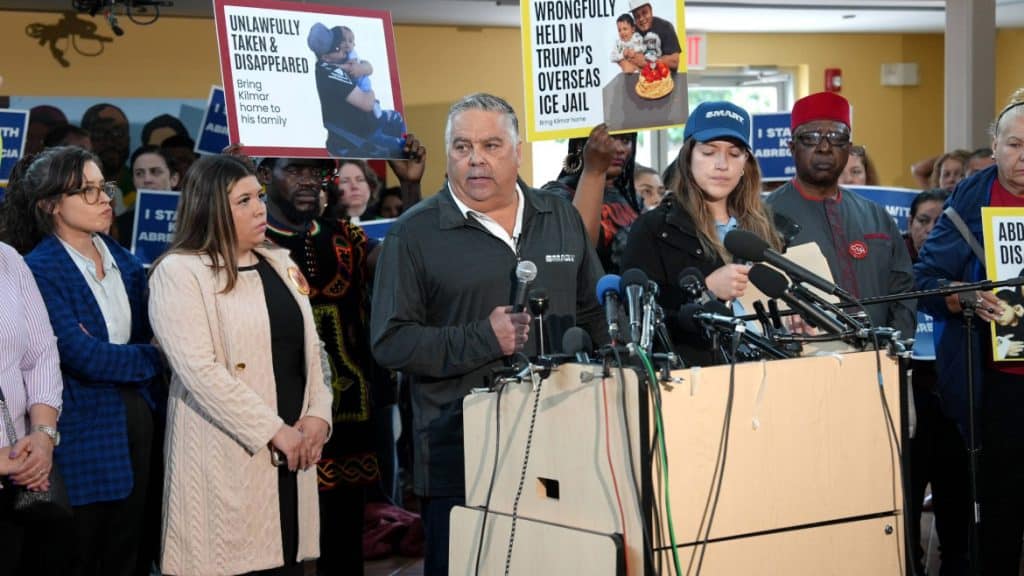
The events that followed marked the start of a monthslong saga for Abrego Garcia during which he was unlawfully sent to El Salvador and held at the notorious CECOT prison. They also reveal just what’s at stake when we say, “an injury to one is an injury to all.” Because the case of Kilmar Abrego Garcia is not just about one man. It is about all of us — and the rights we all stand to lose when one person is deprived of theirs.
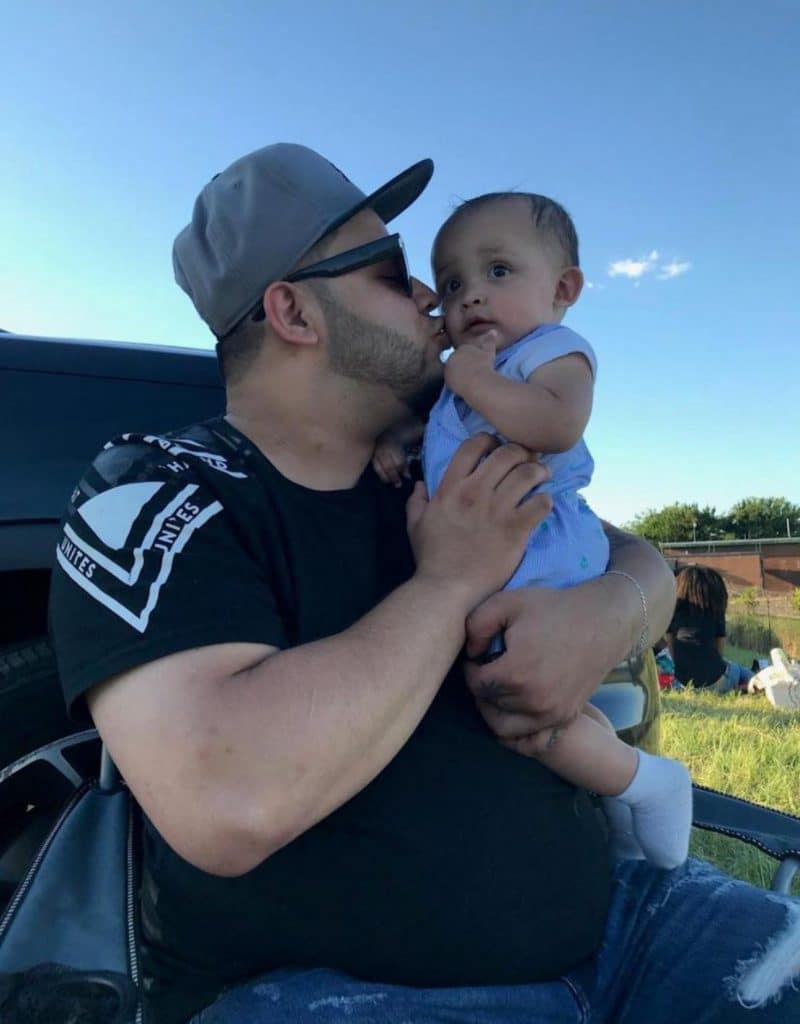
Kilmar Abrego Garcia with his childAbrego Garcia (right) with his wife, Jennifer, in Baltimore
The right to work
Kilmar Abrego Garcia joined Local 100 as an apprentice in January 2025. Five years prior, an immigration judge had granted Abrego Garcia “withholding from removal” status, which prohibited the government from deporting him to El Salvador on account of a credible fear of persecution and gang violence. Like many SMART members and millions of taxpayers in the United States who are not citizens, Abrego Garcia’s status authorized him to work in the United States — and to union representation.
As SMART House Counsel Luke Rebecchi noted, “millions of people in this country, many of our members, are not citizens but have every lawful right to be here and to work. And it’s incumbent upon the union to represent them.”
Abrego Garcia’s immigration status prevented the federal government from sending him to El Salvador, what Rebecchi called “the one and only place that he could not be removed to.” But that is exactly what the federal government did, just days after he was detained. The federal government later sought to justify his deportation by describing Abrego Garcia as a gang member, but it never gave Abrego Garcia theopportunity to defend himself against the allegation. It simply removed him.
General President Coleman speaks at a press conference in Maryland
When Abrego Garcia arrived in El Salvador, he was immediately imprisoned in the Centro de Confinamiento del Terrorismo (CECOT); a prison known worldwide for alleged human rights abuses. He was later moved to a different prison in response to public pressure, but according to United States Senator for Maryland Chris Van Hollen — who met with Abrego Garcia in El Salvador — he had no contact with his wife, his children or legal counsel for months. His attorneys have since alleged that he was tortured and lost 30 pounds during his imprisonment.
Following Abrego Garcia’s removal to El Salvador, and in the months since, various media personalities and governmental officials have resorted to attacking his character and made all sorts of allegations against him, as justification for his removal. These attacks made headlines, but they do not change the central fact of the matter: The federal government did not give Kilmar Abrego Garcia an opportunity to defend himself before he was summarily removed to El Salvador. In other words, he was deprived of due process.
The constitutional right to due process
The Fifth Amendment of the United States Constitution states: “No person shall be … deprived of life, liberty, or property, without due process of the law.” The 14th Amendment adds: “nor shall any State deprive any person of life, liberty, or property, without due process of law; nor deny to any person within its jurisdiction the equal protection of the laws.”
As SMART House Counsel, Rebecchi works to protect the rights of SMART members on a daily basis. He explained that the wording in the Constitution around these rights to due process is very specific — and it protects every one of us from unfair persecution.
“The Constitution mentions ‘citizens’ in many places, but it specifically states ‘no person’ [in the Fifth Amendment],” Rebecchi said. “The use of ‘person’ was intentional, and it protects all persons in the United States regardless of their citizenship status. Before the government deprives a person in the United States of life, liberty or property — for instance, by imprisoning them, fining them or deporting them — that person is entitled to a fair hearing and the opportunity to defend themselves against the charges. Without process of law, without an opportunity to present your case, to have your liberty decided by someone who’s neutral and impartial — without that, we’re all at the whims of somebody else, of whoever occupies the Oval Office. Without due process, then it’s whatever they say. That’s a terrifying reality to live in.”
Rebecchi noted that the right to due process has particular significance for SMART members.
“None of us would stand for an employer who just says, ‘no, you don’t work here anymore.’ We negotiate contracts that ensure that members have a right to be heard,” he said. “That protects them at work. That’s one of the guarantees of the labor movement.”
SMART General President Michael Coleman summed it up succinctly following a press conference in April: “When Kilmar Abrego Garcia was mistakenly deported to El Salvador, he was denied his right to due process, and we at SMART are fighting to ensure he receives the treatment he is granted under law — just like we would, and we always will, fight for the rights of every single SMART member.”
Justice delayed
On March 24, 2025, Abrego Garcia’s wife, Jennifer, sued the government on behalf of herself, Kilmar andtheir son. Almost immediately, the federal government admitted that Abrego Garcia’s disappearance to El Salvador was an “error,” and on April 4, Judge Paula Xinis ordered the government to return Abrego Garcia to the United States. The government appealed the ruling all the way to the Supreme Court. On April 10, the Supreme Court ruled against the federal government and ordered the federal government to facilitate his return to the United States.
And yet, Abrego Garcia remained in an El Salvador prison until early June.
“It’s just not enough to admit that you made a mistake,” General President Coleman said in April. “You need to fix it.”
From coast to coast, SMART members fight for justice
The magnitude of Abrego Garcia’s case became clear immediately, and SMART leapt into action. SMART leaders and members rallied with Abrego Garcia’s family, lawyers and supporters, demanding justice and due process. General President Coleman appeared on CNN to emphasize the importance of due process and constitutional rights.
SMART leaders also helped rally the labor movement to the cause. General President Coleman, International Union of Painters and Allied Trades (IUPAT) President Jimmy Williams, UNITE HERE President Gwen Mills and Liz Shuler, president of the AFL-CIO, sent a letter to Ambassador Milena Mayorga of El Salvador on May 1, 2025, calling on the Salvadoran government to immediately release Abrego Garcia and respect his right to due process.
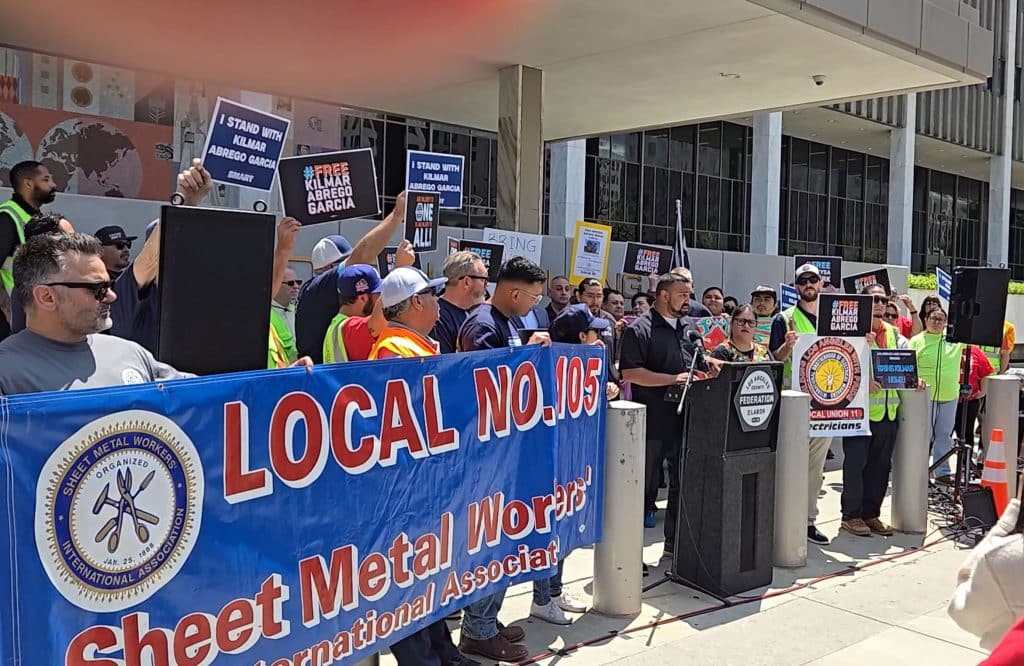
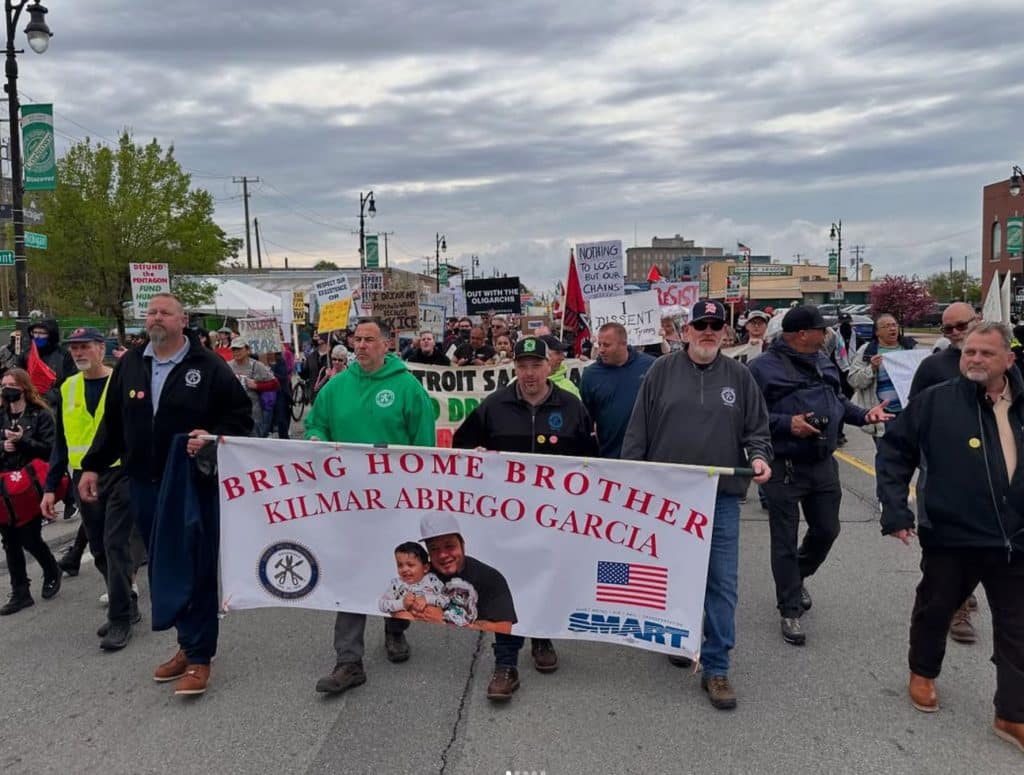
International leaders were joined by SMART members from coast to coast. On May 1, members of Local 80 helped lead the Detroit May Day parade, with Business Agent Jason Grunenwald delivering a speech demanding justice for Abrego Garcia. And in Los Angeles, Local 105 officers and members rallied with sister unions and members of Congress, demanding thatthe government bring Abrego Garcia home and give him due process.
“Today it’s Kilmar, tomorrow it could be me,” said Local 105 member Alex Calderon. “Tomorrow it could be any one of us or our loved ones. Please fight to bring Kilmar back home.”
An injury to one is an injury to all
It hasn’t only been SMART members fighting for Abrego Garcia’s due process. Across North America — and even across the world — workers demonstrated the meaning of union solidarity in the battle for our rights. That included Iron Workers in Boston, UNITE HERE members in Las Vegas, transit workers in Southern California, railroad workers in Maryland, the Unión General de Trabajadores in Spain and many more.
Why? Because union members know, better than most other people in the world, the power of solidarity.
“Kilmar was denied his due process, which is not only wrong — it’s also a very betrayal of what we stand for in this country,” said former Local 105 Business Manager Steve Hinson.
Abrego Garcia returns to the United States — but the case continues
Abrego Garcia was finally brought back to the United States in early June. But he was immediately indicted on new criminal charges of alleged human trafficking. Abrego Garcia has pled not guilty, and his attorneyshave steadfastly maintained that the criminal charges are baseless and nothing more than political retribution.
In August, Abrego Garcia was released on bond from Putnam County Jail in Tennessee and traveled home to Maryland, where he finally reunited with his family.
But just three days later, while he was following the law and attending a mandatory Immigration and Customs Enforcement check-in in Baltimore, he was taken back into custody. The federal government has since notified Abrego Garcia’s attorneys of its intent to deport him to Eswatini — a country he has no relation to — after he rejected a deal in which, in exchange for a guilty plea, the government would have deported him to Costa Rica.
“At SMART, we fight for the principle of due process every single day. We stand for the fundamental American value that all our members, and everyone in this country, are innocent until proven guilty. Let’s be very clear: Kilmar deserves his day in court. And if the government wants to send him to jail, they need to prove his guilt in court,” said General President Coleman after ICE took Abrego Garcia back into custody.
He added: “As of [Monday] morning [August 25], Kilmar has filed a lawsuit challenging his detention and deportation, ‘unless and until he [has] a fair trial in an immigration court, as well as his full appeal rights.’ We stand with Kilmar’s family and supporters in demanding he receive a fair trial and the chance to make his case in court.”
Davis-Bacon prevailing wage rates set minimum pay and benefit standards on federal construction projects, based on surveys of wage rates in the area. This ensures that contractors bidding on those jobs can’t undercut area standards — putting skilled, well-trained construction workers (including SMART members) on projects. In many places, prevailing wage laws provide union-won pay and training standards to local workers, benefiting local communities and working families.
Prevailing wage rates also help SMART members at the bargaining table. When contractors across a local area are required to provide strong, family-sustaining pay and benefits, local unions can negotiate for the contracts members deserve without worrying about bad-faith companies pricing out high-road employers and lowering area working standards.
That’s why SMART fights for strong prevailing wage laws at the local level, and to strengthen the Davis-Bacon and Related Acts in the federal government. Because unfortunately, SMART members are just as impacted when prevailing wage rates are lowered.
A recent example from Florida: For decades, the United States Department of Labor has used one Davis-Bacon wage determination for construction work at the Cape Canaveral Air Force Station, Patrick Air Force Base, Kennedy Space Center and Malabar Radar Site — known altogether as Cape Canaveral — and another for Brevard County, Florida. The Cape Canaveral wage determination reflected union-won rates for all classifications, ensuring contractors bidding on work were paying strong, union-negotiated packages (and helping signatory contractors and members win more work). The Brevard County wage determination does not reflect those rates. Most of the rates on the Brevard County wage determination are low rates that haven’t increased substantially for more than 10 years.
Earlier this summer, the new administration’s Department of Labor announced that the Cape Canaveral prevailing wage rate would be replaced, effective July 4, 2025, by the lower Brevard County rate.
“Unfortunately, this is a decision that will affect SMART members in the near future and for many years ahead,” said SMART General President Michael Coleman. “The high standards contractors previously met at Cape Canaveral have now been lowered, opening the door for companies to bid on work without paying workers what they deserve. That’s the immediate impact. And in future negotiations, local unions in the area won’t have the foundation of strong prevailing wages to stand on when bargaining for the pay and benefits that our members earn.”
“SMART members and their fellow construction workers at Cape Canaveral are doing vital work to support our nation,” he added. “Undermining that just doesn’t make sense.”
Canada sets the standard
The disappointing actions by the United States Department of Labor and Congress contrast sharply with the current policy that SMART members enjoy in Canada.
In the U.S., the spending bill President Trump signed into law gets rid of a variety of work-creating tax credits. In Canada, similar tax incentives known as Investment Tax Credits offer companies a 30–40% credit for investments in clean technology, hydrogen production and carbon capture. These green economy credits are designed to drive investment toward sustainable energy projects. What sets them apart, however, is their strong labour standards. To qualify, employers must ensure that at least 10% of total work hours are performed by registered apprentices and that all construction workers are paid the prevailing wage — which includes health and welfare benefits as well as pension contributions.
In other words, this represents the strongest definition of prevailing wage ever implemented in Canadian labour history, utilizing the union definition of prevailing wage.
“It’s simple: Thanks to these incredibly strong standards, SMART Canada members will be put to work and Canadian families will benefit. No question,” General President Coleman said. “We applaud the Government of Canada for putting working families first, and we will continue to work with state and federal governments in the U.S. to win policies that benefit our members and their families.”
Across the United States, working parents — including SMART members — are facing a child care crisis. Whether from the cost or the lack of availability, trying to find child care can put working Americans’ lives on hold, impacting their ability to pursue their career, grow their family and more.
That’s why SMART partnered with TOOTRiS to offer members at participating U.S. sheet metal locals access to wraparound child care benefits. And for Local 3 (Omaha, Neb.) member Tanner Tieken, that benefit has already made a difference.
“It [TOOTRiS] was probably one of the best customer experiences I’ve had, working with any company,” he said.
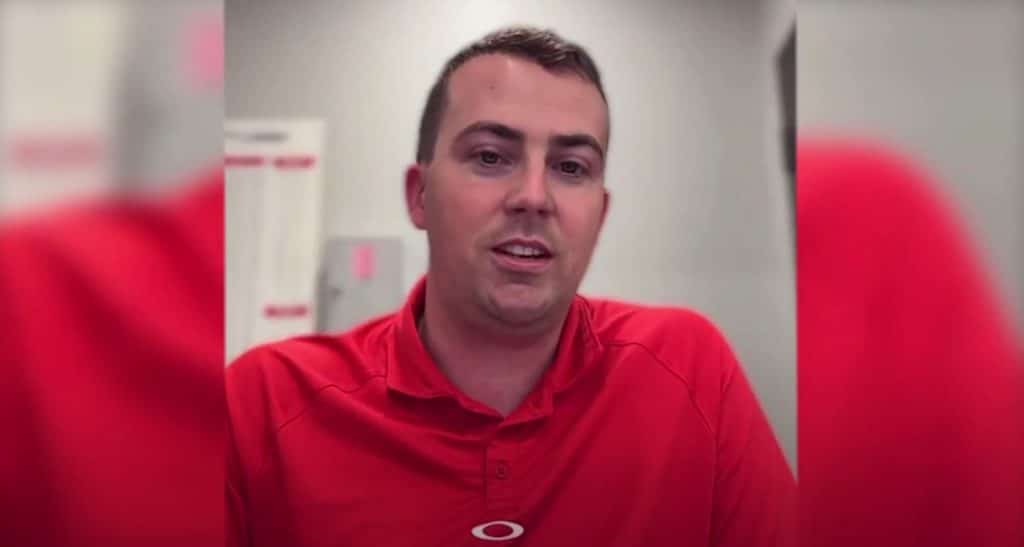
Local 3 member Tanner Tieken
With the TOOTRiS child care benefit, members can access more than 200,000 licensed child care providers nationwide via TOOTRiS’s state-of-the-art platform, including programs offering non-traditional hours, drop-in care and 24/7 availability. TOOTRiS technology — accessible to members for free via the TOOTRiS app or online — allows parents to search, compare and enroll in care based on real-time availability tailored to their needs, making it easier to find affordable options that work for them.
Perhaps most importantly, as Tieken pointed out, the TOOTRiS concierge service offers prompt, personalized assistance, whether trying to find summer camp a year in advance or dealing with a child care need at an unexpected time. That means that members who prefer not to use technology have a dedicated service that has their backs: real people helping them find the care they need.
“It was timely,” Tieken said. “It wasn’t like I waited, asked a question and waited three hours. It was at most maybe 30 minutes.”
Child care crisis hits home across the U.S.
In a 2024 report, the advocacy group Kids Count in Nebraska revealed that “a full year of tuition and fees… at the University of Nebraska at Lincoln was cheaper than sending an infant to center-based care in 2021.”
Meanwhile, Nebraska Extension and We Care for Kids reported that 31% of parents with children five and under said that they left the workforce because they couldn’t find affordable child care; 34% of parents with children five and under said they refused a job opportunity, promotion or change because it would increase child care expenses; and that inadequate access to child care and early learning costs Nebraska families, businesses and state tax revenues nearly $745 million annually in direct losses.
Before making use of his child care benefit, Tieken said he and his family had experiences that backed up those reports.
“You almost feel like you want to wait until preschool before you try to go to another [kid,] number two. I’m just working to pay for daycare at that point,” he explained, adding: “I think that that’s kind of the contributor to the rise of a single-income household with a stay-at-home mom or dad. Because if you run the numbers sometimes, it just doesn’t make sense to be away from your kid that long, and you’re not really financially benefiting from [both parents working].”
TOOTRiS benefit makes a difference
Tieken was the first member at Local 3 to sign up for the TOOTRiS benefit. Not only is it making a difference for him and his family; he said it shows SMART’s commitment to helping members in any way possible.
“[SMART] sees where the struggle is,” Tieken noted. “Obviously, with today’s market and inflation and all that, everything’s going up in price. So obviously [SMART] can’t do too much about that; can’t pay everyone $100 an hour, it’s not feasible, not possible — the world would shut down, businesses would close — but [SMART is saying] we can help you out with something like child care.”
A $2 billion megaproject that was set to create more than 3,000 union jobs in Massachusetts is under threat after Congress passed the 2025 tax bill, which President Trump signed into law on July 4, 2025.
The Allston Multimodal Project, which had a project labor agreement in place, would have put workers on the job straightening out the Massachusetts Turnpike throughout Boston’s northwest corner, opened up land for development and invested in public transit. SMART sheet metal workers and other union construction members would have played a key role, including building a new train-and-bus hub.
But on Friday, July 18, the Trump administration’s Department of Transportation confirmed that DOT is terminating $327 million that Massachusetts won in 2023 for the Allston Multimodal Project. Massachusetts will keep just $8 million from the grant.
“Unfortunately, some of the harmful pieces of the spending bill are already starting to impact SMART members and our communities, just weeks after the president signed it into law,” said SMART General President Michael Coleman. “This project wasn’t only going to create thousands of union jobs, including for SMART sheet metal workers. It was going to invest in local communities and the state’s transportation network. Because funding has been so drastically cut, all of that is in jeopardy.”
The project has been in the works for more than a decade. The Boston Globe reported that it “was Governor Deval Patrick, after all, who first promised this new transit hub, dubbed West Station, alongside the turnpike realignment, 11 years ago.”
But the pieces only came together in March of last year, when the Biden administration awarded the project a $335 million grant through the Department of Transportation’s Reconnecting Communities and Neighborhoods program.
Even with the rescinded funding, Mass. Governor Maura Healey said in a statement that her administration “remain[s] committed to doing everything we can, working with our incredible project partners, to make Allston Multimodal a reality.”
But the fact remains that the pulling of federal grant money directly threatens SMART members’ jobs.
“The Healey-Driscoll Administration is conducting a strategic review of the project to determine a path forward,” SMART Northeast Regional Council President Bob Butler said in an email to Local 17 members. “Local 17 stands with our fellow union partners, as well as our community and government allies in demanding the funding be restored — and in fighting to keep this project alive.”