During every election year, there’s one thing that always happens — regardless of which race is being run, who the candidates are, whether it’s election season in the United States or in Canada.

Every single candidate tells you who your enemy is.

This is especially true for SMART members and union workers. As the people who build and move our two nations, politicians across the political spectrum — conservative, liberal and everyone in between — know exactly how valuable our voices are. They know that when SMART members commit to something, we see it through. So they work especially hard to convince us that we need to vote for them to take on our enemies.

But here’s the problem. Most of the time, the people they say are against us — people who may look different, speak another language or work in another industry — aren’t the ones attacking our jobs, our safety and our rights as union workers. They aren’t the real enemy.

The real enemy is the group of people with money, power and control. The class that owns the corporations, the media companies, the railroads, the private equity firms. Corporate elites and the politicians in their pocket are the real enemy. And they’re the only people who benefit when workers are divided.

A history of divide and conquer

The American ruling class has been trying to divide working people since we first began to unionize. There are countless examples since the first formal American labor organizations were founded, but one is especially relevant: the Pullman Strike.

George Pullman, an engineer and American capitalist, founded the Pullman Company to manufacture railroad cars — most famously, a luxury sleeper car for rail travel. This business, among others, made Pullman a millionaire: The Pullman Company grew rapidly throughout the late 1800s, developing a mass production model that helped it take over its competitors. (Pullman and figures like Andrew Carnegie also bailed out Union Pacific in 1871, taking positions on its board of directors.)
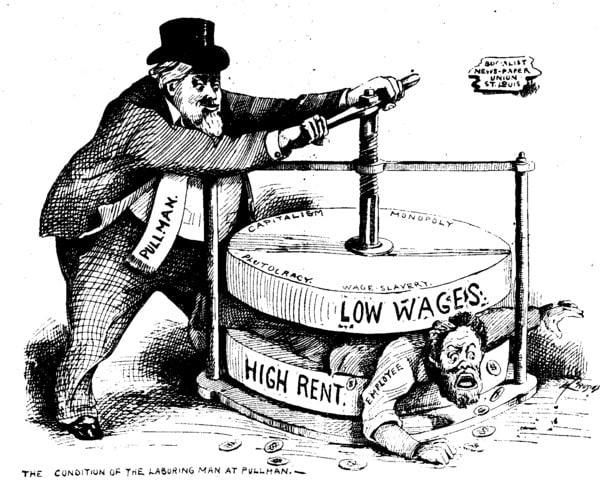
Pullman eventually founded a company town on the South Side of Chicago, called Pullman, to house his company’s workers. While living standards were relatively high for the time, there were no independent newspapers, public speeches, meet­ings or open discussions allowed — red flags for workers seeking to unionize — and Pullman made money off the rent his employees paid to live in the town.

Things began to hit a breaking point in the 1890s. When an economic depression hit in 1893, Pullman cut his workers’ pay, eliminated jobs and increased work hours — without lowering rent and prices in his company town. Workers stood up in response, with thousands walking out on a strike led primarily by Eugene Debs — who later served as an officer of one of SMART-TD’s ancestor unions — and hundreds of thousands ultimately participating in a boycott of trains carrying Pullman cars.

That’s when the real enemy played its hand.

Similar to today, the rich and powerful of the 19th century tried to get workers to blame other workers — immigrants, Black workers and others — for the challenges they faced. Unfortunately, this frequently worked. Many labor unions at the time were “white only,” and Pullman’s 2,000 African American porters were not part of the striking union — weakening the action.

It all came to a head when United States President Grover Cleveland and his attorney general, former railroad attorney Richard Olney, filed an injunction against the striking workers, then sent federal troops to Chicago in July 1894 to break the strike. Days later, the situ­ation turned deadly, with more than a dozen workers killed and many other people injured.

While the strike was hugely impactful, leading to major shifts in rail labor law and the creation of Labor Day as a federal holiday, it was ultimately broken.

2026: Robber barons in office

Compared to the corporate elites that control huge sections of the United States and global economy today, George Pullman almost seems like a working man.

Billionaires like Elon Musk (a trillionaire), Jeff Bezos, Warren Buffett, Mark Zuckerberg and others have more money than they know what to do with. They control huge portions of the United States supply chain, media companies, newspapers, social media and beyond.

And worst of all, they have large parts of the United States government in their pocket.

The proof lies in the policy that’s currently coming from Congress and the White House.

In 2025, Congress passed the Big Beautiful Bill Act, signed into law by President Trump on July 4 of last year. This law increases costs for the American working class while helping the modern-day robber barons get even richer: The wealthiest 0.1% in the country will likely gain more than $290,000 each year as a result of tax changes in the “One Big Beautiful Bill.”

The bill included cuts to Medicaid that raised the costs of health care plans for SMART members and families, cuts to tax credits that will lead to canceled projects and lost work hours for sheet metal workers, and more. The bill will also likely increase the costs of housing and energy, and it is putting nursing homes and rural hospitals in danger nationwide.

In other words, while telling us that we need to be afraid of other workers, the elites passed legislation that will make our lives worse, and make them even richer.

That’s only one example. Federal agencies under this administra­tion have canceled projects that were creating jobs for SMART members, threatened passenger rail funding that SMART-TD transit operators rely on, attacked the collective bargaining rights that are the foundation of our union, and much more.

The names of the people trying to dominate our lives may have changed. Back in the day, their names were Pullman, Carnegie, Rockefeller and Vanderbilt. Today, they’re Bezos, Musk, Zuckerberg, Ellison and Thiel. But just like the distant past, today’s elites still use any means possible — especially their allies in government — to crush us and enrich themselves.

And now more than ever, we need to fight back.
Strength in unity

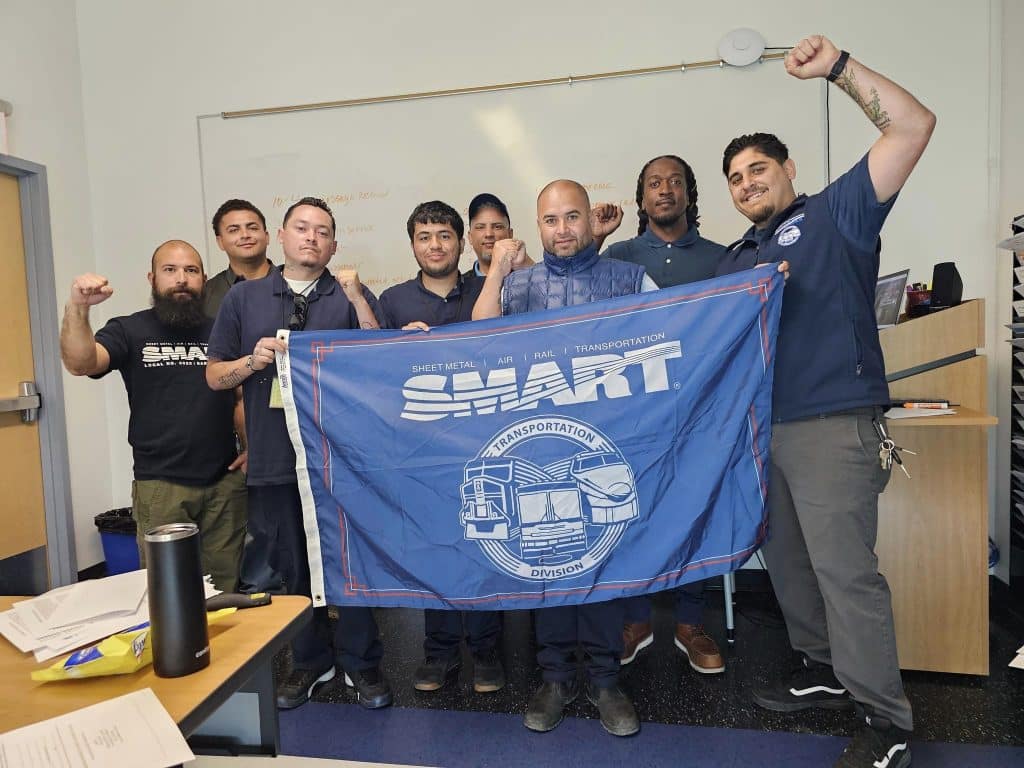
Across the country, we are witnessing something: American workers are rejecting the status quo.

In state governments nationwide, SMART-TD members are refusing to accept what has been treated as normal for far too long. Workers are mobilizing at statehouses, passing state rail safety laws and protections for transit operators over the objections of rail carriers and industry groups.

The same is true for workers in other industries. In Minnesota, for example, SMART Local 10 sheet metal workers at Jones Metal went on strike after the company proposed phasing out the monthly stipend it offered employees in lieu of health care. SMART members voted to strike. And after hitting the picket line, members won more money as part of their health care stipend — and, crucially, a commitment from the company to establish a health care plan by the end of the agreement.

And it’s happening in politics, too. Across the country, and across political parties, elected officials who refuse to fight against the establish­ment are losing in primary elections to challengers who walk the talk for American workers.

Working people across the United States are ready to stand up against the powerful people who want to divide us. That’s why our unity is so important.
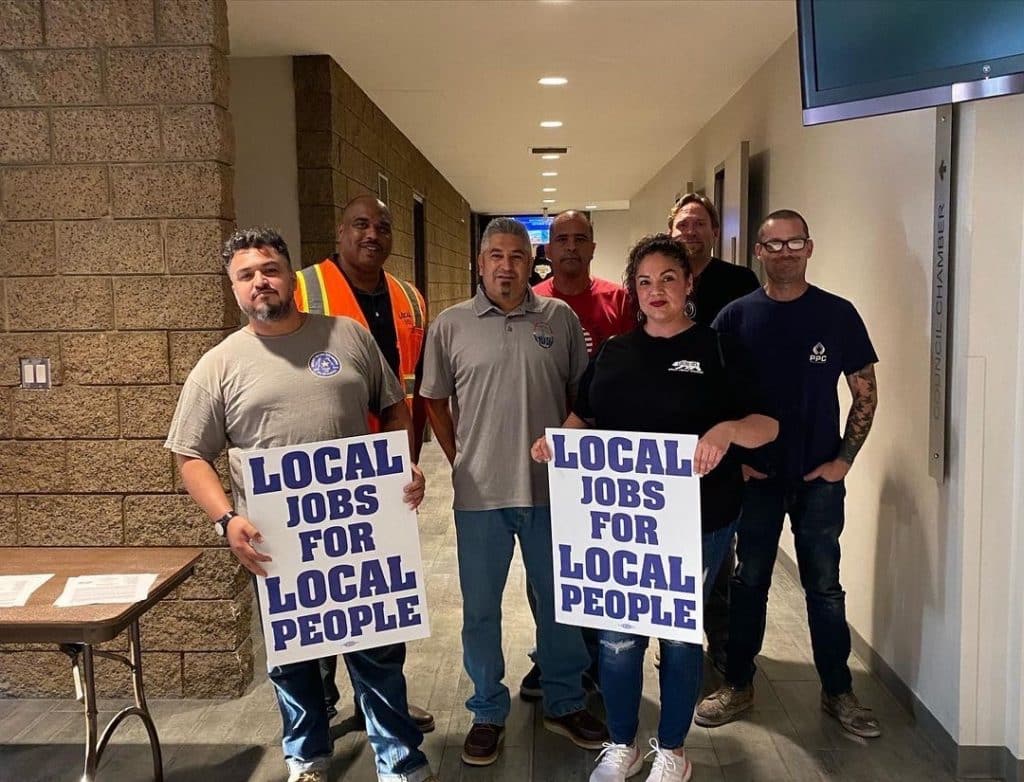
No matter our job title, our industry, our trade, our craft, how many years we’ve been in the union, or where we come from, we have more in common with one another than we will ever have with the powerful people who want us to stay divided.

So across sheet metal and transpor­tation, the time is now to take action.

It starts at work: having each other’s backs in solidarity.

It extends to the union hall: showing up and making our voices heard.

It doesn’t stop there: We need to be present in our communities, ensuring our neighbors and fellow workers are standing together.

And it continues on Election Day, when we vote for the candidates who truly stand with us.

The divisive ads and attacks will come thick and fast this election year. But solidarity is built into who we are. It’s the foundation of every contract, every victory, every leap forward that we’ve made.

And it is the principle we will continue to stand on, in 2026 and beyond.
Brothers and sisters,

We are living in divisive times. You see it when you turn on the TV, when you check your phone or open up social media — you may even experience it on the jobsite, in the shop or in the rail yard. People can’t seem to agree on how to solve the problems regular, working Americans and Canadians are facing, and they point the finger at each other in response.

That is no accident. Across our two nations, workers have been facing huge challenges — and whether it’s in politics or the media, powerful people want us to blame each other for these challenges.

There’s no point in sugarcoating how difficult things have been in recent months.

The costs of gas, diesel and groceries kept going up.

Wars taking place halfway across the world have impacted the construction industry and led to increased cybersecurity concerns on the railroad, leading to unpredict­ability and anxiety about our safety and our jobs — how we’re going to provide for our families.

Transit companies continue to slow-walk any real action to protect our SMART-TD transit operators from violent assaults, and confusion over tariffs is still disrupting the produc­tion and manufacturing industry.

It’s a simple fact: This chaos is hurting SMART members.

Workers aren’t the ones causing these problems. We don’t have the power to make the kind of decisions that throw everything in jeopardy for the Americans and Canadians who wake up early every morning and power our two nations.

It’s billionaires, their corporations, their lobbyists and the politicians in their pocket who make those deci­sions. And they are the people who benefit from trying to divide us.

It’s the richest of the rich, the elites who hate our union and everything we represent. They know our strength is in our soli­darity, and that when we all come together, we are unstoppable. We prove that every day: when we win new contracts, when we pass state rail safety laws, when we organize nonunion competitors.

So they try to keep us apart. They try to make us blame each other for the problems we face in our daily lives.

That’s why it’s so important that we all come together over the things we have in common. Our solidarity. Our patriotism, and our love for our families. The fact that we work hard for a living, building and moving our two nations.

That’s what defines us. That’s who we are. Whether you live in the United States or Canada, whether you’re a sheet metal member or a transportation member — no matter who you voted for, where you come from or what your job title is, you belong in this union. We are all SMART brothers and sisters.

Election Day 2026 is steadily approaching in the U.S., and there will be candidates who try to make us forget that fact — the fact that we have so much more in common with each other than with the elites who want to convince us that they are our allies. So regardless of who’s running for what office, and what candidates say to try to get your vote, don’t let them divide us — whether this year in the U.S. or during the next Canadian elections.

From Ontario to Florida, from Chicago to Victoria, let’s continue to stand together. That’s how we win, and that’s how we move forward.

In solidarity,

SMART General President Michael Coleman

In SMART and across the labor movement, we talk a lot about the “union difference:” the difference in pay, benefits and quality of life between organized and unorganized workers.

The numbers tell a powerful story. On average, union members earn more money, have better health care and pension benefits, and enjoy a higher quality of life, regardless of industry.

But the union difference is more than data. It means something real to SMART members and our fami­lies. It doesn’t just show up in our paychecks; it provides security for our families and peace of mind that we can keep our spouses, children and grandchildren safe and healthy.

That difference does not happen by chance, and it is not something that was simply given to us. At SMART, under the leadership of General President Michael Coleman, we fight for the union difference every day.

Here is what that looks like in practice. General President Coleman works tirelessly to ensure our union does more than simply meet member expectations, and he expects the same level of commitment throughout SMART’s International staff. Guided by that principle, we do not accept contracts that merely keep pace with industry standards, and we are not satis­fied with elected officials who offer promises without results.

That means treating every dollar of members’ dues with the responsibility and accountability it deserves.

As your general secretary-trea­surer, I have been entrusted with the responsibility of safeguarding members’ dues and ensuring those resources support the long-term strength and stability of our union.

Those dues help fund the orga­nizing efforts that bring more contractors and carriers into SMART, strengthening our union and increasing our leverage at the bargaining table.

Those dues help support our advo­cacy efforts, led by General President Coleman, before state, provincial and federal leaders across the United States and Canada — ensuring that the voices of SMART members are heard on issues that affect our jobs, our safety and our future.

And those dues help position our union for the future through targeted investments in the systems that power our work. Voyager modernizes local union membership management. TD Connect powers the daily operations of SMART-TD, helping our Transportation Division serve its locals and strengthening the union as a whole. And V-Connect, originally anticipated for next year, is ahead of schedule, with an incremental rollout beginning this fall. V-Connect will replace an outdated third-party system with a secure, modern solution for locals to transmit mission-critical resources directly to the International.

Under General President Coleman’s leadership, we continue making those investments in our future. At the same time, many chal­lenges remain outside our control, especially in government. When anti-labor forces attack workers’ rights and union protections, our union must often devote significant resources to defending the progress we have already made.

As we move closer to Election Day in the United States, let us keep the union difference in mind. Let us remember what that difference means for our jobs, our families and our future. And, as General President Coleman wrote on page 2, let us continue standing together as we work to secure that future for generations to come.

In solidarity,

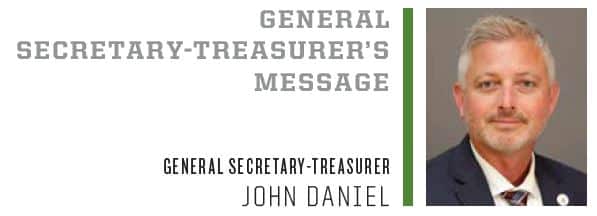
John Daniel
SMART General Secretary Treasurer

Brothers and sisters,

We’ve all heard the saying: The only constant is change. That’s especially true for those of us who work in the transportation industry.

Whether it’s the growing push for increasingly automated operations confronting both our rail and bus members or a corporate culture that continues to prioritize profits at the expense of safety, our union is no stranger to change.

In these times of uncertainty, representation matters.

That’s why no matter what changes the Federal Railroad Administration (FRA) or Federal Transit Administration (FTA) push down the pipeline, SMART-TD’s mission will always remain the same: protecting the livelihoods of the members we represent.

We show up to the bargaining table having done our homework

Every labor organization has a duty to defend its members when employers seek fundamental opera­tional changes. That responsibility becomes even more important when those changes threaten long-estab­lished railroad jobs.

For years, our union has dedicated itself to protecting our members against these kinds of changes that pose a direct threat to their livelihoods.

But this isn’t something that happens by chance or because the stars conveniently aligned on a particular day.

Those protections were earned through years of difficult nego­tiations, strategic planning and an understanding that today’s deci­sions must account for tomorrow’s challenges.

Our local and national leaders make it a point to do their home­work ahead of time before they come to the bargaining table, proactively preparing for what’s coming down the road rather than sitting back and waiting for it to find them.

This is a hallmark of our union and clear proof that representation matters.

Other unions may resort to playing the blame game when things get tough, but that’s not SMART-TD. We don’t complain or wallow in self-pity when the deck is stacked against us. That’s never been our approach, and we don’t intend to change course any time soon.

We dig in, we fight for our members, and we let our actions speak louder than our words.

SMART-TD is prepared for the inevitable changes that lie ahead

SMART-TD members have always tackled whatever industry-related challenge lies in front of them head-on, controlling the narrative rather than being defined by it.

At the same time, our leader­ship will continue using every contractual protection, every legal agreement and every bargaining opportunity available to defend the jobs of the members who have entrusted us with that responsibility.

This is exactly what members expect from their union, and a commitment that we take incredibly seriously.

Both the rail and bus industries are entering another period of significant technological change. There will undoubtedly be difficult conversa­tions, spirited debate and important regulatory proceedings ahead.

SMART-TD intends to lead those discussions just as we always have.

We will continue advocating for safety and defending our members’ jobs.

And when our members’ careers and families are on the line, we will never apologize for doing everything within our power to protect them.

That is what responsible union leadership looks like, and it’s why SMART-TD continues to be the gold standard for rail, bus and transit workers across the country.

In solidarity,

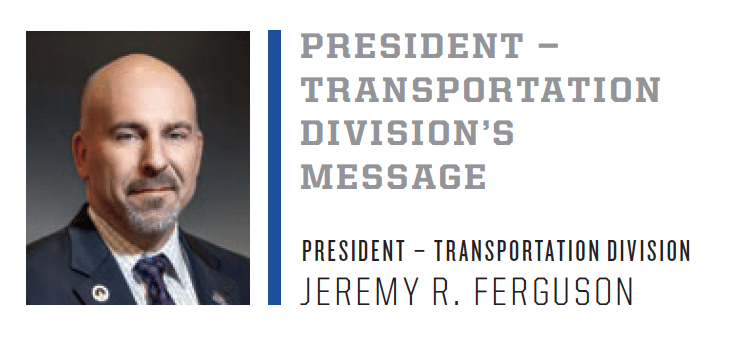
Jeremy R. Ferguson
President, Transportation Division

It was a privilege to gather recently in Edmonton, Alberta, for the 50th Canadian Convention. The convention celebrated our history, our progress and most importantly, the members who continue to build the future of our union.

Bringing together retirees, apprentices, local leadership and members from across the country, the event highlighted our shared commitment and the importance of recognizing those who built SMART Canada while supporting the next generation who will carry it forward. A key event of this year’s convention was the apprenticeship competitions in sheet metal and roofing, which showcased the skill, craftsmanship and dedication of our workforce.

We were also honoured to welcome General President Michael Coleman and General Secretary-Treasurer John Daniel to Canada, where they joined us in recog­nizing the continued growth and historic investment in Canada’s unionized skilled trades. This includes the federal government’s $6 billion investment to recruit, train and hire up to 100,000 new trades workers, along with $225 million to modernize training infrastructure and strengthen apprenticeship programs.

These commitments, alongside new support through the Canadian Apprenticeship Training Grant, which provides up to $16,000 per apprentice during training, and an additional $5,000 Red Seal incentive upon certifi­cation, reflect the importance of investing in apprentices and retention to build a reliable workforce. Together, these measures represent up to $21,000 in direct support per apprentice, helping reduce financial barriers, improve completion rates and strengthen long-term retention in the skilled trades.

This summer, I also had the opportunity to tour the Darlington Nuclear Refurbishment project alongside Local 30 (Toronto) members. The visit highlighted the expertise of our members working on one of Canada’s most significant energy projects. Local 30 members have played a key role in the nuclear sector for more than a decade, with over 130 members currently supporting work across multiple nuclear facilities. They were instrumental in the success of the world’s largest nuclear refurbishment at Darlington, delivering the project safely, on time and under budget.

Looking ahead, our members will continue to shape Ontario’s nuclear future. Approximately 60 Local 30 members will be working on the Small Modular Reactor (SMR) project at Darlington, while the recently announced Wesleyville Nuclear Facility will become the world’s largest nuclear generating station once completed.

In Southern Ontario, the majority of Local 473 (London) members are currently supporting the Bruce Power Nuclear Refurbishment project. The Bruce Nuclear Generating Station is one of the world’s largest operating nuclear sites, and the refurbishment of six reactors further demonstrates Ontario’s commitment to expanding clean nuclear energy. The project has already achieved remarkable success, progressing seven months ahead of schedule and approximately $150 million under budget, a testament to the skill, professionalism and dedication of SMART members.

SMART’s contribution to the nuclear industry extends well beyond work at generating stations. Local 537 (Hamilton) members are supporting the sector through manufacturing, with approximately 20 sheet metal workers building feeder cabinet covers for CANDU reactors that are shipped to nuclear facilities around the world. The same facility also employs an addi­tional 25 production workers manufacturing spent fuel rod holders and assembling waste bins used to safely store and transport spent nuclear fuel, demonstrating the essential role SMART members play throughout Canada’s nuclear supply chain.

Across every region and sector, SMART Canada members continue to demonstrate the skill, dedication and professionalism that drive our industry forward. From landmark nuclear projects to major investments in training and infrastructure, our members are at the centre of building Canada’s future. As we move ahead, we remain focused on creating opportunities, strength­ening our workforce and ensuring long-term success for members across the country.

In solidarity,

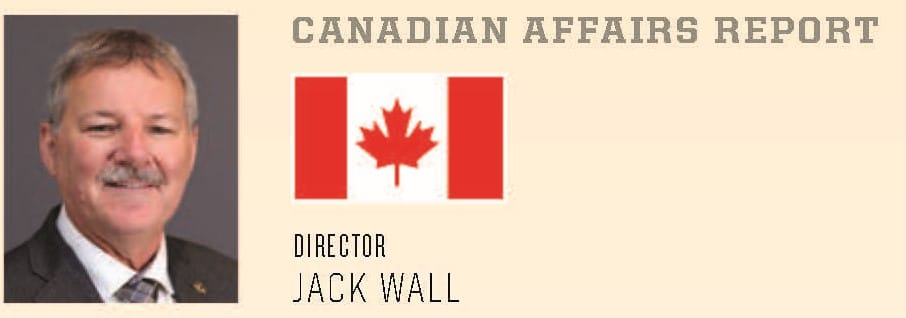
Jack Wall

Director of Canadian Affairs

On April 13, 2026, Virginia Governor Abigail Span­berger signed a two-person rail crew (2-PC) bill into law, ending SMART-TD’s years-long fight for a legally mandated crew of at least two quali­fied people on all trains, locomotives or light engines transporting freight in the commonwealth.

As all rail workers know, having at least two qualified railroaders in the cab is crucial to safely operate trains, requiring an engineer to operate the locomotive and a conductor to monitor the tracks, manage the train and respond to emergencies. It is a common-sense safety measure for SMART-TD members, rail workers and communities along the tracks. However, railroad share­holders and corporate elites would happily do away with one or both of these positions, prioritizing profit over public safety.

By signing the bill, Governor Spanberger has actively ensured that in Virginia, trains are held to a high safety standard, and all crews have the required members needed to responsibly operate them.

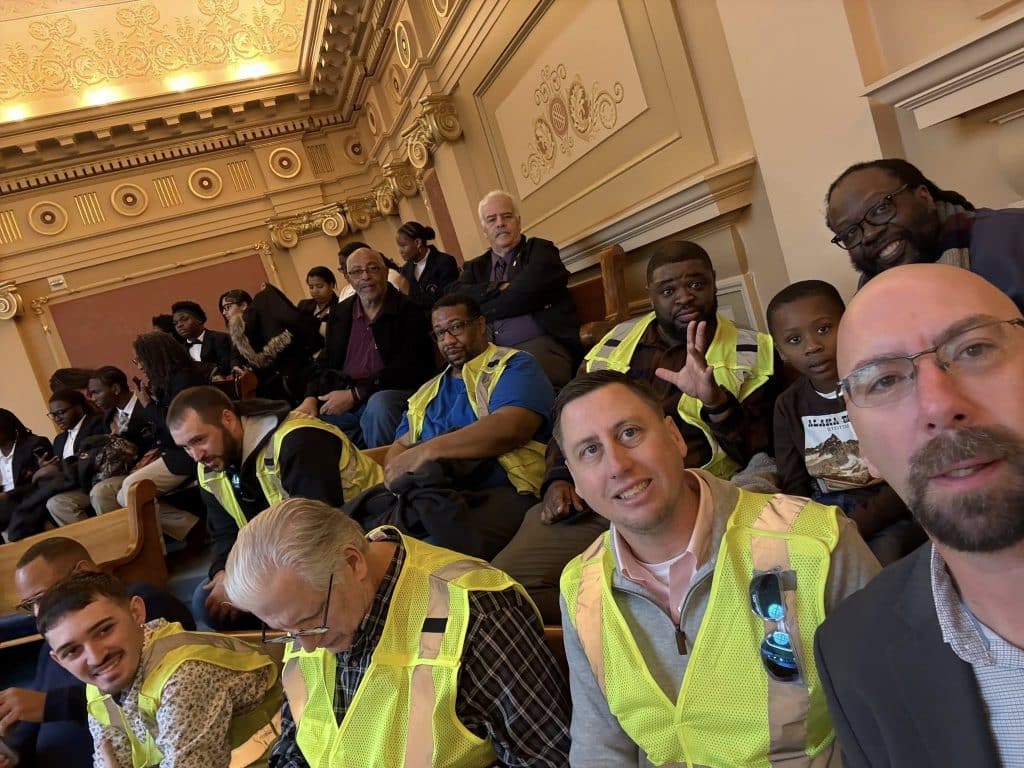
SMART-TD members packed the Va. capitol to make their voices heard

Newly elected gov. finishes the job

Cementing the 2-PC bill into Virginia law was a hard-fought battle that required a change in leadership to accomplish — demonstrating the importance of electing representatives who truly have our backs.

The same bill passed in the legislature two years ago as a bipartisan effort, but thanks to former Governor Glenn Youngkin’s late-night veto, it never became law. Youngkin’s veto showed how little he values public safety and the well-being of SMART-TD members compared to the benefits reaped by supporting big businesses and railroad shareholders.

SMART-TD members didn’t stop fighting for the bill after Youngkin’s veto. And fortunately, current governor and 2-PC supporter Spanberger righted her predeces­sor’s wrong, ensuring that trains traveling throughout the commonwealth will have a full crew on board. Spanberger’s actions proved that common sense and public safety should not be partisan issues, and that the 2-PC bill is a necessary step in the right direction when it comes to transportation rules and regulations.

Members made this happen

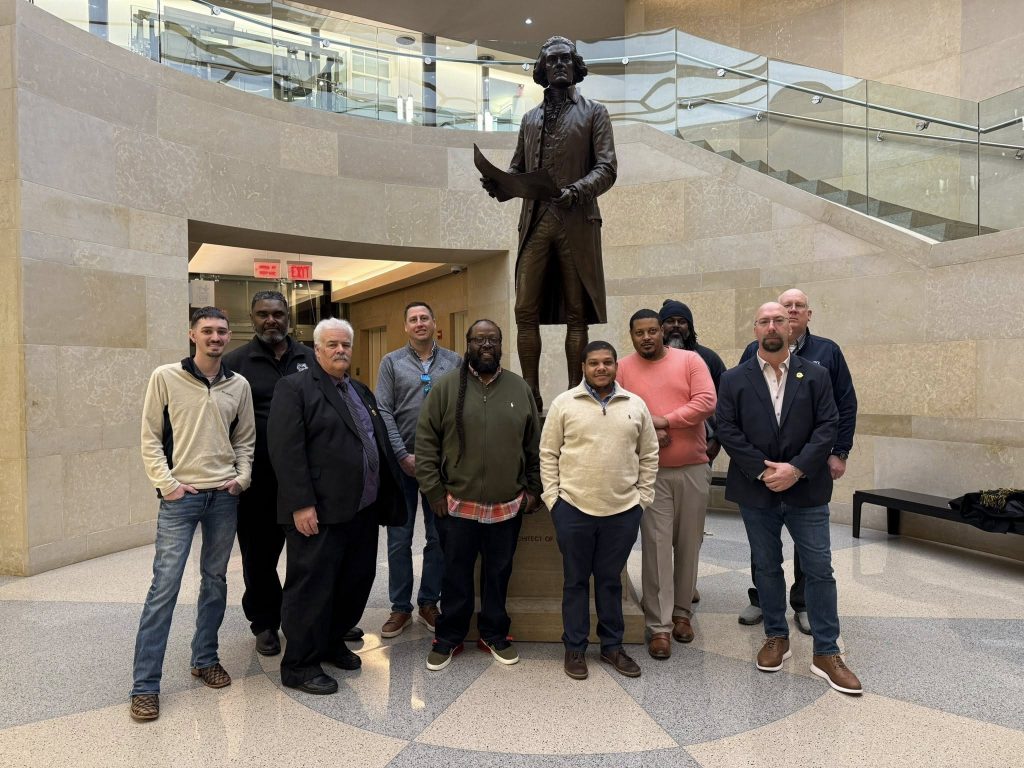
This historic win was a direct result of the hard work and determination shown by Virginia Safety and Legislative Director Ronnie Hobbs and members who took action by showing up, speaking out and telling lawmakers that 2-PC benefits both rail safety and Virginia communities.

“I can’t thank our members enough for their work to get this passed,” emphasized Hobbs. “Lawmakers listened to their constituents and prioritized the safety of communities throughout the commonwealth. We’re proud to join the list of states where 2-PC is the law of the land and hope that it continues to grow!”

On June 30, 2026, SMART Southwest Gulf Coast Regional Council President and Fourth General Vice President Billy Kenyon retired, bringing an end to a decades-long career spent serving fellow members.

Kenyon began his career doing a six-month pre-apprenticeship, prior to serving a four-year apprenticeship at SMART Local 54 in Houston, Texas. In a harbinger of things to come, he was awarded the outstanding apprentice award when he completed the program in 1996.

At the start of his journey in the trade, he was employed by various contractors, starting at an HVAC shop, then working at a spiral pipe shop, before finally moving to a heavy industrial shop where he continued working as a journeyperson.

In 2000, Local 54 was accepting applications for an organizing/marketing representative, so Kenyon applied and was appointed to the position. He served the local as an organizer for the next nine years. In June 2009, Brother Kenyon was elected by the Local 54 membership to the position of business representative. He also served on the Harris County AFL-CIO Executive Board from 2012 to 2019.

In 2012, he was elected to serve as Local 54’s business manager/financial secretary-treasurer and continued in that position until 2018. During that time, he was elected president of the Southwest District Council, where he served until the formation of the Southwest Gulf Coast Regional Council in 2016. Kenyon was appointed to the SMART General Executive Council on February 1, 2021, advancing to fourth general vice presi­dent before retiring.

“Since the first day I started working with Billy, he would always say, ‘Eddie, I just want to leave everything better than how I got it,’” said new Southwest Gulf Coast Regional Council President Eddie Gonzalez. “Well, my friend: Congrats! Mission accomplished!”

In 2025, SMART launched its partnership with TOOTRiS, offering United States sheet metal members at participating local unions access to affordable, on-demand child care options that match their schedules, locations and other needs.

SMART has continued working with TOOTRiS and other organizations in the months since, aiming to bolster the support that members can receive. And now, Local 85 (Atlanta, Ga.) has an expanded partnership with TOOTRiS, offering members the existing benefit and providing apprentices monthly child care subsidies — delivering added support during the years when new members of our union are just starting their careers.

Local 85 apprentice Kristopher Baxter is currently in the second year of his apprenticeship. He and his wife, Brittany, are parents of three young children — raising a family as costs rise across the country. Local 85’s new child care benefit is helping them manage the long commutes, demanding schedules and increasing costs of providing for a young family in 2026.

Brittany and Kristopher Baxter with one of their three children

Because the stipend is applied per child, the impact for their family is multiplied.

“It’s truly been an amazing experience,” said Brittany Baxter. “Child care is extremely expensive, tutoring is expensive, and to have a benefit that not only helps us pay for it, but also helps us search and choose providers on an easy-to-use platform takes away so much stress.”

“It helps us catch up on bills, save money, and not feel like you’re suffocating because bills don’t stop,” Kristopher added.

Under the program, Local 85 is providing graduated monthly child care stipends based on year of apprenticeship, applied per child:

  • Year one: $400 per month
  • Year two: $300 per month
  • Year three: $200 per month
  • Year four: $100 per month

“We see how hard our apprentices are working to build a life and a career at the same time,” said Steve Langley, Local 85 business manager and SMART general vice president. “If we can ease even one of the pressures they’re carrying, especially for working parents, that’s worth doing. This is about standing behind our members when it matters most.”

Expanding on a groundbreaking benefit

Local 85’s benefit is an expansion of SMART and TOOTRiS’s groundbreaking partnership, which is available to SMART sheet metal members at participating U.S. locals.

Ordinarily, access to TOOTRiS’s program costs $24.99 per month. For SMART sheet metal members at participating local unions, the program cost is covered by funding from the SMART International, giving them real-time access to licensed child care providers in urban and rural areas; search features tailored for special needs care and flexible scheduling; and multilingual support through TOOTRiS’s app and website.

In addition to the platform, TOOTRiS’s concierge service offers members personalized assistance in helping to locate providers that meet their needs and work schedules, including very early hours, swing shifts and more. Providers are licensed and regularly reevaluated utilizing state licensing data to ensure they meet stringent quality standards, giving members peace of mind when searching for care.

In the months since, SMART and TOOTRiS have worked together to identify opportunities to improve that benefit offering, from potential grant opportunities to local market potential.

Local 85’s partnership with TOOTRiS is just one example.

“We’re in it to help people,” Langley concluded. “We’re in it to make our communities better, and to help the people that need help.”

As working Americans continue getting hammered by higher fuel costs, the federal government is beginning to signal a major retreat from long-term passenger rail investment at exactly the wrong time.

According to Politico Pro’s May 8 Morning Transportation newsletter, the Federal Railroad Administration (FRA) is proposing to eliminate new fiscal year 2027 appropriations for the Federal-State Partnership for Intercity Passenger Rail Grant Program, one of the country’s major passenger rail expansion and modernization programs.

The proposal comes as the massive five-year infrastructure investments passed under the bipartisan Infrastructure Investment and Jobs Act (IIJA) approach expiration. Rail advocates have increasingly warned the country is heading toward an “investment cliff” once those advance appropriations run out.

The FRA is also proposing reductions to Amtrak funding, including an 8% cut to National Network grants and a 24% reduction to Northeast Corridor grants compared to fiscal year 2026 levels.

Meanwhile, working Americans are dealing with rising transportation costs, economic uncertainty and fuel prices that continue squeezing household budgets. For millions of commuters and working families, passenger rail and public transportation are not political talking points or luxury services. They are financial lifelines and now more than ever.

The debate in Washington is changing

To be clear, passenger rail funding is not disappearing overnight.

The FRA recently opened applications for billions of dollars in remaining IIJA rail grants, including funding for Northeast Corridor improvements, grade crossing safety projects and rail infrastructure upgrades. Those projects are still moving forward under previously authorized funding.

But the direction of the conversation in Washington is unmistakable.

The debate is no longer centered on expanding long-term passenger rail investment. It is increasingly centered on how much support federal leaders are willing to continue once the infrastructure law money expires.

For rail labor and working-class communities, that shift carries enormous consequences.

The concern is not whether rail investment exists today. The concern is whether Washington is preparing to pull back support tomorrow while working Americans are still struggling to afford the cost of getting to work. 

Public transportation Is proving its value

SMART Transportation Division members working commuter rail, passenger rail and transit operations are seeing exactly what happens when fuel prices rise and economic pressure intensifies.

Ridership climbs. Demand grows. Families search for alternatives to expensive daily driving. Communities rely more heavily on systems that reduce congestion, lower commuting costs and keep workers connected to jobs.

That is why many transportation advocates view the proposed future reductions in rail support as dangerously disconnected from our current reality.

“Gas and diesel prices are higher than they’ve been in years. Many of our members drive long distances to get to work, and they are feeling the pain. Experts are saying that these prices are expected to stay high. And as if that’s not bad enough, this administration’s FRA is reportedly looking at reducing passenger rail funding. Calling balls and strikes, this makes no sense for anyone,” said SMART General President Michael Coleman. “At a time when more working Americans are relying on public transit than ever — and when our SMART-TD transit workers are more essential than ever — the last thing we need is uncertainty around public transportation jobs and infrastructure. But that’s exactly what we’re getting. We urge Congress and this administration to change course. Stand with our members and working Americans everywhere, and make it a priority to invest in the public transit systems that support our communities.”

SMART-TD National Safety and Legislative Director Jared Cassity said Washington appears to be ignoring what working families are experiencing every single day.

“You cannot tell Americans to just swallow higher fuel prices while simultaneously backing away from the very transportation systems that help working people survive them,” Cassity said. “That is completely backwards.”

Cassity said commuter rail and passenger rail become more important during periods of economic strain, not less.

“When gas prices spike, public transportation stops being optional for a lot of families,” he said. “Every train carrying workers into cities, every passenger route connecting communities, every transit system helping people avoid another hundred dollars at the pump matters. Pulling back investment now sends the message that Washington either does not understand what working families are dealing with or simply does not care.”

The investment cliff ahead

The FRA’s fiscal year 2027 request illustrates the larger problem now looming over passenger rail nationally.

The agency is requesting $2.79 billion in new budget authority for FY27, but many of the large IIJA advance appropriations that dramatically expanded rail investment over the last several years will no longer be available after fiscal year 2026.

That means Congress is entering a critical fight over whether the country will continue building modern passenger rail infrastructure or allow investment to stall once the temporary infrastructure law funding runs dry.

SMART-TD Deputy National Safety and Legislative Director Don Roach said the timing could not be worse.

“The American people are already telling Washington what happens when transportation costs spiral out of control,” Roach said. “Ridership increases. Demand for public transportation increases. Working people start looking for any way possible to avoid getting crushed by commuting costs.”

Roach said reducing long-term support for passenger rail while families are already struggling financially would be a serious mistake.

“You cannot spend years talking about infrastructure, economic growth and reducing pressure on working families, then start backing away from transportation investment the second people need it the most,” he said. “If Washington allows this momentum to collapse after IIJA expires, the people paying the price will not be politicians. It will be working Americans sitting in traffic longer, paying more at the pump and watching transportation options disappear.”

What comes next

The debate now unfolding in Congress is larger than a single budget cycle.

It is a test of whether federal transportation policy will continue building on recent passenger rail investments or begin retreating from them just as economic conditions are making reliable public transportation more valuable for millions of Americans.

SMART-TD is urging Congress and the Department of Transportation to maintain strong long-term investment in passenger rail, commuter rail and transit infrastructure that keeps working Americans moving safely and affordably.

The country is starting to see what sustained rail investment can accomplish.

The question now is whether Washington intends to continue building on that progress or walk away from it, increasing the power oil companies have over every American. 

SMART-TD Vice Presidents David B. Wier, Jr. and Jamie C. Modesitt report that SMART-TD has received numerous favorable decisions from cases arbitrated at the First Division of the National Railroad Adjustment Board (NRAB).

In NRAB First Division Award No. 32203 (Parmelee, 2026), the Board adjudicated a case where Union Pacific terminated the employment of a yardman for alleg­edly refusing to submit to a reasonable cause drug and alcohol test. At the time of the incident, the claimant arrived at the carrier’s property in South Holland, Illinois, to retrieve his personal vehicle that he had previ­ously left on the carrier’s property due to mechanical defects. A manager observed the claimant in the parking lot attempting to start his vehicle and offered to provide him with transportation to his residence. At that point, the claimant and the manager departed the carrier’s property in the manager’s vehicle.

After vacating the carrier’s property, the claimant and manager stopped to purchase food from a takeout restaurant. While purchasing food from the restaurant, the manager received a call from another manager requesting him to return the claimant to the carrier’s property for a reasonable suspicion drug and alcohol test. After the manager returned the claimant to the carrier’s property, he informed him that he was required to submit to a reasonable cause drug and alcohol screen.

Because he believed that he was not subject to a drug and alcohol test due to the fact that he was not on duty at the time, the claimant refused to submit to the drug and alcohol test. Although the Board found that the claimant should have submitted to the drug and alcohol test, it determined that the carrier’s handling of the case, particularly its decision to transport him towards his home and then return him to the carrier’s property, miti­gated the degree of discipline assessed to the claimant. Based on its findings and conclusions, the Board rein­stated the claimant to service and directed the carrier to provide him with compensation for time lost after his initial nine months withheld from service.

GO-953 General Chairperson Luke Edington, GO-953 Senior Vice General Chairperson Kurt Christensen, GO-953 Senior Vice General Chairperson Ian Reynolds, GO-953 Senior Vice General Chairperson Mike Moore and GO-953 Senior Vice General Chairperson Zach Nagy progressed this case to the NRAB First Division.

In NRAB First Division Award Nos. 32225, 32226 and 32227 (Lamboley, 2026), the Board arbitrated disputes that pertained to the Iowa Interstate Railroad termi­nating three employees for allegedly misusing their company-issued iPad devices to access confidential information related to other employees. In rendering findings on these three cases, the Board determined that the claimants were not afforded fair and impartial inves­tigations due to the improper, prejudicial conduct of the hearing officer, Larry Hicks.

In this regard, the hearing officer unilaterally decided which rules to charge the claimants with violating after the charging officer and other carrier witnesses concluded their testimony at the formal investigation. Based on its findings, the Board deter­mined that the hearing officer’s conduct compromised the claimants’ ability to receive fair and impartial investigations. Accordingly, the Board ruled to rein­state the claimants to service with compensation for their lost earnings. GO-IIR General Chairperson Tim Kilbride progressed these cases to the NRAB First Division.

In NRAB First Division Award No. 32293 (Tener, 2026), Union Pacific terminated the employment of a conductor for allegedly going in between equipment with insufficient separation. In reviewing the instant case, the Board determined that the record did not adequately establish that the claimant was in violation of the rule that the carrier cited as its basis for terminating his employment. Arriving at that conclusion, the Board ruled to reinstate the claimant to service with back pay for all lost time.

GO-953 General Chairperson Luke Edington, GO-953 Senior Vice General Chairperson Kurt Christensen, GO-953 Senior Vice General Chairperson Ian Reynolds, GO-953 Senior Vice General Chairperson Mike Moore and GO-953 Senior Vice General Chairperson Zach Nagy progressed this case to the NRAB First Division.