
During every election year, there’s one thing that always happens — regardless of which race is being run, who the candidates are, whether it’s election season in the United States or in Canada.
Every single candidate tells you who your enemy is.
This is especially true for SMART members and union workers. As the people who build and move our two nations, politicians across the political spectrum — conservative, liberal and everyone in between — know exactly how valuable our voices are. They know that when SMART members commit to something, we see it through. So they work especially hard to convince us that we need to vote for them to take on our enemies.
But here’s the problem. Most of the time, the people they say are against us — people who may look different, speak another language or work in another industry — aren’t the ones attacking our jobs, our safety and our rights as union workers. They aren’t the real enemy.
The real enemy is the group of people with money, power and control. The class that owns the corporations, the media companies, the railroads, the private equity firms. Corporate elites and the politicians in their pocket are the real enemy. And they’re the only people who benefit when workers are divided.
A history of divide and conquer
The American ruling class has been trying to divide working people since we first began to unionize. There are countless examples since the first formal American labor organizations were founded, but one is especially relevant: the Pullman Strike.
George Pullman, an engineer and American capitalist, founded the Pullman Company to manufacture railroad cars — most famously, a luxury sleeper car for rail travel. This business, among others, made Pullman a millionaire: The Pullman Company grew rapidly throughout the late 1800s, developing a mass production model that helped it take over its competitors. (Pullman and figures like Andrew Carnegie also bailed out Union Pacific in 1871, taking positions on its board of directors.)
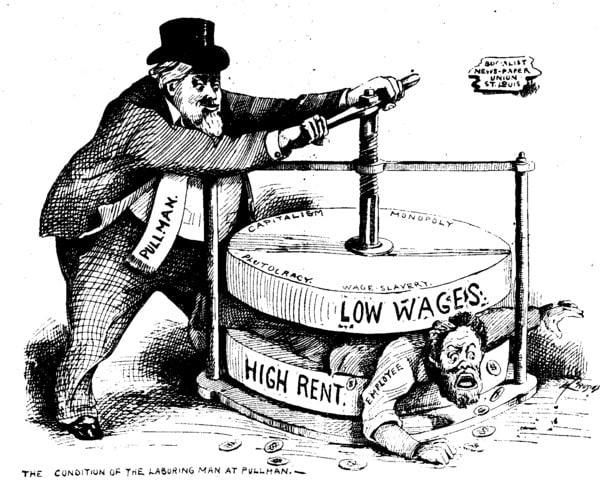
Pullman eventually founded a company town on the South Side of Chicago, called Pullman, to house his company’s workers. While living standards were relatively high for the time, there were no independent newspapers, public speeches, meetings or open discussions allowed — red flags for workers seeking to unionize — and Pullman made money off the rent his employees paid to live in the town.
Things began to hit a breaking point in the 1890s. When an economic depression hit in 1893, Pullman cut his workers’ pay, eliminated jobs and increased work hours — without lowering rent and prices in his company town. Workers stood up in response, with thousands walking out on a strike led primarily by Eugene Debs — who later served as an officer of one of SMART-TD’s ancestor unions — and hundreds of thousands ultimately participating in a boycott of trains carrying Pullman cars.
That’s when the real enemy played its hand.
Similar to today, the rich and powerful of the 19th century tried to get workers to blame other workers — immigrants, Black workers and others — for the challenges they faced. Unfortunately, this frequently worked. Many labor unions at the time were “white only,” and Pullman’s 2,000 African American porters were not part of the striking union — weakening the action.
It all came to a head when United States President Grover Cleveland and his attorney general, former railroad attorney Richard Olney, filed an injunction against the striking workers, then sent federal troops to Chicago in July 1894 to break the strike. Days later, the situation turned deadly, with more than a dozen workers killed and many other people injured.
While the strike was hugely impactful, leading to major shifts in rail labor law and the creation of Labor Day as a federal holiday, it was ultimately broken.
2026: Robber barons in office
Compared to the corporate elites that control huge sections of the United States and global economy today, George Pullman almost seems like a working man.
Billionaires like Elon Musk (a trillionaire), Jeff Bezos, Warren Buffett, Mark Zuckerberg and others have more money than they know what to do with. They control huge portions of the United States supply chain, media companies, newspapers, social media and beyond.
And worst of all, they have large parts of the United States government in their pocket.
The proof lies in the policy that’s currently coming from Congress and the White House.
In 2025, Congress passed the Big Beautiful Bill Act, signed into law by President Trump on July 4 of last year. This law increases costs for the American working class while helping the modern-day robber barons get even richer: The wealthiest 0.1% in the country will likely gain more than $290,000 each year as a result of tax changes in the “One Big Beautiful Bill.”
The bill included cuts to Medicaid that raised the costs of health care plans for SMART members and families, cuts to tax credits that will lead to canceled projects and lost work hours for sheet metal workers, and more. The bill will also likely increase the costs of housing and energy, and it is putting nursing homes and rural hospitals in danger nationwide.
In other words, while telling us that we need to be afraid of other workers, the elites passed legislation that will make our lives worse, and make them even richer.
That’s only one example. Federal agencies under this administration have canceled projects that were creating jobs for SMART members, threatened passenger rail funding that SMART-TD transit operators rely on, attacked the collective bargaining rights that are the foundation of our union, and much more.
The names of the people trying to dominate our lives may have changed. Back in the day, their names were Pullman, Carnegie, Rockefeller and Vanderbilt. Today, they’re Bezos, Musk, Zuckerberg, Ellison and Thiel. But just like the distant past, today’s elites still use any means possible — especially their allies in government — to crush us and enrich themselves.
And now more than ever, we need to fight back.
Strength in unity
Across the country, we are witnessing something: American workers are rejecting the status quo.
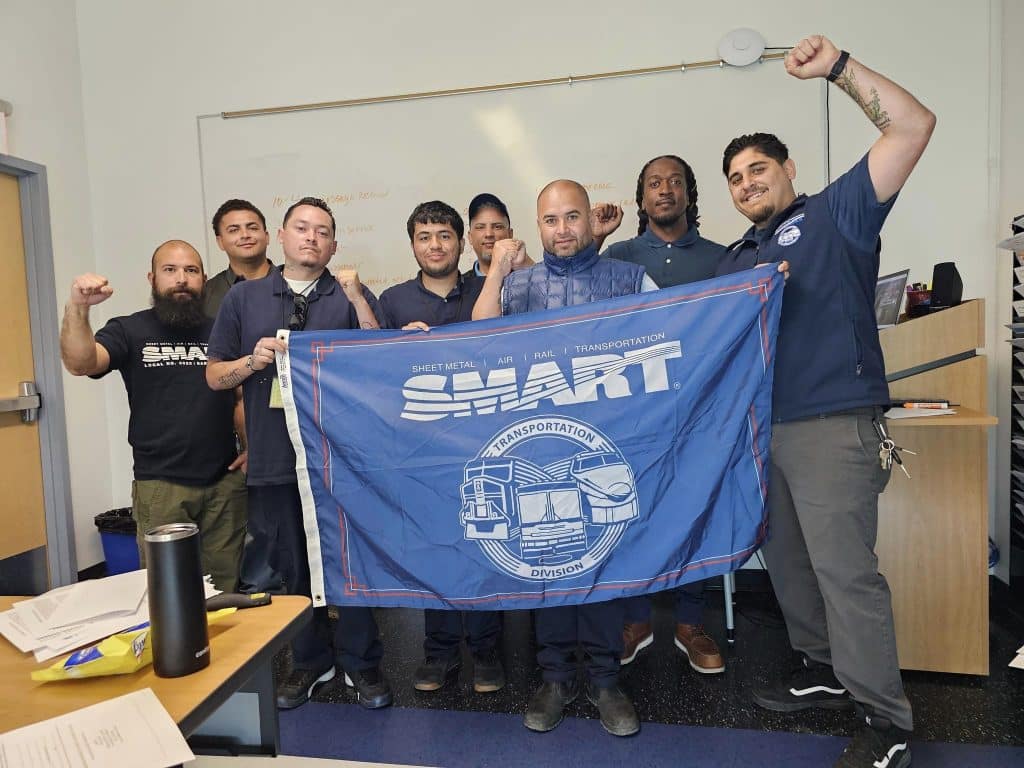
In state governments nationwide, SMART-TD members are refusing to accept what has been treated as normal for far too long. Workers are mobilizing at statehouses, passing state rail safety laws and protections for transit operators over the objections of rail carriers and industry groups.
The same is true for workers in other industries. In Minnesota, for example, SMART Local 10 sheet metal workers at Jones Metal went on strike after the company proposed phasing out the monthly stipend it offered employees in lieu of health care. SMART members voted to strike. And after hitting the picket line, members won more money as part of their health care stipend — and, crucially, a commitment from the company to establish a health care plan by the end of the agreement.
And it’s happening in politics, too. Across the country, and across political parties, elected officials who refuse to fight against the establishment are losing in primary elections to challengers who walk the talk for American workers.
Working people across the United States are ready to stand up against the powerful people who want to divide us. That’s why our unity is so important.
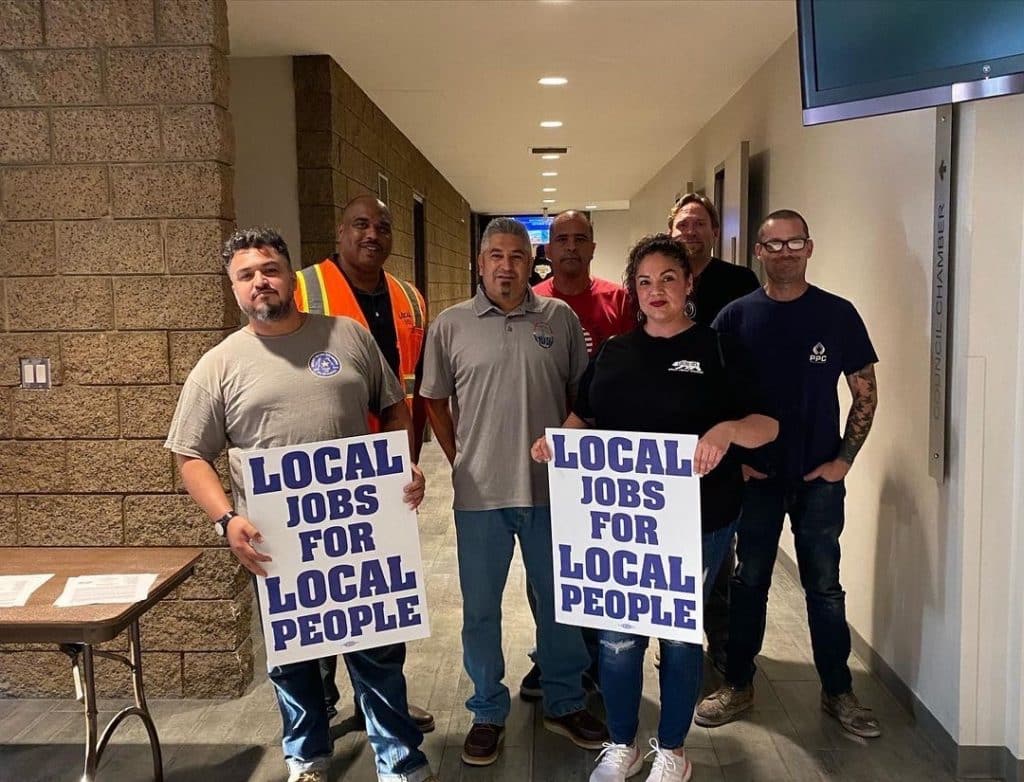
No matter our job title, our industry, our trade, our craft, how many years we’ve been in the union, or where we come from, we have more in common with one another than we will ever have with the powerful people who want us to stay divided.
So across sheet metal and transportation, the time is now to take action.
It starts at work: having each other’s backs in solidarity.
It extends to the union hall: showing up and making our voices heard.
It doesn’t stop there: We need to be present in our communities, ensuring our neighbors and fellow workers are standing together.
And it continues on Election Day, when we vote for the candidates who truly stand with us.
The divisive ads and attacks will come thick and fast this election year. But solidarity is built into who we are. It’s the foundation of every contract, every victory, every leap forward that we’ve made.
And it is the principle we will continue to stand on, in 2026 and beyond.