“There are laws that say good things to union members, and there are laws that do good things for union members. With the U.S. Treasury Department’s final rule on labor standards for Inflation Reduction Act tax credits, there is no doubt that the IRA is a law that concretely benefits SMART sheet metal workers. These precedent-setting tax credits provide up to five times the base credit to those who pay workers prevailing wages and employ registered apprentices on qualifying clean energy projects — making it a no-brainer to use union labor on those projects.
“We thank this administration for taking steps to ensure green jobs are union jobs, and our skilled tradespeople stand ready to build this nation’s sustainable future.”
The Centers for Disease Control (CDC) reports that construction is second only to mining when it comes to suicide rates in American professions. According to a 2020 survey, 83% of construction workers said they had struggled with mental health issues. And data from the National Survey on Drug Use conducted by the Substance Abuse and Mental Health Administration found that 12% of construction workers have an alcohol abuse disorder, compared with the national average of 7.5%.
For all those reasons — and as part of our union’s core values of solidarity and safety — SMART and the Sheet Metal Occupational Health Institute Trust (SMOHIT) started the SMART Member Assistance Program (MAP) approximately 10 years ago.
“SMART MAP is a program that focuses on mental health,” explained SMART Director of Wellness and Mental Health Support Chris Carlough. “We do some awareness training around … anxiety, depression or substance use, suicide prevention, things like that. And we talk about resources, we help our local unions find resources for their members. And on the back end, we develop and train peer mentors to help support all the members and families that are going through crisis.”
Watch Chris Carlough and Ben Cort discuss union mental health programs like SMART MAP and Union EAP.
By training union workers to be peer mentors for their fellow brothers and sisters, the program aims to raise awareness, reduce the stigma surrounding mental wellness and create a self-sustaining mental health support system within our union, helping to ensure members have somebody to lean on. Not only that – the three-hour SMART MAP sessions provide members with an avenue to open up about their own experiences.
“One of the things that really strikes me is how our members really want to talk about this,” Carlough pointed out.
In addition to SMART MAP, members also have access to an employee assistance program called Union EAP, founded by SMART MAP consultant and subject matter expert Ben Cort.
“[Union EAP] is based on a premise that our members are asked to do way too much when they’re in a time of crisis: You make a phone call, and you basically end up getting a list back of a bunch of different places that you can call if you want to,” Cort said. “The idea that we had with this was much more of a concierge kind of mental health service. You call, you speak to a clinician, that clinician does a full assessment, understands what’s going on, and then builds an individualized and personal plan for you and for your family. And then we see you through all of it.”
Alongside Carlough – and as part of his work with the SMOHIT helpline, which provides a resource for members to call when they need assistance – Cort has been taking phone calls from members for the last five or six years, helping direct them to resources and work their way through mental health crises. He said that aspect of his profession is “one of the coolest and most rewarding things in my entire career.”
The work done by Carlough and Cort – as well as other professionals throughout SMART and SMOHIT – is all part of fostering a union-wide environment that helps SMART members feel comfortable talking about mental health and seeking help when they need it. The more we can provide those union mental health programs, Carlough maintained, the better we will be able to keep our fellow union workers healthy and safe.
“We don’t necessarily want to talk about it on the jobsite, but when we’re given a safe space to be able to talk a little bit about it, we have our members really opening up on how they’re feeling. How they’re dealing with divorce, for example, what they’re struggling with — whether it’s mental health, substance use,” he said. “We’ve had members express that they have suicidal ideations — and we [can support] them. We have these moments in these trainings [when] I really feel like our union is light years ahead of other building trade unions in this.”
Variable refrigerant flow (VRF) systems are on the rise, making up an ever-growing portion of the HVAC market share in the United States. And in Albuquerque, New Mexico, Local 49 is taking proactive steps to ensure VRF work is performed by SMART members.
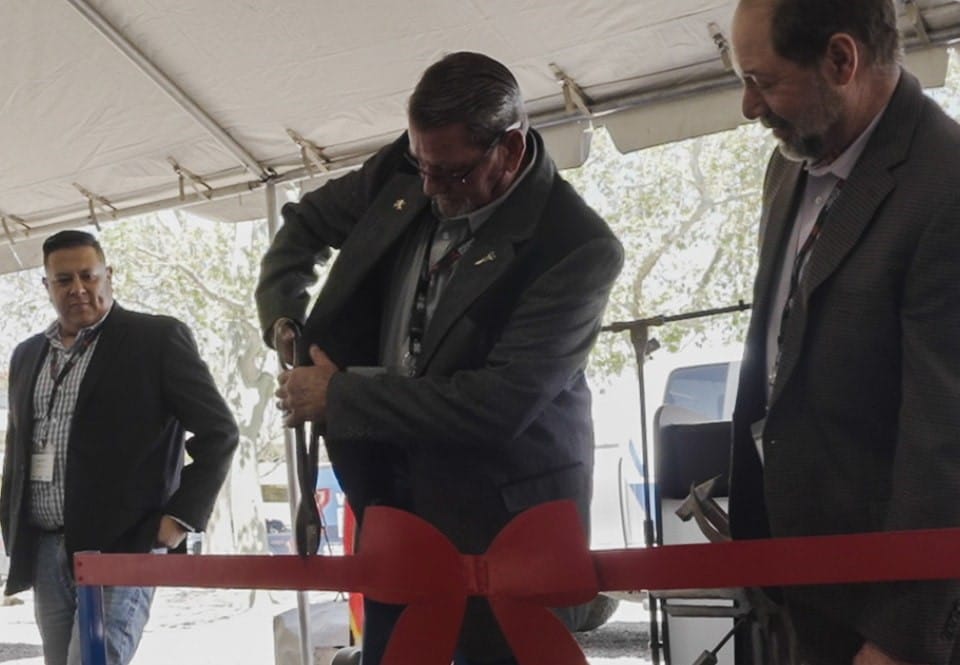
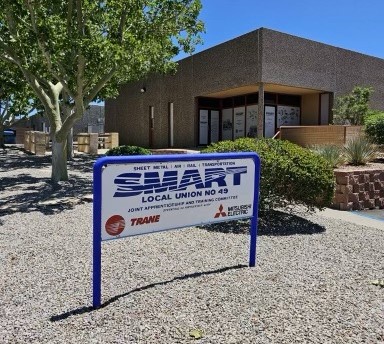
On April 16, 2024, the local welcomed representatives from Mitsubishi Electric Trane HVAC US (METUS) to its JATC to open the first-ever METUS VRF lab in the U.S.
METUS representatives joined Local 49 members and SMART leaders to officially open its new VRF lab.
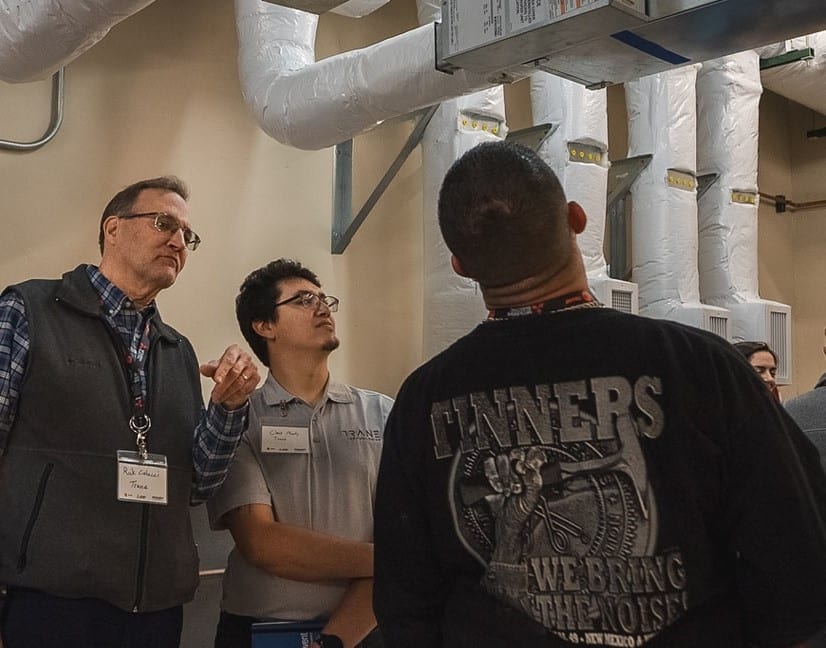
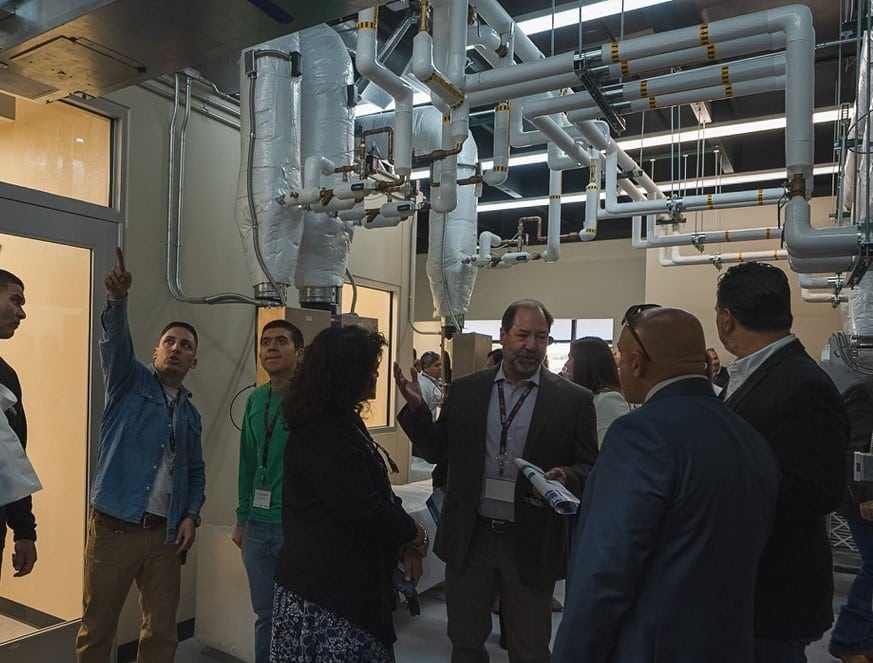
“This collaboration between the Local 49 JATC, Trane and Mitsubishi showcases cutting-edge VRF technology and provides hands-on training for apprentices and industry professionals,” explained Local 49 Business Manager and Financial Secretary-Treasurer Isaiah Zemke. “Our curriculum is tailored to the latest advancements in VRF technology, ensuring industry relevance.”
VRF HVAC systems offer sophisticated, energy efficient heating and cooling by using a single outdoor condensing unit to provide hot and cool air through indoor units, utilizing heat pumps or heat recovery systems. With a greater national emphasis being placed on such environmentally beneficial and cost-effective technologies for commercial and multi-family residential buildings, the demand for VRF expertise will only continue to grow – and as of today, the only METUS VRF lab in America is in the Local 49 JATC. (Importantly, Zemke noted, METUS is New Mexico’s exclusive vendor for all the state’s air moving equipment.)
Not only does that ensure Local 49’s apprentices have the skills needed to take on VRF work in New Mexico — the lab can also function as a de facto organizing tool, bringing nonunion workers in need of training to the one place where they are guaranteed to witness, without any interference, the union difference.
“It’s going to be the future of heating and air conditioning,” said Local 49 member Miguel Lopez of Butler Sheet Metal, who led apprentices in helping build the lab.
The journey to the April 16th ribbon-cutting had an unexpected origin. Local 49 President Chuck Lees is an avid fly fisherman. As it turns out, so is Trane Sales Representative Larry Anderson. Years ago, through their shared love of fly fishing, the two men forged a relationship that led to collaborations on testing and balancing work — and, some time later, the idea of a VRF lab. Thanks to the friendship between Lees, Anderson, Zemke and the rest of the local, labor and the manufacturer swiftly established a partnership, and METUS signed a memorandum of understanding with Local 49 for the JATC’s innovative new lab.
“Basically, Mitsubishi supplies all the VRF equipment and will replace it with any new, updated equipment,” Zemke explained. “Our obligation on the training side is to make sure that we install it and put in all the controls.”
For Local 49 members, the VRF lab couldn’t have come at a better time. The state of New Mexico is applying for a variety of grants to perform work related to lowering emissions and building a green economy. One example of that work: constructing and retrofitting multi-family housing. Thanks to its in-house VRF training, Local 49 anticipates being able to take on those jobs from start to finish.
“For low-income housing, they would do an assessment of the windows, the roof, the HVAC system,” Zemke explained. “So, it will be our testing and balancing contractors that can go do that assessment. And then we would have our contractors go and install these Mitsubishi split VRF systems.”
The new lab demonstrates how vital it is for labor unions to be active and forward-thinking when it comes to training, organizing and collaborating with management-side partners. Zemke views it as an example of “organizing the work” that will benefit all the entities involved.
“When all the parties come together — the training center, the labor union, the contractors — we can build great things together,” he concluded. “And that’s basically what we’ve done with this.”
SMART and NEMI applaud the Biden administration for its commitment to improving building energy efficiency. This commitment will help cut building energy costs, benefit our environment and create jobs for the skilled and certified SMART sheet metal workers who can get the job done. Energy efficiency and indoor air quality (IAQ) goals will only be achieved if heating, ventilation and air conditioning (HVAC) units function as designed. And verifying that these systems operate as intended can only be assured if they are installed, tested and maintained by skilled, trained, and certified professionals and technicians. To help meet the U.S. Department of Energy’s new standards, we are committed to the following:
SMART is committed to increasing awareness of how improper installation and maintenance can affect occupant health and performance, reduce indoor air quality and increase costly energy consumption by facilities throughout the United States.
NEMI is committed to creating and maintaining the highest quality training and associated ANSI National Accreditation Board (ANAB) accredited ISO/IEC 17024 personnel certifications for the HVAC industry, to ensure the training and certifications remain relevant and meet the needs of the Biden administration now and in the future.
SMART and NEMI will work together to reevaluate and modernize the certifications needed to meet this building definition. This includes the International Training Institute (ITI) and International Certification Board (ICB) certifications that promote healthy and energy efficient buildings, such as Building Envelope Installer, Duct Air Leakage Testing, Fume Hood Performance Testing, Indoor Air Quality – Ventilation Verification, TAB Technician and Supervisor, TABB Commissioning, TABB Sound and Vibration, and Total Building Energy Auditing.
The Great Recession of 2008 derailed the lives of working Americans and families. For SMART members, the economic downturn made its impact felt in a variety of ways — among the most devastating being its effect on union pensions. With assets plummeting, the Sheet Metal Workers’ National Pension Fund and local union pension funds alike were forced to take steps to secure their retirement plans, leading to drastic cuts to retiree benefits.
For SMART Local 33 (Northern Ohio) member James Chester, who had already taken a reduced pension payment in order to retire at age 55, the loss felt earthshattering.
“It was a shock to my financial system,” he said. “It was a shock when I had everything worked out to the details, worked out [for] when I retired.”
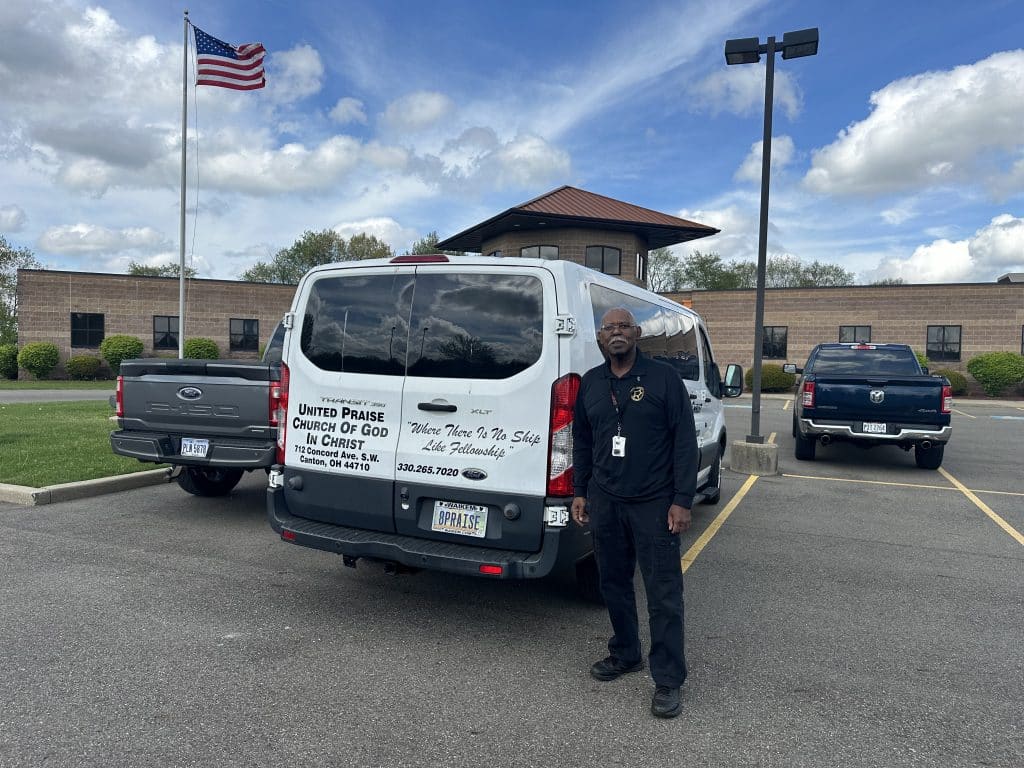
Local 33 retiree James Chester, whose pension was restored by the American Rescue Plan, stands next to his van at the Local 33 union hall.
For Chester and fellow retirees, the promise of a union-won pension was a motivating factor throughout decades of hard work, offering not just financial security but the chance to enjoy their “golden years” with their loved ones. The inability of legislators to provide needed pension relief in the years following the recession left many of those workers flailing, paying the price for an economic catastrophe spawned by unchecked Wall Street greed.
“I probably lost a third [of my pension],” Chester said. “And that was a big hit.”
“I had to sit down and really get my pencil sharpened. Really had to do some figuring out — how am I going to make [it through] this?”
And then, in early 2021, workers finally got the reward they deserved for their decades spent building our nation. President Joe Biden signed the American Rescue Plan Act into law, which included funding for multiemployer pension relief. For the approximately 1,600 SMART members in the Sheet Metal Workers Pension Fund based in Massillon, Ohio — James Chester being one of them — that meant the full restoration of their retirements.
“I looked to my wife with a smile on my face. She said, ‘James, what are you smiling about?’ What are you smiling so much about?’” Chester recalled. “Until I [told] her, ‘Babe, guess what. We’re getting it all back.’ … I got all the money back. I was ecstatic.”
Along with pension restoration for retirees, pension protection funding in the American Rescue Plan will put the Ohio Sheet Metal Workers Pension Fund on the path to solvency going forward – helping to secure the future benefits of active SMART sheet metal workers. According to Chester, that fact alone, on top of investments in union jobs and American industry, make it vital to vote for pro-union candidates in the upcoming election.
As with everything our union does, there will be members who do not agree with the commitment to fostering an inclusive environment. They may be misinformed about what the commitment entails, misled by figures in the media who disagree with the commitment, or genuinely concerned about what all of this could mean for them and their career. You will not convince all of your members that this work is worth doing, but by following a few simple messaging practices, you can increase your chances of convincing the skeptics in your ranks:
1. This is fundamentally about respect. Most members would agree that all workers deserve to be treated with respect and that no worker should have their opportunities limited because of a preconceived notion about who they are or what they are capable of. But like it or not, we all walk around with a lot of unchecked biases. Adopting these practices and policies will help each of us keep those biases in check and, by extension, more meaningfully respect one another.
2. This is not about shaming members. Some members may feel that the commitment to building an inclusive environment is an attack on who they are, what they believe in or where they come from. There is a lot of media out there that advances this line, but it could not be further from the truth. This work is about ensuring that all members feel welcome and have a place in our union. It is about building solidarity between workers and forging a stronger union.
3. Recruiting and retaining a diverse membership is strategic. Everybody knows the statistics about the massive shortage in skilled construction workers. While that shortage may be good for labor in the short term, in the long term our union needs to recruit and retain more skilled construction workers to thrive and grow. Future skilled construction workers will work the hours that fund each of our retirements, and the simple fact is that those future, potential members are more likely to be women and/or people of color than ever before. Tolerating discrimination and harassment undermines our solidarity.
4. Those we do not welcome will end up as our competition. If those future members do not feel accepted by our union, then they will seek other careers, work nonunion or join other building trades unions, and SMART will only be weaker for it. They will also share their negative experience with SMART with other nonunion workers or other building trades unions, which will hinder our organizing efforts.
SMART’s Rapid Response Protocol is intended to help union officers prepare for and respond to incidents of bias, discrimination and harassment. Why is this important? There are many reasons: (1) we should be welcoming all members; (2) this is a safety issue; (3) we need to recruit and retain members; (4) legal liability; (5) our governments and communities expect change; and (6) union solidarity.
1. We should be welcoming ALL members – At the end of the day, every member wants to feel welcome in the workplace. No one likes to feel excluded or that they are not part of the team. And at the end of the day, people will not want to join the sheet metal trade if their work environment would subject them to discrimination, harassment and bullying. Reviewing the Protocol and taking the steps listed here will help make our environment better for every member, regardless of their background.
Our union should make every member feel valued and respected not only for their skills, knowledge and excellence on the job, but also as human beings.
2. This is a safety issue – As union leaders, representing members is our ultimate purpose, and ensuring safe and inclusive work environments for every member should be one of our greatest objectives. Eliminating discrimination, harassment, hazing and bullying is important for workplace safety because these incidents and behaviors erode workplace cohesion. These incidents are bad for employee morale and productivity, and they can cause significant emotional distress.
Workplace bullying and harassment, for instance, is meant to harm and to cause people to feel powerless to respond. By disempowering a member and reducing their sense of safety and security on the job, such behaviors contradict the basic principles of organized labor. Your members count on you to stand up for them, since they look to their union leaders for protection against any violation of their rights and dignity at work.
3. We need to recruit and retain members – Right now, and for the foreseeable future, we face workforce demands like never before. It is thus essential that we recruit and retain every member with the skills necessary to perform our work. Ensuring that work environments are free of bias will not only better position us to retain our current talent; it will also allow us to recruit new talent to the workforce. In addition, every time an apprentice or a journey-level member leaves our trade, the industry loses their skills, along with the thousands of dollars that were invested in their training. Taking the steps listed in the Protocol will ensure that the opportunities our union offers – skilled, middle-class jobs with great wages and benefits – are available to every person across North America, regardless of their background.
When these incidents occur, it is important for our local unions and regional councils to respond quickly and appropriately. Depending on the severity of the incident, it may hit the news, which can lead to embarrassment and harm to the union’s reputation. That would hinder our organizing and recruitment efforts with any potential members who come across the news article. Furthermore, anti-union organizations, such as the Associated Builders and Contractors (ABC), have claimed to embrace diversity and are trying to argue that they have a competitive advantage when it comes to supporting and broadening it. This is our opportunity, as the union sheet metal industry, to prove we support and embrace diversity across North America.
4. Legal liability – Proper response to these incidents is also important for ensuring compliance with all applicable laws, including the duty of fair representation (DFR), and for guarding against legal liability. A union may be liable for discrimination against its members and applicants for membership. If a member complains to their union about unlawful harassment/discrimination and the union fails to do anything, the local union/regional council may be held liable for harassment/discrimination or for a violation of the duty of fair representation. This can be very expensive.
5. Our governments and communities expect change – The U.S. Equal Employment and Opportunity Commission (EEOC) has taken a particular interest in the construction industry recently. And in Canada, the federal government has ratified ILO-C190, a global treaty aimed at eliminating workplace harassment and violence. Government focus and action increases the importance of our union being seen as a leader of these initiatives by our communities, the building trades and society as a whole.
6. Union solidarity – Discrimination and harassment result in toxic and unhealthy environments and create division among our membership. This undermines our union solidarity and our ability to come together on the issues most important to our members. This is our moment to make clear across this union that it is unacceptable for any of our members to face harassment, discrimination, hazing or bullying. Every member is part of our SMART family, and we must look out for each other. We are only strong if we stand together as one.
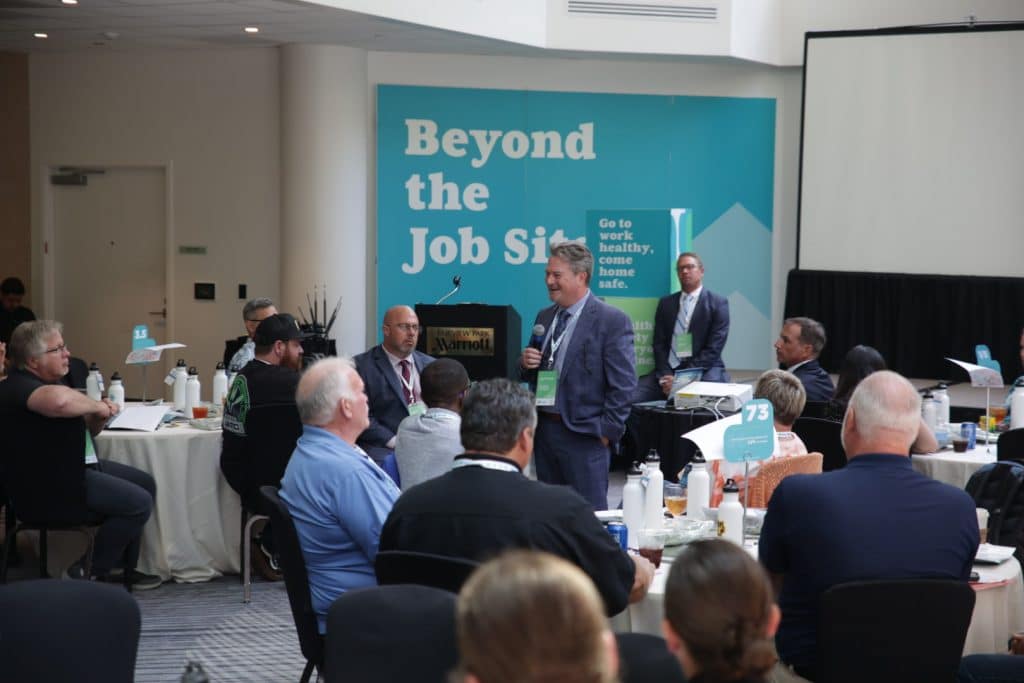
SMART MAP Coordinator Chris Carlough speaks at the sheet metal Safety Champions Conference.
SMART MAP (Member Assistance Program) mental health sessions have been evolving since they began more than a decade ago to combat the high suicide and substance use disorder rates among construction workers. Participants in the class become SMART MAP mentors as they learn to be mental health first responders — peer counselors able to lend a listening ear and guide fellow SMART members to local resources.
The three-day sessions offer theoretical as well as practical knowledge and the basic skills necessary for crisis intervention. They also give participants information about substance abuse disorder and relapse, motivational interviewing, confidentiality and ethics, legal issues, marijuana, health insurance and treatment center options, suicide prevention, aftercare programs and how to change the culture of the union and help end the stigma of addiction and other mental health issues.
While Canadian brothers and sisters have been included in SMART MAP sessions in the past, due to the pandemic, a session hadn’t made its way north since 2018. With some help from Patricia Pike, a Canadian-American dual citizen and CEO and founder CanAm Interventions, the SMART MAP session held in Toronto on March 26-28 provided a tailored presentation.
“Since we’ve been doing education and training through SMART MAP the last 10 years or so, we’ve had Canadian members attend regular SMART MAP sessions,” said Chris Carlough, SMART MAP coordinator. “It’s not brand new, but the program we delivered this time was specifically designed for Canada.”
The key to a successful SMART MAP mental health session is a group of participants willing to share their experiences and engage with the speakers. The March class was full of such attendees, with a long waitlist emerging within 18 hours of registration opening. Due to the need, the Sheet Metal Occupational Health Institute Trust (SMOHIT) allowed 57 members to attend the course, nearly double the size of a normal session.
Typically, having more than 25-30 participants takes away from the course’s intimacy and engagement. Not this time, said Jeff Bradley, SMOHIT program director.
“It was like a bunch of buddies going out together and talking,” he said. “It was cool.”
“We’ve had sessions before when you’re trying to pull out words, experiences, thoughts out of the attendees, but Canada wasn’t like that,” added Carlough. “It was a raucous event for three days.”
SMART MAP mental health sessions are typically held for local leadership, and the SMART MAP team also presents a peer-to-peer session for rank-and-file members. In July, they will be back in Toronto to impart skills and mental health knowledge to members of Local 285.
“We are doing peer training throughout North America, and we will be present in Canada in 2024,” Carlough said.
The combination of mental health sessions for leadership and peer-to-peer trainings for rank-and-file members helps bring awareness of mental health and substance use disorder to the entire local, Carlough explained.
“In the mental health trainings, we’re talking to people in the room directly,” he noted. “But we’re also talking about the people who they’re going to go back and help in their local unions.”
The success of the session is measured by the knowledge and skills gained and how members use that knowledge to help one another. During the March Toronto session, members developed the confidence to talk about difficult subjects, see different perspectives on addiction, and understand the true definition of self care and useful statistics, according to post-event evaluations.
“We can put this gained knowledge to use immediately,” one member said.
Another added: “Everything covered during this session has been well worth it, and I want to thank the team for all the work you do and help that was given to me.”
The Spring 2024 SMART Members’ Journalis now online. Featuring messages from SMART International leadership, union and industry news, local union updates, service awards and much more, this edition of the journal puts a particular focus on our union’s recent policy victories — highlighting states, cities and federal government action that have created jobs and protected our members.
“Politics can feel like a chore, but when we work collectively to win pro-union politicians and policies, we materially benefit our jobs, our families and our futures.”
The spring issue’s cover story was a long time coming: After years of advocacy, organizing, lobbying and fighting against entities like the Association of American Railroads (AAR), the SMART Transportation Division finally won a federal two-person freight crew regulation. The rule, announced in April during an event at the United States Department of Transportation, is a huge step forward for union jobs and rail safety.
SM Local 206 and fellow building trades unions worked tirelessly in the electoral arena to accomplish something similar in San Diego — first by repealing the city’s ban on project labor agreements in 2022, and then with the unanimous passage of a citywide PLA in 2024, a titanic political shift that’s helping turn San Diego into a union town.
And the Transportation Division’s tireless pursuit of safety for railroad workers paid off when Norfolk Southern agreed to pilot the Confidential Close Call Reporting System (C3RS), an anonymous safety reporting tool that protects SMART-TD railroaders who share safety concerns with the Federal Railroad Administration.
Those are only a few of the stories told in the Spring Members’ Journal, which also showcases organizing victories in Indiana and Georgia, local union news across North America and information on new funds appointees. View an index of individual articles here, and read the full digital version of the printed journal here.
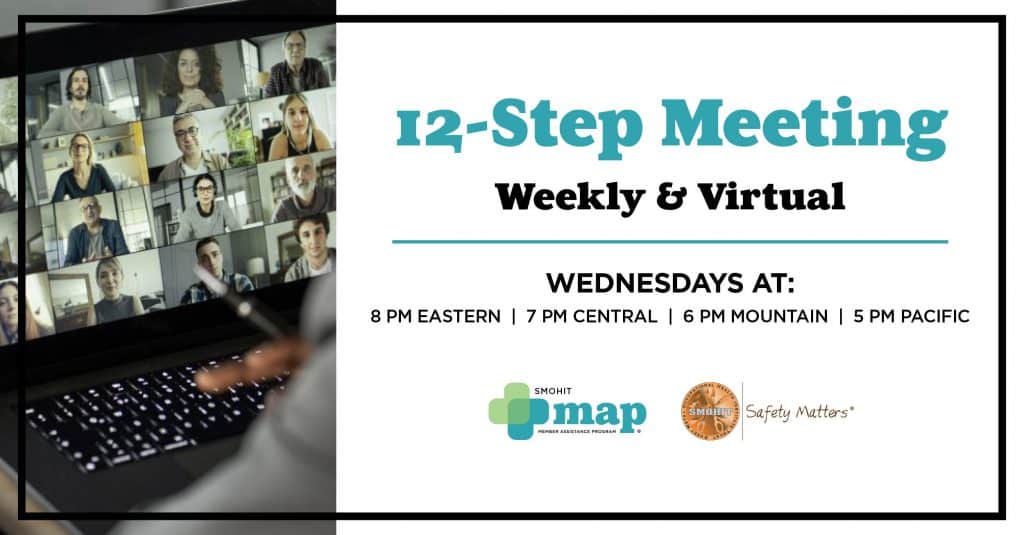
The Sheet Metal Occupational Health Institute Trust (SMOHIT) is hosting 12-step, recovery-based Zoom meetings on Wednesday evenings at 8 p.m. Eastern time; 7 p.m. Central time; 6 p.m. Mountain time and 5 p.m. Pacific time. Sessions are designed for union members, and SMOHIT prioritizes privacy and confidentiality above all else. Registration is required to receive the meeting link.
These recurring meetings are open to all SMART members and their families who have or believe they may have an alcohol, substance abuse or other behavioral addiction problem — all are welcome. The only requirement for participation is a desire to be free of active addiction.
When signing up, you’ll be asked for your union membership number solely for verification purposes, to ensure a secure environment for all participants. (If you are a relative of a SMART member who would like to register, please use their SMART member number.) Your email address will be used exclusively to send the meeting link every month, making access secure, stress-free and convenient for you.
The discussions and interactions within the 12-step recovery meetings are held in strict confidence — what is shared there, stays there. Join SMOHIT and your fellow SMART members in this journey toward wellness, where you can feel secure, respected, and embraced as you share, connect and heal with fellow members.