SMART members often go underappreciated in North American society — and when we are recognized, it’s mostly for the jobs we do.

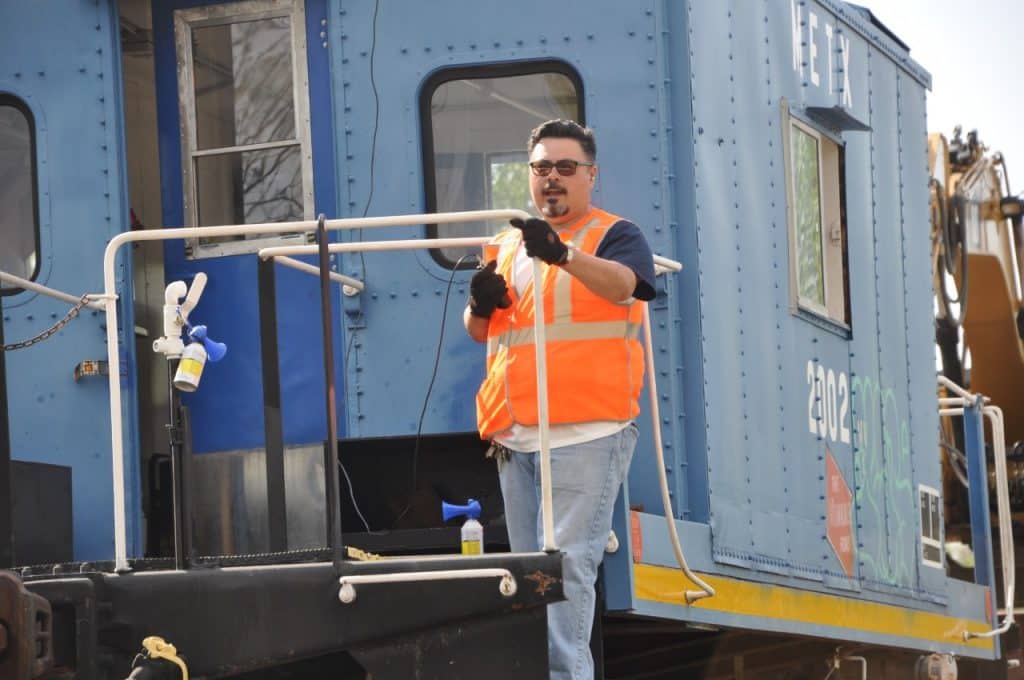
Not everyone knows what sheet metal workers are, or the vital role railroaders play in the national supply chain. But they do see members on jobsites building new schools and hospitals; in the cab of a freight train, transporting cargo across the country; at the wheel of a bus, bringing Americans wherever they need to be.

What they do not always see is the most powerful part of union membership: We take care of each other.  

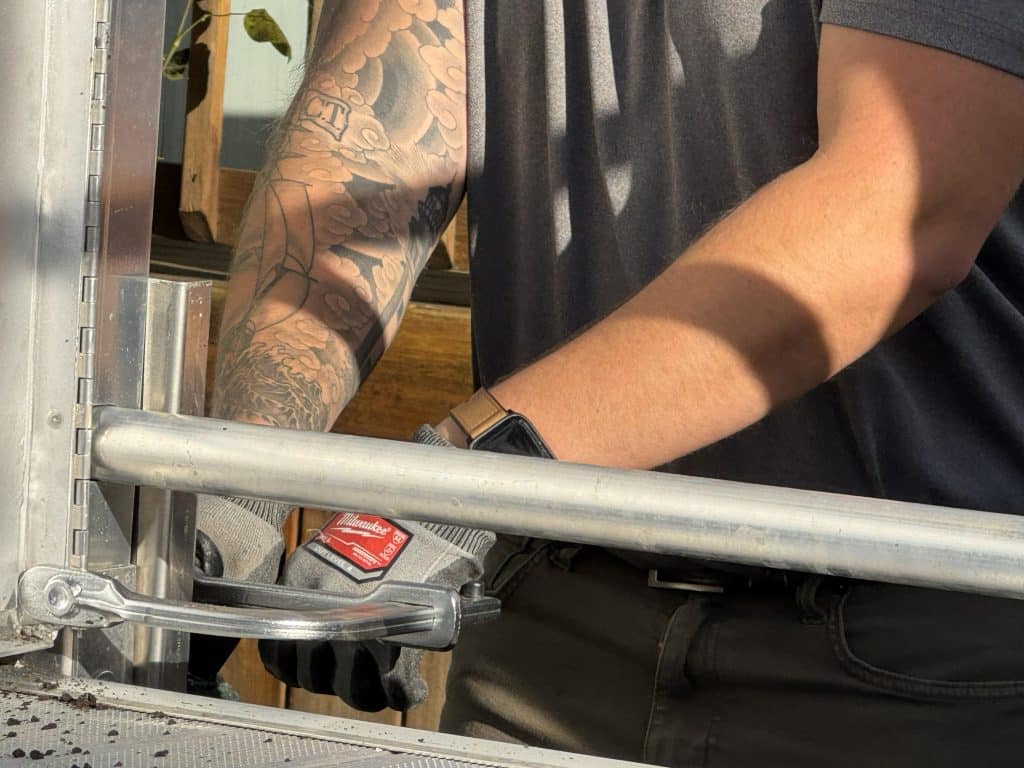
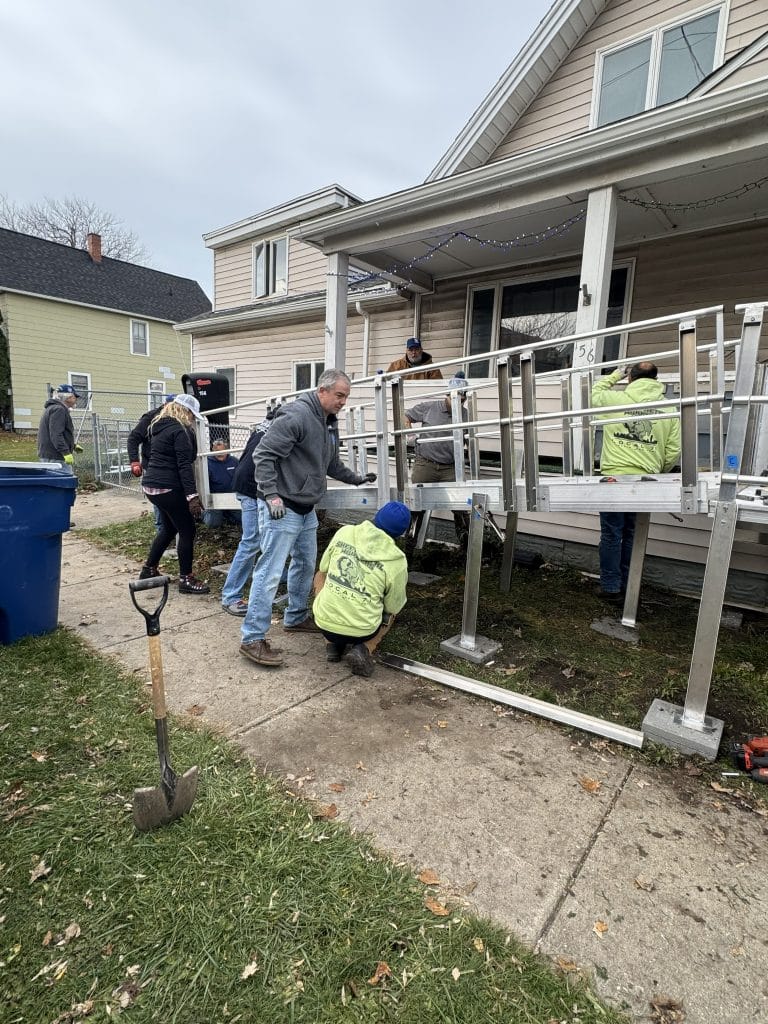
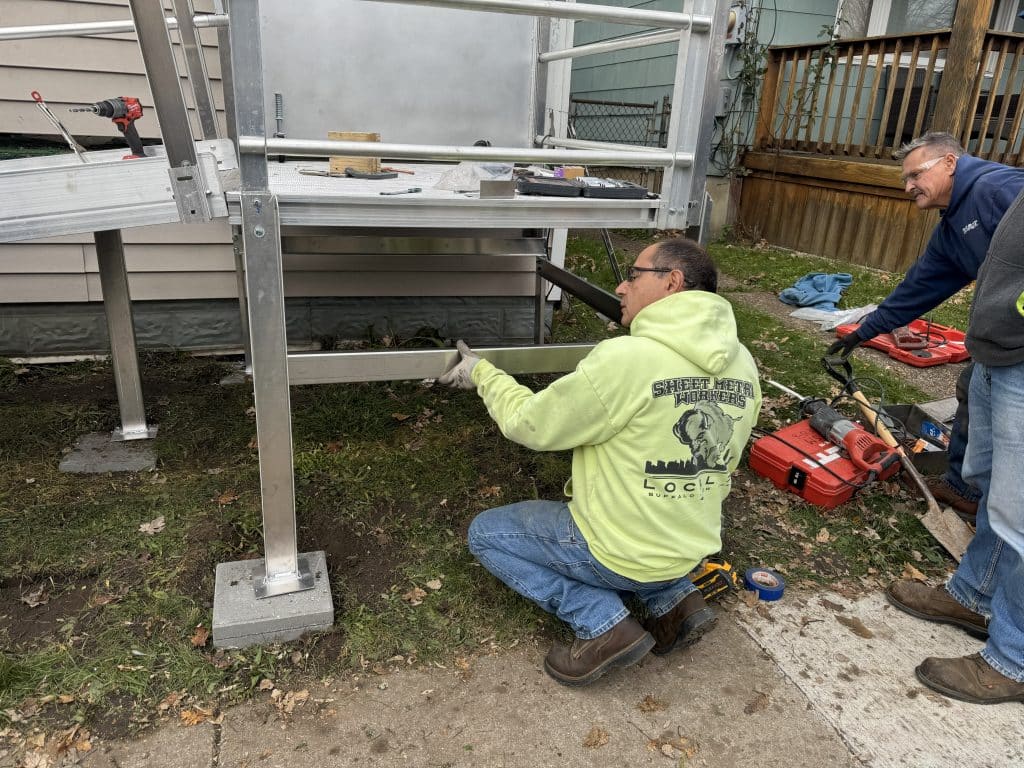
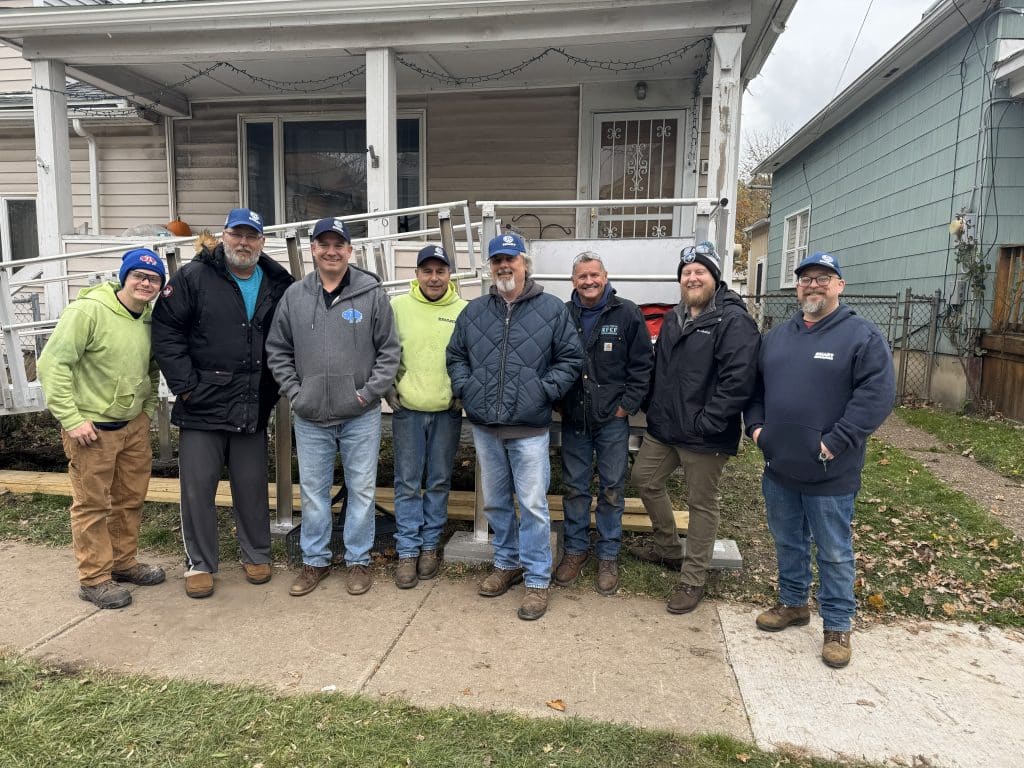
Sheet metal and Transportation Division members made that clear in late 2025, when the Buffalo, New York, SMART Army sprang into action to help a brother in need.
“I didn’t see the light”

Dave Garringer, a member of SMART-TD Local 1393, was working as a conductor for CSX Transportation when he made a stop in Rochester, New York, in May of 2023.

As Garringer stepped off the train, he felt the ground shift, and his foot folded “in a very odd way,” he told WNYLaborToday.com. Unfortunately, that was just the beginning for our TD brother — over time, the injury worsened, and in November of 2025, he had to get his left leg amputated below his knee.

Garringer began using a wheelchair, but his Buffalo, New York, home — built in 1890 — didn’t accommodate the wheelchair ramp Garringer needed to get in and out of his house.

“I didn’t see any light. My wife didn’t see any light at the end of the tunnel,” he said in an interview with SMART News.

That’s when the SMART Army got involved.
“We’re not in a tunnel anymore”

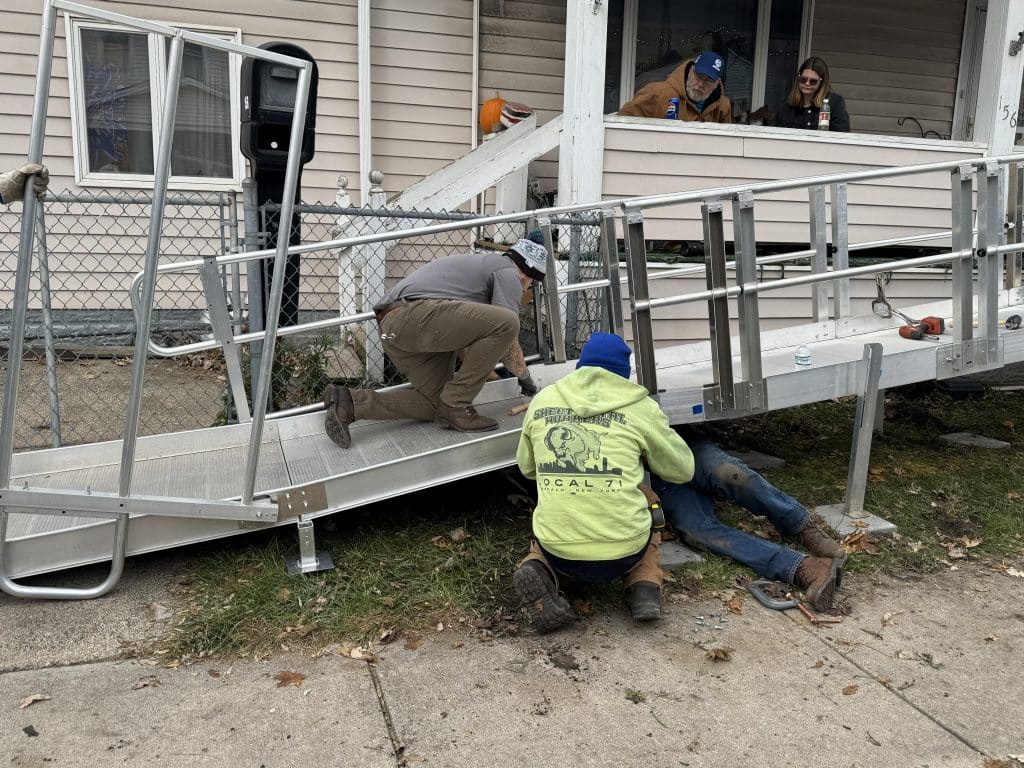
SMART-TD’s Dan Banks started spreading the word that a fellow SMART member needed help. Shortly after, Garringer said, Local 71 showed up.

“They didn’t know who I was,” he said. “But there they were in my front yard in the cold, doing something for me and my family out of the kindness of their hearts.”

Local 71, the SMART sheet metal local based out of Buffalo, has helped members with wheelchair-accessible ramps in the past, along with other SMART Army events aimed at supporting the community.  

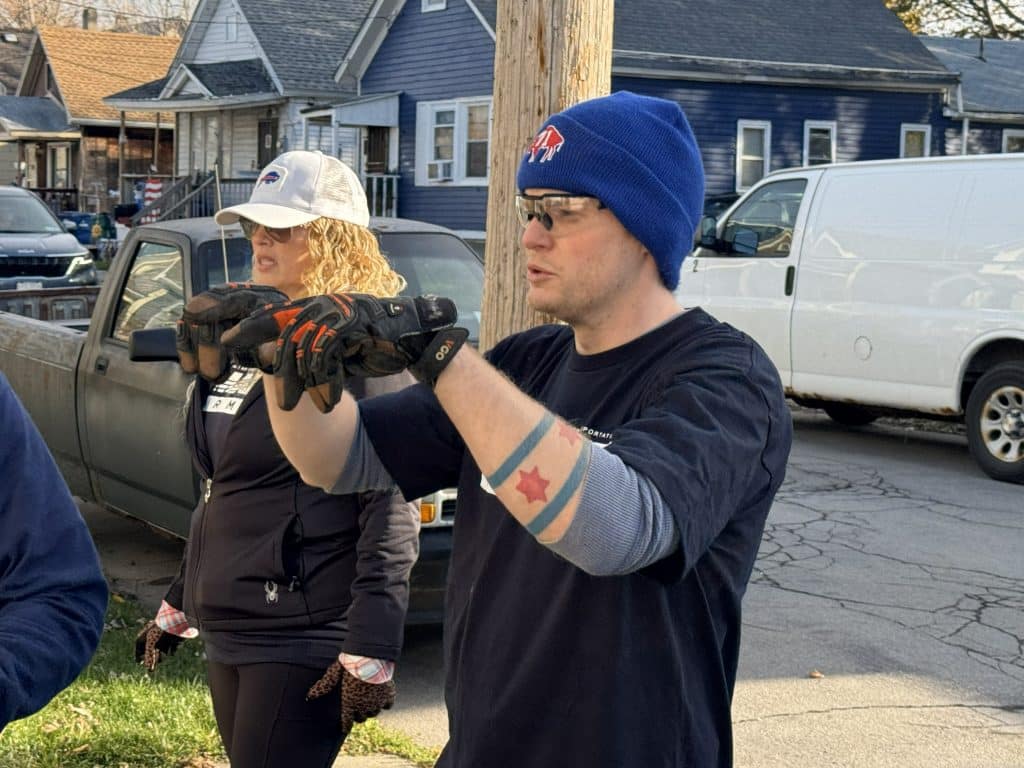
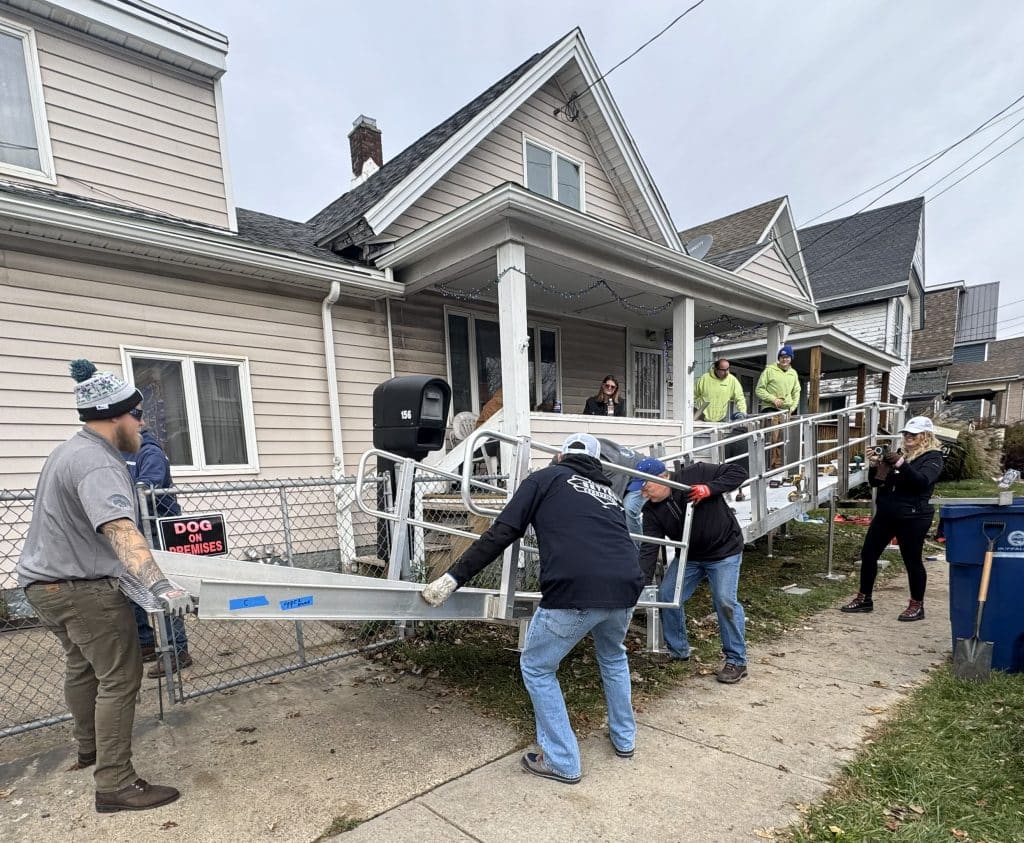
“I remember him saying this was the first time he felt hopeful in two years, so that kind of hit me right away and got me excited about [the project],” Local 71 Organizer Adam Kerr said. “[SMART] contacted us on October 30th, and then by November 14th we were completely done with the project.”

Kerr added: “The biggest value that you can get out of a union is that collective membership you can lean on. You’re not just coworkers, you’re brothers and sisters.”

Garringer said the display of solidarity has made a huge difference, both materially and otherwise.

“We’re not in a tunnel anymore, and we realized we’re not in this alone — we’re not in this by ourselves,” he said. “And that means a lot in a situation like this, where your whole life has been turned upside-down and it will never be the same.”
“This is what we do”

Garringer has been a proud member of SMART-TD for years. He told WNYLaborToday that he knew well the benefits of having union representation on the worksite and at the bargaining table, particularly when negotiating new contracts. But the wheelchair ramp went a step further.

“I’m very proud of my union, which is a wonderful thing,” he said. “They’re there to fight for you when your contract comes up, but when people need help — they are there.”

SMART-TD’s Banks joined the wheelchair effort, traveling from Cleveland to Buffalo, where he was one of several members interviewed by Buffalo ABC affiliate WKBW.

“This is what we do,” he told WKBW. “We’re a union. We take care of each other.”

The conferences of the International Training Institute (ITI), National Energy Management Institute (NEMI) and the Sheet Metal Occupational Health Institute Trust (SMOHIT) are now the Sheet Metal Industry Institutes Conference (SMII).

The organizations will come together Sept. 22-24 in Atlanta to provide resources, training and opportuni­ties that strengthen the unionized sheet metal industry. While each institute will retain its own focus, keynote speakers and large group sessions will bring together training directors and coordinators; certified techni­cians, supervisors and contractors; and physical and mental health safety champions. Breakout sessions, chosen during registration, allow each attendee to customize their conference experience.

During the conference, SMOHIT will recognize safety champions for the 15th year through the Safety Matters Awards, and NEMI will showcase this year’s inductee into the TABB Hall of Fame, which has celebrated icons in the testing, adjusting and balancing industry since 2003.

The SMII Conference is also an efficient way for industry leaders to attain ITI, NEMI and SMOHIT updates and resources without the need to attend three separate confer­ences throughout the year. Register today!

Register for the SMII Conference here.

Submit TABB Hall of Fame nominations here.

Submit SMOHIT Safety Matters Awards nominations here.

“Semiconductor plant project creates hundreds of jobs for SMART sheet metal workers in Michigan.”

That would have — and should have — been the headline about a megaproject in the Flint area, one that looked set to change the lives of entire communities. But all that evaporated when political chaos got in the way.

“They were supposed to build a semiconductor chip plant to the tune of a couple square miles on the roof — a lot of work,” explained Mike Carpenter, a sheet metal mechanic and 12-year member of SMART Local 7. “Two hundred tradespeople for 10 to 15 years just in the sheet metal trades, thousands of jobs between other trades, supporting industry, business, transportation. It was going to put Flint almost back to that industrial, automotive attitude that it had back in the ‘70s and ‘80s.”

To be specific, the $55-plus billion project “was expected to be among the largest economic investments in Michigan’s history” and create up to 10,000 jobs, according to Michigan Live. Michigan state and local officials had worked for years to bring the project to the area. And, as Carpenter explained, that scale of project is never just about the work it creates. The impact spreads to area businesses, the local housing market and community members who aren’t directly involved.

“It sounded like everybody was set up for a win,” Carpenter said, adding: “We were really hoping for jobs.”

Then, in the summer of 2025, everything changed.

“Because of massive economic uncertainty at the national level, an advanced manufacturing company we were working with to bring a huge project to Michigan has decided not to move forward with plans to construct a semiconductor plant anywhere in the United States,” Michigan Governor Gretchen Whitmer said in a July statement. “Their board came to this decision amid national economic turmoil, which is at risk of worsening amid threats of even higher tariffs.”

SMART General President Michael Coleman commented on the project cancelation back when the news first broke.

“This project would have been huge for Local 7 sheet metal workers and members of the local community, and its cancelation is devastating for our members, their families and working people in Michigan,” he said. “These projects change lives, and when they get canceled, SMART members and working people lose. It’s that simple. We need our leaders in government to focus on policies that protect our jobs, our communities and our families.”

Carpenter echoed those sentiments.

“It was disheartening, you know. You look forward to years and years of good, steady work, and building your funds back up, and building your pension back up,” he explained. “Taking care of the retired members that helped build what we have, and taking care of the future members — building something that they’re going to be proud of and something that they can profit from after they’ve put their time in.”

As of now, Carpenter said, the massive site of the now-canceled project is sitting empty: hundreds upon hundreds of acres, with site prep ongoing but nothing to put members to work.

“It would be nice to see some cooperation on getting this back up and running,” he concluded. “Michigan taxpayers have a lot of money into that … So it’d be nice to see the taxpayers get a return.”

Public transit is crucial for SMART members and working families in Illinois. The state’s public transportation system, the second largest in the country, helps people get where they need to be every day — and provides jobs for rail workers, transit operators and tradespeople.

But in 2025, as a result of funding issues, Metra and other transit agencies in the Chicago area had proposed service cuts of approximately 40% — which would have had devastating consequences for SMART-TD members, Railroad, Mechanical and Engineering members, and union sheet metal workers in the region.

“Metra, publicly, earlier [in 2025], came out with what we call a ‘doomsday scenario,’” explained SMART-TD Illinois Safety and Legislative Director Robert Guy, referring to the funding cliff that faced transit agencies in Northern Illinois.

“We consider ourselves to be the face of Metra; we interact with the passengers more than any other craft,” he added. “So when you’re talking about reducing 300 on-board personnel, that would have been mostly our members. It would have been devastating.”

Unions united in response, creating the Labor Alliance for Public Transportation and organizing fiercely to pass transit funding legislation that would protect members’ jobs.

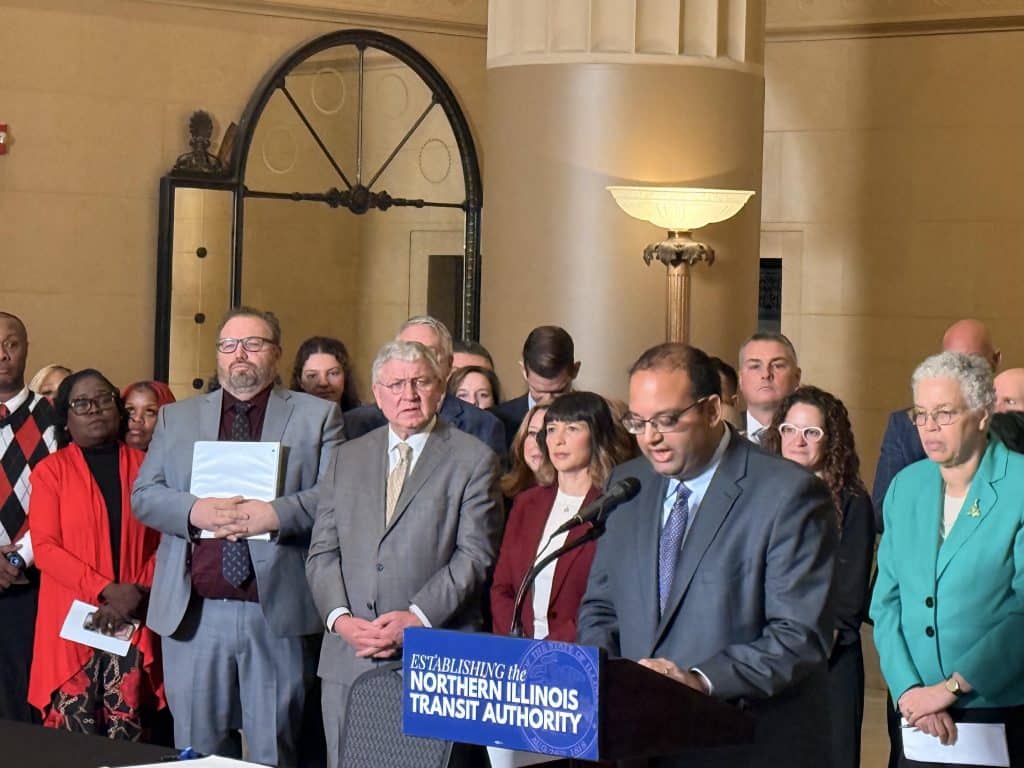
That effort paid off on December 16, 2025, when Illinois Governor J.B. Pritzker signed the Northern Illinois Transit Authority Act into law.

“Failing to address the transit fiscal cliff simply wasn’t an option, so we applaud those in the General Assembly who supported SB 2111, along with the other stakeholders and the thousands of our fellow union members of the Labor Alliance for Public Transportation for fighting every day to get this vital piece of legislation over the finish line,” Guy said.

An existential funding crisis

Back in early 2025, finding a solution for Chicagoland’s transit crisis looked anything but guaranteed.

The root of the problem dated back decades. Years of underfunding, made even worse by the Covid-19 pandemic, led to an impending fiscal cliff that would have exceeded $750 million in 2026. The only possible outcome from such an extraordinary funding shortage would have been dramatic cuts to Metra, the Chicago Transit Authority (CTA) and Pace — leading to lost jobs for SMART members and disrupting the lives of millions of people in Northern Illinois. The CTA has 309 million riders annually, while Metra and Pace have 35 million riders and 17 million riders each year, respectively.

“[Proposed service cuts] would mean less weekday service,” Guy said. “It would mean drastically reduced early morning service, late evening service, less express service, which really would have made commutes longer.”

Notably, the cuts affected not just SMART-TD members, but the SMART RME members who work on the railroad and the Chicago-area sheet metal workers who build and maintain transit infrastructure.

“This would impact SMART Railroad, Mechanical and Engineering employees, SMART-TD members as well as Local 73 members at the CTA,” said Rob Shanahan, International representative in the SMART RME Department.

SMART-TD and sheet metal leaders joined RME members at a Chicago rally for a fair contract with Metra in 2022

Labor organizes to protect jobs, transit

The fight to save SMART members’ jobs and public transit in Northern Illinois lasted throughout 2025.

The Labor Alliance for Public Transportation lobbied in the Illinois General Assembly, fighting to win legislation that would fund public transportation, fix existing inefficiencies in the transit systems and keep members working. At the same time, union members made their voices heard, talking about what the Chicagoland transit system means to them and spreading the word about the upcoming fiscal cliff.

The most important thing throughout the process, Guy said, was solidarity.

“Everyone brought their own perspective, their experience, the stories from the membership. We stayed strong, we stayed together. If we would have cracked at all, we probably couldn’t have got this over the finish line,” he noted. “We really did work as one.”

The result? The Northern Illinois Transit Authority (NITA) Act, passed in December. The law creates a new regional authority (NITA) to oversee CTA, Metra and Pace, invests in public transit, capital projects and tollways across the state, and addresses the fiscal cliff that threatened so many SMART members’ jobs.

“The bill is going to provide robust funding to continue operations as they currently exist,” said Shanahan, who is a member of SMART Local 256 in Chicago. “It will offer improvements as far as potential expansion, more money to improve facilities and equipment. And finally, it provides some security and stability; it’s a long-term solution to the problem of funding transit in Illinois.”

The law calls for there to be a transition team to move from the current system to the new NITA board system. In a nod to the crucial role unions played in securing the legislation, labor will be part of the transition, Guy said.

“As we were as the legislation moved through the General Assembly, our voices will be heard to protect not only our members currently but hopefully our future members, as we look to expand transit and have a transit system worthy of 10, 15, 20 years down the line,” he concluded.

A pro-worker rail safety bill was officially signed into law by former New Jersey Gover­nor Phil Murphy in early 2025.

A-4460, also known as S3389 in the Senate, enacts strict two-person crew requirements for freight trains, ensuring that critical safety functions are not placed on the shoulders of a single worker. This provision reflects real-world operating conditions and directly addresses risks that rail workers have warned about for years.

The bill also strengthens oversight of railroad infrastructure, requires enhanced safety reporting, mandates the use of modern detection technolo­gies and expands/solidifies the role of labor organizations in investigations of derailments and other accidents. The bill is one of the most comprehen­sive and practical rail safety packages passed in the modern era.

Protecting rail workers and communities is not a partisan issue, but a shared responsibility. A-4460 passed with overwhelming bipar­tisan support.

This landmark legislation repre­sents the culmination of years of dedicated advocacy by the SMART-TD New Jersey Safety and Legislative Board, led by Director Ron Sabol. Together they carried our lived experiences from yards, terminals and crew rooms across the state directly to the halls of the State House in Trenton. Their message was simple and consistent: Rail safety saves lives, and it must be treated as a top priority.

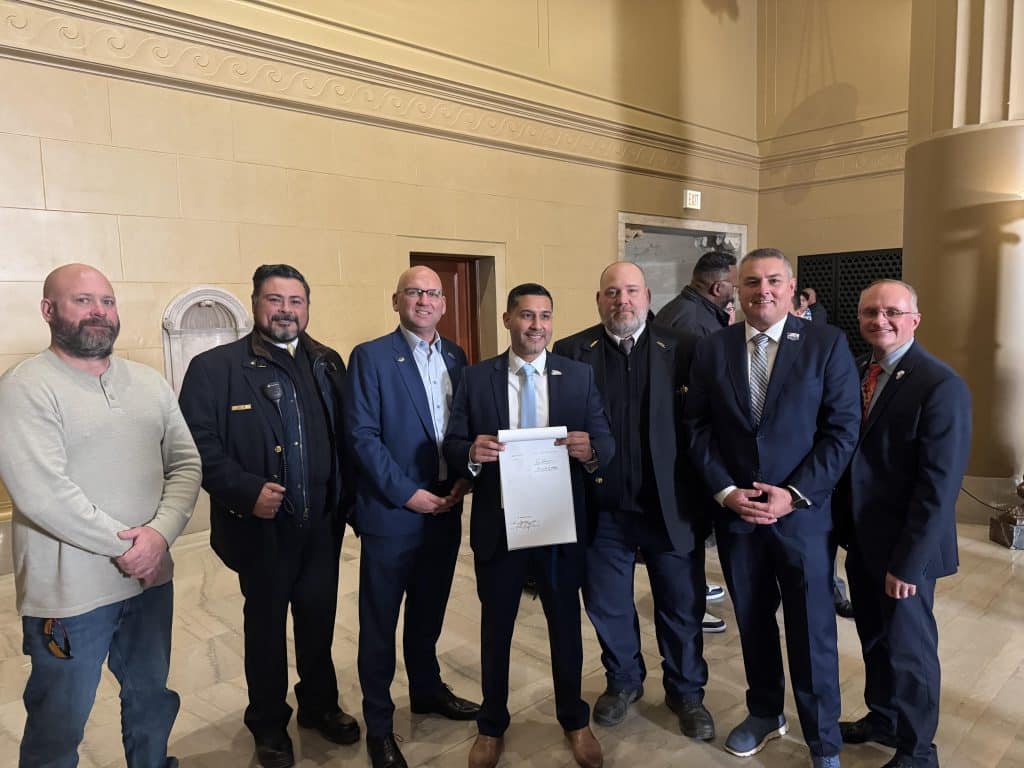
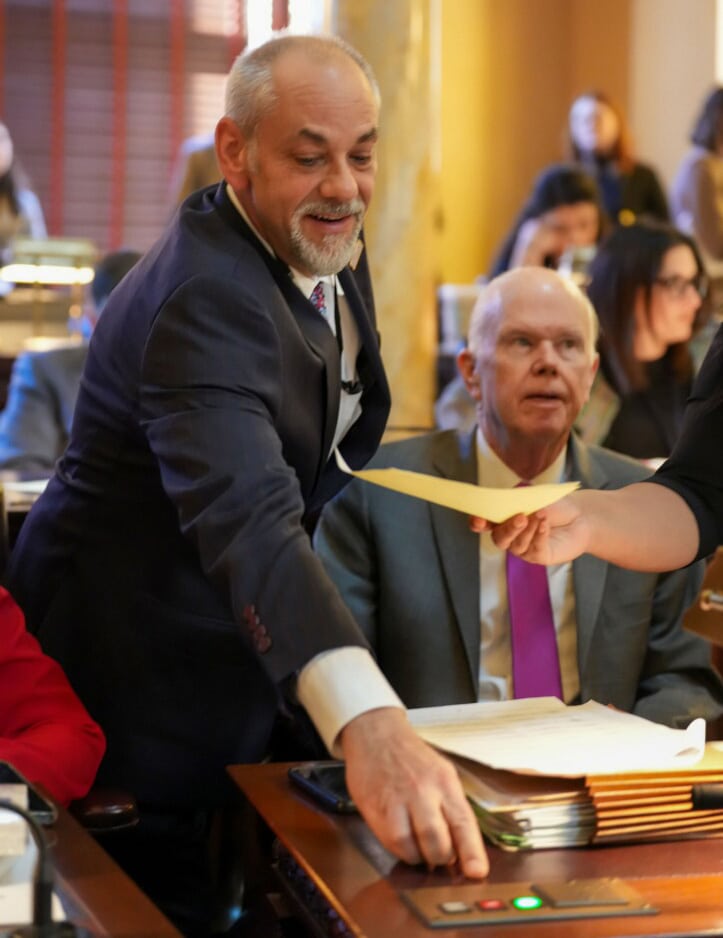
The worker-driven effort behind this legislation was formally recog­nized when Sabol was given the honor of casting a vote for the bill. This honor was extended by Senator Patrick Diegnan, who represents New Jersey’s 18th Legislative District. This acknowledgement recognizes SMART-TD and Sabol’s leadership and tireless advocacy in helping move this legislation across the finish line.

Our rail safety package officially became law on January 20, 2026, when Governor Murphy proved his SMART-TD allegiance with one of his last acts in office.

This worker-led victory proves that when rail workers bring their experiences directly to lawmakers, meaningful change follows!

(Photo: Ron Sabol casting a vote for S3389 on the Senate floor.)

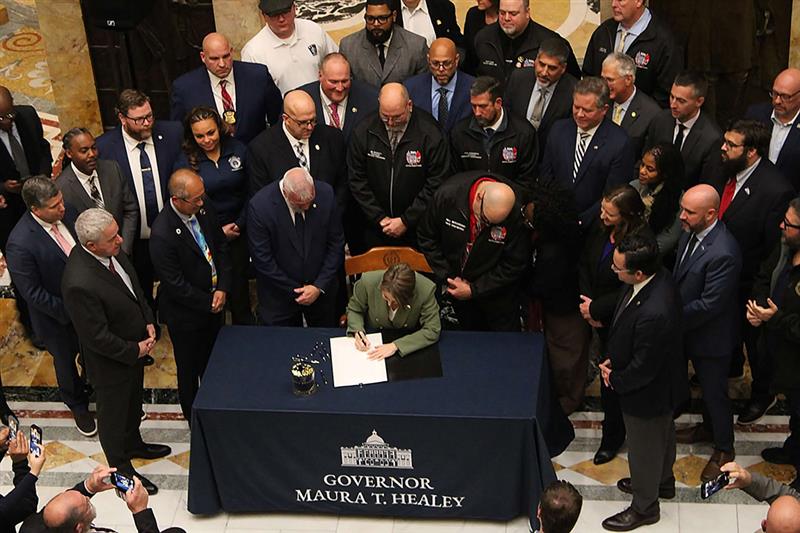
After years of tireless work led by SMART-TD, private transit workers in Massachusetts were granted the same protection from violent assaults as their public counterparts when Governor Maura Healey signed the MBTA Employee Assault Bill (H. 4645) into law on December 4, 2025.

Keolis, a private contractor within the state, employs over 500 SMART-TD members as conductors, engineers, and onboard crews. The new law imposes a penalty of up to 120 days in jail and a maximum $5,000 fine for an assault on a transit employee. The law also adds “bodily fluids” to the definition of an assault, which imposes a strong disincentive for passengers assaulting operators with their spit or urine.    

“I’m grateful to all of our brothers and sisters who never stopped showing up and sent a message to our lawmakers that it’s time to get this done,” said SMART-TD’s New England Safety and Legislative Director Dave Stevenson. “This victory belongs to the men and women who keep Boston and the commonwealth moving!” 

Mass. latest in SMART-TD effort to protect workers nationwide

As transit workers across the country continue to face the daily threat of violent assaults, this legislation represents an important step forward in the fight to ensure that the punishment for attacking these frontline employees literally fits the crime. 

The December 4 bill signing marks the fourth state where SMART-TD passed transit safety legislation in 2025. Members in Maryland, Colorado, and California successfully guided transit safety bills to passage in their respective statehouses. 

If SMART-TD’s interim Bus and Transit Assault Prevention and Safety (BTAPS) Committee Chairperson Cole Czub has anything to say about it, Massachusetts won’t be the last. 

“Safety on the job is and will always be our union’s top priority,” explained Czub. “As I’ve said before, we want to put together one bill that we can push forward to all the states as we’re going along, trying to get more states to pass, and hopefully a federal bill that will protect our members.”

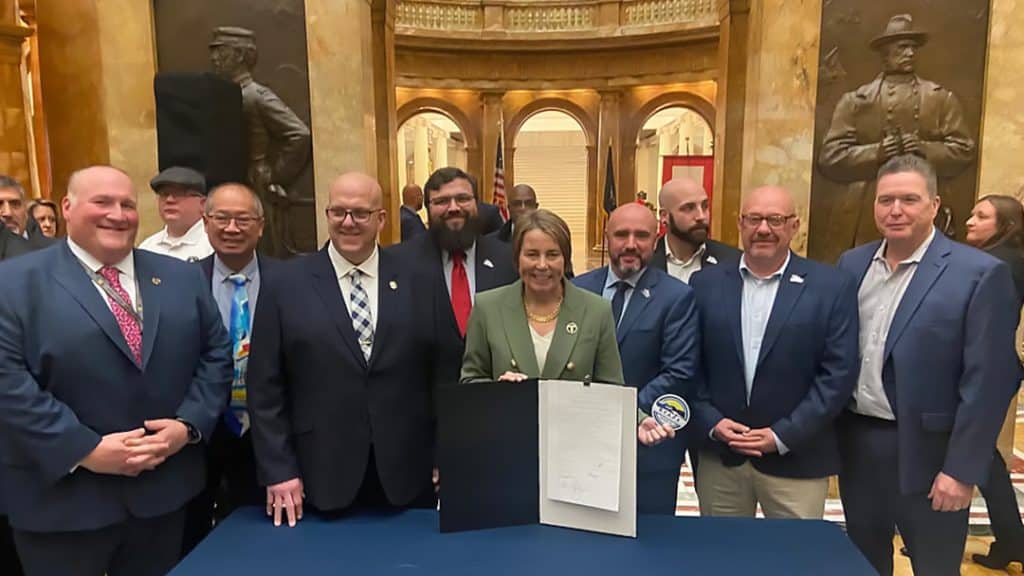
Holding a BTAPS decal, Governor Healey is flanked by Cole Czub and Dave Stevenson at the bill’s signing, as well as International Rep. Bob Butler (furthest right)

The work SMART members do impacts the every­day lives of people across North America, from the buildings constructed by sheet metal workers to the transportation operated by TD members. SMART members improve the quality of life for our neighbors in countless ways, helping them breathe clean air, safely transporting people and freight from point A to B, and more.

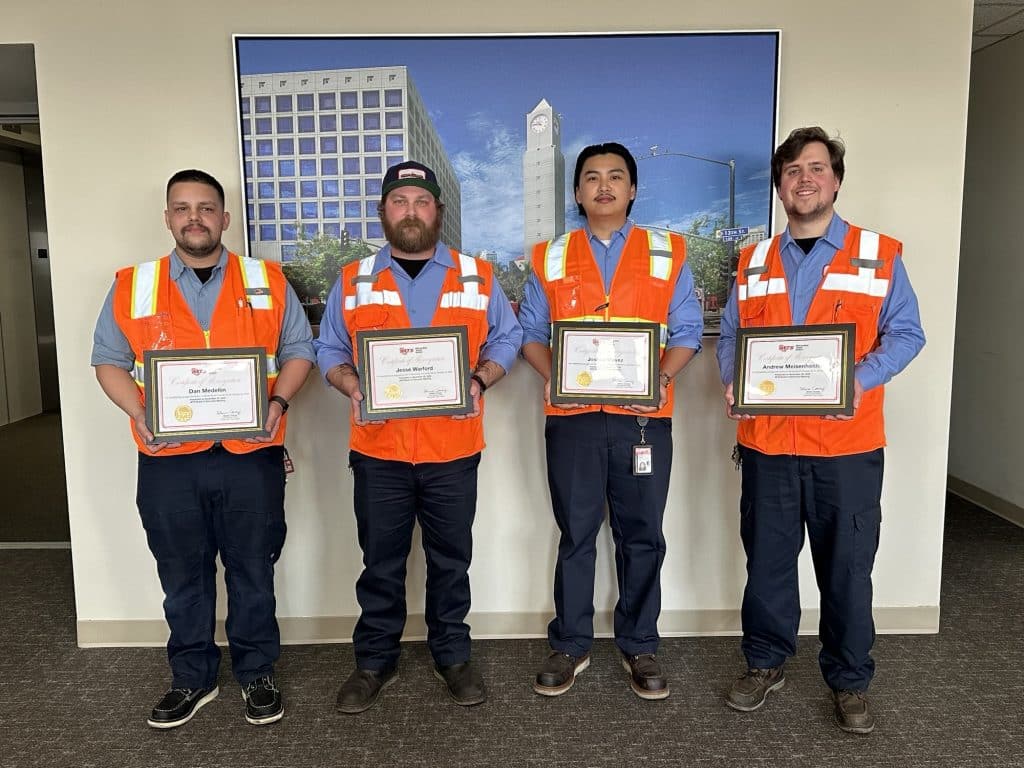
For SMART Railroad, Mechanical and Engineering (RME) Local 398 Brothers Joshua Mavez, Andrew Meisenholder, Jesse Warford and Dan Medellin, this impact took on a whole new level when they saved a woman’s life just outside their facility.

On October 24, 2025, the four San Diego Metropolitan Transit System (MTS) Light Rail Vehicle Department workers noticed an enormous cloud of smoke coming from a van that had crashed just outside the workplace. When Mavez first arrived at the scene, all he saw was “a car stuck between two gates.” It was only when he noticed the tires pop and sparks flying that he realized some­thing was seriously wrong.

Mavez was the first to rush to the scene, and Meisenholder, Warford and Medellin followed without any hesitation, armed with fire extinguishers.

The four RME brothers were ready to take action and put out the fire. But then, Meisenholder recalled, “a security guard yelled out that somebody was in the car, and after that, you could see the silhouette of somebody in the vehicle.”

The four immediately shifted their focus from extin­guishing the fire to rescuing the elderly woman trapped inside her vehicle.

“The fire was getting bigger and bigger by the second,” Mavez said. But the four MTS workers did not let fear or danger get in their way. They were able to shatter the van’s windows and pull the woman out, saving her from the fire and thick smoke.

For Meisenholder, who has elderly family members of his own, the experience was visceral.

“I felt for her and just wanted her to be okay,” he said.

The events resonated close to home for Mavez as well.

“A month before this scenario happened, I had an uncle that passed away in the same exact way. I wasn’t thinking about that in the moment, but after the whole scenario happened, it made me really think, ‘this is like my uncle in the car and now I’m rescuing him,’” he said.

Meisenholder said that this situation demonstrated the true power of union solidarity.

“I feel confident and closer to them [Mavez, Warford and Medellin] knowing that we all had each other’s back. We all just did what had to be done,” he explained.

Mavez added that as municipal workers, “we should be held up to a standard. We work for the public, so we should be able to do what we can to help others.”

The four SMART members were honored for their heroic actions by the MTS Board, with Chairman Stephen Whitburn and CEO Sharon Cooney conducting a ceremony of recognition.

Thank you to Brothers Mavez, Meisenholder, Warford and Medellin for showing exactly what our union stands for. Without these four brothers’ bravery, compassion and heroism, the situation could have ended very differently.

Early January marked a deeply sad and consequential moment for rail labor, rail management and the freight rail industry as a whole.

CSX Transportation announced its decision to dismantle Operation RedBlock. This union-run program stood as the gold standard for substance abuse prevention, peer prevention and safety in railroading for more than four decades. Since its founding in 1984, Operation RedBlock saved lives, preserved careers, stabilized families and safeguarded the movement of America’s freight.

“This is a sad day — not just for our members, but for management as well,” said SMART-TD President Jeremy Ferguson. “Operation RedBlock worked because it saved lives, it saved careers, and it prevented countless incidents that would have cost the railroad far more than the program ever did.”

A program built on trust and proven results

Operation RedBlock was never about shielding employees from responsibility. It was about ensuring that railroaders did not report to work under the influence, under extreme distress or under levels of distraction that lead to derailments, collisions, injuries and fatalities.

By offering a confidential, non-punitive path to help, RedBlock did something in-house corporate programs rarely achieve. It created trust.

That trust ensured that men and women on the ballast removed themselves from service when they were not fit for duty and sought long-term solutions to the underlying issues creating instability in their lives. In doing so, Operation RedBlock did not just benefit workers. It safeguarded train crews, supervisors, communities along the right-of-way and CSX’s bottom line.

For 41 years, this program prevented accidents before they happen. That is not speculation. That was its record.

That record was repeatedly recognized by federal regulators. The Federal Railroad Administration acknowledged that Operation RedBlock and its coordination with CSX’s EAP produced measurable safety benefits.

“FRA has been impressed by the CSX Operation RedBlock programs, the EAP program, and the synergy and cooperation between the two programs,” said Jerry Powers, Staff Director of the FRA’s Part 219 Drug and Alcohol Program. “FRA considers an effective mark-off program and voluntary self-referral and co-worker reporting policies as key force-multipliers to Part 219-regulated testing in the deterrence and detection of drug use and alcohol misuse.”

FRA’s Powers went on to say, “The level of referrals is approximately three times greater year-to-year as compared to random and reasonable cause/suspicion positives, a figure that truly speaks to the outstanding efforts of CSX Drug & Alcohol, EAP, and Operation RedBlock Program personnel. One must keep in mind that these are not just statistics but actual individual employees being helped with substance disorders that can not only improve railroad safety but also positively impact the families of the employees and the emotional development of their children.

“The mark-offs and referrals demonstrate that the ORB Programs under the leadership of Mike Jackson and Phillip Young with Tad Hood (MOW and Signal) and Scott Higgins (Mechanical) has been successful in promoting and creating on-going cultural change and employee engagement to reduce and eliminate unsafe behavior.”

President Ferguson put it simply: “Operation RedBlock didn’t survive for four decades because it only benefited labor. It survived because it worked. It made CSX safer, more stable, and more reliable. Programs without value do not last 41 years in this industry.”

A history the industry chose to ignore

The dismantling of Operation RedBlock at CSX did not happen in a vacuum.

Amtrak and Union Pacific once had similar union-run RedBlock programs. Those programs also saved lives and served their memberships and public safety well. Both were ultimately taken over by management under the belief that carrier-controlled employee assistance programs could do the job better.

They could not.

Amtrak’s program disappeared entirely. Union Pacific lost nearly all traction after experienced union coordinators were removed.

“We watched this happen at Amtrak and Union Pacific, and now CSX is following the same path,” said Mike Jackson, Operation RedBlock program coordinator for CSX and a member of SMART-TD Local 1374 (New Castle, Pa.). “Once management took control at those properties, the trust disappeared. When trust disappears, people stop coming forward — and safety suffers.”

Losing more than a program

The loss of Operation RedBlock is part of a much larger trend: railroads abandoning the commitments they once claimed to believe in.

In the 1980s and 1990s, railroads invested in robust mental health and substance abuse programs staffed by masters-level counselors embedded in divisions. These professionals met railroaders face-to-face. They followed through. They cared whether people lived or died.

Today, most rail carriers rely on outsourced, checkbox-driven EAP vendors with little accountability and no connection to the railroad lifestyle. That is why the union-run Operation RedBlock stood above the rest.

“Federal law requires railroads to have EAPs, but nothing requires them to make those programs effective,” Jackson said. “What we’ve lost across this industry is real commitment. The health and mental condition of our coworkers has to matter. It can’t be reduced to compliance on paper.”

Operation RedBlock at CSX was the last program of its kind still standing.

“I’m deeply disappointed that this mission is being dismantled,” Jackson said. “What makes it worse is knowing our members will no longer have someone standing in their corner, making sure our industry doesn’t fail the people who are struggling.”

An abdication of leadership

CSX claims that nothing will change. They want us to believe that Operation RedBlock’s functions will simply be absorbed into its internal EAP.

SMART-TD members know better.

When discipline, attendance and job security all flow from the same entity, voluntary self-reporting disappears. Fear replaces trust. Problems go underground until they surface as accidents, injuries or fatalities.

By eliminating the independent, union-run structure that made Operation RedBlock effective, CSX has dismantled the very safeguard that kept unfit employees out of service and trains moving safely.

But this is not the end of the fight.

“No matter what the carriers do, our members need to know this: we have their backs,” Jackson said. “We will keep fighting for them — even when the road forward isn’t clear.”

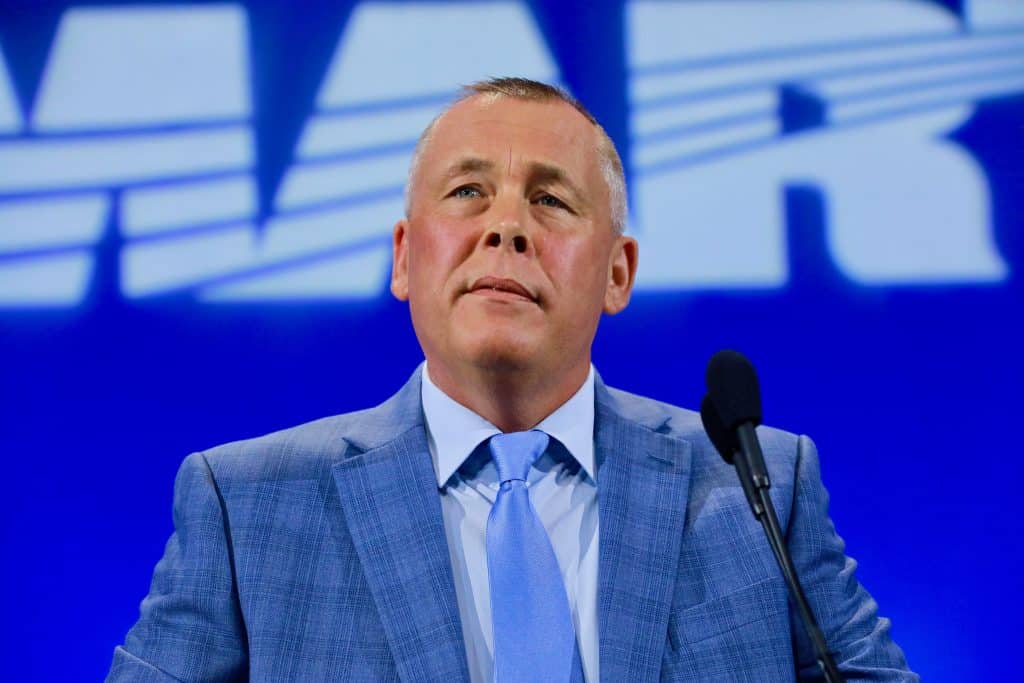
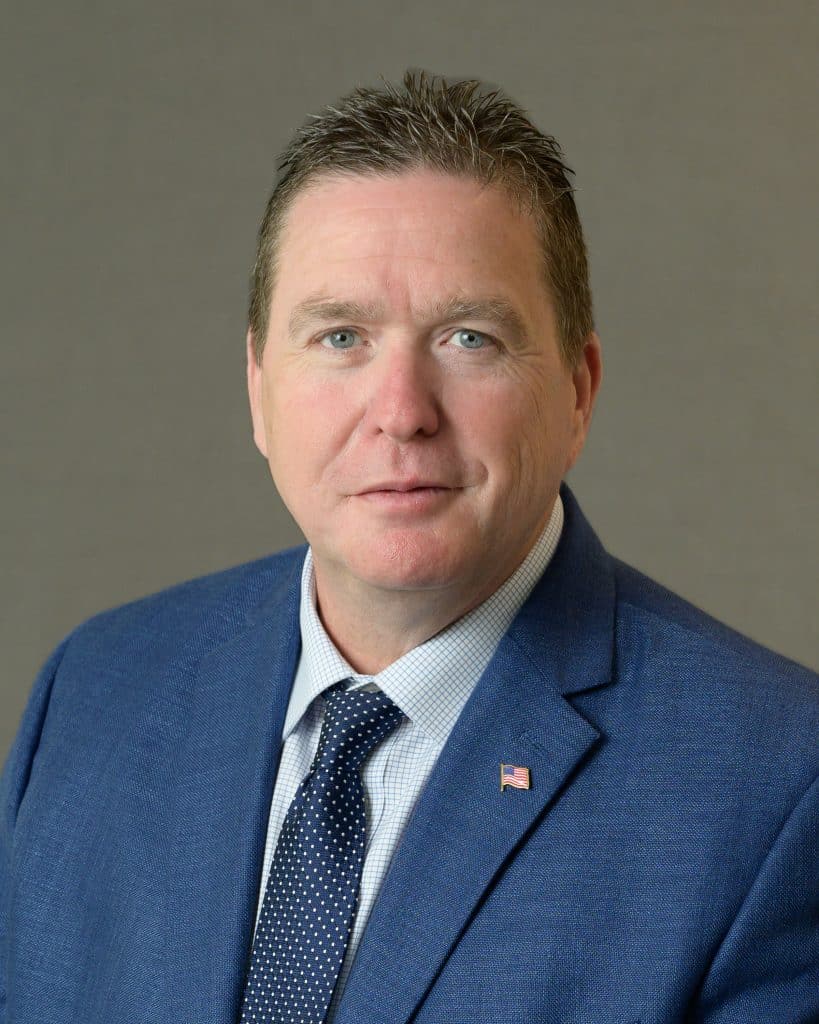
On February 9, 2026, SMART General President Michael Coleman announced the election of SMART Local 28 (New York City and Long Island) Business Manager Eric Meslin to the SMART General Executive Council (GEC), following former Fifth General Vice President Bob Butler’s appointment as SMART International representative. In addition, former Local 44 Business Manager Don Dunne was appointed an International representative for the mid-Atlantic region.

Eric Meslin is a third-generation sheet metal worker whose lifelong commitment to Local 28 and the labor movement has propelled him through a distinguished career of union leadership.

He began his apprenticeship in 1998, earning journeyperson status four years later. In 2006, he was elected to Local 28’s Executive Board, where he continued to serve through subsequent reelections in 2007 and 2010.

In 2013, Meslin was elected to represent the membership full-time as a business representative. During this period, he was also appointed as a labor-side trustee to both the Joint Labor Management Committee and the Joint Apprenticeship Committee. He was reelected as business repre­sentative in 2016.

The members of Local 28 elected Meslin as president and business manager in 2019, reaffirming their confidence in his leadership with reelections in 2022 and 2025. He serves as chairman of the Local 28 Trust Funds and also chairs the Local 28 Political Action League. Meslin sits on the Executive Boards of the New York State Building Trades Council, the New York City Building Trades Council and the Nassau Suffolk County Building Trades Council, and he serves as a delegate to the Metropolitan Association of Presidents and Business Representatives. In 2020, Meslin was appointed by SMART General President Emeritus Joseph Sellers Jr. to the Board of Directors of NEMI (National Energy Management Institute), where he served as a trustee.

In 2024, SMART General President Coleman appointed Meslin as a trustee of SASMI (Stabilization Agreement of the Sheet Metal Industry). The following year, in 2025, Meslin was elected president of the New York State Council of Sheet Metal Workers, representing Locals 28, 38, 46, 58, 71, 83, 112 and 137.

Meslin is married and the proud father of three daughters. His commitment to family mirrors the dedication he brings to the members of Local 28, and he often credits his wife and daughters for their unwavering support as he continues to serve our union and the broader labor community.

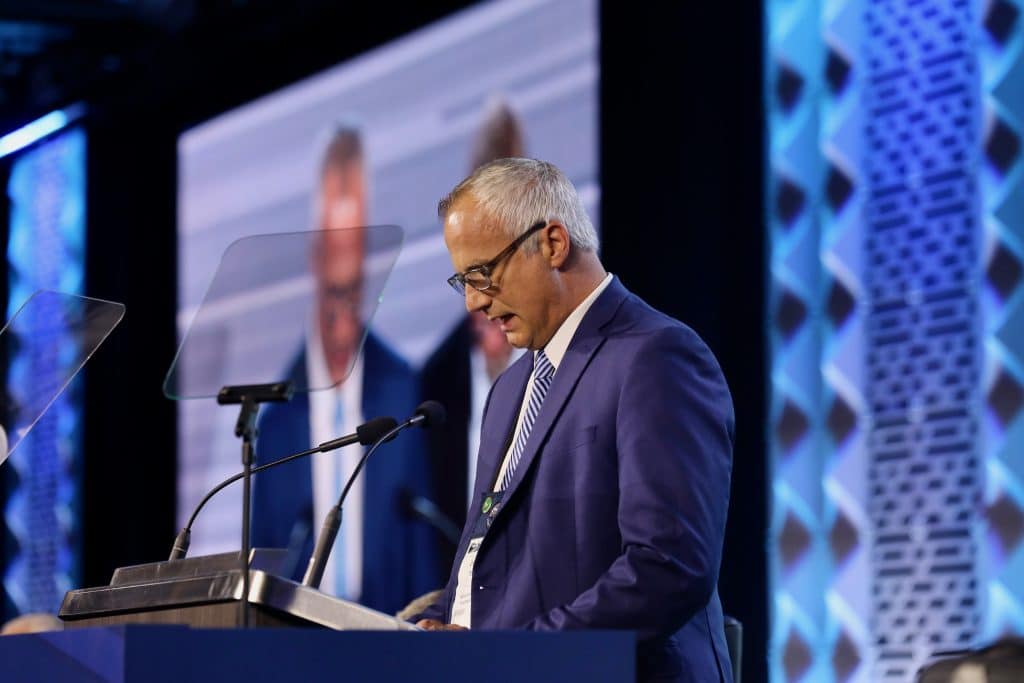
Newly appointed International Representative Bob Butler has been a member of Local 17 (Boston, Mass.) for 40 years. He stepped into local leadership in 1997 as trustee and was subsequently elected to the local’s Executive Board. Butler was elected as a business representa­tive in 2002, a position in which he served until his election as business manager in 2012.

With Butler’s extensive knowl­edge of the trade and his experience in union leadership, he was elected president of the SMART Northeast Regional Council (NERC) in 2021 and led the four locals within this region. In 2022, Butler was appointed as a general vice presi­dent on the GEC, where he served until transitioning into his new role.

Alongside Butler, former Local 44 (Northeastern Pa.) Business Manager Don Dunne was also appointed an International represen­tative in February. Dunne has been a member of Local 44 since 1998 and graduated from the apprentice­ship in 2002. Shortly thereafter, he served as a trustee until his election as recording secretary in 2006. That same year, he expanded his contri­butions by becoming a part-time welding instructor for Local 44’s apprenticeship program, sharing his knowledge and skills with the next generation of sheet metal workers.

Dunne’s leadership continued to grow as he was elected business representative in 2012. His commit­ment to the membership was further recognized in 2018, when he was elected business manager. In 2021, he was reelected to serve as both business manager and financial secretary-treasurer.

Dunne also served as trustee for Local 44’s Funds and the Joint Apprenticeship Training Center. In 2021, he was appointed co-chair of SASMI. Beyond his roles within Local 44, Dunne has held several prominent positions in related organizations.

Congratulations, brothers!

A lot has changed in the many decades since sheet metal workers first organized in 1888. Back then, “tin knock­ers” were known for their snips and hammers; today, technological advancements like AutoCAD and artificial intelligence have not just shaped the way we work, but the world in which we live.

However, one thing has not changed: the pride that comes with being a skilled tradesperson. Being able to drive past a building and say, “I built that.”

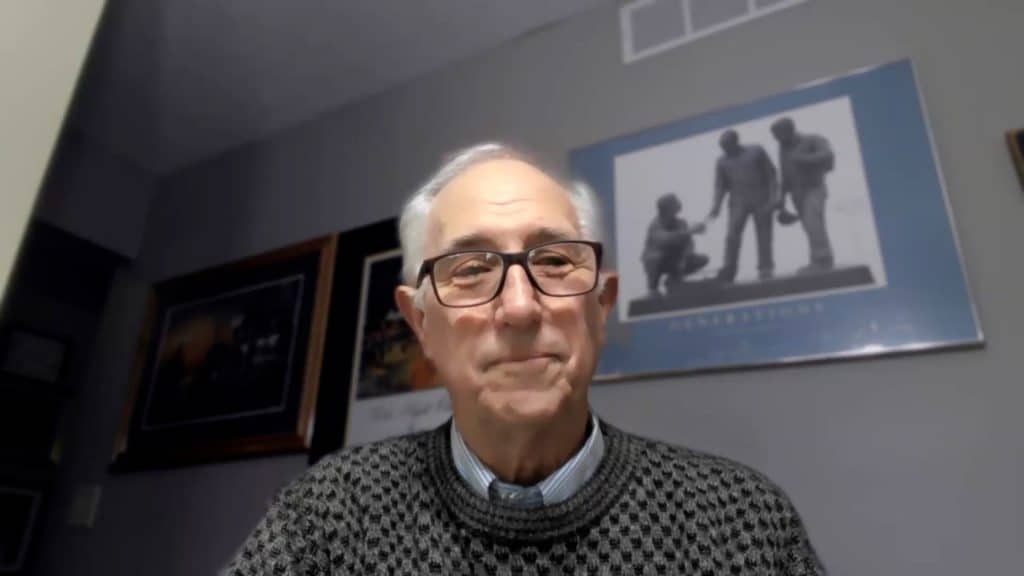
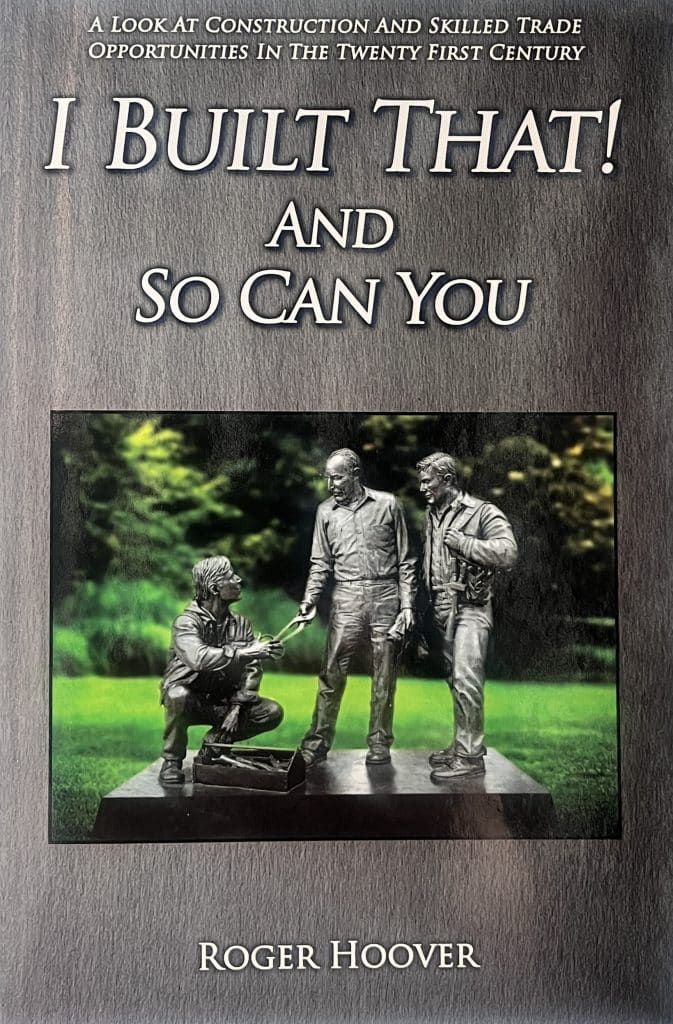
That precise feeling is what Local 24 (central Ohio) member Roger Hoover drew upon when he titled his 2026 book, I Built That! And So Can You. Now available for purchase via Braughler Books, the 128-page book was called a “must read for students” by the Urbana Daily Citizen.

Roger Hoover

“We don’t have any books about anybody doing anything in the trades,” Hoover said in a recent interview with SMART. “I couldn’t find anybody who has written about it … and I thought, ‘Well, why not me?’”

Hoover, now 72 years old, joined our union in 1972. The sheet metal trade changed his life: Over the decades, he enjoyed a fulfilling career building his community, providing for his family and, following over 40 years in the industry, retiring with the comfort of a union-negotiated pension.

That was in 2016. After nine years of retirement, he came back to work to help build a General Motors plant last year — just 1.9 miles from his house.

“The first job I came out on was probably the best job I was ever on,” said Hoover, who has since been working on a data center project. “I really didn’t know how much pride I had in what I did until I came back, and then realized: Wow, this is really a great way to make a living.”

Hoover has enjoyed his return to the tools — but the fact that he even could come back to work is part of what inspired him to write I Built That! And So Can You.

Over the years, he said, he asked countless sheet metal workers whether they were happy they joined the trade. The nearly universal answer was “yes.” When he asked those same sheet metal workers if they would encourage their children to enter the trade, the answer, he explained, was frequently “no.”

That disconnect, resulting at least in part from American high schools’ unrelenting effort to push students to go to college rather than consider the skilled trades, has helped lead to today’s workforce shortage, he argued. There’s also the fact that despite the essential role SMART members play in communities across North America, very few people actually know what sheet metal workers do.

To that end, I Built That! was born.

With such an extraordinary range of experience — working in the industry as an appren­tice, draftsman, foreman, estimator, field supervisor, project manager and instructor — Hoover’s book has plenty of insights for both current members and future sheet metal workers. It includes stories from throughout Hoover’s career, which spans from the years predating the Occupational Safety and Health Administration (OSHA) to the high-tech data centers that he and thousands of other SMART members are helping build today. He has witnessed many innovations throughout his years in the trade — and he played a key role in more than a few.

One such project was one of the first-ever industrial solar panel jobs in the United States, where despite having little relevant experience, Hoover’s problem-solving skills — developed over the span of his career — helped with its success.

“That makes me such a proud member, because we really have been on the forefront of a lot of things,” he said.

Hoover has also played a part in helping our union and our industry expand. Starting in the 1990s, he partnered with SMACNA to deliver leadership classes across the United States and Canada, and he authored the Basic Sheet Metal Estimating Manual through the same partnership.

Today, with the publication of I Built That! And So Can You, he aims to keep spreading the gospel about working in the sheet metal industry, particularly to young people who may otherwise think the only road to job security is a college degree.

“People don’t understand what we do, and they don’t understand the incredible, incredible opportu­nity that’s available for kids coming into the industry, and with no debt,” Hoover said, adding:

“There’s a great amount of pride that goes into being a sheet metal worker. We do things that nobody else can do.”