“What BE4ALL is about — for me, it’s about respect. It’s about respect for each and every person in this room, everybody out on the jobsites, in the shops, wherever you may be … To me, it boils down to the respect that each and every one of us should have for each other, because we’re part of an organization. We’re part of a family.”

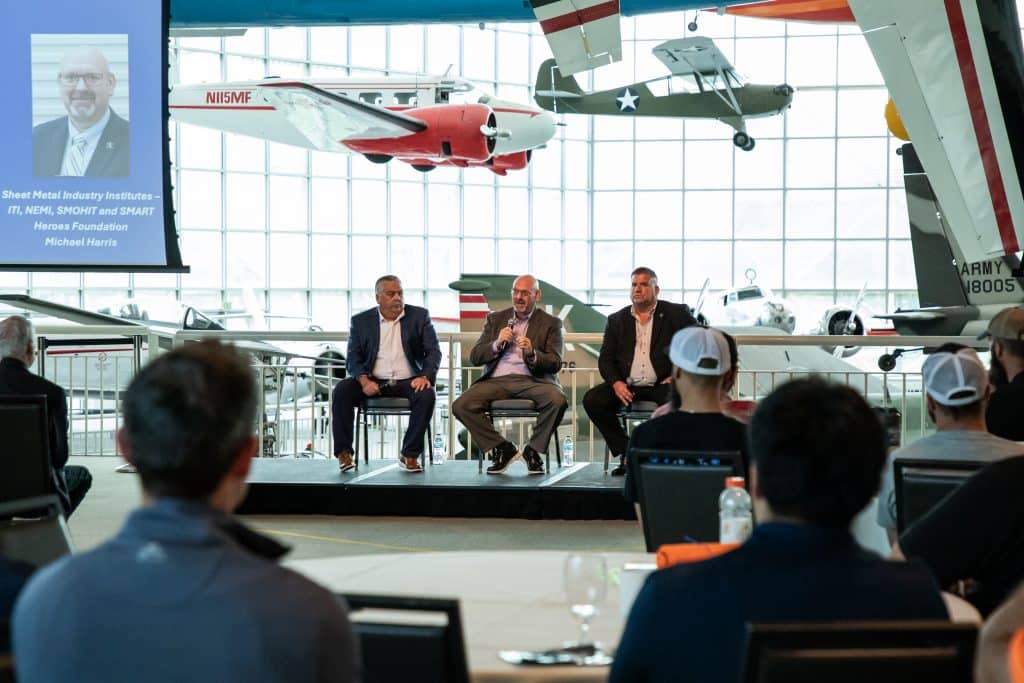
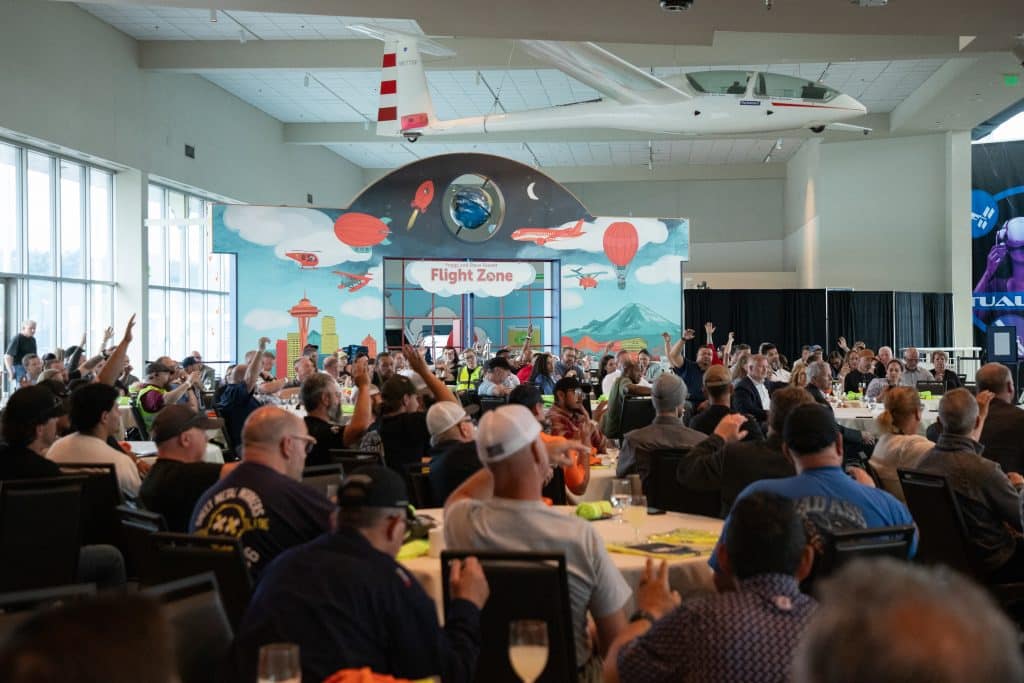
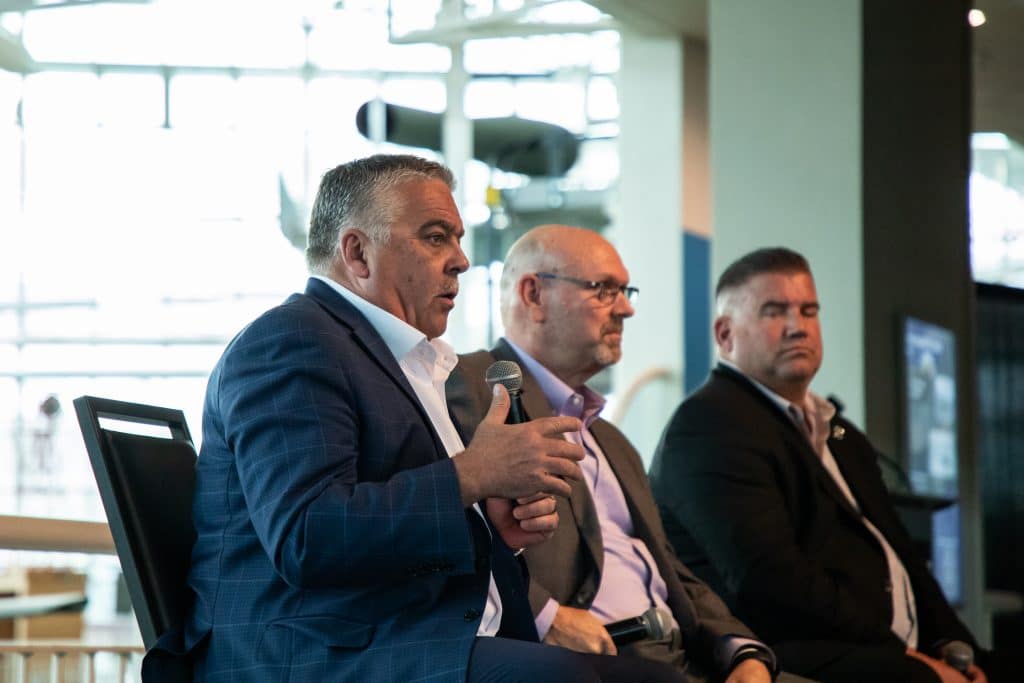
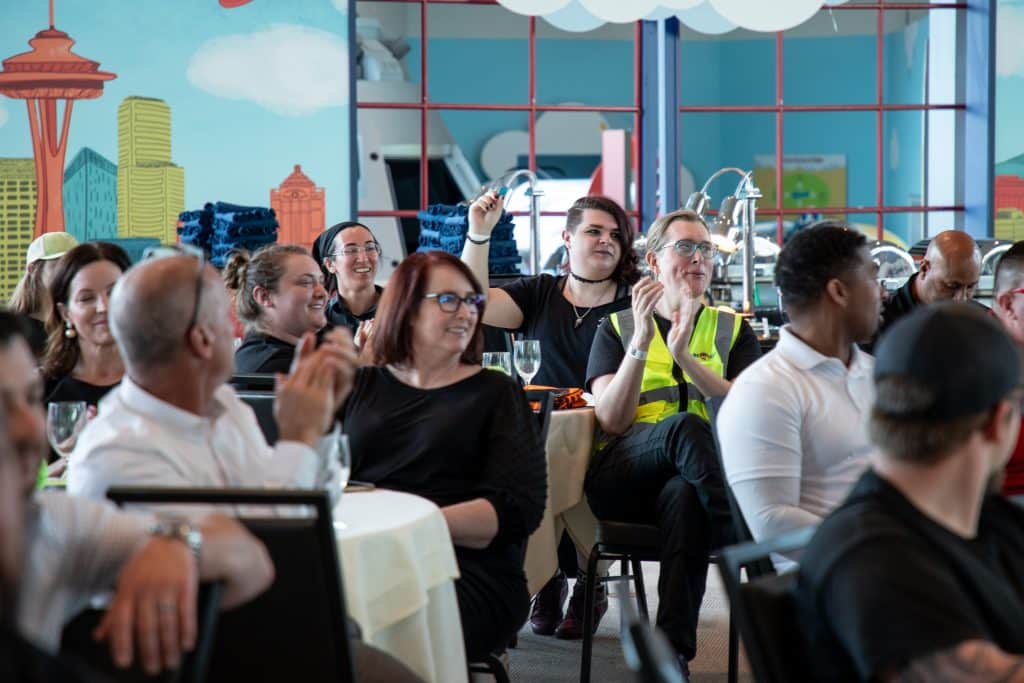
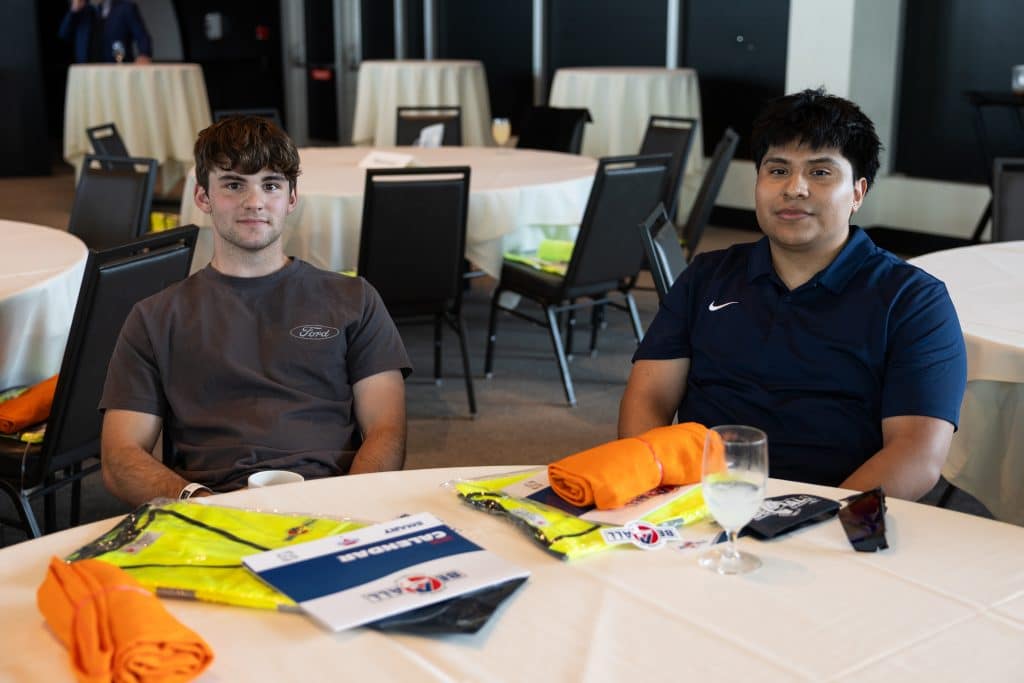
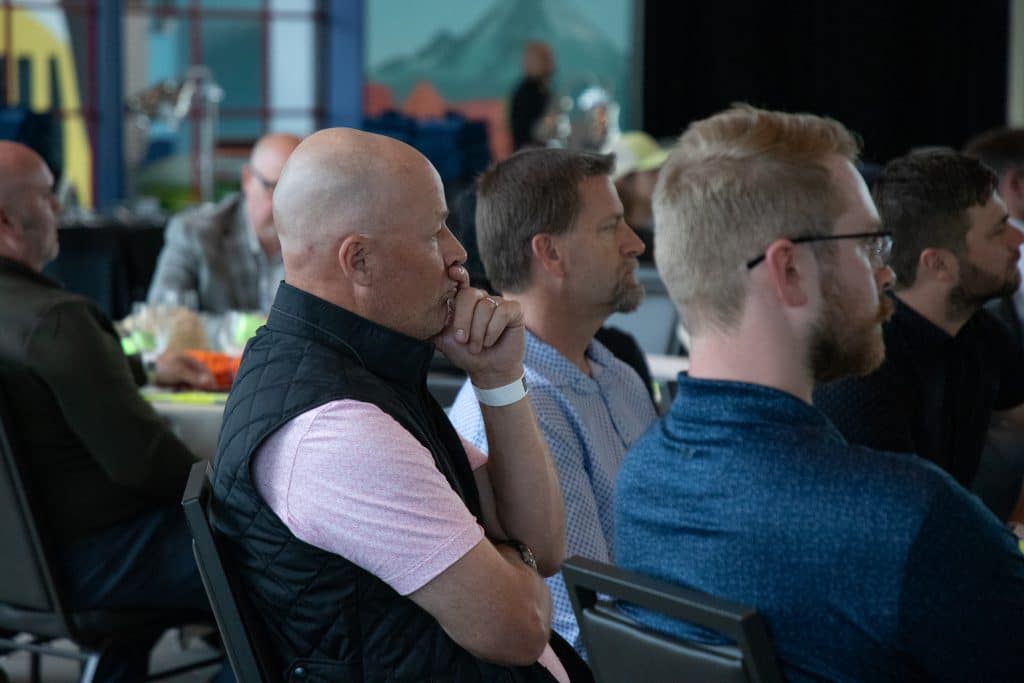
Those words, spoken by SMART General President Michael Coleman, summed up the second-ever Belonging and Excellence for All (BE4ALL) Town Hall, which took place May 28, 2026, in Seattle, Washington. The Town Hall — featuring General President Coleman, SMACNA President Todd Hill and Funds Executive Director Michael Harris — brought nearly 200 SMART members and SMACNA contractors together at Seattle’s Museum of Flight to speak directly with leadership about an important initiative to strengthen the unionized sheet metal industry.
BE4ALL, a joint effort by SMART, SMACNA and the International Training Institute (ITI), started in 2021. Its goals are indicated by its title: Belonging and Excellence for All. In order to maintain the strength of our union, our signatory contractors and our market share, SMART locals need to be able to recruit and retain workers in communities across the United States and Canada. But that can only happen if all of us — from new apprentices to organized journeyworkers to longtime members to retirees, regardless of gender, race, sexual identity, political beliefs or country of origin — feel like we belong: on the jobsite, in the shop and at the union hall.

Coleman, Hill and Harris delved into the importance of BE4ALL during the Town Hall. The event, moderated by Dushaw Hockett, was divided into two parts: a conversation between Hockett and the three leaders followed by a question-and-answer portion, in which Local 66 members spoke directly with International leadership about BE4ALL.

In dialogue with Hockett, the three sheet metal industry leaders talked about what BE4ALL is — and what it is not — and why it is so important to every single member of our union. As General President Coleman said repeatedly throughout the event, BE4ALL is really very simple: It’s just about being a good human being. Being kind to one another, one and off the job. Making sure we all feel welcomed, in our union and in our workplaces.

But it’s also about taking specific actions and implementing strategies to counteract real issues that our industry is facing. With large portions of the skilled trades workforce approaching retirement, we need to recruit and retain members to maintain and grow our strength. That can’t happen if people come into our industry and immediately feel like they don’t belong. And the ugly truth of the matter is that, for too long, many talented individuals have left the trade because rather than being welcomed, they were met with hostility.

Those are people we lose to other trades or the nonunion sector. And that weakens our union.
To that end, the three leaders explained, BE4ALL has developed specific campaigns and resources to create a culture of belonging and excellence for every single member. A Rapid Response Protocol to help prevent and respond to hazing, bullying, harassment, discrimination and other harmful instances. Constitutional amendments, proposed and ratified by delegates to the last two SMART conventions, to take action against those same instances. Toolbox Talks and Learning Journeys to provide education and awareness around what we can do to welcome one another in the industry.

“It’s about all of the membership being exposed to [BE4ALL],” said Harris. “BE4ALL has a website, beforall.org. I challenge everybody in this room to go to that website, because all the resources we’ve talked about … are available on there.”

Early in the conversation, both SMART Northwest Regional Council President Devin Leingang and Heavy Metal Summer Experience President/cofounder Angie Simon told Local 66 members not to be afraid of bringing tough questions to the leaders on stage. Sheet metal workers took that to heart, asking for specific metrics for measuring BE4ALL’s success, inquiring about the specific problems BE4ALL was aiming to counteract, and more.

“Everything sounds good, but it seems like it’s more for the future than the present,” said Local 66 member Jerome. “What is happening now, for individuals who are in the situation now?”

In response, Coleman, Harris and Hill were open and honest with attendees. All of the resources discussed are available now, they reiterated. The BE4ALL Committee is working hard to develop both immediate, actionable items and forward-thinking strategies. But the culture change and the long-term work is just that: long term. And it needs to be adopted by all of us to be effective.

In the end, the three leaders emphasized, the stakes are clear. On one level, BE4ALL is strategic. If we don’t recruit and retain, we will lose talent, our contractors will be unable to go after the work that supports members, our market share will suffer, and ultimately, our pension and benefit funds will feel the impact.

On another, more important level, it’s about our union’s values. Solidarity. Having each other’s backs. Brotherhood and sisterhood.

“This organization is my family,” said General President Coleman, adding later: “It’s just not that hard, it really isn’t, to be a good person.”

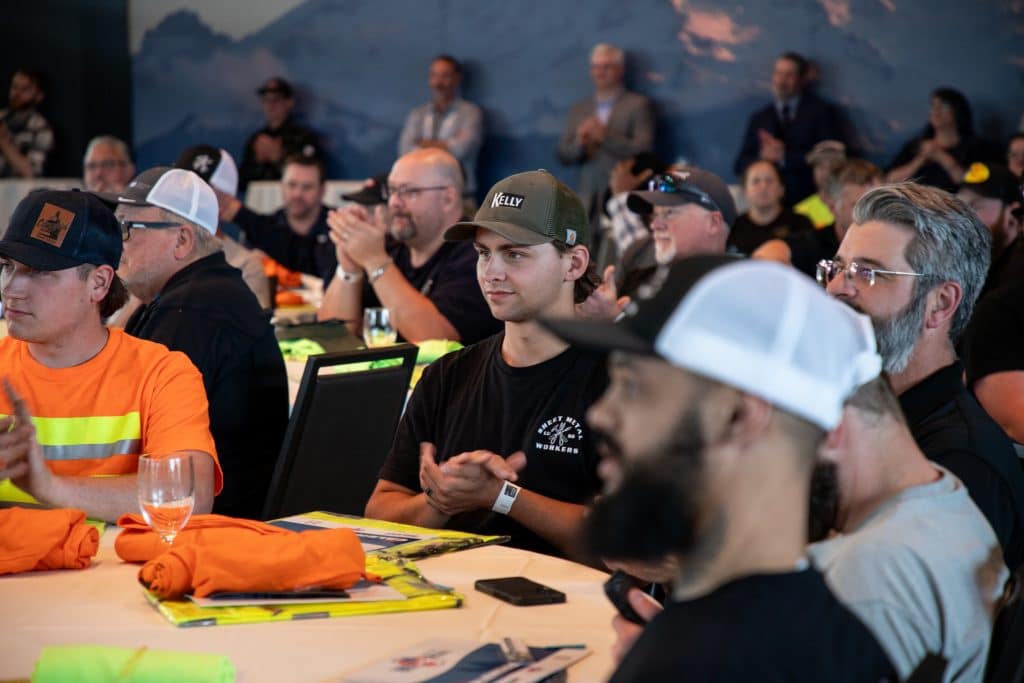
With around 180 in-person attendees at the Museum of Flight, plus 296 views via livestream, the event had its intended impact: raising awareness about a crucial effort to strengthen our union and our industry. As Harris noted, BE4ALL — like our union and the labor movement — has to be an initiative driven by the members, for the members. Union sheet metal workers in every state and province need to engage with BE4ALL in order to accomplish the initiative’s goals and create opportunity for all members.

Judging from reactions at the Town Hall, that message resonated.

“I’m a first year apprentice, I’m 24, I don’t know sh*t — and so you guys are telling me what’s expected of me,” said Local 66 member Carlos. “So, thank you.”

“What BE4ALL is about — for me, it’s about respect. It’s about respect for each and every person in this room, everybody out on the jobsites, in the shops, wherever you may be … To me, it boils down to the respect that each and every one of us should have for each other, because we’re part of an organization. We’re part of a family.”

Those words, spoken by SMART General President Michael Coleman, summed up the second-ever Belonging and Excellence for All (BE4ALL) Town Hall, which took place May 28, 2026, in Seattle, Washington. The Town Hall — featuring General President Coleman, SMACNA President Todd Hill and Funds Executive Director Michael Harris — brought nearly 200 SMART members and SMACNA contractors together at Seattle’s Museum of Flight to speak directly with leadership about an important initiative to strengthen the unionized sheet metal industry.

BE4ALL, a joint effort by SMART, SMACNA and the International Training Institute (ITI), started in 2021. Its goals are indicated by its title: Belonging and Excellence for All. In order to maintain the strength of our union, our signatory contractors and our market share, SMART locals need to be able to recruit and retain workers in communities across the United States and Canada. But that can only happen if all of us — from new apprentices to organized journeyworkers to longtime members to retirees, regardless of gender, race, sexual identity, political beliefs or country of origin — feel like we belong: on the jobsite, in the shop and at the union hall.

Coleman, Hill and Harris delved into the importance of BE4ALL during the Town Hall. The event, moderated by Dushaw Hockett, was divided into two parts: a conversation between Hockett and the three leaders followed by a question-and-answer portion, in which Local 66 members spoke directly with International leadership about BE4ALL.

In dialogue with Hockett, the three sheet metal industry leaders talked about what BE4ALL is — and what it is not — and why it is so important to every single member of our union. As General President Coleman said repeatedly throughout the event, BE4ALL is really very simple: It’s just about being a good human being. Being kind to one another, one and off the job. Making sure we all feel welcomed, in our union and in our workplaces.

But it’s also about taking specific actions and implementing strategies to counteract real issues that our industry is facing. With large portions of the skilled trades workforce approaching retirement, we need to recruit and retain members to maintain and grow our strength. That can’t happen if people come into our industry and immediately feel like they don’t belong. And the ugly truth of the matter is that, for too long, many talented individuals have left the trade because rather than being welcomed, they were met with hostility.

Those are people we lose to other trades or the nonunion sector. And that weakens our union.
To that end, the three leaders explained, BE4ALL has developed specific campaigns and resources to create a culture of belonging and excellence for every single member. A Rapid Response Protocol to help prevent and respond to hazing, bullying, harassment, discrimination and other harmful instances. Constitutional amendments, proposed and ratified by delegates to the last two SMART conventions, to take action against those same instances. Toolbox Talks and Learning Journeys to provide education and awareness around what we can do to welcome one another in the industry.

“It’s about all of the membership being exposed to [BE4ALL],” said Harris. “BE4ALL has a website, beforall.org. I challenge everybody in this room to go to that website, because all the resources we’ve talked about … are available on there.”

Early in the conversation, both SMART Northwest Regional Council President Devin Leingang and Heavy Metal Summer Experience President/cofounder Angie Simon told Local 66 members not to be afraid of bringing tough questions to the leaders on stage. Sheet metal workers took that to heart, asking for specific metrics for measuring BE4ALL’s success, inquiring about the specific problems BE4ALL was aiming to counteract, and more.

“Everything sounds good, but it seems like it’s more for the future than the present,” said Local 66 member Jerome. “What is happening now, for individuals who are in the situation now?”

In response, Coleman, Harris and Hill were open and honest with attendees. All of the resources discussed are available now, they reiterated. The BE4ALL Committee is working hard to develop both immediate, actionable items and forward-thinking strategies. But the culture change and the long-term work is just that: long term. And it needs to be adopted by all of us to be effective.
In the end, the three leaders emphasized, the stakes are clear. On one level, BE4ALL is strategic. If we don’t recruit and retain, we will lose talent, our contractors will be unable to go after the work that supports members, our market share will suffer, and ultimately, our pension and benefit funds will feel the impact.

On another, more important level, it’s about our union’s values. Solidarity. Having each other’s backs. Brotherhood and sisterhood.

“This organization is my family,” said General President Coleman, adding later: “It’s just not that hard, it really isn’t, to be a good person.”

With around 180 in-person attendees at the Museum of Flight, plus 296 views via livestream, the event had its intended impact: raising awareness about a crucial effort to strengthen our union and our industry. As Harris noted, BE4ALL — like our union and the labor movement — has to be an initiative driven by the members, for the members. Union sheet metal workers in every state and province need to engage with BE4ALL in order to accomplish the initiative’s goals and create opportunity for all members.

Judging from reactions at the Town Hall, that message resonated.

“I’m a first year apprentice, I’m 24, I don’t know sh*t — and so you guys are telling me what’s expected of me,” said Local 66 member Carlos. “So, thank you.”
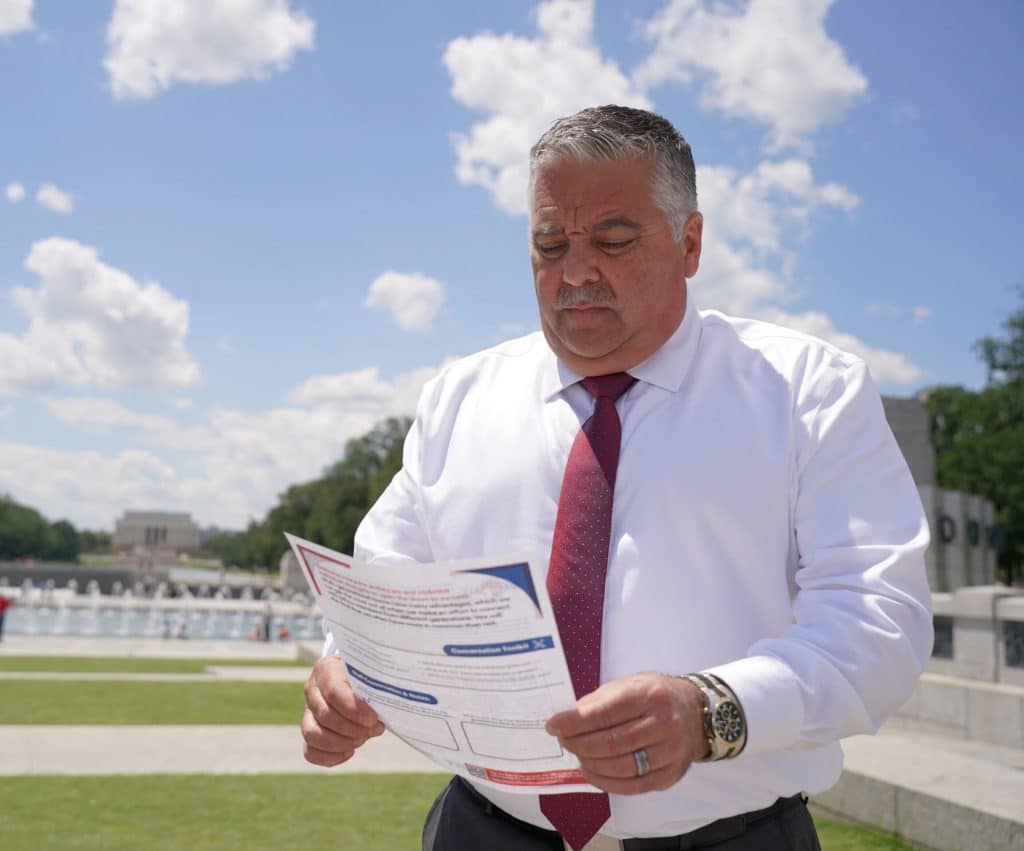
SMART General President Michael Coleman reads a BE4ALL Toolbox Talk in Washington, DC.
SMART General President Michael Coleman reads a BE4ALL Toolbox Talk in front of the World War II Memorial in Washington, DC.

Join the Talks On Tour contest to show the BE4ALL committee where you read your Toolbox Talks!

We want to see you holding up a BE4ALL Toolbox Talk wherever you read it, whether you’re at a jobsite, in an office, the union hall or even on vacation. Group photos okay? Absolutely! Show us your team spirit for a chance to win big – the whole group will be eligible for the prize! Just make sure your photo is taken in a safe and appropriate setting.

Snap your pic and email it directly to be4all@smart-union.org with the subject line “Talks On Tour” to be screened and entered to win. Let’s unite to champion safety and education within the industry. We can’t wait to see where Toolbox Talks take you!

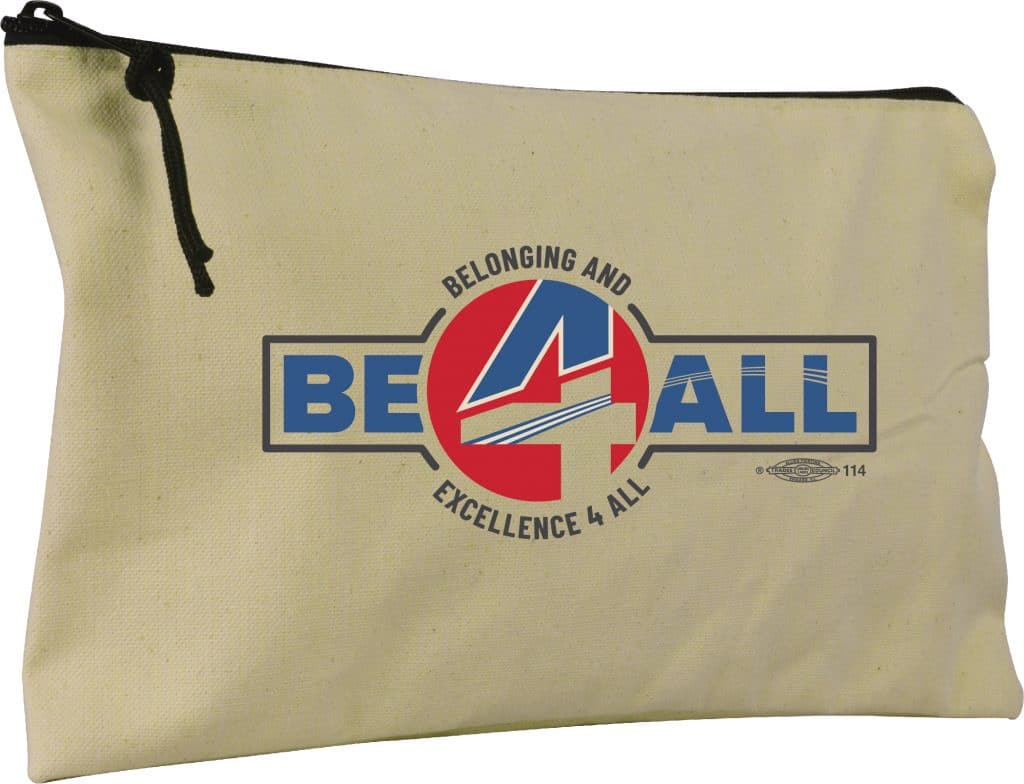
Contest prize: A BE4ALL-branded tool pouch.

Read the latest BE4ALL Toolbox Talk, entitled “Courageous Conversations,” in English and in Spanish, and view all existing BE4ALL Toolbox Talks here.

The theme of the 2023 SMART Leadership Conference was “This Is Our Time!” In recognition of this important moment — for both our union and the industry — we invite SMART members to practice the five skills of the BE4ALL (Belonging and Excellence for All) leader.

These core skills help to create welcoming workspaces that foster belonging for all. They are also consistent with the vision and mission of BE4ALL, a joint initiative supported by SMART, SMACNA and the International Training Institute (ITI).

The five practices:

1. Intergroup contact. BE4ALL leaders make intergroup contact a daily practice. Intergroup contact requires that leaders step out of their comfort zone to engage people who are different (or those they perceive to be different). If done on a regular basis, this practice can be life changing. In the book Biased: Uncovering the Hidden Prejudice That Shapes What We See, Think, and Do, author Jennifer Eberhardt, a Stanford social psychologist, notes that “personal connections can override the power exerted by implicit bias.” There are several ways to practice intergroup contact. In the workplace, the strategy may involve regular lunch meetings or check-ins with coworkers in which two people get to know each other beyond job titles and roles. In private life, intergroup contact could take the form of participating in a diverse social club or community association.

2. Micro-affirmations. BE4ALL leaders also practice micro-affirmations. Micro-affirmations are small — but important — ways that we can acknowledge the humanity, dignity and worth of others. They include:

  • Name recognition. Asking a person for their name, and then remembering and repeating their name later, is one of the most powerful ways that we can signal to another person: “I see you.” “You matter.”
  • Life events. Inquiring about important events in people’s lives. These include birthdays, anniversaries and important holidays. You can record the dates in your calendar – then, when an important date arrives, take a moment to acknowledge the person by sending a card, email or text.
  • Feedback and affirmation. Take time to give other people feedback (positive or otherwise). But remember, for feedback to be effective, it needs to be specific and genuine. It’s also important that you have enough of a relationship with the other person that they will be open to receiving what you have to say.

3. Non-biased decision-making. In the Bias and Belonging training sessions conducted by the ITI, instructors offer several tools to assist with non-biased decision-making. These tools include the use of mental scripts. A simple mental script goes like this:

What if I’m wrong, and what’s happening in this situation is not (what I think it is)? But, instead, it’s (something else).

For example, what if the reason why the apprentice has been late three days in a row has nothing to do with a lack of work ethic? Instead, maybe the person is homeless and sleeping in their car.

Mental scripts invite us to pause and challenge our assumptions before making a decision.

4. Courageous conversations. BE4ALL leaders regularly practice courageous conversations. A courageous conversation is an exchange between two people. Usually, the conversation is initiated in one of two situations: a) when we feel that we have been wronged by another person and/or; b) when we have done or said something (real or perceived) to wrong another person.

In a recent article, we laid out the seven “As” of a courageous conversation.

But there are two that are foundational for every leader. They are

  • Anchoring: Preparing yourself — mentally and emotionally — before the conversation. This provides a reserve of energy to tap into for what can be a long and uncomfortable process. Preparation may include listening to music or going for a walk or run.
  • Acknowledging: Share with the person ways that you may have contributed to the problem or tension. To do this, simply say: “I want to acknowledge that, at times, I can be (or I may have done) ______________. And this may have contributed to the problem or tension we have.

The above practice is often referred to as looking in the mirror leadership versus looking out the window (where we blame and point fingers at others).

5. Remembrance and repair – the two “Rs” of history. Finally, the effective leader takes the time to understand the history of diverse groups. In BE4ALL Learning Journey sessions, we often talk about the two “Rs” of history — remembrance and repair. Remembrance is the practice of reflecting on the past, and looking for lessons that we can apply to the future. Repair is the practice of taking action — as individuals or through our organizations — to repair any harm caused by the past, and to ensure that the past does not repeat itself.

One of the easiest ways to practice remembrance is by visiting museums, either in person or virtually. Below are several resources — each with virtual exhibitions, teaching resources and more that can be accessed via each resource’s website — that leaders can use to support their practice work. Do not just “visit” the exhibits once. Instead, make it a ritual.

The exhibits and resources are:

National Museum of the American Indian (NMAI). The NMAI collects and preserves the world’s most expansive collections of Native artifacts and is committed to serving the greater public as an honest and thoughtful conduit to Native cultures — present and past — in all their richness, depth and diversity.

Asian Pacific American Center (APAC). Bringing history, art and culture to you through innovative museum experiences and digital initiatives with the goal of enriching the American story with the voices of Asian Pacific Americans.

LGBTQ+ History. Resources curated by the Smithsonian with LGBTQ+ connections, including archival collections, videos and online exhibits.

National Museum of African American History and Culture (NMAAHC). Devoted exclusively to the documentation of African American life, history and culture.

American Women’s History Museum. Decades in the making, the American Women’s History Museum’s physical location is not yet complete. With a digital-first mission and focus, the online museum amplifies a diversity of women’s voices, highlighting contributions women have made to America’s most defining moments.

Museum of the American Latino. Currently being built to recognize the accomplishments, history and culture of Latino communities.

United States Holocaust Memorial Museum. A living memorial to the Holocaust, the United States Holocaust Memorial Museum inspires citizens and leaders world-wide to confront hatred, prevent genocide and promote human dignity.

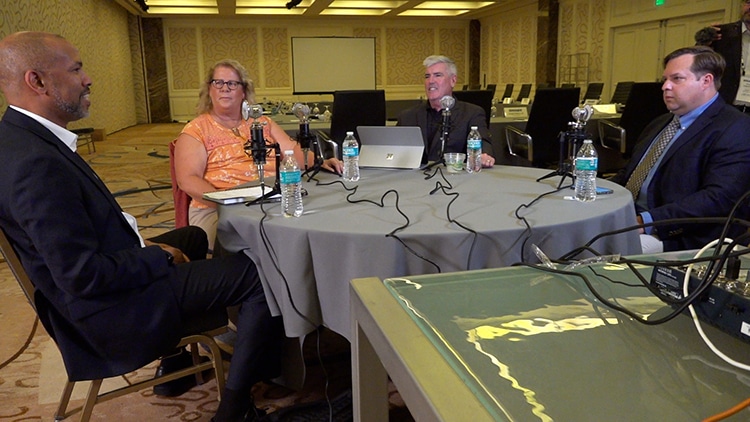
From left: Dushaw Hockett, SMACNA past President Angie Simon, SMART General President Joseph Sellers and SMACNA CEO Aaron Hilger.

The October 2022 episode of Talking SMART focused on the Belonging and Excellence for All project, also known as BE4ALL. As a joint effort of SMART, union signatory contractors in SMACNA, and the International Training Institute, the project is tasked with working to ensure that all members, particularly those from historically underrepresented groups, feel welcome and experience all the opportunities that come with being a union member.

In short, Be4All is a bold, long-term effort to transform the unionized sheet metal industry by creating workplace and business environments that are welcoming and foster belonging for ALL workers and contractors.

We have a special guest host this episode – Dushaw Hockett, founder and executive director of Safe Places for the Advancement of Community and Equity (SPACEs), a Washington, DC-based organization that is working with SMART and SMACNA to move forward with the Be4All project.

At the SMART Leadership Conference in San Francisco in August 2022, Hockett sat down with SMART General President Joseph Sellers, SMACNA CEO Aaron Hilger and SMACNA past President Angie Simon to discuss how both organizations are working together to build a thriving industry where everyone is treated with dignity and respect, everyone feels welcome, and sheet metal workers and contractors work together to achieve the highest standards of excellence in their skills and crafts.

Return to Talking SMART index page.


Talking SMART is a member of the Labor Radio Podcast Network — working people’s voices, broadcasting worldwide 24 hours a day.