Sisters and brothers,

My name is Jack Wall, and I’m honoured to have been appointed director of Canadian affairs for SMART in December 2024. It’s a responsibility I don’t take lightly, and I’m proud to follow in the footsteps of those who served before me. Like them, I’ll work hard every day to represent our members and do what’s best for our union.
We’re at an important moment — not just for SMART Canada, but for the broader labour movement across North America. This year has already brought significant political changes and new challenges. Ongoing tariffs continue to impact our sheet metal, roofing and production sectors here at home and for our SMART brothers and sisters in the United States. But beyond the headlines, your Canadian staff is pushing forward — advocating, organizing and working to strengthen the future of our locals from coast to coast. Despite the challenges we face, I firmly believe the future is bright for SMART members.

Years of advocacy at all levels of government have resulted in real, concrete wins — from funding grants to labour-friendly language in clean energy legislation. These achievements didn’t happen by chance — they’re the result of hard work, persistence and unity. Now, we need to build on that momentum. That means growing our capacity and continuing to invest in the future of our members.

Over the past year, and with the full support of SMART leadership, we’ve added key resources to help us make progress — both politically and publicly — across Canada. I’m pleased to welcome two new staff members to our dedicated team:

Bob Gougeon, former business manager and financial secretary-treasurer of Local 285 in Toronto, has joined as our new International representative for government affairs and megaprojects. Bob brings years of experience and a strong understanding of what our locals need on the ground.

Aidan Strickland, previously director of communications for Helmets to Hardhats Canada, is our new communications specialist. She will help raise SMART’s public profile and share the stories and successes of our members in a variety of forums.

Together, our Canadian team brings the knowledge, experience and energy we need to keep moving forward. I’m confident we’re stronger with them onboard — and that their work will make a meaningful difference for members from coast to coast to coast.

I also want to acknowledge the continued uncertainty caused by shifting tariff policies. I know the toll this takes on our industries, our locals and our families. But I also know that General President Michael Coleman has been clear: Canadian locals and members have his full support. His commitment to unity across borders — Canadian and American alike — remains one of our greatest strengths. I share that commitment, and I know it will carry us through whatever comes next.

As we look ahead to the rest of 2025 and beyond, we’ll stay proactive — whether it’s organizing in our communities or working with officials at every level of government to advance our cause. You have my word: I, along with the rest of the Canadian staff, will give everything we’ve got to secure a strong future for SMART members across this country.

In solidarity,

Jack Wall

Director of Canadian Affairs
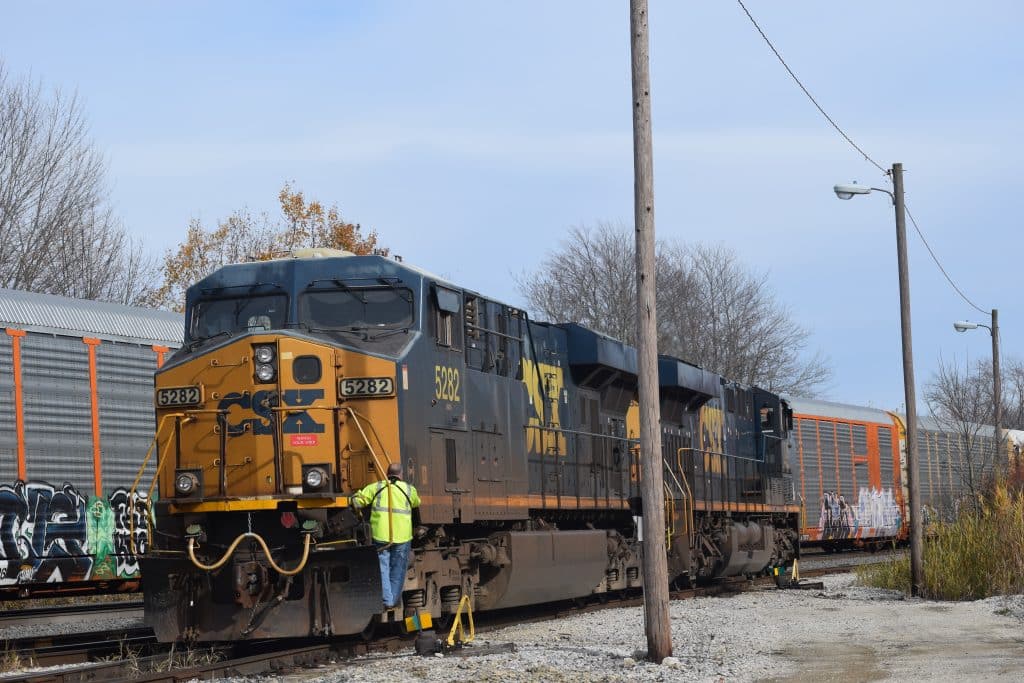
After more than four years of tireless effort and advocacy, SMART-TD announced the successful passage of the Railroad Employee Equity and Fairness (REEF) Act in December 2024, with President Biden signing the bill into law in January 2025. This historic legislation permanently exempts Railroad Unemployment Insurance Benefits from sequestration, ending a 5.7% reduction that railroaders have unfairly borne for years. In simple terms, this bill ends the outdated tax of $50 every two weeks on railroaders drawing unemployment benefits from the Railroad Retirement Board (RRB).

The REEF Act rights a longstanding wrong that has disproportionately impacted railroad workers, particularly those who find themselves furloughed or medically unable to work. These workers, many of whom already face significant financial hardship when transitioning from regular railroad wages to the modest $450 every two weeks provided by the RRB, were subjected to sequestration that further reduced this already limited benefit.

“For most Americans, a $50 cut may seem insignificant, but to a railroader relying on a fixed benefit, it’s a financial crisis,” said SMART-TD National Safety and Legislative Director Greg Hynes. “After years of fighting this injustice, the REEF Act’s passage is proof that persistence pays off. The work we’ve done on Capitol Hill to secure this victory is worth every ounce of effort and all the shoe leather we left on the steps of the House and Senate buildings.”

The process to get this bill over the line was not easy. It took consistent advocacy, relentless lobbying and cooperation across political parties. SMART-TD’s Hynes and Jared Cassity, who collectively bring decades of experience from BNSF and CSX, respectively, led the charge, ensuring that Congress understood the gravity of the situation faced by railroad workers.

“We understand the struggle because we’ve lived it. We know how much that small cut impacts an out-of-work railroader’s ability to make ends meet,” said Deputy National Safety and Legislative Director Cassity. “This legislation is a direct result of the tireless advocacy of our members, who took the time to speak out, engage with lawmakers and apply pressure at every step

Cassity continued: “Railroad workers not only sell their labor, they sacrifice more than most to care for themselves and their families. It is through their hard work and efforts that railroad retirement is funded, which is why it is so rewarding to see the senseless reductions from sequestration finally lifted. In this process of advocating for REEF, our brothers and sisters have proven that they are willing to stand in solidarity to put up a fight. I couldn’t be prouder of our members for their tenacity to win back not just what was earned — but what is deserved.”

The REEF Act’s passage is a powerful reminder of what is possible when unions, lawmakers and working people come together to fight for fairness. Cassity and Hynes extended their deepest thanks, on behalf of SMART-TD, to all of the sponsors and cosponsors who supported this bill, as well as the thousands of TD members who stood united throughout the process.

“SMART-TD members have stood shoulder-to-shoulder with us every step of the way, from rallies to calls to congressional offices. This victory belongs to every one of our members who answered the call and fought to make sure their voices were heard,” said Hynes. “It is because of their engagement, their commitment and their perseverance that we’ve been able to secure this long-overdue relief.”

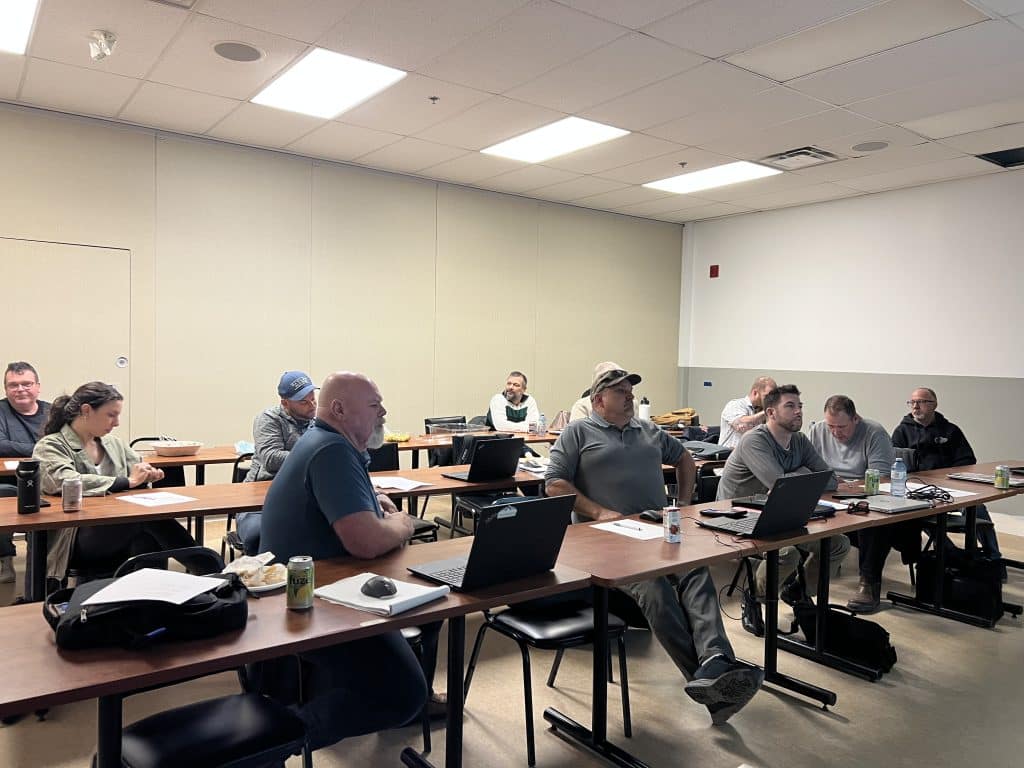
SMART’s Ontario organizers held their first-quarter meeting on Tuesday, March 18, where they strategized for the months ahead and further developed their knowledge and skills.

“It was a highly productive session where we tackled key topics, including preparing for the open period, CRM training with Kris Harmon and Cecilia Locke, the Ontario blitz, area reports and more,” said SMART Canada International Representative for Business Development Patrick Gordon. “The discussions were insightful, setting a strong foundation for our upcoming initiatives.”

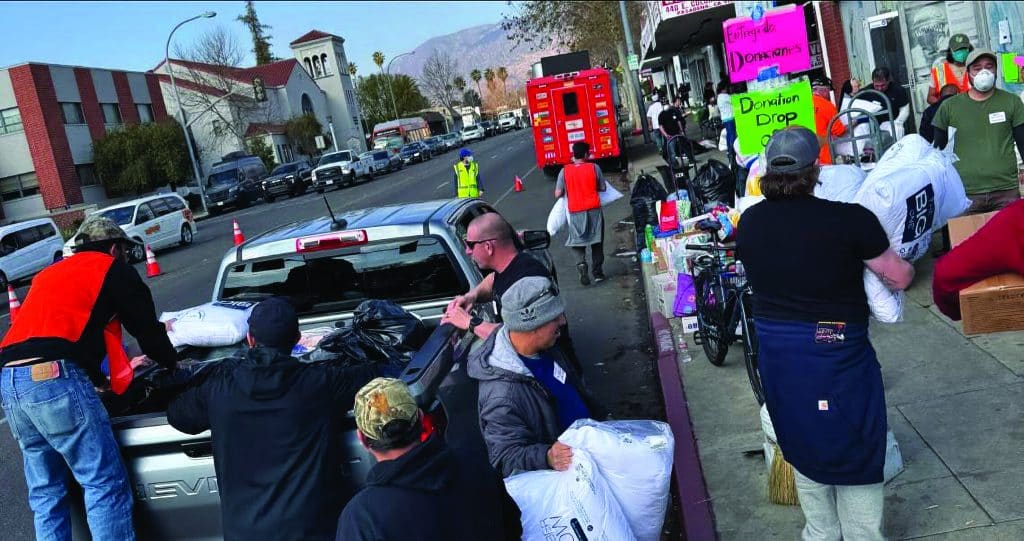
In early January, 2025, the world watched in horror as fires swept through Southern California, leaving unprecedented devastation and destruction in their wake. Entire neighborhoods were obliterated, with tens of thousands of buildings and homes wiped off the map.

SMART local unions, the International and members across North America responded with an awe-inspiring show of solidarity. At the IA level, General President Michael Coleman sent a letter requesting donations from local unions. SMART-TD bus members assisted in evacuating impacted neighborhoods and supported operators working when the fires broke out. And both TD locals and SM Local 105 immediately leapt into action, even as the fires were still burning.

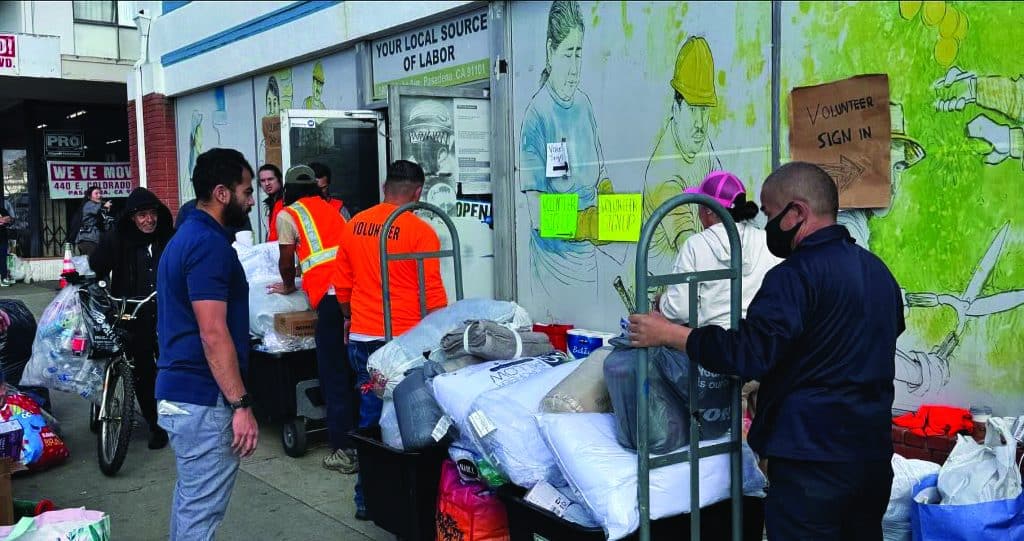
“Local 105’s full-time officers quickly developed a plan on how to address the needs of our members in the affected burn areas and evacuation zones,” said Local 105 Business Manager/President Steve Hinson. “First, we put together a collection center in the hall and donated all the collected food goods, blankets, pillows, etc. to one of the donation centers in Pasadena. Then we identified our own members in the burn areas and reached out to each member to ask them what their needs may be since the fires broke out. Of the 70 members in the burn zones, there were 12 members that had some displacement from either lost power, missed work from evacuations and/or loss of property. Unfortunately, we had two retirees lose their homes due to the fires.”

Along with coordinating local support efforts, Local 105 worked with SMART Director of Special Projects Louise Medina to secure a Disaster Relief Fund grant to address the immediate needs of members. The financial support ended up being crucial.

“The members’ needs were so wide in range, the full-time officers of the local decided it would be best to give all 12 members a Costco gift card to help them replenish any goods they may have lost due to the power outages in the burn areas,” Hinson explained. “We also decided that for any member that lived in the burn areas, if they lost time from work due to evacuation orders, we would reimburse their lost wages with documentation of lost work hours.”

Hurricane Relief

“Words cannot express how much the financial assistance we received from you was appreciated for the devastation we suffered from Hurricane Milton, and Greg Blose for his immediate action. The damage to our home and loss of our vehicle was a big financial and mental burden for us. With your help, we have been able to get a vehicle and pretty much get our home back to normal. Again, thank you so very much for helping during this difficult time.” — Local 12 retiree testimonial

“We are very grateful to all of you for this support and help for our family as we recover from the damages suffered from the Hurricane Helene flooding. We weren’t expecting this, and we can’t thank you enough.” — Local 5 member testimonial

The local also decided it wasn’t enough to simply react to disaster. At 105’s February union meeting, the members voted to start a local disaster relief fund, allocating an initial $25,000 to the cause. As Hinson pointed out, members in Southern California know there will be fires, floods and earthquakes in the future: “We need to be prepared to act swiftly to make sure our brothers and sisters are taken care of in their time of need.”

Overall, the tragic fires demonstrated what SMART membership is all about: standing together for our union family.

“We received an overwhelming amount of support from SMART locals in both the United States and Canada,” Hinson said. “I would like to thank all our sister locals for their generous donations directly to Local 105 and to the SMART Disaster Relief Fund. I would also like to thank the full-time staff for making all the calls and reaching out to ensure our brothers and sisters are taken care of — and, of course, our members, who donated goods and time to help our communities.”

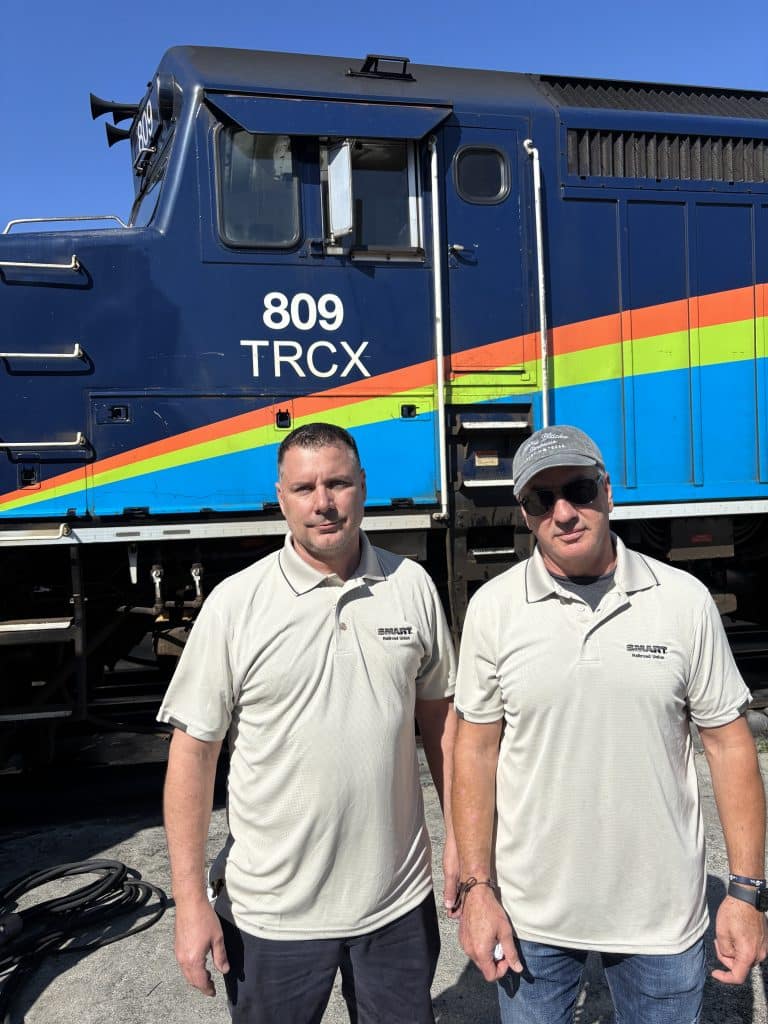
In so-called “right-to-work” states like Florida — the home of commuter rail service Tri-Rail — union workers are often forced to overcome multiple obstacles during contract negotiations. On the one hand, they’re trying to make gains on pay, benefits and working conditions. On the other, they need to surmount potential division between the workers who have signed up for the union and those who opt out of representation.  

But that wasn’t a problem at Tri-Rail’s Hialeah, Florida, facility during the most recent round of contract negotiations. The tireless work of SMART Mechanical Department Local Chairpersons Luis Roves and Raul Barnat ensured every single worker on the property signed up to be a member of SMART-MD — and when the time came to vote on a new contract, every single SMART-MD member cast a vote. The result: 100% ratification.

“Everyone was on the same page,” said SMART-MD General Committee 2 Directing General Chairperson John McCloskey, who negotiated the agreement alongside International Rep. Rob Shanahan. “We had one unified message, and that made it easy to negotiate as one voice and win the contract the members wanted.”

SMART-MD first organized and negotiated a contract at the Hialeah facility in 2015. At the time, 15 of the 28 Tri-Rail employees signed up for union representation.

When ownership of Tri-Rail changed hands from Bombardier to Herzog Transit Services in 2019, SMART-MD ran another organizing campaign at the facility, with Roves and Barnet playing key roles. The two local chairpersons engaged every employee, including brand-new hires — explaining the union advantage and the importance of signing up with SMART-MD. Eventually, they established 100% union membership throughout the property.

“There is definitely a language barrier when I’m down in Miami,” said McCloskey, an Irish immigrant. An added difficulty for McCloskey and Shanahan: The vast majority of the Tri-Rail employees are of Cuban descent, mostly speaking English as a second language. “Luis and Raul are just so proactive. They kept it together in a right-to-work state. They fielded all the questions, all the concerns.”

The previous Tri-Rail contract was subject to renegotiation on July 1, 2024, with SMART-MD initiating discussions two months prior. With Roves and Barnat consistently in contact with Tri-Rail’s workforce, relaying their priorities to McCloskey and Shanahan, SMART-MD eventually reached a tentative agreement with the employer in February, with the unanimous, full-participation ratification vote taking place shortly after.

McCloskey paid tribute to Roves and Barnet’s industrious work on behalf of their fellow Tri-Rail employees, calling their effort a “great success.” He also noted how the negotiation process demonstrated our union’s values.

“At the end of the day, we serve our members no matter their background — we’re not going to let a language barrier get in the way,” he said. “That isn’t going to deter anyone in our organization from negotiating a good contract.”

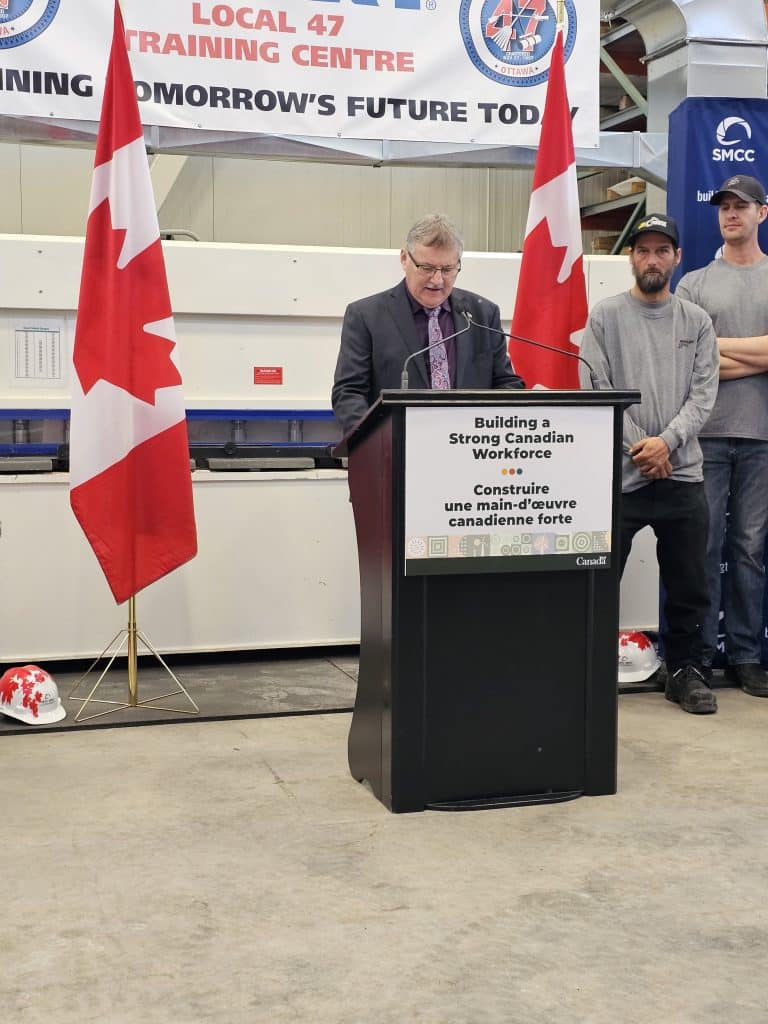
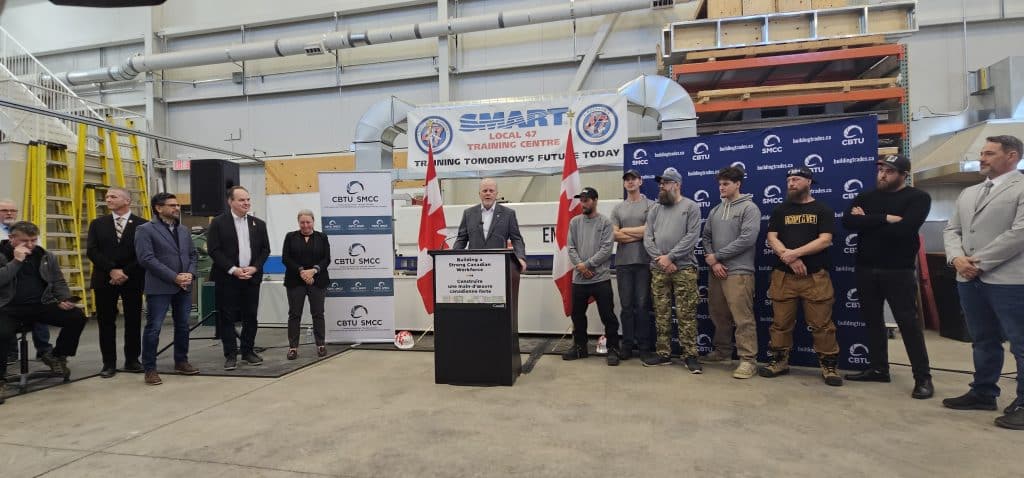
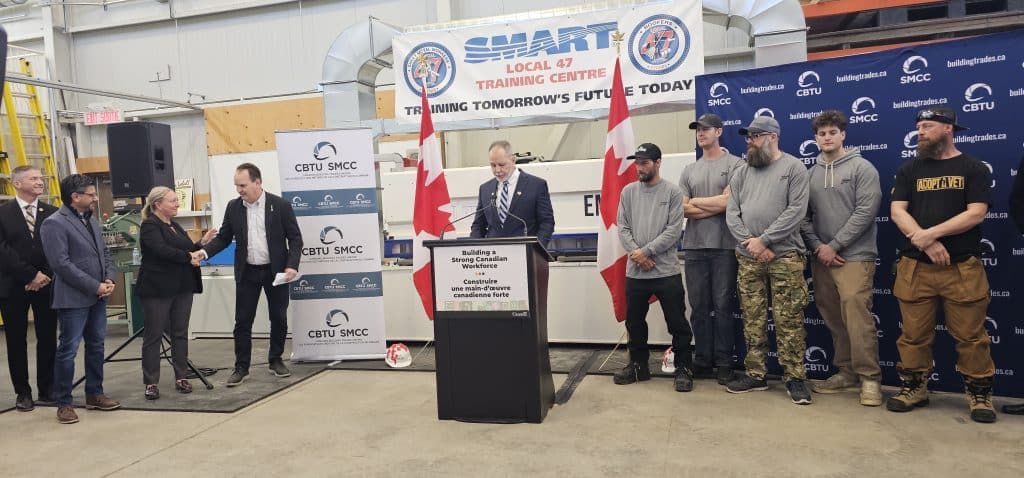
On March 18, 2025, Steven MacKinnon, minister of Jobs and Families in Canada, visited the SMART Local 47 (Ottawa, Ontario) training centre to announce $67 million in funding for unions to enhance training, aimed at ensuring skilled trades workers lead the transition to the clean economy of the future. The funding, awarded through the Union Training and Innovation Program (UTIP) Sustainable Jobs Stream, included a possible $8.9 million for SMART.

“We’re thrilled that the government has awarded this project to SMART,” said Jack Wall, SMART director of Canadian affairs. “This funding will go a long way to significantly improving the quality of the training our members receive and will help more than 2,000 of our members upgrade their skills, and build a new permanent resource for every apprentice and journey-worker in our trade.”

SMART Canada has been working for years to make sure Canada’s green future is built union. Since the Canadian government announced its ambitious goal to achieve net-zero carbon emissions by 2050, SMART has worked to promote strong labour standards in federal policy, secure funding for training programs such as Canada’s Building Trades Unions’ “Building It Green” initiative, promote the union sheet metal and roofing trades as pathways to good jobs, and more.

Partnering with CBTU and SkillPlan Canada to help secure financial assistance for new training is the next step in that process. Overall, the funding announced by MacKinnon in March will go to 10 union-led projects across Canada, training nearly 29,300 tradespeople with the skills they’ll need to build Canada’s new clean economy. The Local 47 training centre was one of the beneficiaries of that funding; CBTU and SMART also received funding to develop a national online training curriculum, empowering sheet metal workers nationwide to access always-available training to develop crucial skills for clean energy work.

“This is an exciting day for our organization,” Wall concluded. “This will be a team effort to help redevelop some of our curriculum and help train our members to be better prepared for green projects — and to pass those skills on to future generations.”

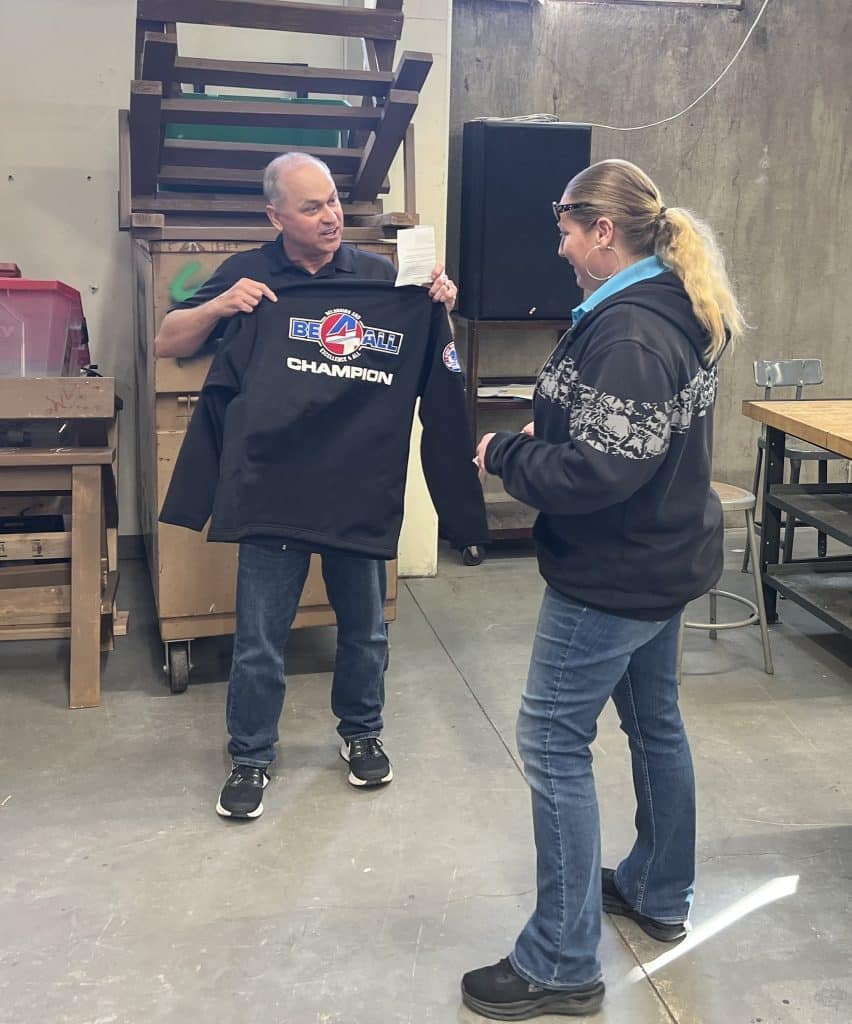
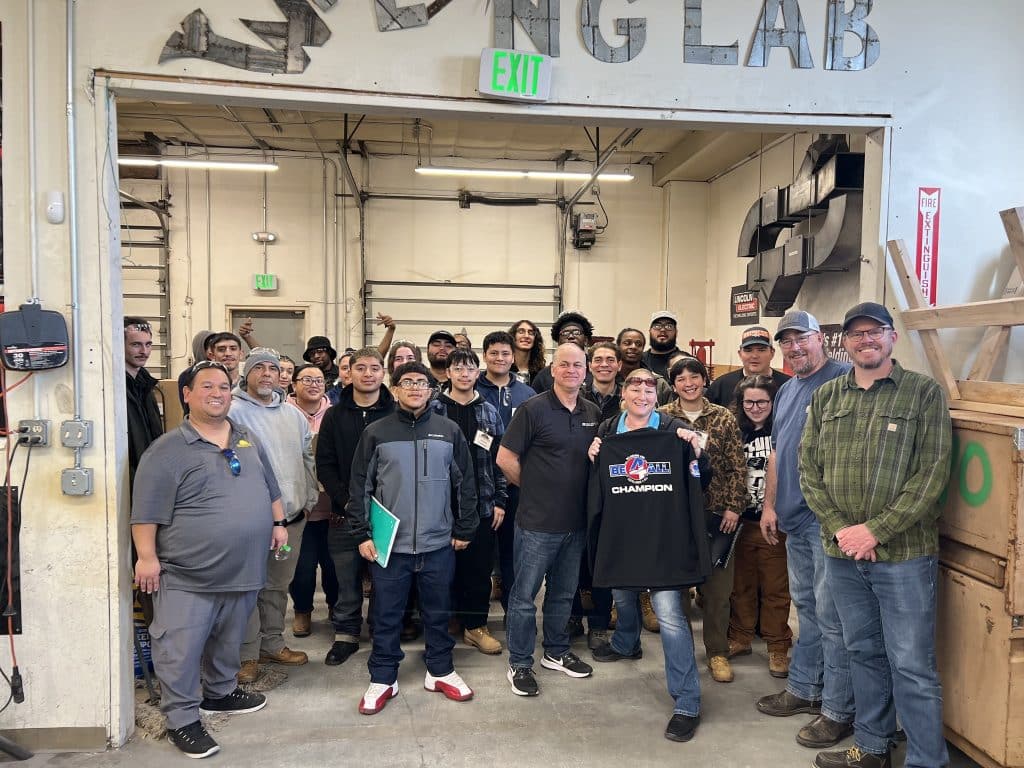
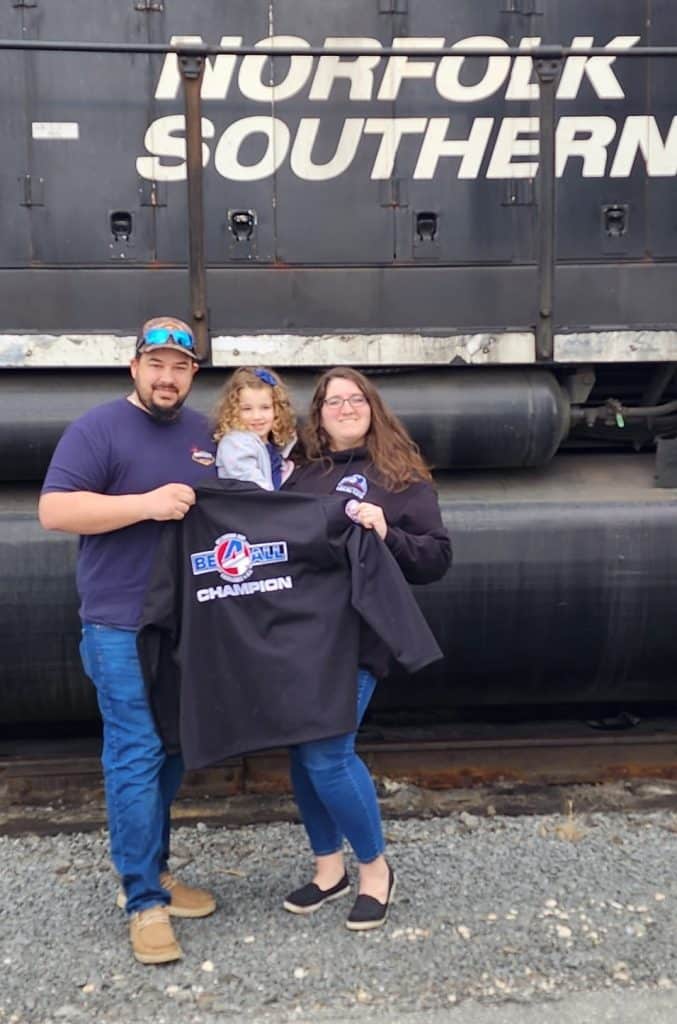
Each quarter of the year, as part of the Belonging and Excellence for All (BE4ALL) initiative, SMART members are challenged to answer one simple question — why are you proud to be a SMART union member? — to be entered into a raffle to win a $100 gift card and a BE4ALL jacket.

And each quarter, SMART members meet the challenge, telling their stories of union pride and solidarity.

The Fall 2024 challenge raffle winners are no different.

Local 9 (Denver, Colorado) sister Delores Bledsoe, the sheet metal winner, answered: “I want to start with, I love my union! I have been a member for nine and a half years, and from day one I can honestly say it has transformed my life, from building my self-worth to financial stability!

“My self-worth was minimal to say the least [before joining the union]. I had no skills and no direction in my life, but when I joined the union it all came together! I had purpose and went home every day feeling good about how my day went. I was able to learn a skilled craft, and I was able to build relationships that will last forever. There were days I wanted to give up and throw in the towel, but between my classmates and the local union staff, I had a support system that I never knew was possible. As for the financial stability, I feel like I went from rags to riches — I went from a studio apartment in a very rough neighborhood to owning a five-bedroom, four-bath home.

“Every day I come home feeling blessed, and I know that without my union and hard work, this might not even be possible! I now work with the Colorado Building and Construction Trades to spread hope, happiness and knowledge about unions, and to show people that being proud of where you work is possible and living happily and comfortably is obtainable.”

Eleven-year SMART-TD Local 1378 (Wilmington, Delaware) member Joseph Castiglione, the TD winner, said: “The union has made it possible for me to provide a life for my wife and daughter that my parents were not able to provide for my sister and me. With the contracts SMART has been able to negotiate for us, I was able to purchase our house, becoming the first in my family to own a home. I owe everything I have and will have to this organization and its amazing leadership.”

And in a demonstration of SMART values, Castiglione gave his $100 gift card to a local sheet metal apprentice in his area — putting the principle of solidarity into practice.

The Centers for Disease Control (CDC) reports that construction is second only to mining when it comes to suicide rates in American professions. According to a 2020 survey, 83% of construction workers said they had struggled with mental health issues. And data from the National Survey on Drug Use conducted by the Substance Abuse and Mental Health Administration found that 12% of construction workers have an alcohol abuse disorder, compared with the national average of 7.5%.

For all those reasons — and as part of our union’s core values of solidarity and safety — SMART and the Sheet Metal Occupational Health Institute Trust (SMOHIT) started the SMART Members Assistance Program (MAP) approximately 10 years ago. Now, in addition to SMART MAP, members at participating local unions also have access to an employee assistance program called Union EAP, founded by SMART MAP consultant and subject matter expert Ben Cort.

“[Union EAP] is based on a premise that our members are asked to do way too much when they’re in a time of crisis: You make a phone call, and you basically end up getting a list back of a bunch of different places that you can call if you want to,” Cort said. “The idea that we had with this was much more of a concierge kind of mental health service. You call, you speak to a clinician, that clinician does a full assessment, understands what’s going on, and then builds an individualized and personal plan for you and for your family. And then we see you through all of it.”

Alongside SMART Director of Wellness and Mental Health Support Chris Carlough — and as part of his work with the SMOHIT helpline, which provides a resource for members to call when they are experiencing crisis or need a helpful ear — Cort has been taking phone calls from members for the last five or six years, helping direct them to resources and work their way through mental health crises. He said that aspect of his profession is “one of the most rewarding things in my entire career.”

Many employee assistance programs fall short of the standard SMART sets for member benefits. For instance, Carlough reported, “we have seen EAPs categorize hits on their website as contacts or in many cases ‘member engagement,’ which is quite the stretch. Also, the limited number of providers available through EAPs can be a challenge for our members.” According to the National Council of Mental Wellbeing, he noted, “the average wait time to access mental health support is about six weeks. If you’re looking for a specialist in a certain area or with specific attributes, wait times can stretch into months.”

Some perks of Union EAP, according to Carlough:

  • Every call is taken by a licensed clinician, 24/7/365.
  • Their primary key performance indicator (KPI) is increased utilization rates, versus website visits or other metrics.
  • Each case is led by a master’s-level clinician, who works with the member and their insurance and builds a personalized plan.

The work done by professionals throughout SMART and SMOHIT is all part of fostering a union-wide environment that helps SMART members feel comfortable talking about mental health and seeking help when they need it. The more we can provide those resources, Carlough maintained, the better we will be able to keep our fellow union workers healthy and safe.

“We don’t necessarily want to talk about it on the jobsite, but when we’re given a safe space to be able to talk a little bit about it, we have our members really opening up on how they’re feeling. How they’re dealing with divorce, for example, what they’re struggling with — whether it’s mental health, substance use,” he said. “We’ve had members express that they have suicidal ideations — and we [can support] them. We have these moments in these trainings [when] I really feel like our union is light years ahead of other building trades unions in this.”

Kevin Mulcahy, a 42-year member of SMART Local 63 (Western Mass.) and longtime International staff member, retired on July 31, 2024, bringing an end to decades of leadership and activism on behalf of SMART members.

Mulcahy joined Local 63 in 1982, getting involved with his union as a trustee from 1991 to 1997, then running successfully for business manager/financial secretary-treasurer — positions he held from 1997 until 2007. During the same time, he served as president of the Western Massachusetts Building Trades and as first vice president of the Western Massachusetts AFL-CIO, both from 2000 until 2007. That was the year Mulcahy took the leap to International advocacy: From 2007 until 2024, he worked as an International organizer, assistant director of organizing and regional director of organizing, helping build the foundation for a period of astonishing growth for our organization.

Mulcahy’s decades of dedication to SMART are an inspiration to union activists across North America, and his impact will continue to be felt for years to come.

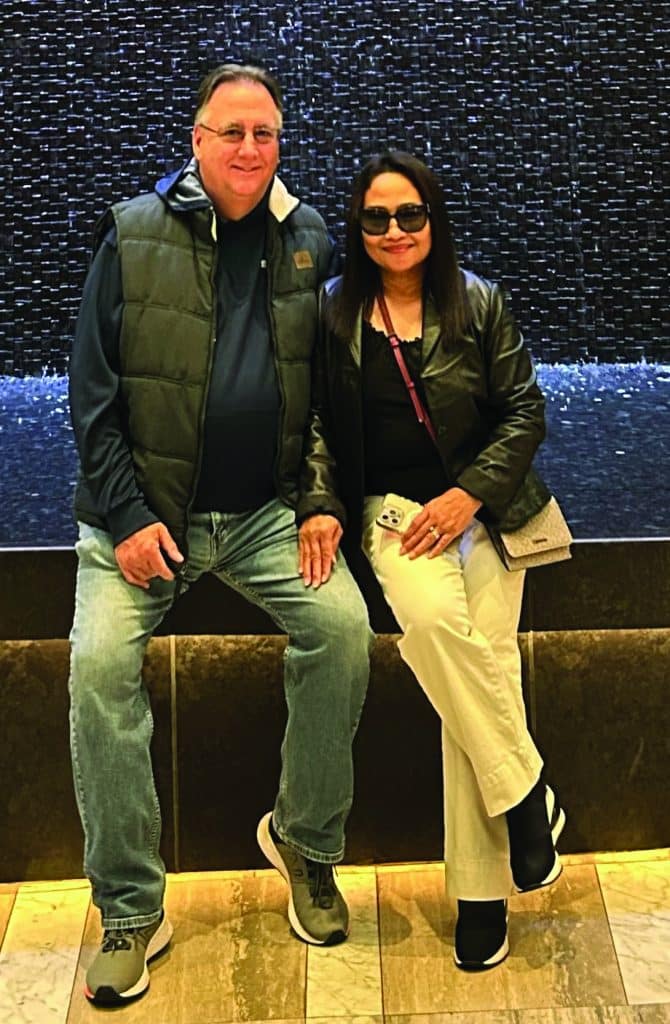
Mulcahy with his wife, Maribel

SMART is committed to keeping members informed about actions that impact our jobs, livelihoods and families. The SMART Governmental Affairs and Communications Departments are tracking executive actions that affect members — positively and negatively — and will continue to do so moving forward. This list was last updated April 10, 2025.

Pro-worker actions:

  1. President Trump nominated former Oregon Republican Rep. Lori Chavez-DeRemer as secretary of the Department of Labor. Chavez-DeRemer built a pro-worker record in Congress, voting for bipartisan legislation like the Protecting the Right to Organize (PRO) Act and National Apprenticeship Act. Chavez-DeRemer was confirmed to lead the DOL in March.

    Anti-worker actions:

    1. President Trump fired National Labor Relations Board General Counsel Jennifer Abruzzo and board member Gwynne Wilcox. These firings cast out a pro-worker champion at the NLRB who advanced SMART members’ rights (banning captive audience meetings, for example) and made it so the NLRB couldn’t meet to oversee union organizing elections or hear cases about employers breaking the law.
    2. President Trump canceled government support for wind energy projects, putting construction on hold and forcing contractors and local unions to look elsewhere for work.
    3. Trump’s Environmental Protection Agency has canceled $20 billion in loans for building retrofits and other energy efficiency projects that would create good jobs for SMART members.
    4. President Trump revoked an executive order that implemented the Inflation Reduction Act and directed federal agencies to focus on creating good-paying union jobs. To date, the labor standards in the Inflation Reduction Act have created thousands of jobs, with projects paying prevailing wages and providing opportunities for hundreds of SMART apprentices.
    5. President Trump revoked an executive order implementing the Bipartisan Infrastructure Law; the order had prioritized creating jobs with high labor standards where workers have the chance to join a union.
    6. President Trump revoked an executive order that implemented the Inflation Reduction Act provisions on Medicare negotiation of lower drug prices.
    7. President Trump and Elon Musk’s Department of Government Efficiency (DOGE) fired thousands of federal workers who provide needed healthcare to veterans and ensure seniors receive the Social Security payments they earned.
    8. President Trump issued an executive order directing agencies to disapprove finalized union contracts signed within the last 30 days of the Biden administration.
    9. The Trump administration’s Federal Railroad Administration granted 22 waivers to Genesee & Wyoming Railroad subsidiaries, including the Heart of Georgia Railroad and Georgia Central Railway, to begin testing autonomous freight rail cars — despite SMART-TD raising concerns about safety (prototypes failed several critical safety tests) and members’ job security.
    10. The Trump administration’s Office of Management and Budget Director Russell Vought is currently trying to shut down the Consumer Finance Protection Bureau, a law enforcement agency formed after the 2008 financial crisis to protect American consumers from financial institutions allegedly practicing dishonest or illegal activity. The CFPB has returned over $13 billion to millions of Americans who have fallen prey to financial scams.
    11. The Trump administration’s Department of Defense ended the use of project labor agreements on “large-scale construction projects,” taking away work from union members and signatory contractors.
    12. The Trump administration’s then NLRB Acting General Counsel William Cowen made captive audience meetings, a key tactic for bosses looking to scare workers into voting against a union, legal again after they had been banned by the previous NLRB general counsel.
    13. President Trump, in a joint address to Congress, called for the cancellation of the CHIPS Act, which is creating thousands of jobs for SMART members on semiconductor manufacturing projects from Arizona to Vermont.
    14. President Trump’s Department of Homeland Security canceled the collective bargaining agreement between the Transportation Security Agency and TSA officers, leaving 47,000 TSA officers without representation.
    15. The Trump administration’s Department of Education fired half of its staff, including those in charge of workforce development programs that direct students into the trades. These cuts will make it harder for children with disabilities to get the education they deserve. President Trump later signed an executive order directing Education Secretary Linda McMahon to dismantle the department.
    16. President Trump and Elon Musk’s DOGE announced the closure of Railroad Retirement Board field offices across the country, compounding the already unacceptable delays and wait times rail workers experience when attempting to contact or get information from the RRB. Additionally, President Trump’s executive orders made it so the RRB can only hire one employee for every four who leave, adding onto the capacity issues the under-funded board already faces.
    17. President Trump repealed previous executive orders that promote registered apprenticeships on infrastructure projects, handing an early win to nonunion contractors. The Trump White House said the order, which leveled the playing field for SMART contractors and apprentices, was “forcing radical labor policies and apprenticeship mandates onto American businesses and government agencies.”
    18. President Trump picked Crystal Carey, a lawyer at the notorious union-busting law firm Morgan Lewis, to head the National Labor Relations Board. Carey’s biggest recent client was Amazon.
    19. As part of the U.S. Housing and Urban Development Department’s DOGE-directed downsizing, HUD is closing the Office of Field Policy and Management, which enforces prevailing wage and anti-discrimination laws that protect SMART construction workers; 150 field staff have been let go as of Friday, March 21.
    20. Following the directions of President Trump, DOGE moved to dismantle the Federal Mediation and Conciliation Service, a small agency that supports unions and employers throughout the collective bargaining process and helps to resolve work stoppages. The kneecapping of the FMCS, which makes up 0.0014% of the U.S. budget, could result in longer work stoppages, prolonged contract negotiations and more.
    21. President Trump issued an executive order that stripped union rights and collective bargaining from more than 700,000 federal workers, including those who take care of veterans and work in border security, among many others. This undermines the bedrock principles of collective bargaining our nation was founded on, and that SMART members rely on when bargaining every union contract.
    22. Trump Energy Secretary Chris Wright directed the National Laboratory Operations Board to “assess the benefits and risks of removing construction labor agreement provisions from National Laboratory contracts” — a clear step away from decades of project labor agreements that benefit SMART members on National Laboratory work.