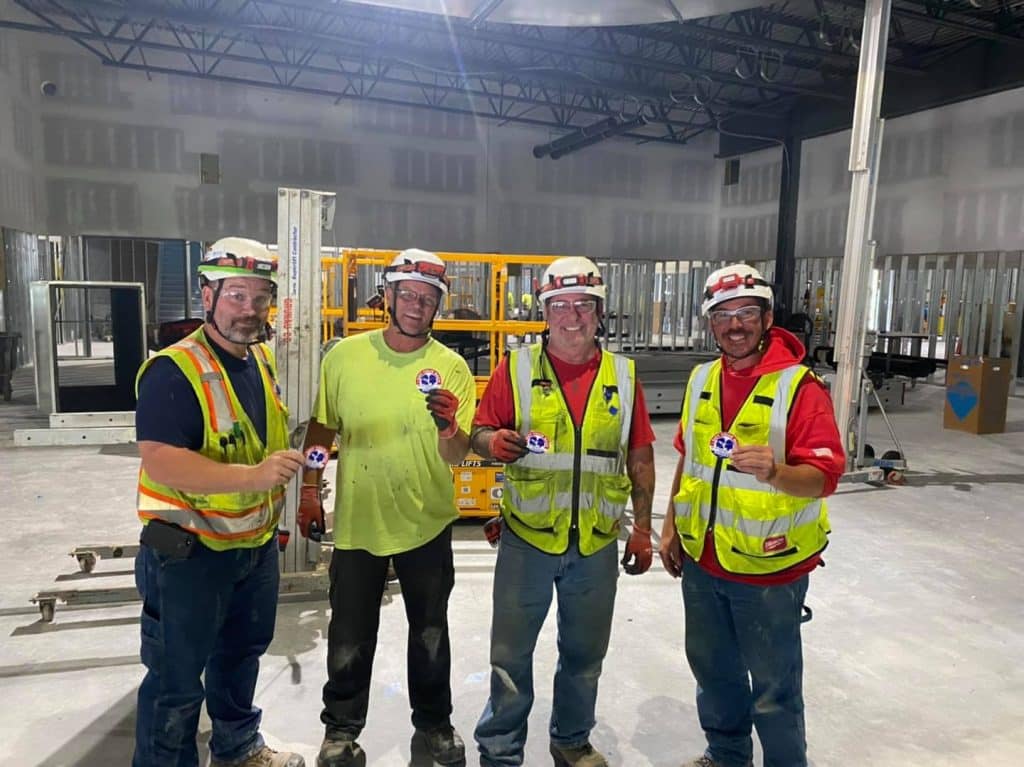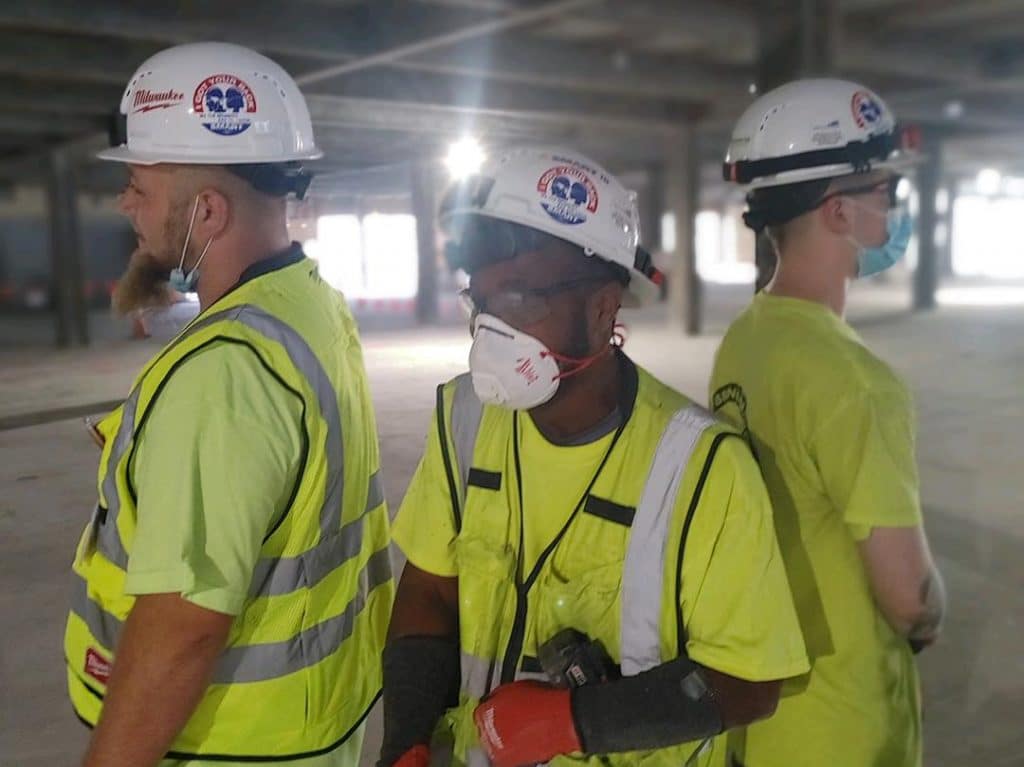
Local 20 (Indianapolis) Instructor Cam Williams brings the mentorship and leadership of the training center to his work with Boys II Men, a local organization that aims to help middle school boys grow into the best version of themselves.

In SMART, the solidarity that defines union membership extends well beyond our fellow brothers and sisters. SMART members pride ourselves on the work we do in our communities, whether it’s food drives, Habitat for Humanity projects or volunteering to mentor youth across North America.  

Cam Williams, an instructor at SMART Local 20 in Indianapolis, Indiana, is a prime example, serving as a mentor and board member for a local organization called Boys II Men.  
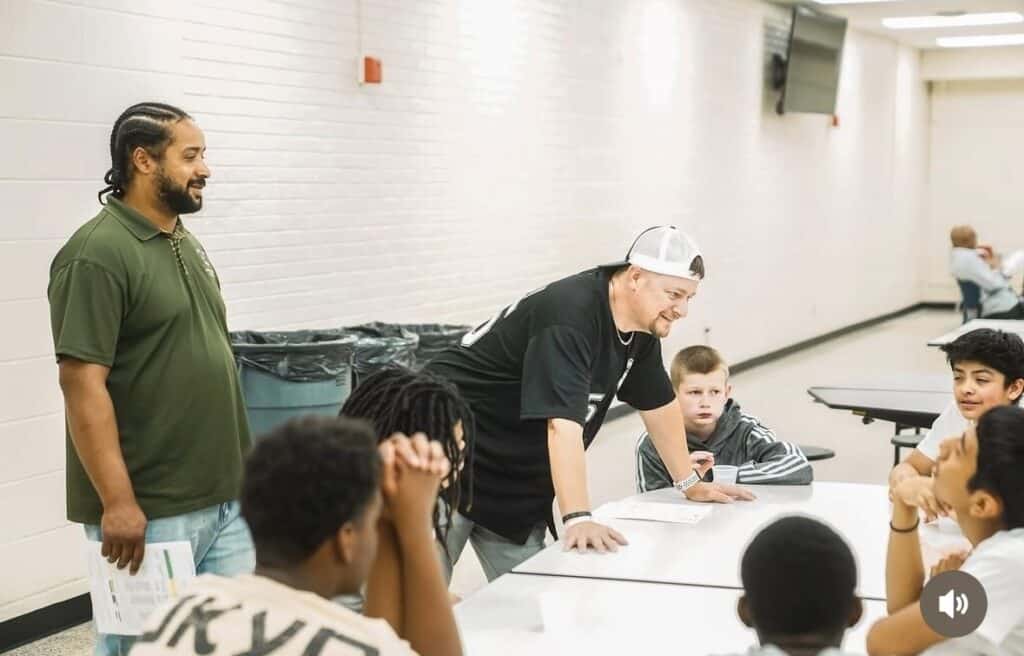
Cam Williams, furthest left, mentors Boys II Men cadets

Founded in 1995 by “four Pike Township teachers who saw a need for middle school boys to have male role models invested in their lives,” Boys II Men “seeks to cultivate the development of adolescent boys in a safe and exciting team environment by promoting civic engagement, personal responsibility, positive relationships, respect for women, and a lifelong appreciation for learning,” according to its website.  

What that means in practice? A lot of things, Williams explained. Providing safe spaces for youth transitioning from middle school to high school so they can talk about the challenges in their lives, from school to home and beyond. Helping program participants develop leadership skills, practice public speaking, and be active and attentive listeners. Putting on college visits, outings to baseball and football games, and mission trips to Nicaragua. From personal finance management and tying ties to team-building outings in the area, Boys II Men facilitates a huge range of activities to help young people be the best they can be.  

“We seek to give them an opportunity to see the world and expose them to skills and an education that’s more than what’s right in front of them,” Williams explained.  

Coming full circle via the sheet metal trade 

For Williams, Boys II Men isn’t just a local organization that does good work in the community.  

“I’m the only mentor that was originally a student of the program,” he said. “I started the program in the 1999-2000 school year, when I was in 6th grade, and have consistently returned to help whenever I can.” 

Even after finishing the program, Williams stayed connected as a “lifetime member.” Boys II men uses a points system: Participants bring personal progress reports to Friday night sessions, read books each month, participate in community service work, help with the fundraising events and more, with each activity assigned a point value. When participants reach the end of 8th grade, the top 10 “cadets” with the most points can become lifetime members: 9th – 12th grade students who continue to get mentorship through the program, but also provide help to the new cadets. 

“Once I graduated high school I had to wait until the age of 21 to become a mentor in the program, but that didn’t stop me from showing up to the Friday night sessions and interacting with the cadets and other life timers,” Williams said. 
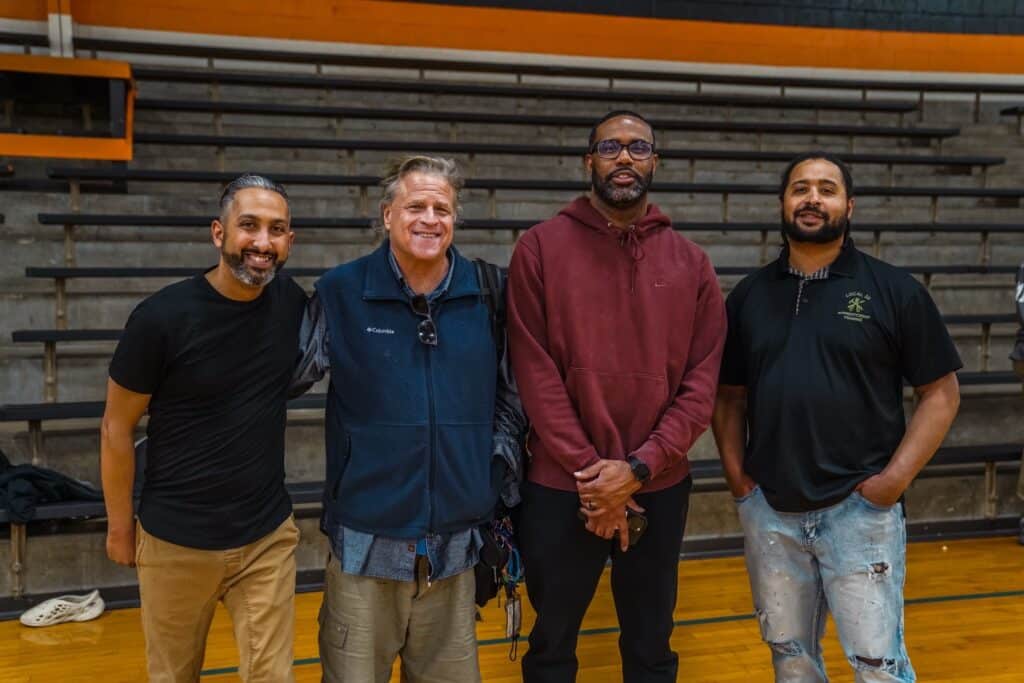
Williams, right, with fellow mentors

Fast forward a couple decades: Williams has enjoyed a successful career in the trade, ranging from working in the field to his relatively new position as an instructor. He credits at least part of that to his formative years with Boys II Men. 

“The program has helped me a ton and still is to this day,” he said. “I have realized that Boys II Men helped shape me to be the great Local 20 instructor and mentor that I am today. Those same skills [I learned] apply to my apprentices; they help me to have compassion and patience with everyone. Taking the time to know a person’s situation and trying to understand and help versus judging a book by its cover.” 

Building connections, building a future  

When Williams joined the sheet metal trade, he didn’t have as much time to spend on Boys II Men. But two years ago, when he became an instructor, he jumped back in — both as a mentor, and then as a member of the board.  

Now, he’s aiming to strengthen the connections between Boys II Men and Local 20, helping youth learn more about the sheet metal trade and forging a strong future for both organizations.  
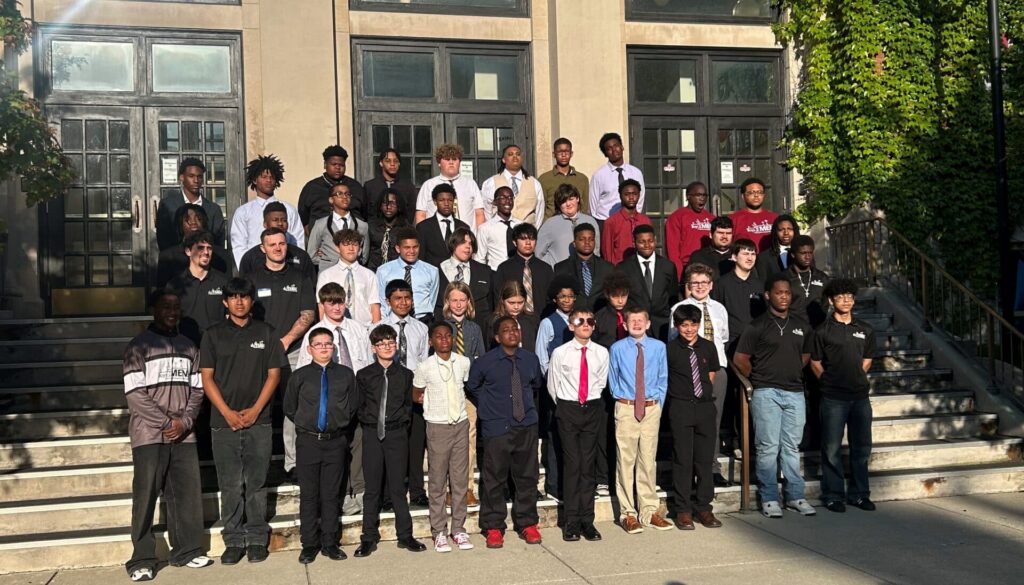
Boys II Men graduates pose for a picture

“I have been trying to connect the program with our local training facility,” Williams said. “I have been approved to start giving tours of the school, holding mockup interviews to teach those skills, and putting together small projects for students to work on and take home — showing the cadets all the equipment we have and what we do with it.” 

He considers that relationship a win-win. 

“Cadets will know that becoming a sheet metal worker is an option, and that they can make good money with no college debt. The local would benefit from this tremendously; we would not have random applicants but ones that understand what it takes to be successful and what it means to be a good human and to bring that culture with them.” 

That isn’t just about building the future of Local 20’s membership and exposing young people to the union sheet metal industry. It’s also about both organizations’ values.  

“Boys II Men’s core values are to HELP — Humility, Encouragement, Love and Purpose,” said Williams. “These all align with those of our local and training facility. We preach self-awareness to our brothers and sisters, ask them to demonstrate empathy and have a willingness to listen and learn from those around them.” 

A foundation of mentorship 

Mentorship is one of the core pillars of our union. Since sheet metal workers first organized back in the 1800s, our union has thrived on a tradition of solidarity and members helping one another, whether teaching in the training center or looking out for one another on the job. 

Williams is helping continue that legacy, at the JATC and beyond. It’s another reminder that SMART members practice our union values both on and off the job. 

Great work, brother! 
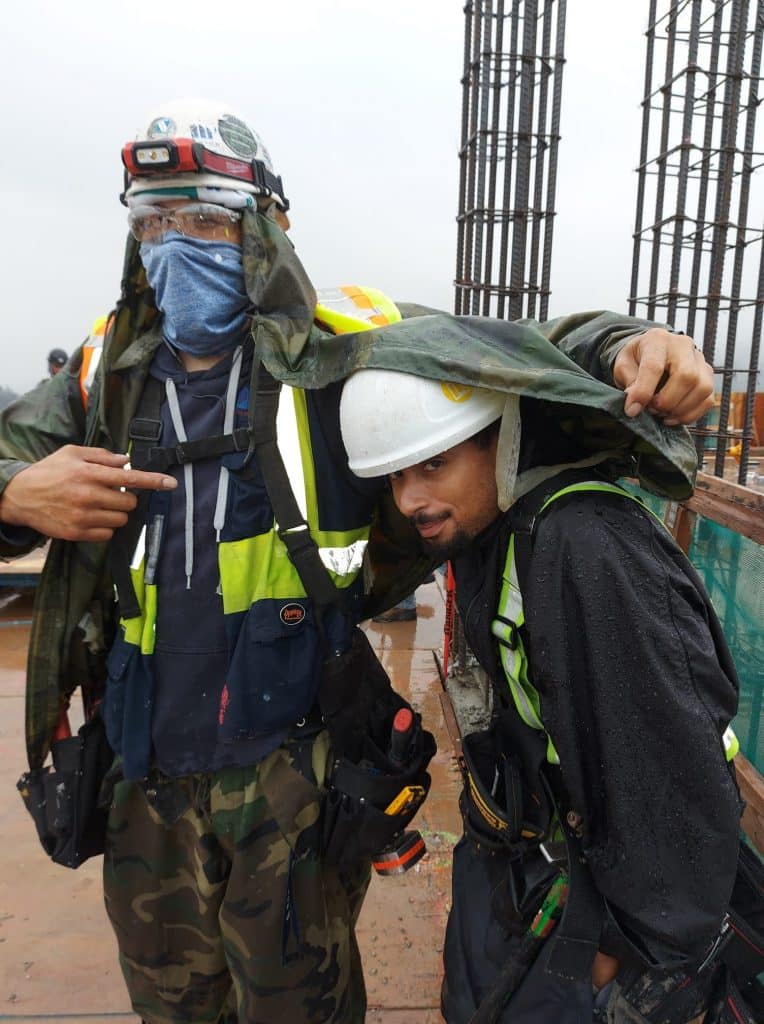
At the jobsite, senior members of the crew often tell us how important it is to speak up if we see an unsafe act. We all want to return home in the same condition we arrived. But when we fail to look out for one another while performing our work, incidents happen, and these can have lasting and devastating effects.

The same goes for workplace behavior. SMART wants our members to speak up for them­selves and others when they are uncomfortable or witness others who are in the compromising posi­tion of being bullied or harassed. As with safety, it is crucial to create a culture that encourages members to say something when they observe harassment or bullying. We all deserve to return home from work unharmed — physically, mentally and socially.

In fact, discrimination and harassment on construction sites can endanger the physical safety of members on the job. Due to the dangerous nature of our work, you need to be able to trust that the member next to you will keep you safe. If your coworker is harassing you, it is hard to trust that they will ensure your safety.

As members of SMART, we have the moral duty to ensure the safety and well-being of our fellow members and to encourage each other and build morale while on the job. The concept of a workplace free of harassment and discrimination should be owned by each member at every worksite. Intervention is an effective tool to curb and hopefully eliminate harassment and bullying in the workplace.

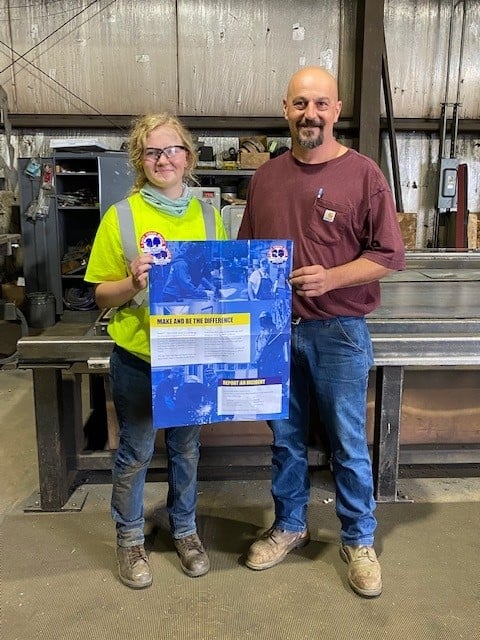
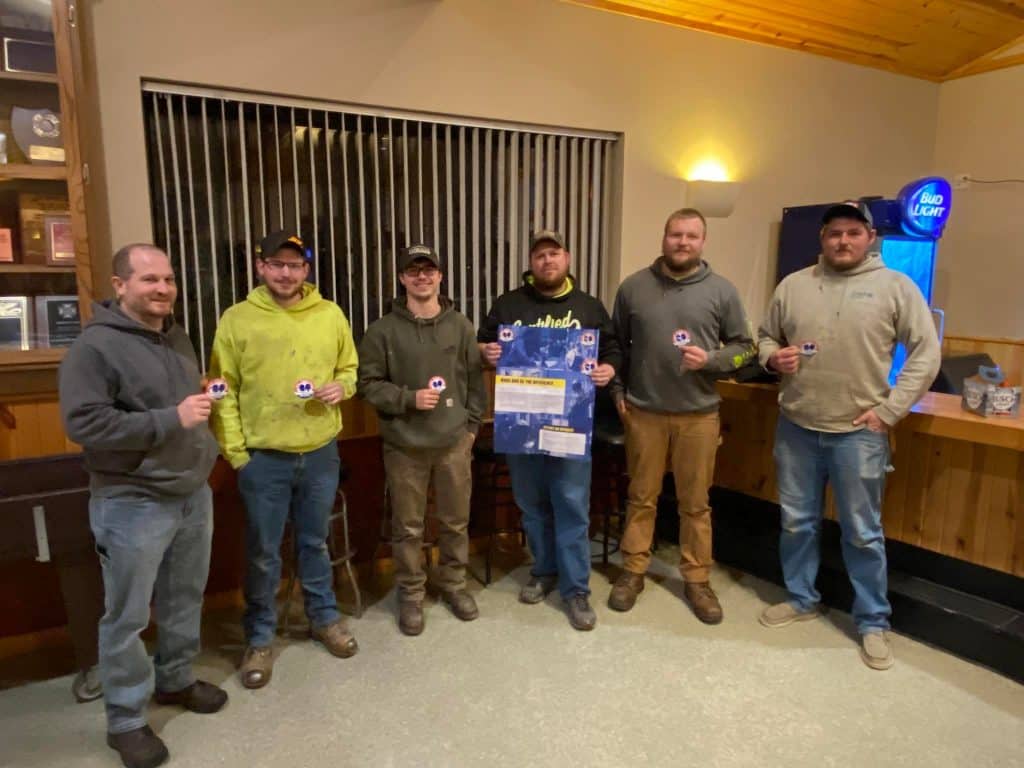
With all this in mind, SMART announced the expansion of the I Got Your Back Campaign — “Speak Up, Speak Out” in May. We seek to create and reinforce a culture where members Speak Up, Speak Out when they see something wrong. Therefore, we ask every member to do the following:

1. If you witness a fellow member being bullied, harassed, discrim­inated against or mistreated on the job, please Speak Up, Speak Out.

2. If you are being bullied, harassed, discriminated against or mistreated on the job, please Speak Up, Speak Out if you are comfortable doing so, or ask a trusted ally for help.

What does it mean to Speak Up, Speak Out? This can take many forms depending on the situation:

  • Ask the offender to stop. Here are some examples of things you can say: “This needs to stop right now.” “This is wrong, and you need to stop.” “This is not right. Leave [name] alone.”
  • Ask the individual if they are okay and if they would like to report this incident. Emphasize that they did not deserve to be treated this way and that you have their back.
  • Approach other bystanders and encourage them to Speak Up, Speak Out. Every voice matters, and there is power in numbers.
  • If you are not comfortable saying something in the moment, you can report the incident to your union rep or the employer.

In turn, we ask all of our union officials to commit to the following:

  1. Ensure each of our members receives the best quality union representation when they are facing harassment, bullying, discrimination or mistreatment on the job.
  2. Ensure there is no retaliation for speaking up and reporting an issue. Communicate repeatedly with your members that retalia­tion is not tolerated, ask members to report retaliation if it occurs, and take swift and decisive action if a member is retaliated against for speaking up.

This campaign expansion is designed to encourage our members to intervene when bullying or harassment occurs on the jobsite with the same sense of urgency as if a fellow member were facing unsafe work conditions. We believe the expansion of the I Got Your Back Campaign will help ensure this practice becomes universal throughout our union.

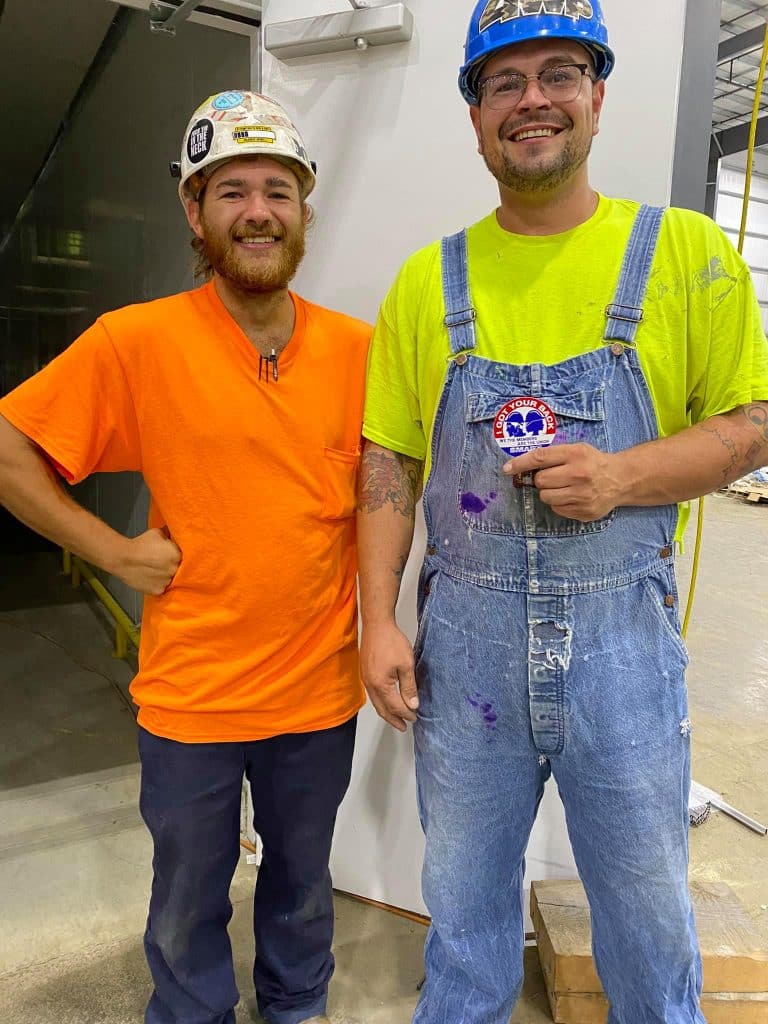
In 2021, SMART launched the I Got Your Back Campaign, which celebrates the many great mentors and allies in our membership and reinforces member solidarity throughout our great union. Today, SMART announced the expansion of the I Got Your Back Campaign — “Speak Up, Speak Out.”  

We seek to create and reinforce a culture where members Speak Up, Speak Out when they see something wrong. Therefore, we ask every member to do the following:  

  1. If you witness a fellow member being bullied, harassed, discriminated against or mistreated on the job, please Speak Up, Speak Out.  
  2. If you are being bullied, harassed, discriminated against or mistreated on the job, please Speak Up, Speak Out if you are comfortable doing so, or ask a trusted ally for help.  

What does it mean to Speak Up, Speak Out? This can take many forms depending on the situation:  

  • Ask the offender to stop. Here are some examples of things you can say: “This needs to stop right now.” “This is wrong, and you need to stop.” “This is not right. Leave [name] alone.” 
  • Ask the individual if they are okay and if they would like to report this incident. Emphasize that they did not deserve to be treated this way and that you have their back. 
  • Approach other bystanders and encourage them to Speak Up, Speak Out. Every voice matters, and there is power in numbers.  
  • If you are not comfortable saying something in the moment, you can report the incident to your union representative or the employer.

In turn, we ask all of our union officials to commit to the following: 

  1. Ensure each of our members receives the best quality union representation when they are facing harassment, bullying, discrimination or mistreatment on the job. 
  2. Ensure there is no retaliation for speaking up and reporting an issue. Communicate repeatedly with your members that retaliation is not tolerated, ask members to report retaliation if it occurs, and take swift and decisive action if a member is retaliated against for speaking up.  

This campaign expansion is designed to encourage our members to intervene when bullying or harassment occurs on the jobsite with the same sense of urgency as if a fellow member were facing unsafe work conditions. We believe the expansion of the I Got Your Back Campaign will help ensure this practice becomes universal throughout our union.  

A Local 16 member holds a piece of metal dedicated to Carrie Barber.


Chelsey Bus recently graduated from her apprenticeship at Local 16 in Portland, Oregon. During her five years of training, she experienced much of the same adversity that other women in the trades face; although SMART has made great strides to recruit and retain women, they remain a minority of the membership. That’s what makes stories of “I Got Your Back” solidarity – including Bus’s – so vital for the growth of our union.

When Bus began her apprenticeship, she said her duties involved menial work, like moving materials. But she began to see a shift in her job responsibilities around the time she was assigned to work at General Sheet Metal in Clackamas, Oregon, on an architectural sheet metal job.

“I didn’t have a lot of experience working on the architectural side,” explained Bus. “So I was kind of surprised when I was given the assignment.”

Nevertheless, Bus thrived. Over the course of her apprenticeship, she worked in residential HVAC, commercial HVAC, TAB, a mechanical shop and an architectural shop.

While working on an architectural project at General Sheet Metal, her friend and project manager, Carrie Barber, passed away unexpectedly.

“During that period, immediately after he passed away, people started telling me that he had gone to bat for me. He stuck his neck out and believed in me and got me placements. I had no idea,” Bus said. “His encouragement and faith in me were really touching. He had my back; I didn’t even know it.”

Bus said Barber’s faith in her was inspiring, and she plans to pay it forward – both on and off the job.

“I plan to make an effort to be that person for others,” she said. “I want everyone to experience that level of support, that same feeling that I’ve got your back.”

Adriana Farren has always been into numbers. She earned a bachelor’s degree in human resources with a minor in finance and worked in the front office of the former Sheet Metal Workers Local 41 in Puerto Rico before moving to Pennsylvania in 2011.

This was where her life took a much different turn, and it all started with a job working in the office of Comprehensive Test and Balance in Dover, Pa.

After two years overseeing Farren working in the office — reading plans, going over forms and entering data — Todd Walter, owner of the company, approached her with a question: Would you be interested in becoming an apprentice?

“I said, ‘yes.’ Then, he said, ‘You’ll have great benefits,’ and I said, ‘yes’ twice,” Farren recalled with a laugh. “By looking at the reports, I thought it would be a career I would be interested in.”

The first lesson: integrity and honesty are important in testing, adjusting and balancing (TAB).

Walter saw Farren working on bids and learning the necessary drawings, documentation and paperwork, and he offered her the chance to have a career instead of a job. A second-generation sheet metal worker, Walter also took the opportunity to guide Farren through the process and mentor her as others had mentored him.

The first lesson: integrity and honesty are important in testing, adjusting and balancing (TAB), he said.

“No matter what you do, they have to believe what you tell them. Adriana had good personal skills. She had the insight. She is very smart, and she was at the top of her class. She fit the bill,” Walter added. “It’s something my father said a long time ago — you can have a job, or you can put your head into it and make it a career.”

During the first two years of her apprenticeship at SMART Sheet Metal Local 19 (Central Pa.), Farren knew she wanted to do testing, adjusting and balancing. So, at night, she took air and water classes and was certified as a technician in 2015 while she was still an apprentice.

Since her graduation in 2017, Farren has continued to gain certifications. She said testing keeps the skills fresh in her mind. To date, she holds a welding certification in addition to duct leakage testing and high-efficiency particulate air (HEPA) testing.

“It’s a continuous learning process. I want to continue learning more about the balancing concept. I like to learn new things every day.”

– Local 19 member Adriana Farren

“It’s a continuous learning process. I want to continue learning more about the balancing concept. I like to learn new things every day. I would like to expand my knowledge in different areas related to TAB,” she said. “Having a certification shows people you’re certified in that concept and you know what you’re doing. In order to be a TAB tech, you don’t have to have the certification, but if you do, it proves you know what you’re doing.”

Knowledge, in Farren’s case, was definitely powerful. Although she took English classes on her native island of Puerto Rico, it was her second language. Being the only female balancer at Comprehensive Test and Balance — something Walter would like to see change — has its challenges, but all the challenges she’s faced have been nothing she can’t handle, she said.

“Back when I was in college, I thought I wanted to look after the employees and watch over them from a human resources point of view,” Farren said. “Looking back, 12 years later, that would have been very boring for me. I would have had to be in an office with the same four walls. No offense to the people who do it, but I like the fact I’m always somewhere different and learning something new.”

Walter took a chance asking Farren if she would be interested in a career. Now, as a full-time balancer at Comprehensive Test and Balance, she sees how her love of numbers led her to the career she now has. An interest in math, problem solving and finance isn’t relegated to an office and four walls. Those interests also can lead outside to various locations, continuous learning and a skill set that can last a lifetime.

“If you think you can do it, give it a try,” Farren said. “You don’t lose anything by trying, not just in this career, but anything. Trust your gut feeling. If you think you can do it, you probably can.”

Adriana Farren has always been into numbers. She earned a bachelor’s degree in human resources with a minor in finance and worked in the front office of the former Sheet Metal Workers Local 41 in Puerto Rico before moving to Pennsylvania in 2011.

This was the point where her life took a much different turn, and it all started with a job working in the office of Comprehensive Test and Balance in Dover, Pennsylvania.

After two years overseeing Farren working in the office, reading plans, going over forms and entering data, Todd Walter, owner of the company, approached her with a question: would you be interested in becoming an apprentice?

“I said, ‘yes.’ Then, he said, ‘You’ll have great benefits,’ and I said, ‘yes’ twice,” Farren recalled with a laugh. “By looking at the reports, I thought it would be a career I would be interested in.”

Walter saw Farren working on bids and learning the drawings, documentation and paperwork and offered up the change to a career instead of a job. A second-generation sheet metal worker, Walter also took the opportunity to guide Farren through the process and mentor her as others had mentored him.

The first lesson: integrity and honesty are important in testing, adjusting and balancing (TAB), he said.

“No matter what you do, they have to believe what you tell them. Adriana had good personal skills. She had the insight. She is very smart, and she was at the top of her class. She fit the bill,” Walter added. “It’s something my father said a long time ago — you can have a job or you can put your head into it and make it a career.”

The first two years of her apprenticeship at Sheet Metal Workers Local 19, Central Pennsylvania, Farren knew she wanted to do testing, adjusting and balancing. So, at night, she took air and water classes and was certified as a technician in 2015 while she was still an apprentice.

Since her graduation in 2017, Farren has continued to gain certifications. She said testing keeps the skills fresh in her mind. To date, she holds a welding certification in addition to duct leakage testing and high-efficiency particulate air (HEPA) testing.

“It’s a continuous learning process. I want to continue learning more about the balancing concept. I like to learn new things every day. I would like to expand my knowledge in different areas related to TAB,” she said. “Having a certification shows people you’re certified in that concept and you know what you’re doing. In order to be a TAB tech, you don’t have to have the certification, but if you do, it proves you know what you’re doing.”

Knowledge, in Farren’s case, was definitely powerful. Although she took English classes on her native island of Puerto Rico, it was her second language. Being the only female balancer at Comprehensive Test and Balance — something Walter would like to see change — has its challenges, but all the challenges she’s faced have been nothing she can’t handle, she said.

“Back when I was in college, I thought I wanted to look after the employees and watch over them from a human resources point of view,” Farren said. “Looking back, 12 years later, that would have been very boring for me. I would have had to be in an office with the same four walls. No offense to the people who do it, but I like the fact I’m always somewhere different and learning something new.”

Walter took a chance asking Farren if she would be interested in a career. Now, as a full-time balancer at Comprehensive Test and Balance, she sees how her love of numbers led her to the career she now has. An interest in math, problem solving and finance isn’t relegated to an office and four walls. Those interests also can lead outside to various Comprehensive Test and Balance locations, continuous learning and a skillset that can last a lifetime.

“If you think you can do it, give it a try,” Farren said. “You don’t lose anything by trying, not just in this career, but anything. Trust your gut feeling. If you think you can do it, you probably can.”

The August 2021 Talking SMART episode focused on union mentorship, mutual support in the workplace, and working proactively to address issues such as hazing, bullying and discrimination. Our featured guests were SMART Director of Special Projects Louise Medina and SMART Local 265 member Mike Powers.

Every member has had at least one person in his or her career who has stood up for them, provided formal or informal union mentorship, or been there in times of crisis or need. SMART launched the “I Got Your Back” campaign as a way to recognize those who have stepped up and stood up for what’s right and to reinforce a culture of paying it forward.

Sister Medina served as a business representative at Local 265 and president of the SMART Recruitment and Retention Council; in addition to director of special projects, she is also a member of the BE4ALL Committee. Brother Powers is also a Local 265 member who now serves as a trustee at his local. He began as an apprentice at Wiesbrook sheet metal and spent his apprenticeship and following journeyperson years learning all aspects of architectural and job management.  

In addition, General President Joseph Sellers joined Talking SMART for open mic segment at the end of the episode. He responded to a question about what SMART is doing to promote workplace environments that are free of bullying, harassment, hazing and discrimination.

Return to Talking SMART index page.


Talking SMART is a member of the Labor Radio Podcast Network — working people’s voices, broadcasting worldwide 24 hours a day.