Whether on the streets of Charlotte, in the dry Nevada heat, or somewhere in between, SMART-TD members were out in full force during Labor Day weekend!
SMART-TD Local 1715 Participates in First Parade While Local 195 Continues Annual Tradition
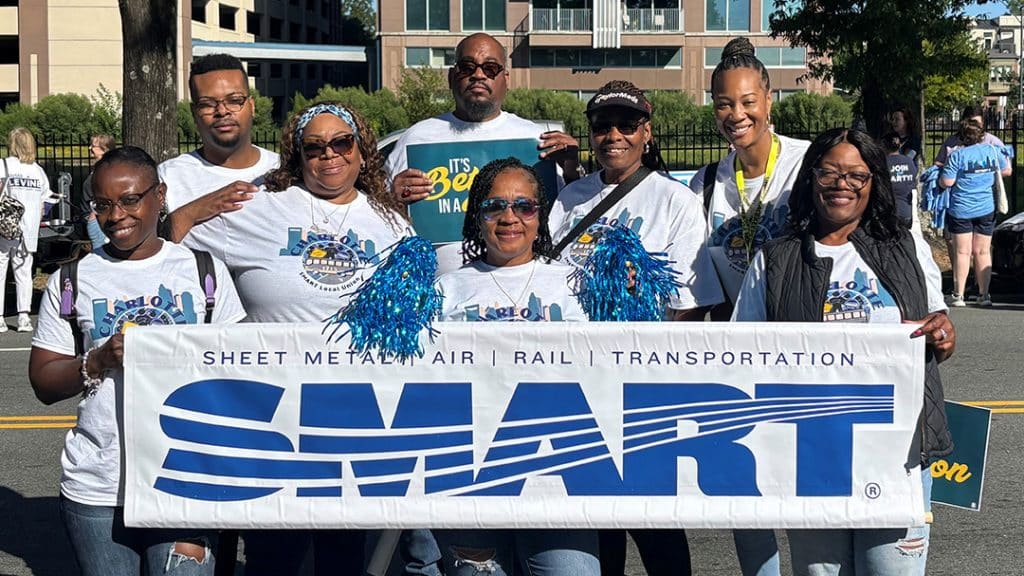
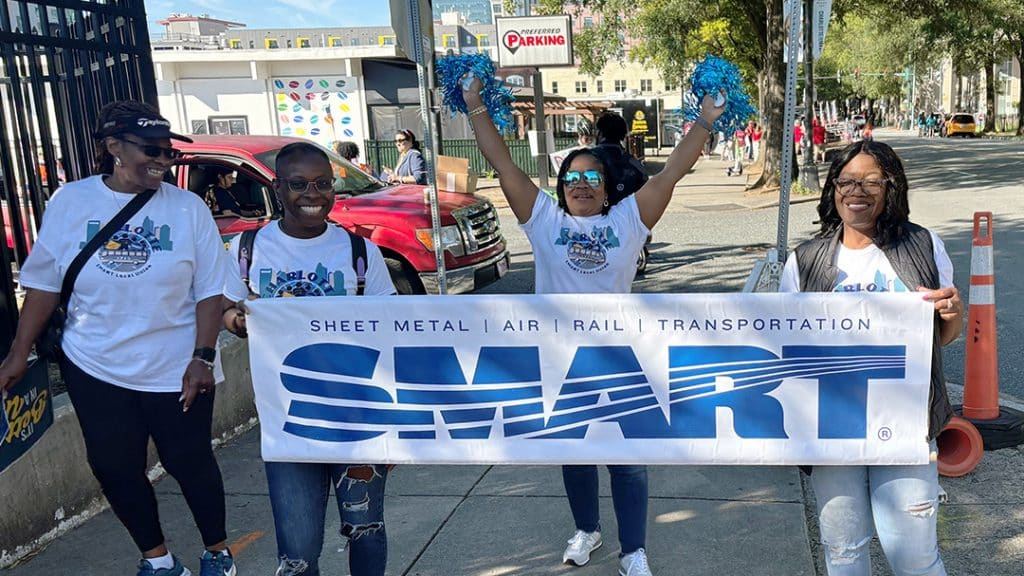
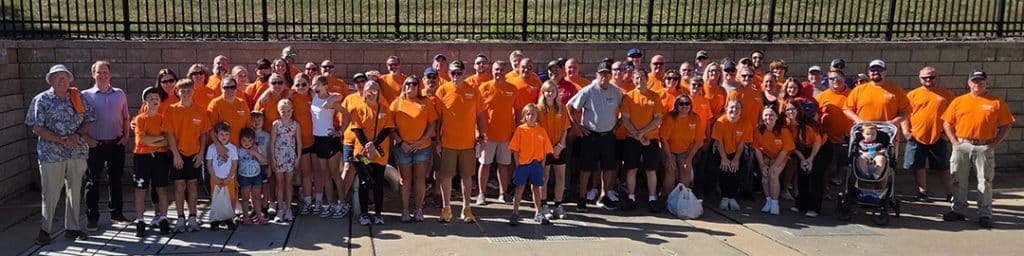
Our brothers and sisters with Local 1715 (Charlotte, NC) participated in the city’s Labor Day Parade for the first time.
Local 1715 brothers and sisters prepare to march in the Charlotte Labor Day Parade
Organized by Interim General Chairperson and President Virginia Walker and Safety & Legislative Representative Gia Lockhart, the members are looking to build off the success of this year’s event and grow participation even more in 2026.
This was Local 1715’s first time participating in the city’s Labor Day Parade
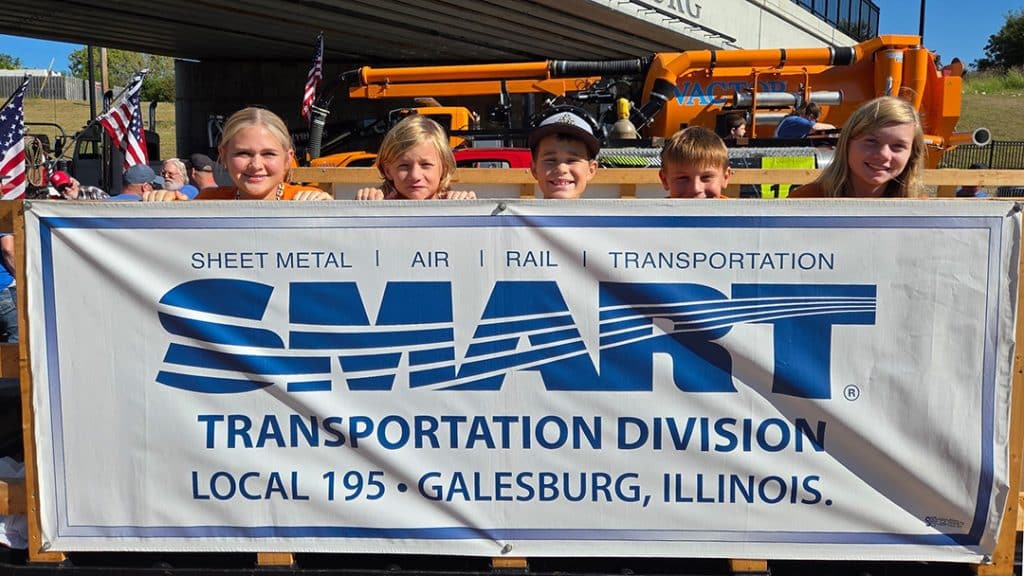
To the west, SMART-TD members in Local 195 (Galesburg, IL) turned out in full force for their community’s annual Labor Day Parade, which is the longest continuously running Labor Day Parade in the United States.
Local 195 (Galesburg, IL) continues its annual Labor Day Parade tradition
This is a popular event and one that always draws strong participation from SMART-TD.
Nevada’s LaborFest and Eastern Idaho State Fair Showcase SMART-TD
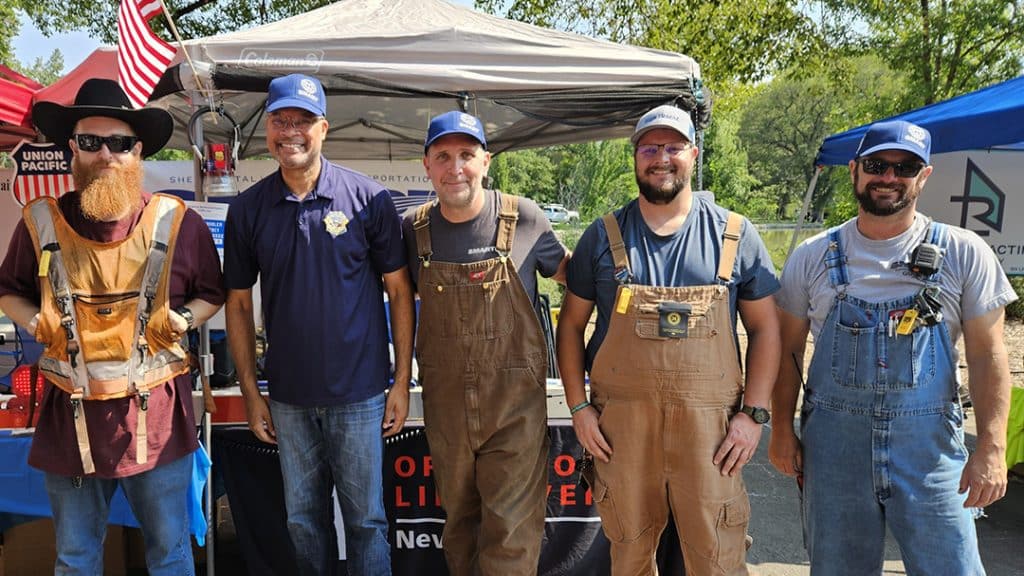
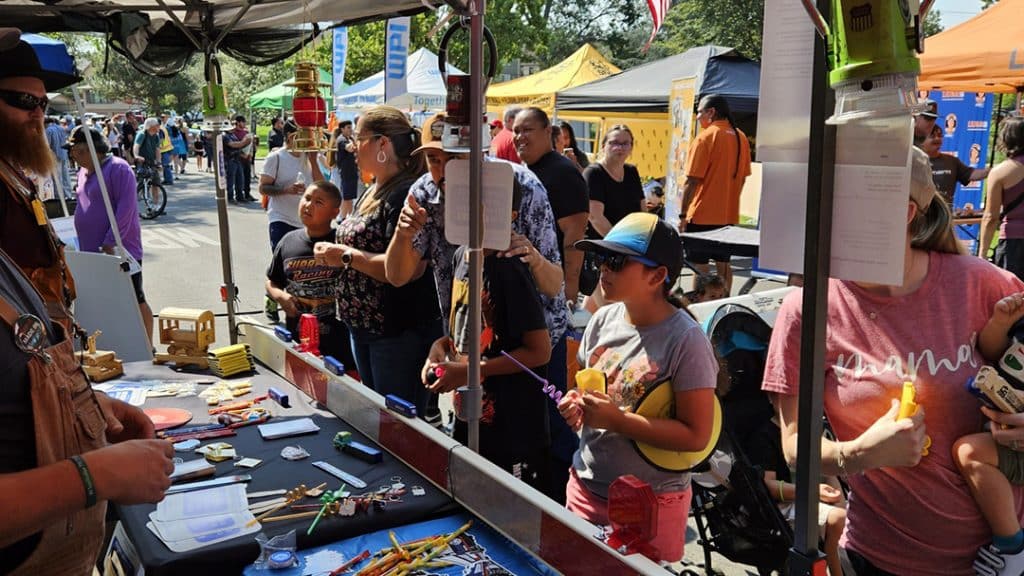
On the West Coast, SMART-TD had strong representation at Nevada’s annual LaborFest.
From left to right: SMART-TD Local 1043 member Chris Hess, Nevada State Attorney General Aaron Ford, SMART-TD Nevada State Legislative Director Gabe Christenson, SMART-TD Local 1043 S & T Steve Magee, and SMART-TD Local 1043 Local Chairman Jim Becker
Hosted by the Northern Nevada Central Labor Council, the Nevada State AFL-CIO, and other affiliated unions, the popular community event takes place in Reno and doubles as a job fair for people looking to join a union.
SMART-TD’s LaborFest booth provided lots of information about our union for visitors, including details about Operation RedBlock and the importance of promoting awareness around the tracks.
SMART-TD staffing its LaborFest booth in Reno, NV
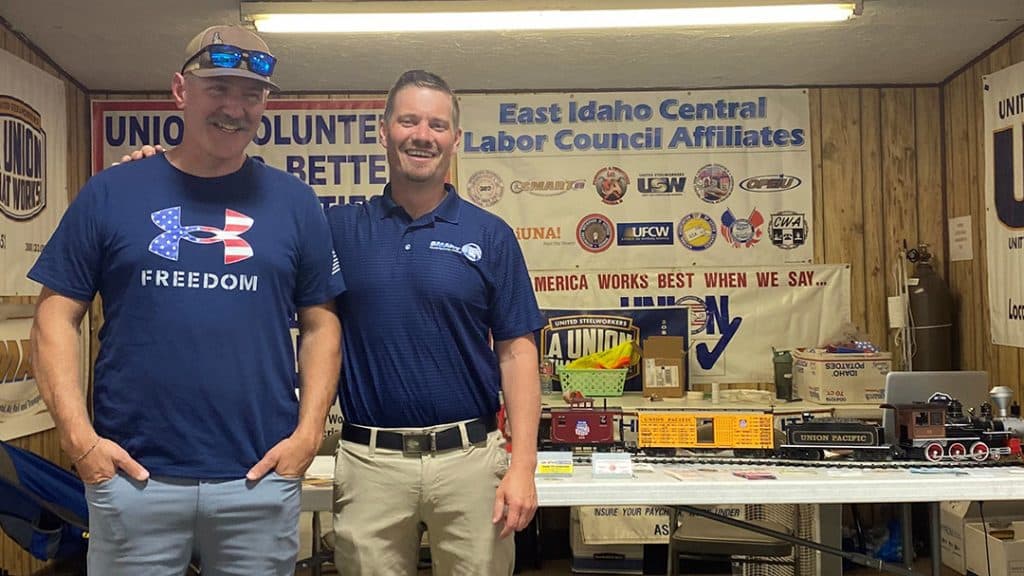
To the north at the Eastern Idaho State Fair, SMART-TD took a proactive approach by distributing literature about rail safety and crossing awareness to the public while also staffing the union booth to help educate visitors on the importance of unions and the benefits of belonging to SMART-TD.
Sharing the benefits of union membership with the public at the Eastern Idaho State Fair
Thank you to all of our brothers and sisters across the country who ensured that our union was well-represented at your community’s Labor Day events!
We’ve got to hand it to Congressman Eric Burlison (R-Missouri): he’s very good at staying on-brand.
After an unsuccessful attempt to codify Congress’s “disapproval” of the federal two-person crew (2-PC) rule in April of 2024, he’s back with a new piece of legislation that serves as another clear reminder that he’s officially against us.
Tell your Congressperson: support railroad safety nationwide by voting against this latest attempt to appease the carriers at the expense of the men and women who keep our railroads running.
Déjà Vu with New Attempt to Invalidate 2-PC
Last week, Congressman Burlison filed the “Train Crew Choice Act,“ which seeks to repeal the 2024 rule that requires a second crew member on Class I freight and passenger trains.
Claiming that the intent of the bill is to “stop union bosses from using Washington to get what they can’t win at the bargaining table,” he is trying to once again overturn our long-sought and hard-won 2-PC rule that took decades to become a reality.
Congressman Burlison goes into more detail in the bill’s announcement, claiming that “We should not [be] imposing unnecessary regulations that benefit special interests.”
These are some of the very players who fight against regulations for the rail industry, claiming that they can regulate themselves without the need for federal oversight or accountability.
They are the definition of “special interests,” and this newest attempt to overturn 2-PC is at the top of their deregulatory wish list.
We suggest Congressman Burlison take a good hard look in the mirror before throwing around buzz words without any context in a desperate attempt to drum up votes for his dangerous, misguided legislation.
Don’t Take Last Year’s Defeat for Granted
If history is any indication, Congressman Burlison’s second attempt to invalidate 2-PC will hopefully fall as flat as the first one.
But here’s the reality: things in the political arena aren’t the same as they were a year-and-a-half ago.
We’ve lost some important allies while the carriers have inevitably gained some new supporters.
That’s why it’s critically important to ensure that Congressman Burlison’s legislation doesn’t see the light of day, let alone a floor vote in either chamber.
Together, we can remind Burlison that SMART-TD’s members are the true industry experts on railroad safety and a force to be reckoned with when we stand together.
It’s a disturbing trend that’s impossible to ignore: SMART-TD’s bus and transit operators face a growing risk for on-the-job verbal and physical attacks while our State Legislative Directors strategically fight to ensure that our members are protected to the fullest extent of the law.
A Nationwide Effort with Local Implications
Just this year, SMART-TD has secured stronger protections for transit workers in multiple states, including Maryland,Colorado, and California.
Local Chairperson and Vice Chairperson of SMART-TD’s Bus and Transit Assault Prevention and Safety (BTAPS) Committee Cole Czub explains in a recent SMART News clip that his goal is to eventually expand the effort nationwide.
“We eventually want to put together one bill that we can push forward to all the states as we’re going along trying to get more states to pass or eventually and hopefully a federal bill that will protect our members,” he said.
Ensuring the safety of his members is a responsibility that Brother Czub doesn’t take lightly.
“I think it’s very important for our members to see that at the end of the day, we’re not just punching off on a clock,” he explained. “We don’t sign off. We’re always doing what we’re doing as representatives for our members. We’ve got [members’] backs no matter what: at work, outside of work, whatever’s going on that we are there to stand with them.”
Ensuring Equal Protection for Transit Workers
One notable example in the fight for stronger safety protections is HB 1877 in Massachusetts, which is focused on our brothers and sisters who work for Keolis Commuter Rail in Boston.
Massachusetts has a law on the books protecting public transportation workers, elevating operators to the level of a police officer or first responder if they’re assaulted.
Because Keolis is a private company, this law doesn’t apply to our SMART-TD brothers and sisters who work for them, excluding them from much-needed protections.
Watch the SMART News clip below, where Brother Czub explains that a push is underway to change the law so that SMART-TD members who work for Keolis don’t fall through the cracks and are protected at the same level as their public employer counterparts.
Historic Wins on Quality of Life and Strong Wage Increases Secured
SMART-TD is proud to announce that a Tentative Agreement (TA) has been reached for our Yardmasters. This agreement, made in partnership with the National Carriers’ Conference Committee (NCCC), represents a major step forward in both wages and quality of life improvements for our members.
Substantial Wage Increases
The agreement provides four consecutive annual general wage increases:
July 1, 2025 – 4.0% increase
July 1, 2026 – 3.75% increase
July 1, 2027 – 3.5% increase
July 1, 2028 – 3.25% increase
July 1, 2029 – 3.00% increase
By the end of this agreement, Yardmasters will see a compounded increase exceeding 18.75%, strengthening economic security and reflecting the essential work performed every day in yards across the country.
Quality of Life Wins
While wage growth is a critical win, this agreement also addresses long-standing quality of life concerns for Yardmasters.
“Quality of life for our Yardmasters was at the heart of everything we fought for in this Tentative Agreement,” explained SMART-TD’s Alternate Vice President Chris Bartz, who is an active Yardmaster on the CPKC railroad. “Everyone in this union knows that historically, the youngest of our craft have been on call seven days a week, with no rest days at all when assigned to the guaranteed extra board. This provision finally rights decades of wrongs against our Yardmasters.
“By securing guaranteed rest days, we’re giving members the ability to plan for time off without worrying about the Carrier calling. This is something that has been a very long time coming. Just as importantly, we won language that requires the Carriers to come to the table to negotiate sick days on a clear timeline. Our goal is to ensure Yardmasters achieve the same protections as our T&E brothers and sisters,” Brother Bartz explained.
This agreement is not only right and just: it’s proof of what we can accomplish when we stand united.
Guaranteed Rest Days
For the first time, Yardmasters will have guaranteed rest days on the extra board built into their schedules. This ensures members receive predictable time away from work to recharge, spend time with family, and reduce fatigue.
Expanded Sick Days
The TA also provides a path for the negotiation of paid sick days, a major step forward in recognizing the need for Yardmasters to recover. This provision of the TA creates a structured negotiation between the carriers, and SMART-TD aimed at bringing the same sick day structure our T&E members have to our Yardmasters.
Enhanced Vacation Time
Quality of life improvements in this TA extend into wins on vacation time as well. In this TA, we have secured additional vacation time for our Yardmasters as well as accelerated the accrual of vacation time for our newer members.
A Balanced Agreement for the Future
Taken together, these gains mark a significant milestone for SMART-TD Yardmasters. Meaningful wage increases combined with strategic quality of life improvements show the power of collective action and the dedication of members and leadership in securing a stronger future.
Yardmasters will soon review and vote on this Tentative Agreement.
This is your agreement. These are your wins.
Sometimes, SMART-TD members step back from their usual duties and take their passion for what they do into their communities.
That’s exactly what Wisconsin State Safety & Legislative Director Andy Hauck did recently, and it was a special experience for one local man.
A Lifetime Fan of Trains
In August, SLD Hauck received an e-mail from the State Commissioner of Railroads about a resident at Azura Memory Care and Assisted Living in Verona, WI who’s in hospice care but has had a longtime love for trains.
The staff wanted to throw him a train-themed party and was looking for a train conductor to attend.
The commissioner’s office reached out to SLD Hauck and asked if he was interested.
He didn’t need any convincing and was even joined by his girlfriend who ran a switch engine at a museum before they met.
“We just went and talked railroads and told railroad stories, and they had residents there in chairs and we just sat up front by the fireplace,” he said. “He was always interested in trains. His daughters were there, and they mentioned that they used to go on trips and watch trains.”
Azura turned the party into a facility-wide event, and SLD Hauck noted how there was no shortage of questions from the other residents in attendance.
“There were a lot of retired schoolteachers in that group, and this was eye-opening to these people…that there’s only two people on every train. Some are three miles long, and they asked about some of the wrecks and things like that.”
It’s More Than a Job. It’s a Calling
Serving as the Wisconsin SLD since 2019, Brother Hauck shared one of the first things that he told his Board when he got elected.
“Sometimes, this has got to be a service position, and we need to take care of people.”
In some cases, that spills over to his legislative work when lawmakers see him at various events.
“It keeps us on the radar,” he explained. “These legislators are surprised when they see you at these events. But it overlaps and then they see that we’re not always coming at them with something we need. We’re doing some public service, too.”
For SLD Hauck, that’s what matters.
“It’s not the big ‘me, me, me’ show,” he said. “It’s about service to other people. It’s about taking care of everybody else.”
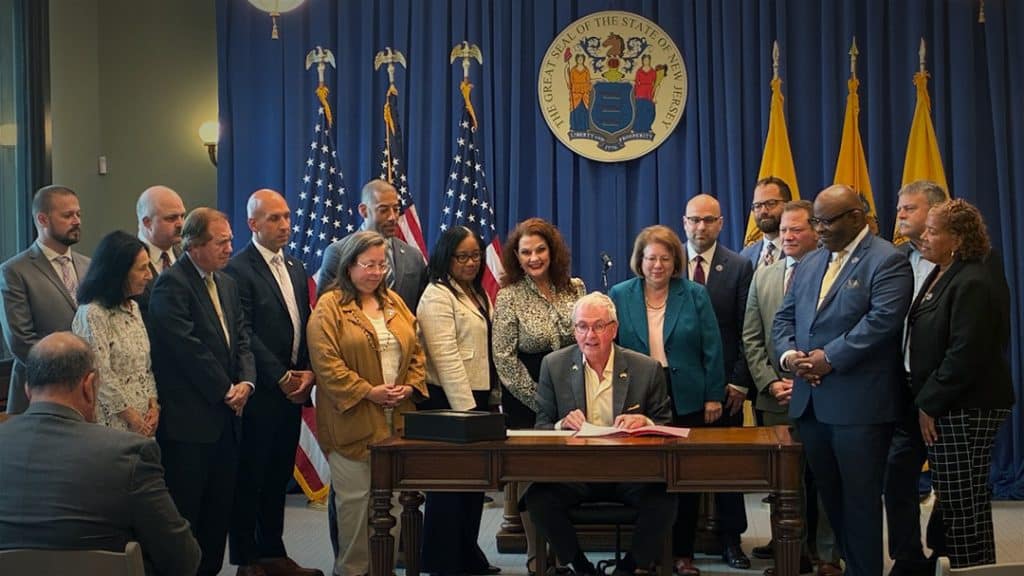
Thanks to SMART-TD’s leadership and collaboration with other labor organizations and the New Jersey State AFL-CIO, two new, pro-worker bills are now law in the Garden State!
Protection Against “Captive Audience” Meetings
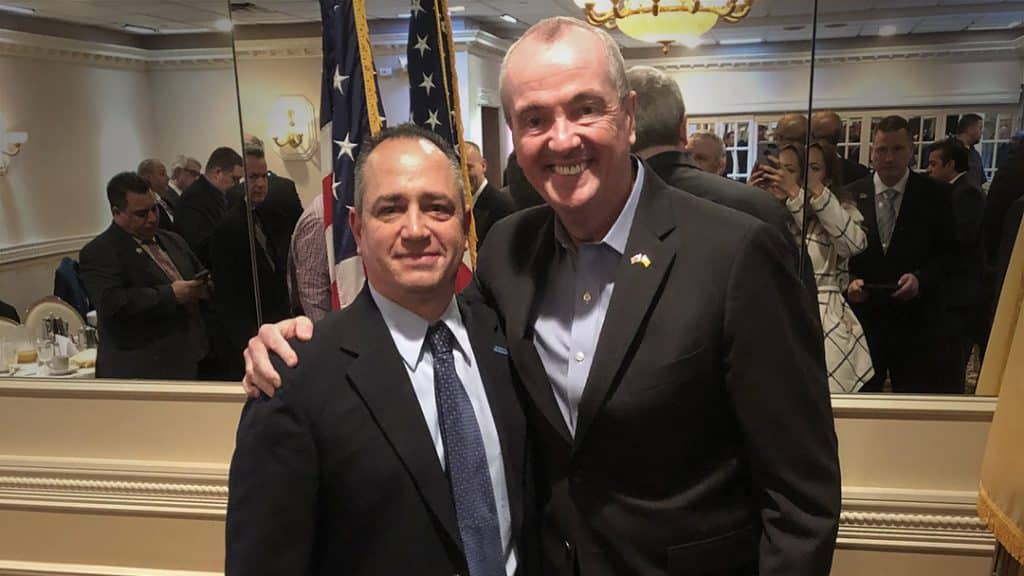
Governor Phil Murphy signs the two pro-labor bills into law
Sponsored by a cohort of bipartisan lawmakers, A-4429 prohibits employers from forcing employees to attend meetings concerning political or religious matters, including what’s known as “captive audience meetings.”
“By protecting workers from being forced to sit through captive audience meetings, New Jersey is defending the dignity and independence every worker deserves on the job,” explained SMART-TD’s New Jersey State Safety & Legislative Director Ron Sabol. “SMART-TD applauds Governor [Phil] Murphy for taking this bold step to stand with our workers.”
These are a well-known scare tactic used by some employers to discourage forming or joining a union.
The new law makes it clear that attendance at these meetings is voluntary, and employees can’t face retaliation for their decision not to participate.
Employers can still hold voluntary meetings, share legally required information, and conduct anti-harassment and anti-discrimination training, but workers’ rights are at the heart of the bill.
New Jersey State Assistant Safety & Legislative Director Joe Williams (left) with Governor Murphy
Labor History Required in New Jersey Classrooms
The second pro-labor bill signed by Governor Murphy (A-1682) enshrines education about organized labor in the New Jersey Student Learning Standards for Social Studies for grades 6-12. The law requires the state Board of Education to adopt standards about the history of labor and labor movements, and school districts are directed to provide instruction on United States and New Jersey labor history as part of their regular curriculum.
“By requiring labor history to be taught in our schools, the state ensures that the next generations understand the sacrifices and struggles that built the workplace protections we have today,” said SLD Sabol. “As these young people prepare to enter the workforce, they’ll have a deeper appreciation and knowledge of the benefits we enjoy that were won by unions but often taken for granted in today’s world.”
A-1682 boasted 22 bipartisan co-sponsors and sets an important precedent for labor education.
New Jersey continues to be an example of what’s possible when lawmakers and labor work together to get things done. Congratulations to SLD Sabol and the New Jersey and Delaware Safety and Legislative Board for doing their part to help secure these legislative victories!
SMART-TD is pleased to announce the open enrollment period for the Voluntary Income and Life Protection (VILP) Program has been extended through September 26th.
This program now includes a new Voluntary Gap Short-Term Disability (STD) Plan, designed to work alongside the existing SMART-TD Voluntary Short-Term Disability (VSTD) coverage. By stacking with current benefits, this new plan provides increased income protection for members unable to work due to injury, illness, or surgery.
Coverage for all elections made during this enrollment will be effective October 1, 2025.
Please note: this will be the last opportunity to enroll in the new Gap Short-Term Disability coverage this year.
In addition to this new option, members continue to have access to:
Voluntary Long-Term Disability (VLTD)
Voluntary Life Insurance (VLIFE)
Together, these three benefits make up the SMART-TD VILP Program, offering a comprehensive package of financial protection tailored to the unique needs of SMART-TD members.
Important Enrollment Information
Coverage is not automatic — members must actively enroll during the open enrollment period.
Benefit payments are done exclusively through ACH (automated bank draft); payroll deductions will not be used.
Members will receive instructions and support materials via email and other communication channels.
Members currently enrolled in VLTD or VLIFE will receive special communications with details on how to:
Add the new Gap Short-Term Disability coverage
Update existing coverages
Transition to ACH if still using payroll deduction
We encourage you to help promote awareness of this program at the local level. Your support is critical to ensuring members understand the benefits available and how to enroll.
For more details, visit smart-vilp.com or call the SMART-TD VILP Customer Service Center at (224) 770-5328.
Members must enroll and elect their benefit options before September 26, 2025, to get covered.
This week, the U.S. Department of Transportation (DOT) and the Federal Railroad Administration (FRA), under the Trump Administration, announced a major expansion of their capacity to inspect railroad bridges across the nation.
For years, railroaders have voiced concerns about the bridges we travel over every day. Many of these structures were built more than a century ago, at a time when trains were far shorter and lighter than the massive loads they now carry.
Many of us saw the NPR and Howard Center short film that spoke to how poor our bridge inspection process is, which became nightmare fuel for any railroader who watched it. Every one of us has felt that moment of unease rolling across an aging bridge and wondered if gruesome photos of our train would appear on tonight’s news.
Retraining Existing Staff Grows Rail Inspectors From 6 to 169
Until now, there were only six trained FRA bridge inspectors tasked with covering the entire United States. FRA is training an additional 163 Federal and State Track Inspectors to perform railroad bridge inspections in addition to their existing duties. The number of eyes on our bridges will jump from fewer than 10 to 169 inspectors nationwide.
Inspectors will be able to recommend civil penalties when defects are found and force rail carriers to bring bridges up to code—or face fines. This expansion indicates the FRA plans to finally hold railroads accountable.
Secretary Duffy and FRA Administrator Feeley Emphasize Responsibility and Efficiency
Transportation Secretary Sean P. Duffy said:
“The Trump Administration is delivering on its promises to make government more efficient and keep travelers safe. Leveraging our existing, dedicated workforce to improve oversight of railroad bridge safety is another common-sense win for Americans.”
Acting FRA Administrator Drew Feeley added:
“The Bridge Safety Standards have long helped assure that railroad bridges are safe. The addition of this training for existing inspectors will give FRA many more opportunities to confirm the structural soundness of railroad bridges. We will continue to find new and cost-effective ways to improve safety.”
SMART-TD Was Consulted, Helped Inform FRA’s Decision to Act
Our voices were part of this effort. When the Administration began considering this initiative, they reached out to us directly. Our National Safety and Legislative Director, Jared Cassity, was quoted in the official announcement, emphasizing just how critical bridge safety is to the men and women we represent:
“The safety of the railroad system relies upon a multitude of components, but few are as critical to the public and the men and women we represent as the integrity of the bridges America’s trains traverse. That’s why SMART-TD is encouraged to see the Trump Administration taking action to increase the number of inspectors qualified to inspect bridges by utilizing the existing State Track Inspectors and providing them with the necessary training to ensure rail carrier compliance on bridge safety.”
A Safer Future for Rail Workers
This development is a clear step forward in addressing one of the most pressing safety concerns facing rail workers today. While there is more work to be done, FRA’s expansion of bridge inspections means more accountability, more oversight, and ultimately, safer tracks for our members and the communities we serve.
Washington, D.C. — Sept. 3, 2025 —Congressman Mike Lawler (R-NY-17) introduced the Transit Funding Flexibility Act of 2025, which addresses the ongoing fiscal crisis faced by America’s public transportation systems. This legislation, if passed, would provide a long-term solution to allocate transit funding. SMART-TD endorses this legislation.
Rep. Lawler also co-sponsored the bipartisan Railroad Yardmaster Protection Act alongside Rep. Salud Carbajal (D-CA). We are grateful for his continued commitment to advocating for the men and women who keep America’s transportation systems moving safely and reliably.
Local Control over Allocation of Grant Money
The Transit Funding Flexibility Act allows recipients of certain grant funds to use that money for operating costs, like paying our SMART-TD members. The funds are currently restricted to costs associated with equipment and facilities used in public transportation.
Restrictions on how transit funding can be allocated have limited the ability of local agencies to direct money where it is most urgently needed. This bill confronts this problem by giving decision-makers in cities across the country the flexibility to use their funding to preserve and improve service, sustain jobs, and strengthen public transit systems.
At a time when major transit systems in Philadelphia and Chicago are on the verge of a meltdown, this legislation will empower cities to maximize the effectiveness of their existing resources.
Chicago, Philadelphia Face Devastating Cuts Without this Flexibility
Bob Guy, SMART-TD’s Illinois State Safety and Legislative Director, highlighted the importance of this flexibility:
“In this era of fiscal cliffs for public transit, this bill can help us avoid the large-scale cuts to our workforce we are looking at. Right now, our Chicago members at METRA, along with CTA and PACE, are being told to expect a 40% cut. The Transit FundingFlexibility Act gives us the ability to use the resources we have where they matter most, and that is sustaining the workforce and ensuring service continues in our city.”
Brother Guy went further, saying, “This isn’t just about our members. Businesses in this city depend on a reliable way to get their employees to the workplace. If routes start getting cut, our economy will suffer. This bill will help us keep our SMART-TD brothers and sisters in the business of keeping Chicago running.”
Anthony Petty, General Chairperson representing SMART-TD’s SEPTA members in Philadelphia, echoed this sentiment:
“Any help works at this point. Obviously, what we need right now is more funding for public transit. But freeing up what transit agencies can do with the money they do have does help. Here at SEPTA in Philadelphia, we have a new General Manager. I see this bill as a way for the federal government to get out of the way and let Scott Sower (SEPTA GM) get creative and see what he can figure out. One thing we know for sure is that the current situation is not sustainable.”
Public Outrage at Service Cuts Impacts Frontline Workers
It isn’t just our SMART-TD members who are upset about the cuts at SEPTA. Brother Petty also told SMART News that, “The public is understandably angry about the cuts we’ve been told are coming. It has got to the point where I’m more worried about our members’ safety than ever. These passengers are mad and feel like they are getting cheated. And those of us on the front line are the only people they see to take out their frustrations on.”
“This is a bad situation. I want to see this bill pass, but I’d love to see additional funding come along with it. One way or the other, it is good to see work being done to figure out how we get ourselves out of this funding situation.”
SMART-TD Supports Congressman Lawler’s Project
With transit systems under severe strain nationwide, SMART-TD is excited to see our legislators engaged in this fight and working to brainstorm creative, long-term solutions to the complicated issue of transit funding.
Our members and the services they provide are essential to this country, yet we are too often overlooked or taken for granted. Congressman Lawler and his staff have shown a willingness to listen, act, and advocate for real solutions. SMART-TD looks forward to helping champion this bill, educating decision-makers, and fighting for a stable and reliable future for public transportation.
Last Chance to Attend a Regional Training Seminar (RTS) in 2025
The Atlanta Regional Training Seminar (RTS) is still two months away, but space is already filling up quickly! If you plan on attending or are thinking about it, don’t delay and finalize your registration and book your hotel room today!
The Atlanta RTS begins on Monday, October 27, 2025, with an evening Welcome Reception. The training will cover topics such as local governance, the roles and responsibilities of local presidents, secretaries, treasurers, legislative representatives, and local chairpersons in member advocacy, an overview of the SMART Constitution, and other key subjects.
Location: Wyndham Atlanta Buckhead
Dates: October 27-30, 2025 (S&T: October 27-31)
Room Rate: $159/night
Registration Fee: $75
For a detailed meeting agenda, please visit the Meetings page via the SMART Union mobile app.
All RTS presentations will be available on the SMART University site, and those attending future meetings can print them off to assist in following along when attending the in-person classes.
We look forward to seeing you in Atlanta!
Space in some of the training tracks is limited and will be filled on a first-come first-served basis. Online Registration Is Required!
Registration closes on October 13, 2025, and there will be no onsite registration available.