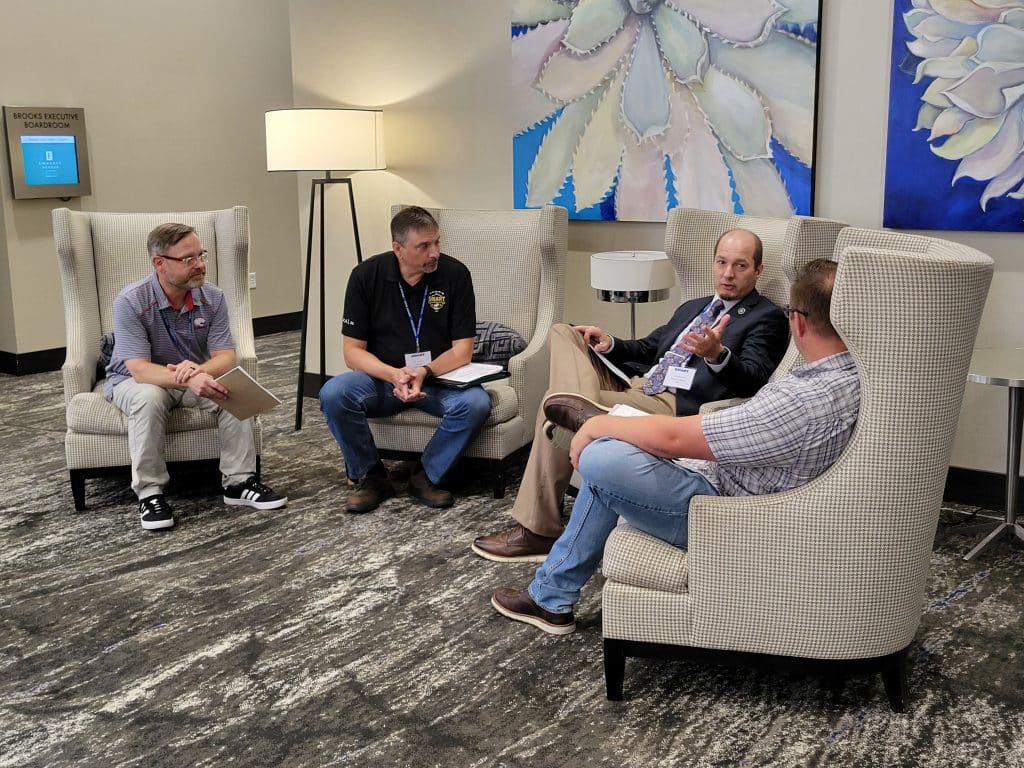
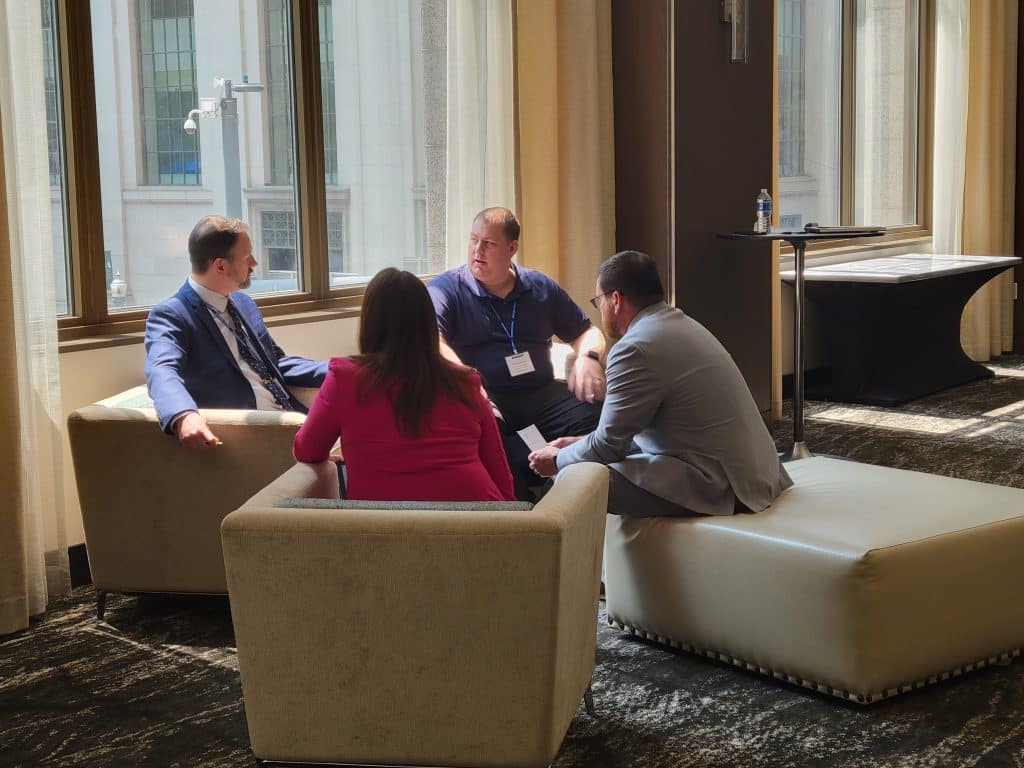
As I write this, I and the rest of your International leadership are preparing for the 2025 SMART Leadership Conference. Each year, these conferences bring together local union officers from across North America and across our union, with both sheet metal and TD leaders gathering to do the hard work of strengthening SMART.
That is the most valuable part of these conferences: the fact that every single officer in our union — regardless of craft, trade, state, province or country — is in one place, doing the work that needs to be done for our common purpose.
That purpose? Fighting for SMART members.
That’s what we do in this union, whether on the jobsite, at the hall, on buses or trains, in government or beyond. It’s what ALL of us do: International officers, local union leaders, shop stewards and the hundreds of thousands of men and women who build and move our nation. And it’s what we’ve done throughout the history of our union, our movement and our two nations. The gains we’ve made — whether it’s pay, benefits, workplace safety, job-creating laws, you name it — we have made by fighting together for what matters.
SMART is YOU, the members — and I know all of us are dedicated to doing whatever we can to make sure the interests of you, the members, come first.
Across our union, we’ve won some huge victories recently. In Mobile, Alabama, members of SMART-TD Local 598 resisted the Alabama Port Authority’s attempts to divide members and secured an agreement that ensures major gains in wages, benefits and crew consist protections. In New Mexico and Connecticut, Local 49 and Local 38 won laws that expand prevailing wage to include custom offsite fabrication workers, creating jobs for SMART members and our neighbors. In Kansas, SMART-TD won state-level funding to expand passenger rail service. In Colorado, SMART Local 9 helped win the passage of the HVAC Improvements for Public Schools law, which will put our members to work statewide.
We’ve also been fighting for SMART members at the national level, in any arena that we can. One example: When the Department of Defense tried to end the use of project labor agreements (PLAs) on large-scale construction projects, it was a direct threat to SMART members’ jobs. This wasn’t something Congress could fix, so North America’s Building Trades Unions (NABTU), which includes SMART and 13 other unions, took the fight to court. Together, we won a key victory: A federal judge ordered the Department of Defense to go back to using PLAs, putting union members and working Americans back on the job.
Another example, this one from Canada: The new prime minister announced a Federal Major Projects Office, designed to cut project approval times from five years to just two — a move that would create more jobs for skilled workers, including sheet metal workers and roofers.
From the local to the national, in the United States and Canada, that’s what our fight looks like. And it’s important to remember: SMART isn’t blue, SMART isn’t red. SMART is YOU, the members — and I know all of us are dedicated to doing whatever we can to make sure the interests of you, the members, come first. We will work with anyone, regardless of political party, and we will fight in Congress, in Parliament, in the courts, in local governments and at the bargaining table to protect members’ jobs, livelihoods and families. You have my word.
This summer, as SMART members reflect on where we’re headed, one truth continues to ground our progress: Our strength comes from each other. From the shop floors to the rail yards, from Parliament to Capitol Hill, our success depends not on a single action or title, but on our unity.
In his Spring 2025 Members’ Journal message, General President Coleman outlined the rising threats we face — attacks on our jobs, our contracts and the industries we work in. Efforts to privatize passenger rail, defund construction projects and chip away at labor protections aren’t just political maneuvers — they’re direct challenges to our ability to provide for our families. They are meant to divide us and weaken the solidarity that makes SMART so effective.
That’s why this year’s SMART Leadership Conference theme — “Fighting for What Matters… Our Members” — is more than a slogan. It’s a commitment. One that each of us makes when we join this union. It reminds us that the union isn’t somewhere else — it’s us. We, the members, are the union. Our collective action, our shared purpose and our daily work are what give SMART its power.
And as General President Coleman wrote on page two, that power has produced real, lasting wins. In recent months, Transportation Division members — rail, transit and bus — stood strong and won transformative contracts that reflect the dignity and demands of the work they perform. Sheet metal members secured maternity leave benefits, improved jobsite safety and gained access to TOOTRiS, a flexible childcare program tailored to our industry’s schedule. Across all sectors, SMART has worked to expand access to mental health support for members and their families via an employee assistance program, Union EAP. And we modernized how locals serve members through the Voyager system.
These gains didn’t come by accident — and they didn’t come easily. They came from our shared discipline, focus and resolve.
Our focus has been simple: strengthen our foundation so we can protect what we’ve built and push forward with confidence.
As your general secretary-treasurer, that’s my responsibility: to make sure every back-of-house decision — from vendors to banking, infrastructure to benefits — supports our front-line mission. We are not just responding to today’s needs. We are preparing for tomorrow’s challenges. That means making smarter investments. Asking hard questions of our partners. Building a technology structure that allows SMART to leverage who we are — and the collective knowledge we hold — in new and more powerful ways.
This work is quiet, but it is transformational. It’s how we ensure stability in unpredictable times. It’s how we build opportunity for the next generation. And it’s how we prove, every day, that SMART is not just a strong union — it’s a growing one.
We aren’t finished. We’re just getting started. Together, let’s keep fighting for what matters: our fellow members.
Whether on the rails or on the road, the trend is clear: Workers are continuing to see the value of joining SMART-TD.
As the gold standard in representing rail, bus and transit workers across the country, we remain as committed as ever to fighting for our brothers and sisters under the SMART-TD umbrella.
We’re also focused on the future, including welcoming our newest members and celebrating the more than a half-dozen tentative agreements that have been ratified so far this year.
This impressive list speaks for itself.
Building off last year’s wins, such as the Louisville & Indiana (L&I) Railroad joining our union, we’ve had three short-line railroads choose SMART-TD by unanimous or overwhelmingly large margins since January.
The first was Wilmington Terminal Railroad, which is a subsidiary of Genesee and Wyoming. After being without representation since coming under G&W ownership in 2005, the workers voted unanimously to join SMART-TD in January.
That was followed less than two weeks later by another G&W property, Connecticut Southern Railroad, joining our union in a nearly unanimous vote. Connecticut Southern workers were previously under an umbrella agreement with the Brotherhood of Locomotive Engineers (BLE), which benefits some (but not necessarily all) properties that it covers. Tired of feeling like they weren’t being heard, our new brothers reached out to SMART-TD. That speaks volumes about our union and our reputation.
The most recent addition to our SMART-TD family came in June, when workers from both the Transportation and Engine crafts and the Maintenance of Way crafts with the Arkansas and Missouri Railroad voted to organize in a landslide.
Our organizers are focused on having meaningful conversations about how union membership improves workers’ quality of life, and what SMART-TD can deliver that other unions just can’t.
This is just a snapshot of what our Organizing Department has accomplished at the halfway point of the year, and we have no plans to slow down.
These organizing victories are important, but our union’s ability to nail down strong agreements for new and established members alike is what makes SMART-TD stand out in the labor community.
Our union is committed to standing with our members every step of the way, ensuring their voices are heard, their needs are met and the bar is raised for both their quality of life and the level of respect they receive on the job.
Whether it’s new hires at Zum Transportation (Local 1706) getting a front-row seat to SMART-TD’s Bus Department’s negotiations with their new employer or ratifying a TA for Local 1732 at TransitAmerica Services Inc. (TASI) in California that sets a precedent for other commuter railroads across the country, our union is committed to fighting like hell for our members.
When it comes to negotiating new agreements, we’re always aiming to set the bar higher than before and ensure that pay and benefits reflect the professionalism, knowledge and dedication that TD members bring to the job.
We saw this firsthand with several tentative agreements that were overwhelmingly or unanimously ratified during the first half of the year, including SMART-TD-represented conductors and assistant conductors with Keolis Commuter Services, bus operators in Local 1687 working for Red Apple Transit in New Mexico, and our Local 1887 members who work for Birmingham Terminal Railway putting collective action into practice to secure meaningful change.
The common denominator between all three agreements is significant wage increases that redefine what’s possible for rail, bus and transit workers across the country.
We didn’t stop there. Within the last two months, agreements have been reached between SMART-TD Local 598 and the Alabama Port Authority, California Local 1741’s Local Committee of Adjustment (LCA) and San Carlos Schools, and SMART-TD Local 1701 and Montebello Transit.
This isn’t a laundry list of accomplishments. It’s a reflection of the SMART-TD difference. Workers see the value that we bring to the table because we let our actions speak louder than words. We don’t just talk about what we can offer members: We make it happen.
Together, our union is creating a movement, and these victories are proof. As I said before, momentum is with us. We will carry this momentum through the rest of 2025 and into the National Negotiations with the Class I freight railroads.
Workers are stronger, safer and more secure with SMART-TD at their side.
In solidarity,
Jeremy R. Ferguson President, Transportation Division
Big and exciting developments are underway in Canada’s unionized construction industry, signaling strong growth, major investments and new opportunities across the country.
One standout moment reflecting this momentum was the welcoming of General President Michael Coleman and General Secretary-Treasurer John Daniel to our Canadian Convention, where they had the opportunity to meet with local leaders and witness our talented apprentices showcase their craft during the highly anticipated skills competition.
SMART Canada is also celebrating the recent mobilization of over 450 members to support Local 235 in Windsor for the Stellantis electric vehicle battery plant megaproject, one of the largest green energy projects in the country. At the project’s peak, more than 950 SMART members were on site, demonstrating our union’s capacity to rapidly scale up a skilled workforce to meet the industry’s demand. Our signatory contractor, Lancaster, was particularly impressed with the efficiency and impact of the mobilization, which showcased SMART’s reputation as a reliable partner in delivering complex and high-profile projects.
We are building on this megaproject momentum as Canada’s newly elected prime minister, Mark Carney, successfully passed Bill C-5, An Act to enact the Free Trade and Labour Mobility Act and the Building Canada Act. This legislation will provide the regulatory reform that Canada’s Building Trades Unions have been advocating for to expedite the construction of major projects. Projects deemed in the national interest will have a reduced approval time, from five years to two years, enabling thousands of SMART members to access jobsites more quickly and provide long-term job stability and economic benefits to our members and their families.
As the nation continues to prioritize sustainability and nation-building projects, there will be an increased focus on green energy projects, which SMART is fully prepared to support with a skilled, job-ready workforce. Through a recent $8.9 million investment in federal funding, more than 2,000 SMART members will be able to upgrade their skills through training curricula and online learning tools focused on the future of clean technology. This funding announcement is a sign that Canada’s federal government sees SMART workers as key to building Canada’s future.
Another key investment in the skilled trades, and in SMART specifically, is the Government of Ontario’s funding of over $1 million to build a training centre in Thunder Bay at Local 397. This investment will support the construction of a dedicated facility for sheet metal workers and roofers, with the capacity to train and upskill 760 individuals over a five-year period through pre-apprenticeships and apprenticeships.
This investment is a testament to SMART’s strong and collaborative relationships with all levels of government, reflecting the recognition that labour unions play a critical role in expanding career opportunities, driving economic growth and delivering state-of-the-art training. Together, we are helping to create a stronger skilled trades workforce across Canada.
As we continue to strengthen our relationships with provincial and federal governments, we are growing in capacity, preparing for increased work opportunities and building a stronger, more secure future together.
On June 30, 2025, Brother Greg Hynes, director of the SMART-TD National Safety and Legislative Department, officially retired. While his departure left large shoes to fill, the legacy he leaves behind is one that will guide and inspire our mission for generations to come.
Brother Hynes’s decades-long commitment to SMART-TD was not just a job, it was a calling. That calling not only changed the lives of TD members, it reshaped the landscape of labor advocacy across the country.
“It’s one thing to be a railroader and complain about the conditions. It’s another thing to stand up and do something about it. That’s what I did, and it’s been the greatest honor of my life,” Hynes said.
A lifelong unionist
Greg Hynes’ journey in railroading began not just with a job but with a legacy. A fifth-generation railroader born in Winslow, Arizona, Brother Hynes hired out with Atchison, Topeka & Santa Fe Railway in Los Angeles in 1995 before transferring to Phoenix in 1997. It didn’t take long for Greg to make his mark in union leadership. By 2003, he was elected legislative representative for Local 1081 in Glendale. One year later, he became Arizona’s assistant state legislative director and ascended to state director by 2009, a position he held with distinction until he was called to serve on a national scale.
Building a national legacy: from the locomotive cab to the nation’s capital
Hynes’s contributions to SMART-TD and rail labor are monumental. After chairing the UTU Rail Safety Task Force in 2009, he was elected alternate national legislative director in 2014 and took over as national legislative director in 2019, a role to which he was re-elected in 2024. Under his leadership, the Safety and Legislative Department transformed into one of the most effective engines for labor advocacy in the nation.
He wasn’t just present in Washington, DC; he wore out the steps of the Capitol. Whether walking the halls of Congress or visiting statehouses across the country, Brother Hynes made it his mission to ensure that the voices of SMART-TD members (rail and bus alike) were heard, respected, and protected.
Perhaps no achievement shines brighter than his role in the landmark 2024 federal rulemaking mandating two-person freight crews across the United States. While many claimed credit, those who know the story understand that Greg Hynes was the unstoppable force behind that victory.
His fingerprints are also all over the push for paid sick leave for rail workers, a victory realized for 90% of the industry in no small part because of Greg’s tenacity. He was instrumental in championing the 2024 REEF Act, guaranteeing equitable treatment for railroaders receiving Railroad Retirement Board benefits.
These were not just policy wins. They were quality-of-life wins for his brothers and sisters.
Forging new traditions in labor advocacy
Hynes didn’t follow tradition; he created new ones. He redefined Railroad Day on the Hill from an industry event into the most powerful lobbying effort for rail labor, giving members direct access and influence in shaping policy. He also pioneered Bus and Transit Safety Day on the Hill, which immediately bore fruit in the form of stronger assault prevention regulations out of the FTA. The next event is already scheduled for this fall, a testament to the momentum Greg built.
From the Federal Railroad Administration’s RSAC to the SOFA Working Group and the Department of Transportation’s Advisory Committee on Human Trafficking, Greg’s influence radiated throughout the national transportation policy landscape.
Part of Greg’s lasting impact on this union will undoubtedly be the example he set for those brothers and sisters that will take up the mantle. Brother Jared Cassity, who served as Greg’s Deputy Director starting in 2019, said: “It has been an absolute honor and privilege to work alongside Greg for the past five years. I am grateful to him for his willingness to accept me into the office, to pass along his knowledge, and for being a good friend. There is no one I would have rather learned the intricacies of DC with than him. He has been a warrior for SMART-TD and for all working families, leaving a legacy that is sure to live on. His presence will be missed, but I congratulate him on a retirement well earned. Hopefully, there are many stages in his future.”
Cassity took over Hynes’s position as director on July 1, with former SMART-TD Michigan Safety and Legislative Director Don Roach moving into the deputy director position. More about Cassity and Roach will appear in the next issue of the Members’ Journal.
Beyond the tracks and the Hill: a renaissance man
Greg Hynes is more than a labor leader; he’s a renaissance man. A talented actor and musician, Greg has been featured in multiple plays, working as an actor in productions all across Arizona. As an actor, Brother Hynes saw the same kind of success we witnessed him have as a Safety and Legislative director. Hynes starred in off-Broadway productions of Steven Sondheim’s Into the Woods and Assassins, along with many other plays. He once took the stage as Colonel Jessup in A Few Good Men, channeling Jack Nicholson with grit and charisma. It wasn’t just the railroads that couldn’t handle the truth Hynes was bringing to that production. In his theater career, he was nominated for Best Actor and Best Supporting Actor multiple times, and won awards for Best Production as well as Best Director.
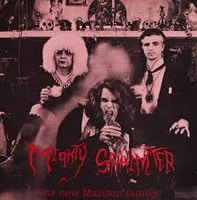
Before he ever wore the blue collar of the rails, he was known as Mr. Wonderful, pounding out rhythms on his drums, belting out vocals, and filling clubs with the raw energy of punk rock. He was a fixture in bands such as the Teds, Jodie Foster’s Army, the Skeletones, and the legendary Mighty Sphincter.
Greg found success with all of his bands in the thriving punk scene of Phoenix in the 80’s and 90’s, but with the Mighty Sphincters, he hit it big. They opened shows for Social Distortion and The Dead Kennedys and have influenced the likes of Alice Cooper, Marilyn Manson, White Zombie and GWAR.
To many outside our union, Greg is known as the guy who stole the show with hard-hitting, relentless rhythms at a concert or a scene-stealing performance on the theater stage. To us at SMART-TD, he’s known simply as the best damn Safety and Legislative Director in rail labor history.
To those who worked closely with him, Greg’s greatest legacy is one of professionalism and humble leadership, an idea that Safety & Legislative Department Chief of Staff Jenny Miller emphasized to SMART News.
“Greg’s humility and kindness stood out in Washington. Even as one of the most influential lobbyists on the Hill, he never considered himself to be above anyone else,” explained Miller, who served in her role during Brother Hynes’ tenure and beyond. “Whether interacting with the lowest member of the office staff or a sitting U.S. Senator, Greg treated both with the same level of respect. That’s a special quality of his that I personally admire and one that will be missed by everyone who’s had the honor of working with him. Even though Greg accomplished more in this role than anyone in the history of SMART-TD, I’ll always think of him first and foremost as my friend.”
An icon in work boots and windbreakers
Brother Hynes’ unconventional approach has made him unforgettable. Take, for example, the October 2024 TD Board of Directors meeting in Houston, Texas. Officers were asked to wear sports coats in a rare dress code moment for SMART-TD. Hynes, a proud son of Arizona, walked in confidently wearing a Phoenix Suns windbreaker. When questioned on it, his answer was as classic as it was logical: “I don’t understand the problem. This is a jacket, and basketball is a sport.”
That’s Greg in a nutshell: clever, principled and impossible to pigeonhole.
A legacy that will echo for generations
As he stepped into retirement, SMART-TD saluted Greg Hynes for a career of relentless advocacy, fearless leadership and boundless originality. He reimagined what this union could be and then worked hard enough to make it real. His humor, drive and sincerity made him not only a powerful advocate but a beloved brother to us all.
As President Jeremy Ferguson put it, “Greg Hynes accomplished what few have done in our union’s history. He secured landmark legislative victories and set a new standard for rail and transit safety. His work has directly improved the lives of our members and their families for generations to come. Two things are certain. Greg will absolutely be missed around here, and he will never be forgotten in this union or anywhere else he goes.”
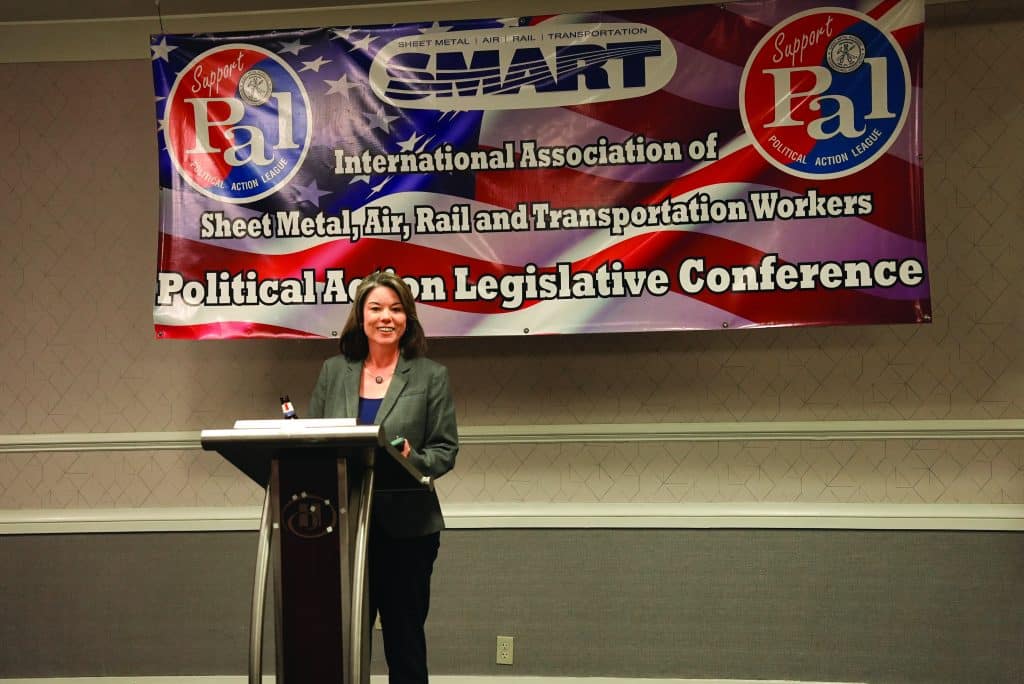
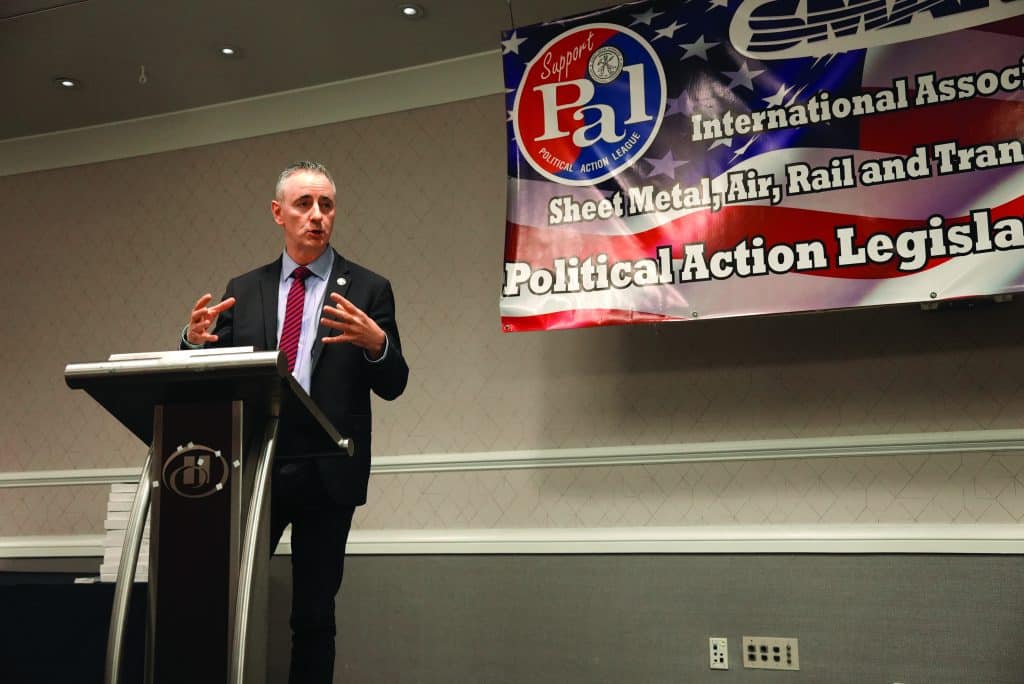
During the 2025 North America’s Building Trades Unions (NABTU) Legislative Conference, SMART officers and IA staff gathered for a reception to honor the local unions who donated the most, per capita, to the SMART Political Action League (PAL) in 2024, as well as hear from congressional allies Angie Craig and Brian Fitzpatrick. Rep. Craig, a longtime ally of SMART members in Minnesota, illustrated the impact collective bargaining made on her and her family, as well as her commitment to apprenticeship programs.
“The fight you’re putting up to make sure your members have jobs, have work, is incredible,” she said.
Rep. Fitzpatrick is a longtime pro-labor Republican who supports legislation like the PRO Act, the National Apprenticeship Act and has called on the president to rescind executive orders attacking collective bargaining. Fitzpatrick thanked SMART for our union’s support of pro-union candidates across party lines, and promised to keep fighting for our priorities.
The top 31 local unions in PAL donations, per member, in 2024:
Local 137 (New York, N.Y.)
Local 66 (Seattle, Wash.)
Local 71 (Buffalo, N.Y.)
Local 265 (DuPage County, Ill.)
Local 293 (Honolulu, Hawaii)
Local 112 (Elmira, N.Y.)
Local 17 (Eastern Mass.)
Local 25 (Northern N.J.)
Local 22 (Union, Morris, Somerset, Sussex Counties, N.J.)
Local 40 (Hartford, Conn.)
Local 36 (St. Louis, Mo.)
Local 27 (South N.J.)
Local 435 (Jacksonville, Fla.)
Local 206 (San Diego, Calif.)
Local 49 (Albuquerque, N.M.)
Local 399 (Charleston, S.C.)
Local 80 (Detroit, Mich.)
Local 88 (Las Vegas, Nev.)
Local 256 (Chicago, Ill.)
Local 44 (Northeastern Pa.)
Local 20 (Indianapolis, Ind.)
Local 33 (Northern Ohio)
Local 63 (Western Mass.)
Local 218 (Springfield, Ill.)
Local 105 (Los Angeles, Calif.)
Local 104 (San Francisco, Calif.)
Local 38 (Westchester and Rockland Counties, N.Y.)
Local 12 (Southwestern Pa.)
Local 15 (Central Fla.)
441 (Mobile, Ala.)
Local 7 (Lansing, Mich.)
Pictures of the top 31 locals (who were present at the reception) can be viewed and downloaded here.
After decades of service to International staff, elected leadership and SMART members, Kathleen Griffith, executive assistant to the general secretary-treasurer, retired in spring 2025.
Kathleen Griffith, second from left, pictured during GST John Daniel’s swearing-in ceremony
Griffith started her career with SMART, at that time the Sheet Metal Workers’ International Association, in 1987, with the title of secretary I in the bargaining unit. Over the years, she became secretary III, IV then V, and then was promoted to staff — secretary to Mary Lou Jackson, office manager, in 1989.
In 1993, she became executive assistant to the GST, a position she held for more than 30 years. Griffith served under General Secretary-Treasurers Larry Cassidy, Michael Sullivan, Ted Zolotopolski, Thomas Kelly, Joseph Nigro, Joseph Sellers, Jr., Joseph Powell and John Daniel — demonstrating the utmost professionalism, knowledge and expertise at every step of the way.
SMART staff, leaders and members benefited from Griffith’s work for decades. Thank you for your years of service, Kathleen!
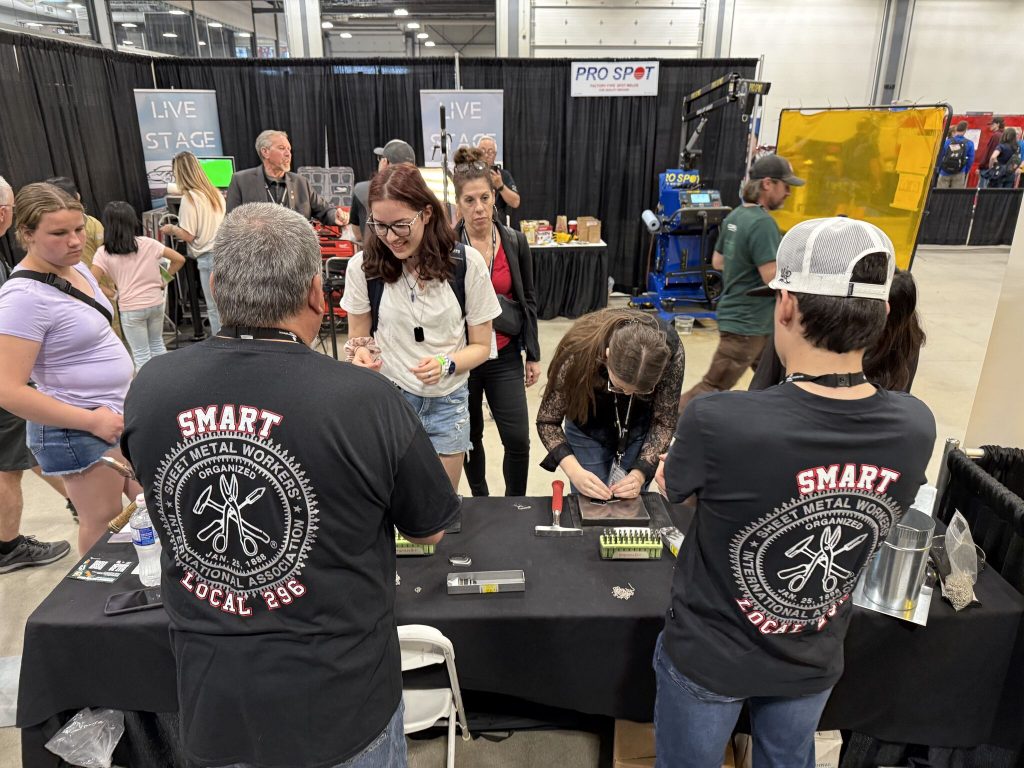
SMART Canada reps were proud to attend the Skills Canada National Competition in spring 2025, showcasing the top student and apprentice talent across the country. Skills Canada inspires youth to explore careers in the skilled trades through hands-on experiences and strong industry connections.
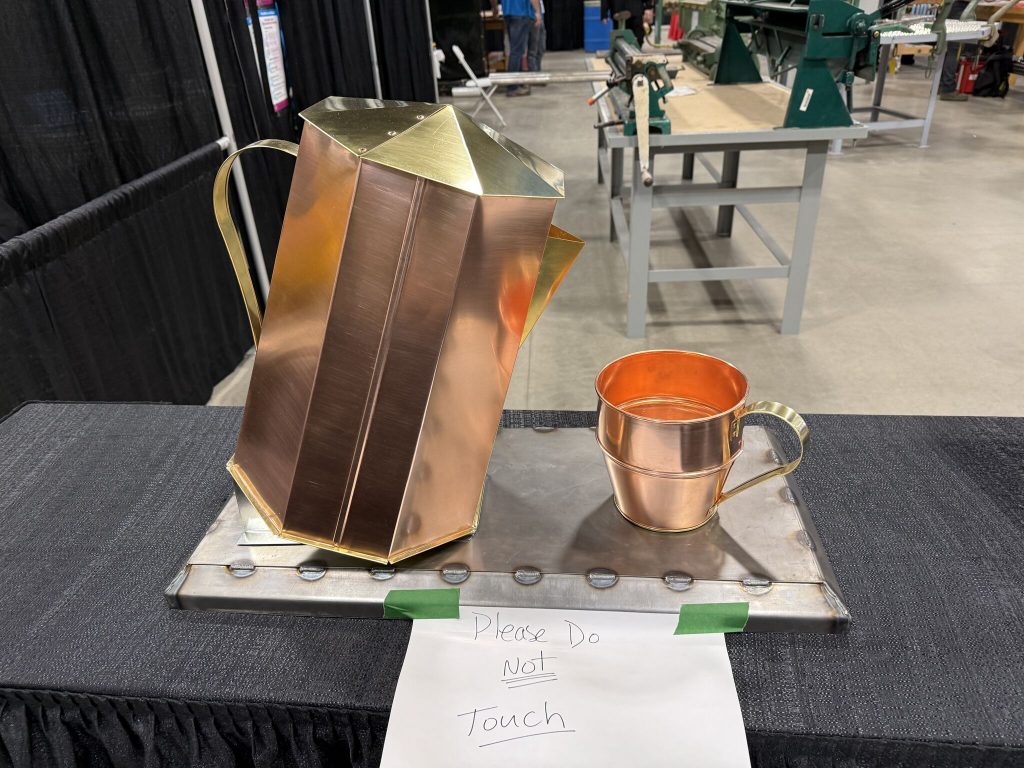
The SMART sheet metal project, a replica of the world’s largest coffee pot, was a fan favourite and showcased the precision, talent and pride that go into the sheet metal trade every day. SMART brothers Mackenzie (Local 409, Halifax) and Raine (Local 296, Saskatchewan) competed in the competitions — a true testament to the next generation of talent coming up through the ranks.
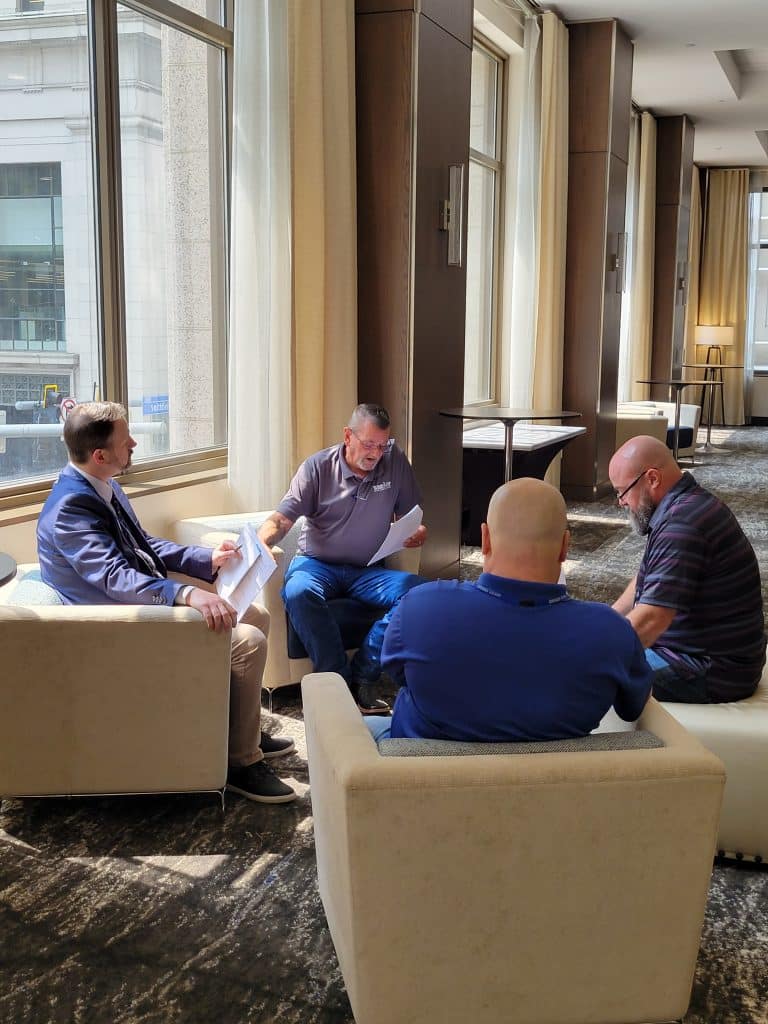
SMART union leaders often need to communicate important information to a wide variety of people — politicians, business owners, fellow workers and reporters, to name a few — when fighting to better the lives of SMART members. That’s why the SMART Education Department held its Effective Communication II class in Pittsburgh, Pa., during the week of June 3, 2025, bringing together participants from across North America to enhance their skill sets.
The class focused on improving communication skills by dissecting branding and messaging techniques, practicing lobbying tactics, creating pitches for news stories, framing and reframing talking points, and making spontaneous arguments through debate. On each of the three days of the class, participants honed their lobbying skills with exercises that asked attendees to role play as random organizations that sometimes challenged their beliefs, helping local leaders understand the other side of the argument. Groups were mixed for every exercise, and a point system was in place.
“Congratulations to Christina Bayaniyan (first place) and Jon Davis (second place) for being recognized by their peers as the top two participants in the class!” said SMART Director of Education Eli Baccus.
New policies around federal funding are hitting home for sheet metal workers in San Diego, where cuts to funding from the National Institutes of Health led to the pausing of two huge construction projects and dozens of sheet metal workers losing out on pending jobs, according to local officers. With the funding cuts hitting right when other projects were winding down, Local 206 members are experiencing high unemployment numbers for the first time in years.
“It was like a perfect storm. We had some of the biggest jobs we’ve ever had in San Diego: the airport expansion, the Gaylord Pacific Resort down in Chula Vista, at the bay front, and some other really big pharmaceutical jobs,” said Local 206 Business Manager Dave Gauthier. “So a lot of that was trickling down and slowing down, and then with the NIH funding cutting, we lost, on just two jobs alone, over 100,000 work hours.”
Under President Trump, billions of dollars have been terminated in NIH grants nationwide, including at institutions like University of California San Diego. SMART members may not think of themselves as being affected by the NIH, but that funding is often used for construction that requires sheet metal workers, especially in labs and hospitals. A new lab and a hospital expansion project were the jobs that Local 206 members were slated to take on before the NIH funding cuts hit.
Now, after years of 100% employment, 19% of Local 206 members are out of work.
“Over five years, we haven’t had any mass layoffs. We’ve been organizing like crazy — we’ve grown our membership by close to 30% in the last five years. For a lot of our members who have joined in the last five years, they’ve never seen a layoff. They’ve never received that check,” Gauthier said. “I’d say that the Trump administration and all their funding cuts … is affecting our members.”
“I think our members that are now on the out of work list for the first time, or the first time in a long time, are starting to realize the affect that this administration is having even on a construction worker here in San Diego that’s trying to feed his or her family,” he added.
The negative impacts of federal policies show the importance of local politics, according to Local 206 Business Representative Dom Luyo. Over the years, the local has worked tirelessly to secure project labor agreements with cities and school districts throughout San Diego County. This has put union sheet metal workers on an enormous range of jobs, and it offers a road map for Local 206 moving forward. Even as work slows — whether resulting from federal funding freezes, shifting tariff policies that spook some investors and developers, or other factors — Luyo encouraged fellow SMART members unionwide to build relationships with pro-labor candidates at the local level.
“Getting local politicians on your side will help regulate local rules for your membership,” he said. “I think we’ve done a great job doing that collectively, not just the sheet metal workers but with all the other building trades unions together: working to get the right politicians in place to help us secure more work from more labor-friendly candidates.”