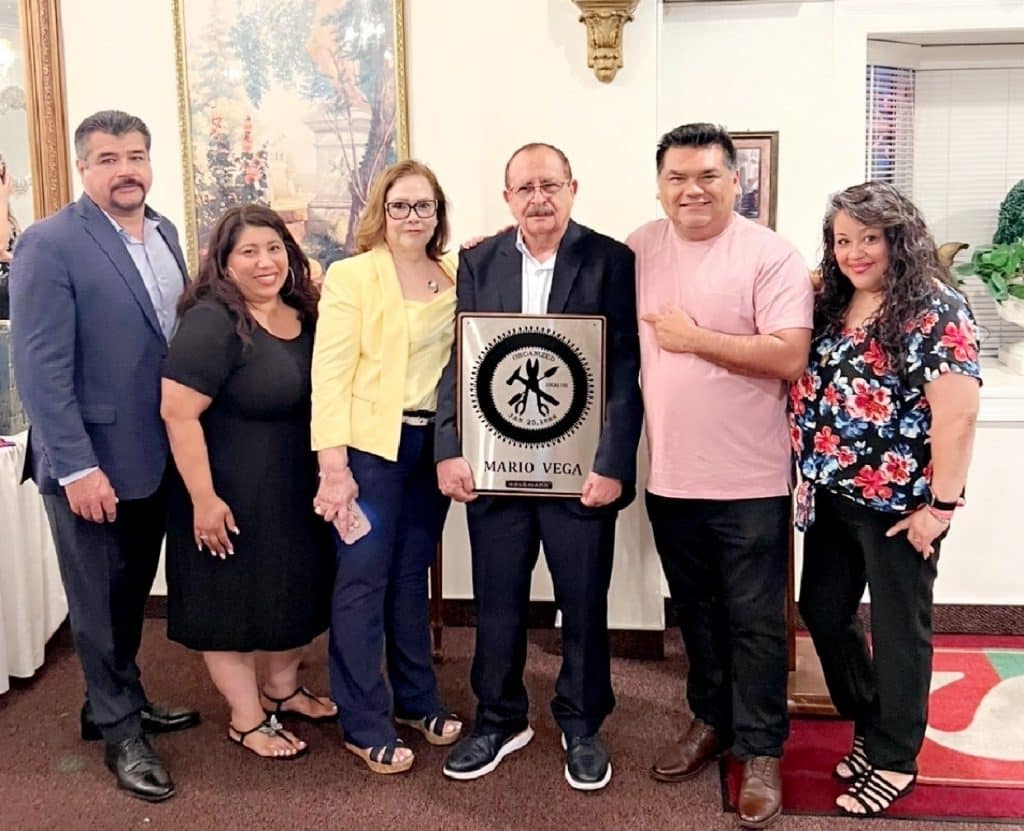
In the summer of 2025, SMART Local 170 (Pico Rivera, California) recognized and celebrated the incredible career and lasting impact of Mario A. Vega, who retired after 42 years of dedication to SMART as a member, leader and strong advocate for the unionized production and manufacturing industry.
Left to right: SMART Regional Organizing Director Manuel Gonzalez, Local 170 Dues Administrator Vanessa Medina, Maria Vega, retired Local 170 Business Manager Mario Vega, Local 170 Business Manager Roberto Torres-Muniz and Gloria Rodelo, Local 170 office manager
Brother Vega joined Local 170 in 1983. Two years later, he was appointed a shop steward at Simpson Strong Tie. His commitment soon earned him the trust of the membership, which elected him, in 1990, to both the Local 170 Executive Board and as a trustee of the Local 170 Group Insurance Benefits Trust.
On April 1, 2015, Vega became a Local 170 business representative, and after two years, he was elected to serve as the local’s business manager and financial secretary-treasurer. From then until his retirement, Brother Vega devoted himself to organizing, advocating and empowering his union brothers and sisters as business manager. His leadership helped secure fair wages, strong benefits and dignity on the job for countless members.
Throughout his career, Vega has been more than a leader in our union. He has been a mentor, a friend and a source of inspiration. His contributions have shaped not only our organization but also the lives of countless colleagues and workers in the production industry.
“As Mario moves into this well-earned chapter of his life, we want to thank him for all he has given and wish him and his wife, Maria, health, joy, relaxation and new adventures in retirement,” the local wrote. “Congratulations, Mario! You have truly made the difference at SMART Local 170 — and you will be deeply missed. On behalf of the entire local, we sincerely congratulate you on your retirement. Your contributions have been invaluable, and your legacy will endure in the history of our organization.”
Members of Local 296 in Saskatchewan are in a period of stability and opportunity, supported by steady construction activity across the province and a significant milestone recently achieved for the trade.
Contractors are reporting a mix of commercial, industrial and maintenance work, creating consistent employment opportunities and allowing companies to plan years ahead. With projects already being bid on for 2027 and beyond, Business Manager TJ King says the outlook is strong.
“We’re not just in a good spot, we are in a great spot with steady work,” said King. “We aren’t in a boom-or-bust mentality, and stability is what matters most for our members.”
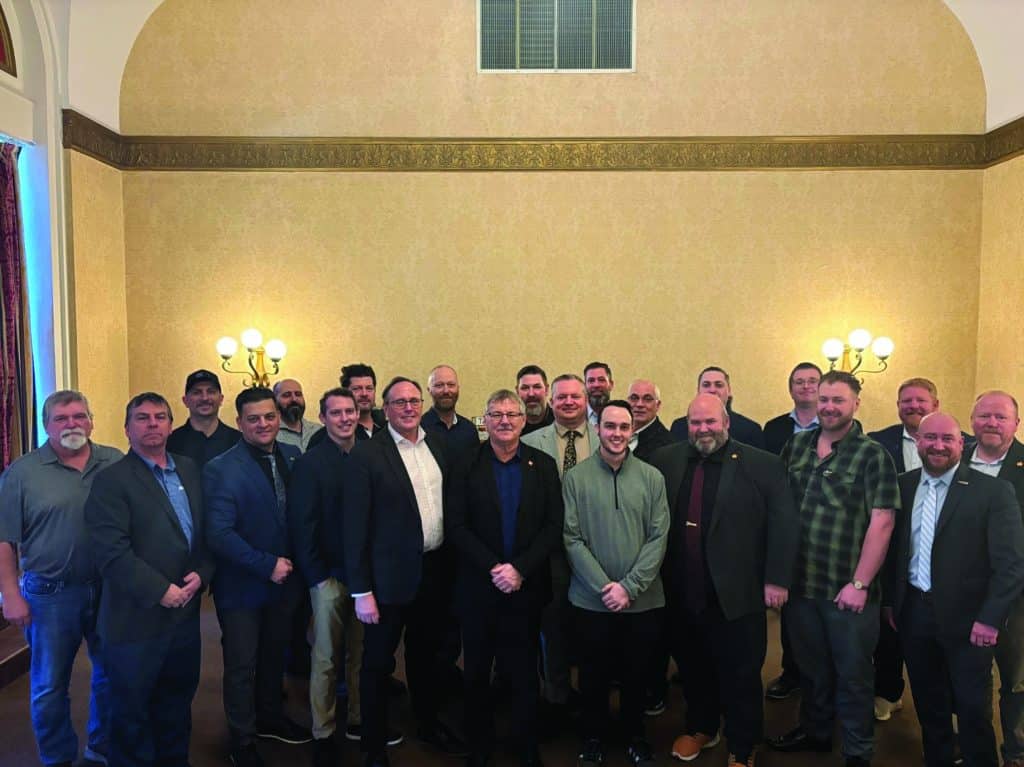
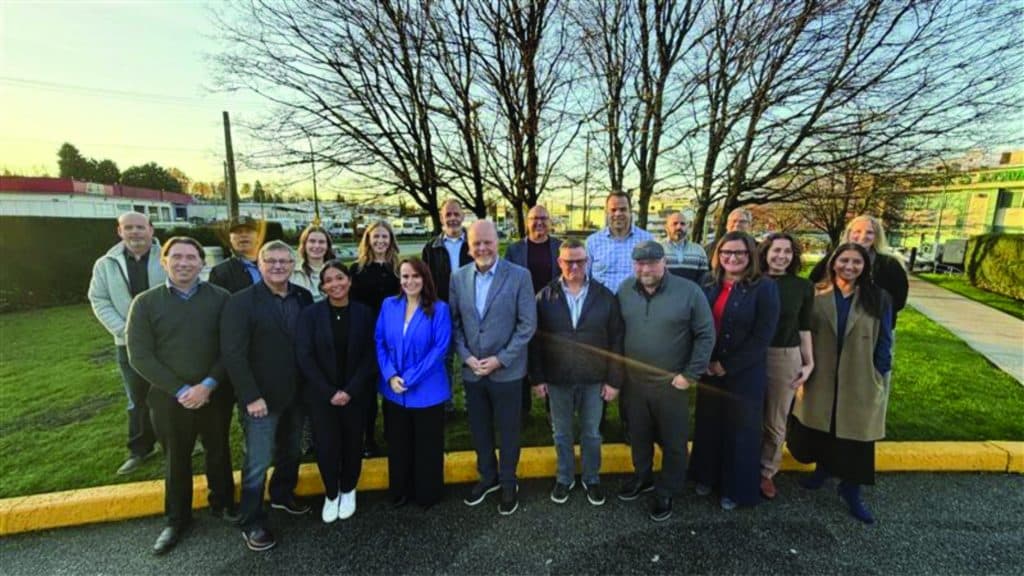
Director of Canadian Affairs Jack Wall with members of the Western Conference, including the Conference Recording Secretary and Local 296 Business Manager TJ King
Megaprojects across the province are driving demand for Local 296’s skilled workforce. Among them is the $9 billion Phase 2 expansion of the BHP Jansen Potash Mine, along with new schools, power plants, hospitals, uranium mining developments and long-term care homes. Upcoming projects in Saskatchewan’s nuclear sector are also expected to generate work well into the next decade.
With opportunity comes the need for preparation. King says members who take the initiative to pursue additional training and certifications will be best positioned to take advantage of the work ahead.
“There are a lot of opportunities here,” King said. “Preparation is what separates those who will get the opportunities, those willing to go out, obtain the required certifications and keep themselves at the highest level of skill.”
The local is also focused on strengthening its membership through organizing efforts, new initiatives and outreach to bring more workers into the trade. King says that growth must be inclusive.
“If we want women to stay and advance in our trade, we need spaces where their voices are heard and supported,” he said. For that reason, the local is starting a women’s committee to help ensure women have a dedicated forum to connect, raise concerns and support one another in the trade.
Another major milestone for Saskatchewan’s sheet metal workers is the official designation of Architectural Sheet Metal (ASM) as a recognized sub-trade, a development more than 14 years in the making. Previously performed without a formal training pathway or certification, this work now has a clear and recognized structure along with a trade designation.
This change will provide roughly 200 members with formal recognition for the skills they’ve been practicing and the opportunity to obtain official certification in their field.
For King, the achievement reflects the local’s commitment to strengthening the trade while preparing members for the future.
“We are focused on stability, opportunities and growth for tomorrow, in an effort to set up our members for long, successful careers.”
Local 9 (Colorado) member Jacob Stone recently completed his apprenticeship capstone assignment in impressive fashion, crafting a custom copper lantern featuring acid etching and intricate design work.
“The craftsmanship speaks for itself,” Local 9 wrote. “Beyond the shop, Jacob also serves as a sergeant in the U.S. Army Reserves, balancing military service with apprenticeship training — an incredible commitment that deserves recognition.”
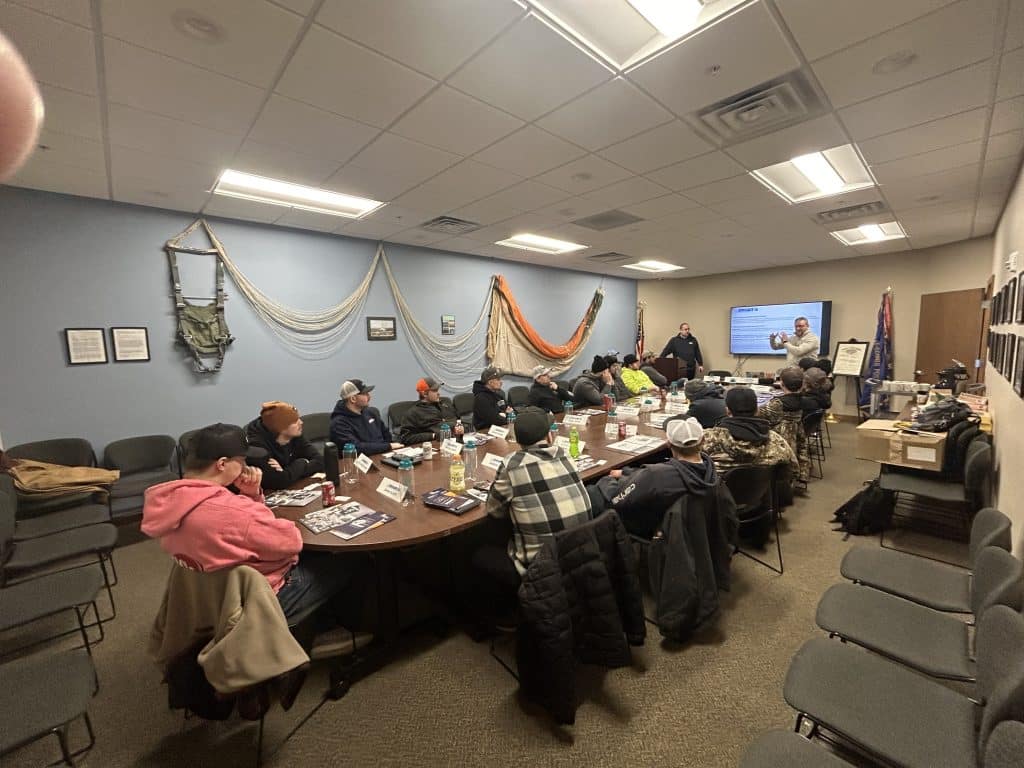
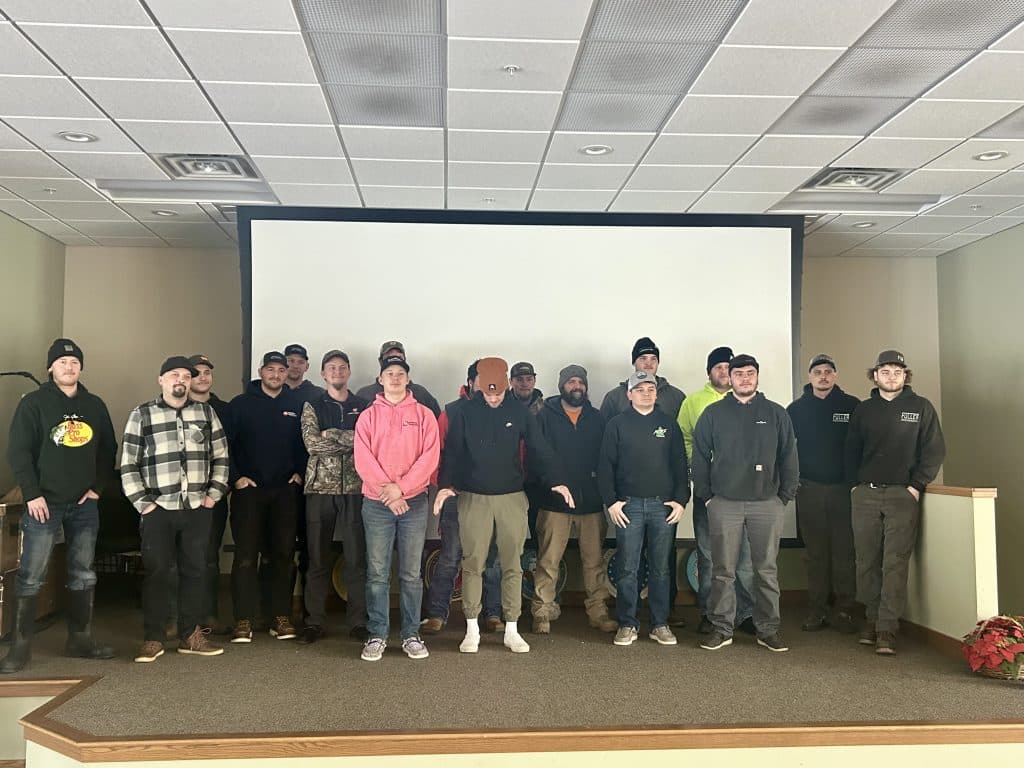
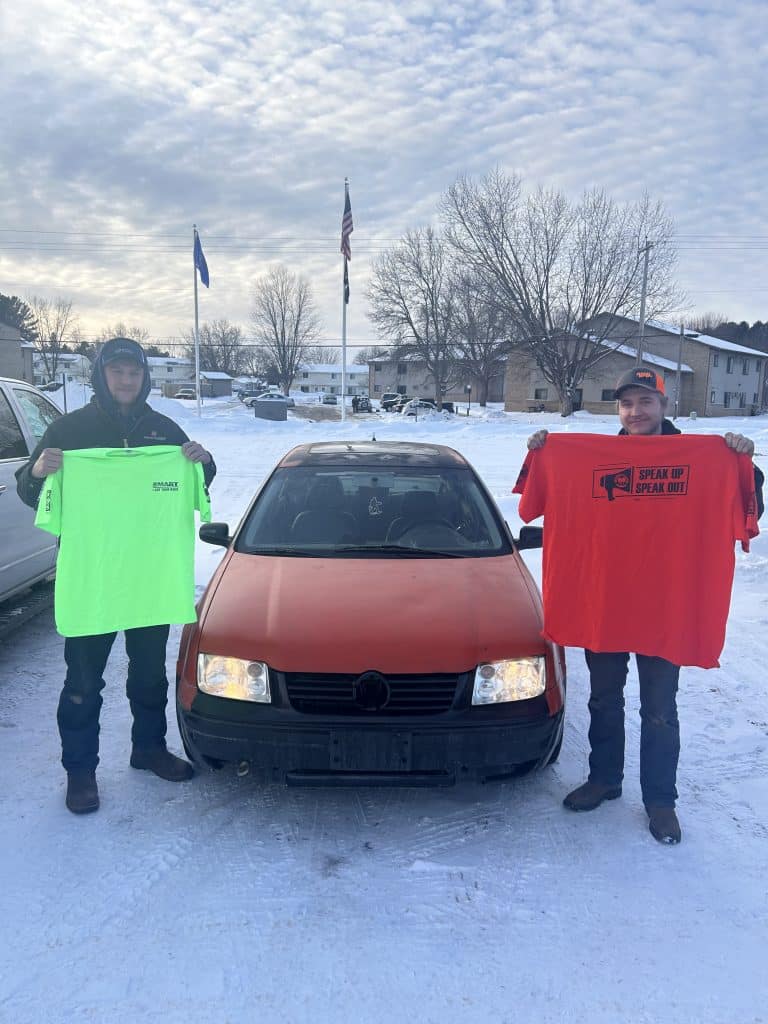
Second-, third- and fourth-year apprentices braved the Wisconsin winter cold to attend Local 18’s Wausau-area Construction Organizing Membership Education Training (COMET) classes in January.
Local 18’s COMET class aims to get members involved early in their careers, teaching them about the labor movement, the benefits available to them through their union and their collectively bargained contracts, and much more. As former Local 18 Organizing Director Hallie Jennerman wrote in 2024, the local’s COMET curriculum is intended “to forge growth in our membership through organizing, growth in our markets, growth in our benefits through additional hours worked, and to give those behind us a future by creating engaged, active members who will carry our union forward and organize all unrepresented sheet metal workers.”
In January 2026, Local 18 apprentices learned together and strengthened their bonds of union solidarity — despite the -10 degree temperature on the day of the class.
I’m writing as we approach the end of the year — and everything that comes with it. In the United States, we recently celebrated Thanksgiving, along with Veterans Day and, in Canada, Remembrance Day in early November. By the time you read this, members across our union will have celebrated various holiday traditions — Christmas, Hanukkah, New Year’s Eve and many others — and will be looking forward as we begin 2026.
Christmas, Hanukkah, Kwanzaa, Veterans Day, Remembrance Day — all these holidays mean different things for different people. But to me, they have powerful things in common.
For one, they all carry a message of gratitude. Veterans Day and Remembrance Day remind us to be thankful for the selflessness, the service and the sacrifice of military heroes in the United States and Canada; the people who fought, in the name of something bigger than themselves, to bring us the freedoms we enjoy today. And whatever faith you hold or tradition you recognize, holidays like Thanksgiving, Christmas and Hanukkah also remind us to be grateful: for our communities and for each other.
They also remind us to be thankful for our union. For so many of us, our SMART membership is the reason we have the ability to give gifts to family, spend time with loved ones, gather with those we haven’t seen in a while. Those things weren’t given to us. They were earned. They were won by us, working Americans and Canadians, when we came together and used our collective voice to make change.
And that is why, as we take on the first weeks and months of 2026, I’m also filled with determination.
There’s no point in sugarcoating it, brothers and sisters: 2025 was tough. The cost of living has continued to climb. Trade policies at the government level impacted members in both of our nations. In the U.S., legislation passed that will threaten our members’ jobs — in fact, there has already been a negative impact — and will raise the costs of our health care plans. The rich continued to get richer, all while we fight so the people who power North America get the pay and respect they deserve.
But that’s the thing about our union. We are defined by our solidarity. We fight collectively. We bargain as one. We stand together as hundreds of thousands of working people across our two nations, ready to defend each other and fight for our families. As I look back on 2025 — at the way we worked tirelessly, even in the face of challenges, to win better contracts, safety on the job, and good lives for our families — I know our future is brighter than the past.
Lastly, I want to make sure to note something. The holiday season isn’t always the easiest, even when our societies make it seem like it’s simply a time for joy and celebration. In that spirit, I hope all of you know that your union, your brothers and sisters, are here for you. We have support systems and resources available to members, from the SMOHIT Helpline to Union EAP. We have your back.
When we stand with one another, we know what we can achieve. Let’s continue to do exactly that in the year ahead.
As we start another year, it’s worth reflecting on where we’ve been — and where we want to go.
Throughout 2025, SMART members won victories that changed lives. Our own lives, the lives of our families and the lives of people we most likely will not ever meet. We organized, signing up new members in production shops in right-to-work states, recruiting sheet metal apprentices and journeyworkers all over the United States and Canada, bringing in new properties on the railroad and winning big victories at municipal bus carriers. We bargained, coming together to collectively secure contracts — across the sheet metal and transportation industries — that provide the pay, benefits and dignity that every single one of us deserves. We mobilized, whether we were helping build better communities through SMART Army service projects or packing city hall buildings to secure project labor agreements and union jobs.
That is what we do, sisters and brothers. We are sheet metal workers, sign workers, roofers, railroaders, bus and transit operators, and production employees. United by our common cause and our values, we achieve things together that we could never do alone.
And yet, as General President Coleman wrote, last year was still a tough one. We faced attacks from people who are wealthy, powerful and determined to hold on to that power, even if it means making life harder for working families.
The truth is, this isn’t new. Anti-worker forces have been attacking the labor movement for decades. They did it through “trickle-down” economic policies in the 1980s that cut taxes for the wealthy. They did it through deals like the North American Free Trade Agreement, which led to outsourcing and lost jobs for working people in both of our nations. And they kept it up this past year, in the U.S. especially: canceling funding for construction jobs, including when the government was shut down, and passing legislation that will raise costs and lead to lost work hours for SMART members.
With all those challenges, it can be easy to feel like the odds are against us. They have money, they have influence, and they have allies in government who will prioritize their interests over policies that benefit working families. But there’s a reason these forces are so determined to pass right-to-work laws, undermine collective bargaining and try to weaken our movement. It’s because they know our strength.
There’s a saying: “Organized people beat organized money.” SMART members prove that every single day. When we pass laws that extend prevailing wages to offsite fabrication, like we did in Connecticut, New Mexico and other states. When we get project labor agreements passed in cities and counties across the country. When we win state railroad safety policies in states like Colorado, or when we secure bipartisan support for our issues. All of that shows that when we stand together, we have real power and strength — even when we are up against the richest and most powerful people in the world.
The start of a new year gives us a chance to chart where we go from here. Over the next 12 months, let’s stand together, have each other’s backs and secure the future for ourselves, our families and our union.
It’s a simple fact: Unions provide stability for workers in an economic environment where that concept is rare.
That’s true across many different industries but especially in the technology sector, where workers are seen as expendable and burnout (both physical and mental) is the norm. This should sound familiar to all of us!
Also normal are mergers and mass layoffs with little thought given to the actual humans who make these companies run.
One of the most well-known mass layoffs in the technology industry happened in 2002. Hewlett-Packard Co. (HP) announced that it would cut thousands of jobs as part of its acquisition of Compaq Computer Corp, a merger that promised to “boost efficiencies” — AKA Precision Scheduled Manufacturing.
In total, more than 17,000 workers lost their jobs and their livelihoods in the blink of an eye.
It was a lose-lose situation: Employees were seen as disposable and put on the chopping block while the merger failed to meet its lofty, promised goals.
Without representation or protections like a union contract (or a Jobs For Life agreement) in place to push back against these massive layoffs and safeguard their interests, these workers were ultimately lost to the footnotes of history.
More than 20 years later, this move has seemingly become second nature.
The unmentioned but common denominator? These are almost always nonunion workers who lack the benefits and job protections that are a well-known hallmark of membership.
Jobs that from the outside might be seen as flashy, cushy or status-bearing usually carry little to no insulation from things like mass layoffs and at-will employment, where you can be fired for any (or no) reason.
That’s where a union and a union contract are game changers.
In September, SMART-TD announced a landmark agreement with Union Pacific that puts a promise in writing: Our members working in train and yardmaster service will have job protection for the length of their careers following the carrier’s merger with Norfolk Southern, subject to the usual requirements for continued employment.
This is an unprecedented guarantee in the history of American railroading.
When the agreement was announced, we didn’t mince words: The biggest railroad and biggest rail union in America were breaking new ground that protects jobs, families and the future of the United States supply chain.
That’s the union difference at work.
Or take our brothers and sisters at the Port Terminal Railroad Association. As SMART News reported in October, a disturbing pattern emerged over the past several years highlighted by ongoing disregard for union agreements, safety obligations and basic respect for the workforce.
We fought for our yardmasters who were being mistreated and sent a clear, unmistakable warning to PTRA management: This behavior will not be tolerated and stops now.
What’s been most notable, however, is the solidarity between crafts on the property. Although represented by several different unions, yardmasters, engineers, conductors and maintenance workers have demonstrated that unity and solidarity are the best protections against intimidation and are proof of what solidarity in action looks like.
Union members are much more difficult to treat as disposable. We fight for our fellow brothers and sisters, because we’re a family. Like all families, unions are far from perfect and not without flaws. But when the going gets tough, we get going.
We stand up and fight for our members to ensure they don’t become another set of statistics in an article about the latest layoff.
We ensure they have a voice at work and are afforded the protections that they’ve earned as union members.
We’ve got their backs — from the day they receive their union card until it’s time to retire.
That’s the value of being union, and being in the SMART-TD family.
In solidarity,
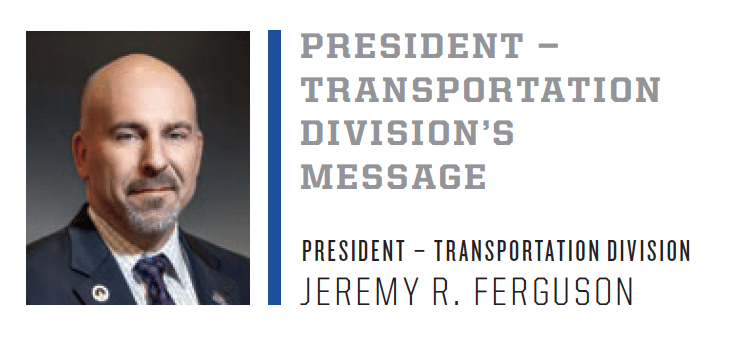
Jeremy R. Ferguson President, Transportation Division
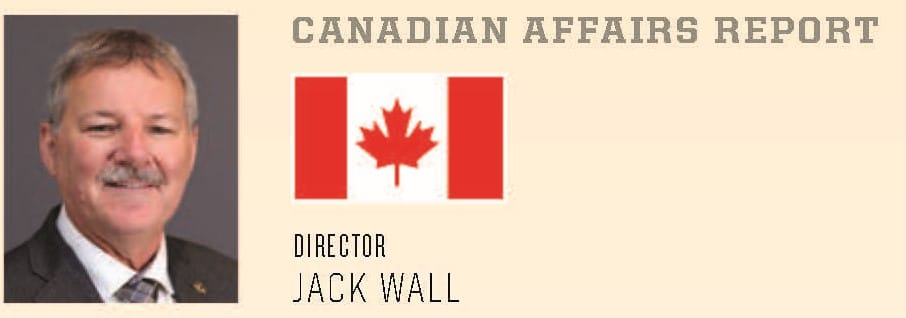
As we begin the new year, there is a lot to be thankful for. Our industry is thriving, our members are supported through existing and newly negotiated collective agreements, and we are preparing to take on an increased number of megaprojects in healthcare, the industrial sector and housing. At the same time, our production units continue to be busy.
We are entering 2026 well-positioned to build on this momentum. Supporting our members and the unionized construction industry more broadly is the 2025 Federal Budget, passed on November 17, that included significant investments in infrastructure, housing and megaprojects across the country.
Some of these major investments include:
$75 million over the next three years to fund the Union Training and Innovation Program.
$51 billion over 10 years through the Build Communities Strong Fund to support provincial and local infrastructure projects.
$115 billion over five years for infrastructure in healthcare, transit and wastewater systems.
$25 billion to accelerate homebuilding and address housing needs across the country.
SMART members have always played a critical role in building community infrastructure that keeps our cities thriving. Looking ahead, we will remain key in delivering transformative megaprojects, with the federal government’s goal of “building an enormous amount of infrastructure at speeds and scales not seen in generations.” SMART members will be on the front lines, shaping Canada’s future while leading the shift toward modern, low-carbon construction.
This is the work our members have excelled in over the centuries. Now, that expertise will be formally recognized through the SMART Green Certificate program, which is currently being developed. This program will reaffirm our members’ knowledge and readiness to contribute to upcoming clean-economy projects. The SMART Green Certificate program is being established in collaboration with Canada’s Building Trades and Skill Plan Canada.
In the new year, SMART will continue working on the development of this program, which will feature sheet metal-specific learning modules tailored to today’s evolving industry and will provide unified, industry-leading green training nationwide. Down the road, this certification will increase employability, support greater mobility between provinces and give our members pride in the environmental leadership that SMART Canada is striving for.
SMART Canada team members join training experts from coast to coast and our Green Future Partnerships collaborators
SMART Canada was proud to host Secretary of State for Labour, Minister Zerucelli, at the Local 47 Training Centre (Ottawa, Ontario) for the re-announcement of the SMART Green Certificate. The visit highlighted how government, industry and unions continue to work together to strengthen our training and support the future of our trades.
We closed 2025 on a high note and look forward to what 2026 will bring as these major infrastructure and training investments begin to take shape. Together, we can build a stronger future for our members, our industry and our country.
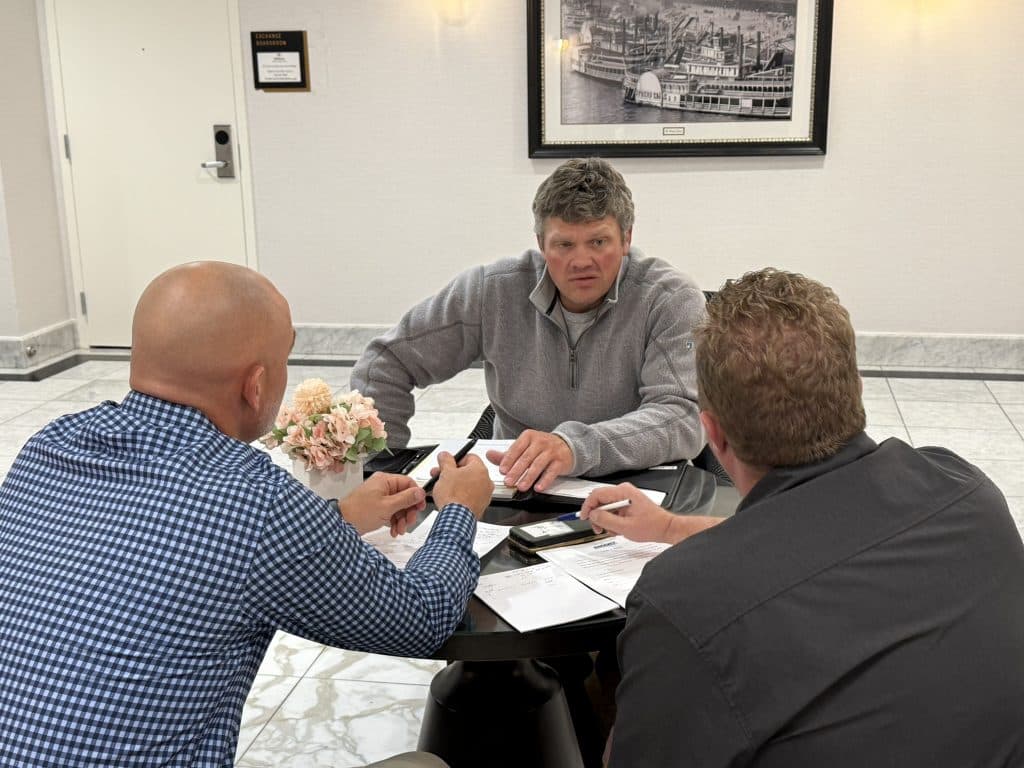
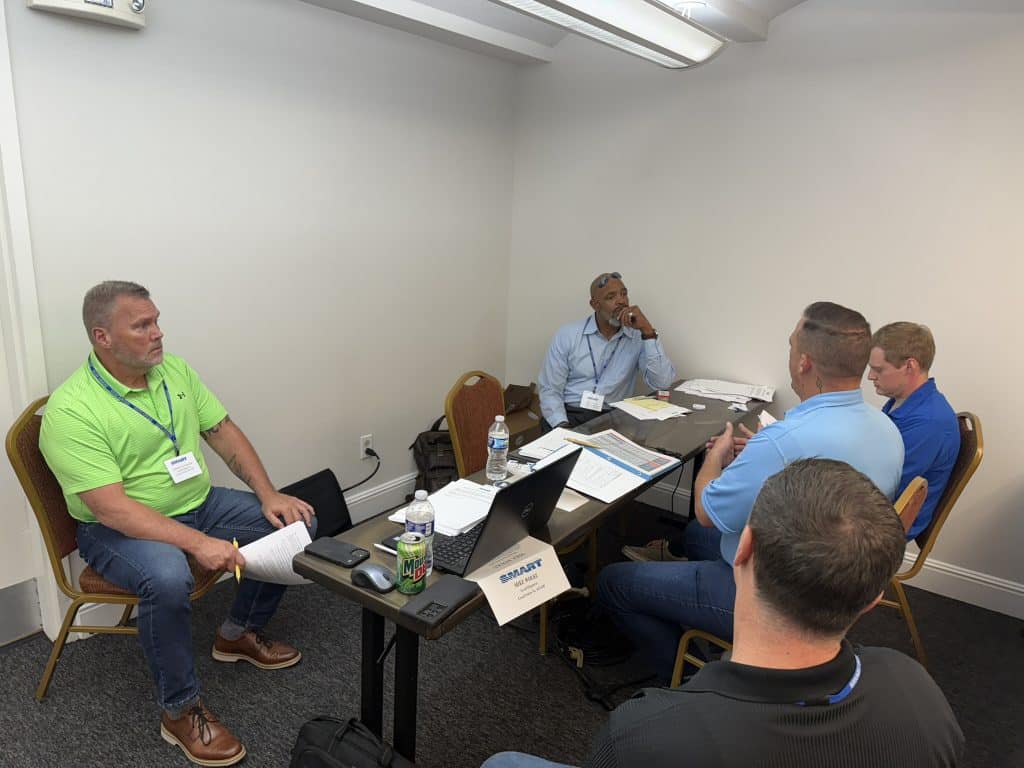
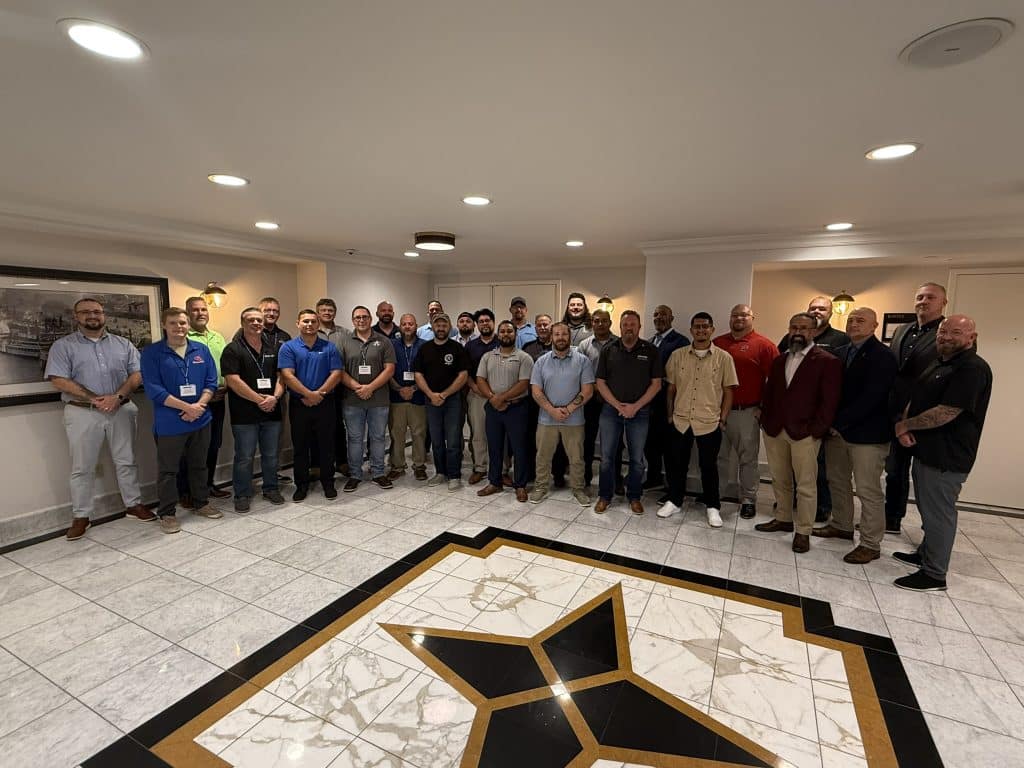
The SMART Education Department, in collaboration with the Organizing Department, held its Organizing III class during the week of October 6–10, 2025, in St. Louis. This redesigned class focused on the “top-down” organizing strategy, with a specific emphasis on developing organizing campaigns targeting nonunion contractors.
Expanding SMART’s signatory contractor base is one of the best methods local unions have to keep members employed. For that reason, it’s more important than ever for organizers to strengthen their ability to identify, build relationships with and ultimately sign new employers.
The primary subject of the October class centered around what contractors need to succeed and how our locals are built to fulfil that primary need: a flexible labor force. Participants delved deep into a contractor’s mindset to understand the challenges of running a construction company, learning how to reframe common employer objections to unionization as benefits for both workers and contractors. Attendees also roleplayed interactions with the gatekeeper, delivered a custom-built elevator pitch and practiced both first meetings and subsequent meetings with the contractors.
Throughout the week, participants learned to find nonunion contractors in their local’s jurisdiction using Standard Industrial Codes (SICs) and turned their lists into maps and routes using Google Maps. There were nearly 20 exercises during the course; after mock exercises, participants debriefed with critical feedback to their peers.
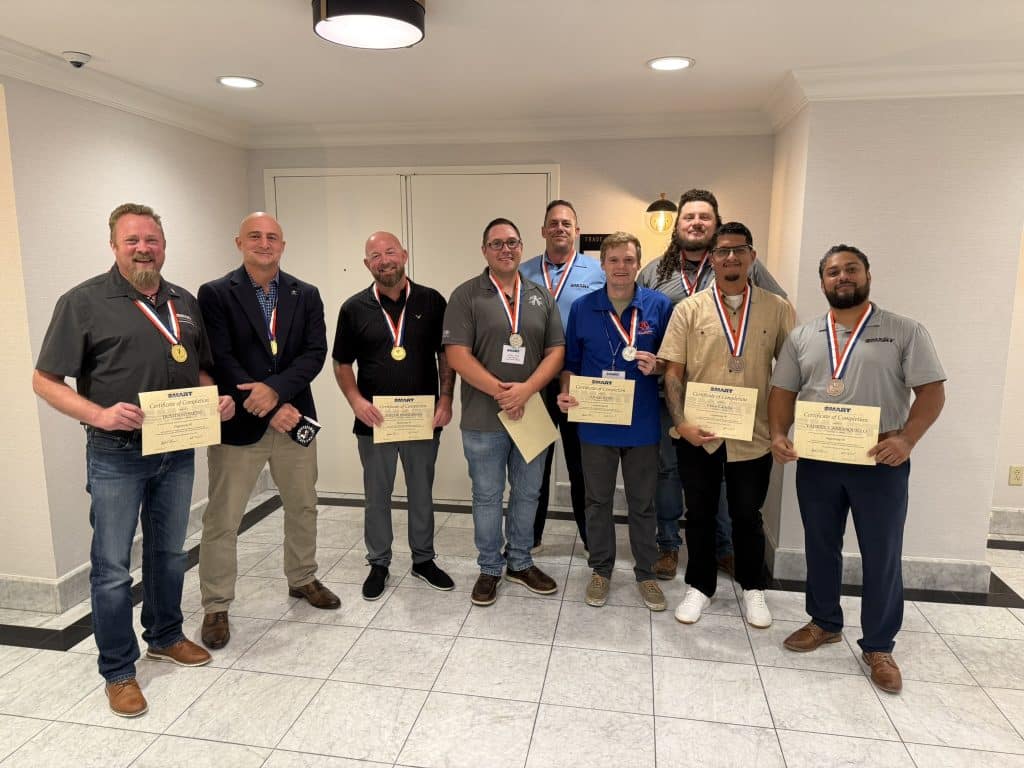
A point system was in place, with organizers grouped into fiction local unions and evaluated by their fellow participants. “Local 111” — Phil Berg (Local 23), Cesar Carrillo (Local 26) and Yadriel Carrasquillo (Local 68) — took third place. “Local 444” — Adam Kerr (Local 71), Doug Meyers (Local 103) and Aaron Leslie (Local 104) — was ranked second place. “Local 333” — Dustin Hysmith (Local 16), Hallie Jennerman (International organizer/Local 18) and Jay Jones (Local 265) — was recognized by peers as the top group in the class.
“Congratulations to Jay Jones, the highest point winner in the top group, for winning the coveted ‘Coffee is for Closers’ coffee cup!” said SMART Director of Education Eli Baccus. “We hope this class spurs participants’ top-down organizing efforts, and that more contractors are brought in for more member jobs.”
In late August, President Trump’s Department of Transportation canceled $679 million in federal funding for 12 offshore wind projects across the country. That included fully taking back hundreds of millions of dollars in grant money for infrastructure work at Humboldt Bay Harbor District in Northern California — immediately throwing Local 104 members’ work opportunities into question, in the short and long term.
“As long as this administration makes decisions that directly impact our members, I’m going to keep calling balls and strikes. This decision is clearly a ball,” said SMART General President Michael Coleman. “For our members in Northern California, this was a once-in-a-lifetime project — one that was going to create dozens of jobs in the short term, and keep employing Local 104 sheet metal workers for the long haul. Taking back that grant money, which was already awarded, just makes zero sense.”
The DOT had originally awarded a $426 million infrastructure grant to the Humboldt Bay Harbor District, allowing the Harbor District and the Building and Construction Trades Council of Humboldt and Del Norte Counties — which includes Local 104 — to agree to the very first project labor agreement in the region. Around 90% of that grant was earmarked for the development of a heavy-lift marine terminal to support offshore wind; money that has since been pulled back, putting construction in jeopardy.
When SMART members hear “offshore wind,” they may not immediately think “sheet metal jobs.” But the fact is, the Humboldt offshore wind development would have turned a brownfield site into a full-blown, brand-new facility, expected to include multiple new buildings. That means sheet metal work: duct fabrication, facility construction and potentially up to dozens of Local 104 members on-site at various project phases. And that was just the immediate opportunity. The offshore wind company, RWE, had signed a memorandum of understanding (MOU) that committed to using union labor for long-term operations and maintenance of the facility, guaranteeing work for years to come.
“In short, this project represented a generational opportunity for our members in an area that doesn’t see many large infrastructure projects,” said Local 104 State Legislative Director Vince Sugrue. “The cuts are a devastating blow to the immediate construction jobs that would have put our members to work, but also to the long-term union maintenance and operations jobs that were guaranteed under the MOU.”
The Humboldt Bay Harbor District is just one example of many jeopardized jobs across the country. In Massachusetts, the DOT canceled $34 million in federal funding for the Salem Wind Port Project, where work had already started. The project was expected to create 800 construction jobs over the next couple years.
“Our government leaders have the power to do things that directly benefit our members. Federal funding for these port projects is a great example of that,” General President Coleman said. “Taking that funding away, and threatening our members’ jobs by doing so, is just not the right thing to do for members, our families or our country.”
Additional projects impacted:
Withdrawn funding:
Sparrows Point Steel Marshalling Port Project (Maryland)
Bridgeport Port Authority Operations and Maintenance Wind Port Project (Connecticut)
Wind Port at Paulsboro (New Jersey)
Arthur Kill Terminal (Staten Island, New York)
Gateway Upgrades for Access, Resiliency & Development at the Port of Davisville Project (Rhode Island)