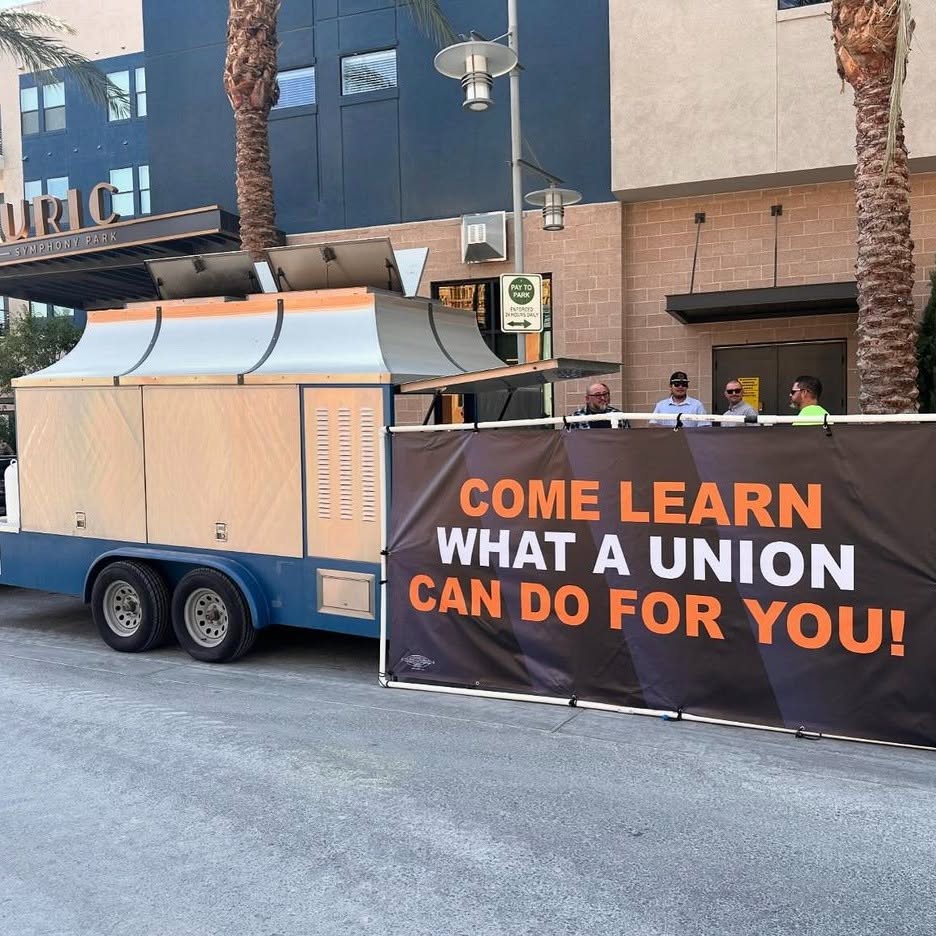
Throughout the state of Nevada, SMART Local 88 (Las Vegas) is organizing to grow its membership, strengthen union contractors and create more opportunities for members. That organizing has paid off, with the local recruiting sheet metal workers from nonunion competitors to meet ongoing workforce demands in Northern Nevada’s Reno area, home of SMART Local 26.
When SMART local unions work to bring new members into the unionized sheet metal trade, it isn’t just about growing the strength of our union. It’s about making life better for those workers and their families — and it helps current members by growing the strength of unionized contractors.
Local 88, under Business Manager Geremiah Robnett’s leadership, has demonstrated that union difference clearly. In the last two months, the local’s Organizing Department of Alfonso Lopez and Robert Diaz has signed up 15 new journeypersons from larger nonunion contractors in the region. These are foremen and workers that the local has known for years, maintaining constant contact through jobsite visits and referrals.
These newly organized Local 88 members are increasing their incomes in the range of $8-12 per hour solely on base hourly wages, with another $30 an hour in benefits that include Health & Welfare for their entire families, plus Tri-State and International pension plans.
Organizing new members to take on work in the Reno area — specifically from contractors who drive down wages in Southern Nevada — benefits the workforce for the entire state. It also helps level the playing field between union contractors and the bad-faith employers who consistently drive down area pay and working standards.
The percentage of work that union sheet metal workers and contractors perform in a given region is called “market share.” When a local union’s market share is high, that means members have more work opportunities. When a local’s market share is threatened, members could face the possibility of reduced jobs.
That’s why SMART locals organize constantly to maintain and grow their market share. A recent example from Nevada demonstrates the impact.
A threat to Local 26 members
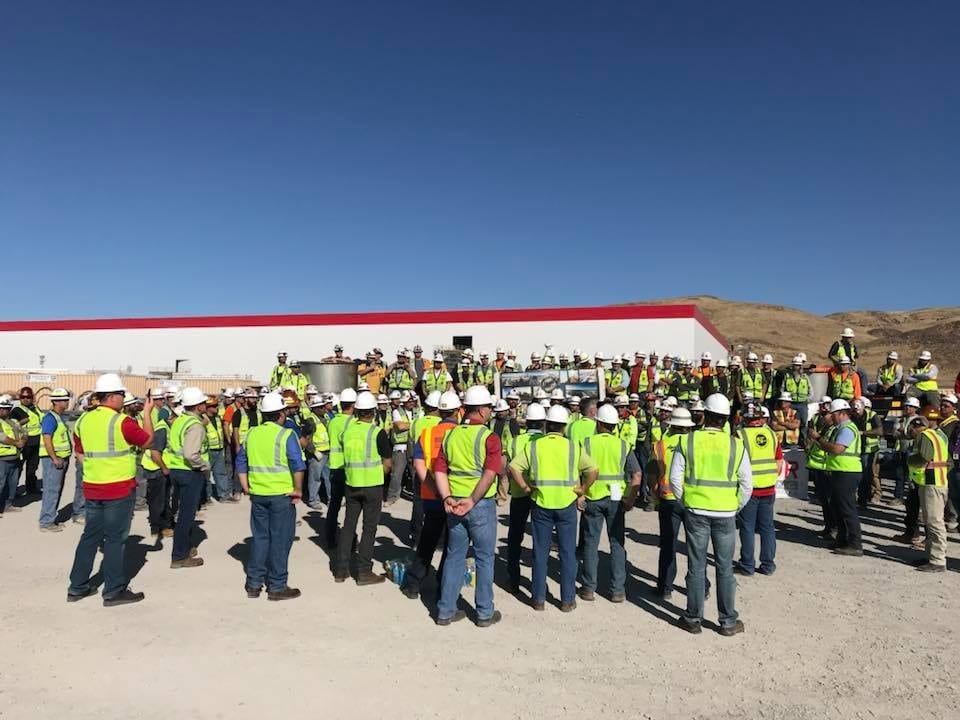
Since construction began at Tesla Gigafactory 1 in Reno in 2014, SMART Local 26 union contractors have successfully performed almost all mechanical sheet metal work on the project. The scale of the facility required workforce support from SMART members across the country, with sheet metal workers traveling from nearly every region to assist Local 26 in meeting the workforce demands of one of the largest industrial projects in the United States.
Members at the Gigafactory in 2017
Toward the end of 2025, rumors began circulating that Tesla had started self-performing a significant portion of the sheet metal work outside of the main Gigafactory building. Initially, Local 26 was unable to verify the reports until a former Tesla employee visited the union hall seeking employment opportunities.
During discussions with the worker, organizers learned that Tesla was performing large-scale ductwork installations using more than 60 workers from across the country — workers who were not SMART members. The worker also identified the project location and explained that Tesla was staffing the operation through a temporary labor provider, Superior Skilled Trades (SST), based out of Florida.
Further investigation revealed that SST was recruiting heavily from Southern states and other regions with lower wage rates, making Tesla’s compensation package highly attractive to workers willing to travel. SST’s focus was on providing labor quantity rather than skilled sheet metal experience, resulting in many workers possessing only limited sheet metal backgrounds.
Tesla’s use of out-of-state workers posed a clear danger to SMART members, taking away work opportunities in the region. Recognizing this threat, Local 26’s Organizing Department quickly mobilized.
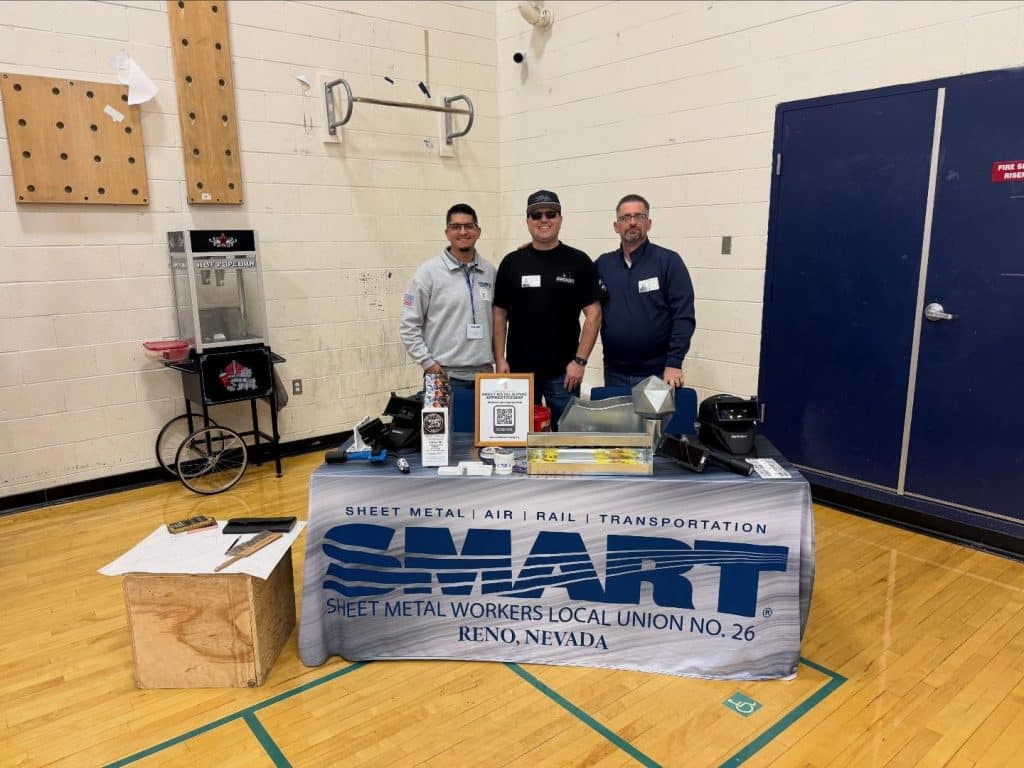
From left to right: Organizer Cesar Carrillo, newly elected Business Manager Sean O’Keefe and newly elected Business Representative Shane Henderson
An opportunity to build union strength
Organizers began building relationships with workers on the project and developed an extensive list of potential members from the Tesla workforce. Through consistent jobsite visits, conversations and follow-up efforts, organizers identified qualified workers who could strengthen the local union while also reducing Tesla’s ability to self-perform work.
Over the following months, Local 26 successfully recruited more than 30 workers from the project, including 18 journeypersons, 7 forepersons and 5 apprentices.
The successful recruitment of these workers was an immediate help to Local 26, which was facing a period of unprecedented workforce demand. The additional workers helped the local satisfy workforce requests while simultaneously creating opportunities for union contractors to reclaim portions of the work that Tesla had originally planned to self-perform.
As of the end of the second quarter of 2026, Tesla continues to self-perform some sheet metal work; however, the scale of those operations has been significantly reduced compared to the previous year. Through aggressive organizing and workforce recruitment, Local 26’s Organizing Department successfully mitigated a major threat to members’ work opportunities while strengthening the local’s membership for future growth.
What began as a challenge to members’ market share ultimately became one of the local’s most successful recruitment efforts in recent years. Great work, Local 26!
SMART apprenticeship programs are a core part of our union’s foundation. Across North America, local apprenticeships help ensure the future of our union. They change lives, helping working people enter fulfilling careers in the sheet metal industry. And on top of that, they benefit communities across the United States and Canada, setting the standard for craftsmanship, skill and training.
For all those reasons, it is vital that we always work to uphold the high-quality apprenticeship standards that define our union.
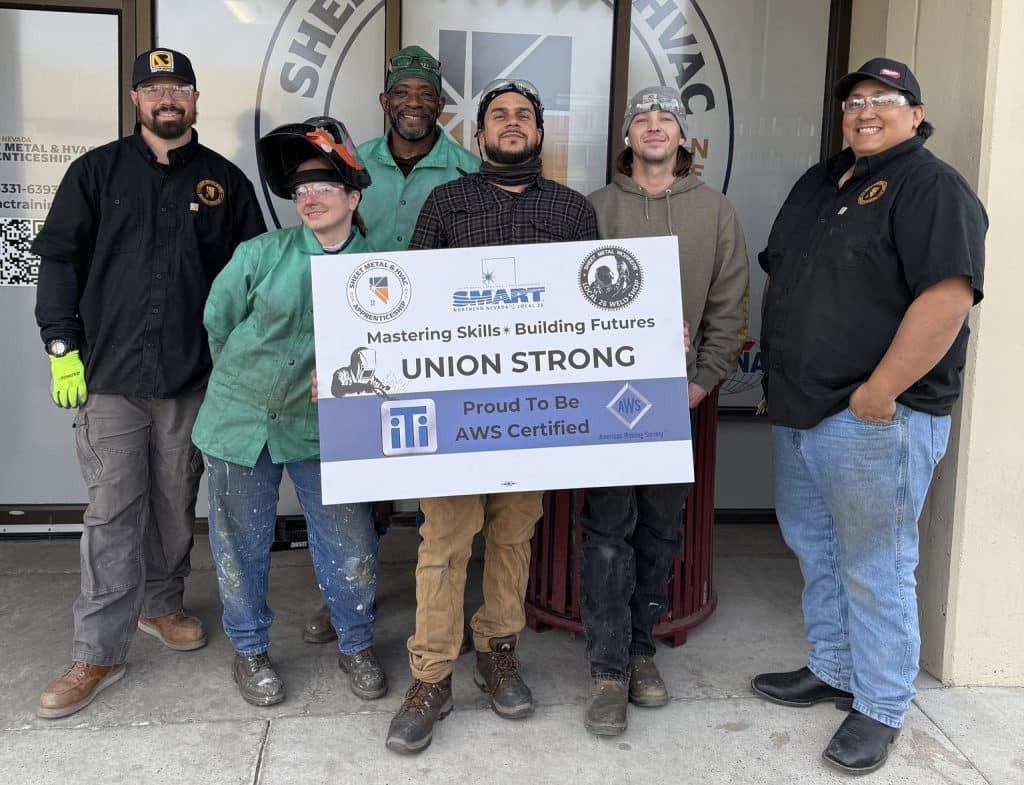
Local 26 apprentices
In 2025, the Northern Nevada Sheet Metal & HVAC Apprenticeship (SMART Local 26) was formally notified by the Nevada State Apprenticeship Council (NSAC) that a nonunion contractor association had applied to establish a parallel apprenticeship program for sheet metal workers (O*NET 47-2211.00). Under Nevada Revised Statutes (NRS) 610.144, a parallel program cannot be approved unless it is proven to be at least equivalent in quality and content to existing registered programs. This requirement initiated a formal review and special hearing process for the nonunion program.
After conducting a comprehensive evaluation of the proposed standards, curriculum and supporting documentation, SMART Local 26 identified several concerns, including the clarity of training hour requirements, the level of detail in the proposed curriculum, documentation requirements for instructors and facility staff, the use of objective assessment standards and whether the proposed standard provided training across the full scope of sheet metal work in Nevada. A detailed letter of opposition was submitted to NSAC outlining these concerns. The hearing, originally scheduled for September 2025 and later reconvened on January 8, 2026, included testimony from SMART Local 26 and SMART Local 88 (Las Vegas) leadership, training center representatives and legal counsel.
Following review of the written record and testimony, the Nevada State Apprenticeship Council denied the proposed parallel program.
This decision reaffirmed the statutory protections within NRS 610.144 and upheld the integrity and quality of Nevada’s registered apprenticeship programs. It is also proof that parallel apprenticeship programs are not automatically approved and must clearly demonstrate equivalency in scope, structure and accountability. That is more important than ever to remember as SMART works to protect apprenticeship standards across North America.
Thanks to proactive organizing from stakeholders in Nevada’s unionized sheet metal industry, local unions and community members can count on the rigorous standards they’ve come to expect in apprenticeship programs.
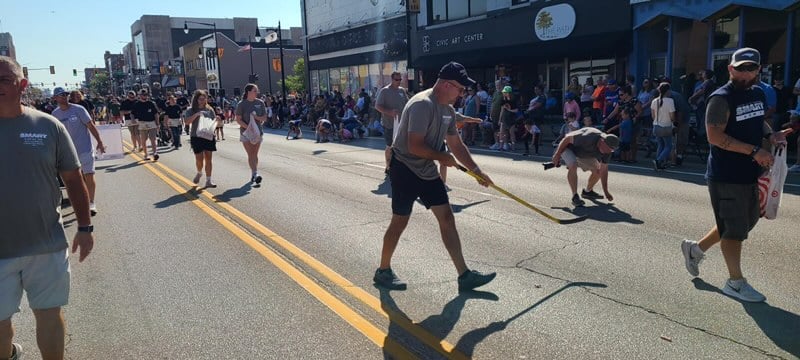
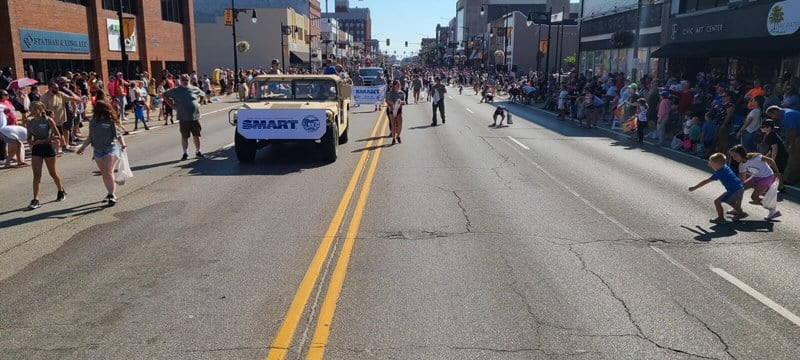
Monday, Sept. 4, marked Labor Day in the United States and our members were out making their presence known in celebration of the work we do while raising awareness about the work that still needs to be done in this country to raise the profile of the working class and organized labor.
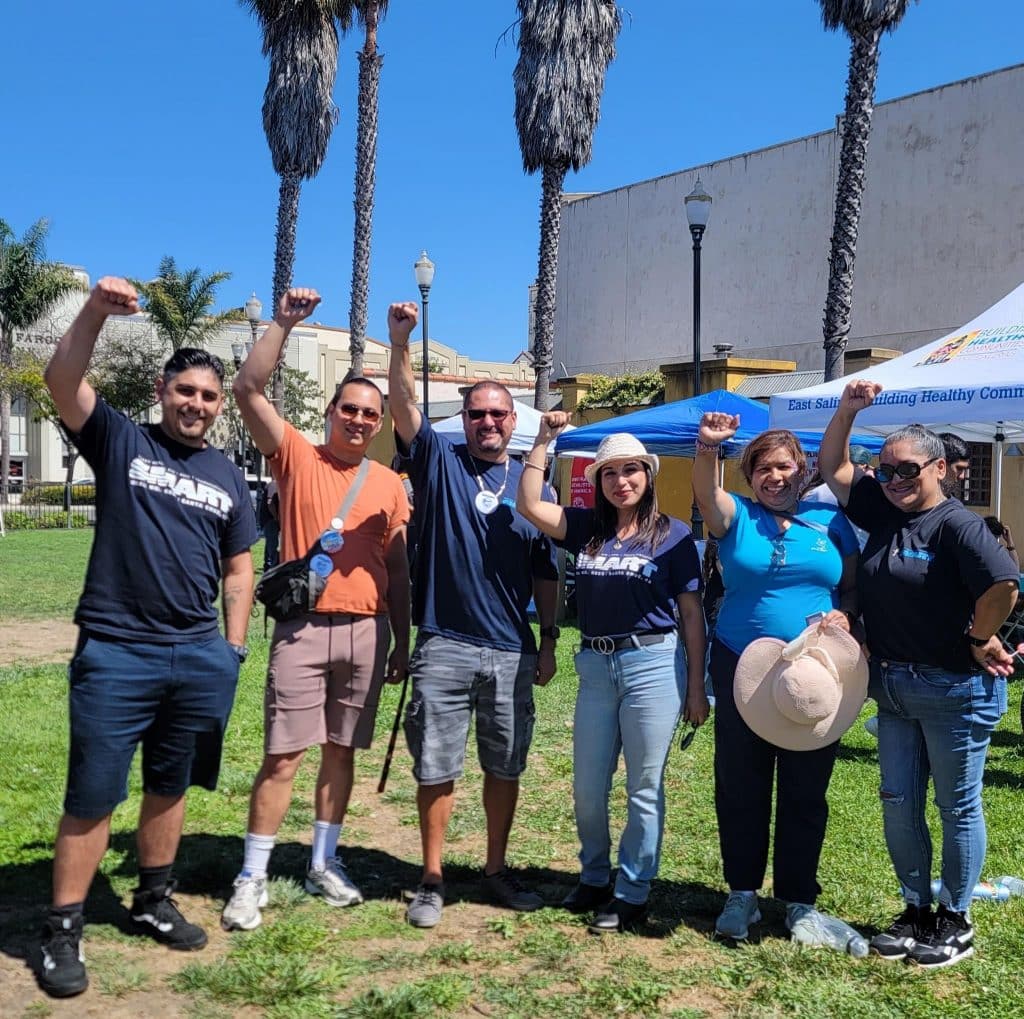
California — Local 23 — Santa Cruz
Bus Department Alt. Vice President James Sandoval, left, and other members of his Local 23 in Santa Cruz, Calif., take part in a Labor Day event.
Illinois
SMART Transportation Division President Jeremy Ferguson and Alt. National Legislative Director Jared Cassity were in Galesburg, Ill., and continued the tradition of a TD presence in the the nation’s longest-running Labor Day parade.
Nebraska
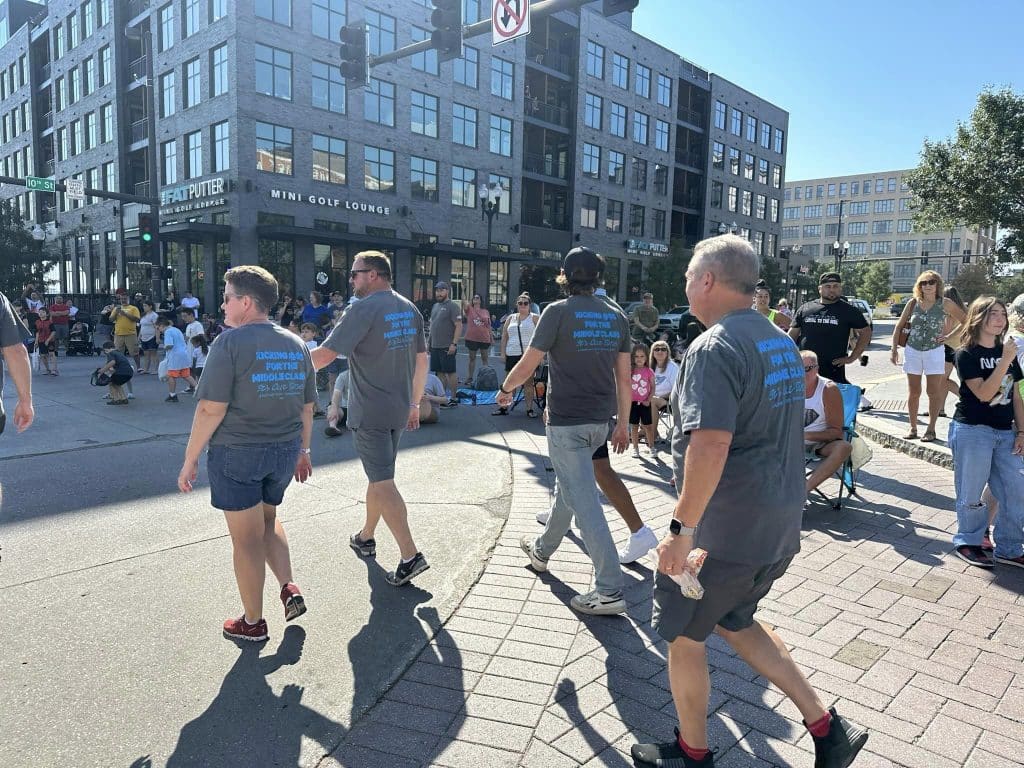
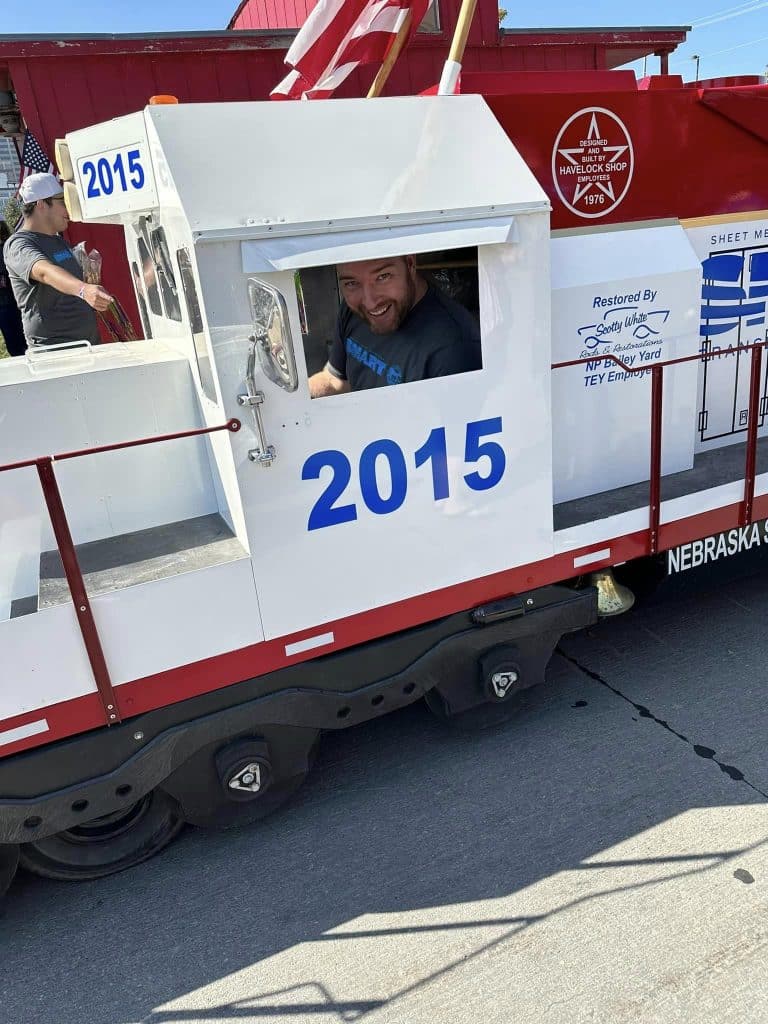
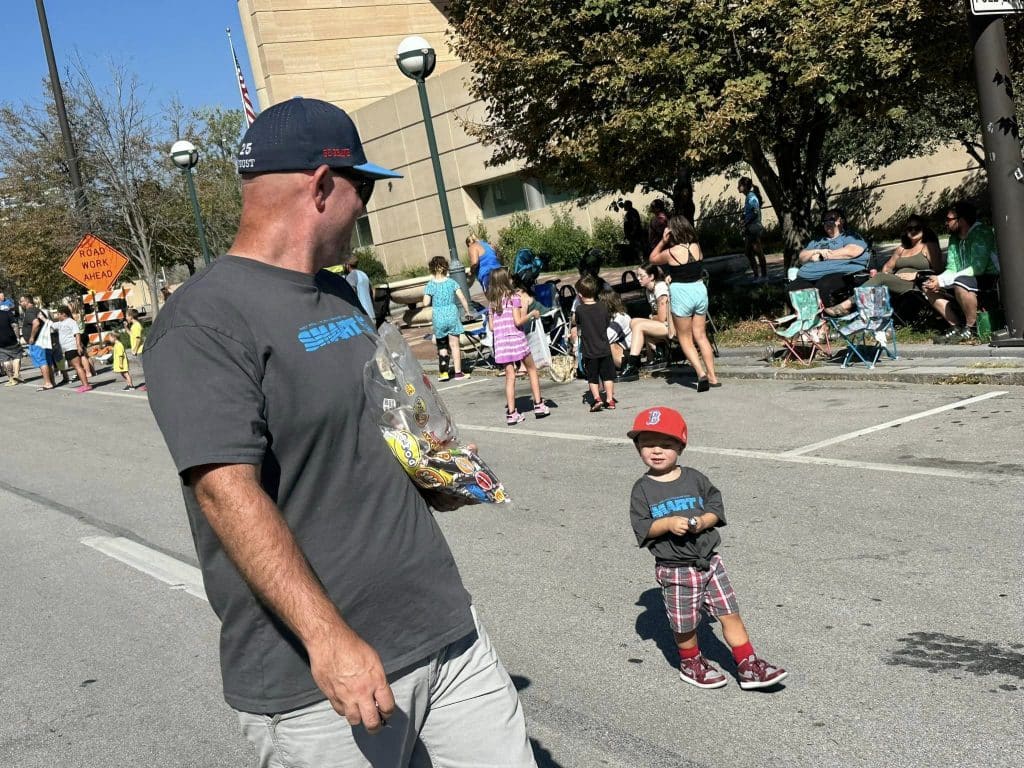
Our members participated in a Labor Day parade in Omaha, complete with the traditional appearance of the SMART-TD-branded mini-locomotive.
Nevada
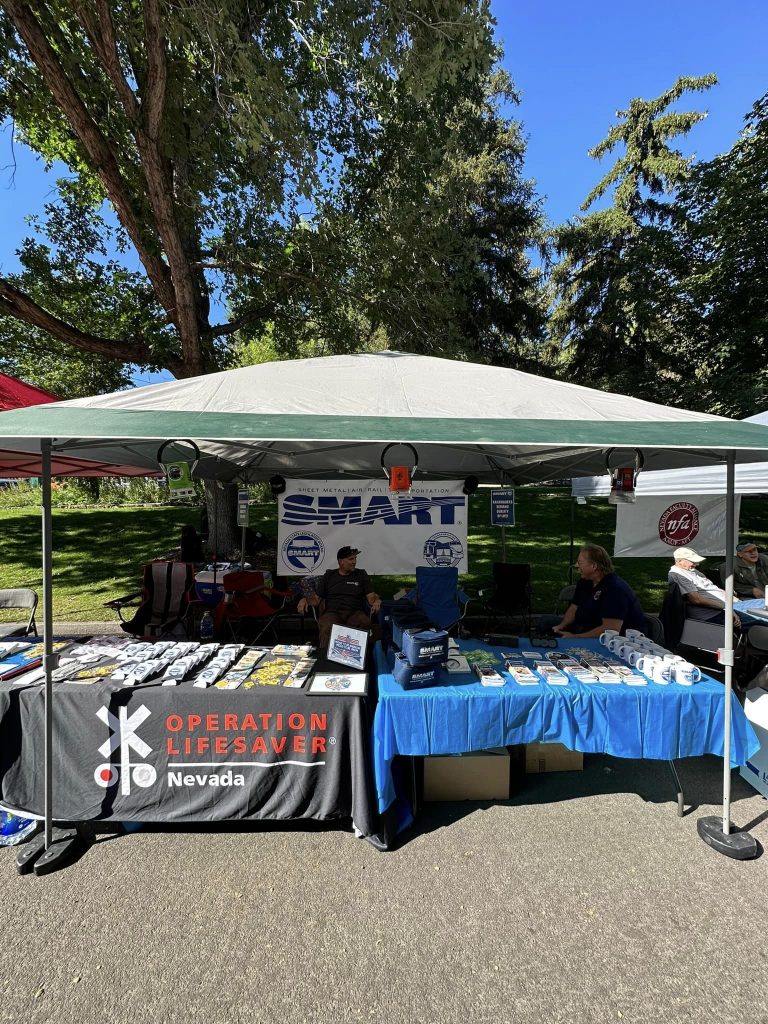
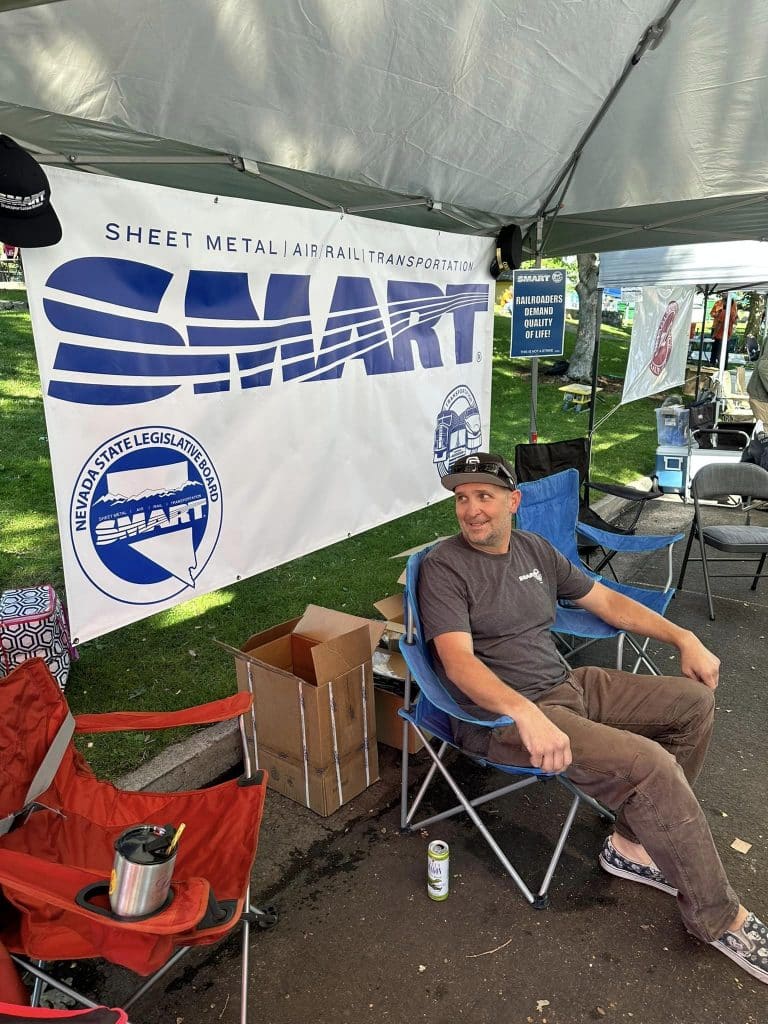
SMART-TD’s Nevada State Legislative Board had a presence at the Reno LaborFest.
Ohio
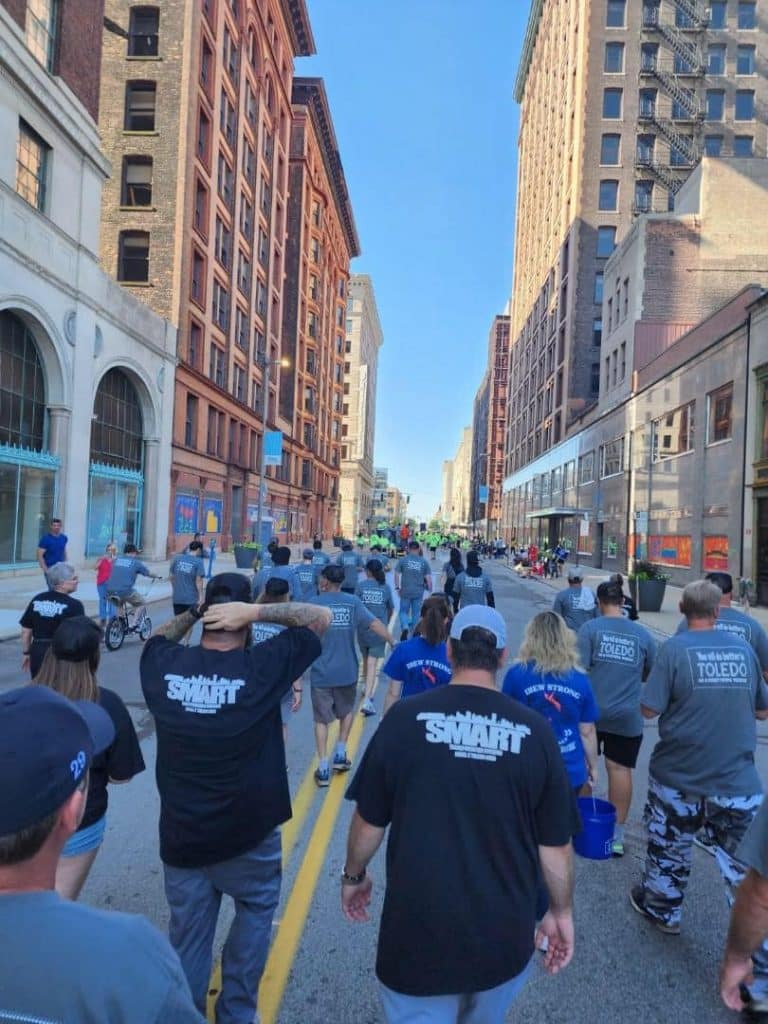
Members from TD Locals 2, 1529 and 1816 walked in the Toledo annual Labor Day parade with Sheet Metal members from SMART Local 33.
Virginia
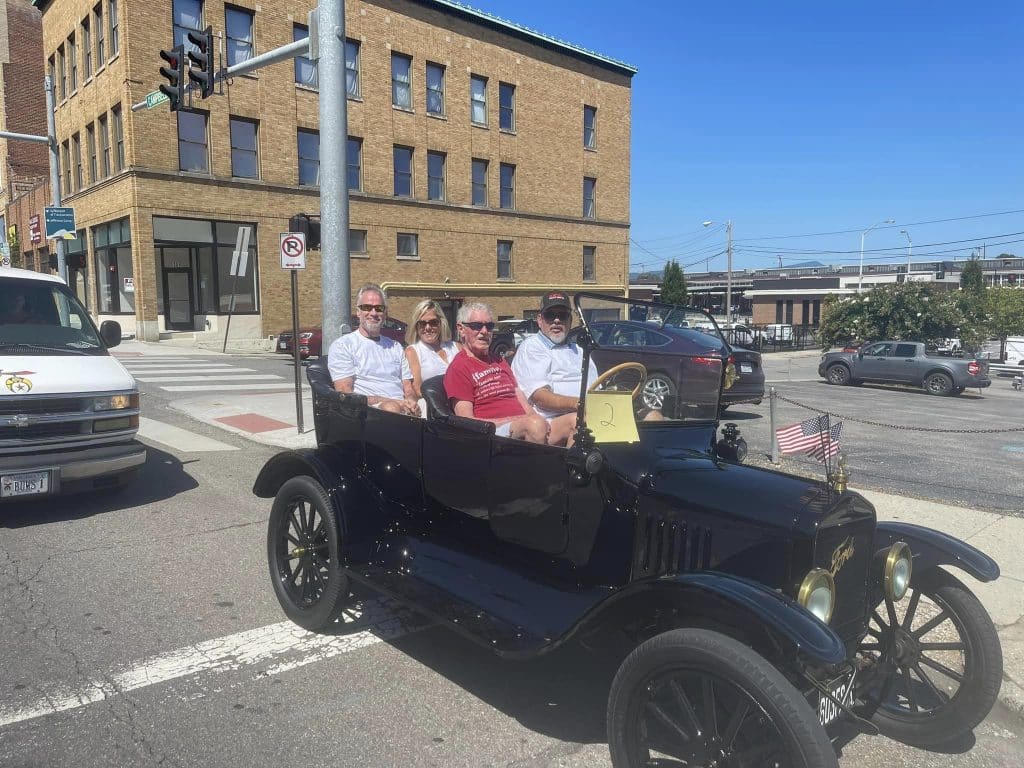
SMART Transportation Division had a presence at the Labor Day parade in Roanoke, Va.
Nevada Gov. Steve Sisolak has issued a proclamation praising America’s railroaders, declaring Wednesday, April 28, 2021, as “A Day In Honor of Railroad Workers.” A portion of the proclamation reads: “The safe and efficient movement of the trains transporting… freight and… passengers through Nevada is due foremost to the dedication and professionalism of those employees who are directly involved in train movements, including Train and Crew Dispatchers, Maintenance of Way personnel, Signal Maintainers, Mechanical personnel, and train crews.” The SMART Transportation Division Nevada Legislative Board and BLET Nevada State Legislative Board worked jointly to lobby Gov. Sisolak regarding the proclamation. The two boards issued a joint statement, which reads in part: “Every day, front-line railroad workers report for duty as required and perform the tasks of their jobs in a manner which ensures that the movement of freight and passengers by rail which is needed to keep this nation’s economy functioning is accomplished. In spite of various objectives and circumstances which create hurdles to be crossed in providing this vital service, the work which you do continues to deliver for those counting on it… On this special day, we salute and thank you for the work that you do, while encouraging you to stay focused on safety in the course of your work. We also ask that you join us in remembering those workers who have passed on before us, some in the line of duty, while committing to continue fighting for all still among us with whom we share struggles.” SMART-TD President Jeremy R. Ferguson and BLET National President Dennis R. Pierce said, “Our unions thank Governor Sisolak for honoring railroaders with this proclamation and for recognizing the important role SMART-TD and BLET members play in keeping our economy strong. We also thank Jason Doering, SMART-TD Nevada State Legislative Director, and Matt Parker, BLET Nevada State Legislative Board Chairman, for their efforts in helping to secure this proclamation and for their dedication to railroad safety.” A copy of Governor Sisolak’s proclamation can be found here (PDF).
# # #
The SMART Transportation Division is comprised of approximately 125,000 active and retired members of the former United Transportation Union, who work in a variety of crafts in the transportation industry. The Brotherhood of Locomotive Engineers and Trainmen represents nearly 58,000 professional locomotive engineers and trainmen throughout the United States. The BLET is the founding member of the Rail Conference, International Brotherhood of Teamsters.
Doering Nevada State Legislative Director Jason Doering and his BLET counterpart Matthew Parker explain why two-person crews are necessary in an op-ed on the website of The Nevada Independent. In the article, Doering and Parker refute some of the carriers’ most common arguments as to why two-person crews should not be legislated. They specifically mention a letter in support from Larry Mann, who helped to draft the Federal Railroad Safety Act of 1970 and is SMART TD’s rail safety coordinator to the designated legal counsel. “‘The FRSA has been in existence since 1970, and no court has ever ruled that collective bargaining agreements or any rights under the Railway Labor Act preempted a safety law,’ Mann wrote. … Mann pointed out that Wisconsin enacted two-person crew legislation in 1997 and had the law challenged by four rail carriers. The law was upheld in 1999 by the 7th Circuit Court of Appeals.” The Assembly Growth and Infrastructure committee recently voted on April 11 to send Assembly Bill 337, the state’s two-person crew bill, to the Assembly floor and recommended that it be passed as amended. Click here to read the rest of the article from The Nevada Independent.
Although both the Nevada Senate and House approved S.B. 427 – the state’s two-person crew bill – Republican Governor Brian Sandoval vetoed the measure June 8. Click here to read Sandoval’s veto letter.
Nevada Senate Bill 427 (S.B. 427), sponsored by Nevada State Senator Mark Manendo (D – Dist. 21), seeks to restore a requirement in Nevada’s laws regarding the minimum number of persons operating freight trains in the state. The bill comes in response to interest expressed by freight railroad carriers nationwide in reducing the current crew size for most cross-country freight trains from two persons to a single operator. Railroad workers oppose such action, citing what they see as a compromise in safety with regard to further crew size reductions. “In an incident such as a derailment resulting in the release of hazardous materials, the elimination of a crew member from freight trains would cause delay in notification to emergency responders. That creates an unacceptable risk to the public,” said SMART TD Nevada State Legislative Director Jason Doering. “The desire to pursue single-person operations of freight trains clearly represents placing cost reduction and profits ahead of responsibility for ensuring that movement of freight by rail through the communities of Nevada takes place in the safest possible manner,” added Matt Parker, chairman of the Nevada state legislative board of the Brotherhood of Locomotive Engineers and Trainmen (BLET). Nevada law previously specified a minimum crew size for freight trains in the state. The crew size requirement in that law was repealed in 1985 to accommodate changes to collective bargaining agreements negotiated between rail carriers and the labor unions representing their transportation craft employees. “Had we foreseen the day that rail carriers would seek single-operator crews, we most certainly would not have supported repeal of Nevada’s previous crew consist requirements, instead insisting upon a modification to the law,” said retired UTU Nevada State Legislative Director Rodney Nelms, who participated in the 1985 legislative action. S.B. 427 passed the Senate Committee on Transportation with a 3-2 vote. You can find the bill here: https://www.leg.state.nv.us/App/NELIS/REL/79th2017/Bill/5505/Overview A special thanks goes out from Doering to Sen. Manendo for sponsoring S.B. 427. Doering asks that members contact their Nevada state senators and ask them to support S.B. 427. Members can contact their state senators directly by visiting the Nevada State Senate website.
Yucca Mountain President Trump is requesting $120 million in his 2018 budget to restart the licensing process to store nuclear waste under Nevada’s Yucca Mountain. This could also mean a revival for a proposed rail line to the remote site. The project was first proposed in the 1980s but Nevadans on both sides of the aisle have been disapproving of the project. Click here to read more from Trains.com.