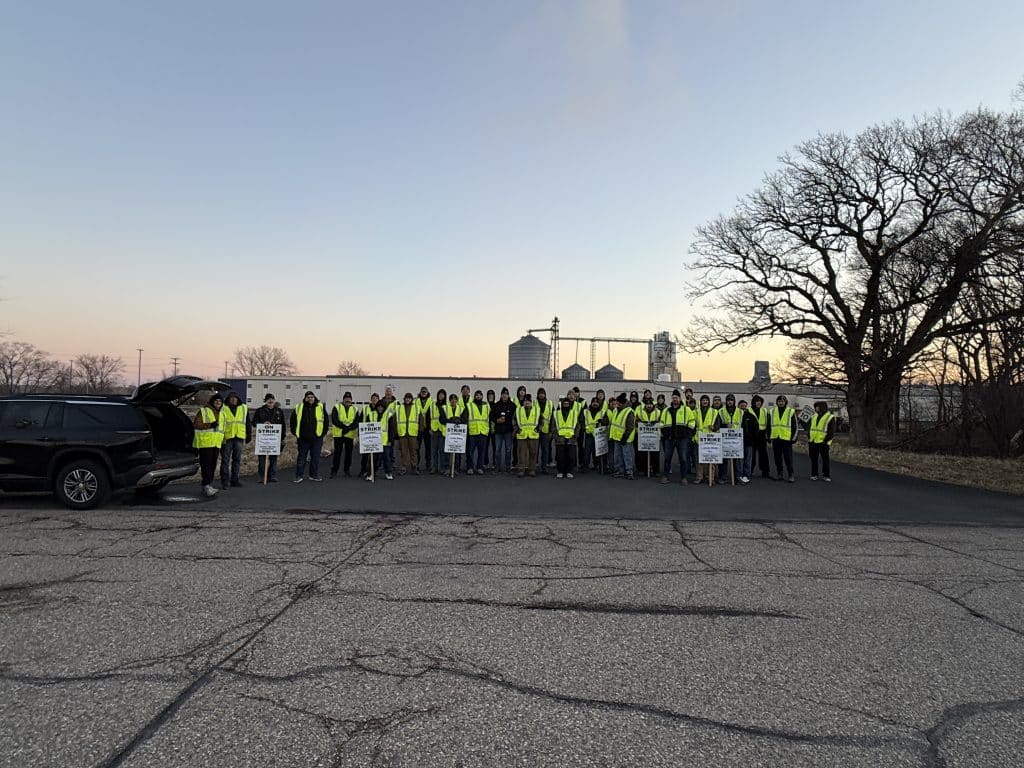
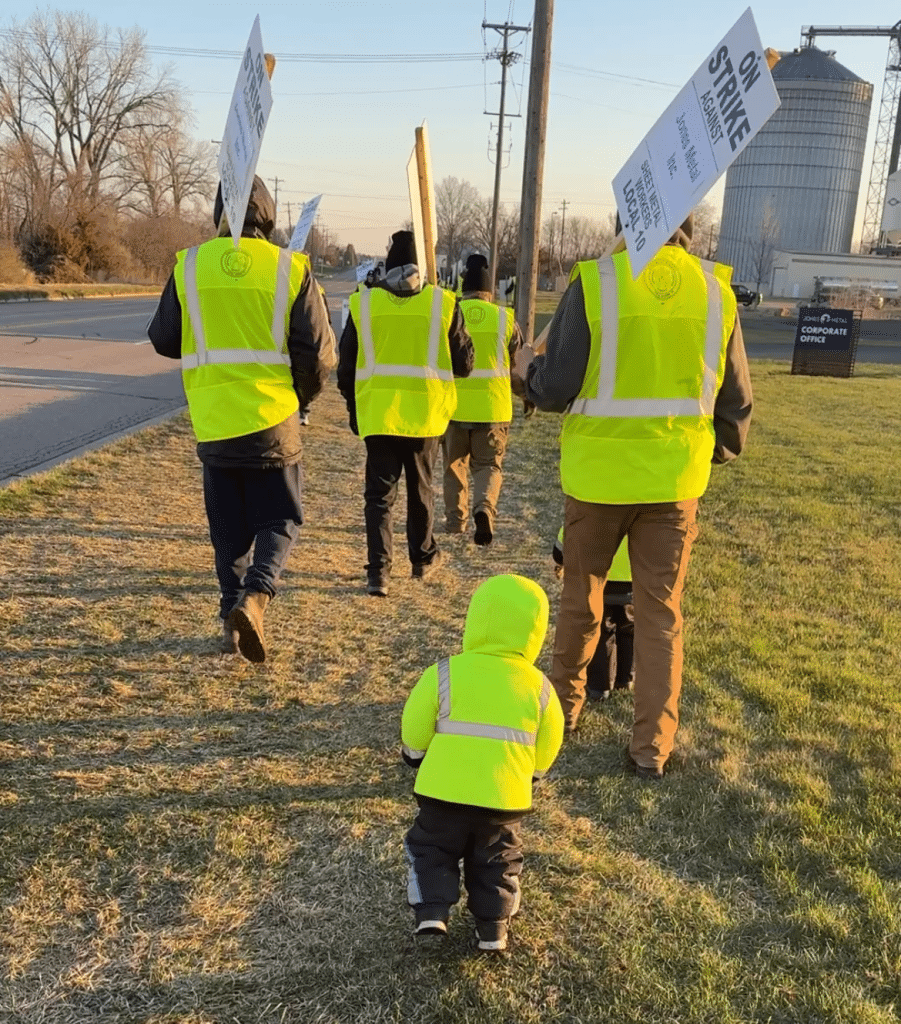
SMART General President Michael Coleman often says that our solidarity is our greatest strength. Local 10 members in Mankato, Minnesota, proved that in April 2026, going on strike and winning much-needed gains and guarantees around health care.
Jones Metal, Inc. in Mankato is a production shop that employs 42 Local 10 members. In 2016, according to Business Manager and President Matt Fairbanks, “there was a production health plan that ended up going bankrupt, and the company didn’t go out and buy a health plan. They just decided to give the employees a stipend, a weekly stipend for health coverage.”
That was 10 years ago. When bargaining came around in April 2026, the stipend amount provided by the company hadn’t changed — despite the rising costs of health insurance.
“That stipend was part of the contract in 2013 and they have not raised that stipend or contributed to a health care plan for these employees for the last 13 years,” SMART Local 10 Financial Secretary-Treasurer Jason Damman told the Mankato Free Pressin April.
Amid a time of spiking costs — and with huge increases in insurance rates coming down the pipe in Minnesota, according to the state Department of Commerce — members at Jones Metal went to the bargaining table seeking some relief for their families. Instead, Local 10 reported, the company proposed sticking with the same stipend for another three years.
Members responded by voting down the offer and authorizing a strike the same day.
Solidarity, community support prove pivotal
Local 10 put our union’s values on display as Jones Metal workers hit the picket line. The local’s entire Minnesota staff temporarily relocated to Mankato, a city in Southern Minnesota, for almost two full weeks. The local applied for and received assistance from the International’s strike fund, helping members get by for the duration of the strike. The state AFL-CIO, local building trades and SMART International Organizer Dan Kortte walked the line alongside members all day, nearly every single day, maintaining strength and unity through the blustery Minnesota springtime.
“It’s a lot to go on strike. It’s a ton of work,” Fairbanks said. “And it went off as seamlessly as a strike could go off.”
Especially crucial to Local 10’s success, Fairbanks explained, was the community support that members received in Mankato. Even though the region is known as a nonunion area, locals showed up for the Jones Metal workers, showcasing the fact that SMART members are not just essential workers but essential parts of communities across North America.
“The support that we had from the community — driving by and honking, coming and walking the line with us, dropping off food and water, and things like that — it kept the members’ spirits upbeat, knowing that people cared, and that really helped,” Fairbanks said.
Power in unity
Despite the multiple days on the picket line, Local 10 members at Jones Metal stayed strong and unified throughout their strike. They never wavered in their demands; in fact, Fairbanks noted, they were ready to keep striking to win what they deserved.
Ultimately, that wasn’t necessary. In the agreement eventually ratified by the members, the company agreed to provide more money as part of their health care stipend — and, crucially, to establish a company health care plan by the end of the agreement.
“I know they’re going to start working on that fairly quick and hopefully have that in place long before the four-year agreement is over,” said Fairbanks.
Perhaps most important is the message that the members sent the company.
“The message sent is that you need to supply health care for people that show up and do work for you every day,” Fairbanks concluded. “It’s a human thing: having health care, making sure that your families are covered.”
From a frozen stipend amount dating back to the 2010s, to the imminent creation of a company health plan. That’s the power of solidarity!
For SMART members, organizing goes beyond bringing new brothers and sisters into our union. It’s about winning the work that members rely on.
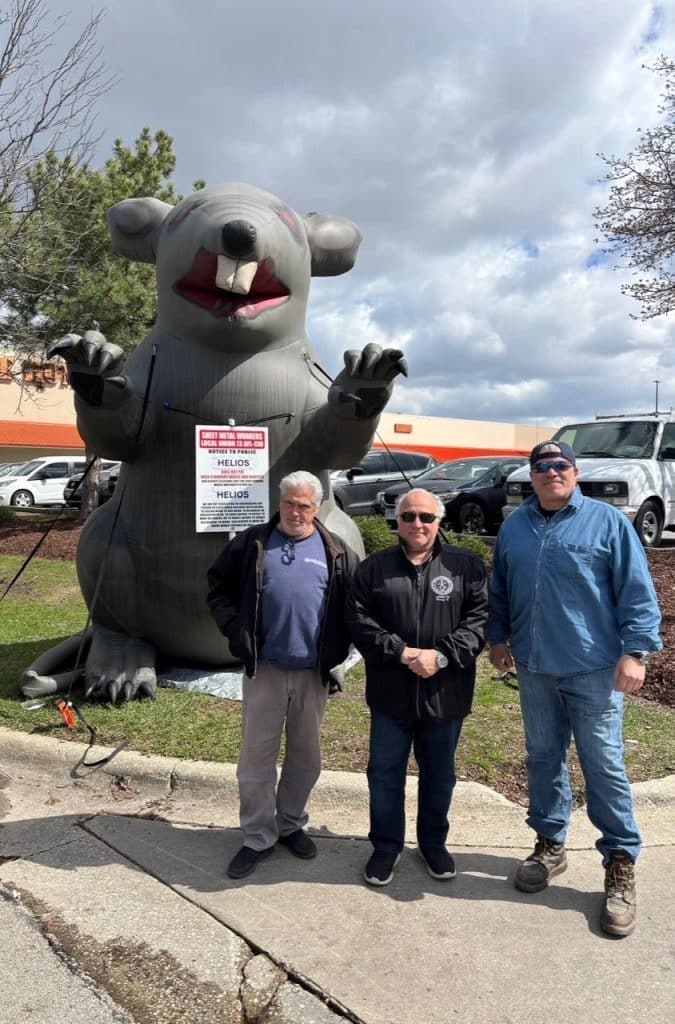
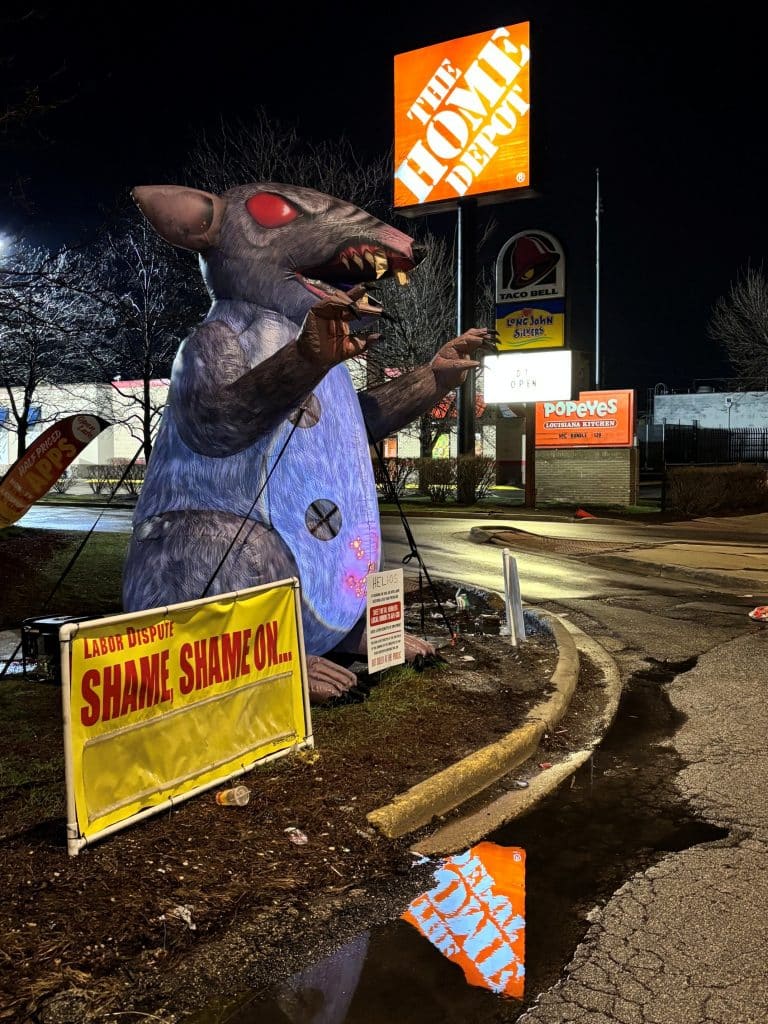
A recent example from SMART Local 73 (Chicago and Cook County, Illinois) showed just how important that is. Through coordinated job action, strategic market recovery efforts and strong teamwork from members and staff, Local 73 successfully reclaimed multiple Home Depot rooftop unit replacement projects from a non-signatory contractor and secured the work for a Local 73 union contractor.
The effort began when Business Agent Dave Brown learned that non-signatory contractor Helios was performing rooftop unit replacement work at Home Depot locations within Local 73’s jurisdiction. Local 73 immediately mobilized, monitoring locations and gathering information on upcoming projects.
After identifying a project in Homewood, Illinois, Local 73 established an area standards picket. The crane company honored the picket line, preventing the work from moving forward. Following discussions between Local 73 representatives and Helios management, the project was reassigned to Diversified Construction Group, a Local 73 signatory contractor, which successfully completed the work.
The victories did not stop there.
Shortly afterward, a recently organized Local 73 member provided critical information after overhearing Helios employees discussing another upcoming Home Depot project. Acting on that information, Local 73 began researching and canvassing Home Depot locations throughout the jurisdiction. Those efforts led the local to a second project in Chicago.
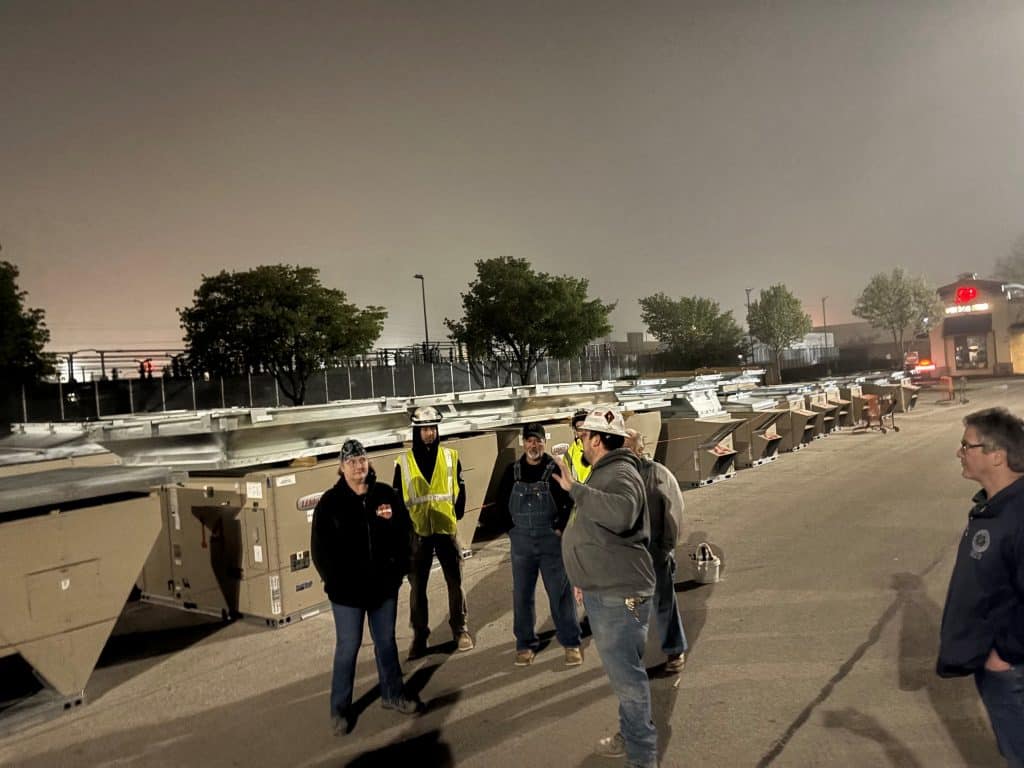
When the work was scheduled to begin, Local 73 once again established an area standards picket. The crane company again honored the picket line, and Local 73 officers, organizers and business agents committed to maintaining a continuous presence at the site. For three days, Local 73 representatives worked around the clock, rotating shifts and maintaining pressure while discussions continued with Helios and Home Depot representatives.
The persistence paid off.
Following sustained communication and job action, the second project was also reassigned to Diversified Construction Group, securing additional work opportunities for Local 73 members and signatory contractors.
Perhaps the most significant outcome came after the project was resolved. Through discussions with Home Depot executives, Local 73 opened the door to future conversations regarding the use of Local 73 signatory contractors for Home Depot projects throughout Cook and Lake Counties. While those discussions are ongoing, they represent a potential opportunity to expand market share and create long-term work opportunities for Local 73 sheet metal workers.
This success story demonstrates the power of a coordinated union effort. From business agents, organizers and local leadership working together in the field, to a recently organized member providing valuable information that led directly to another project recovery, every level of the organization played a role in the outcome.
Through vigilance, communication and a willingness to act, Local 73 was able to protect market share, secure work for signatory contractors and create new opportunities for future growth. That’s why we organize!
On February 23, 2026, workers at SPX Cooling Technologies, LLC in Springfield, Missouri, voted to ratify their first contract as SMART members. The three-year agreement includes a $1,500 ratification bonus, wage increases of over 11%, the preservation of health and retiree benefits and just cause protection against unfair discipline.
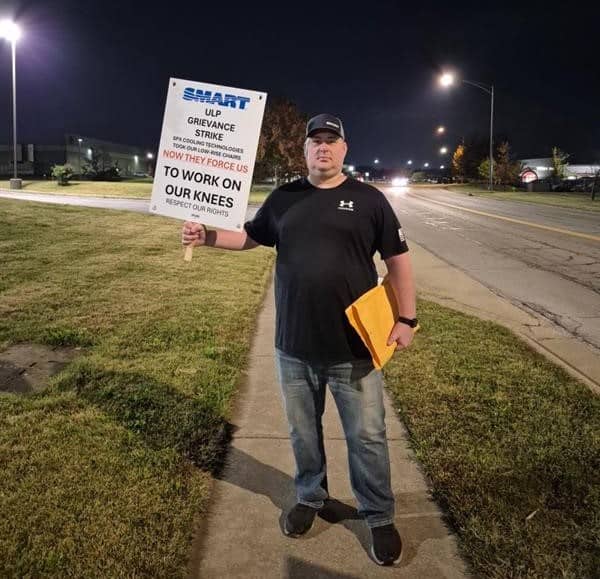
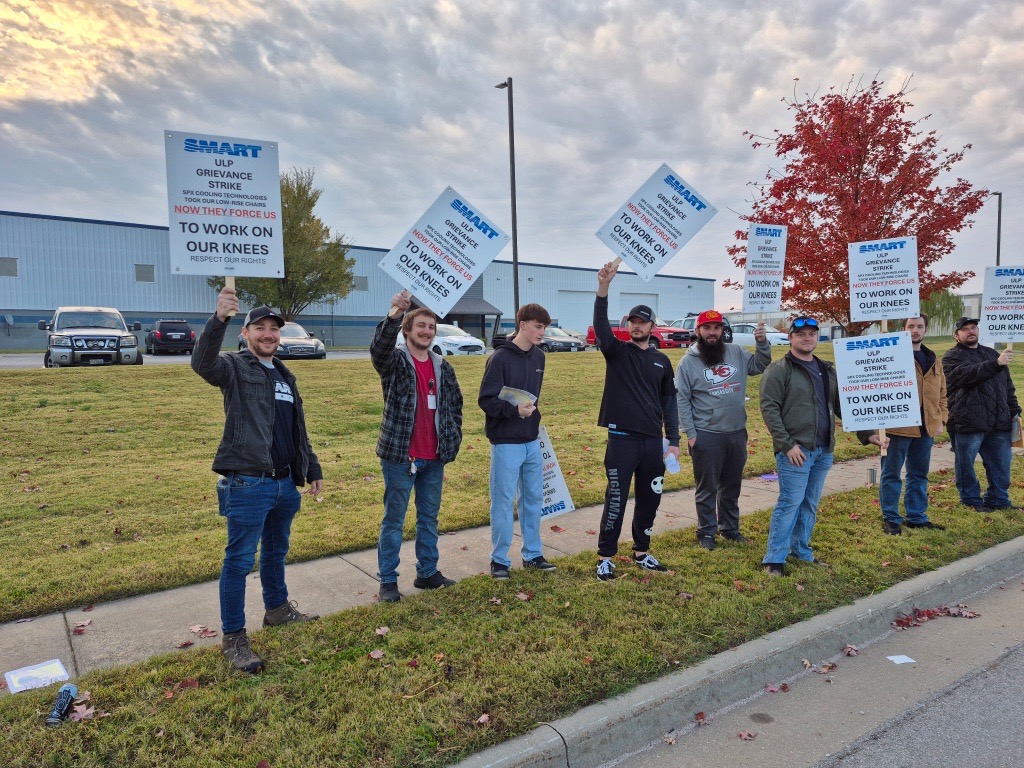
The victory came from workers who were organized to stand together and utilize labor’s oldest and most powerful weapon: the strike! On two different instances in November 2025, SPX workers struck, first for one day to protest the company’s removal of low-rise chairs from the workplace, and then once more for two days to protest the company’s hostile and callous response.
“We went to the picket line. We had our signs out there. We let the company know that this is not acceptable to us,” said SPX employee and SMART Local 208 member Andrew Stracke.
“The majority of our shop is looking for union representation”
SPX Cooling Tech employees at the Springfield facility, which opened in 2024, manufacture cooling towers and air-cooled heat exchangers; cooling towers, in particular, are in high demand as investment increases in data centers. The components that SPX employees manufacture are vital for the continued boom in data center construction.
Workers started to talk about organizing in response to various issues in the shop. Stracke, a Local 208 negotiating committee member who has worked at SPX since 2024, alleged instances of favoritism, different wage rates for different people, inconsistent discipline policies and more.
“I was actually the one that placed the call to [a union] office up in St. Louis,” Stracke recalled. “And I felt like the first thing I told them was, ‘look, the majority of our shop is looking for union representation.’”
“Me and Andrew, we were just kind of talking with each other one day about, you know, the unfair working conditions that we were experiencing at the time at the shop. We were just kind of trying to figure out what we could do about it. It was just regular old employees,” added fellow SPX worker and negotiating committee member Wyatt King. “One employee by yourself, you know, you’re not going to have a lot of weight behind you, but when you organize into a union, you can actually address unfair working conditions and unfair wages.”
Members demand a change
The workers at SPX Cooling Technologies in Springfield overwhelmingly elected SMART Local 208 to represent them in a July 2025 National Labor Relations Board (NLRB) election.
But despite the workers’ strong support for the union, SPX initially opposed their organizing. The day after workers won their election, management took away the low-rise chairs that workers used on the job, forcing them to work on their knees.
“I was just astonished … everybody was just kind of like, ‘well, you know, it’s clear retaliation towards electing a union to represent us,’” said King. “I mean, some of those guys in the shop are 60 years old working on the concrete, on their knees all day.”
On Friday, November 7, workers engaged in a one-day grievance strike over the removal of chairs. The strike was covered by the Springfield News-Leader newspaper.
“Any concerns that we’ve raised, whether it’s about chairs, retaliation, harassment, intimidation — they’ve just stonewalled us on all of it. There’re no discussions,” SMART Central States Regional Production Council Organizer Richard Harris said in an article in the News-Leader. “We should be able to sit down and talk about these issues and resolve them. We shouldn’t have to resort to this.”
Workers attempted to serve their strike notice on an SPX supervisor. But the supervisor refused to meet with them. Instead, a woman workers identified as the supervisor’s wife pulled up to the picket line in a white sedan with two anti-union signs taped to her back windows. One read: “F**k the Union.” The other: “Do what lil b*tches do best while down on your knees!!!” She proceeded to drive back and forth in front of the picket line, shouting profanities at the workers and threatening to have them arrested.
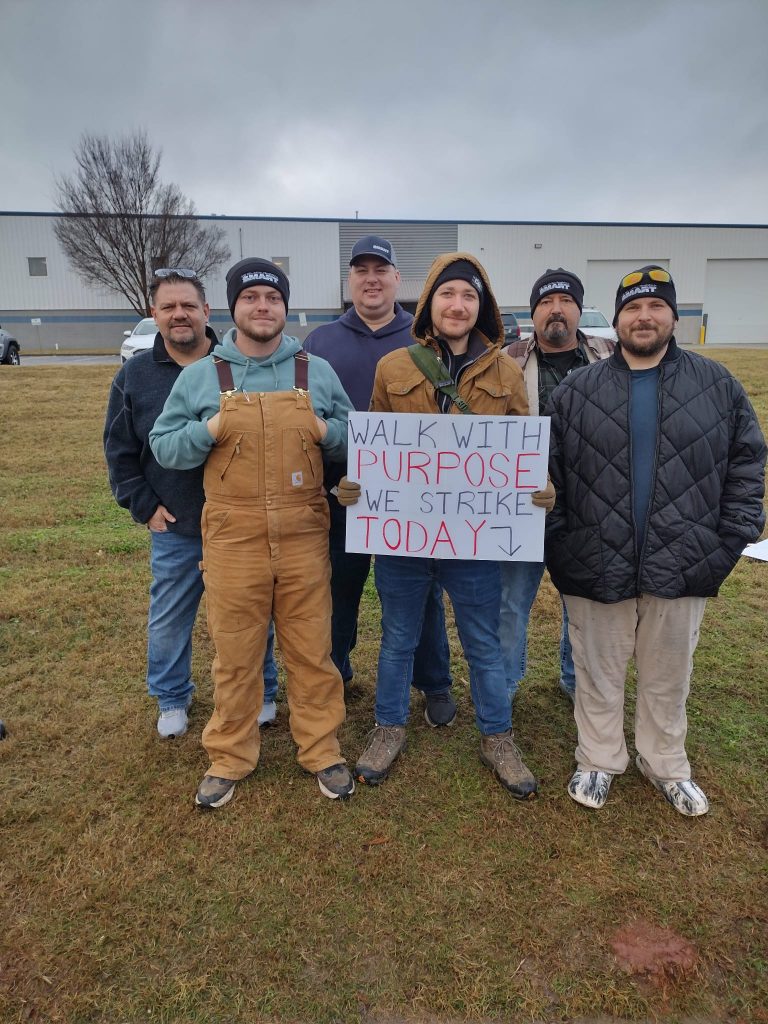
The week after the strike, workers submitted a harassment complaint with SPX’s General Counsel in Charlotte, N.C., regarding the signs. The complaint was signed by nearly everybody in the shop. In the meantime, management continued to threaten workers for participating in the strike. One worker who took part in the strike was verbally reprimanded for “not walking with a purpose.”
Unsatisfied with SPX’s handling of their harassment complaint, workers struck a second time on November 24 and 25. Picket signs read: “Walk with purpose! We strike today!”
Direct action gets the goods
Seasoned union leaders know how difficult first contract campaigns are. The legal consequences for bargaining in bad faith are next to nothing — a notice posting and promise not to do it again — so many employers adopt a strategy of endless delay. According to recent studies, 63% of first contracts fail to settle in one year, and 43% are still unresolved after two. The average time from NLRB certification to first contract — if one is ever reached — is 465 days!
How, then, did SPX workers manage to win their first contract in under six months? By recognizing the structural power they have within the data center economy, and by taking direct action to resolve their grievances. The strikes had an immediate effect on SPX’s demeanor at the bargaining table. Company representatives freely admitted the top priority was getting units assembled and out the door, which the strikes interfered with. Before the strikes, the company was agreeing to meet to bargain once every six weeks; after the strikes, the parties were meeting six days per month.
Collective strength and common ground
In the following months, Local 208 members say, the workers stood strong. And when they voted to ratify their first contract as SMART members, their agreement included a clause requiring the company to provide low-rise chairs.
“We’ve held so many meetings with the bargaining unit, and the participation has been outstanding,” said Stracke. “We have a really high percentage of people that work in the facility that are completely on board. They’re completely invested, they’re excited to see what working with this union and negotiating a contract, what could come of it. And already we have seen the union step up whenever they needed to step up, and give us answers when we need answers.”
In turn, the negotiating committee reports, the relationship between workers, Local 208 and management has started to improve.
“I think we’re in the middle of establishing a great line of communication and work relationships between the company, the employees and the union, and hopefully, this is a relationship that we’re able to keep going even beyond our first contract,” said Logan Hirst, SPX worker and Local 208 negotiating committee member.
Other members of the negotiating committee are similarly optimistic about the road ahead — largely because, as SMART members, they’re not just individuals at work anymore. They’re part of something bigger.
“We’re not just bringing up our complaints to management, and they just do whatever they want with it. We actually have a voice, we have a lot of weight behind us now, and they actually have to listen to us,” said King. “They have to negotiate fairly. … We’re all standing together to make real change in our workplace.”
The SMART difference:
Workers at SPX Cooling Technologies, LLC in Springfield, Missouri, voted to ratify their first contract as SMART members in February.
The three-year agreement includes a $1,500 ratification bonus, wage increases of over 11%, the preservation of health and retiree benefits and just cause protection against unfair discipline.
On two different instances in November 2025, SPX workers struck, first for one day to protest the company’s removal of low-rise chairs from the workplace, and then once more for two days to protest the company’s hostile and callous response.
The average time from NLRB certification to first contract — if one is ever reached — is 465 days. SPX workers won their first contract in under six months.
On February 23, 2026, workers at SPX Cooling Technologies, LLC in Springfield, Missouri, voted to ratify their first contract as SMART members. The three-year agreement includes a $1,500 ratification bonus, wage increases of over 11%, the preservation of health and retiree benefits and just cause protection against unfair discipline.
The victory came from workers who were organized to stand together and utilize labor’s oldest and most powerful weapon: the strike! On two different instances in November 2025, SPX workers struck, first for one day to protest the company’s removal of low-rise chairs from the workplace, and then once more for two days to protest the company’s hostile and callous response.
“We went to the picket line. We had our signs out there. We let the company know that this is not acceptable to us,” said SPX employee and SMART Local 208 member Andrew Stracke.
“The majority of our shop is looking for union representation”
SPX Cooling Tech employees at the Springfield facility, which opened in 2024, manufacture cooling towers and air-cooled heat exchangers; cooling towers, in particular, are in high demand as investment increases in data centers. The components that SPX employees manufacture are vital for the continued boom in data center construction.
Workers started to talk about organizing in response to various issues in the shop. Stracke, a Local 208 negotiating committee member who has worked at SPX since 2024, alleged instances of favoritism, different wage rates for different people, inconsistent discipline policies and more.
“I was actually the one that placed the call to [a union] office up in St. Louis,” Stracke recalled. “And I felt like the first thing I told them was, ‘look, the majority of our shop is looking for union representation.’”
“Me and Andrew, we were just kind of talking with each other one day about, you know, the unfair working conditions that we were experiencing at the time at the shop. We were just kind of trying to figure out what we could do about it. It was just regular old employees,” added fellow SPX worker and negotiating committee member Wyatt King. “One employee by yourself, you know, you’re not going to have a lot of weight behind you, but when you organize into a union, you can actually address unfair working conditions and unfair wages.”
Members demand a change
The workers at SPX Cooling Technologies in Springfield overwhelmingly elected SMART Local 208 to represent them in a July 2025 National Labor Relations Board (NLRB) election.
But despite the workers’ strong support for the union, SPX initially opposed their organizing. The day after workers won their election, management took away the low-rise chairs that workers used on the job, forcing them to work on their knees.
“I was just astonished … everybody was just kind of like, ‘well, you know, it’s clear retaliation towards electing a union to represent us,’” said King. “I mean, some of those guys in the shop are 60 years old working on the concrete, on their knees all day.”
On Friday, November 7, workers engaged in a one-day grievance strike over the removal of chairs. The strike was covered by the Springfield News-Leader newspaper.
“Any concerns that we’ve raised, whether it’s about chairs, retaliation, harassment, intimidation — they’ve just stonewalled us on all of it. There’re no discussions,” SMART Central States Regional Production Council Organizer Richard Harris said in an article in the News-Leader. “We should be able to sit down and talk about these issues and resolve them. We shouldn’t have to resort to this.”
Workers attempted to serve their strike notice on an SPX supervisor. But the supervisor refused to meet with them. Instead, a woman workers identified as the supervisor’s wife pulled up to the picket line in a white sedan with two anti-union signs taped to her back windows. One read: “F**k the Union.” The other: “Do what lil b*tches do best while down on your knees!!!” She proceeded to drive back and forth in front of the picket line, shouting profanities at the workers and threatening to have them arrested.
The week after the strike, workers submitted a harassment complaint with SPX’s General Counsel in Charlotte, N.C., regarding the signs. The complaint was signed by nearly everybody in the shop. In the meantime, management continued to threaten workers for participating in the strike. One worker who took part in the strike was verbally reprimanded for “not walking with a purpose.”
Unsatisfied with SPX’s handling of their harassment complaint, workers struck a second time on November 24 and 25. Picket signs read: “Walk with purpose! We strike today!”
Direct action gets the goods
Seasoned union leaders know how difficult first contract campaigns are. The legal consequences for bargaining in bad faith are next to nothing — a notice posting and promise not to do it again — so many employers adopt a strategy of endless delay. According to recent studies, 63% of first contracts fail to settle in one year, and 43% are still unresolved after two. The average time from NLRB certification to first contract — if one is ever reached — is 465 days!
How, then, did SPX workers manage to win their first contract in under six months? By recognizing the structural power they have within the data center economy, and by taking direct action to resolve their grievances. The strikes had an immediate effect on SPX’s demeanor at the bargaining table. Company representatives freely admitted the top priority was getting units assembled and out the door, which the strikes interfered with. Before the strikes, the company was agreeing to meet to bargain once every six weeks; after the strikes, the parties were meeting six days per month.
Collective strength and common ground
In the following months, Local 208 members say, the workers stood strong. And when they voted to ratify their first contract as SMART members, their agreement included a clause requiring the company to provide low-rise chairs.
“We’ve held so many meetings with the bargaining unit, and the participation has been outstanding,” said Stracke. “We have a really high percentage of people that work in the facility that are completely on board. They’re completely invested, they’re excited to see what working with this union and negotiating a contract, what could come of it. And already we have seen the union step up whenever they needed to step up, and give us answers when we need answers.”
In turn, the negotiating committee reports, the relationship between workers, Local 208 and management has started to improve.
“I think we’re in the middle of establishing a great line of communication and work relationships between the company, the employees and the union, and hopefully, this is a relationship that we’re able to keep going even beyond our first contract,” said Logan Hirst, SPX worker and Local 208 negotiating committee member.
Other members of the negotiating committee are similarly optimistic about the road ahead — largely because, as SMART members, they’re not just individuals at work anymore. They’re part of something bigger.
“We’re not just bringing up our complaints to management, and they just do whatever they want with it. We actually have a voice, we have a lot of weight behind us now, and they actually have to listen to us,” said King. “They have to negotiate fairly. … We’re all standing together to make real change in our workplace.”
The SMART difference:
Workers at SPX Cooling Technologies, LLC in Springfield, Missouri, voted to ratify their first contract as SMART members in February.
The three-year agreement includes a $1,500 ratification bonus, wage increases of over 11%, the preservation of health and retiree benefits and just cause protection against unfair discipline.
On two different instances in November 2025, SPX workers struck, first for one day to protest the company’s removal of low-rise chairs from the workplace, and then once more for two days to protest the company’s hostile and callous response.
The average time from NLRB certification to first contract — if one is ever reached — is 465 days. SPX workers won their first contract in under six months.