Following is an update directly from President Jeremy Ferguson for SMART-TD freight carrier members, specifically those who are currently under “national handling” for the 2025 bargaining round.  

This round got off to a good start on the earliest schedule ever, with tentative agreements reached before the opening period required under the Railway Labor Act.   

Currently, most of Rail Labor has already ratified what is now a “pattern agreement,” including the Brotherhood of Maintenance of Way Employees (BMWE), which is the second-largest rail union membership-wise.  

This was an historic tentative agreement that had been proposed to some of our membership already, but unfortunately it was turned down during the ratification process last year. It’s a significant TA, because it provides the largest front-loaded pay increase schedule, totaling a compounded 18.78 percent pay increase, with additional increases in vacation benefits for members with less than 25 years of service, increases in H&W benefits and improved vision/dental benefits, without third party intervention. By July 1, 2029, the foreman rate of pay will increase $61.40 per day and the conductor basic daily rate of pay will increase $55.28. (Under the record 22% of PEB 250 our foreman saw a $63.36 per day increase and our conductors saw a $56.53 basic day increase.)   

“Front loaded” means that the larger pay increases come in at the beginning of the contract rather than at the end of it, which strengthens the compounding effect of each subsequent wage increase. Historically, our largest wage increases have been towards the end of our moratoriums.  

“Without third party intervention” means that never has a union accomplished this much without givebacks and without a mediator, arbitrator or Presidential Emergency Board being involved in the process.   

If you’re not familiar with the NRLC Bargaining Chart, you can review it here ► 

President Ferguson and the full SMART-TD negotiating team will be meeting with the NCCC in Cleveland next Tuesday (July 22) to continue the negotiations, except for where we have already ratified agreements.   

It’s unfortunate that we are still at the table negotiating here in July, instead of celebrating the first of the five pay increases going into effect July 1, but the circumstances are understandable due to the large misinformation campaign that was waged on social media and on the cabs of our locomotives by another union.  Furthermore, it’s important that our younger (newer) members understand what a moratorium is and how that can protect them. The sooner we get this round of negotiations completed, the sooner a moratorium will be in place to secure their futures for another five years! This is huge, in the event technology rears its ugly head and God forbid, the government sees no issue with its implementation thereof. 

What about our Crew Consist Agreement that mandates conductors on all trains?  

Since there are no work rule changes to this effect, we will have another five-year period where no changes can even be proposed under Section 6 of the RLA once we ratify these agreements.  

This is huge!   

We have obtained a two-person crew (2-PC) regulation from the FRA, but we are still very concerned about what the Supreme Court has done with its recent Chevron decision which could compromise our regulation. We are still fighting for Congress to pass the latest Rail Safety bell, which would make 2-PC the law of the land. While we pursue this critical legislation, we still need to take every other possible measure to secure our futures one step at a time. Ratifying this agreement does this.   

Members have asked: what are we giving up? 

The answer: NOTHING!

There are no work rule changes in this proposal. This is a win-win for rail labor, hence the reason that nine other rail unions have already ratified the same pattern agreement, including our brothers and sisters in the SMART Sheet Metal Rail Department. Our SMART-TD Yardmasters on CSX have now ratified this pattern, along with our BNSF Yardmasters but in a more modified version.   

My office will provide another update following our July 22 meeting with the NCCC. All members are encouraged to keep staying engaged and standing united as we move forward in this crucial process.     
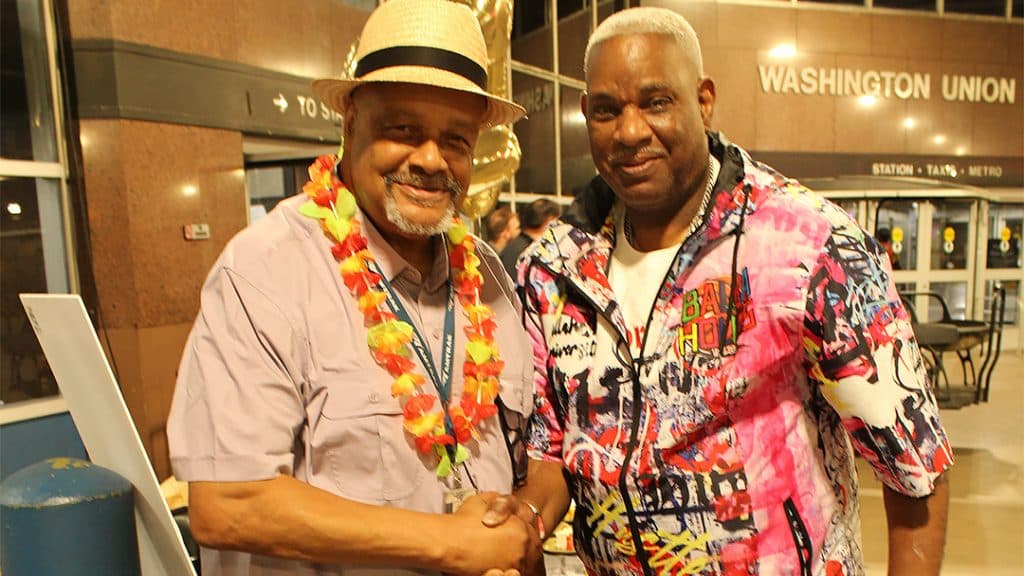
June 27 is an important day for Brother Bill Link.

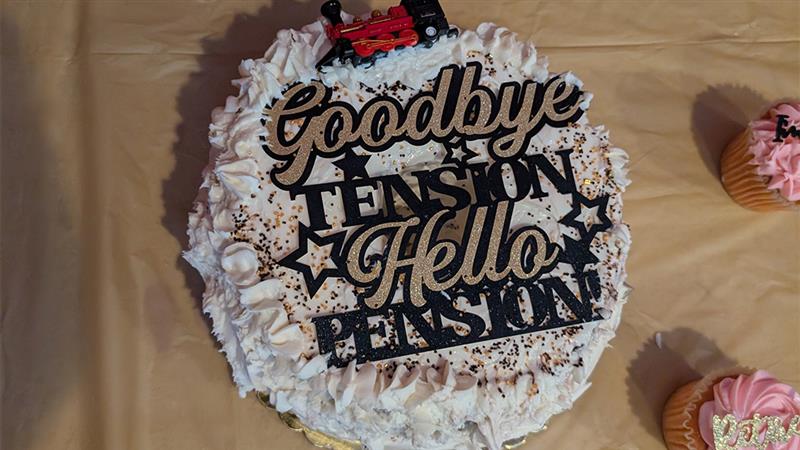
In 1972, it was the day that he began his railroad career. In 2025, it was the day that he officially retired after 53 years of service, the highest Amtrak seniority in the country.  

“I loved it. It’s like riding on a rolling treasurer chest, if you’re conscious,” reflected Brother Link in an interview with SMART News two weeks into his retirement. “I found out it was the perfect job for me.”

An Abrupt End to Post-Graduation Limbo

After graduating from Lincoln University in the early 1970s, Brother Link wasn’t in a hurry to find a job.

Instead, he was hanging out at the bar with his friends before heading home between three and four o’clock in the morning, just “living life after college.”

Then one morning he woke up to his 6’3”, 300-pound truck-driver father standing over him.  He told him “Boy, if you think you’re gonna be sleeping in my house when I’m going to work after I put you through college, you got another thing coming.”

The next thing Brother Link knew, he was at a job fair in New York City.  

“I said ‘Hell no, I don’t want to county money in a room all my life’ so I went up to Central Park and hung out for an hour or two.”

While he was there, he thought about a suggestion from a neighbor back home about the railroad looking for new hires.

Too Tall to be an Engineer

He vividly remembers taking a test with about 11 other men before being told that he was picked for the premier engineer job but was too tall.

As an African American during the height of the Black Power Movement, Brother Link figured that “reasoning” had something to do with his skin color. But it wasn’t that or physical stature that made him too tall. It was his hair.

He waited in a room for about 20 minutes before someone came in and told him “Mr. Link, if you want a job, come back in one hour without that” and pointed to his afro.

“That was the day the revolution died,” said Brother Link, laughing.

Brother Bill Link (left) at his retirement celebration (Photo courtesy of David Pendleton)

Starting a New Chapter

The day the revolution died was also the birth of Brother Link’s more than five-decades on the rails.

“I was working on freight trains, coal trains, whatever. So I had a mixed career,” he explained. “It wasn’t always on the passenger train, but by the time I got older I got on the passenger train.”

That’s where Brother Link had some of his most impactful experiences.

“The conductor had a lot of roles to play,” he said. “He’s a priest, he’s a policeman, he’s an entertainer. When the train is late, he’s got to keep the people informed and occupied, things like that.”

His last passenger that he talked to before retirement was especially memorable.

“[It] was [singer] Dionne Warwick. She rode the first-class car, and I told her my story about how I’m getting ready to retire.”

The connection that she shares with the railroad is even more memorable: her father was a Pullman Car Porter.

“Can you imagine that?” asked Brother Link. “She was telling me she could always remember two trips that she took. One was to Florida with her father on the train and one to California. She’s the nicest lady.”

Breaking Barriers

Even though he met his fair share of superstars and “shakers and bakers,” Brother Link is most proud of the path that he forged for other African Americans.

“For all we hear in the media and all we hear everywhere, the railroad was very accommodating to race at the time I got hired. There were individuals that were ridiculous, but the railroad as a whole was acceptable.”

Back in the 1970s, his role caught some riders by surprise.

“In my early years on the railroad, African Americans who were 90 years old would come up to me and say ‘Son, we thought we’d never see this day’ when they saw me as a conductor. So I always viewed myself as an ambassador for our race.”

Brother Link was also the first African American to serve as the president of Local 1470.

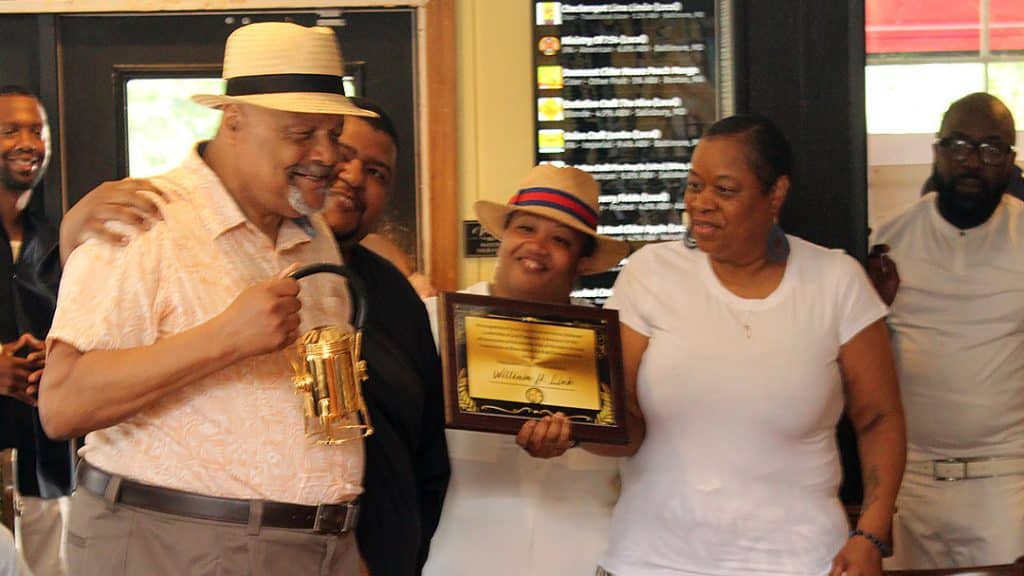
He received the A. Philip Randolph Lifetime Achievement Award and was presented with the Golden Lantern from SMART-TD upon his retirement. 

Brother Bill Link receives the Golden Lantern at his retirement celebration (Photo courtesy of David Pendleton)

At the end of the day, he attributes his accomplishments to the foundation that his mother laid for him.

“[She was from] the Jim Crow South so she didn’t want to see us boys getting hurt or anything,” explained Brother Link. “She always told us to be humble, caring, kind and courteous. That was the major ingredient for me making it 50 years.”

Honoring a Mentor and Friend

One of the SMART-TD members who already misses Brother Link is Maryland Safety and Legislative Director David Pendleton, who cites him as his first railroad mentor.

“If you looked up the word ‘trailblazer,’ there will probably be a picture of him somewhere in there,” said SLD Pendleton. “When you think of Local 1470, you think of Bill Link. He’s been a mentor to so many of the members, including myself. I became a union officer at his urging.”

His absence from the train for the past couple of weeks has been an adjustment, but SLD Pendleton is excited for his union brother’s next chapter.

“I’m very happy that my friend is finally retiring and enjoying the years of work that he’s done,” he said. “I’ve been on the railroad over 20 years, and these are the first weeks that I’ve ever been there and he’s not there. So it’s just bittersweet for me. But I miss my buddy, no doubt about it.”

Photo courtesy of David Pendleton

At 75 years old, Brother Link is ready for whatever lies ahead, especially after his retirement celebration.

“The Bible says it best. To all things, there’s a season. A time to be born, time to work, time to live, time to retire, time to die. I had my run with the railroad, and the party they gave me is fulfilling for a lifetime.”

More transit workers in California could soon have stronger protections, thanks to a bill that expands penalties and widens the coverage of temporary restraining orders (TRO). 
 
The bill, AB 394, is currently moving through the legislative process.

Stronger Penalties for Attacks on Transit Workers

Current law states that the penalty for assaulting a bus driver or passenger is punishable by up to one year in jail, a fine of up to $10,000 or both. If an injury results from the incident, the punishment involves potential time in state prison.  
 
The problem is that the list of those who are protected by these penalties is very narrow. 
 
With attacks against transit workers grabbing headlines nationwide, SMART-TD’s California Safety & Legislative Director Louis Costa says that more needs to be done. 

Restraining Orders to Cover Entire Transit System Automatically 

“Every day, transit workers are spit at, stabbed, hit, sexually assaulted, and more,” explained SLD Costa. “These incidents on public transportation system systems create safety risks and disrupt operations, making it harder for workers to perform their duties and passenger who rely on public transit.”  
 
Under the current law, employers or unions can only file a temporary restraining order (TRO) on behalf of the employee who was harassed, attacked, or threatened. No additional enforcement, such as a system-wide ban, is available.  
 
“These incidents have had a direct impact on daily operations, and as a result, many agencies throughout the state are experiencing severe operator and employee shortages,” Costa continued. “This has also impacted riders’ feelings of safety on public transit systems.” 
 
The pending bill expands current law to include an employee, public transportation provider, or contractor of a public transportation provider and makes TROs applicable across the entire transit system.  
 
This means that instead of applying to a single operator, the offender would be temporarily banned from all vehicles, stations, stops, and facilities operated by the transit agency.  
 
“This bill empowers transit agencies, employee representatives, and courts with additional tools to deter harmful behavior and enhance safety across California’s public transportation systems,” SLD Costa said.  

SMART-TD Adds California to Transit Safety Legislative Priorities 

California is the latest in a growing list of states where SMART-TD members are running or have passed legislation to better protect transit workers.  
 
This year alone, our brothers and sisters in Maryland, Colorado, and Massachusetts have either notched legislative wins to secure or strengthen safety protections or are very close to doing so, which SLD Costa points out is a hallmark of our union.  
 
“SMART-TD has been, and continues to be, a firm advocate of prioritizing public transit and the safety of our members and all transit agency employees.”  
 
AB 394 passed unanimously out of the Senate Committee on Public Safety last week and awaits a hearing in the Senate Judiciary Committee.  

July 9, 2025 — Nebraska — A loophole in a Nebraska regulation was finally closed to hold rail crew van drivers to similar standards as those required of Uber and Lyft drivers.  

The three-year drive to enact the regulatory change was led by Nebraska State Safety & Legislative Director Andy Foust and the Nebraska State Legislative Board.  

Rail Crews Mistakenly Classified as Cargo! 

Back in 2019, Nebraska passed legislation classifying rail crew carriers like RailCrew Xpress (RCX), Hallcon and PTI with non-passenger commercial drivers, like those hauling furniture.  

This classification had no disqualifying criteria, meaning a person with recent convictions for things like felony drug charges or sex offenses could legally operate a crew van.  

Unsafe individuals could (and would) sit behind the wheel, directly endangering SMART-TD members and Nebraska Communities. 

SMART-TD Pushes for Change 

SLD Foust, a seasoned railroader himself, knew the system was broken.  

“We all have those drivers we trust, the ones who make us feel safe enough to close our eyes after a long shift,” Foust explained. “But then there’s the other kind. The ones that put us on edge, that force someone in the crew to stay alert just in case something goes wrong. That guy who puts off the vibe that maybe we should take shotgun and have our union sister ride in the backseat as far away from the driver as possible. We can’t allow this to be what we accept as normal.”  

During a Public Service Commission hearing following a serious crew van accident, it was revealed that the driver had a history of drug possession charges. Foust investigated further and discovered the concerning hiring practices followed by rail crew carriers in his state.  

Crew-hauling companies knew they could get away with paying lower wages to drivers who were unable to secure employment anywhere else. Our safety was being traded for corporate convenience and the all-too-familiar operating ratios. 

Foust and the Nebraska State Legislative Board threw the brakes on this practice. 

Crew Drivers Must Meet Established Standards 

The Nebraska Public Service Commission officially adopted new rules and regulations on June 23, 2025. Under Title 291 NAC, Chapter 3, 013.08(D), rail crew van drivers are now subject to similar standards as Transportation Network Companies. The following convictions now disqualify applicants from driving rail crews: 

  • Drug-related offenses 
  • Sexual assault and related charges 

These disqualifiers are enforced via a seven-year lookback period. 

The railroads might still think of us as less than human, but thanks to Foust and the Nebraska Public Service Commission, they are being forced to acknowledge that we are people.  

“We’re not cargo. My members are not couches or coffee tables,” Foust said. “We’re people. And our safety matters.” 

Nebraska Sets National Precedent 

With Nebraska now enforcing true safety standards, it sets a powerful precedent for the other 38 states where RCX operates.  

Brother Foust and his work in Nebraska is now being presented to our representatives in other states, so crew transportation providers are held accountable for who they make responsible for our members’ safety. 

SMART-TD wants to talk with you — but more importantly, we want to listen. 

We know your time is valuable. So, let’s start here:

Reach out to us anytime

Send your thoughts to News_TD@smart-union.org or reply to any Newswire email. We want to hear what matters to you, what stories you’re interested in, what questions you want answered, and where you’re most likely to see our updates. 

Tell Us What You Use, and We’ll Meet You There 

Every day, we share updates about contracts, safety, legislation, and what’s happening in SMART-TD. Right now, that information is available on our website, in daily Newswire emails, and across platforms like Facebook, Instagram, and LinkedIn. 

But those might not be the places you go for news. And that’s what we need to know. 

Are you catching clips on TikTok during your lunch break? Skimming through X (formerly Twitter) while waiting for a train? Watching reels on Instagram? Browsing Facebook groups after your shift? Or maybe you’re checking out Truth Social or Blue Sky? 

We’re asking you directly: What social apps do you use, no matter what they are? 
We want to make it easier for you to get the information that matters most to you, right where you already spend your time. 

Why This Is Important for You 

Sometimes we need to get you information fast. It could be a contract update. A new federal rule. A safety alert. 

One tool built exactly for this is the SMART Union app. If you haven’t tried it, it offers real-time notifications, a live news feed, and updates from your local and general committee. It’s built to keep you connected to your union, your crew, and your contract all in one spot. 

If you don’t use the app, we can’t always afford to wait until you come looking for important updates. We need to be able to meet you in the moment, and that only works if we know where you are. 

It’s Not Just News. It’s Your Voice. 

We’ll always share serious updates, but this isn’t just about alerts and negotiations. It’s about building stronger union by sharing how your victories were won, honoring acts of fraternal solidarity, and highlighting the everyday heroism of our jobs. 

But to do that well, we need your help. 

What information do you care about the most? What platforms are you already on? What apps do you check during breaks, while waiting for your train/bus, or while on your commute? That’s where we want to be. 

We’re not here to broadcast at you — we’re here to connect with you. And the more we know about where, how and what you need, the more able we are to make sure you see the right info at the right time. 

How to Tell Us 

We’ve made it simple: 

  • Email us directly at News_TD@smart-union.org 
  • Or reply to any Newswire email 

Just tell us what apps you’re using and what kind of stories you would like to see more of and we’ll take it from there. 

Thank you for helping make SMART-TD stronger, more connected, and truly member-driven. 

Clarification: SMART-Transportation Division does not endorse the “One Big Beautiful Bill Act” but is supportive of a successful effort to eliminate a harmful provision that would have impacted our union’s bus operators.  
 
As the “One Big Beautiful Bill Act” is anticipated to head to President Trump’s desk for his signature, we are grateful that one provision that would have been particularly harmful to our SMART-TD bus operators is no longer included. 

Free Rein on Regulating Artificial Intelligence 

The original legislation contained a measure that would have prohibited states from regulating artificial intelligence (AI) for a period of 10 years, including automated driver systems.  
 
It’s no secret: automation is already a growing threat, but this would have given big tech companies even more leeway to operate unchecked and with limited accountability.  
 
Bottom line: including this provision would have made a bad situation worse.  

TD Members Directly at Risk

Our bus drivers and operators would have been directly impacted by this dangerous proposal, with their jobs and livelihoods at serious risk.  
 
There’s NO substitute for a human operator, and this proposal stood to replace skilled workers with robots and machines that can’t function with the precise skill and expertise that’s needed to perform this work, especially in the event of an emergency. 
 
While we are disappointed that more lawmakers did not stand up for their constituents and stop this harmful bill from becoming law, we’re grateful that the Senate took the important step of removing the AI provision before it moved any further through the legislative process.  

What’s Next 

We’d like to extend a sincere thank you to all members who took the time to reach out to their lawmakers this week to let them know how this bill will impact them and their families.  
 
Rest assured that your efforts did not go unnoticed. 
 
SMART-TD will continue fighting to ensure that our members and their jobs are protected from the very real threats posed by AI 
 
It’s clear that our collective voice accomplishes great things, but the work is not over.  
 
Whether at the local or federal level, keep speaking up and keep contacting your elected officials.  
 
Your input and our strength make a difference, and the fight is just beginning.  

The FRA recently sent notice of a razor blade intentionally stuck to the handbrake wheel of a tank car. We don’t know who did it or why, but we do know someone could have been seriously hurt. Thankfully, whoever tried to set us up with this razor blade on the brake wheel doesn’t know what part of the wheel we actually grab. Next time, we might not be that lucky. 

It’s Hard Enough Already

There are countless ways to get hurt on the job. The last thing we need to worry about is boobytrapped equipment. 

Working Safe in a Dangerous Environment 

Yes, the rulebooks and federal regulations matter. But working safely in a dangerous environment is not easy. Remember, no freight is worth your blood. If you’re rushed, distracted, or just assuming things are “like they always are,” that’s when accidents happen. Stay alert. Situational awareness is how we make it home with all of our parts intact. 

Take care of yourself.  

  • Inspect first. 
  • Protect yourself at all times. 
  • Speak up if something’s not right. 
  • Remind your brothers and sisters to keep their heads on a swivel. 

We all know that the railroads are making conductors do more and more freight car inspections, it’s important to take the time to inspect all equipment carefully, especially around safety appliances.  

Slow down, take a breath, and check your surroundings, especially when it comes to brake wheels, cut levers, ladder rungs, or anything else you come into personal contact with on the rail. Look before you grab. 

Report Suspicious Items to Your Local’s Safety and Legislative Rep. 

We appreciate the FRA for getting this warning to us quickly so we can do what the railroads won’t: look out for each other. Our equipment sits unattended all over the country. We can’t control what trespassers, or bad actors do out there. But we can stay alert. We can watch each other’s backs. And we can make sure everyone goes home whole. 

If you see anything suspicious like razor blades, wires, sharp edges, or tools placed where they shouldn’t be, please report it to your supervisor, your crew and the Safety and Legislative Representative for your local. As a reminder, your LR is also your safety officer. They will know how to handle the situation and how to escalate it to the State or National Safety and Legislative offices if needed. 

Stay safe and stay vigilant.  

July 2, 2025

SMART-TD is excited to announce the upcoming launch of the new Voluntary Income and Life Protection (VILP) Program, which will be available during the upcoming Open Enrollment period.

This program has been designed to provide enhanced financial protection for members and their families, with options that can be tailored to individual needs.

The VILP Program includes:

  • New: Voluntary Gap Short-Term Disability Insurance
    Complements and stacks with the existing SMART-TD Voluntary Short-Term Disability (VSTD) coverage to offer a higher amount of income protection if you are unable to work due to injury, illness, or surgery.
  • Voluntary Long-Term Disability (VLTD)
    Provides extended income replacement for longer-term disabilities.
  • Voluntary Life Insurance (VLIFE)
    Offers life insurance protection to help safeguard your family’s financial future.

Together, these voluntary benefits form a comprehensive protection package, helping to close coverage gaps and strengthen the financial security of our members.

For more information, please visit www.smart-vilp.com.

Enrollment instructions will be provided soon. We encourage all members to take the time to review these valuable options when enrollment opens.

Thank you for your continued support of SMART-TD.