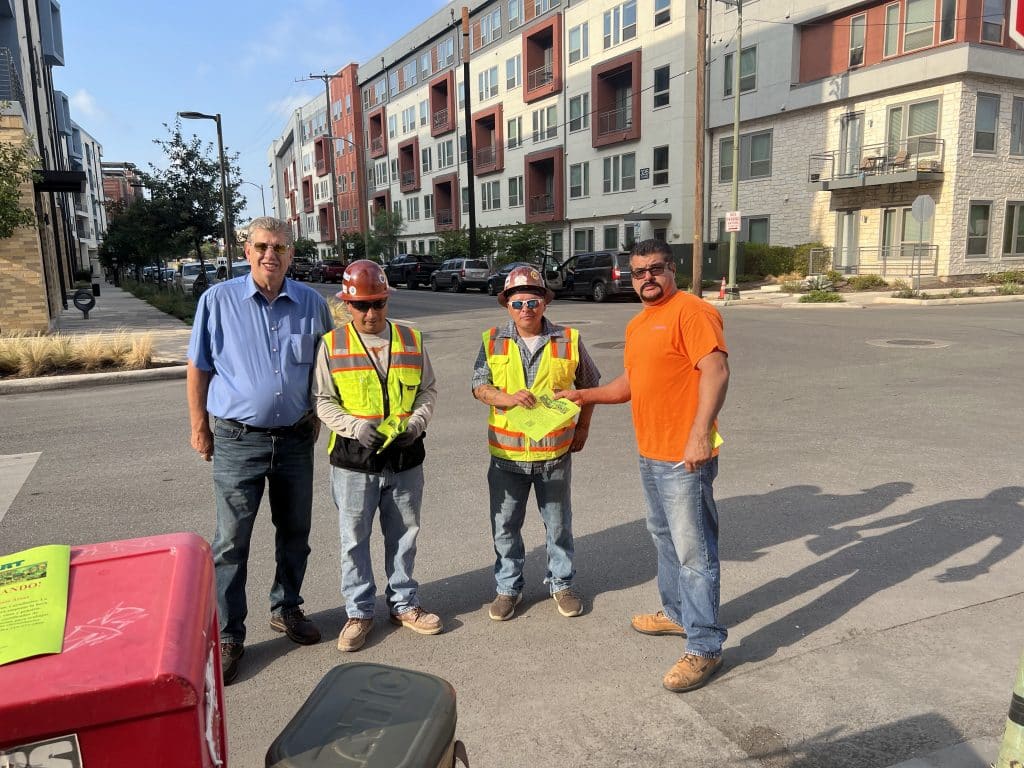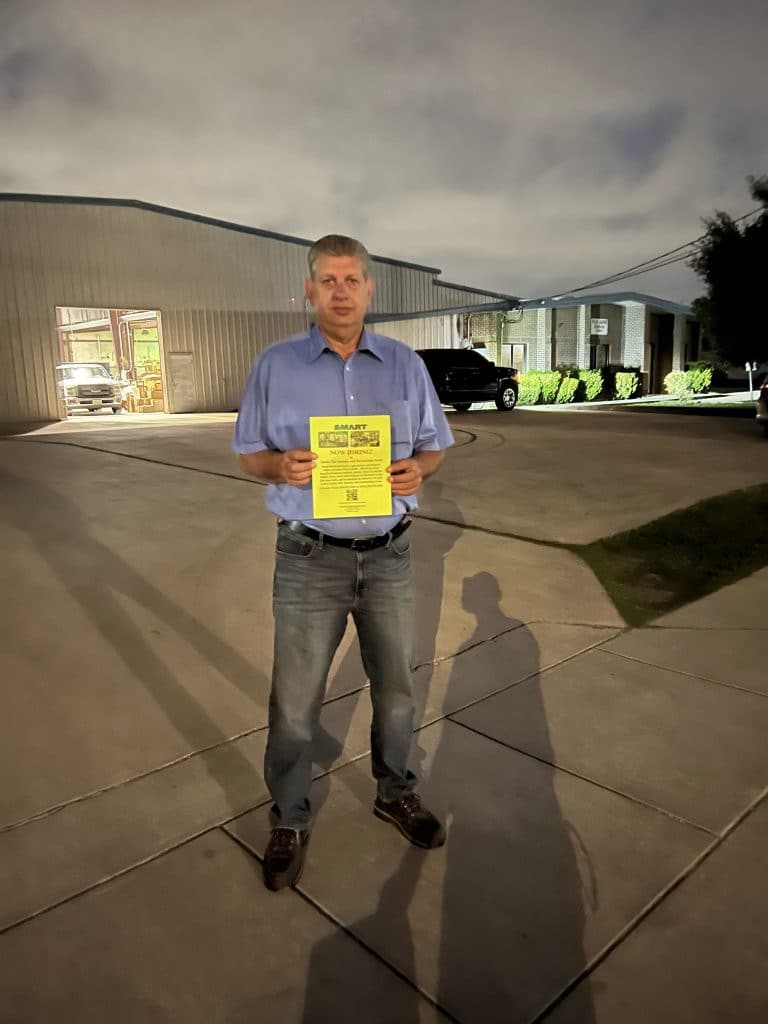
When companies use low-road contractors on construction projects and lower local jobsite standards, sheet metal workers, communities and businesses suffer — which is exactly why SMART local unions organize to make sure that doesn’t happen.

For SMART Local 19, a campaign that started with a Chick-fil-A construction site in Glassboro, New Jersey, eventually led to a huge victory for sheet metal workers and communities across the state.

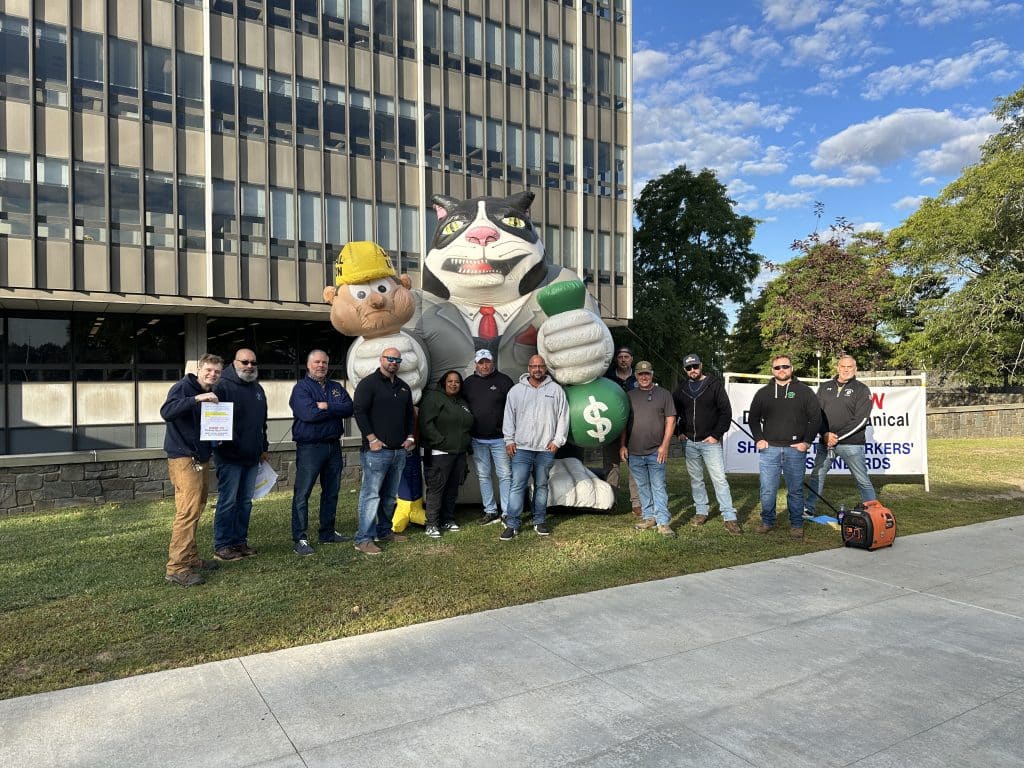
The Glassboro Chick-fil-A was initially using a nonunion contractor to install its sign, menu board and advertising package — meaning sheet metal workers performing that work were not being paid the union-negotiated wages that local community members deserve. In response, Local 19 began bannering the Chick-fil-A construction site; later they brought out an inflatable “Scabby the Rat,” which stood on the jobsite with the banner for three days. Shortly thereafter, Local 19 Organizer Brian Heino received a call from management, informing the local that the work package for that project was re-awarded to a Local 19 signatory contractor.

Another Chick-fil-A location soon broke ground a few miles away — again, using a nonunion contractor. So Local 19 brought back the banners and Scabby in order to raise awareness about why it’s important to use high-road contractors and pay New Jersey sheet metal workers what they deserve. Once again, a Local 19 contractor was re-awarded the work package, securing opportunity for SMART members.

But this time, the work award wasn’t just for the one project — it was for ALL future and current Chick-fil-A locations being built and planned for construction in New Jersey.

When we let people know about the issues happening in their communities, and when companies and contractors realize that those issues aren’t just going to disappear, unions can win real progress for sheet metal workers and local jobsite standards.

For SMART members in New Jersey, the proof lies in every new Chick-fil-A construction site that breaks ground from here on out.

Great work, Local 19!
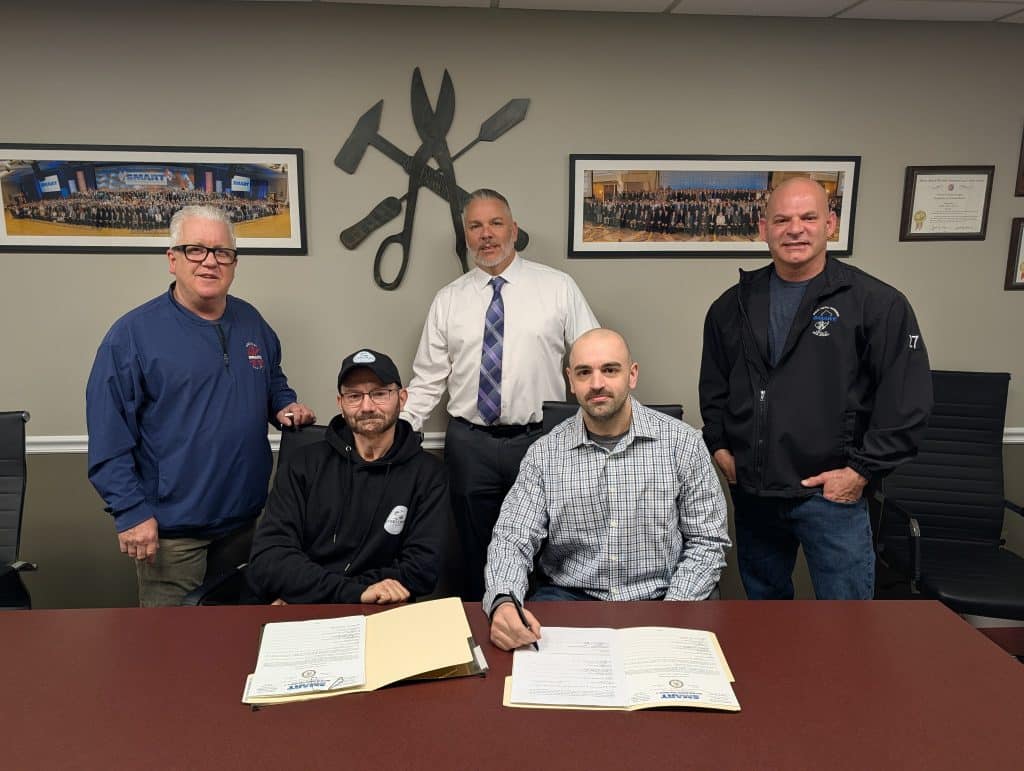
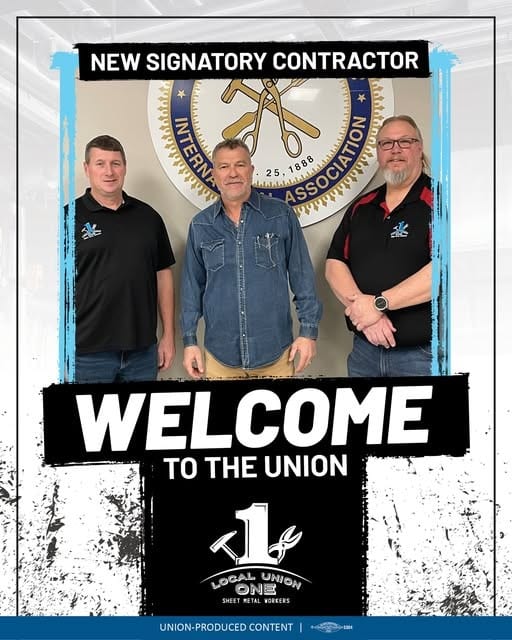
When two members of SMART Local 27 (Southern New Jersey) started to think about starting their own sheet metal company, the local initiated organizing conversations right off the bat. The result? Local 27’s latest signatory contractor: SteelCraft Industrial, a specialty steel fabrication company in Keyport, New Jersey.

The strategic organizing effort started early. When the two members first began to consider leaving their jobs and starting their own business, they had preliminary discussions with the local’s Organizing Department, expressing interest in being signatory to Local 27. Recognizing the opportunity, local organizers immediately began working with them on the benefits of building the company as a union contractor from the start.

Under the direction of Local 27 Business Manager Christopher George, the organizing department worked directly with the prospective owners over several meetings and phone calls, outlining the advantages of becoming signatory — including access to a skilled workforce, the ability to compete for prevailing-wage and public works projects, the benefits of participation in the union’s established benefit and training programs, and much more. The members and the local also discussed the long-term stability that union affiliation could provide for both their business and their families.

After several months of back-and-forth discussions and negotiations, the owners agreed to move forward and sign with SMART Local 27 — expanding our union’s contractor base in the Garden State.

SteelCraft provides yet more proof of why we organize: to benefit sheet metal workers, contractors and communities across North America.

SMART organizers across North America work constantly to help contractors learn about the union advantage: top-notch training, a skilled workforce, the opportunity to grow through partnership and more. That learning process can sometimes take years — but ultimately, local unions, contractors and employees benefit.

That’s the case for recently signed Local 91 (Rock Island, Illinois) contractor O’Dell’s Heating and Air, which officially partnered with the local in December 2025.

“We recently decided to go union,” O’Dell’s wrote on Facebook after the company signed. “We feel the training for union techs is unparalleled and it offers our O’Dell’s family a benefit package they more than deserve. Local 91 has been tremendously helpful through the transition and we couldn’t be more excited to be part of their organization.”

Since 2018, Local 91 had maintained consistent outreach with O’Dell’s through several organizers, each addressing common concerns about cost, control and company size. The current organizer, Chuck Earp, shifted the approach toward understanding operational challenges, which proved pivotal when the contractor toured the training facility and observed apprentices in session. That experience highlighted the growing skill gap within the contractor’s workforce.

O’Dell’s also noted ongoing difficulty finding experienced workers and was operating two employees short, a need that Local 91 immediately filled after signing the contractor. With the contractor’s involvement in new home construction, including a recently awarded 38-unit housing project, the union partnership opened new opportunities for O’Dell’s to compete more effectively in a residential market heavily dominated by nonunion contractors.

Ultimately, the contractor recognized that its true limitations were not wages or autonomy, but access to skilled labor and structured training. By addressing those needs without interfering in business operations, Local 91 successfully brought O’Dell’s on as a signatory shop — an excellent example of a patient, low-pressure organizing strategy that builds trust through value and collaboration.

SMART Local 441 members at Ingalls Shipbuilding — a shipyard in Pascagoula, Mississippi, currently building ships for the United States Navy — recently ratified a five-year agreement that will provide an 18% pay increase right away, 32% increases in the first four years and a variety of other benefits. The new contract demonstrates the importance of organizing rigorously in so-called “right-to-work” states — and the power of a union contract.

Ingalls Shipbuilding, founded in 1938, is one of the largest private employers in Mississippi. The workers there have been performing work for the U.S. Navy for generations, playing a critical role in maintaining our country’s fleet. Despite that fact, there had not been a fully negotiated collective bargaining agreement at the shipyard in over 20 years; past agreements were extensions that only improved wages and health insurance or barely kept up with the cost of living.

For that reason, Local 441’s leadership, headed by Business Manager Thomas Fisher II and Organizers Richard Jennings and John Lake, used the contract campaign to mobilize members, with shop stewards rallying members and encouraging workers that were previously not paying dues to join our union. Working together, the Local 441 team was able to sign 43 new members, 23 of which were signed on the day of the contract vote. These new members push Local 441’s totals in the bargaining unit to over 80% union.

Along with the stellar pay, the contract contains shift premiums of 10%, and specialty and combination workers will receive an additional 5% as well. Perhaps most importantly, SMART members at Ingalls are now in a better position for future rounds of bargaining, with new members helping grow the local’s strength at the shipyard.

This is why we organize!

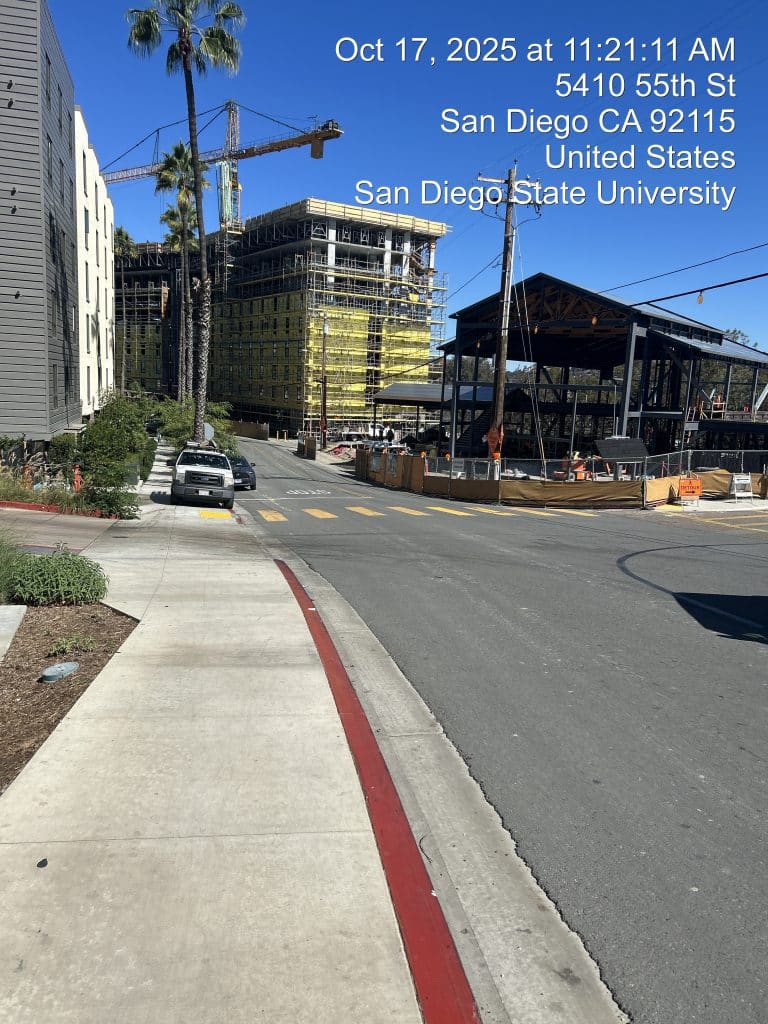
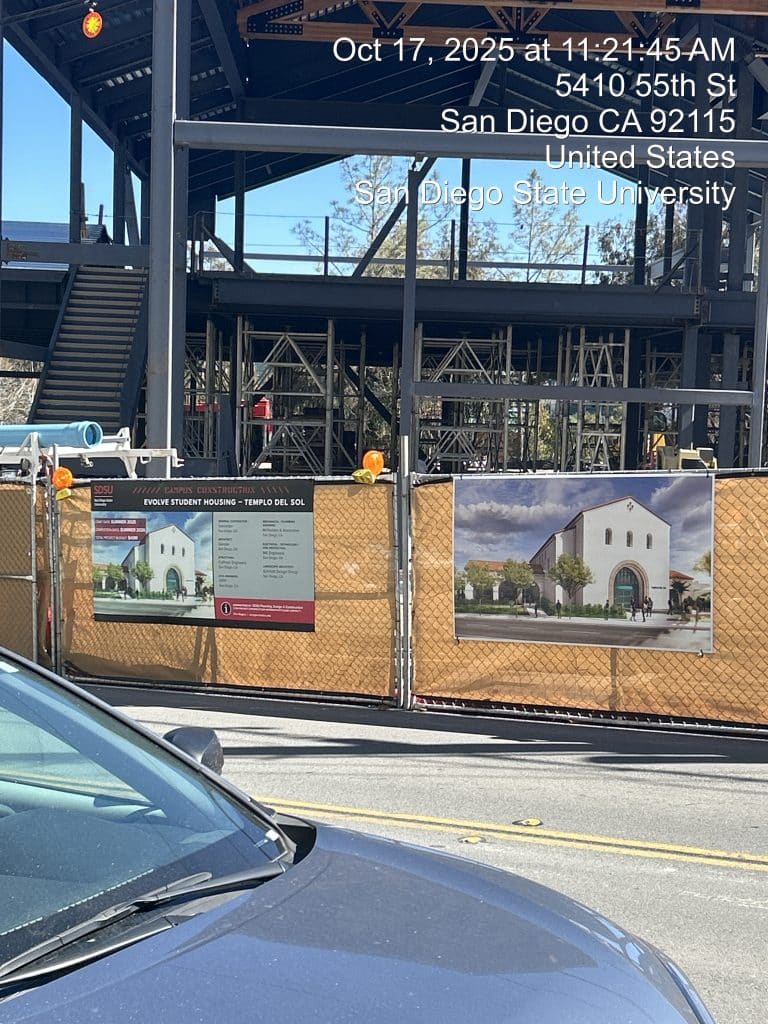
In a victory for SMART members, university students and jobsite standards, Local 206 (San Diego) recently flipped a large college housing project away from a nonunion competitor.

The Evolve Student Housing development at San Diego State University (SDSU) is a $450-million, multi-phase project consisting of five residential towers and an amenity building, with construction that started in May 2025 and continuing through December 2030. The university’s plan calls for maintaining student housing capacity throughout construction by bringing new beds online before existing units are demolished.

Ahead of construction, Local 206 signatory Ocean Park Mechanical completed BIM coordination and prepared to perform the mechanical scope. However, the general contractor, Swinerton, ultimately awarded the full mechanical package to nonunion company Atlas Mechanical.

Local 206 was familiar with Atlas from prior projects in the region. Union representatives began monitoring Phase 1 of the SDSU project and conducting site visits to assess progress. Conversations with other trades and on-site observations indicated that the mechanical contractor was struggling to meet project scheduling demands.

During this process, Local 206 brought to Swinerton’s attention an alleged wage-and-hour violation involving Atlas Mechanical.

In the months that followed, A.O. Reed & Co., a longtime Local 206 signatory contractor, was invited to submit a proposal for the next phase of work and later to provide pricing to assume additional phases of the development. A.O. Reed was subsequently awarded Phase 2 of the project and is currently in discussions to perform mechanical work on future phases of the Evolve Student Housing development.

This outcome reflects the importance of strategic jobsite monitoring, contractor accountability and maintaining strong relationships with owners and general contractors. Through coordinated efforts, Local 206 was able to help position a qualified signatory contractor to successfully deliver the mechanical scope on one of the region’s most significant higher-education housing projects.

That means work opportunities for SMART members. That means high standards for workers on the project. That means college students benefit from the quality and craftsmanship that signatory contractors bring to the table.

That is why we organize!

According to recent studies, the vast majority of Americans — over two-thirds — view unions favorably. Working people know that unions like SMART can change lives with higher pay, protections at work, stronger health care, a pension and a good life for members and their families.

The same studies show that more than 50 million workers in the United States said they would vote to unionize their workplace in 2025 if they got the chance. But due to a variety of factors, from hostile employers to broken labor law, they were unable to get that opportunity.

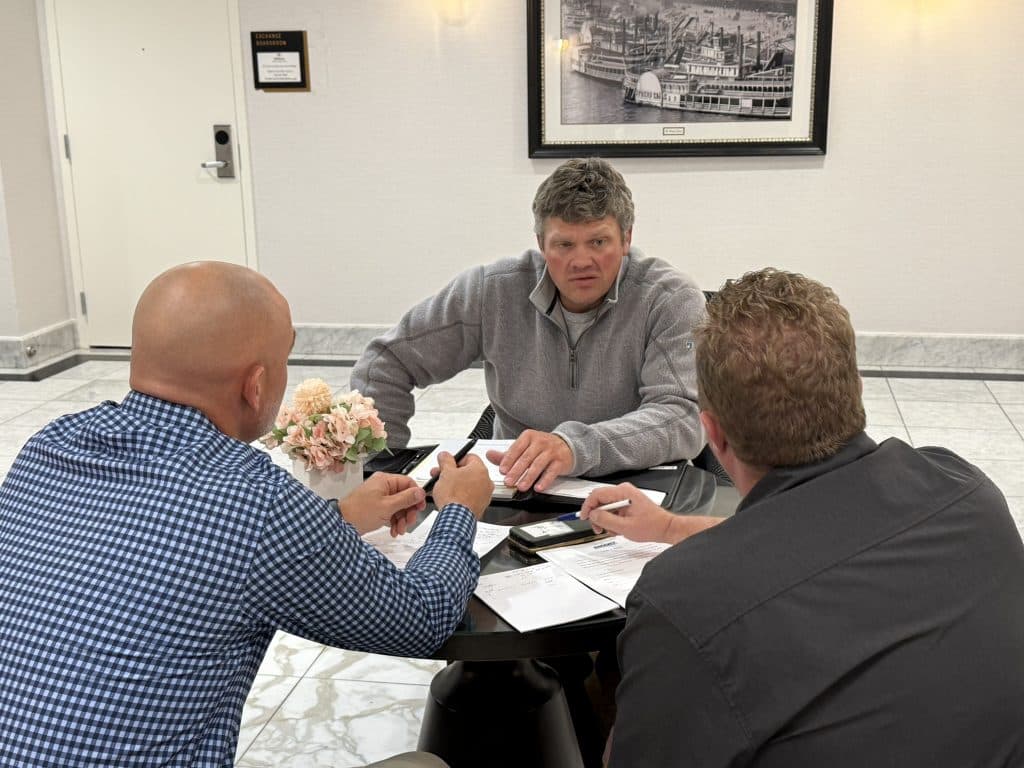
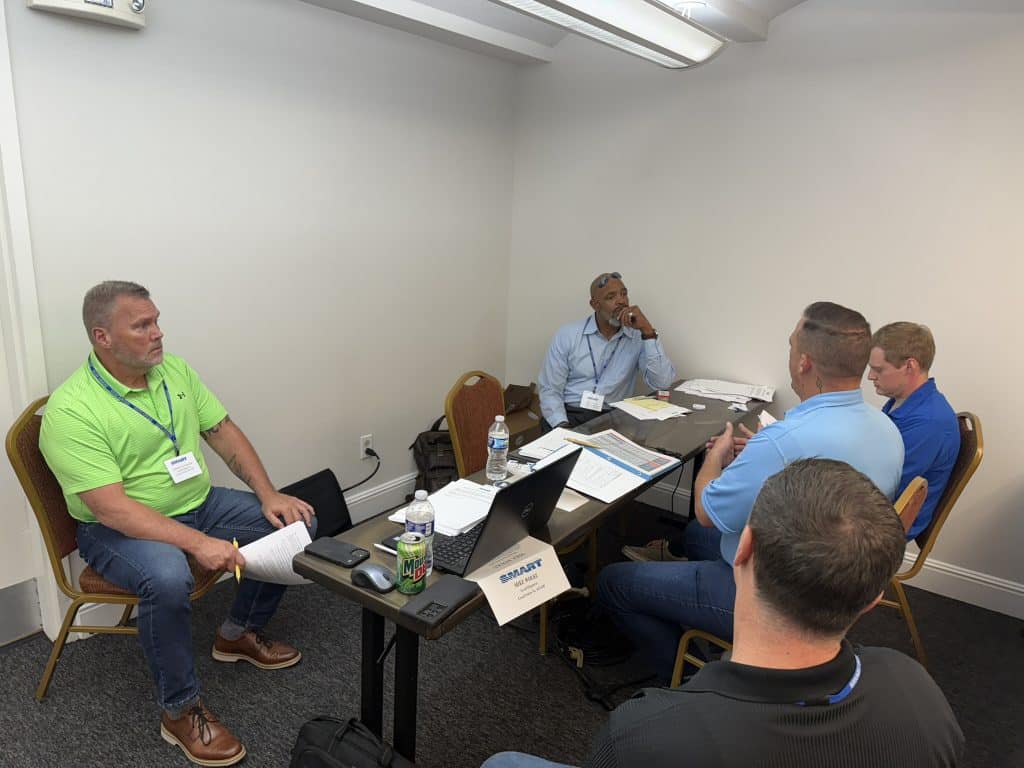
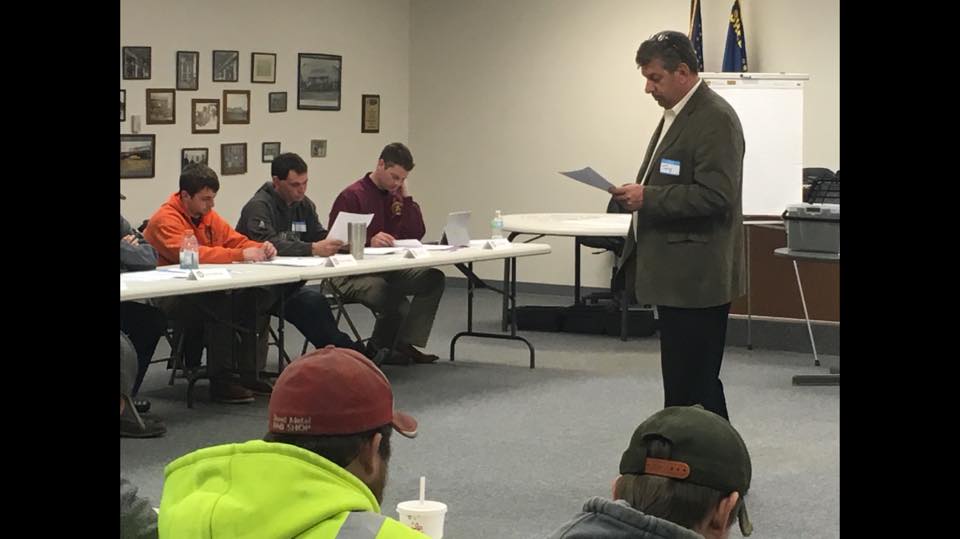
That’s why it’s more important than ever that SMART organizes to help those workers join our union. And it’s why the SMART Education Department held its Bottom-Up Organizing Class in Austin, Texas, during the week of January 5th, 2026. Using comprehensive role-play that mimicked a worker-led organizing campaign over the duration of the week, the class focused on developing practical competency in the process and skills required to successfully facilitate victorious unionization drives.

Participants worked in small “local” teams; each local worked as both an organizing team and role-played as workers at two fictional companies — Coleman Sheet Metal and Daniel Sheet Metal & Fabrication — based on character backgrounds provided for the simulation. From initial contact to a mock union election at the end of the week, attendees dedicated their days in Austin to developing the skills that will help SMART continue to grow.

“Participants were really engaged in the simulation and were observed organizing each other outside of class time,” said International Instructor Richard Mangelsdorf. “Everyone did a fantastic job working with their groups and playing their parts. The fictional Local 5 — Chris Weist (Local 12), Paul Conners (Local 17), Ryan Miller (Local 66), Brian Legge (Local 100) and Kenny “Math” Montejano (Local 105) — was the top “local” in the class, based on highest election win percentage. Well done everyone!”

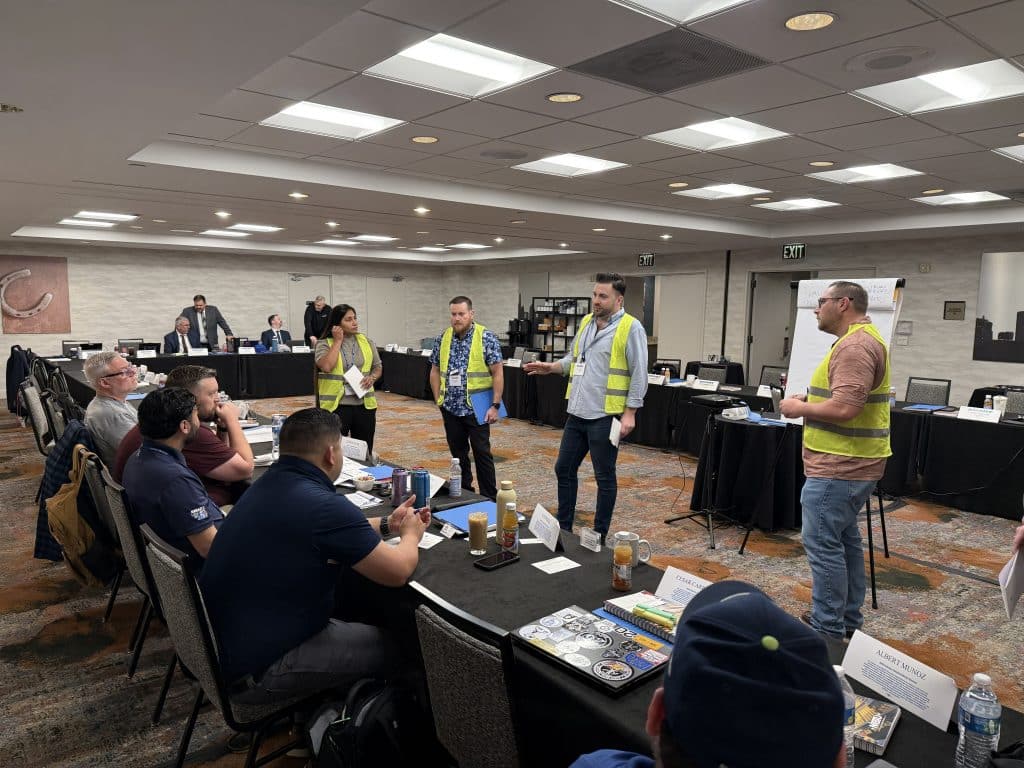
The SMART Education Department, in collaboration with the Organizing Department, held its Organizing III class during the week of October 6–10, 2025, in St. Louis. This redesigned class focused on the “top-down” organizing strategy, with a specific emphasis on developing organizing campaigns targeting nonunion contractors.

Expanding SMART’s signatory contractor base is one of the best methods local unions have to keep members employed. For that reason, it’s more important than ever for organizers to strengthen their ability to identify, build relationships with and ultimately sign new employers.  

The primary subject of the October class centered around what contractors need to succeed and how our locals are built to fulfil that primary need: a flexible labor force. Participants delved deep into a contractor’s mindset to understand the challenges of running a construction company, learning how to reframe common employer objections to unionization as benefits for both workers and contractors. Attendees also roleplayed interactions with the gatekeeper, delivered a custom-built elevator pitch and practiced both first meetings and subsequent meetings with the contractors.

Throughout the week, participants learned to find nonunion contractors in their local’s jurisdiction using Standard Industrial Codes (SICs) and turned their lists into maps and routes using Google Maps. There were nearly 20 exercises during the course; after mock exercises, participants debriefed with critical feedback to their peers.

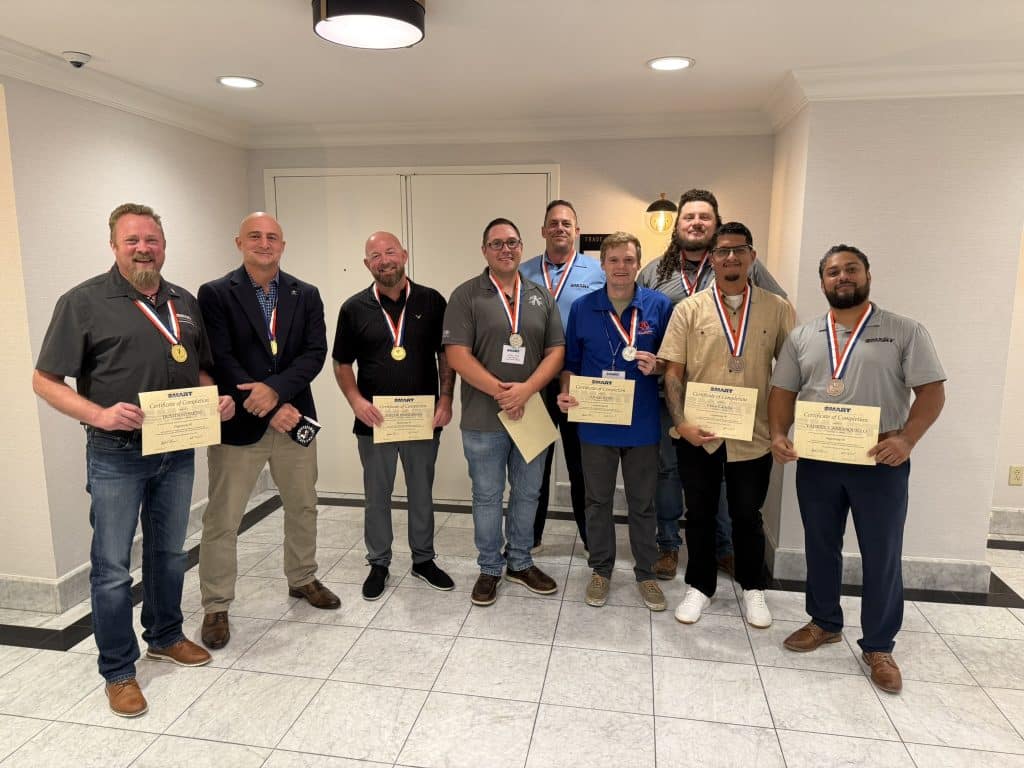
A point system was in place, with organizers grouped into fiction local unions and evaluated by their fellow participants. “Local 111” — Phil Berg (Local 23), Cesar Carrillo (Local 26) and Yadriel Carrasquillo (Local 68) — took third place. “Local 444” — Adam Kerr (Local 71), Doug Meyers (Local 103) and Aaron Leslie (Local 104) — was ranked second place. “Local 333” — Dustin Hysmith (Local 16), Hallie Jennerman (International organizer/Local 18) and Jay Jones (Local 265) — was recognized by peers as the top group in the class.

“Congratulations to Jay Jones, the highest point winner in the top group, for winning the coveted ‘Coffee is for Closers’ coffee cup!” said SMART Director of Education Eli Baccus. “We hope this class spurs participants’ top-down organizing efforts, and that more contractors are brought in for more member jobs.”

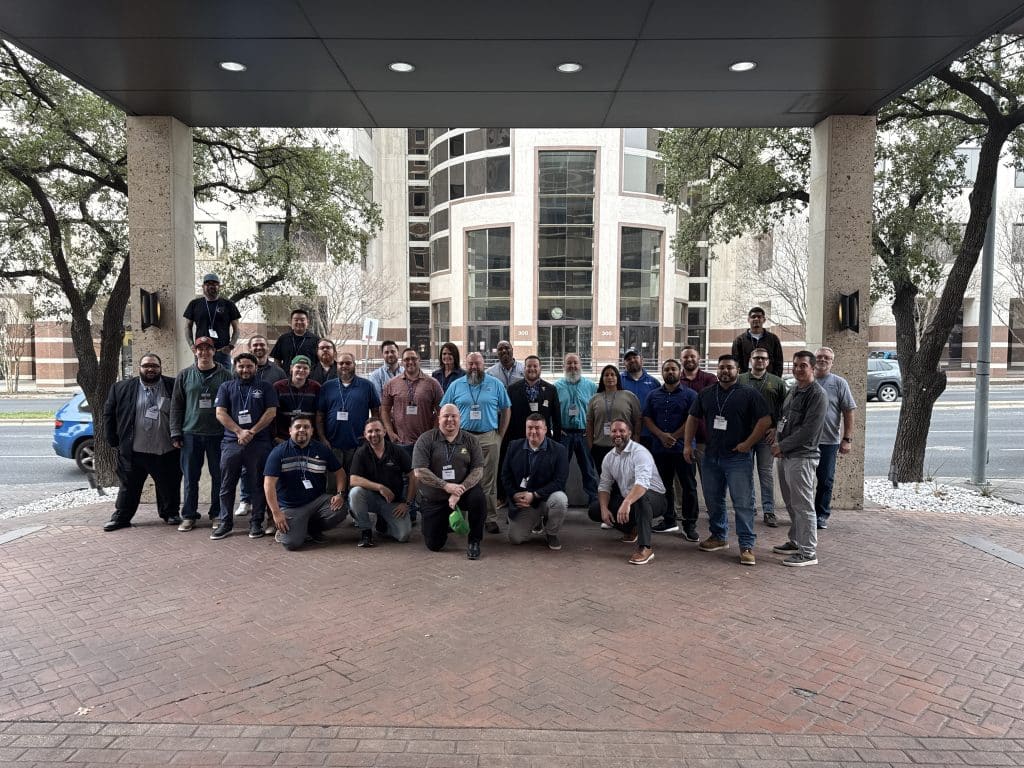
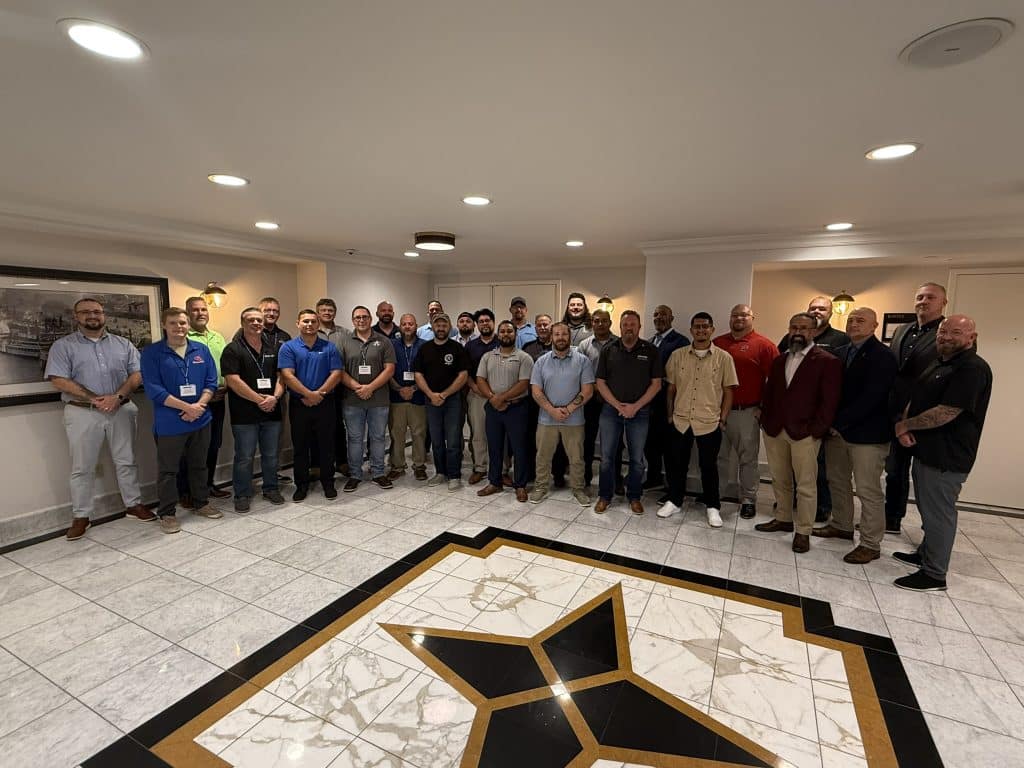
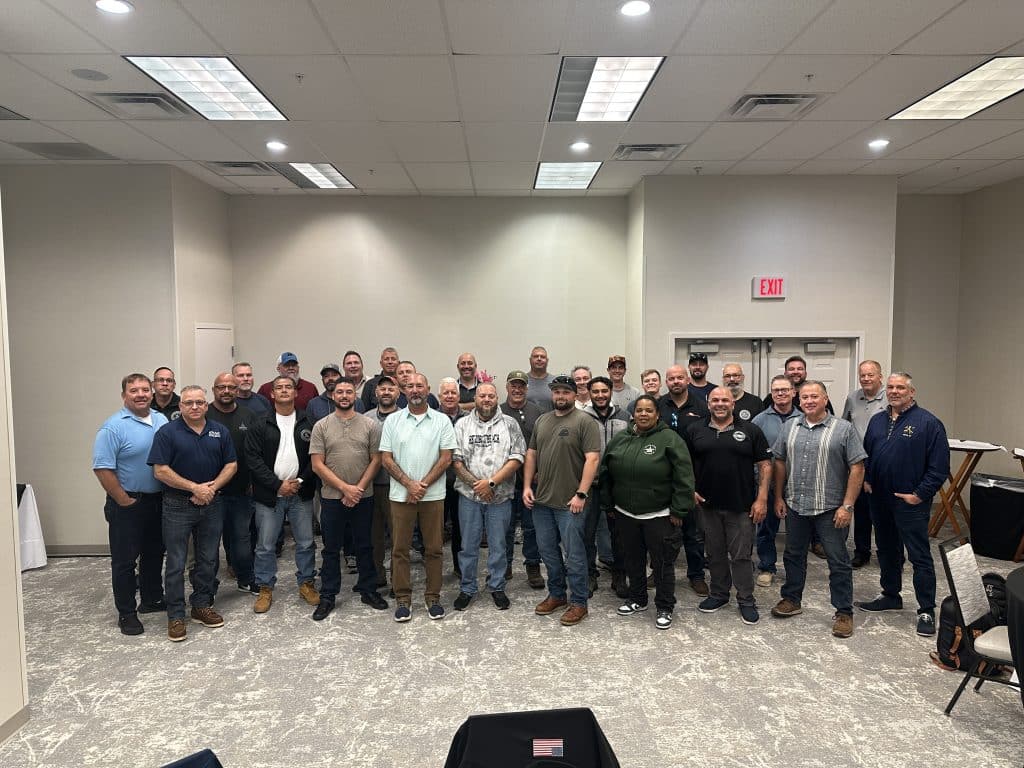
The 2025 SMART Northeast Region I Organizers Meeting was held September 9–10 in Clifton Park, New York, bringing together local union organizers, business managers, business agents and training coordinators from across the northeast of Region I, covering Virginia to Maine.

SMART Director of Organizing Jason Benson, Regional Director Frank Sullivan and International Organizers Tom Kelm, Warren Faust and Frank Greer provided field training to both experienced organizers and 11 newly appointed organizers, who participated in their first regional meeting.

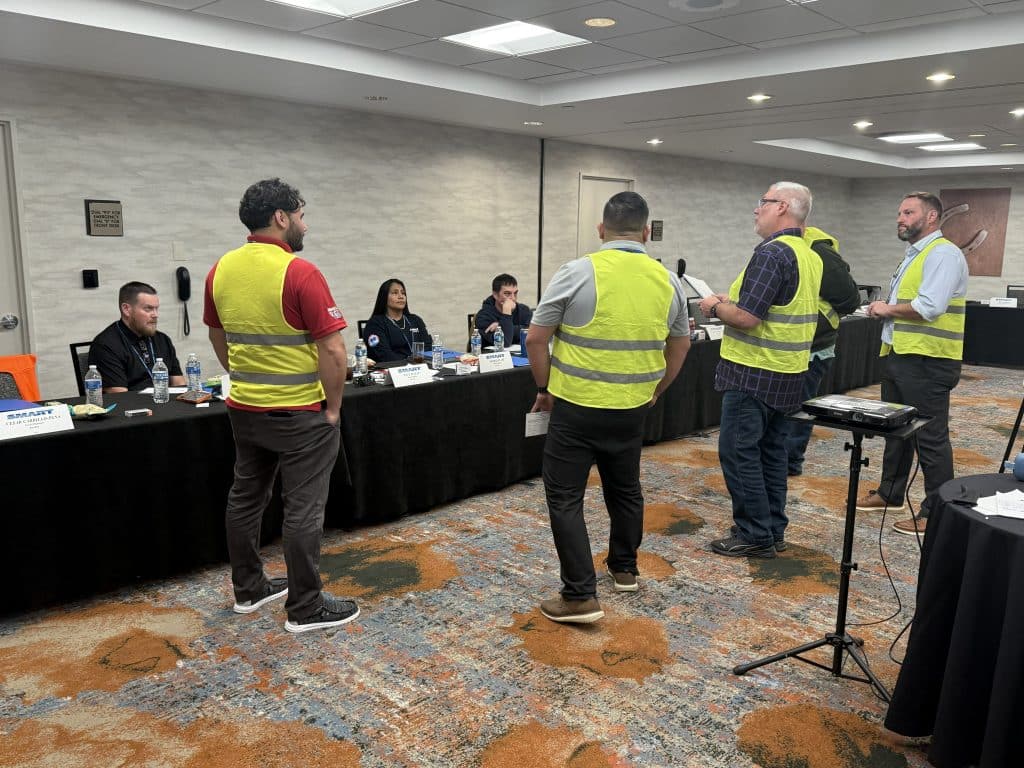
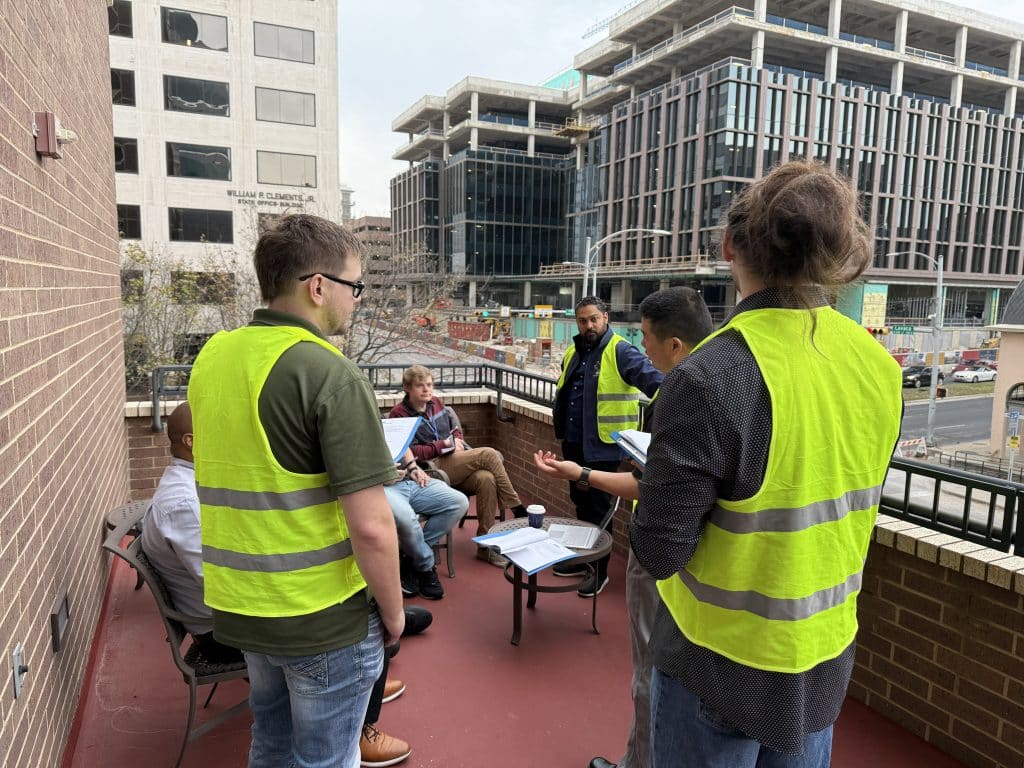
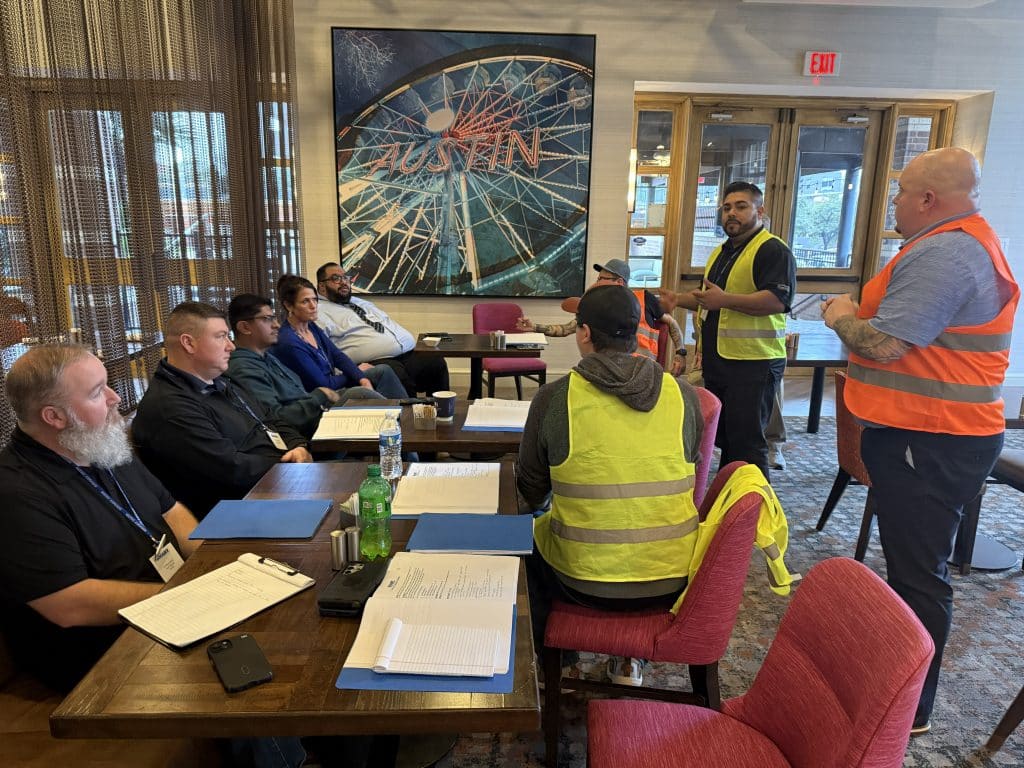
The two-day meeting opened with sessions on SMART organizer expec­tations, street law, Construction Organizing Membership Education Training (COMET) and strategic campaign planning. Day two featured an in-field job action exer­cise at three different sites in SMART Local 83’s jurisdiction, as well as a debrief that provided hands-on experience in applying these orga­nizing strategies. The meeting ended with local organizers’ reports and an open floor discussion, fostering collaboration, knowledge-sharing and alignment on SMART’s orga­nizing priorities across the northeast portion of Region I.

Organizing is how we win!

In January 2026, SMART Local 1 (Peoria, Illinois) announced the successful signing of Prow’ess Construction Corp. as a signatory contractor and the completion of a highly specialized workforce request for an international Federal Aviation Administration (FAA)-regulated project. This effort was led by Local 1 Business Manager Dave Gamber and Organizer Domenic Theison, reinforcing Local 1’s commitment to supplying highly skilled union labor for complex and specialized projects.

Prow’ess Construction Corp., headquartered in Springfield, Illinois, and located within the jurisdiction of SMART Local 218, was awarded a project involving the installation of a copper roofing system at the main airport in Turks and Caicos. The copper roof is a critical component of the airport’s antenna grounding system, requiring highly skilled sheet metal workers capable of passing a stringent FAA-observed soldering certification test.

SMART Local 218, through Organizer Mitch Noll and Business Manager Rich Manka, made efforts to staff the project locally; however, members were not willing to travel internationally for the duration of the work. As a result, and in the spirit of cooperation and solidarity across our union, Local 218 referred Prow’ess Construction to Local 1 to assist in fulfilling the workforce needs.

Under the leadership of Gamber and Theison, Local 1 successfully stepped in to meet the contractor’s needs and ensure the project moved forward with union craftsmanship.

At the request of the FAA, soldering certification testing was conducted under direct FAA supervision at Local 1’s training facility. Two Local 1 members — Jared Clymer and Jim Emanuels — successfully passed all required testing and received FAA approval to perform the work overseas. Both members are now authorized to complete the installation at the Turks and Caicos airport, representing Local 1 and the sheet metal workers’ trade at the highest professional level.

This project highlights the strength of inter-local cooperation, the effectiveness of union training programs and the ability of Local 1 to supply highly skilled labor for technically demanding, FAA-regulated international work.

SMART mourns the passing of our Local 73 (Chi­cago, Ill.) brother Anthony “Tony” Scavone, who left us on July 7, 2025. Tony retired on December 31, 2024, after a remarkable career that touched the lives of so many in our union and beyond.

Tony began his journey working with the tools, where he built not only his craft but also his deep commit­ment to his fellow members. He later served 11 years as a Local 73 organizer, business representative and recording secretary before stepping into a broader role with the International, where he spent 17 years as an organizer and as Region II organizing director. In that role, his jurisdiction stretched from Illinois and Nebraska all the way to the Gulf Coast, and his work left a lasting mark in every corner of that region.

Throughout his decades of service, Tony never stopped fighting for working people. He led organizing campaigns across the United States, strengthening SMART for generations to come. But perhaps his greatest legacy was the time he devoted to mentoring others — patiently sharing his experience, knowledge and strategies with organizers across the International and our local unions. The leaders he guided and the lessons he passed on will carry forward his spirit, knowl­edge and dedication long into the future.

For those who knew him personally, Tony was more than a labor leader. He was a trusted friend, a steady presence and a source of laughter and encouragement. His sharp wit, his warmth and his ability to connect with anyone made him beloved across our union and throughout North America. Tony embodied the best of what it means to be union: solidarity, unity and a deep love for his brothers and sisters.

He leaves behind his wife, Donna, and his children, Roxanne Bastian (Kyle), Nina Scavone and Anthony R. Scavone III; his mother, Rosemary Scavone; and his siblings, Ralph Scavone (Sarina), Julie Petschenko (Mike) and Rosemary Terranova (Peter).

He will be dearly missed, but his impact on the members, the labor movement, and his legacy will never fade.