Organizing is the foundation of the labor movement, and it remains the key to SMART’s health and strength to this day. Bringing unorganized workers into our union is how we grow union density, maintain the health of our funds and build our strength at the bargaining table.
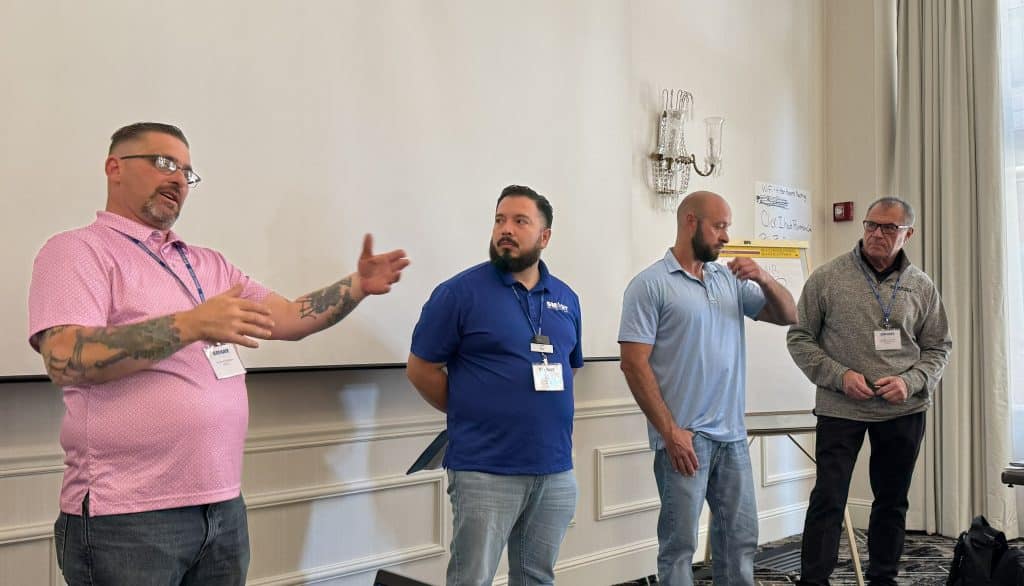
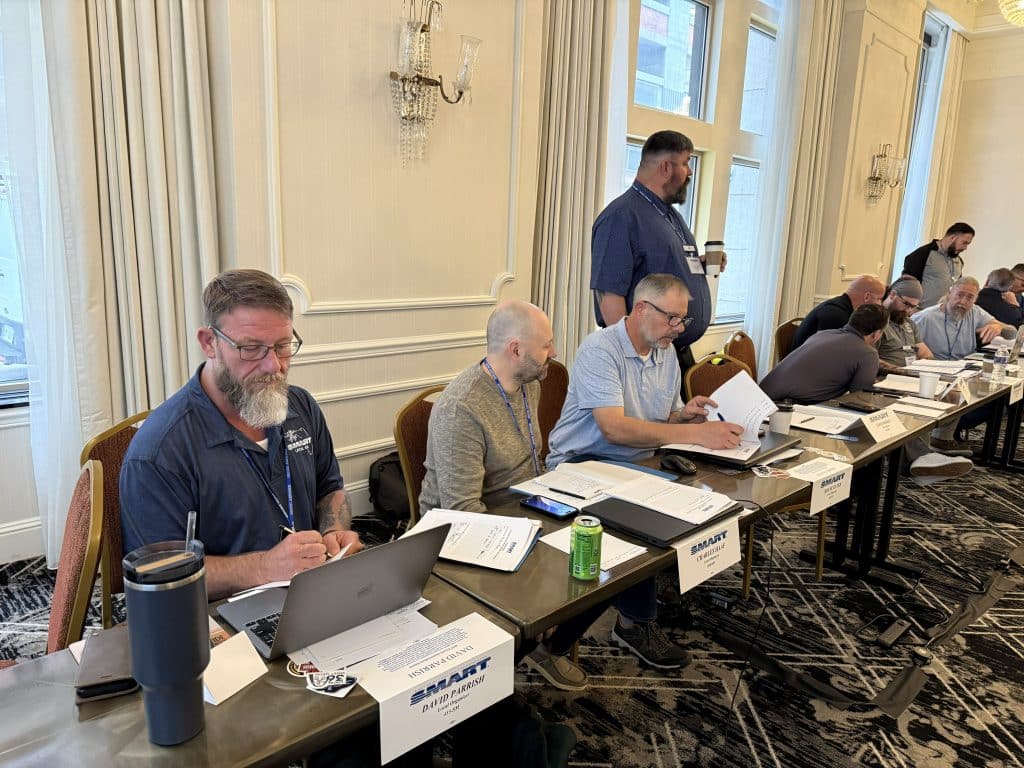
For that reason, the SMART Education Department held its Bottom-Up Organizing class in St. Louis, Mo., during the week of April 13, 2026. The class focuses on developing practical competency in the process and skills required to successfully run bottom-up organizing campaigns.
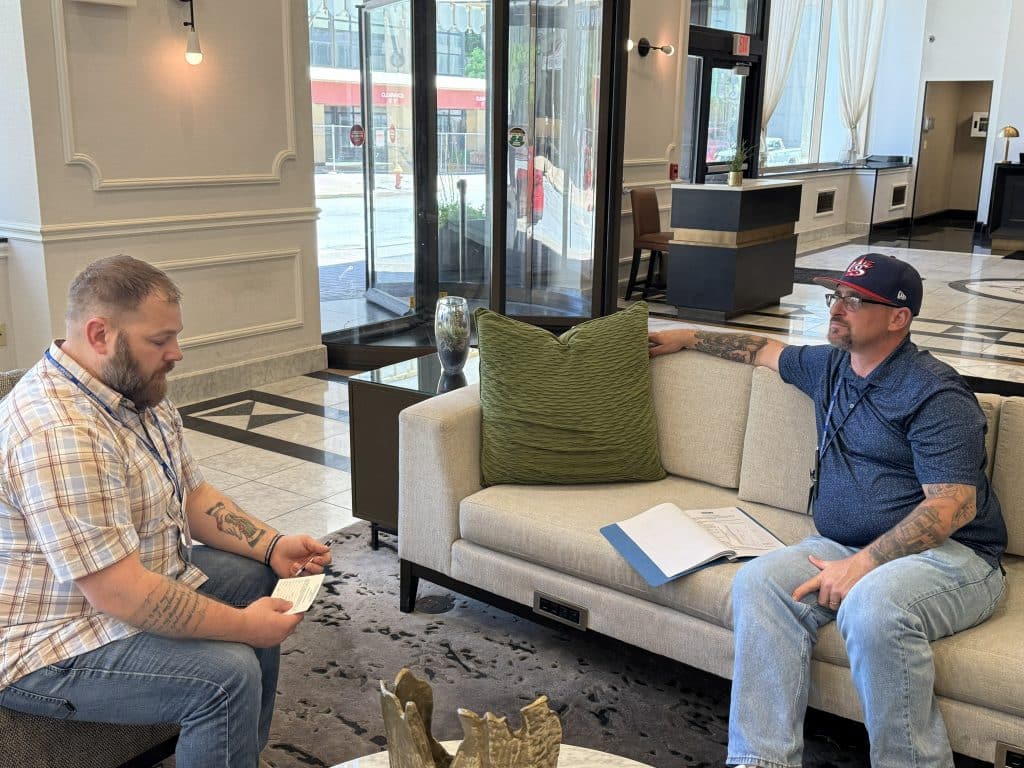
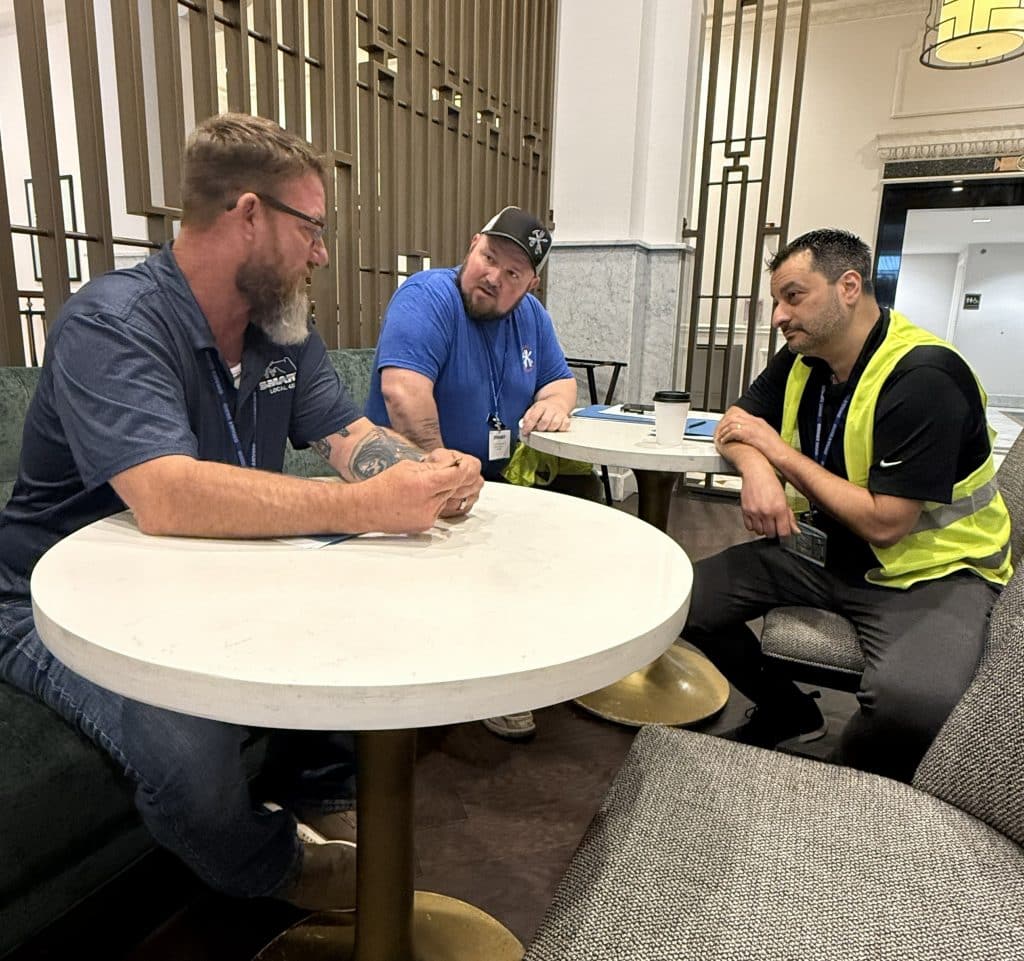
Participants worked in small “local union” teams in a comprehensive role-play that mimicked a bottom-up campaign throughout the entire week. Each fictional local union worked as an organizing team and role-played the workers at the companies — Coleman Sheet Metal and Daniel Fabrication — based on character backgrounds provided for the simulation.
Each team was ranked by their performance in a mock union election at the end of the class. The fictional Local 2 group — Scott Olson (Local 18), Juan Amaya (Local 28), John Gjokaj (Local 38), Kyle Determan (Local 263) and Joe Watters (Local 285) — was the top local in the class based on highest election win percentage.
“Participants were very engaged in the role-play and were observed organizing each other outside of class time,” said SMART Director of Education Eli Baccus. “Everyone did a fantastic job working with their groups and playing their parts. Well done, everyone!”
Good partnerships in the union sheet metal industry don’t happen by accident. They’re built the same way anything worth a damn is built: with time, trust and hard work.
That’s exactly how things got rolling between Local 12 (Pittsburgh, Pa.) and Avalotis Corporation.
Back on October 14, 2025, Local 12 Business Manager Geoff Foringer connected the local with Chris Avalotis, owner of Avalotis Corp. Chris isn’t new to the skilled trades, and he knew what he was looking for. Avalotis Corp started as a family painting business more almost 60 years ago, in 1967. In the decades since, the company has grown into a multi-trade operation, taking on jobs across the country.
During the conversation with Foringer, Chris made it clear what he needed: skilled workers who could deliver on architectural work at a higher level. While his company was already performing that work, he saw something different in what Local 12 brings to the table.
About a week after the first meeting between Avalotis and Local 12, the conversation moved from the phone to the field.
On October 23, Foringer and Local 12’s Chris Weist sat down with Avalotis reps to talk shop — what Local 12 can do, where the local fits, and how SMART can help Avalotis get the job done right. The focus was simple: show the company the value of trained, union sheet metal workers when it comes to architectural applications.
The foundation was set for the potential partnership to grow.
“During this meeting, we outlined how Local 12 could serve as a strategic partner and addressed questions regarding our capabilities,” said Weist. “Avalotis expressed strong interest and requested a follow-up visit to tour the training center and learn more about our programs. Plans were made to prepare a contract in anticipation of that visit, with the goal of executing it at that time.”
Of course, like any job, there were a few starts and stops.
On November 11, 2025, Chris reached out to say they’d reconnect after Thanksgiving. That was no problem for Local 12. The lines stayed open: calls, emails and steady communication, “allowing both parties to further develop the relationship and build mutual trust between Local 12 and Avalotis Corporation,” Weist said.
That’s how trust gets built in this business.
Fast forward to March 9, 2026. Business Agent Joe Schueler and Weist met with Chris and Art Avalotis for a full facility tour and to talk next steps. What came out of that meeting was big:
Avalotis is working nationwide
They’re planning to partner with SMART sheet metal locals across multiple regions
They’re actively looking to bring in more union workers
And it wasn’t just talk. The company is already looking to put Local 12 members to work, starting with a roofing project in Aliquippa, said Weist. On top of that, the company is feeling good about landing insulation and lagging work at a huge project near Homer City, which could mean even more opportunities for SMART sheet metal workers.
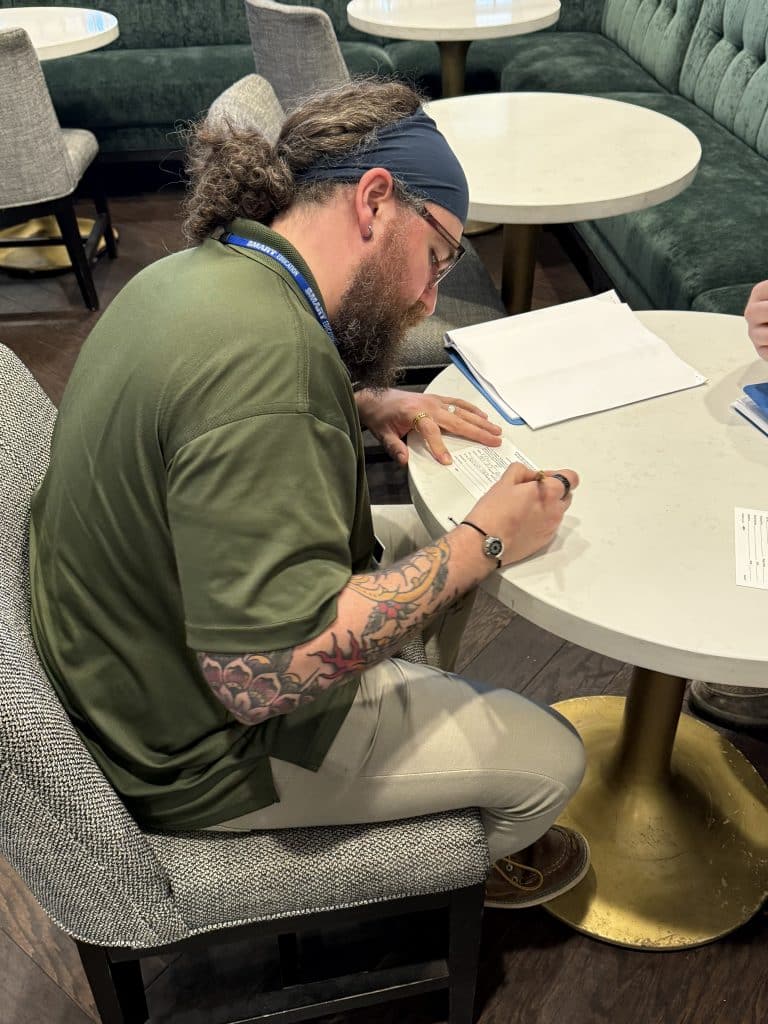
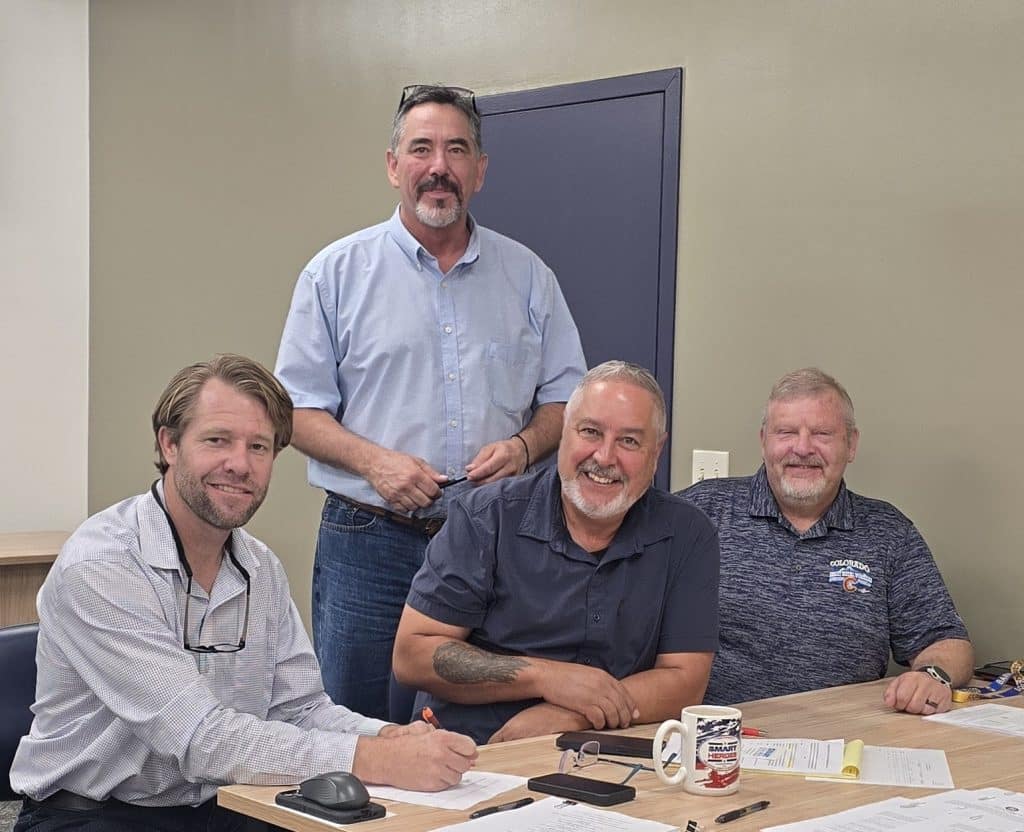
All the groundwork paid off on April 6, 2026. Art Avalotis sat down with Foringer and Business Agents Schueler, Dave Boyd and Kodee Bailey to make it official, signing the contract with Local 12.
With ink on paper, the conversation shifted to where it belongs: putting members to work.
Plans are already underway to staff upcoming projects, both locally and nationwide, getting Local 12 members on the job and expanding opportunities across the board. That means:
More job opportunities
Travel work potential
Stronger union presence across multiple jobsites
Work that matches our training and skill level
When contractors recognize the value of union labor, everybody wins. And this partnership? It’s just getting started.
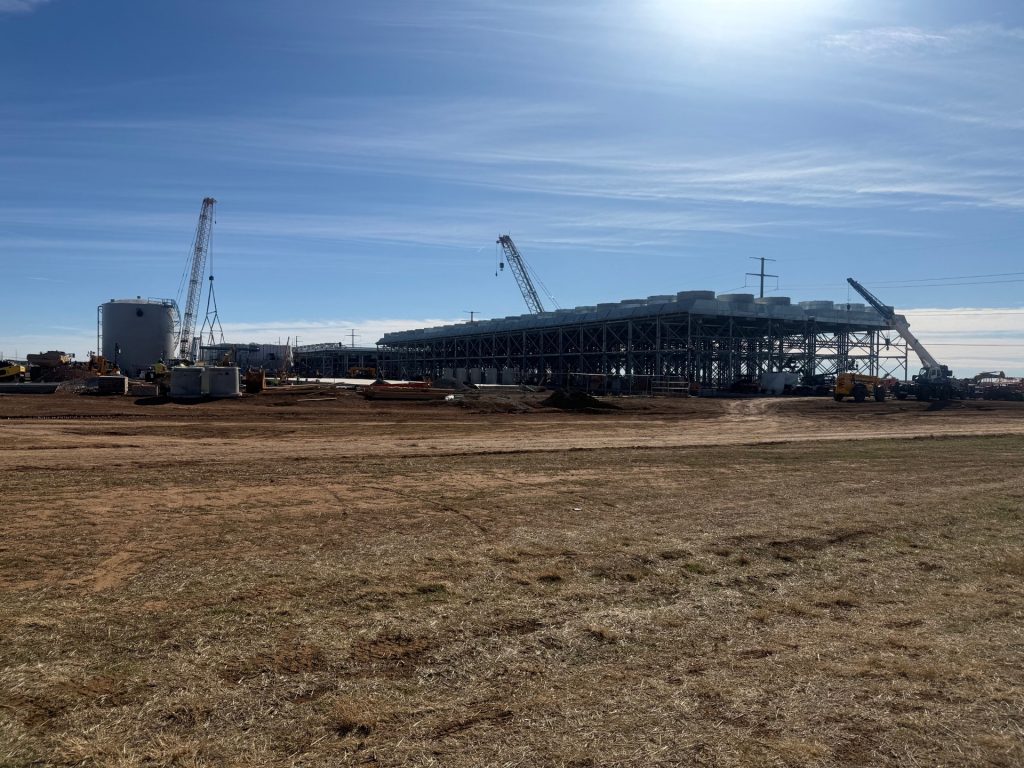
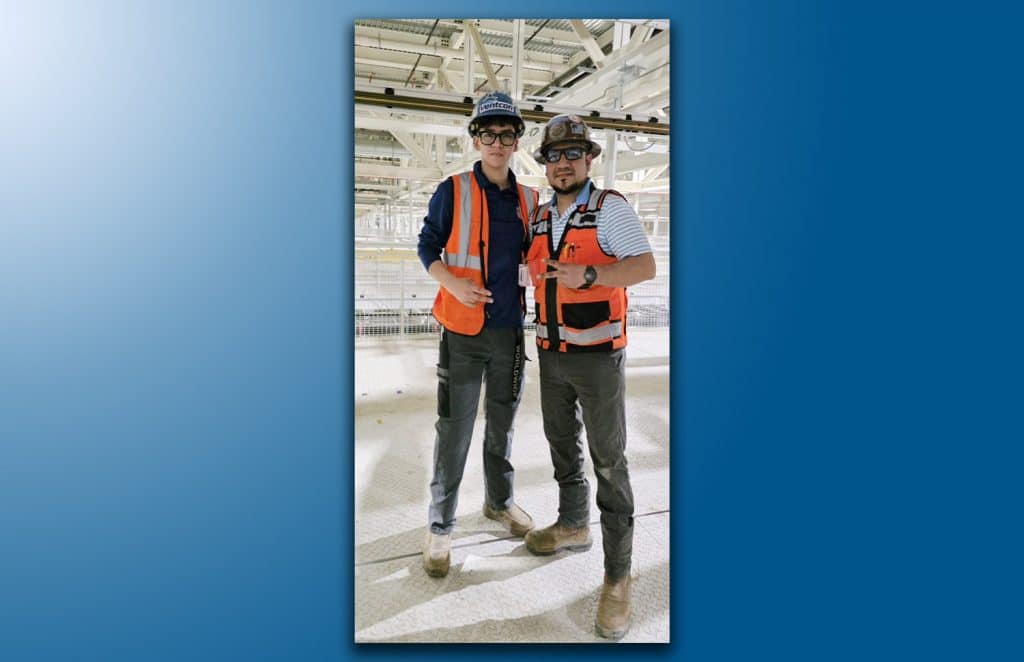
Construction is booming in the American Southwest, with current and upcoming projects popping up steadily in New Mexico and Texas. Thanks to the proactive work of SMART International staff and Local 49, union sheet metal workers and local community members are set to benefit.
“Over the past several months, we have focused on proactively identifying and positioning Local 49 ahead of upcoming work opportunities across the Lubbock and Amarillo, Texas, and New Mexico markets,” said SMART International Organizer Willy Solorzano. “Working alongside Local 49 officers Erick Corona and Roy Privitt, we have taken a coordinated approach to tracking megaprojects, conducting site visits and gathering accurate, real-time information to stay ahead of workforce demands.”
A project in Childress, Texas
Megaprojects create enormous opportunity for SMART sheet metal workers, but they can also present challenges for local unions and signatory contractors. To meet those challenges, staff have been out in the field, maintaining consistent communication to identify projects in early stages, monitor those projects’ progress and prepare accordingly. This has helped SMART stay organized, maintain up-to-date project tracking and stay ready for any upcoming opportunities.
“As a result of this approach, Local 49 staff has successfully met workforce needs on current projects without issues. All workforce requests have been filled in a timely manner, and work continues to move forward smoothly with no disruptions,” said Solorzano. “The ability to anticipate demands and maintain a ready workforce has played a key role in this success.”
What that means in practice: Local 49 members are taking on the existing work that these projects demand, and the local is positioning itself for growth — and more job opportunities — in the future. That is why we organize!
On February 23, 2026, workers at SPX Cooling Technologies, LLC in Springfield, Missouri, voted to ratify their first contract as SMART members. The three-year agreement includes a $1,500 ratification bonus, wage increases of over 11%, the preservation of health and retiree benefits and just cause protection against unfair discipline.
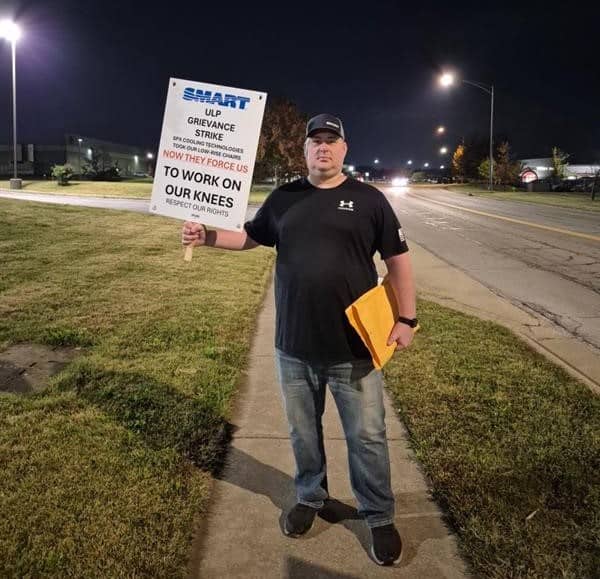
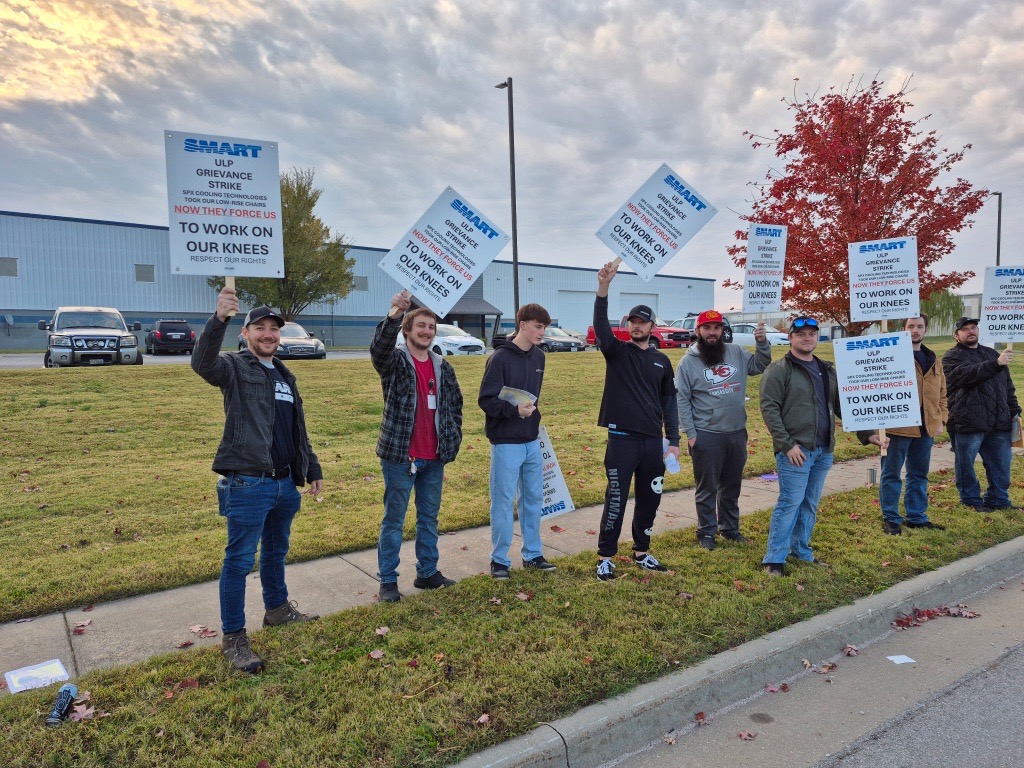
The victory came from workers who were organized to stand together and utilize labor’s oldest and most powerful weapon: the strike! On two different instances in November 2025, SPX workers struck, first for one day to protest the company’s removal of low-rise chairs from the workplace, and then once more for two days to protest the company’s hostile and callous response.
“We went to the picket line. We had our signs out there. We let the company know that this is not acceptable to us,” said SPX employee and SMART Local 208 member Andrew Stracke.
“The majority of our shop is looking for union representation”
SPX Cooling Tech employees at the Springfield facility, which opened in 2024, manufacture cooling towers and air-cooled heat exchangers; cooling towers, in particular, are in high demand as investment increases in data centers. The components that SPX employees manufacture are vital for the continued boom in data center construction.
Workers started to talk about organizing in response to various issues in the shop. Stracke, a Local 208 negotiating committee member who has worked at SPX since 2024, alleged instances of favoritism, different wage rates for different people, inconsistent discipline policies and more.
“I was actually the one that placed the call to [a union] office up in St. Louis,” Stracke recalled. “And I felt like the first thing I told them was, ‘look, the majority of our shop is looking for union representation.’”
“Me and Andrew, we were just kind of talking with each other one day about, you know, the unfair working conditions that we were experiencing at the time at the shop. We were just kind of trying to figure out what we could do about it. It was just regular old employees,” added fellow SPX worker and negotiating committee member Wyatt King. “One employee by yourself, you know, you’re not going to have a lot of weight behind you, but when you organize into a union, you can actually address unfair working conditions and unfair wages.”
Members demand a change
The workers at SPX Cooling Technologies in Springfield overwhelmingly elected SMART Local 208 to represent them in a July 2025 National Labor Relations Board (NLRB) election.
But despite the workers’ strong support for the union, SPX initially opposed their organizing. The day after workers won their election, management took away the low-rise chairs that workers used on the job, forcing them to work on their knees.
“I was just astonished … everybody was just kind of like, ‘well, you know, it’s clear retaliation towards electing a union to represent us,’” said King. “I mean, some of those guys in the shop are 60 years old working on the concrete, on their knees all day.”
On Friday, November 7, workers engaged in a one-day grievance strike over the removal of chairs. The strike was covered by the Springfield News-Leader newspaper.
“Any concerns that we’ve raised, whether it’s about chairs, retaliation, harassment, intimidation — they’ve just stonewalled us on all of it. There’re no discussions,” SMART Central States Regional Production Council Organizer Richard Harris said in an article in the News-Leader. “We should be able to sit down and talk about these issues and resolve them. We shouldn’t have to resort to this.”
Workers attempted to serve their strike notice on an SPX supervisor. But the supervisor refused to meet with them. Instead, a woman workers identified as the supervisor’s wife pulled up to the picket line in a white sedan with two anti-union signs taped to her back windows. One read: “F**k the Union.” The other: “Do what lil b*tches do best while down on your knees!!!” She proceeded to drive back and forth in front of the picket line, shouting profanities at the workers and threatening to have them arrested.
The week after the strike, workers submitted a harassment complaint with SPX’s General Counsel in Charlotte, N.C., regarding the signs. The complaint was signed by nearly everybody in the shop. In the meantime, management continued to threaten workers for participating in the strike. One worker who took part in the strike was verbally reprimanded for “not walking with a purpose.”
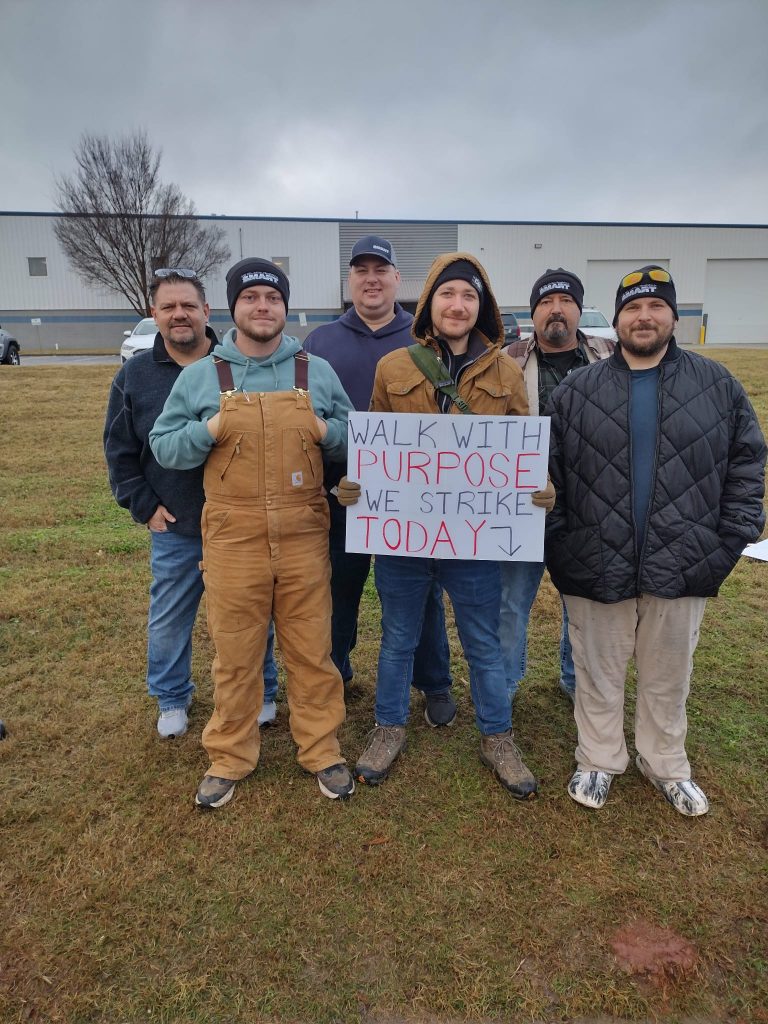
Unsatisfied with SPX’s handling of their harassment complaint, workers struck a second time on November 24 and 25. Picket signs read: “Walk with purpose! We strike today!”
Direct action gets the goods
Seasoned union leaders know how difficult first contract campaigns are. The legal consequences for bargaining in bad faith are next to nothing — a notice posting and promise not to do it again — so many employers adopt a strategy of endless delay. According to recent studies, 63% of first contracts fail to settle in one year, and 43% are still unresolved after two. The average time from NLRB certification to first contract — if one is ever reached — is 465 days!
How, then, did SPX workers manage to win their first contract in under six months? By recognizing the structural power they have within the data center economy, and by taking direct action to resolve their grievances. The strikes had an immediate effect on SPX’s demeanor at the bargaining table. Company representatives freely admitted the top priority was getting units assembled and out the door, which the strikes interfered with. Before the strikes, the company was agreeing to meet to bargain once every six weeks; after the strikes, the parties were meeting six days per month.
Collective strength and common ground
In the following months, Local 208 members say, the workers stood strong. And when they voted to ratify their first contract as SMART members, their agreement included a clause requiring the company to provide low-rise chairs.
“We’ve held so many meetings with the bargaining unit, and the participation has been outstanding,” said Stracke. “We have a really high percentage of people that work in the facility that are completely on board. They’re completely invested, they’re excited to see what working with this union and negotiating a contract, what could come of it. And already we have seen the union step up whenever they needed to step up, and give us answers when we need answers.”
In turn, the negotiating committee reports, the relationship between workers, Local 208 and management has started to improve.
“I think we’re in the middle of establishing a great line of communication and work relationships between the company, the employees and the union, and hopefully, this is a relationship that we’re able to keep going even beyond our first contract,” said Logan Hirst, SPX worker and Local 208 negotiating committee member.
Other members of the negotiating committee are similarly optimistic about the road ahead — largely because, as SMART members, they’re not just individuals at work anymore. They’re part of something bigger.
“We’re not just bringing up our complaints to management, and they just do whatever they want with it. We actually have a voice, we have a lot of weight behind us now, and they actually have to listen to us,” said King. “They have to negotiate fairly. … We’re all standing together to make real change in our workplace.”
The SMART difference:
Workers at SPX Cooling Technologies, LLC in Springfield, Missouri, voted to ratify their first contract as SMART members in February.
The three-year agreement includes a $1,500 ratification bonus, wage increases of over 11%, the preservation of health and retiree benefits and just cause protection against unfair discipline.
On two different instances in November 2025, SPX workers struck, first for one day to protest the company’s removal of low-rise chairs from the workplace, and then once more for two days to protest the company’s hostile and callous response.
The average time from NLRB certification to first contract — if one is ever reached — is 465 days. SPX workers won their first contract in under six months.
SMART membership changes lives — not just for members, but for entire families. Local 399 (South Carolina) member Fabian Campos is a powerful example.
Fabian Campos, right, with his son, a Local 399 apprentice
On May 30, 2025, Brother Campos walked into the SMART Local 399 office to complete an application and interview. At the time, he was nearing the end of a nonunion apprenticeship program in Columbia, South Carolina. Despite having several years of verified experience — including time as a jobsite superintendent in New York — Campos had been placed into an apprenticeship program that did not reflect his skill level.
Like many hardworking Americans nationwide, he accepted this situation out of necessity, determined to support his family even as he earned wages that fell short of meeting their needs.
The unfairness of the situation brought him to the local, where during his interview, it quickly became clear that Campos’s experience and capabilities aligned with the qualifications of a journeyperson. We discussed the opportunities available through SMART Local 399 not only for Fabian but also for his son — including fair wages, comprehensive benefits and a clear pathway for advancement.
The realization of the union difference made an immediate and profound impact. Overcome with emotion, Fabian expressed deep gratitude, recognizing that this opportunity represented a turning point for his family.
Since joining Local 399, Brother Campos has excelled. He is now serving as a foreman on one of our largest projects, demonstrating leadership, skill and professionalism on the jobsite. His son has also joined the apprenticeship program and is actively building his own future within the trade.
Fabian has fully embraced union membership, going above and beyond to give back. He volunteers his time to help organize, teach, translate and mentor others. He has enrolled in every available training class and consistently attends union meetings, embodying SMART’s values of commitment and brother/sisterhood.
Brother Campos’s story is a testament to the life-changing impact of opportunity, fairness and solidarity; in other words, the impact of union membership. Through SMART Local 399, one family’s future has been transformed, and a new leader has emerged to help uplift others.
SMART membership changes lives for:
Members
Families
Communities
Through the power of collectively bargained pay, benefits and apprenticeship programs that provide pathways into middle-class careers.
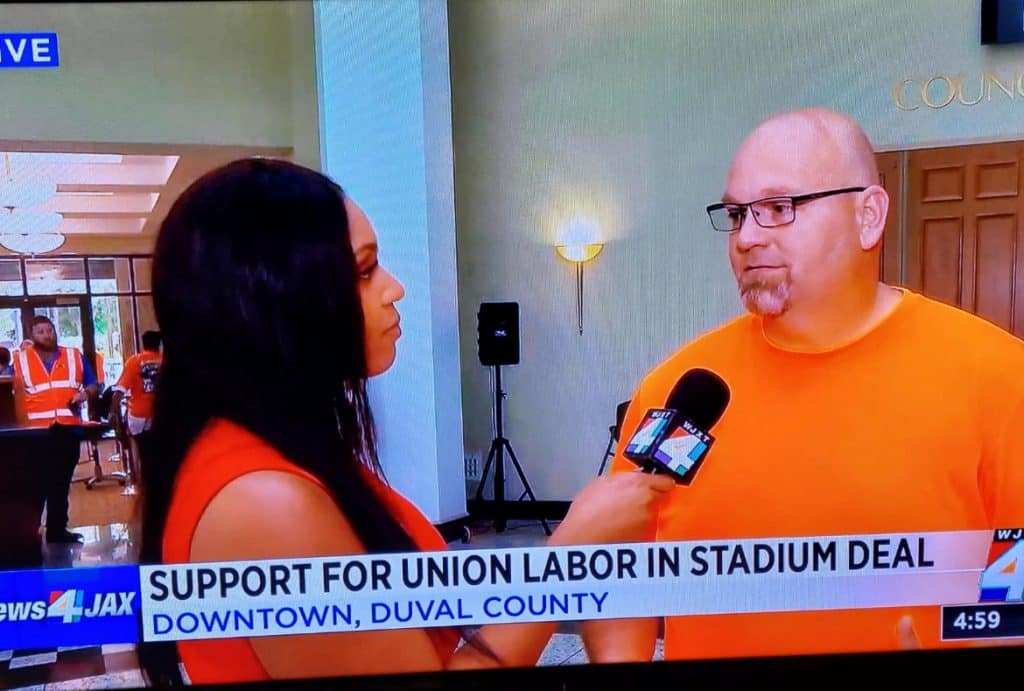
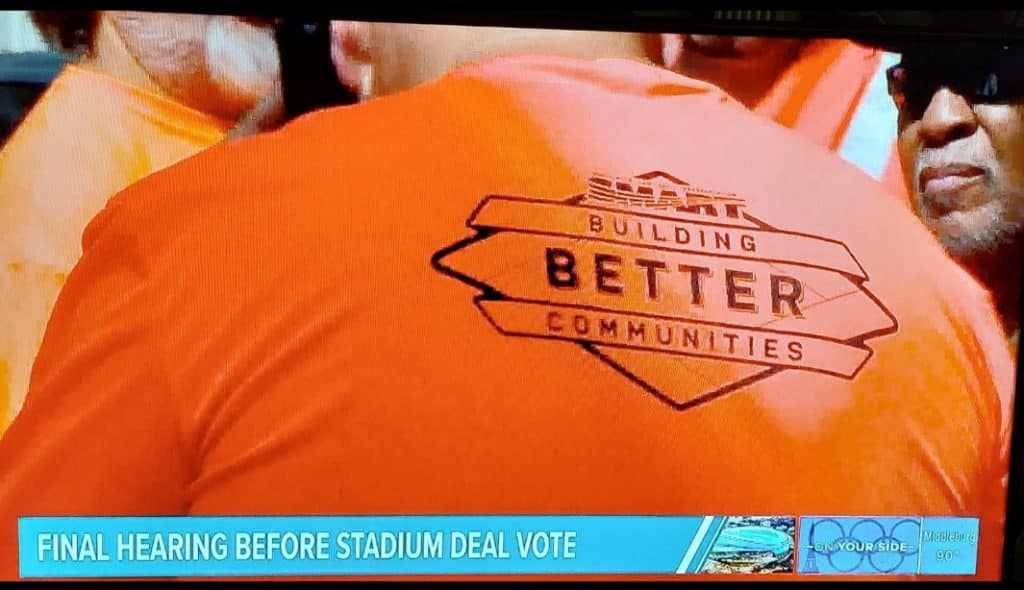
Back in spring 2025, SMART Local 435 and organized labor announced a landmark victory in Jacksonville, Florida. Thanks to the unrelenting advocacy of Local 435 and the North Florida Building and Construction Trades Council, in a campaign led by Business Manager Lance Fout, the $1.4 billion Jacksonville Jaguars stadium renovation project included mandatory apprenticeship and local hiring requirements for the stadium and future city-funded developments.
“This is a first in Jacksonville, and hopefully a trend we can continue,” Fout said at the time.
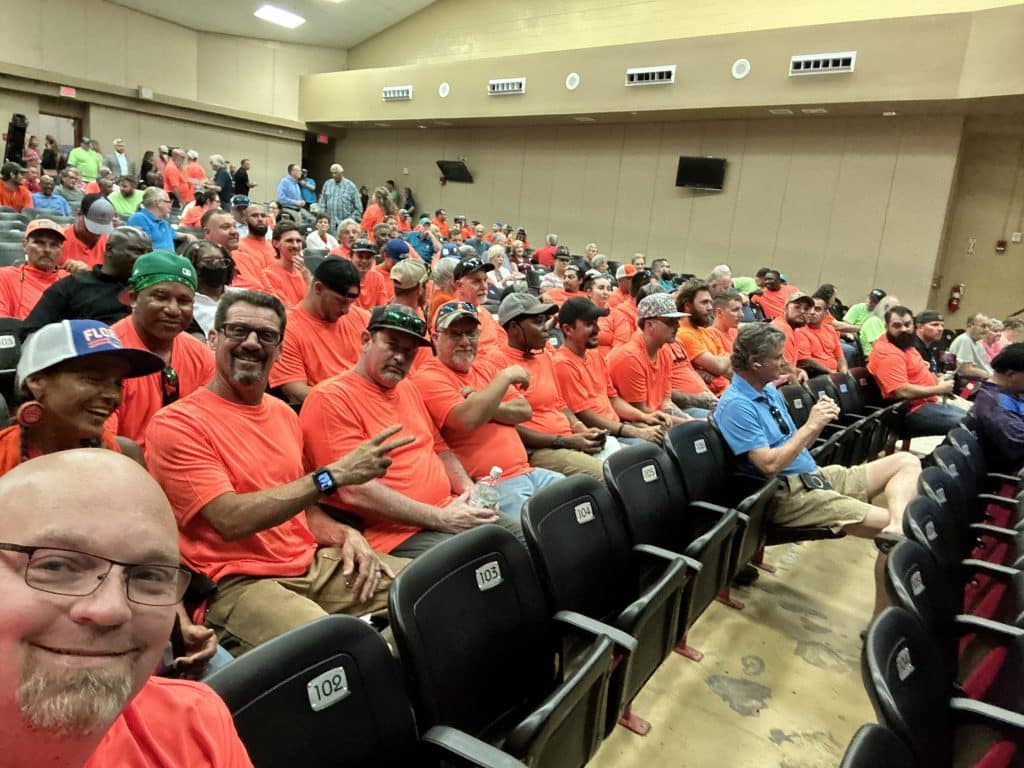
Lance Fout, Local 435 and building trades workers lobbied for pro-worker provisions on the new Jaguars stadium.
Members mobilize in support of local careers
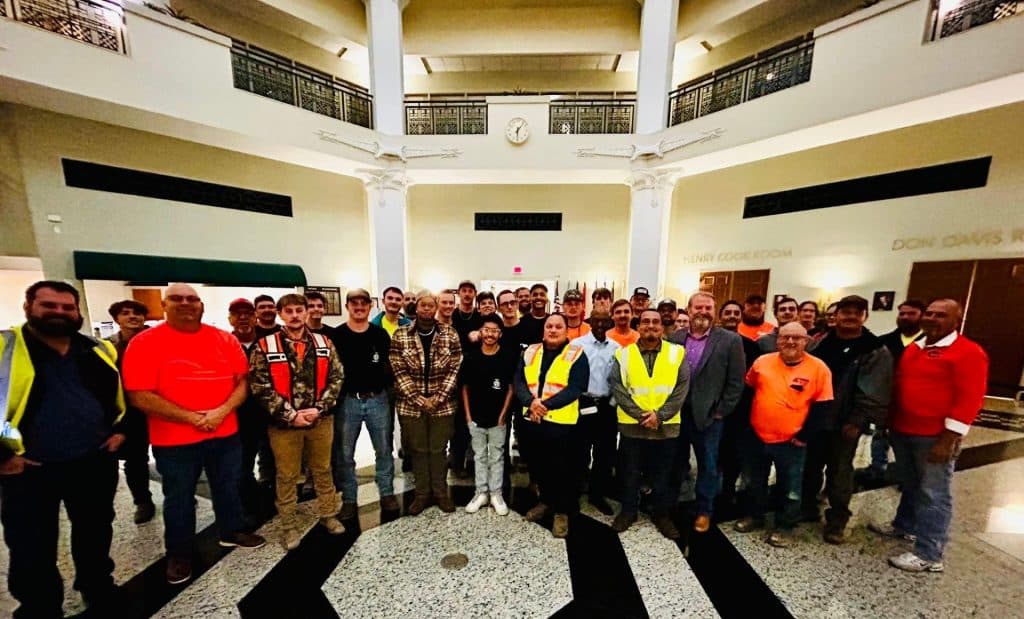
The campaign started when the stadium project was first announced. Fout, Local 435 and the building trades maintained a constant presence in the halls of power, working to ensure public investment by the city of Jacksonville benefited the local community. Together with fellow union building trades workers, Fout and Local 435 held several rallies, urging the city council to include apprenticeship and local hire requirements in the stadium deal, and turned out more than 100 union members to attend a town hall meeting with Mayor Deegan and Jaguars President Mark Lamping. Members continued to mobilize for future meetings.
This visible show of solidarity and direct engagement with city officials successfully moved the needle from simple interest to legislative action, with the inclusion of the apprenticeship and local hire requirements in the final stadium deal.
But the work didn’t stop there. To implement those requirements, Local 435 led the charge in securing a commitment for up to $675,000 in funding to support union apprenticeship programs in Jacksonville. These robust training programs do more than staff a jobsite; they will transform temporary construction roles into decades-long, middle-class careers for the residents of Duval County.
Construction of the stadium has since started, with union sheet metal contractors already awarded the critical HVAC ductwork and exterior architectural applications. Now, as the project scales toward its 2027 peak intensity and 2028 completion, it serves as a blueprint for how organized labor can secure the future of cities across the United States. Enormous projects can work for the communities in which those projects are built — as long as they create good, well-paying jobs for local community members.
Fout put it simply when he testified to the Jacksonville City Council: “When we drive by these major projects, we want to see Duval County license plates. Apprenticeship changes lives.”
Thanks to the work of Local 435 and the North Florida labor movement, union apprenticeships will change more and more lives in the county as the “Stadium of the Future” comes to fruition.
Great work, brothers and sisters!
Success Summary:
Policy Victory: Established mandatory apprenticeship and local hiring requirements for city-funded projects.
Training Investment: Secured a commitment for up to $675,000 to expand and support union apprenticeship programs in Jacksonville.
Collective Mobilization: Maintained a consistent presence of 50+ building trades members (primarily Local 435) at public meetings.
Secured Work Scope: Union contractors officially awarded the HVAC ductwork and exterior architectural metal contracts.
Project Timeline: Construction is underway, peaking in 2027 with a scheduled completion in 2028.
Strong relationships between unions and signatory contractors are the foundation of a thriving industry. When contractors and labor work together, the result is safer jobsites, stronger training and better long-term opportunities for workers and businesses alike.
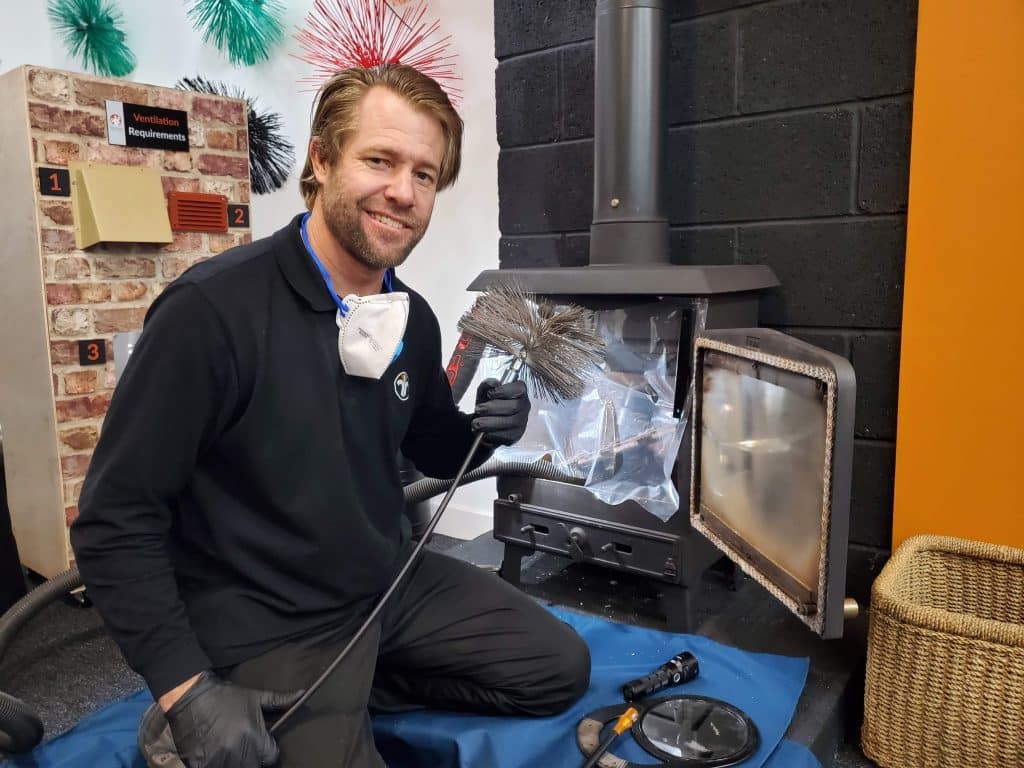
In Colorado, the recent, pioneering partnership between Midtown Chimney Sweeps and SMART Local 9 demonstrates how collaboration, professionalism and high-quality union training can open new doors for local unions, employers, Coloradans and entire industries. Maintenance of metal chimney flues and end caps in Colorado will now be performed by Local 9 members!
“As the owner of the first chimney and fireplace company in the United States to join a national sheet metal workers union, I am proud to share my experience with Local 9 and the transformative impact it has had on my business,” said Byron Schramm, member-owner of Midtown Chimney Sweeps.
Schramm (far left) signs with Local 9
A contractor looking for a better path
In July 2025, Schramm visited the Local 9 union hall looking for solutions.
Like many contractors across the country, Schramm was facing a challenge that has become increasingly common in the trades: finding qualified workers with the training, professionalism and long-term commitment needed to meet the demands of his industry.
Schramm’s interest in raising the standards of his industry had been developing for some time.
“This journey began during my seven-month tour of Europe, where I witnessed the unparalleled excellence in craftsmanship among German, Swiss, and Austrian chimney professionals,” he said. “Their dedication to precision, skill and quality left an indelible mark on me, inspiring a vision for elevating standards back home.”
Upon returning to the United States, Schramm aimed to pursue that vision, but he ran up against obstacles.
“I faced the familiar challenges of our industry: hiring inexperienced workers from outside the building trades, investing time and resources in their training, only to see many drift away and start their own businesses,” he explained. “This cycle made it nearly impossible to scale or grow sustainably. The constant turnover eroded work quality, placed immense stress on me as the owner, and undermined our commitment to delivering exceptional service in an industry where precision is paramount.”
The SMART union advantage
Schramm had previously spoken with representatives from another union about their training program but felt it did not meet the specific workforce needs of his business. During those conversations, he was encouraged to reach out to SMART and was given the name of Chaz Tedesco, Local 9’s political director and organizer. Contacting SMART made sense: Schramm was seeking skilled tradespeople to work on the chimney’s flue and end cap, both of which are made of metal.
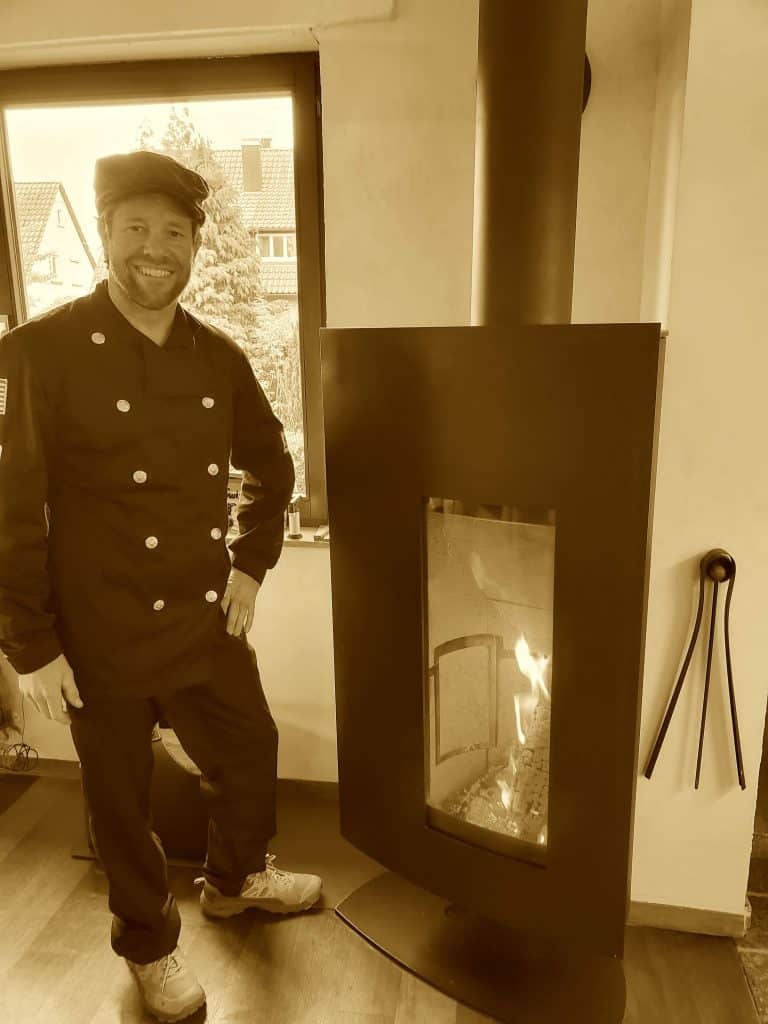
Schramm, pictured in Wigan, England
After making the connection, Tedesco, along with Business Agent Lon Comstock, welcomed Schramm to the union hall. They provided a tour of the facility and introduced Schramm to the structure and depth of SMART’s training programs. The conversation quickly expanded beyond workforce needs and into the broader benefits of becoming a signatory contractor — access to highly trained workers, structured apprenticeship programs, safety standards and a professional workforce committed to craftsmanship.
As discussions continued, Schramm and members of his staff returned to the hall for additional meetings and a deeper look at the local’s training program. During this process, they met Andy Gilliland, state director of the Colorado Sheet Metal Workers Joint Apprenticeship and Training Committee (JATC), and Reed Ausmus, Denver training coordinator.
For Gilliland, Schramm and Midtown Chimney Sweeps represented a unique opportunity.
“During the campaign, I was asked whether the Colorado Sheet Metal Workers Apprenticeship could provide training for this industry,” Gilliland explained. “I’ve been involved in many organizing efforts, and most fit easily into our existing training format. Midtown Chimney Service, however, presented a unique opportunity to build new pathways within our program.”
While much of the needed instructional material already existed within the broader sheet metal curriculum, the specialized nature of chimney and fireplace metal work required adaptation.
Gilliland and the training team began restructuring portions of the curriculum to ensure apprentices and journeypersons would receive the same level of rigorous instruction and craftsmanship expected across the trade — while also meeting the technical needs of this specialized industry.
“My role included shaping curriculum, aligning standards and ensuring our apprenticeship could support this sector with the same rigor and excellence we apply across the trade,” Gilliland said.
Schramm’s involvement played a critical part in that process. By sharing industry knowledge and equipment, he helped bridge the gap between a traditional craft and modern union apprenticeship training.
“Working on this project has been energizing and deeply rewarding,” Gilliland said. “Having a business owner like Byron has been critical. He has provided an incredible amount of information, insight, and support throughout the process.”
Schramm has also supported training by supplying industry-specific training devices and helping the program collaborate with Germany’s national chimney training system — bringing international expertise into the development of the curriculum.
Schramm in Stuttgart, Germany
A historic agreement
The collaboration between Midtown and Local 9 required a significant effort. Because chimney sweep and fireplace service work had never previously been covered under a Local 9 agreement — or any other union — there was no contract template available from another local.
Union leadership and Midtown Chimney Sweeps worked together to carefully review contract language and build an agreement that maintained union standards while allowing the company to successfully transition into signatory status.
“As the owner of the first chimney and fireplace company in the United States to join a national sheet metal workers union, I am proud to share my experience with Local 9 and the transformative impact it has had on my business,” said Byron Schramm, owner of Midtown Chimney Sweeps.
On September 23, 2025, Midtown Chimney Sweeps officially signed a collective bargaining agreement with SMART Local 9, with the contract taking effect on October 1, 2025. Shortly after, all of Midtown’s existing employees were signed up and participated in an orientation program introducing them to the union, its standards and the opportunities available through training and career advancement.
Schramm also joined as an owner-member, further demonstrating his commitment to the partnership and to building a stronger workforce within his company.
The value of union skill and professionalism
For Schramm, the difference in workforce quality became clear almost immediately.
“The journeymen provided by Local 9 demonstrated a level of professionalism and expertise I’ve rarely encountered,” he said.
He recalls one moment in particular that illustrated the union difference.
“I was working alongside a journeyman named Eric on a fresh air kit installation. When I asked him to cut a 4-inch round hole for the pipe, he asked what exact size was needed, explaining that it couldn’t be ‘size on size’ — a trade term meaning the hole must account for the pipe’s physical dimensions, plus a margin for error.”
The solution was simple but telling, Schramm explained.
“We opted for a 4.5-inch hole saw to accommodate the 4.25-inch pipe, a small adjustment that enhanced my own training methods and ensured a flawless fit.”
Later that same day, Schramm witnessed another example of the craftsmanship that comes with union training.
“We moved to the roof to install flashing on a metal surface. [Eric] pulled out a spoon to apply silicone sealant, creating a perfectly smooth, professional seal that was nothing short of remarkable.”
Growing the partnership
The initial contract was designed to meet Midtown’s existing wage structure during the contractor’s transition into the union. Because the company was new to SMART, the agreement initially did not include a journeyperson pay scale, with the highest rate set at approximately 70 percent of Local 9’s standard scale.
However, as Schramm experienced firsthand the value of union craftsmanship, his perspective quickly evolved. After seeing the skill and efficiency that Local 9 journeypersons brought to the jobsite, he requested a modification to the agreement to include a full journeyperson rate within the contract.
Today, that rate has been added, and Midtown Chimney Sweeps now pays that scale to qualified workers. Schramm is also considering adding a foreman position to help manage operations and allow him to focus more on growing the business.
The partnership has already created new opportunities for members of Local 9, Gilliland noted. Journeypersons and apprentices now have the opportunity to work within a specialized segment of the trade while maintaining the quality and standards that define union craftsmanship. The effort has also expanded the apprenticeship program itself by introducing new curriculum, hands-on equipment and even international collaboration.
A team effort, a bright future
Union leadership views the Midtown agreement as a significant milestone.
Jon Alvino, Local 9 business manager, emphasized the teamwork required to make the partnership possible.
“This agreement with Midtown Chimney Sweeps marks a groundbreaking moment for SMART Local 9 as we welcome the first signatory chimney sweep shop into our union family,” Alvino said. “I’m incredibly proud of the collaboration that made this possible — our organizing department, led by Don Perkins, alongside Chaz Tedesco and Jon Davis, working seamlessly with our business representatives Lon Comstock and Ian Fick, as well as our apprenticeship training center, to navigate every detail. This is exactly what teamwork looks like, and I’m excited about the strong future we will build together with Midtown.”
Gilliland believes the partnership represents something even greater. By combining a traditional craft with modern apprenticeship training, Midtown Chimney Sweeps and SMART Local 9 are building a model that could be replicated in other markets. The success of the partnership has already sparked interest from other contractors and demonstrated that union standards can adapt to support new sectors of the industry.
With continued collaboration between labor, contractors and the apprenticeship program, this effort is helping expand opportunities for members while strengthening the future of the trade.
At its core, the Midtown partnership reinforces a fundamental truth of the union building trades: high-quality training, skilled craftsmanship and strong contractor relationships are the keys to raising standards and building the workforce our industries depend on.
And for Schramm, the partnership has already proven transformative.
“Joining the union has not only stabilized my workforce but also reignited my passion for the trade by fostering an environment of excellence,” he said. “I encourage other business owners in our field to consider this path — it’s a game-changer for building a stronger, more resilient industry.”
Organizing is not just about recruiting new sheet metal workers into our union; retaining members is a critical part of the equation. SMART local unions need to grow in order to bolster collective bargaining and ensure health and pension funds remain strong. That can only happen when members both join and stay in SMART.
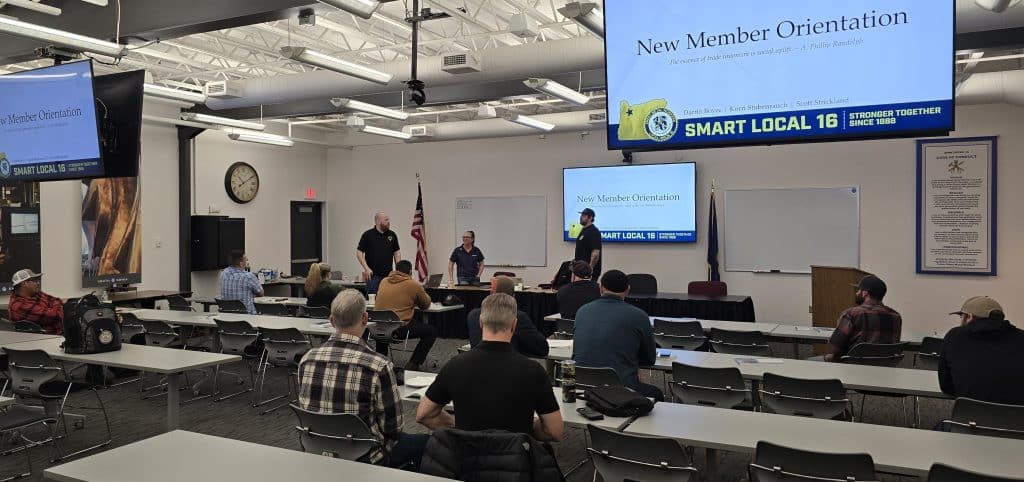
To retain new members, it is vital that they understand what their union is and the support that defines SMART membership. For that reason, SMART Local 16 held its inaugural new organized member orientation on March 7, 2026. This marked the first of what will be many new organized member orientations, led by Regional Manager Brian Noble, Regional Rep. Darrin Boyce, Organizer Korri Stubenrauch and Scott Stricklyn with the local’s Special Projects Department.
Traditionally, SMART Local 16 has educated recruits about the benefits of union membership during the new member sign-up process. Officers and staff use this time to give incoming members a thorough overview of their new union; however, it can often feel like information overload for our latest SMART brothers and sisters. While third-year Local 16 apprentices attend a weeklong Youth-to-Youth class — aiming to build a local culture centered around organizing — no such option exists for members who are organized into the local. To solve that problem, the organizing team at SMART Local 16 created the new orientation, a Saturday class specifically for members who joined the local through organizing.
Inaugural orientation class charts course for the future
One challenge with offering the class was determining whether enough relationships had been built to motivate members to attend a Saturday session. Ultimately, SMART Local 16 set a date and decided to move forward to see if there would be attendance. Letters were sent out to members, and the class was scheduled.
The orientation began with a “What Is the Union?” session, covering union history, structure and how SMART works. Members discussed how to use the union as a resource, heard testimonials from organized members and learned how to get the most out of being in SMART. Additional topics included what to watch for on the job and how to get help when needed. Time was also spent ensuring everyone could log into the online local and International member portals and allowing members to share their experiences as SMART members so far.
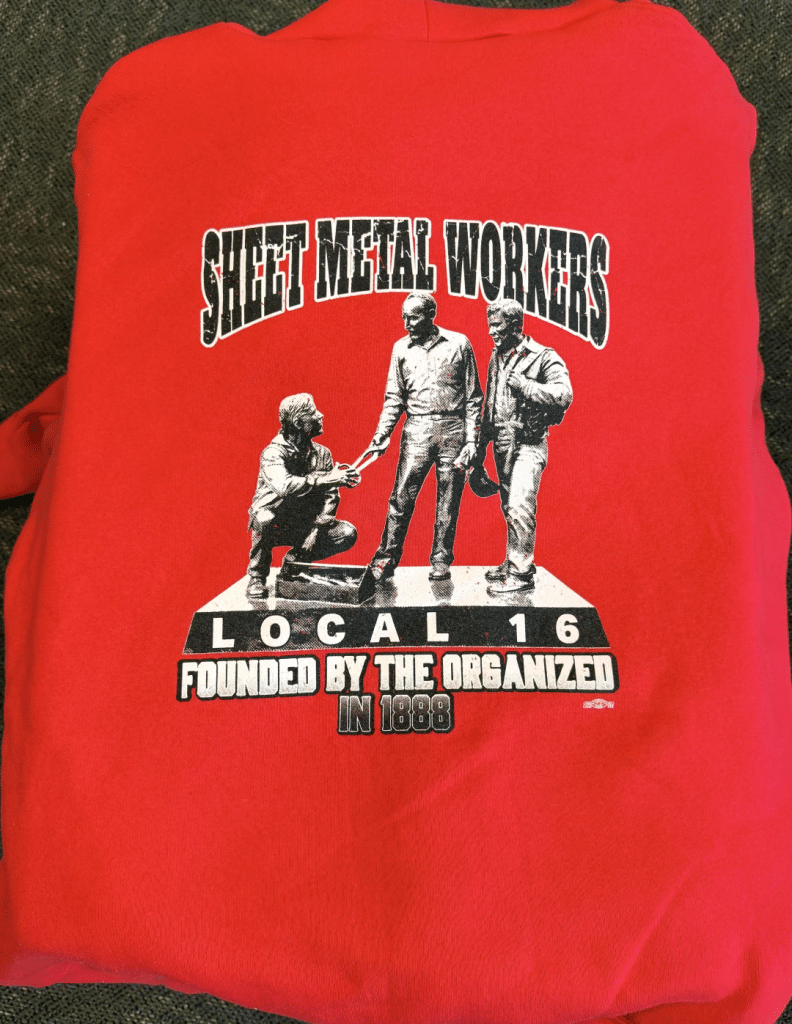
Eight members and one spouse attended the class. Their time at Local 16 ranged from three months to five years, but participants shared one thing in common: They all said they were glad they attended and found the class informative. Participants also received a hoodie that is only available to those who attend the class.
Moving forward, the goal is to spread the word about the value of this class so new members make time to participate when they receive the invitation. For now, SMART Local 16 plans to hold the class twice a year.
Organizing is an ongoing process. New members joining our union is only the beginning; ensuring they become active, engaged members — who take advantage of every part of their membership — is the key next step. When that happens, and when new members stay in SMART, every member benefits.
The patience and persistence of SMART union organizers is set to pay off for both workers and a new signatory contractor in New Jersey.
About three years ago, the Local 27 (Southern New Jersey) Organizing Department began to connect with a small but growing duct cleaning contractor called Induct Air Duct Cleaning. What started as a simple cold-call visit gradually turned into meaningful conversations, with organizers stopping by the shop periodically to discuss how Local 27 might be able to provide expanded opportunities for the company’s success and growth, always leaving the door open for the next meeting and further discussion.
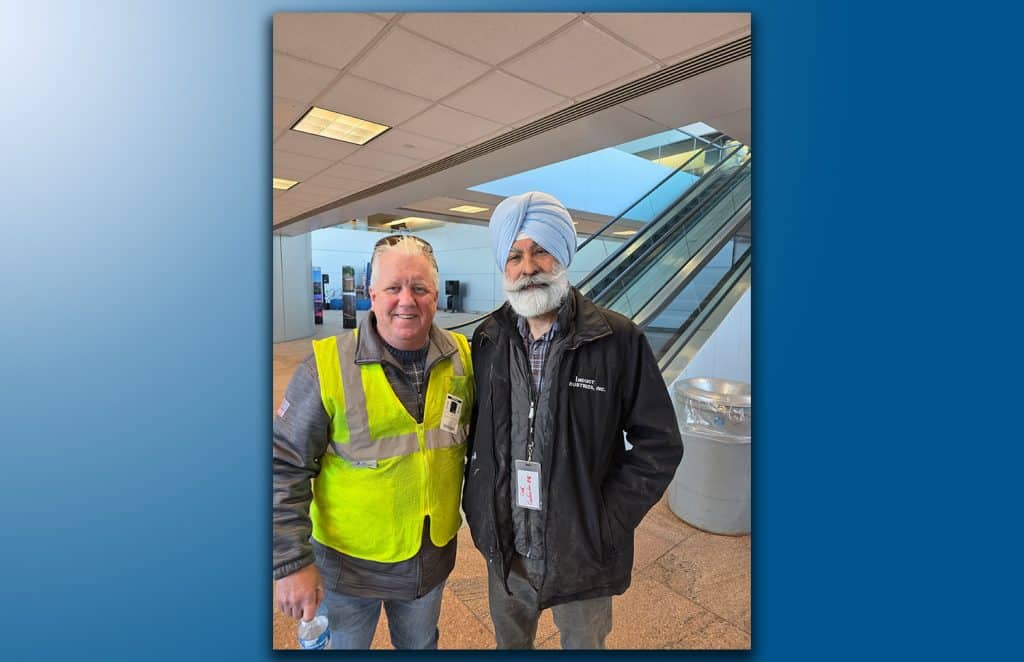
Pictured: George A. Nowatcki, Local 27 organizer, and company owner Boota S. Kharoudh. Not pictured: Greg Goble, Local 27 organizer.
Over time, those brief discussions turned into meaningful dialogue with the company’s owner. As trust slowly developed, the conversations moved from quick visits at the shop door to scheduled sit-down meetings where the organizers and the owner could talk more openly about the future of the company and the benefits of becoming a union contractor.
The local took a slow and steady approach. During several meetings over the years, organizers focused on building a relationship rather than forcing a quick decision. They explained how becoming signatory could provide access to a skilled workforce, training resources and long-term stability in a growing industry sector. The owner listened carefully, asking questions about how the agreement would work and what it would mean for his business.
Eventually, the outreach paid off. The company agreed to move forward, making Induct Air Duct Cleaning the first duct cleaning contractor to become signatory with Local 27.
What began as simple walk-ins and persistence ultimately turned into a successful organizing effort — one that expanded the local’s reach into a specialized part of the HVAC industry and set a precedent for future organizing in the duct cleaning sector. Now, both Induct and its workers are set to benefit for the years to come.
Union membership brings real change to workers and employers alike, and Div 15 Tech, Inc. out of Sacramento, California, is proof.
Workers at Div 15 Tech
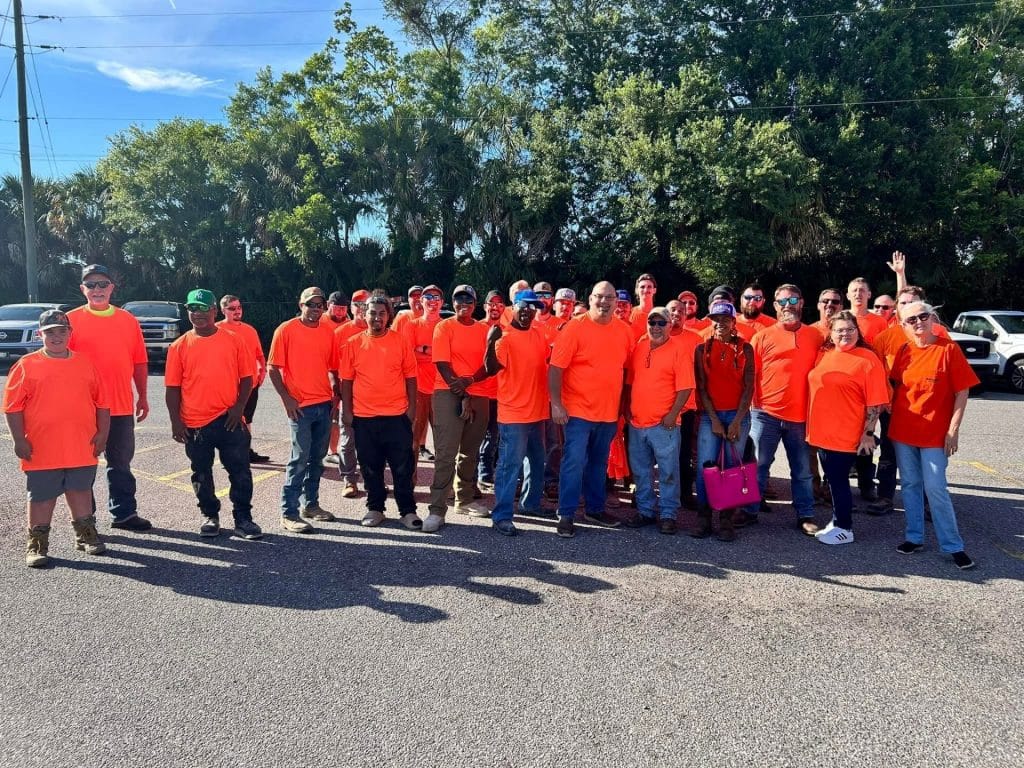
For years, SMART Local 104’s Business Development team met with Div 15 Tech owner Blake Harrison and made the case for signing a collective bargaining agreement. The message was straightforward: Local 104 could provide access to a highly trained workforce, a state-of-the-art training center and the long-term stability that comes with partnership.
For a long time, that message did not resonate. Like many nonunion contractors, Harrison was skeptical — influenced by industry pressure — and he chose to remain independent.
The turning point came when Harrison, discouraged and considering selling his company, reached out to Local 104 Organizer Aaron Leslie to see if the local could help him find a buyer. Instead, Leslie built a relationship grounded in trust and transparency. Through that process, and after taking a closer look at Local 104’s training programs and the professionalism of the local’s members, Harrison decided not to sell. He signed with Local 104.
In less than four months, Div 15 Tech brought on 16 Local 104 members and developed a strong working relationship with the local’s business representatives and organizers — setting the stage for a bright future ahead.
“I should have done this 20 years ago,” Harrison remarked.
The takeaways are simple. For local organizers, consistent outreach, patience and credibility matter. Even when conversations seem unproductive, relationships can create opportunities later. And for business owners who aren’t yet signatory, it’s even more straightforward: It is never too late to secure quality training, skilled workers and a strong partnership by signing with SMART.
Employers and employees benefit when they go union. This is why we organize!