For many years, the mainstream narrative around entering the United States job market has been straightforward: Go to college, get a degree and join the white collar workforce.

Today, as demand for skilled workers continues to grow, that narrative is changing: More and more tradespeople are needed to build the infrastructure, data centers and public facilities that Americans rely on.

In Wheeling, West Virginia, SMART Local 33 and the Heavy Metal Summer Experience (HMSE) are taking advantage, not just telling but showing young people in the area what it’s like to earn a great living while working in the sheet metal trade.

The experience paid off at Wheeling’s 2026 HMSE camp, which brought students to Local 33 to try their hand at a variety of sheet metal work. Out of 19 participants, nine are now working as apprentices for Local 33 contractors, and three more are on the list of apprentices to start soon.

Heavy Metal Summer (HMSE), cofounded by former SMACNA President Angie Simon, provides an opportunity for young people across the U.S. and Canada to get hands-on experience with the trades: HMSE students work with skilled craftspeople at shops, jobsites and local union training centers, discovering for themselves whether they may want to pursue a future in the union.

“Heavy Metal Summer [Experience] is a program meant to bring in kids age 15 to 19 to teach them a little bit about the sheet metal trade and what we do, get them a little hands-on projects, help them get a better understanding [and] see if this is something they want to pursue,” said Local 33 Partnership Development Representative Steve Hancock.

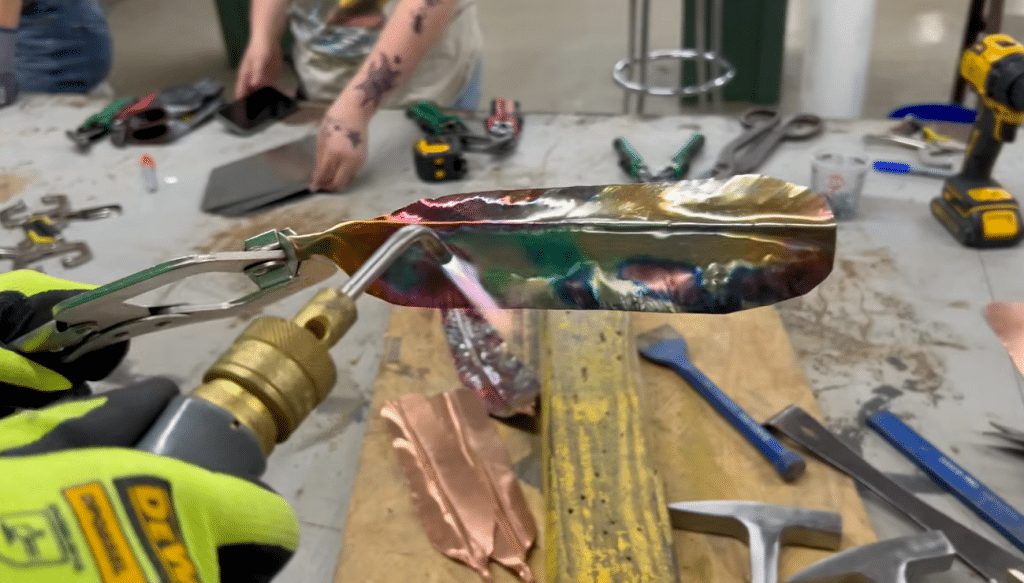
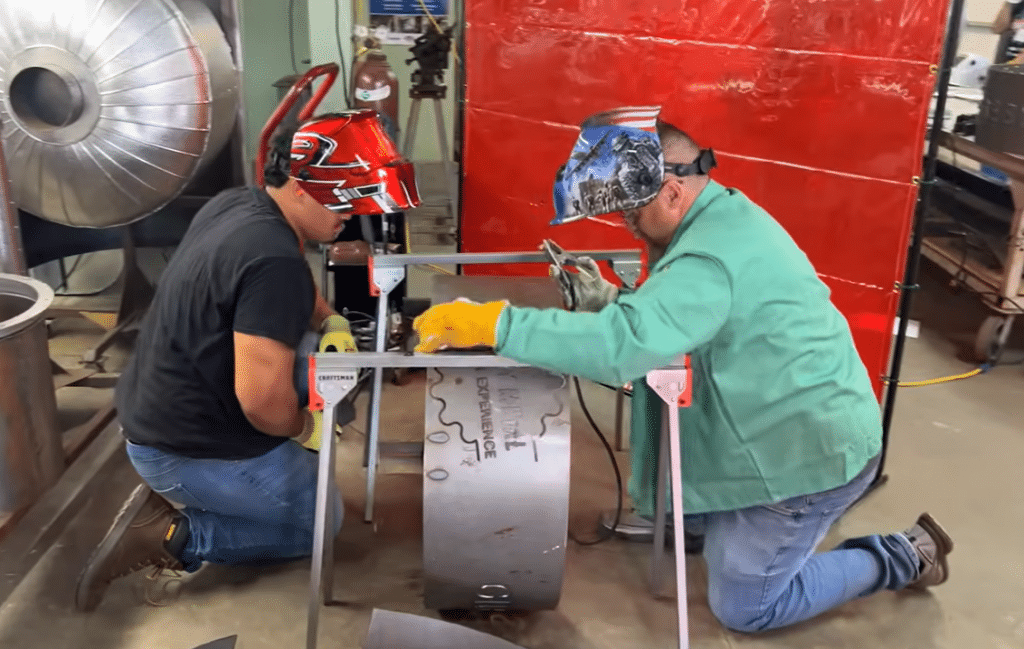
In Wheeling, that meant exploring just a preview of all that the sheet metal trade has to offer. Students learned welding by making a fire ring out of eight-inch black iron; formed, cut and put all the extrusions on an architectural metal panel; formed, cut and put together an architectural metal star; and worked with softer metal to make a copper feather from scratch.

“I made [the] fire pit, or fire ring, the other day, so I thought that was pretty cool,” said 2026 HMSE student Landon. “I was pretty proud of myself.”
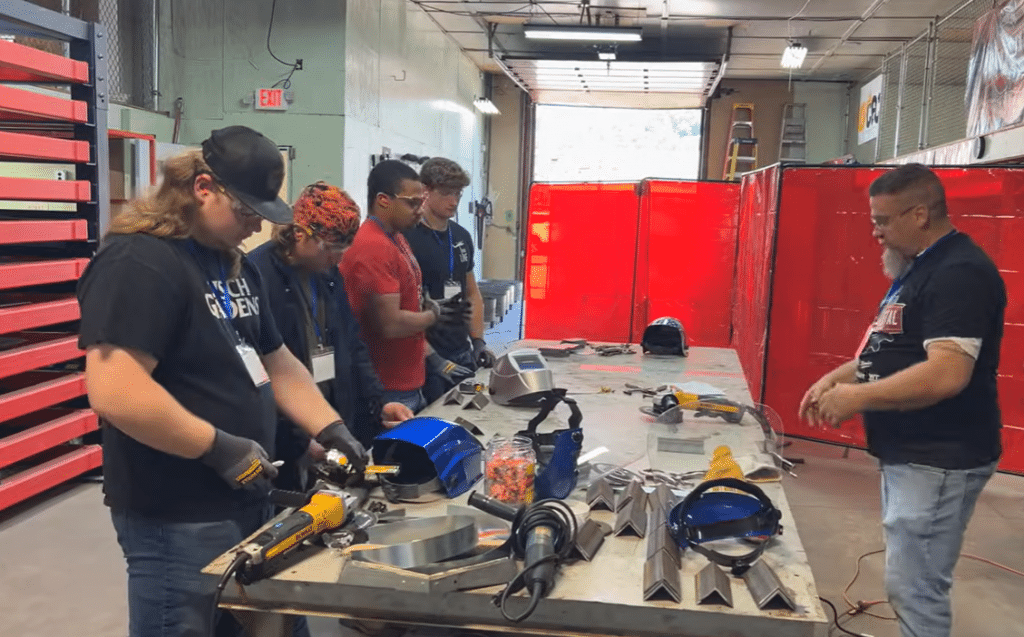
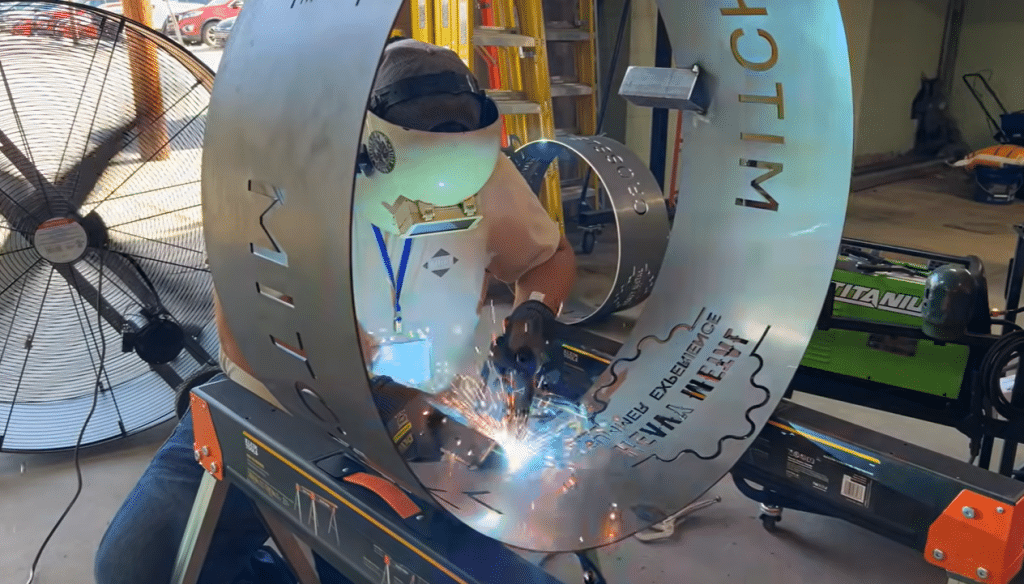
Welding, fabricating, forming, cutting, hammering — the Wheeling HMSE students got to do some of it all, plus hear about the many, many more options that exist in the sheet metal trade. From detailing to architectural sheet metal work, the unionized sheet metal industry has a lot to offer. And for many members, it all starts in the earn-while-you-learn apprenticeship program.

“Programs like Heavy Metal Summer [Experience] are extremely important because it gives the younger generation a vision into what it’s actually like to be in an apprenticeship program … before they actually even potentially graduate high school or decide a career path,” said Josh Jablonski, Local 33 partnership development representative.

In 2026, 19 Wheeling HMSE students experienced that vision — and at least 12 decided that they liked what they saw.

“A lot of kids are pushed from high school straight to college … so the trades are often the best-kept secret in towns, especially like this one here,” concluded Scott Mazzulli, Local 33 Wheeling business representative. “Heavy Metal Summer helps put us on the map.”
When SMART Local 5 (East Tennessee and North Carolina) member Steven Ruger became an organizer in April 2023, the local had around 1,100 members — the majority in Tennessee — with 500 sheet metal workers needed to take on several approaching N.C.-based megaprojects.

“I wanted to become an organizer to help build and grow Local 5,” said Ruger, who first joined the trade in July 2011 with SMART Local 112 (Elmira, N.Y.) before moving to North Carolina years later. “To give others the opportunity I had and build solidarity in North Carolina.”

By all conventional measures, he’s succeeding. Today, thanks in large part to aggressive organizing conducted by Local 5 and spearheaded by Ruger, the local has more than 1,500 members, and the size of Local 5’s North Carolina membership has increased by more than 60%.

Megaprojects drive growth

Back in 2023, three megaprojects in Local 5’s jurisdiction — a Wolfspeed chip plant, a Toyota battery plant and a VinFast plant — put huge workforce demands on signatory contractors. That meant Ruger had to get straight to work once he started his new job as an organizer, training with now-retired International Organizer Kevin Mulcahy while simultaneously building a person-of-interest list for the local.

“Kevin and I researched nonunion fabrication shops in Charlotte, Raleigh and Greensboro, found where workers left these shops and placed yard signs at high-traffic intersections,” Ruger recalled.

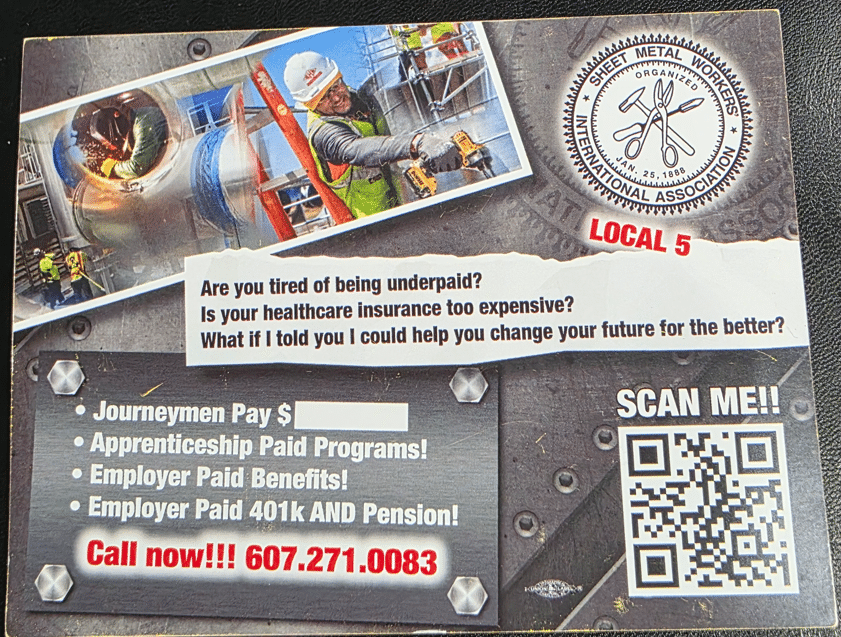
In September 2023, the International put on an organizing blitz in Raleigh, North Carolina, to help staff the megaprojects, with organizers undergoing two days of training and two days of jobsite visits. There were four cars, with four organizers in each car, Ruger said — including one bilingual organizer per vehicle. He also had more than 500 palm cards printed, made up with a QR code that would direct users to a Local 5 landing page that explained megaprojects, pay scale, per diem, overtime and other facts about the union advantage.

“We flooded jobsites, gas stations and supply houses with these cards,” Ruger said. “This was a huge success.”

The recruiting didn’t stop there. Ruger ran ads on Craigslist and Indeed, marketing the many perks of being a Local 5 sheet metal worker. The local has partnered with Guilford Technical Community College to help bring on two classes of 25 first-year sheet metal apprentices. And Ruger found great success stripping one of Local 5’s nonunion competitors, Environmental Air Systems.

“On a couple jobs, I stripped the foreman, and he brought his whole crew of 10-plus people with him,” he said.

Language isn’t a barrier to the union advantage

Ruger, Mulcahy and Local 5 knew that navigating potential Spanish-English language barriers would be key to any organizing success in the area. Along with the bilingual organizers brought in for the Raleigh blitz, Ruger worked with International Organizer Josh Garner and Strategic Research and Data Team Manager Kris Harmon to make sure the Local 5 landing page could be translated into Spanish. He even invested in translator ear buds in order to communicate with Spanish-speaking workers directly.

“I would meet these workers at Sheetz gas stations and our local union hall, explaining all the benefits of joining,” Ruger said. “I hired a few bilingual workers, and going forward they would help me relay information and assist with recruiting.”

Bad-faith employers often exploit language barriers to keep workers from organizing, collectively bargaining and speaking up about jobsite issues. That wasn’t the case at SMART signatory contractor Dynamic Systems, Inc. (DSI), which took on the Wolfspeed chip plant in Siler City, North Carolina. Thanks to their cooperation, all workers were put in a position to succeed — benefiting the employer as well.

“DSI worked with Local 5 and set up two orientations for workers, one in English and one in Spanish,” Ruger explained. “I would send all Spanish-speaking workers to the shop on Friday, and then DSI would report them to the jobsite for orientation in Spanish.”

The success achieved by Ruger and Local 5 marks a roadmap for SMART locals across North America. A wide variety of challenges lie ahead for our organization, from workforce demands to encroaching nonunion competition. But regardless of the nation, state or municipality of any given local, there’s at least one action we can always take: organize, organize, organize.

When SMART Local 5 (East Tennessee and North Carolina) member Steven Ruger became an organizer in April 2023, the local had around 1,100 members — the majority in Tennessee — with 500 sheet metal workers needed to take on several approaching megaprojects.

“I wanted to become an organizer to help build and grow Local 5,” said Ruger, who first joined the trade in July 2011 with SMART Local 112 (Elmira, N.Y.) before moving to North Carolina years later. “To give others the opportunity I had and build solidarity in North Carolina.”

By all conventional measures, he’s succeeding. Today, thanks in large part to aggressive organizing conducted by Local 5 and spearheaded by Ruger, the local has more than 1,500 members, and the size of Local 5’s North Carolina membership has increased by more than 60%.

Megaprojects drive growth

Back in 2023, three megaprojects in Local 5’s jurisdiction — a Wolfspeed chip plant, a Toyota battery plant and a VinFast plant — put huge workforce demands on signatory contractors. That meant Ruger had to get straight to work once he started his new job as an organizer, training with now-retired International Organizer Kevin Mulcahy while simultaneously building a person-of-interest list for the local.

“Kevin and I researched nonunion fabrication shops in Charlotte, Raleigh and Greensboro, found where workers left these shops and placed yard signs at high-traffic intersections,” Ruger recalled.

In September 2023, the International put on an organizing blitz in Raleigh, North Carolina, to help staff the megaprojects, with organizers undergoing two days of training and two days of jobsite visits. There were four cars, with four organizers in each car, Ruger said — including one bilingual organizer per vehicle. He also had more than 500 palm cards printed, made up with a QR code that would direct users to a Local 5 landing page that explained megaprojects, pay scale, per diem, overtime and other facts about the union advantage.

“We flooded jobsites, gas stations and supply houses with these cards,” Ruger said. “This was a huge success.”

The recruiting didn’t stop there. Ruger ran ads on Craigslist and Indeed, marketing the many perks of being a Local 5 sheet metal worker. The local has partnered with Guilford Technical Community College to help bring on two classes of 25 first-year sheet metal apprentices. And Ruger found great success stripping one of Local 5’s nonunion competitors, Environmental Air Systems.

“On a couple jobs, I stripped the foreman, and he brought his whole crew of 10-plus people with him,” he said.

Language isn’t a barrier to the union advantage

Ruger, Mulcahy and Local 5 knew that navigating potential Spanish-English language barriers would be key to any organizing success in the area. Along with the bilingual organizers brought in for the Raleigh blitz, Ruger worked with International Organizer Josh Garner and Strategic Research and Data Team Manager Kris Harmon to make sure the Local 5 landing page could be translated into Spanish. He even invested in translator ear buds in order to communicate with Spanish-speaking workers directly.

“I would meet these workers at Sheetz gas stations and our local union hall, explaining all the benefits of joining,” Ruger said. “I hired a few bilingual workers, and going forward they would help me relay information and assist with recruiting.”

Bad-faith employers often exploit language barriers to keep workers from organizing, collectively bargaining and speaking up about jobsite issues. That wasn’t the case at SMART signatory contractor Dynamic Systems, Inc. (DSI), which took on the Wolfspeed chip plant in Siler City, North Carolina. Thanks to their cooperation, all workers were put in a position to succeed — benefiting the employer as well.

“DSI worked with Local 5 and set up two orientations for workers, one in English and one in Spanish,” Ruger explained. “I would send all Spanish-speaking workers to the shop on Friday, and then DSI would report them to the jobsite for orientation in Spanish.”

The success achieved by Ruger and Local 5 marks a roadmap for SMART locals across North America. A wide variety of challenges lie ahead for our organization, from workforce demands to encroaching nonunion competition. But regardless of the nation, state or municipality of any given local, there’s at least one action we can always take: organize, organize, organize.

Working families across North America continue to bear the brunt of the climate crisis, from extreme heat and natural disasters to poor air quality caused by wildfire smoke. The Canadian government is pursuing aspirational green economy goals in response — and SMART Canada is working to take advantage, organizing and recruiting to make sure the provinces’ sustainable future is union made.

“Transitioning Canada’s workforce to net-zero and ensuring our members receive the skills required to lead the change — without losing jobs — is critical to our economy,” said SMART Director of Canadian Affairs Chris Paswisty.

To that end, SMART Canada recently targeted potential recruits across the nation with a digital advertising campaign. Students and guidance counselors received a video introducing them to the skilled trades, with a link to SMART’s Canadian website providing information on how to get involved. The video proclaims: “This is OUR time, so think green, think clean, think SMART” — emphasizing that a new focus on green industries provides bountiful career opportunities.

“We see the worsening effects of climate change every year,” Paswisty added. “Taking action isn’t just about the future of our planet and the world we leave behind for the next generation. This is about providing for our members, both today and tomorrow.”

The Canadian government’s current goal is to achieve net-zero carbon emissions, as a society, by the year 2050. Doing so will require a massive, nationwide effort — one that will rely largely on SMART’s skilled sheet metal workers and roofers. SMART Canada’s new apprenticeship web page underlines that fact, making clear that our green energy future will create plenty of jobs.

“Our sheet metal workers fabricate and install proper ventilation and air filtering systems, ensuring the overall health and energy efficiency of schools, offices, hospitals, factories, nuclear plants and homes,” said Paswisty. “Our architectural and roofing members play a crucial role in the building envelope, again helping structures operate efficiently, and they install green roofing that helps reduce greenhouse gases and improve air quality. Canada needs our members to complete the green transition.”

Union workers are being helped by political action. The Government of Canada’s 2023 federal budget featured a far-reaching focus on Canada’s green economy, including broadened investment in private-sector-led infrastructure, strong responses to the U.S. Inflation Reduction Act and much more. Perhaps most importantly, the budget tied green tax incentives to one of the strongest definitions of prevailing wage Canada has ever seen — one that incorporates union compensation, benefits and pension contributions, helping create good-paying union jobs as Canada transitions to sustainable energy.

In addition, Canada’s Building Trades Unions (CBTU) are taking steps to make sure today’s workers aren’t left behind. Funded by Employment and Social Development Canada’s Union Training and Innovation Program (UTIP) — which SMART Canada and the CBTU lobbied for extensively — CBTU’s “Building It Green” national training program aims to integrate climate literacy into already existing construction trades education and training, helping apprentices, journeypersons, inspectors and training instructors take on the pressing concerns of climate change. SMART Local 280 (Vancouver, B.C.) President and Training Coordinator Jud Martell helped develop the trade-specific curriculum for SMART members.

There’s no questioning the fact that the climate crisis is, in fact, a crisis, Paswisty added. But meeting the challenge head-on provides a way forward, both for our communities and for SMART members.

“We are ready to grow and meet the demand by welcoming Canadians into the skilled trades, and we will collaborate with the government to continue driving Canadians towards a career in the trades,” he concluded.

SMART Local 18 members and signatory contractors are working to spread the word about rewarding careers in the union sheet metal industry for young people across Wisconsin.

Wauwatosa East High School has partnered with local mechanical contractor firms JM Brennan and TOTAL Mechanical — as well as local manufacturers representing Air Flow, the Milwaukee and Southeastern Wisconsin Plumbing and Mechanical Contractors Association and Sheet Metal and Air Conditioning Contractors Association (PMC SMACCA) — to further develop its learning labora­tory and better prepare the building and construction trades’ labor force of the future.

These companies, the regional contractors’ asso­ciations and the union members who make up their workforces have partnered with Wauwatosa East to advance the HVAC component of its technical training space so that students can be better prepared for a career in the building trades.

Craig Griffie is the technical educational teacher at Wauwatosa East High School and is the coordinator of one of only two certified pre-apprenticeship programs in the state of Wisconsin.

“At Tosa East we are very proud of our program. The students are building a really strong foundation, and it’s all due to the partners we have,” said Griffie.

“We believe in bringing up that next generation for our industry. This class gives students the opportunity to develop that through hands-on learning,” added Jessica Jahner, senior project manager at JM Brennan.

Local 18 members on site at Wauwatosa East demonstrated various aspects of the union sheet metal trade for students — introducing potential recruits to the industry and letting area students know about the life-changing power of a union.

“It’s been amazing working with the people from JM Brennan and TOTAL Mechanical, just learning all these new things and soaking up all this information,” said Hayden, a high school senior.