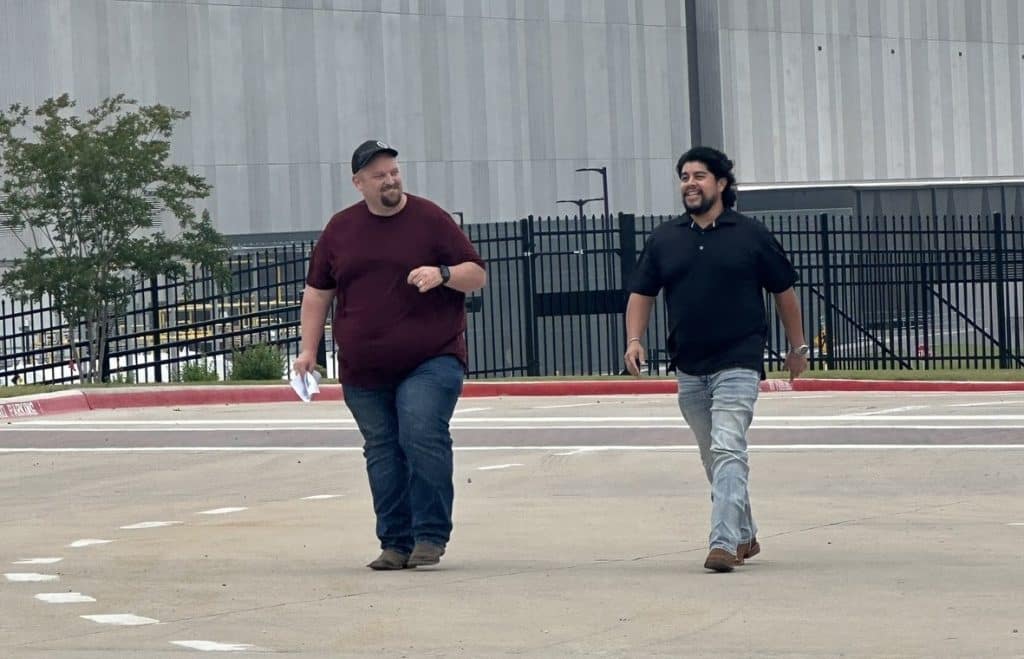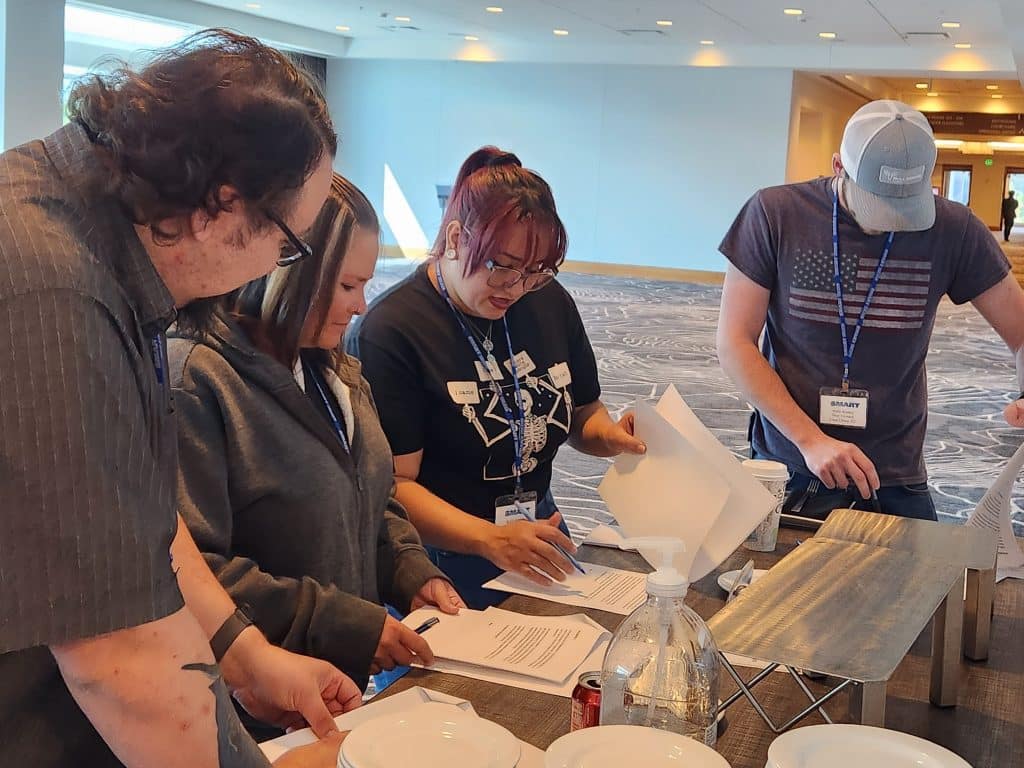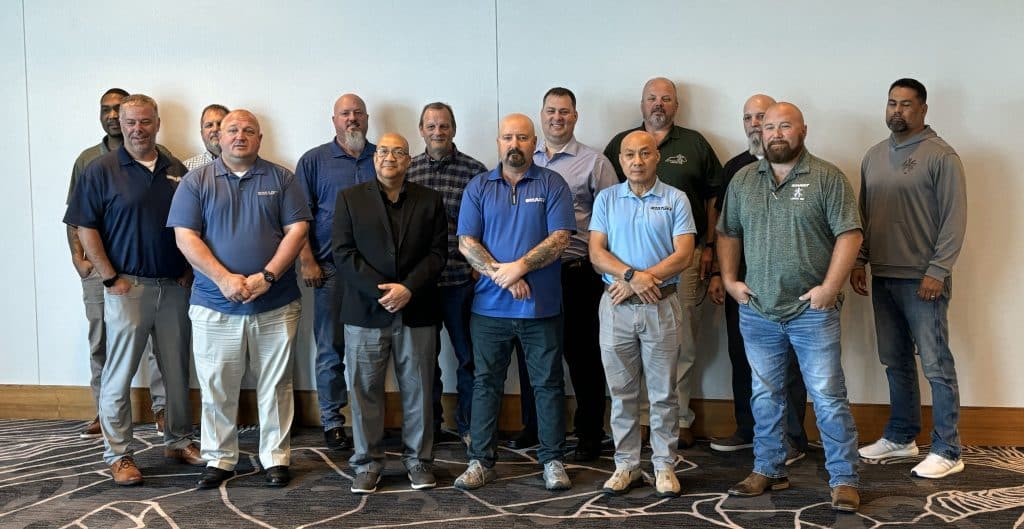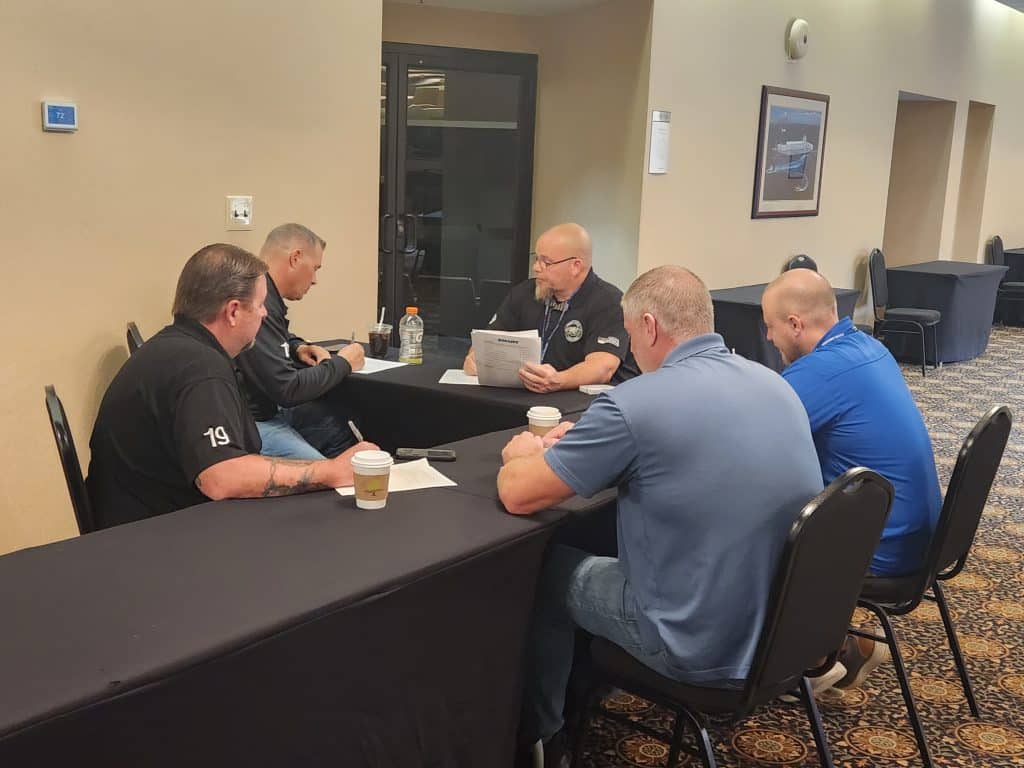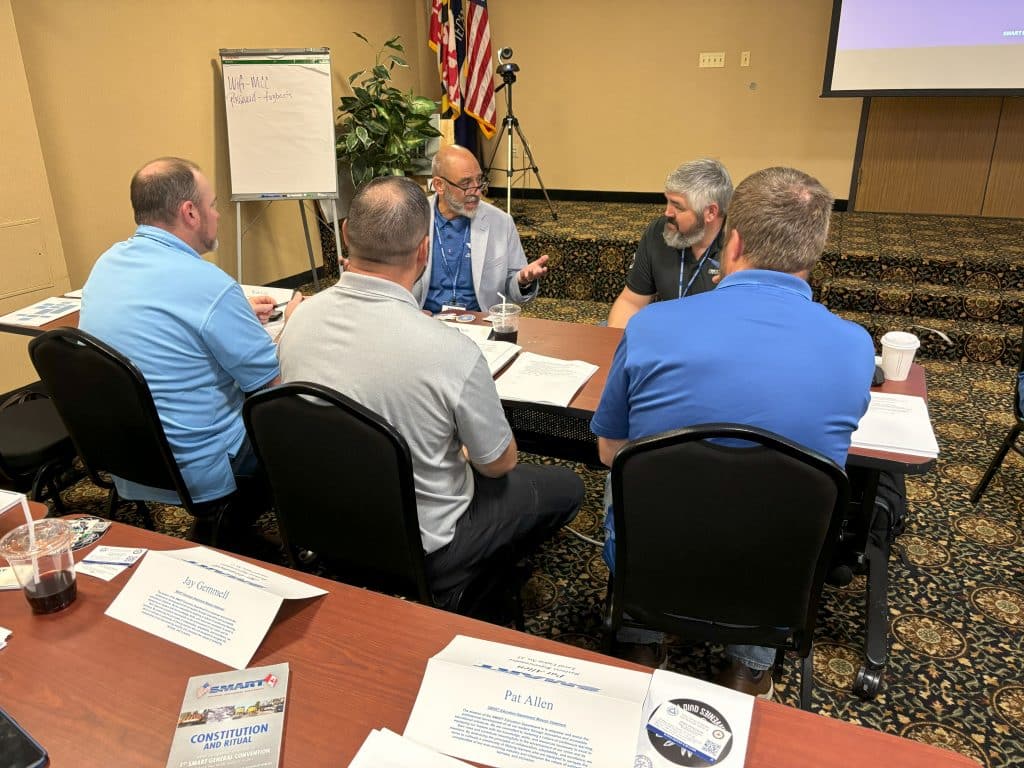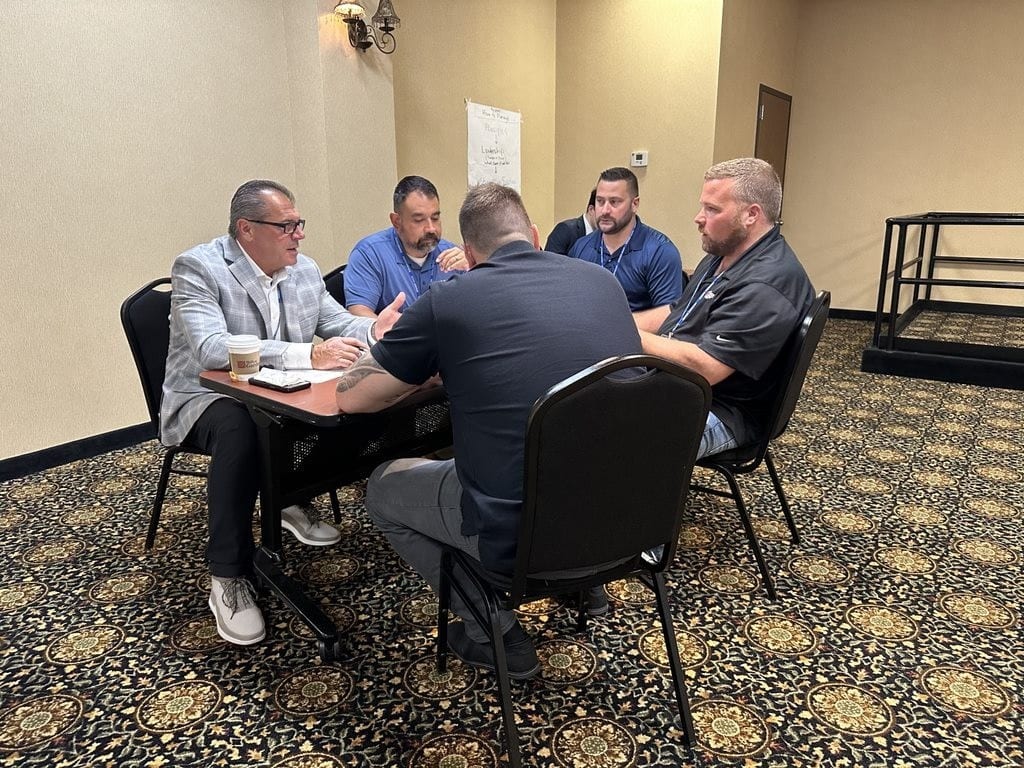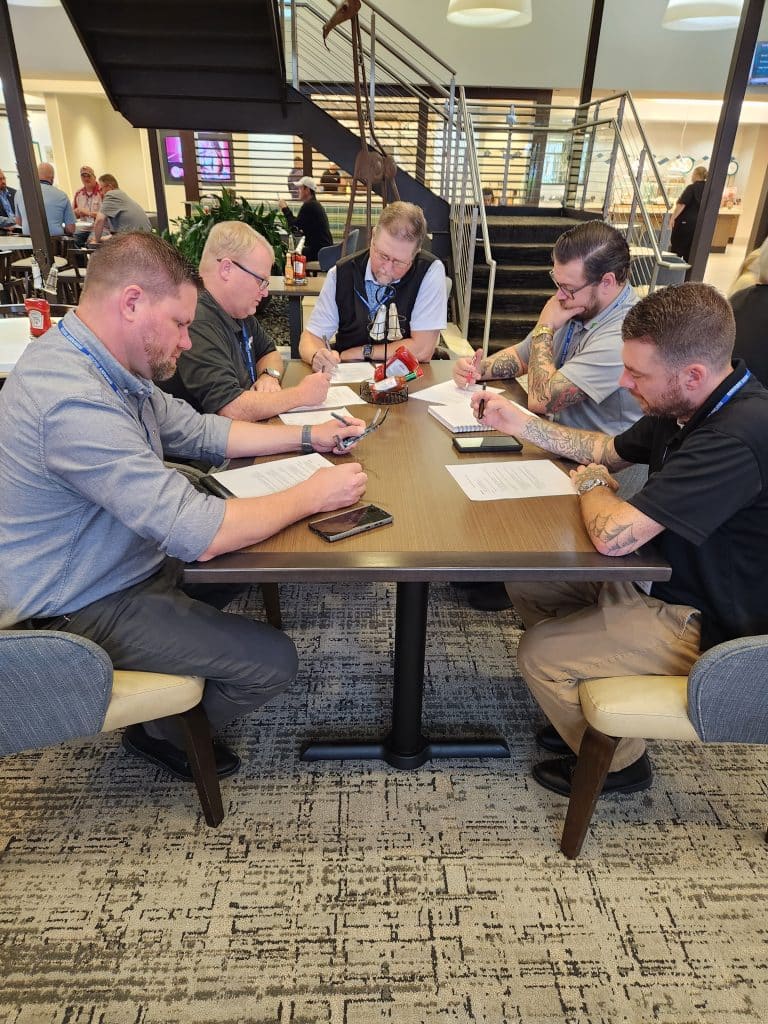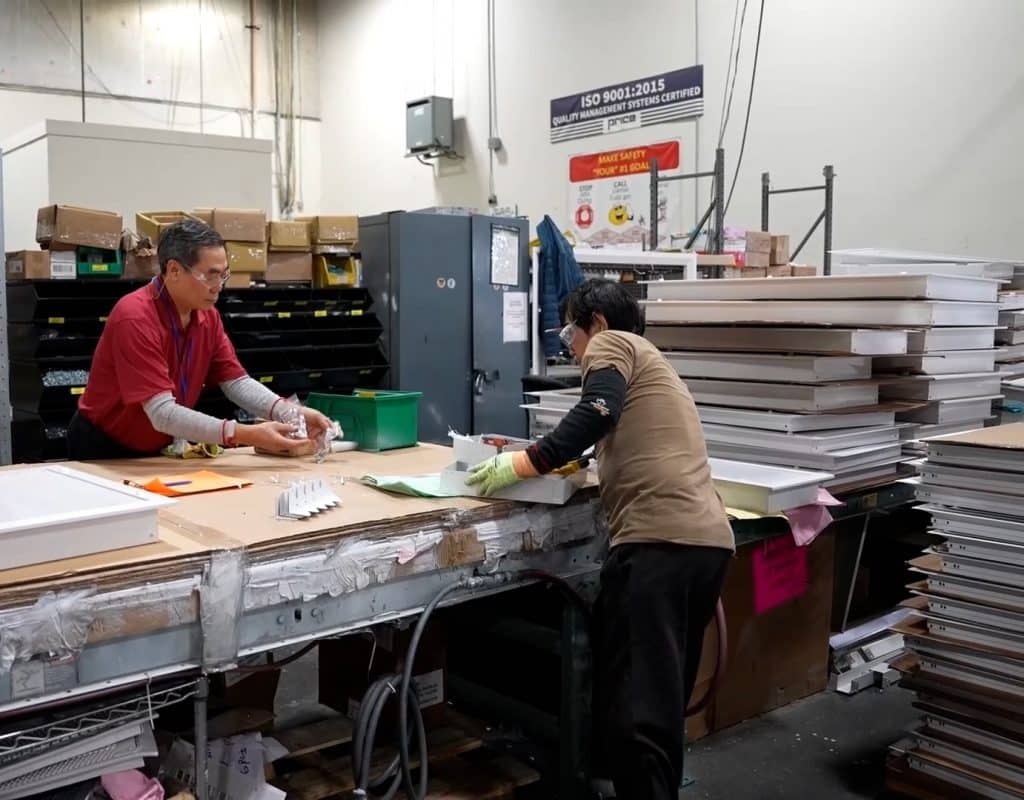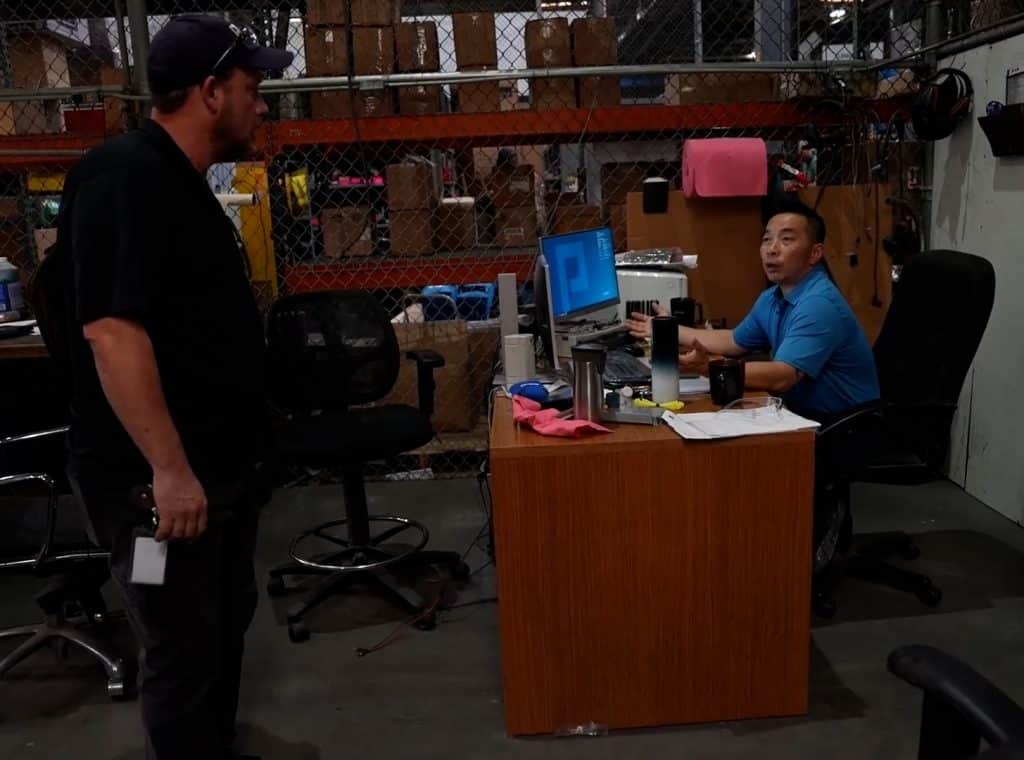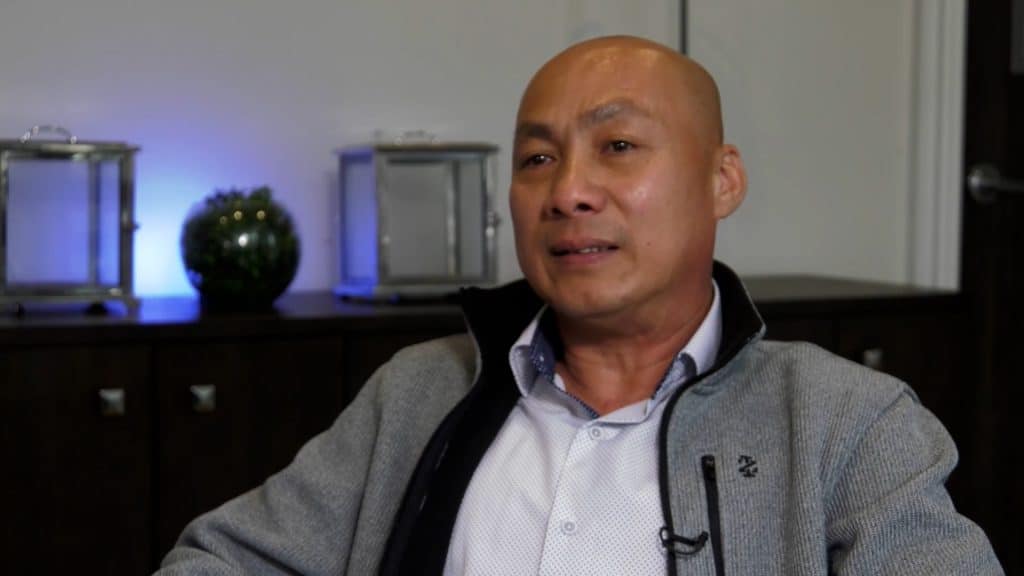
One of the biggest barriers unions face is misinformation: misconceptions about labor unions, often promoted by anti-union organizations, that cause workers to question the power of membership and collective strength. In Idaho, two SMART Local 55 staffers demonstrated the importance of communication in spreading the truth about the union difference.

At Southwark Metal Manufacturing’s Idaho operation, a recent new employee orientation became a strong example of what consistent union communication can accomplish. Carlos Arroyo and Chris Howell, who work for SMART Local 55, spoke with new hires about the value of union membership and, with support from workers who helped carry those conversations, signed up 20 of the 22 workers entering the facility.

Southwark Metal Manufacturing’s Idaho Division, located in Caldwell, Idaho, produces sheet metal products and services wholesale distributors across Idaho, Montana, Nevada, Oregon, Utah, Washington and Wyoming. Organizing members in a production shop can be difficult, and doing so in a “right-to-work” state — where local unions are weakened by having to represent workers who don’t sign up to pay dues — makes the challenge even greater.

That made the results of the orientation especially meaningful.

Rather than leading with a scripted pitch, Carlos and Chris began by asking workers what they had heard about unions. From there, they focused the conversation on real workplace experience, and they relied on the credibility of workers who helped explain what the union means on the shop floor.

They explained that union strength comes from participation. When more workers join and take ownership of their union, their collective voice becomes louder in negotiations and stronger on the shop floor. That message connected union membership directly to the issues workers care about every day.

The conversation also covered concrete benefits, including vacation, Union Plus programs and holiday pay. At this shop, workers receive 10 paid holidays.

Carlos and Chris were careful not to overdo the message. Instead, they kept the discussion focused, practical and tied to real results. They talked about workplace conditions the union had helped improve, including times when painting fumes became a problem or when blistering heat made the floor harder to work on. In those situations, the union helped push for solutions such as moving fans onto the floor and addressing conditions workers were facing directly.

Local 55 Regional Manager Kolby Hanson recognized this effort, noting that organizing production workers is especially difficult in a right-to-work environment. He credited Carlos with developing strong communication skills with production workers over the past couple of years and added that Chris is now building those same skills alongside him.

Their success at Southwark is more than a one-day achievement. It reflects the importance of steady communication, clear explanations of union value and trusted conversations with workers. By meeting new hires where they are, answering questions honestly and working alongside worker leaders who can speak from direct experience, Carlos and Chris helped demonstrate what strong internal organizing looks like.

Congratulations to Carlos and Chris on this important achievement and on helping to strengthen Local 55 at Southwark!
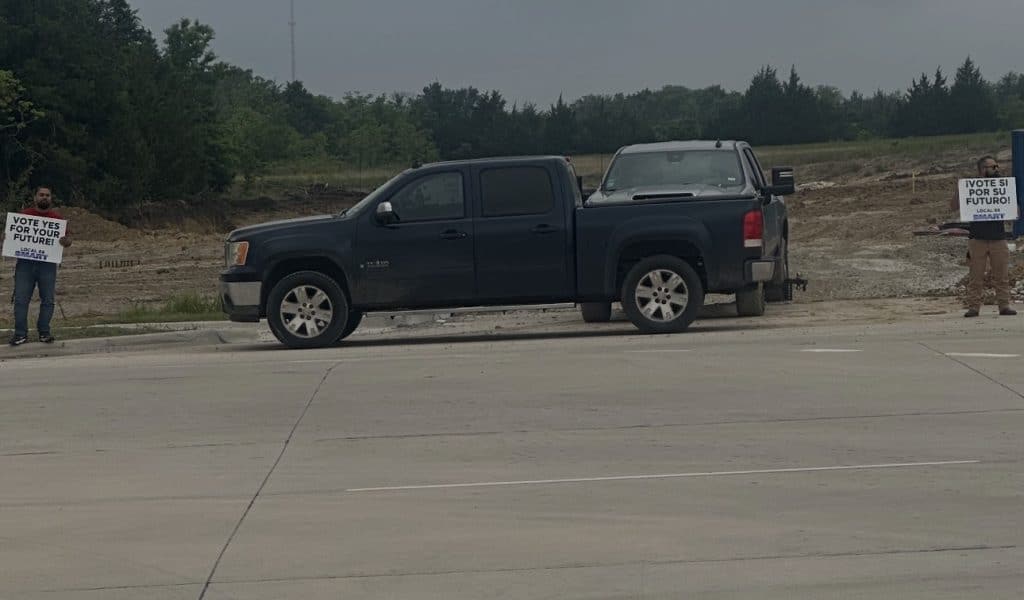
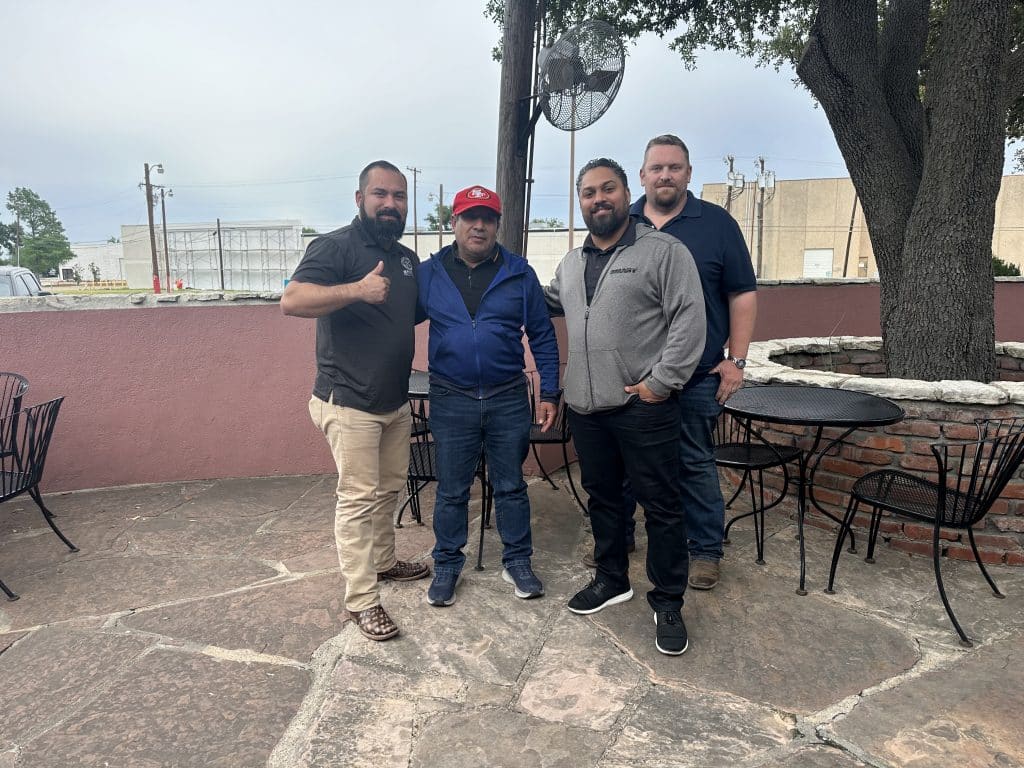
When workers come together to form a union, they’re making a choice to build collective power and win the pay, benefits and workplace standards they deserve. The road to unionization is, far too often, a tough one. But as employees at Dallas-area contractor Stratus Systems demonstrated, solidarity on the job can help workers overcome the challenges in their path.

From 2023 through 2026, workers at Stratus Systems worked with SMART Local 68 members and organizers to build an organizing campaign through sustained outreach, relationship building and the determination of trusted worker leaders.

Organizer Yadriel Carrasquillo and Local 67 Production Organizer Ralph Gomez

Workers fight for their union

The campaign began years ago — and originally met what could have been a devastating setback.

Following worker-to-worker outreach in early 2023 that quickly turned into an organizing campaign by the end of the year, workers filed for an election to join Local 68 with the National Labor Relations Board (NLRB). When the election took place in January 2024, union supporters lost. But that wasn’t the end of the road. The organizing team rebuilt support by strengthening worker engagement, forming an internal organizing committee and expanding worker-led communication. The result? Out of 168 workers at the company, 96 signed cards signaling their intent to join Local 68.

Then, another setback: The United States government shut down, including the NLRB, significantly delaying the workers’ efforts.

Again, the workers refused to give up. In early 2026, organizers secured a rerun NLRB election, then executed an intensive campaign featuring daily strategy meetings, rapid response jobsite outreach, worker-to-worker messaging and strong support from volunteer leaders.

“Everyone was feeling excited because we knew that the workers knew the union had their backs by the workers’ smiles, honks and waves,” said Organizer Yadriel Carrasquillo, who had previously worked as a journeyperson on a jobsite alongside many Stratus employees.

And on May 1, 2026, workers voted in favor of union representation, making SMART Local 68 the certified representative of Stratus Systems employees.

The campaign demonstrated the importance of persistence, worker leadership and coordinated organizing in overcoming setbacks and achieving a successful union election.

Welcome, brothers and sisters!

Worker leaders, pictured above, started the campaign and kept driving it forward

By Shane Vermilye, SMART International organizer

Local 33 (Northern Ohio, West Virginia) has started 2026 with strong organizing momentum, signing six new contractors to date and continuing to grow the local’s market share across multiple districts. These victories are especially significant in West Virginia, where organizing success in a “right-to-work” state requires persistence, relationship-building and commitment from the local’s staff and potential new partners.

And while these wins are tough to achieve, they lead directly to more work opportunities and strengthened collective power for members and families.

One of Local 33’s biggest wins came early in the year in the Parkersburg District, where we signed RW Miller after nearly a year of organizing efforts, meetings and relationship-building. This success brought 17 new members into Local 33 and strengthened our position in the residential market throughout the region.

We also secured agreements with two additional residential contractors, adding seven new members at each company. One contractor was organized in the Charleston District and the other in the North Central District, further expanding Local 33’s union residential presence and creating new opportunities for members in both markets.

Another major milestone came from a long-term organizing effort. Back in 2022, Local 33 organized Wood Commercial and welcomed them into our union family. After experiencing the benefits of being a successful union contractor, the company made the decision to bring its residential company, Wood Heating and Air Conditioning, into Local 33 as a signatory contractor this year. This achievement demonstrates the value of our partnership with contractors and the strength of the union business model.

These organizing victories are helping Local 33 grow our membership, strengthen market share and create more opportunities for sheet metal workers throughout our jurisdiction. We look forward to building on this momentum throughout the rest of 2026.

So-called “right-to-work” laws force unions to represent and bargain on behalf of workers who don’t pay dues. Union dues are the funds that empower local unions to devote resources to bargaining better contracts, organizing more jobsites and workplaces, and better representing members. When local unions are forced to bargain on behalf of non-dues-paying members, both SMART members and nonunion workers suffer.

Know the facts:

• The average worker in “right-to-work” states makes approximately $8,989 less per year than workers in free bargaining states.

• “Right-to-work” laws damage retirement contributions, hurting members’ pensions.

• The workplace fatality rate in so-called right-to-work states is 37% higher compared with free bargaining states.

• Uninsured rates are 11.9% higher in so-called right-to-work states compared with free bargaining states.

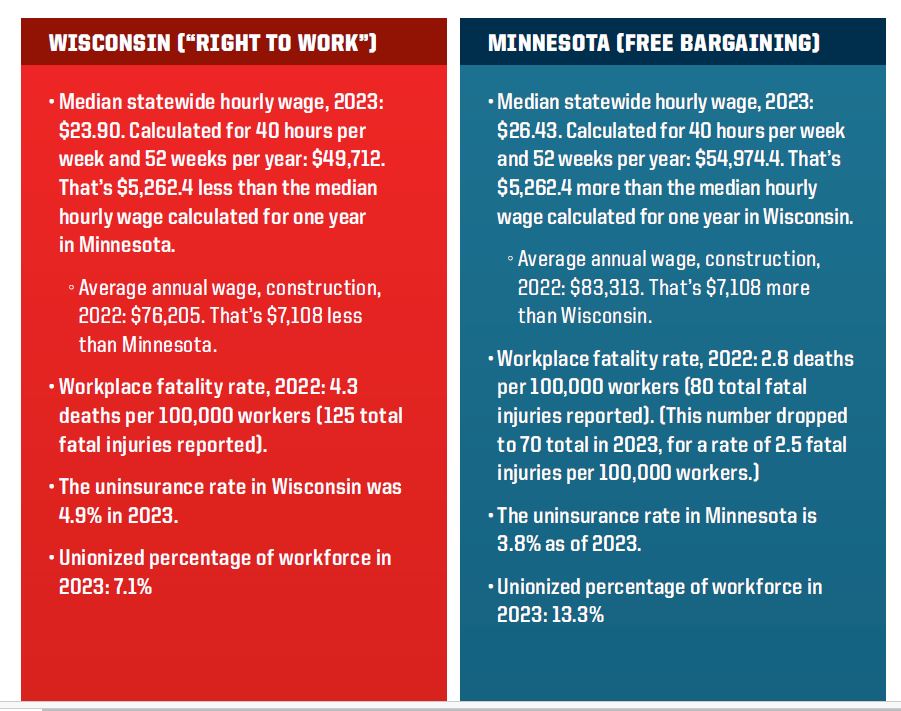
State-by-state comparison:

The Economic Policy Institute compared the economic paths of Wisconsin and Minnesota from 2010 to 2018, which included the years in which Wisconsin passed a so-called right-to-work law and Act 10, which restricted the collective bargaining rights of public sector unions. During that time, job growth in Minnesota grew 11% compared to Wisconsin’s 7.9%. Minnesota’s wages increased by 9.7% compared to Wisconsin’s 6.4%. Household income grew 8.5% in Minnesota compared to Wisconsin’s 6.4%.

Education Dept. hosts second annual Production Institute

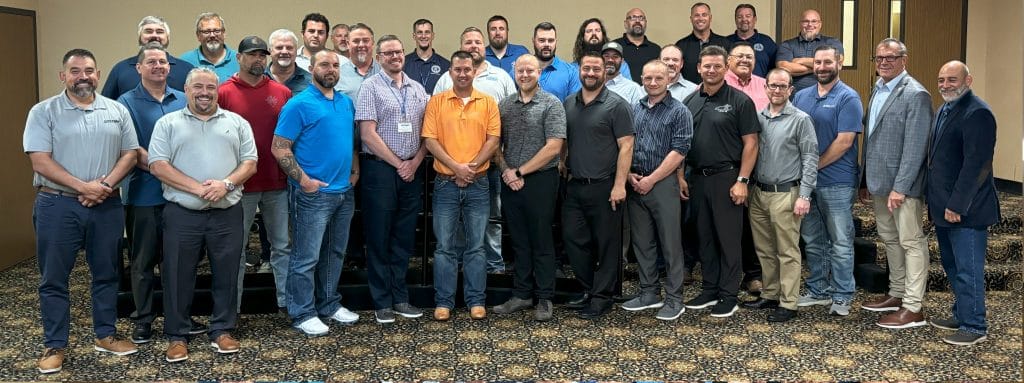
The SMART Education Department held its second annual Production Institute in Indianapolis, Ind., during the week of September 9th — bringing SMART production members and leaders together to build knowledge, skills and camaraderie, and to strategize for the years ahead.

The Production Institute is a three-year, progressive-format class, with attendees from last year advancing to the second round of courses. A new first-year class attended this year, along with the returning 2023 group.

All classes included production-focused content in the core areas of collective bargaining, steward training, organizing and labor history. Attendees also learned about more timely issues in daily breakout sessions on topics such as labor/labour law updates, the open shop agenda and Project 2025, a MEMO focus group, bias and belonging, and the production salting program. Through interactive exercises, attendees were able to apply their knowledge and develop their skills while also getting to know their peers from across North America.

New Representatives class helps latest crop of SMART leaders develop skills 

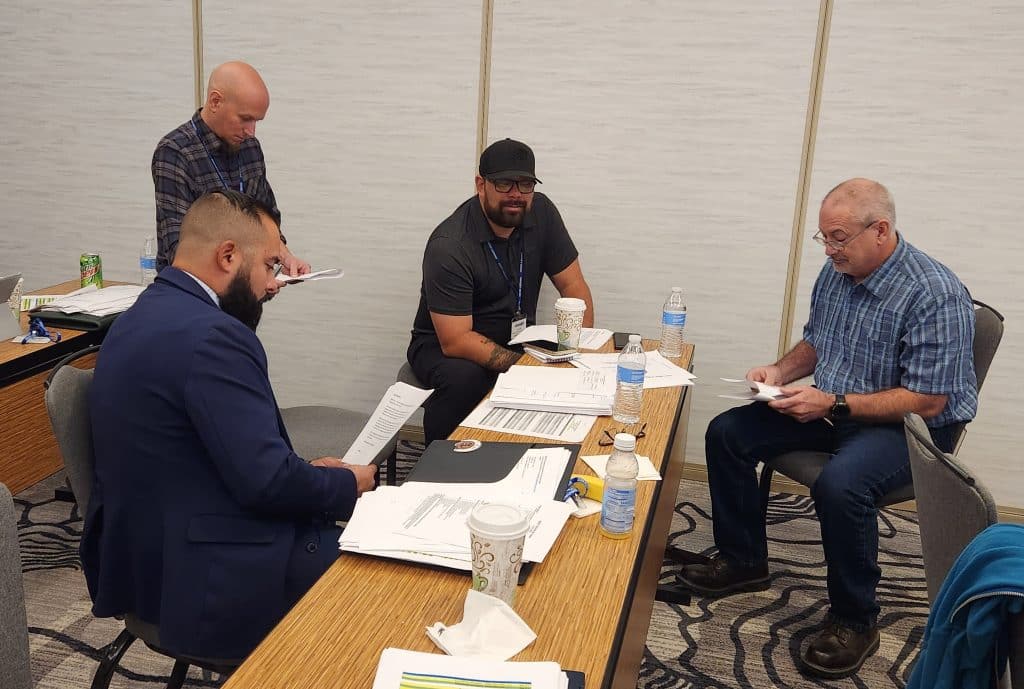
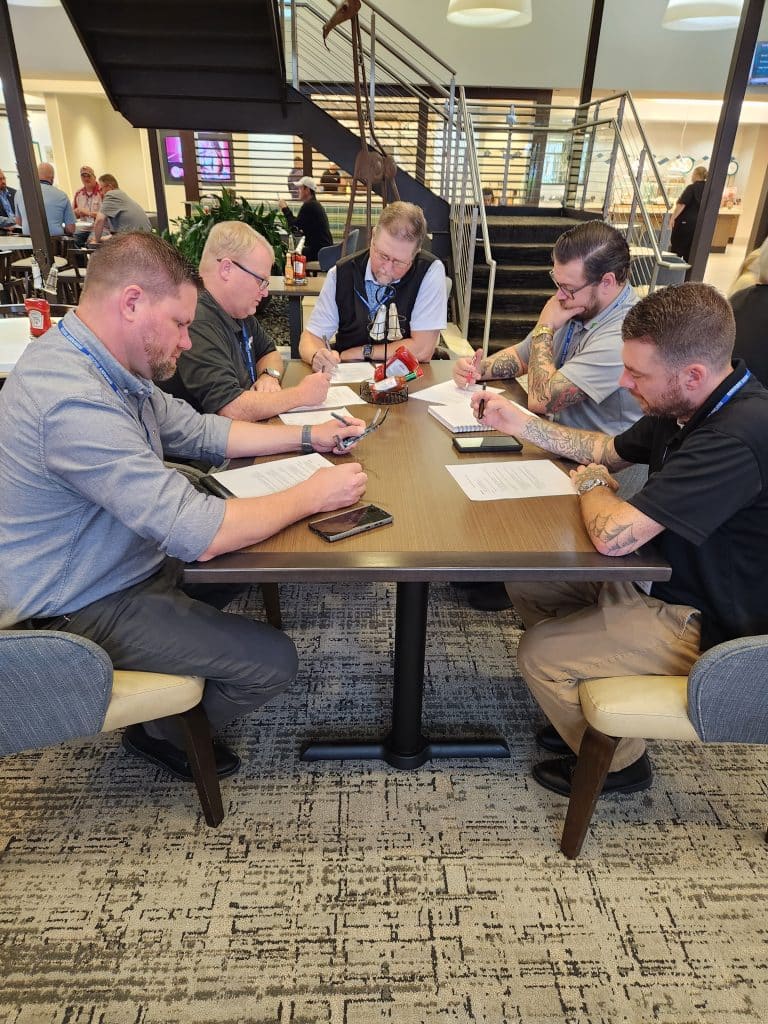
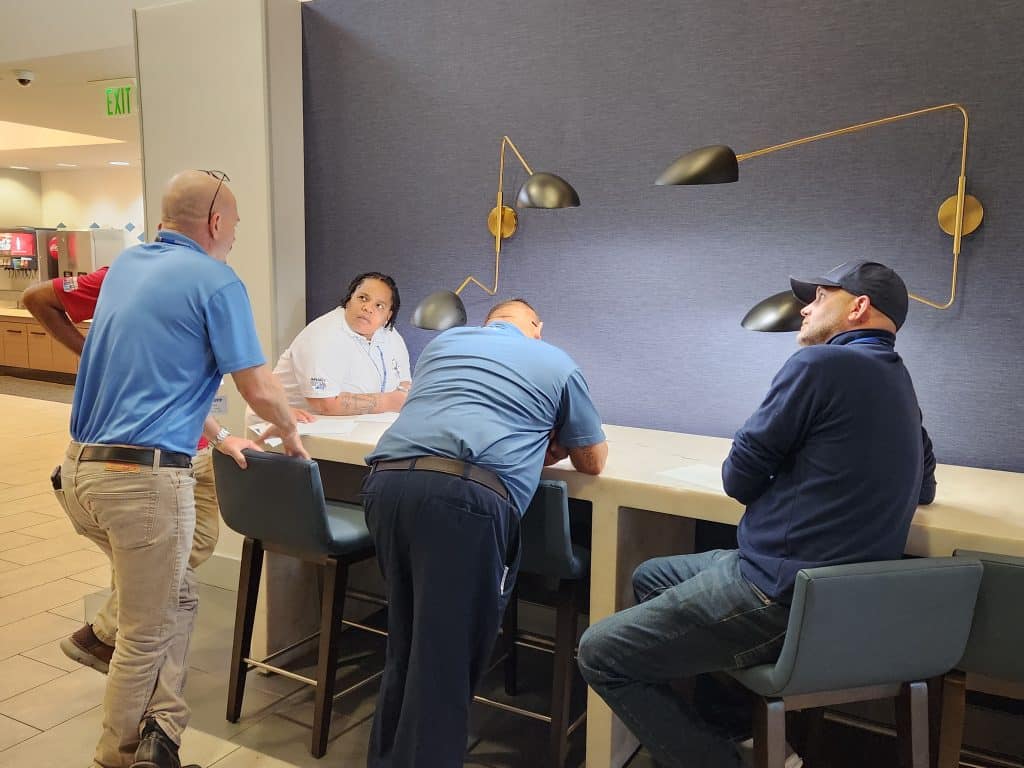
Newly elected and appointed SMART representatives traveled to Linthicum Heights, Md., during the week of September 16th, 2024, to build bonds and learn from one another in the SMART Education Department’s New Representatives I class. The new representatives worked in different groups on activities associated with topics like member misconduct, jurisdictional disputes, contract administration, pre-job meetings and crafting local union meeting reports. In addition, participants built a leadership growth plan to identify areas they would like to develop more as leaders and created specific goals around each item to help them grow throughout their careers.

Education Department hosts class on so-called “right to work” to boost member engagement, organizing

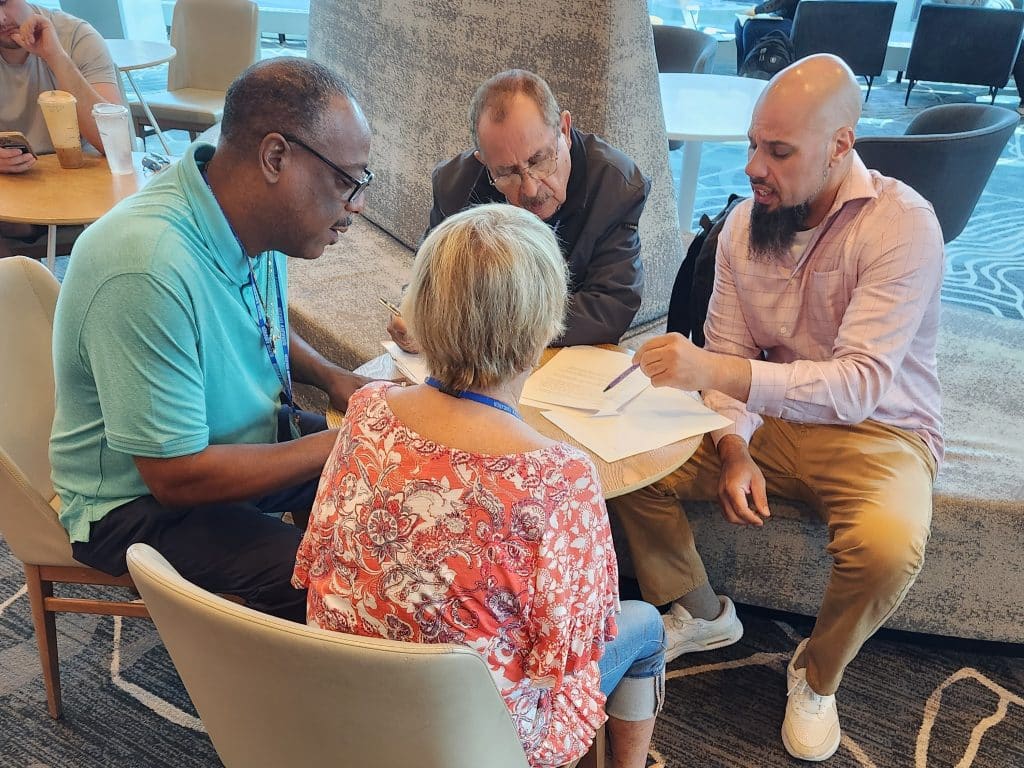
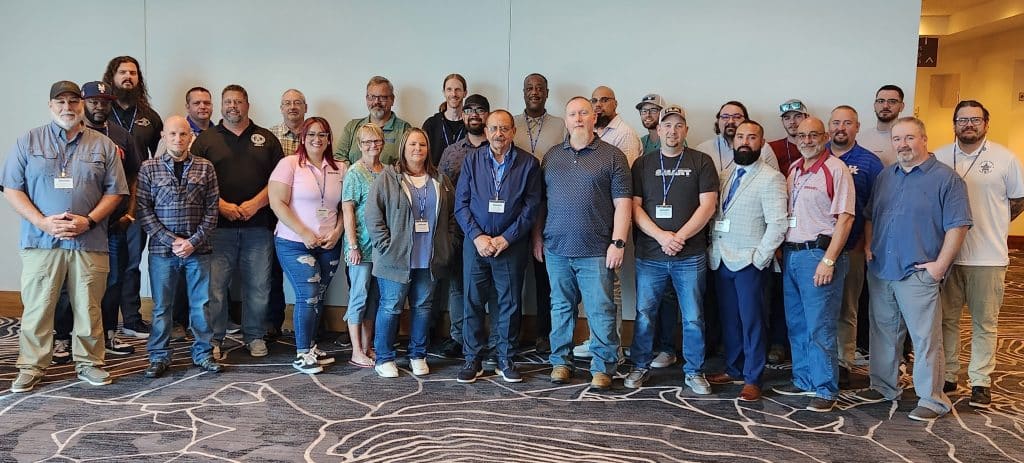
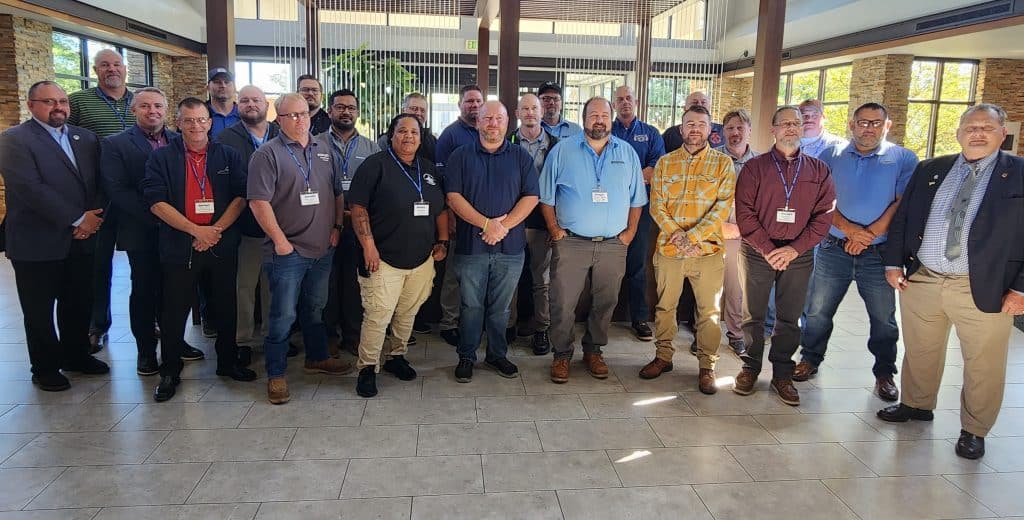
The SMART Education Department held its new “Right to Work and Member Retention” class in Detroit, Mich., during the week of September 30th. The class focused on the open shop movement, the impact of so-called right to work, strategies for improving membership retention, and the critical role that union leaders play in maintaining local union power.

Twenty-three participants from across our union worked together to problem solve and create action plans for their respective locals. The class also took time to celebrate the repeal of Michigan’s right-to-work law and the role that Michigan Locals 7 (Lansing), 80 and 292 (both Detroit) played in that process.

“Everyone’s hard work will help strengthen our union!” said SMART International Instructor Richard Mangelsdorf.

The SMART Education Department held its new “Right to Work and Member Retention” class in Detroit, Mich., during the week of September 30th. The class focused on the open shop movement, the impact of so-called right to work, strategies for improving membership retention, and the critical role that union leaders play in maintaining local union power.

Twenty-three participants from across our union worked together to problem solve and create action plans for their respective locals. The class also took time to celebrate the repeal of Michigan’s right-to-work law and the role that Michigan Locals 7 (Lansing), 80 and 292 (both Detroit) played in that process.

“Everyone’s hard work will help strengthen our union!” said SMART International Instructor Richard Mangelsdorf.

The SMART Education Department held its new “Right to Work and Member Retention” class in Atlanta, Ga., during the week of April 8th. The three-day class introduced topics such as the evolution of the open-shop movement and so-called right to work, right-to-work messaging, the impact of right to work, union loyalty, internal organizing, and representation and implicit bias. Participants worked together to problem solve and to create their own action plans. Each of the 31 attendees completed exercises focused on how to improve member retention at their own locals. Great work, all!

In Georgia, so-called “right-to-work” laws make it hard for unions to organize and retain members, particularly when language barriers in the workplace already present challenges. Despite such obstacles, though, SMART Local 85 (Atlanta, Ga.) has made big inroads at Price Industries, where approximately 70% of the workforce speaks Vietnamese as a first language.

“A new approach to internal organizing has been key to this success,” said SMART Director of Production Workers Dave Goodspeed.

“We were able to hire — from our own ranks — a Vietnamese speaker, Donson Ha,” Goodspeed explained, “and he’s a firecracker.”

Anti-union right-to-work laws allow members to opt out of paying union dues, making the inability to communicate effectively to an entire workforce potentially devastating to both workers and local unions. That was especially true at Price in Georgia: Local 85 was unable to convey the union difference and best represent its members, and workers were cautious about seeking representation from those they literally couldn’t understand.

“For a long time, Price Industries has been a hard nut to crack in terms of signing new members, primarily because Price has made a practice of hiring so many different nationalities,” Goodspeed said.

“They have people who speak English, Spanish, Vietnamese, Burmese, Cambodian, and the largest population of workers down there — probably 50% — are Vietnamese,” added SMART International Production Organizer Sharon Walker.

Until recently, only around 20–25% of Price workers had signed up with the union, Walker said, and the lack of representation had material consequences. One example: The company would post mandatory overtime notices to its bulletin boards in English exclusively, making it difficult for non-English-speaking workers who may have missed the announcement from their shop lead to know what was required of them. And in the event that a worker who didn’t speak English faced discipline, they often didn’t know how to go to their union for help.

“I didn’t know about unions until I met Sharon, and she explained to me … what a union is,” said Vietnamese-speaking Shop Steward Rich Manh Bui.

“Before, nobody represented them, and that’s why Vietnamese [workers] didn’t know anything about a union,” added fellow Shop Steward Hai Ngo. “Even when they joined a union, and they had a problem, they don’t know where they’re going — they don’t know who they’ve got to ask.”

Donson Ha

That’s where Ha and shop stewards like Bui and Ngo entered the equation. Local 85 and SMART International representatives realized they had to do more to gain the trust of the Price workforce, and in the spirit of true trade unionism, they looked to the rank-and-file for leadership. Ha, a 10-year Local 85 member, came from the building trades side of the industry — but after seeing the number of Vietnamese workers in production, especially older workers, he was motivated to change job titles.

Since Local 85 hired Ha as a subsidized production organizer, the percentage of organized workers has approximately doubled.

“I’m very happy to organize, to stand up for Vietnamese people, because they didn’t understand the union; they don’t speak English, and they didn’t know how strong it is to be a union member,” said Ha. “My job is to help them understand how it works, how the union helps people.”