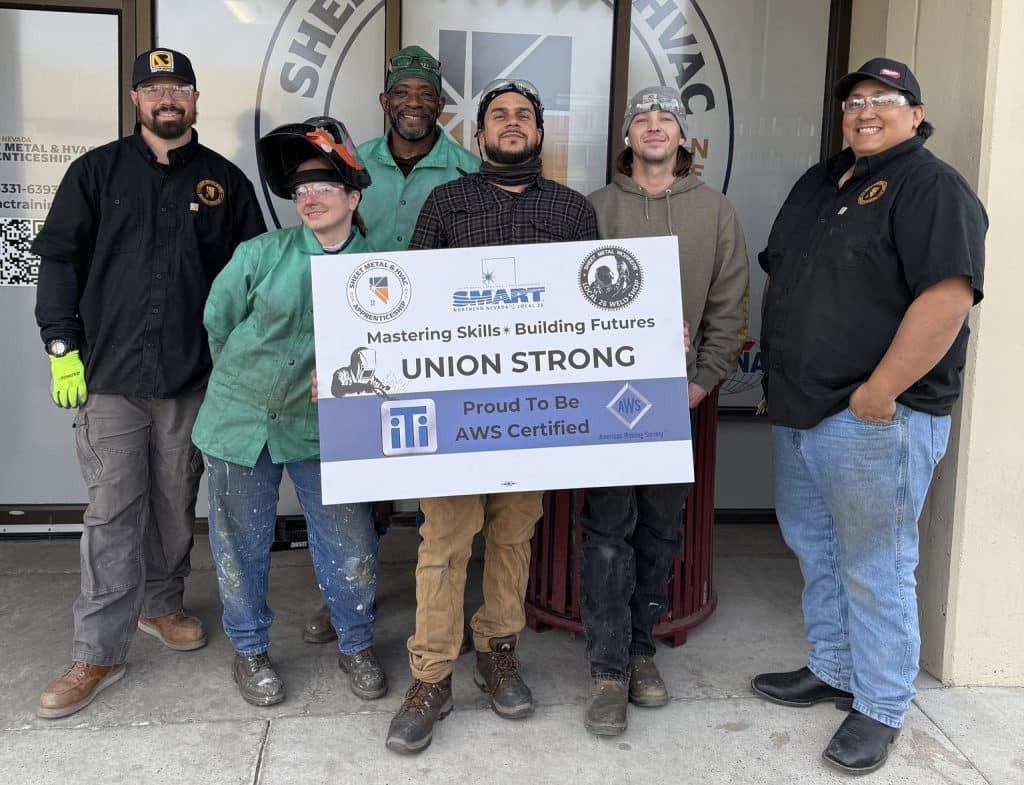
National Careers in Trades Week (NCIT), which takes place April 6-10, 2026, comes at an opportune time for people seeking skilled trades jobs: rewarding, essential careers with excellent pay and strong benefits, including healthcare and pensions. While United States workers are experiencing a stagnant job market with fewer job postings and positions that are harder to secure, well-paying skilled trade job openings look set to grow in the near future.
“There is a lot that has changed about our country over the years: technology, artificial intelligence, you name it. But one thing that won’t ever change is this simple fact: We need skilled trades workers to build our country,” said SMART General President Michael Coleman. “SMART members are doing that from coast to coast, whether building new hospitals, ensuring air quality in schools or making sure apartment and office buildings run as efficiently as possible. We’re excited to shine a light on the many career paths available to workers in our industry during National Careers in Trades Week — and well beyond.”
According to the U.S. Bureau of Labor Statistics (BLS), professions in the skilled trades will experience faster-than-average job growth between 2024 and 2034, with the Occupational Outlook predicting over 600,000 construction job openings each year and a current median annual wage of $58,000 (up from $55,000 in 2025). Median pay is even higher for full-time construction workers who are union members, who have a median wage that is $23,556 higher per year compared with full-time nonunion construction workers (based on BLS median weekly earnings data).
Additionally, apprenticeships in the skilled trades, like those at SMART local unions, provide the opportunity to earn while learning and enter the workforce without debt — an especially relevant piece of information for young people and their parents.
New research conducted by Wakefield Research on behalf of SMACNA shows that 75% of teens aged 13-18 would consider a trade job over going to college. The most compelling reasons for teens opting for a trade over college are higher pay, good benefits and paid apprenticeships, cited by 30% of teens. Other considerations that would sway a teen to the trades include opportunity to be promoted (24%), knowing a job is vital to the economy (21%) and the number of available trade positions growing faster than the average job (19%).
“Skilled professions offer rewarding career opportunities for all people, including young adults, women, veterans and anyone who is looking for a career change,” said SMACNA CEO Frank Wall. “The wages and job security that trade careers offer provide a faster means to home ownership, upward mobility and saving for retirement that other pathways don’t always ensure.”
In addition to the SMART, SMACNA and International Training Institute (ITI), who led the initiative in 2025, other trade groups have joined National Careers in Trades Week to build awareness for all they have to offer and how their disciplines leave lasting legacies on society. These include the Mechanical Contractors Association of America (MCAA), National Energy Management Institute (NEMI), the National Electrical Contractors Association (NECA) and the Sheet Metal Occupational Health Institute Trust (SMOHIT).
Throughout National Careers in Trades Week, cross-industry visibility efforts will showcase the benefits of choosing careers in the skilled trades among job seekers and the American public. The goal is to fill the hundreds of thousands of jobs that are essential to national and global economies and infrastructure projects, including, for example, the construction of chip plants, stadiums, healthcare facilities, factories and data centers.
SMART sheet metal members — whether they’re HVAC technicians, industrial welders, architectural sheet metal workers, testing, adjusting and balancing specialists, or in one of the many other professions the sheet metal trade encompasses — know well the many perks of a career in our union and our industry. As we continue to build North America, our union will work to make sure Americans and Canadians know about those opportunities as well.
That’s how we secure the future for our trade, our industry and our union.
The 2026 research was conducted by Wakefield Research on behalf of the SMACNA among 500 U.S. parents of kids currently enrolled in high school or college between January 13-21, 2026, using an email invitation and an online survey.
SMART apprenticeship programs are a core part of our union’s foundation. Across North America, local apprenticeships help ensure the future of our union. They change lives, helping working people enter fulfilling careers in the sheet metal industry. And on top of that, they benefit communities across the United States and Canada, setting the standard for craftsmanship, skill and training.
For all those reasons, it is vital that we always work to uphold the high-quality apprenticeship standards that define our union.
Local 26 apprentices
In 2025, the Northern Nevada Sheet Metal & HVAC Apprenticeship (SMART Local 26) was formally notified by the Nevada State Apprenticeship Council (NSAC) that a nonunion contractor association had applied to establish a parallel apprenticeship program for sheet metal workers (O*NET 47-2211.00). Under Nevada Revised Statutes (NRS) 610.144, a parallel program cannot be approved unless it is proven to be at least equivalent in quality and content to existing registered programs. This requirement initiated a formal review and special hearing process for the nonunion program.
After conducting a comprehensive evaluation of the proposed standards, curriculum and supporting documentation, SMART Local 26 identified several concerns, including the clarity of training hour requirements, the level of detail in the proposed curriculum, documentation requirements for instructors and facility staff, the use of objective assessment standards and whether the proposed standard provided training across the full scope of sheet metal work in Nevada. A detailed letter of opposition was submitted to NSAC outlining these concerns. The hearing, originally scheduled for September 2025 and later reconvened on January 8, 2026, included testimony from SMART Local 26 and SMART Local 88 (Las Vegas) leadership, training center representatives and legal counsel.
Following review of the written record and testimony, the Nevada State Apprenticeship Council denied the proposed parallel program.
This decision reaffirmed the statutory protections within NRS 610.144 and upheld the integrity and quality of Nevada’s registered apprenticeship programs. It is also proof that parallel apprenticeship programs are not automatically approved and must clearly demonstrate equivalency in scope, structure and accountability. That is more important than ever to remember as SMART works to protect apprenticeship standards across North America.
Thanks to proactive organizing from stakeholders in Nevada’s unionized sheet metal industry, local unions and community members can count on the rigorous standards they’ve come to expect in apprenticeship programs.
SMART organizers across North America work constantly to help contractors learn about the union advantage: top-notch training, a skilled workforce, the opportunity to grow through partnership and more. That learning process can sometimes take years — but ultimately, local unions, contractors and employees benefit.
That’s the case for recently signed Local 91 (Rock Island, Illinois) contractor O’Dell’s Heating and Air, which officially partnered with the local in December 2025.
“We recently decided to go union,” O’Dell’s wrote on Facebook after the company signed. “We feel the training for union techs is unparalleled and it offers our O’Dell’s family a benefit package they more than deserve. Local 91 has been tremendously helpful through the transition and we couldn’t be more excited to be part of their organization.”
Since 2018, Local 91 had maintained consistent outreach with O’Dell’s through several organizers, each addressing common concerns about cost, control and company size. The current organizer, Chuck Earp, shifted the approach toward understanding operational challenges, which proved pivotal when the contractor toured the training facility and observed apprentices in session. That experience highlighted the growing skill gap within the contractor’s workforce.
O’Dell’s also noted ongoing difficulty finding experienced workers and was operating two employees short, a need that Local 91 immediately filled after signing the contractor. With the contractor’s involvement in new home construction, including a recently awarded 38-unit housing project, the union partnership opened new opportunities for O’Dell’s to compete more effectively in a residential market heavily dominated by nonunion contractors.
Ultimately, the contractor recognized that its true limitations were not wages or autonomy, but access to skilled labor and structured training. By addressing those needs without interfering in business operations, Local 91 successfully brought O’Dell’s on as a signatory shop — an excellent example of a patient, low-pressure organizing strategy that builds trust through value and collaboration.
SMART Local 441 members at Ingalls Shipbuilding — a shipyard in Pascagoula, Mississippi, currently building ships for the United States Navy — recently ratified a five-year agreement that will provide an 18% pay increase right away, 32% increases in the first four years and a variety of other benefits. The new contract demonstrates the importance of organizing rigorously in so-called “right-to-work” states — and the power of a union contract.
Ingalls Shipbuilding, founded in 1938, is one of the largest private employers in Mississippi. The workers there have been performing work for the U.S. Navy for generations, playing a critical role in maintaining our country’s fleet. Despite that fact, there had not been a fully negotiated collective bargaining agreement at the shipyard in over 20 years; past agreements were extensions that only improved wages and health insurance or barely kept up with the cost of living.
For that reason, Local 441’s leadership, headed by Business Manager Thomas Fisher II and Organizers Richard Jennings and John Lake, used the contract campaign to mobilize members, with shop stewards rallying members and encouraging workers that were previously not paying dues to join our union. Working together, the Local 441 team was able to sign 43 new members, 23 of which were signed on the day of the contract vote. These new members push Local 441’s totals in the bargaining unit to over 80% union.
Along with the stellar pay, the contract contains shift premiums of 10%, and specialty and combination workers will receive an additional 5% as well. Perhaps most importantly, SMART members at Ingalls are now in a better position for future rounds of bargaining, with new members helping grow the local’s strength at the shipyard.
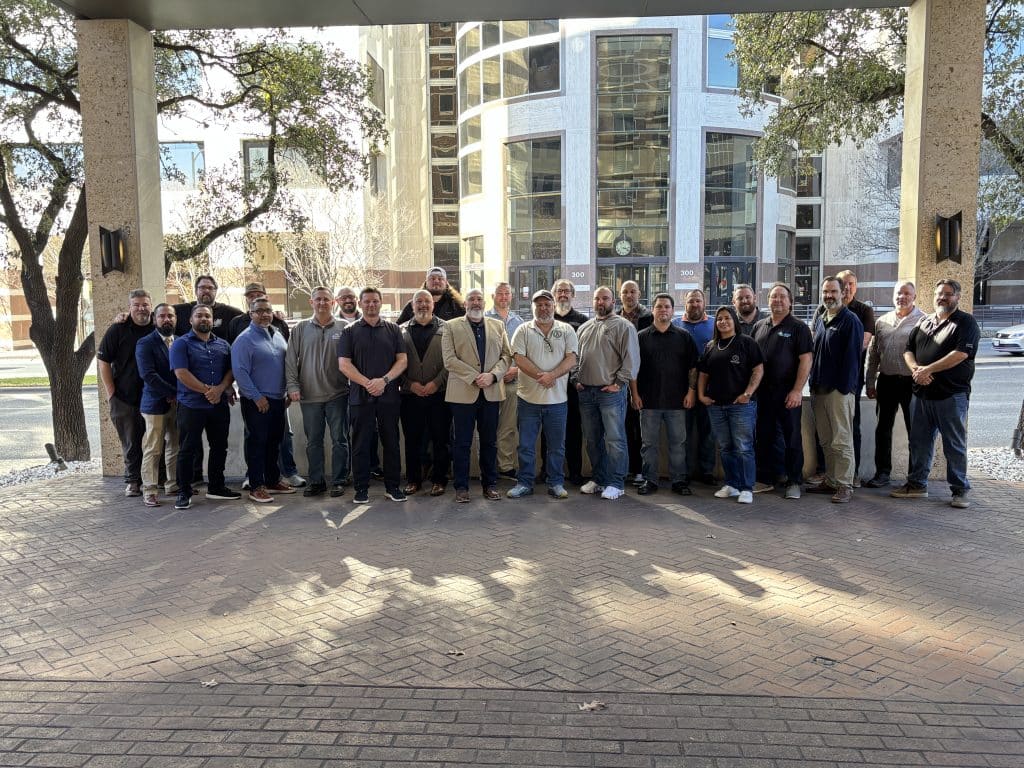
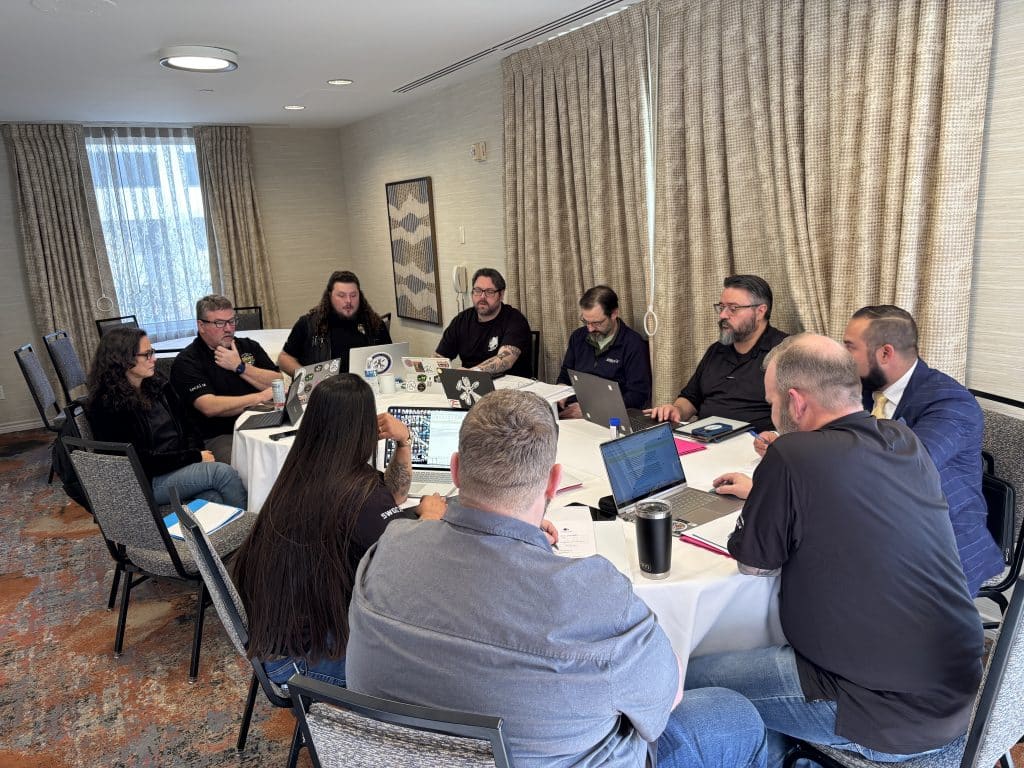
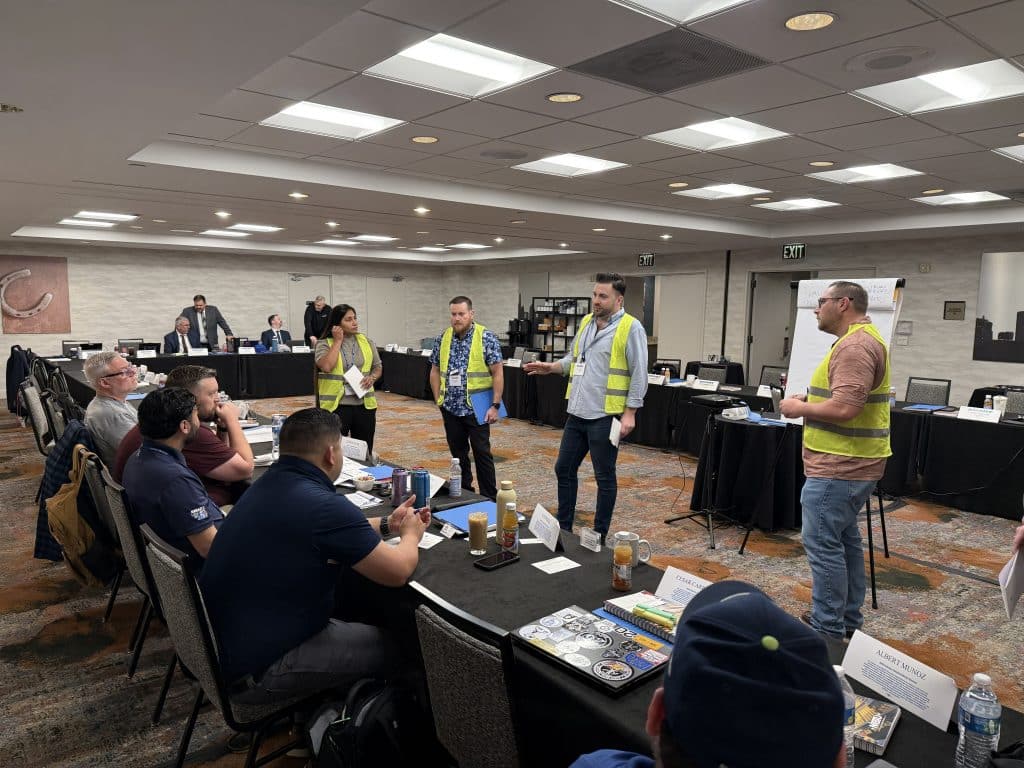
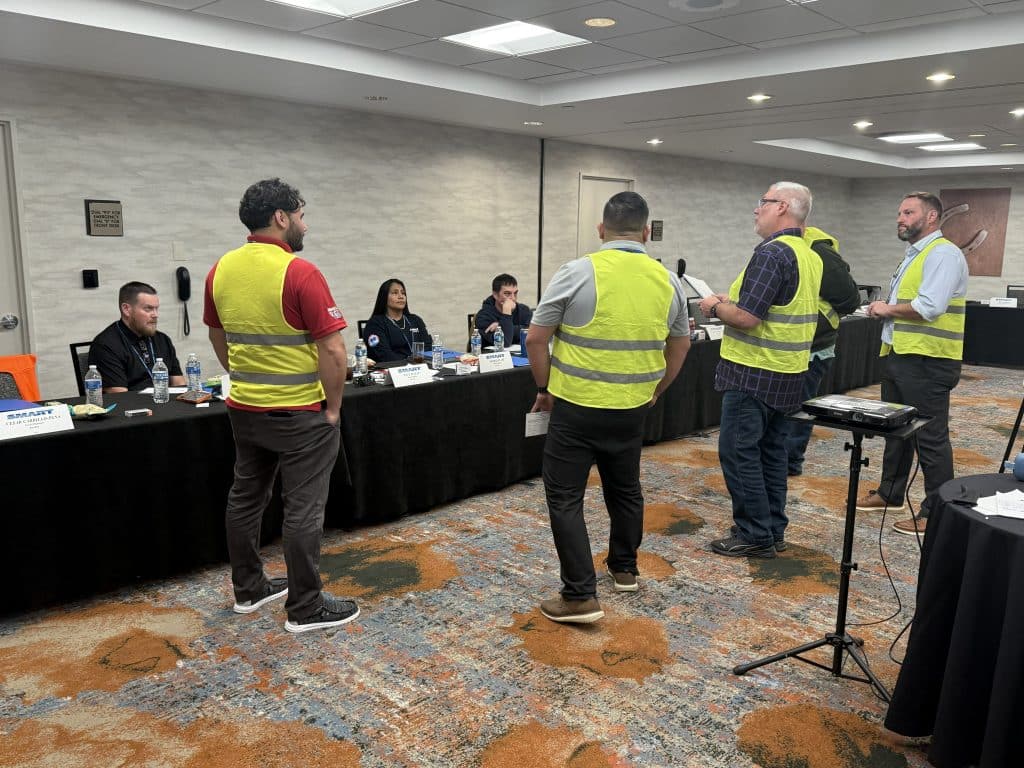
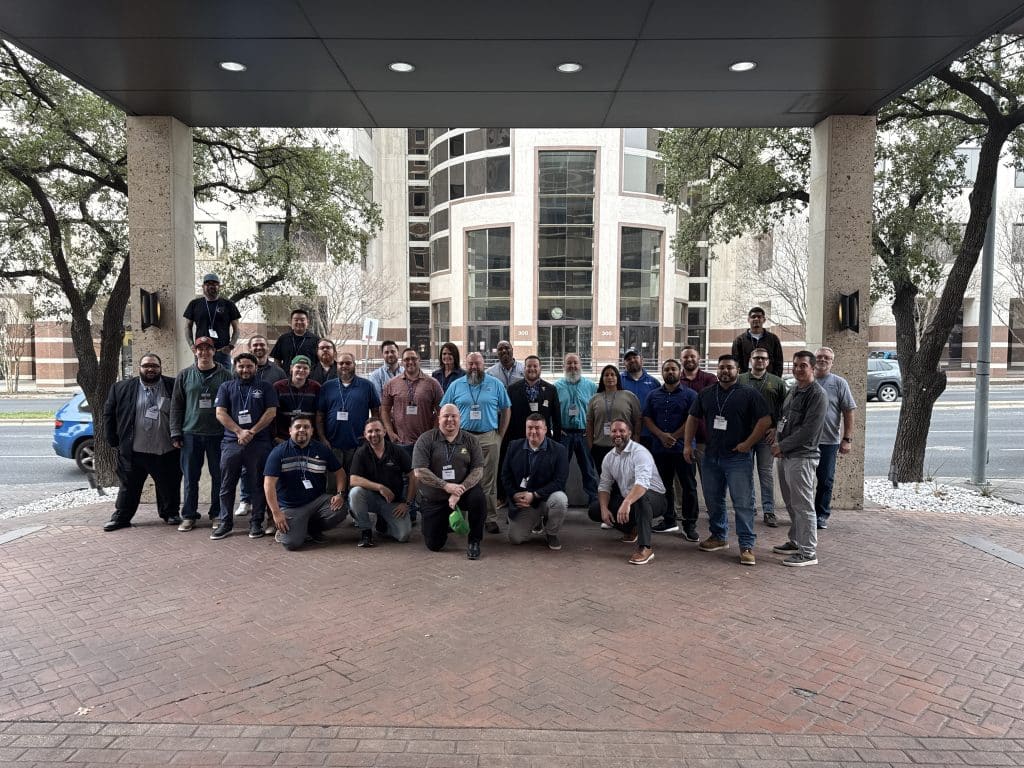
For the third time in five months, the SMART Education Department brought local leaders together to strengthen the foundation of our union: collective bargaining. From February 2-6, 2026, union representatives gathered in Austin, Texas, to further build the teamwork skills needed to negotiate the contracts that members deserve.
The class, developed by the Education Department in conjunction with the Jurisdiction, Canadian Affairs and Production Departments, divided the class into fictional “locals,” with each participant in the group taking on the role of either chair, observer, recorder or numbers person. Attendees spent the week researching employers, developing proposals using member surveys to determine priorities and main issues, and learning their Myers-Briggs (core personality) and Thomas-Kilmann (core conflict mode) types and seeing how they applied to the bargaining process.
The course ended with groups bargaining against one another to get the best contract possible. Each group spent half the bargaining time as a fictional local union, and the other half as a fictional employer association.
“In the ‘employer association” role, they took on the role of a real-life employer with a fictional storyline, personality and ‘pet proposal’ to fight for at the table,” said SMART International Instructor Andre Mayes. “The research, proposals and final contracts were all peer-reviewed in a competition format.”
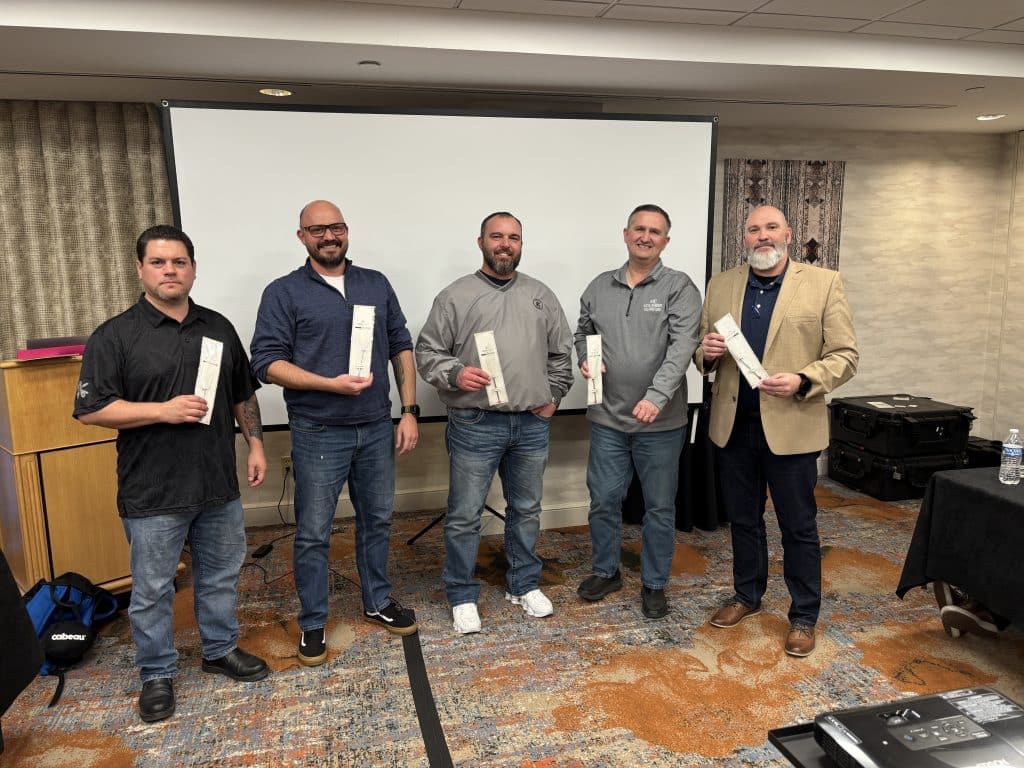
“Congratulations to the winner, ‘Local 1,’ comprised of Daniel Loftis (Local 2), Dustin Truitt (Local 2), Mike Thorne (Local 4), Dean Lee (Local 206) and Domingo Luyo (Local 206),” Mayes added.
The next iteration of the Collective Bargaining class will take place in 2027.
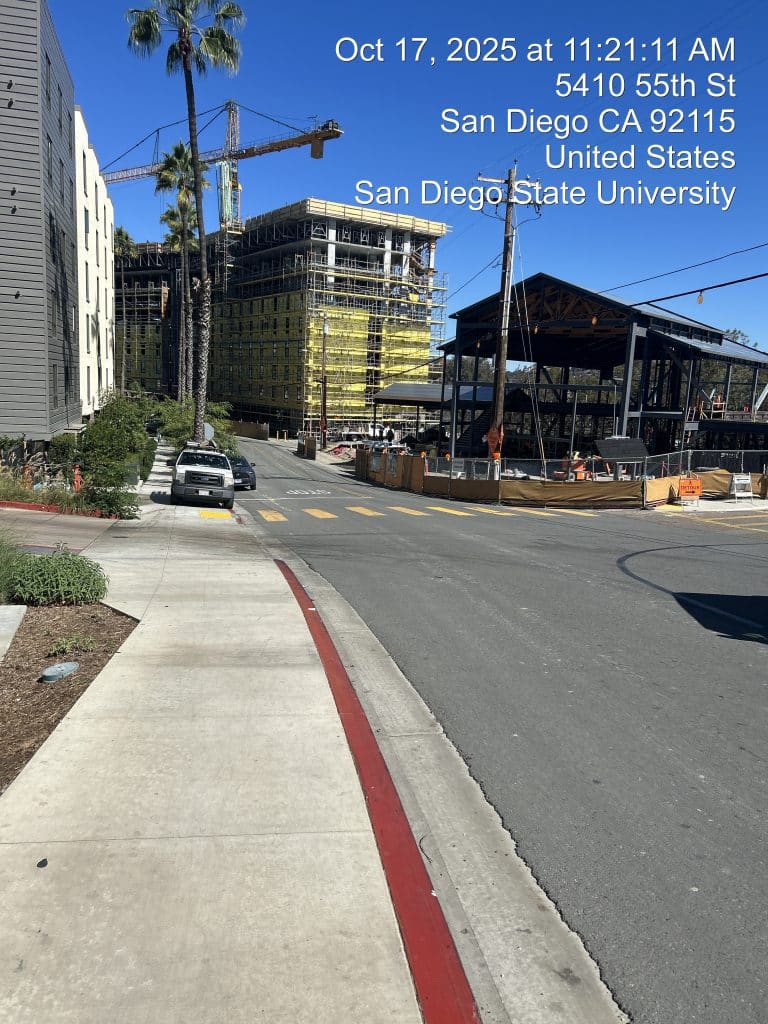
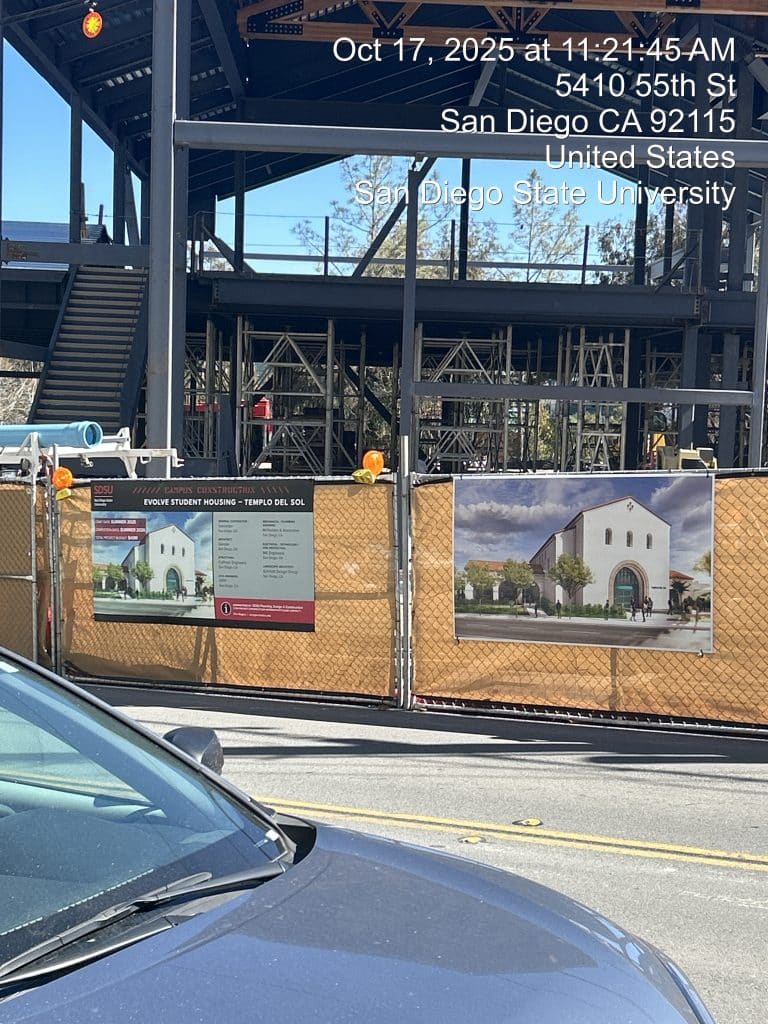
In a victory for SMART members, university students and jobsite standards, Local 206 (San Diego) recently flipped a large college housing project away from a nonunion competitor.
The Evolve Student Housing development at San Diego State University (SDSU) is a $450-million, multi-phase project consisting of five residential towers and an amenity building, with construction that started in May 2025 and continuing through December 2030. The university’s plan calls for maintaining student housing capacity throughout construction by bringing new beds online before existing units are demolished.
Ahead of construction, Local 206 signatory Ocean Park Mechanical completed BIM coordination and prepared to perform the mechanical scope. However, the general contractor, Swinerton, ultimately awarded the full mechanical package to nonunion company Atlas Mechanical.
Local 206 was familiar with Atlas from prior projects in the region. Union representatives began monitoring Phase 1 of the SDSU project and conducting site visits to assess progress. Conversations with other trades and on-site observations indicated that the mechanical contractor was struggling to meet project scheduling demands.
During this process, Local 206 brought to Swinerton’s attention an alleged wage-and-hour violation involving Atlas Mechanical.
In the months that followed, A.O. Reed & Co., a longtime Local 206 signatory contractor, was invited to submit a proposal for the next phase of work and later to provide pricing to assume additional phases of the development. A.O. Reed was subsequently awarded Phase 2 of the project and is currently in discussions to perform mechanical work on future phases of the Evolve Student Housing development.
This outcome reflects the importance of strategic jobsite monitoring, contractor accountability and maintaining strong relationships with owners and general contractors. Through coordinated efforts, Local 206 was able to help position a qualified signatory contractor to successfully deliver the mechanical scope on one of the region’s most significant higher-education housing projects.
That means work opportunities for SMART members. That means high standards for workers on the project. That means college students benefit from the quality and craftsmanship that signatory contractors bring to the table.
On February 24, 2026, Senator Jon Husted of Ohio and Senator Maria Cantwell of Washington introduced the Railway Safety Act of 2026. SMART General President Michael Coleman issued the following statement in response:
“Rail safety isn’t a Red issue or a Blue issue. It’s about keeping our country and our members safe and secure.
“Over three years ago, the devastating Norfolk Southern derailment in East Palestine, Ohio, showed just how important it is for lawmakers to listen to rail workers. That disaster put local families, railroaders and an entire town at risk. The image of that chemical explosion shocked our country — except the SMART-TD members who had been demanding a change even before that day, and who have continued to call for real solutions ever since.
“With the bipartisan Railway Safety Act of 2026, Congress can answer that call and take concrete actions to keep Americans safe: new safety standards for hazardous materials, train length regulations, two-person crews and more. We thank Senators Husted and Cantwell for introducing this crucial bill, and we call on Congress to stand with our members and pass it into law. Because as SMART-TD President Jeremy Ferguson stated when the legislation was introduced, safety is not a political issue. It is a moral obligation.”
According to recent studies, the vast majority of Americans — over two-thirds — view unions favorably. Working people know that unions like SMART can change lives with higher pay, protections at work, stronger health care, a pension and a good life for members and their families.
The same studies show that more than 50 million workers in the United States said they would vote to unionize their workplace in 2025 if they got the chance. But due to a variety of factors, from hostile employers to broken labor law, they were unable to get that opportunity.
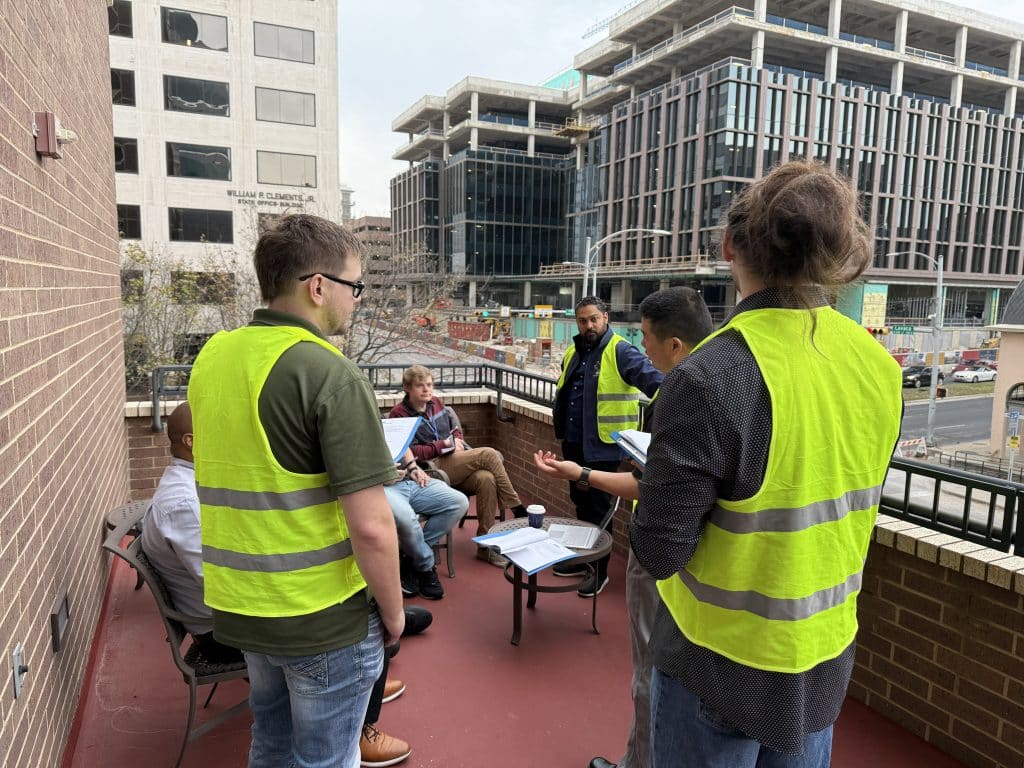
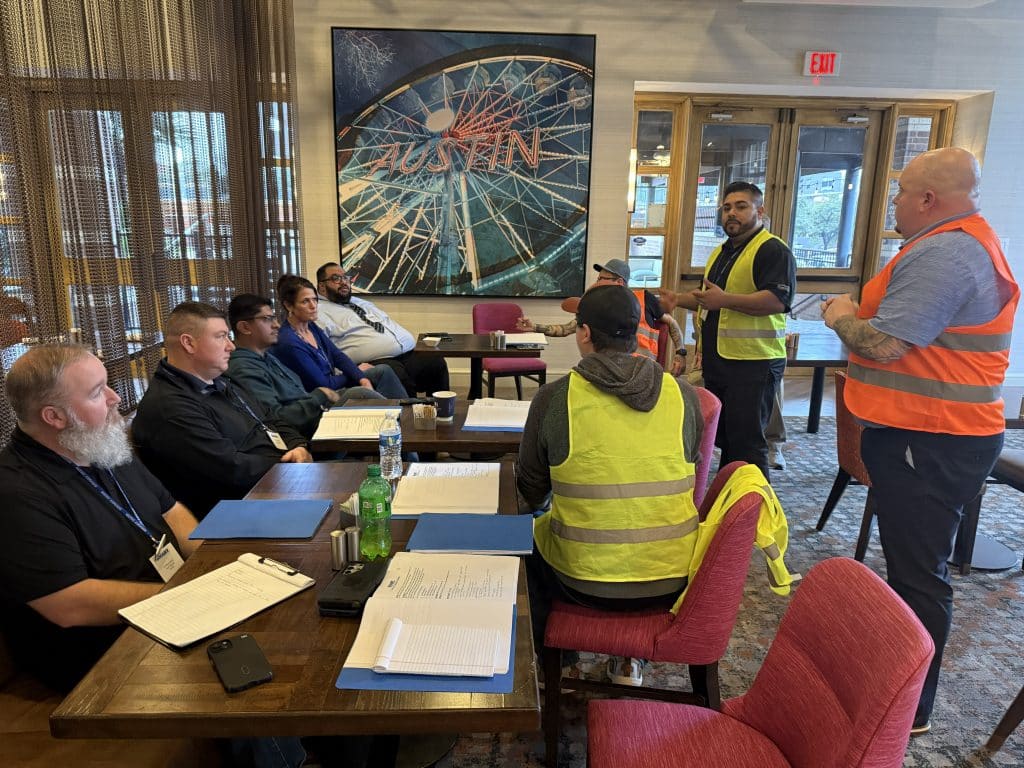
That’s why it’s more important than ever that SMART organizes to help those workers join our union. And it’s why the SMART Education Department held its Bottom-Up Organizing Class in Austin, Texas, during the week of January 5th, 2026. Using comprehensive role-play that mimicked a worker-led organizing campaign over the duration of the week, the class focused on developing practical competency in the process and skills required to successfully facilitate victorious unionization drives.
Participants worked in small “local” teams; each local worked as both an organizing team and role-played as workers at two fictional companies — Coleman Sheet Metal and Daniel Sheet Metal & Fabrication — based on character backgrounds provided for the simulation. From initial contact to a mock union election at the end of the week, attendees dedicated their days in Austin to developing the skills that will help SMART continue to grow.
“Participants were really engaged in the simulation and were observed organizing each other outside of class time,” said International Instructor Richard Mangelsdorf. “Everyone did a fantastic job working with their groups and playing their parts. The fictional Local 5 — Chris Weist (Local 12), Paul Conners (Local 17), Ryan Miller (Local 66), Brian Legge (Local 100) and Kenny “Math” Montejano (Local 105) — was the top “local” in the class, based on highest election win percentage. Well done everyone!”
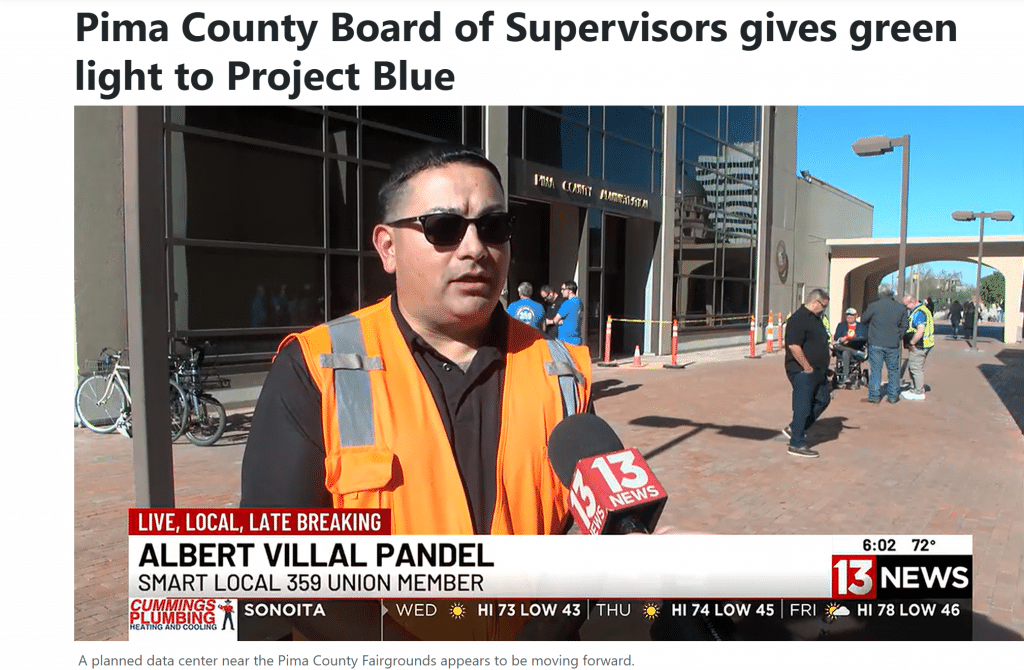
In December 2025, SMART Local 359 helped secure a rare and significant milestone for Arizona’s construction industry in Tucson, when the Pima County Board of Supervisors approved a binding memorandum of agreement tied to the Project Blue data center development. The approval cleared the final hurdle for construction to begin and formally secured the project under a project labor agreement (PLA), leading to a win for SMART members and a historic first for Tucson: a 100% union-built project.
Union solidarity helps overcome challenges
Project Blue faced nearly six months of community opposition, primarily centered on concerns over land transfer and water use in a drought-stricken region. During a marathon public comment session lasting more than seven hours, union representatives, including leadership from Local 359, stood alongside other building trades to articulate the economic, workforce and community benefits of the project. The vote was close (3–2) but decisive. With approval secured, the project is expected to break ground in the first quarter of 2026.
The power of the PLA
The project labor agreement covering Project Blue will deliver outcomes rarely seen in southern Arizona:
100% union construction, the first of its kind in Tucson
Strong local hiring potential in a market where union density is limited
Clear pathways for nonunion workers to transition into union careers
For Local 359, which fights hard for market share in Tucson, the PLA represents a breakthrough opportunity. The project is expected to require 50–100 sheet metal workers over two years, exceeding the local Tucson-area membership base and creating real opportunities to put members on the job while organizing new workers into our union.
Union victories are community victories
In response to public concerns, the data center project’s design was modified from water-cooled to air-cooled systems, significantly reducing water consumption. This change not only addressed some of the environmental objections brought up by community members; it will also increase work opportunities for sheet metal workers and other union trades workers, demonstrating how collaborative problem-solving under a PLA can align community interests with unions and workforce development.
Setting a precedent in Arizona
Arizona, which is a so-called right-to-work state, rarely sees PLAs on large-scale private developments. Project Blue now serves as proof that advocating for PLAs can succeed even in traditionally hostile markets — delivering jobs for SMART members, community accountability, environmental responsibility and economic impact without delays or labor disputes.
Project Blue is a model for how project labor agreements can work in Arizona. It shows that even in low-density union markets, unions can use PLAs to:
Put members to work
Win tough political battles
Address legitimate community concerns
Deliver high-quality, efficient construction
Create real pathways to good union jobs
This success story demonstrates that when organized labor, good-faith employers and public officials align around shared goals, real victories can be achieved for union members and communities alike. Great work, Local 359!
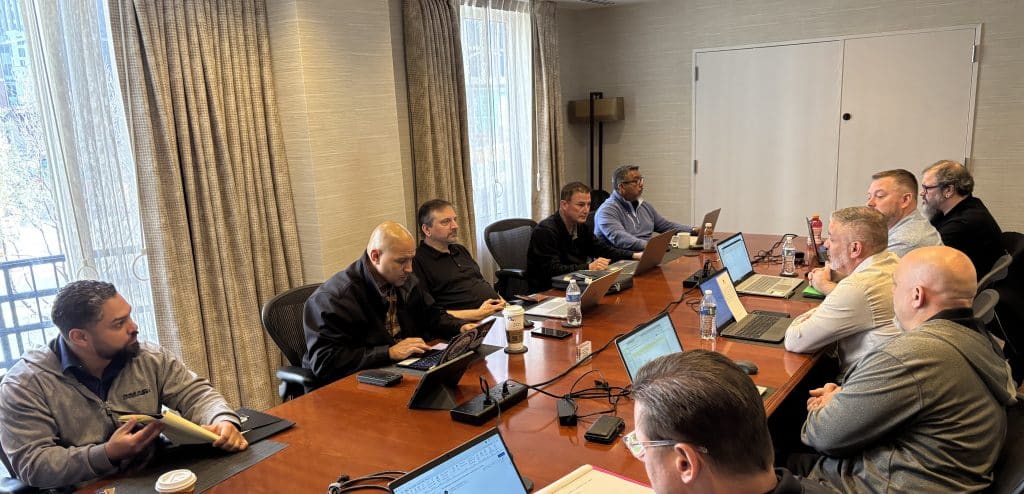
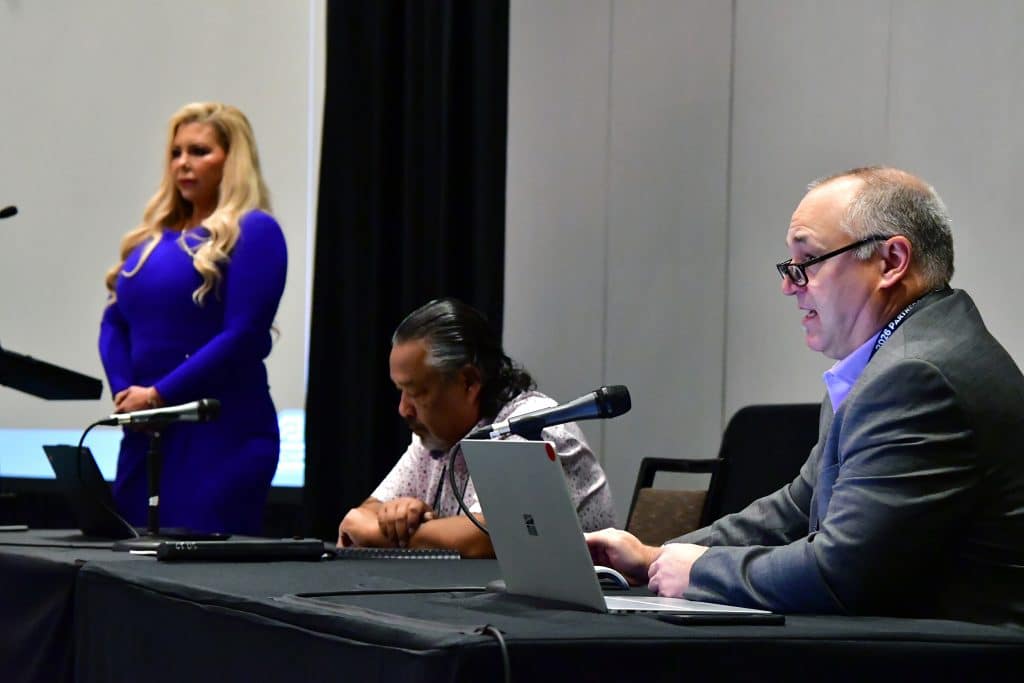
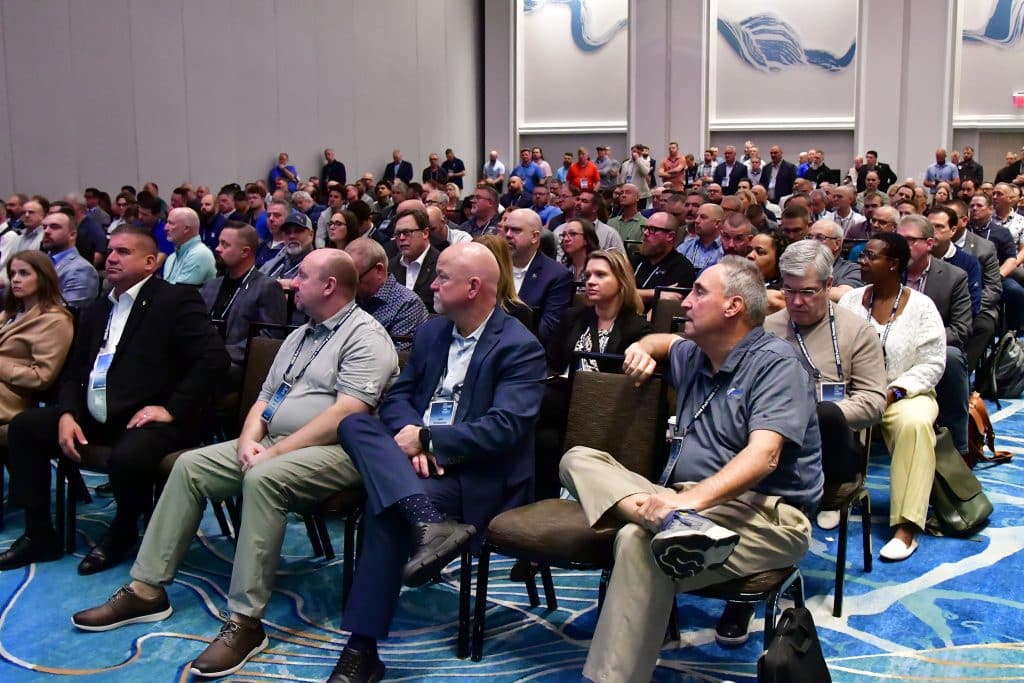
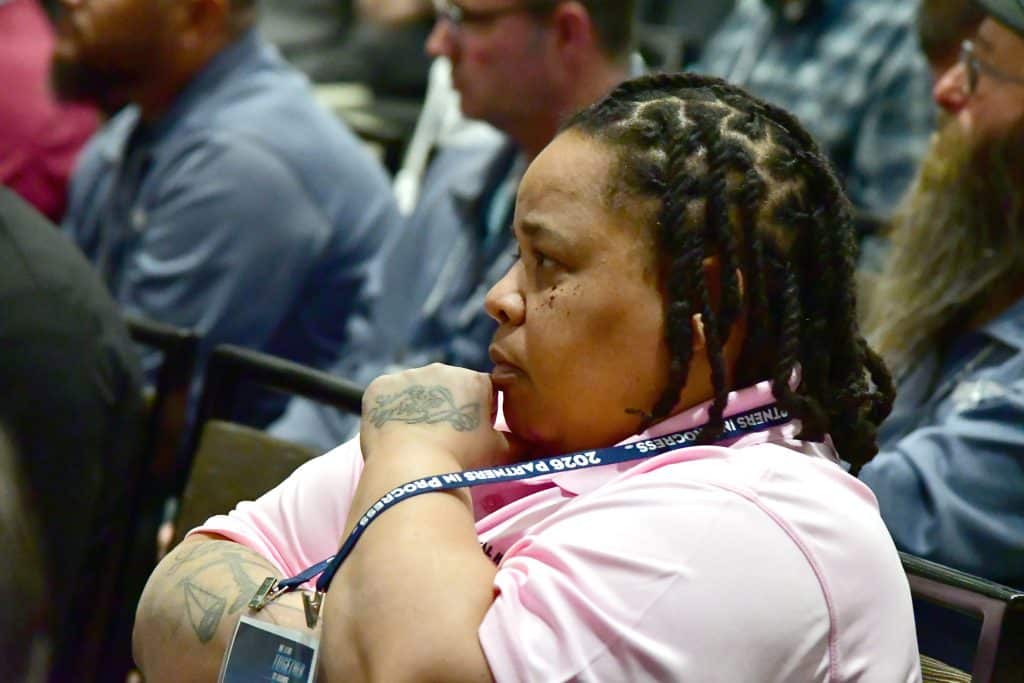
The future of the unionized sheet metal industry depends on the things that matter equally to both local unions and signatory employers: growing market share, steady work opportunities, investments in apprenticeship programs and more. That’s why, on February 17-18, 2026, the SMART-SMACNA Partners in Progress Conference brought together leaders from across the trade. For two days, union leaders and employers focused exclusively on bettering the industry — for SMART members and SMACNA contractors alike.
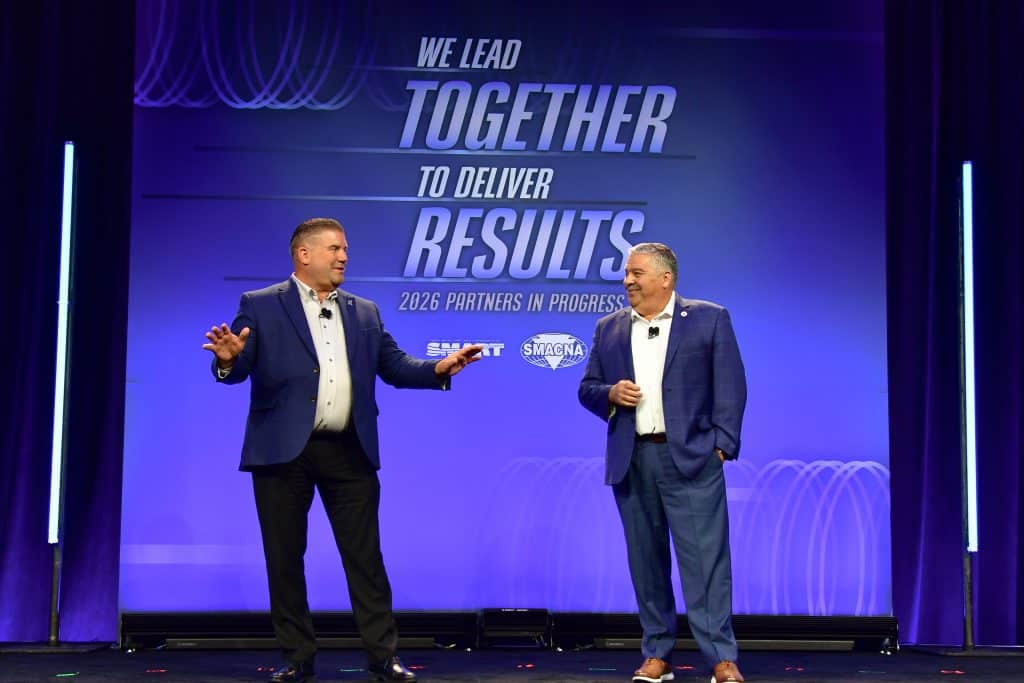
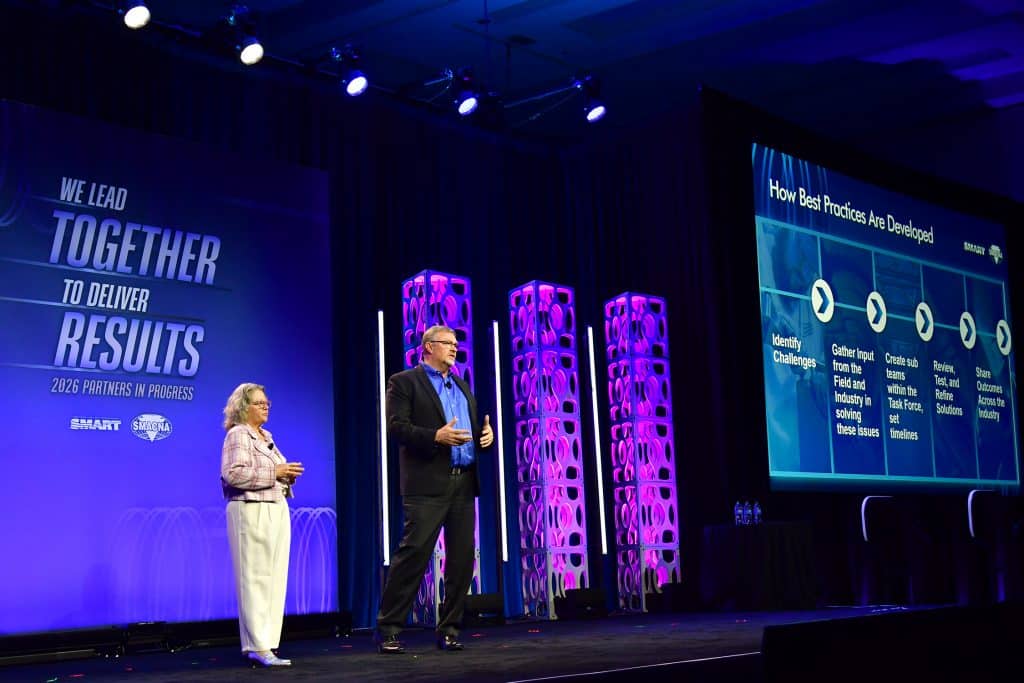
The 2026 Partners in Progress theme was “We Lead Together to Deliver Results.” That sentiment rang true throughout the conference, with keynote speakers and panels demonstrating both the success and the importance of partnering across North America to secure our future.
General President Coleman, SMACNA President Todd Hill reaffirm commitment to the industry
In 2025, the sheet metal industry faced a variety of challenges: federal policymaking that impacted megaprojects in the United States, tariffs that affected jobs on both sides of the United States-Canada border, a U.S. government shutdown and more. But thanks to SMART and SMACNA’s shared commitment to the UNIONIZED sheet metal industry, the two organizations are maintaining their focus on the progress we can make — together.
SMART General President Michael Coleman and SMACNA President Todd Hill, a former union sheet metal worker, demonstrated that in their opening comments.
“Everyone in this room is here because we care about this industry and its future. No matter where we come from or who we represent — labor or management — we’re all committed to keeping this industry strong,” said General President Coleman. “Not just for ourselves, not just for today, but for the people who came before us and the ones who will come next.”
In the past, Hill said, conflict between SMART and SMACNA made it difficult to achieve progress as a whole. That doesn’t benefit anyone, he noted — when the nonunion sector and bad-faith contractors grow stronger, we all lose. That’s why SMART and SMACNA worked together to change that relationship.
“Because of everyone’s efforts on both sides, we have continued to change our industry. The relationship between labor and management has never been stronger,” Hill said.
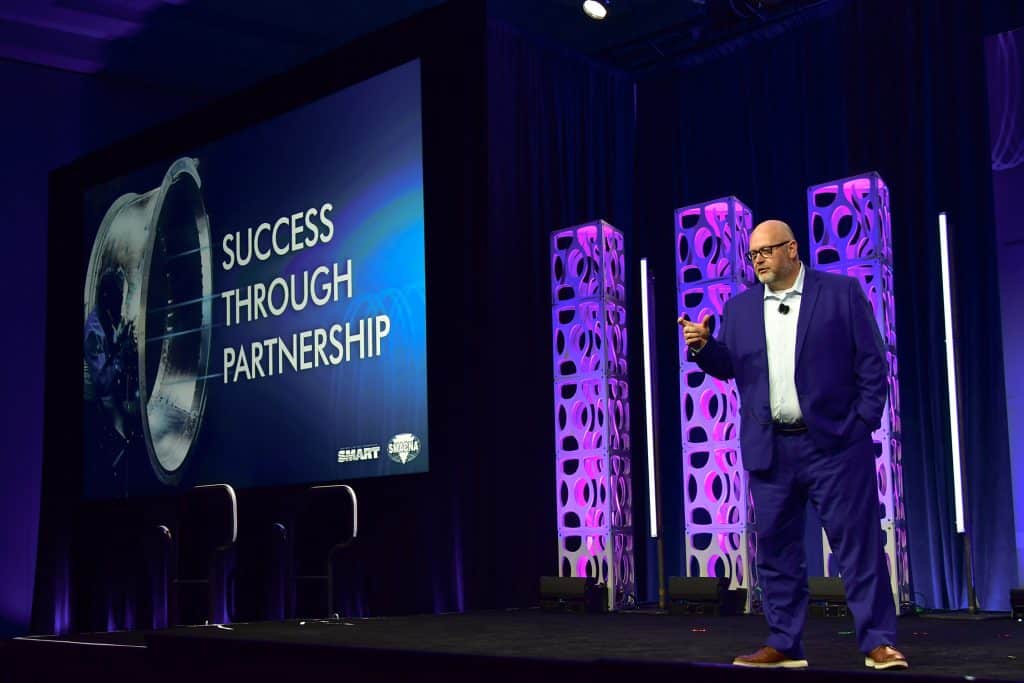
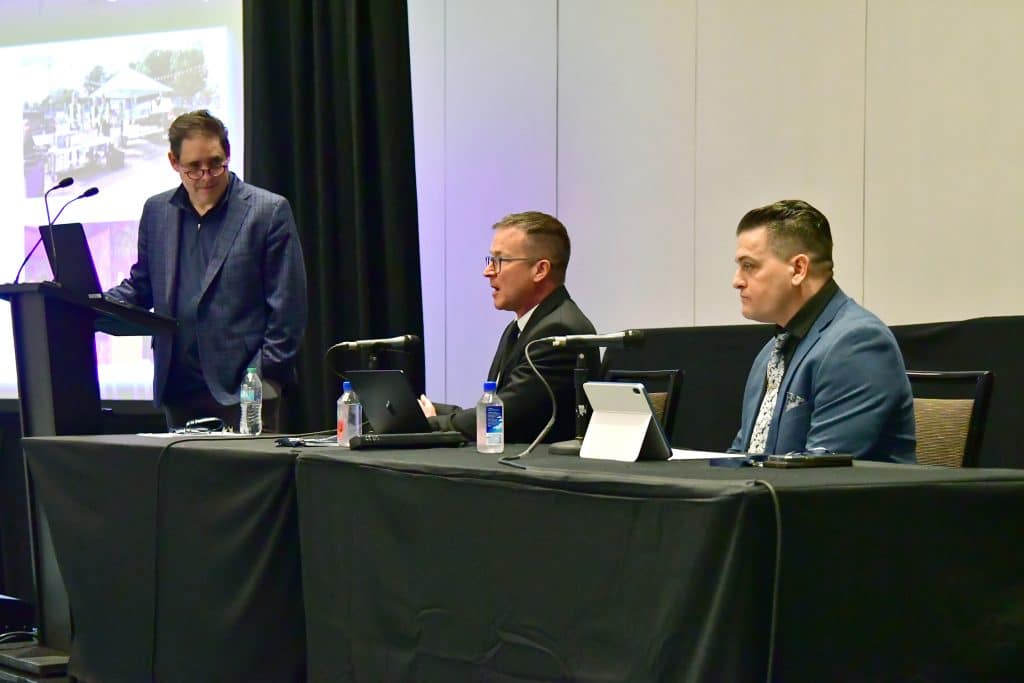
SMART Director of Organizing Jason BensonKathy Kerber of KSM Fabrication and SMART AGP Darrell Roberts present on the Partners in Progress Best Practices Task Force
By working together, the two leaders said, SMART and SMACNA have put the unionized sheet metal industry on the front foot: staffing megaprojects, maintaining and expanding core work market share, and developing new jobsite leadership training initiatives. But, General President Coleman explained, we cannot rest. Hill and Coleman urged attendees to take advantage of the conference — both the networking opportunities and the breakout sessions — to fortify our trade’s foundation moving forward.
“We’ve accomplished a lot. As individual people, as local unions, as contractors, and together as SMART and SMACNA. But we also know that where we are today isn’t the finish line. We owe it to ourselves, and more importantly, we owe it to the next generation. We have to keep building on what we’ve started to secure the future of this industry,” Coleman said, adding:
“What we have here is real. It’s worth protecting. And as long as we keep working together, I’m personally confident this industry’s best days are still ahead.”
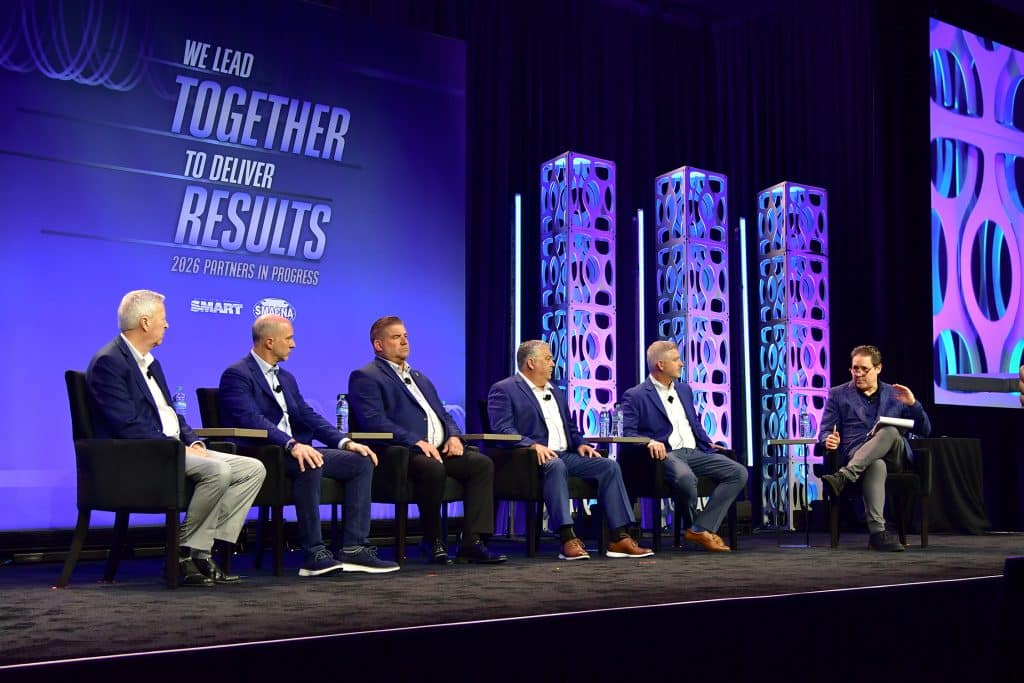
SMART, SMACNA leaders discuss the state of the industry during leadership panel
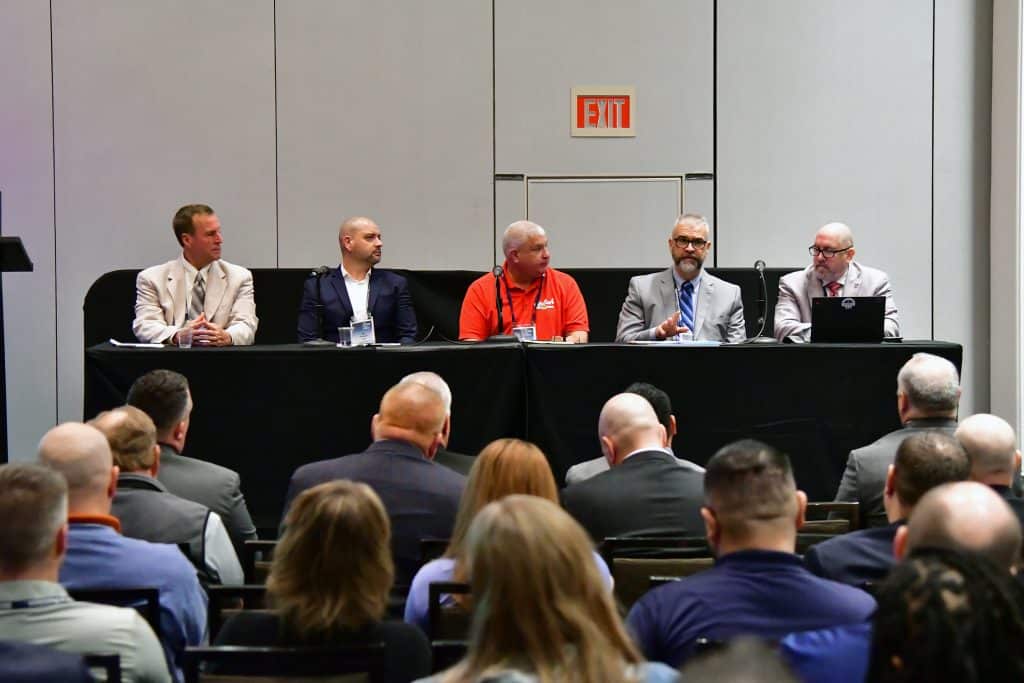
General President Coleman, SMART General Secretary-Treasurer John Daniel, SMACNA President Hill, Immediate Past SMACNA President Tom Martin and SMACNA CEO Frank Wall discussed the state of the industry and took audience questions during a Partners in Progress leadership panel. Throughout the panel, one theme unsurprisingly took precedence: working together to solve problems and help locals continue to grow.
“It’s important to remember that not one of us can do it alone,” Hill said. “We can work together, and that’s true leadership.”
Having a strong relationship built on trust, communication and collaboration empowers local unions and contractors not only when it comes to issues like negotiations, but also when working proactively to win future gains for both employers and SMART members. That’s been evident in the two organizations’ work on megaprojects, retention and beyond. By planning together in lockstep for megaprojects years in advance, for example, locals and contractors met the challenge presented by workforce demands, megaproject management and foreperson training, to name a few.
“When we’re communicating well, we’re up to speed on trends. We know where future big projects might land, and that’s imperative,” said Martin.
Partnership also matters as SMART and SMACNA try to grow — geographically and membership-wise, but also in terms of new markets.
“We’ve got an obligation, a responsibility, to identify those markets and not just lean into them – we’ve got to jump into them,” said SMART General Secretary-Treasurer John Daniel. “We’ve got to find a way to work together to grow into those sectors.”
During the panel discussion and when answering audience questions, industry leaders covered a lot of ground. But the bottom line was put succinctly by General President Coleman.
“When there’s a good labor-management relationship in an area, their market share is high,” he concluded. “That’s a fact.”
Sheet metal leaders prepare for the future in breakout sessions
At every conference, Partners in Progress breakout sessions put the power of effective labor-management relationships on display. In 2026, attendees got the chance to take a variety of lessons home from fellow union leaders and contractors — helping secure the future for sheet metal workers across North America.
In the “Leveraging Technology and Partnerships for Industry Advancement” session, SMART Local 38 (Brewster, New York) Business Manager Michael Colombo joined Mark Treglio and Stacy Yuden, president and CEO, respectively, of the labor-aligned tech and communications firm NEP Services, as well as SMACNA Southeast New York Executive Vice President Alan Seidman. Working together, Local 38, SMACNA SENY and NEP Services used data mining and information technology for strategic political engagement, helping pass pro-worker state legislation in Connecticut in 2025.
Fire life safety is a crucial priority for local unions across SMART — both for the safety of communities and first responders, and because of the work it creates for union sheet metal workers. In “Getting Fire Life Safety Regulations Done — A Practical Playbook,” Local 49 (New Mexico) Business Manager Isaiah Zemke, Tony Kocurek of Energy Balance and Integration, LLC, and Ronda Gilliland-Lopez of SMACNA New Mexico discussed how they worked together to win fire life safety standards in New Mexico.
“Knowing that this was an underserved or under recognized part of a building system to keep occupants safe and building owners safe, we had a lot of support from the fire fighters — union members, boots on the ground,” Zemke said, adding that the partnership with SMACNA helped overcome potential obstacles in the state legislature.
“The work doesn’t end once the law is passed,” he advised attendees. “You’re not done yet.”
Megaprojects have presented local unions and signatory contractors with extraordinary challenges and opportunities over recent years. SMART Director of Megaprojects Joseph Powell, Local 4 (Memphis, Tennessee) Business Manager Mike Thorne, representatives from Southland and Ventcon, and moderator Clark Ellis of Continuum Advisory Group engaged in a panel focused on the project management challenges unique to megaprojects. Collaboration, resource-sharing, consistent communication and coordination are key to helping local unions and signatory contractors meet the workforce challenges that megaprojects inevitably bring.
“At the IA level, we set up meetings with SMACNA, had routine meetings on a monthly basis — really trying to figure out what resources we could provide to locals,” said Powell.
In Labor-Management in Action, Local 280 (Vancouver) Business Manager Steve Davis and SMACNA-British Columbia Executive Director Jeremy Hallman discussed how fostering a true labour-management partnership has benefited the industry in the province, leading to growth for the local union, increased market share and efforts to find new training opportunities for members to help them gain more certifications. In a panel on clean rooms, meanwhile, SMART Canada International Rep. Scott McQueen joined SMART Director of Business-Management Relations Tom Fischbach and Kocurek of Energy Balance and Integration, discussing the massive (and growing) clean room market. In Ontario, McQueen reported, one megaproject alone required 1.5 million work hours on clean rooms.
Other breakouts focused on developing jobsite leaders, reclaiming residential market share, artificial intelligence on the jobsite and in the classroom, and more.
Keynote speakers energize attendees for the work ahead
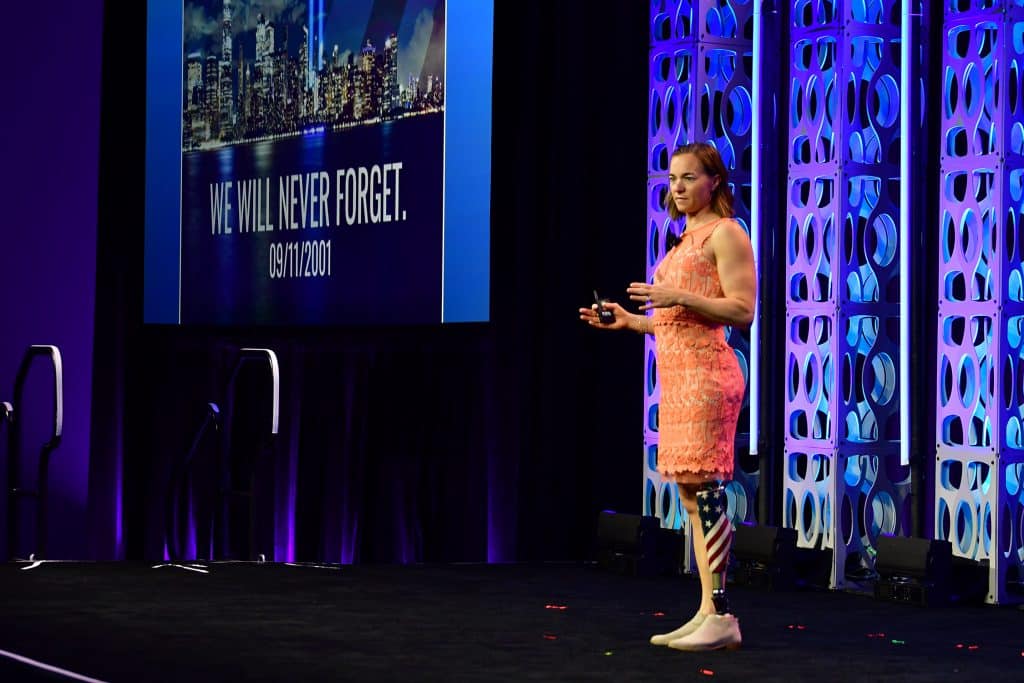
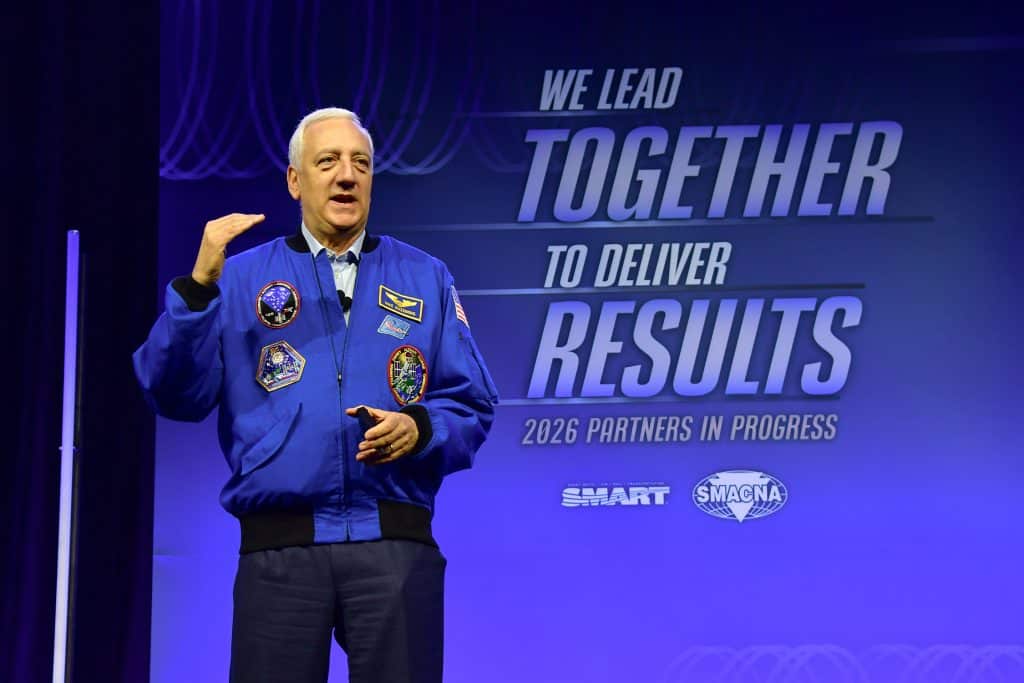
Melissa StockwellMike Massimino
The conference’s opening keynote speaker, Melissa Stockwell, graduated from the University of Colorado in 2002 and was commissioned as a Second Lieutenant in the United States Army. In March 2004, she deployed to Baghdad, Iraq. Just three weeks later, a blast from a roadside bomb struck her Humvee, causing the loss of her left leg above the knee.
Rather than let tragedy slow her down, Stockwell made history. In April 2008, she became the first Iraqi War veteran to qualify for the Paralympics. She competed in three swimming events and was selected by her fellow Team USA athletes to carry the American flag in the closing ceremonies. After Beijing, Stockwell turned to the sport of Paratriathlon and is now a three-time World Champion.
“They took my leg, but they didn’t take my life,” she told Partners in Progress. “My life would go on. The only difference was, I would wake up, put my prosthetic leg on, and go about my day.”
Perseverance, resilience, refusing to give up — local union leaders and signatory contractors need to practice such traits every day. Stockwell presented to conference attendees on “The Power of Choice,” relating her story to the challenges and accomplishments SMART and SMACNA members face in the sheet metal industry.
“You are a team … as you’re learning this week, together, there’s even greater results,” she said, adding: “The next time something doesn’t go your way … how are all of you going to join me in exercising your daily power of choice?”
Closing keynote speaker Mike Massimino is a former NASA astronaut, a New York Times bestselling author and a Columbia University professor. A spacewalker on the final two Hubble Space Telescope servicing missions, Massimino and his crews traveled faster and higher than any other astronauts in the 21st century.
“It was designed to be worked on by astronauts. But there’s a lot of sheet metal on this thing,” he said of the Hubble.
For his first mission to space, Massimino recalled walking up to the spaceship as it made extremely loud, guttural noises, and thinking to himself: “Maybe this wasn’t a good idea.”
That’s when Massimino relied on what he called the three trusts: Trust your tools. Trust your training. Trust your team. That gave him the courage to get inside the spaceship for the first time and, looking at planet Earth from space, experience the most beautiful sight he had ever seen.
On his second mission to Hubble, Massimino and his team were taking on an extraordinarily complicated objective: repairing the Space Telescope Imaging Spectrograph in space. Instead of simply removing and replacing a component, Massimino would be fixing a piece of equipment that was painstakingly put together in a clean room. He needed to access a panel that had 111 small crews holding it in place, each with a washer; more than 100 new tools were invented to complete the task.
Massimino had a backup plan for every single part of the mission — besides a simple handrail that needed to be moved aside. When he looked to remove the final screw holding the handrail in place, it was deformed into a gnarled piece of metal that could not be unscrewed. The mission was in jeopardy.
That’s where trusting his team came into play. Thanks to a stroke of inspiration from an engineer back on the ground in Mission Control, Massimino went for brute force: ripping the rail off the telescope by hand. It worked, and that imparted a valuable lesson.
“We can’t always solve problems on our own — remember there’s a control center for you,” he told sheet metal leaders. “There’s people on your team that can help. And maybe more important, you can be that Mission Control for others.”
Massimino closed with an image of a star field, one with 10 million stars. He called it “the big picture.”
“What you’re doing is not easy, and it’s met with challenges, changes,” he told Partners in Progress. “But when you hit those bumps in the road, I would encourage you to persevere, think about the big picture and keep doing what you’re doing.”